Month: January 2008
Coping with high EMIs
Coping with high EMIs
Ramganesh Iyer for Express Money Posted online: Monday , January 21, 2008 at 1339 IST
If you took a home loan at rates prevailing in 2005 (around 7.5 per cent), you must be feeling the heat now. If you had borrowed Rs 20 lakh for 20 years, your EMI would have increased by Rs 3,500 or more. What options do you have today?
Increase tenure. If you are not near retirement, and if your original tenure was less than 20 years, your bank should increase the loan tenure. The other benefit of this is that due to inflation, the real cost of your loan will decrease over the years.
Prepay. If you have surplus cash, prepay part of your loan. The EMI on remaining principal will remain the same as earlier.
Switch banks. This involves a sizeable transaction cost, besides time and hassle. Your old bank may charge a prepayment penalty, and the new bank, processing and administration fees. Switch banks only if the rate differential is at least 0.5 per cent.
Avoid a bad deal New borrowers should do their groundwork. First, avoid taking on an EMI that is too close to your monthly surplus. Expenses have a tendency to shoot up over the years, while income is more unpredictable. By keeping an adequate buffer, you ensure that interest rate increases do not hurt you.
Scout around for the best deal. PSU banks are slower in processing the application, but usually offer slightly lower interest rates.
Finally, before signing the papers, read the fine-print carefully. Of special importance are the clauses that permit the bank to reset interest rates, and pre-payment related clauses. Change the bank if you find a clause that is not acceptable.
The author is a certified financial planner.
Royal Bath
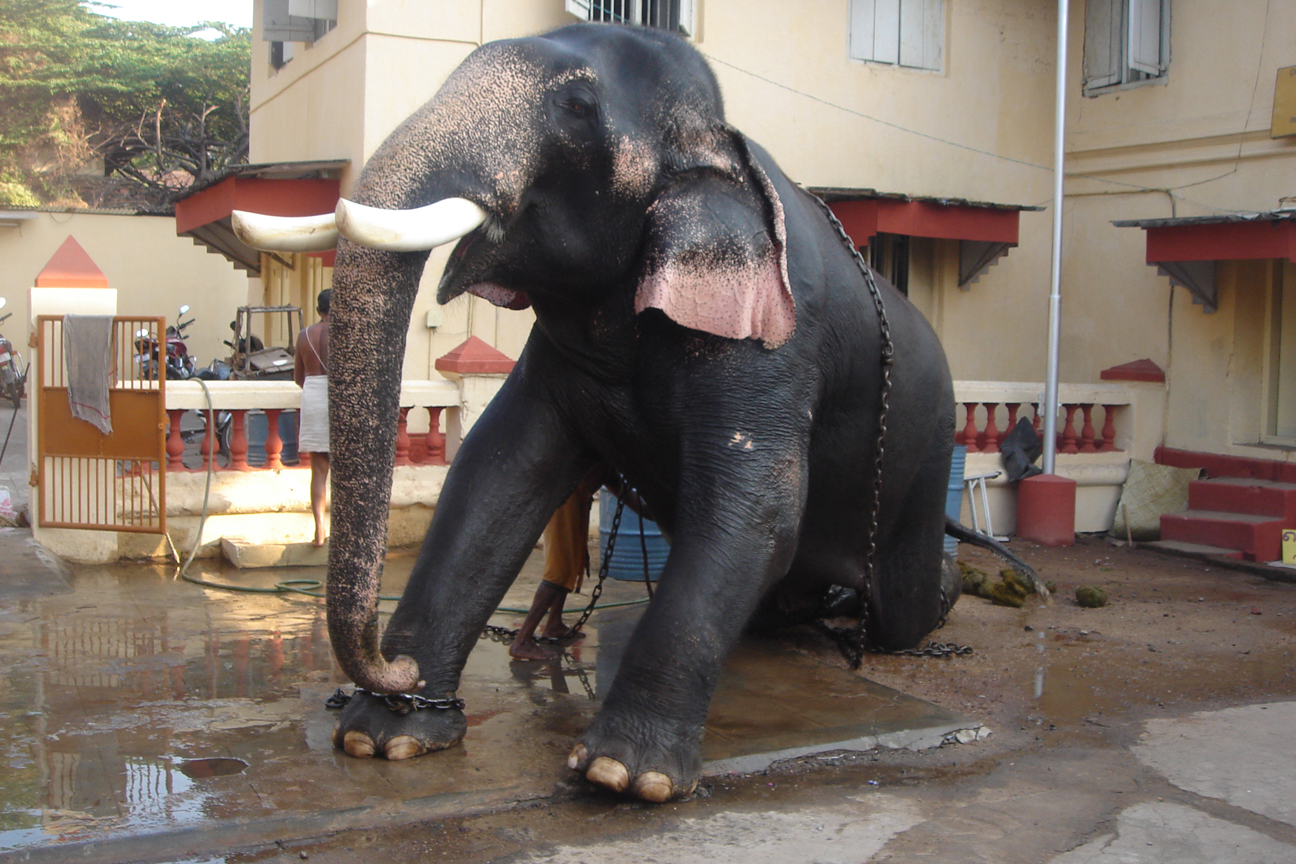
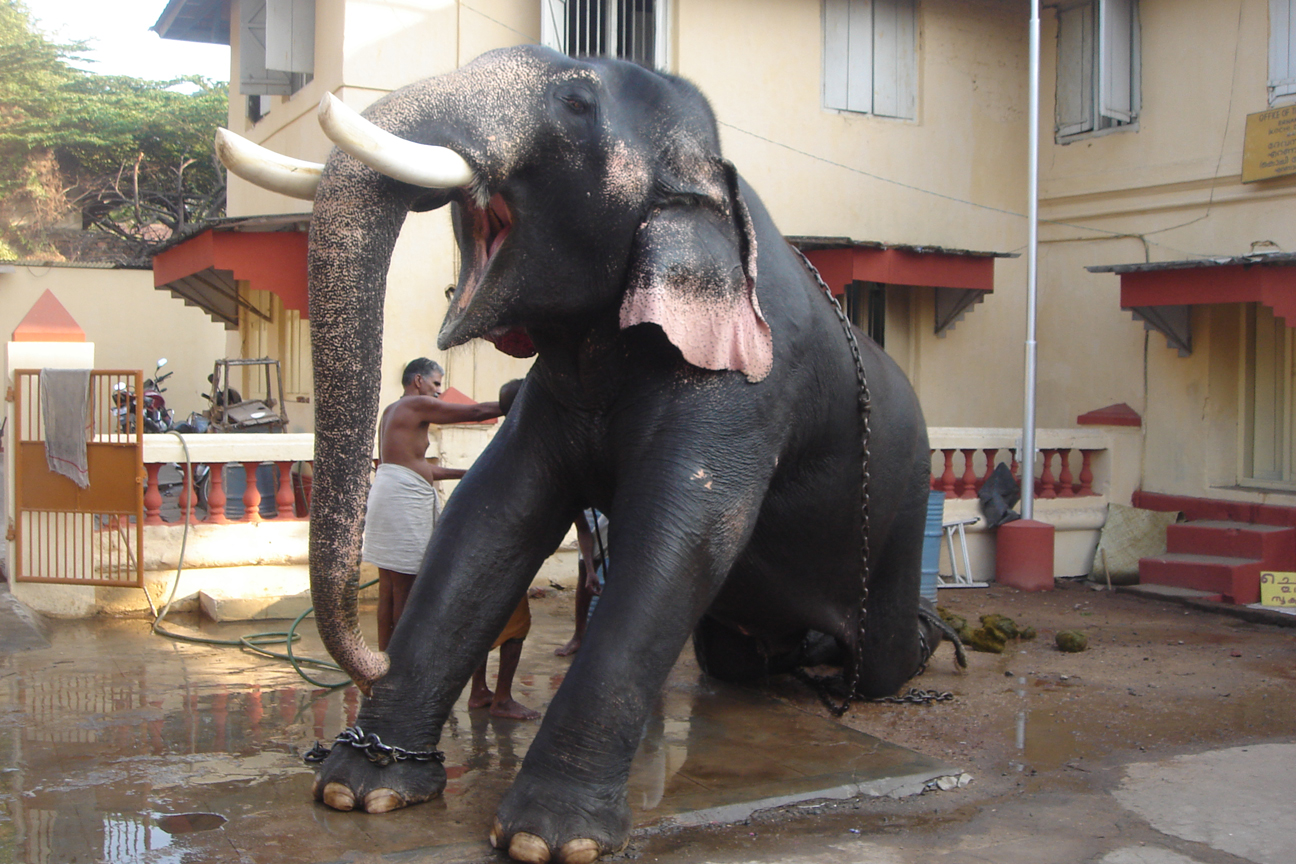

A temple elephant being given a royal bath, before it is taken out for procession at the festival.
Lessons from January 2008
The thing about life is that one makes mistakes. Many mistakes were made in the second half of 2007 and those sins have to be washed away by blood, such is the way of financial markets. Some participants will go down under and never be able to get back to the market again but most will survive. The pain will linger for many months, maybe years but lessons have to be learnt. Every such debacle has lessons for us and the sooner we forget them the more we suffer.
The first lesson is not to let stock price performance become the sole reason for buying, a mistake which was made in abundance in the last 3 months. What couldn’t be explained by fundamentals was credited to liquidity. The present lost all relevance as people chose to focus on the distant future, perhaps simply because the present could never justify those ticker prices; only a hazy dream of the future could. Traders and investors had no time for fundamental analysts, in many cases they were labelled “cribbing fools”. Chartists became the most celebrated tribe on the street as only they could see and predict the one way run to glory for many of the hot stocks even as fundamental watchers cringed at valuations….till the music stopped. Don’t get me wrong, charts do work in trending markets but once stock prices veer away completely from fundamental value, people need to get careful. But they never are. Now that the blinkers are off, people should ask themselves why stocks like RNRL, Ispat, RPL, Essar oil and Nagarjuna fertilisers have lost 50-70% of their value. It is simply because their stock prices had snapped all connection with underlying business fundamentals, earnings and value. Their stock prices became the only reasons for buying them which works for a while but not forever.
The other big lesson, one which should have been driven in earlier in May 2006, is the danger of overextending oneself in the futures market. The lure of stock futures is easy to understand. Put in some margin, take a big exposure on a fast moving stock, make a killing when prices shoot up. Repeat exercise. Just that people forgot that prices may also come down and at a pace which noone can even imagine, maybe their friendly stockbrokers forgot to tell them that part of the story. The result : unbridled speculation that ran into lakhs of crores, excesses that we are paying for today. Even this fall will not cure investors of their love for futures speculation but if at least some amount of caution is injected it would have been a worthwhile learning. Futures are not toys for amateurs, they are time bombs in the hands of inexpert and inexperienced traders, it’s only a matter of when the fuse runs out.
The other learning which I hope will play out in the future, as it has in the past, is that it pays to be brave in times of panic such as these. If I was allowed to invest myself , which I am not, I would have no hesitation in deploying serious money into the market today, knowing fully well that prices may fall more tomorrow. And I would be standing there tomorrow to buy more of the same, till my money ran out. India is going to be a terrific stock market story for many years to come, even an intermediate bearish patch cannot shake that conviction of mine. At best, one will have to wait a bit for the returns to follow. That’s alright. You are happy to put money in a bank FD and then wait for one full year to collect that measly 8%, aren’t you? Then why does the stock market need to give you 20% every month? In the last one year, I haven’t seen so many good stocks trade at such mouth watering levels. Forget trading, avoid the duds which were fuelled up by operators, just go out and buy those bluechips. They will deliver, even if there is a global market meltdown for a while, and if you are a bit patient you will be rewarded. But do remember January 2008, as history will repeat itself again in the future. Just that our memories tend to be too short and our greed too much.
Udayan Mukherjee / MONEYCONTROL
Diversity in All Its Diversity Conference

Diversity in All Its Diversity Conference
The Diversity in All Its Diversity Conference, was organized by Université Total on October 9, is now available in english and french versions.The synthesis of the Diversity in All Its Diversity Conference, organized by Université Total in 9th October.
The all-day event focused on three central diversity challenges: hiring more women, hiring more non-French people and integrating new recruits.
Open to both employees and the public, the conference attracted a number of representatives of other companies, such as Catalyst Europe AG, Microsoft, Vedior France, Communication et Systèmes, as well as Total managers wishing to share their diversity experiences and objectives.
To offer a broader viewpoint and suggest different approaches, researchers and academics also provided historical, social and economic insights on the various aspects of diversity. Dominique Méda, philosopher and sociologist, gave a comparative analysis of the role of women in the economies of the world’s major regions. Françoise Héritier, professor at Collège de France, spoke on the anthropological origins of gender inequality. Suzanne Berger, professor at MIT, addressed the issue of new managerial responsibilities required by globalization.
Shashi Tharoor, diplomat, writer and former Under-Secretary-General of the UN, shared his views on plurality and identity as illustrated by the case of India. Christophe de Margerie delivered the closing remarks for the conference.
Computer upgrades that make sense
Computer upgrades that make sense
(DPA)19 January 2008
WASHINGTON – With notebook and desktop computer prices at an all-time low, you have to think carefully about upgrading them.
That’s because the cost of a few upgrades may come close to equalling the price of an entirely new system.
In general, aside from adding memory or a new hard drive to your computer, you’ll probably want to avoid upgrades designed to improve performance.
The fact is, components in a modern computer – whether desktop or notebook – operate more synergistically than they do independently. So if you upgrade a computer’s main processor, for example, your system may still be hampered by memory that is not optimally paired to the processor or a graphics card that cannot fully unburden the processor enough to allow you to see its full potential.
But that doesn’t mean that all upgrades short of buying a new computer are folly. In general, upgrades that add functionality to your computer – and especially those that might be transferred to a new computer, should you buy one later – can be smart investments. Let’s look at a few.
RAM
Both memory (RAM) and hard drive upgrades make good sense if you know that your system is hampered by insufficient RAM or too little hard drive space. Windows systems today need 1 gigabyte (GB) of memory, at least, and most recent computers can accept up to 4 gigabytes. If you do a lot of multitasking, photo or video editing, or advanced CAD work, you’ll probably benefit from more RAM, especially if you’re using Vista. Bear in mind that a memory upgrade is unlikely to be transferable to a new machine, since memory technology changes about as quickly as processor technology.
Media card reader
Computers sold today often have a media card reader as optional equipment. Media card readers allow you to transfer files from your camera or other portable device much more quickly than if you have to search for a cord and plug the device in directly.
A media card reader is a great convenience, too – and something that’s usually transferable to a new machine or even between machines. If you buy an external media card reader that connects by USB, you can plug it in to just about any computer.
The media card reader is typically seen by your computer as just another drive. Plug in a CompactFlash or other removable storage medium into it, and you can read files from it just as you can by copying files from one disk to another. Internal media card readers are also available, but these will require that you pop open your computer and install them yourself – or have a technician do it for a fee.
USB scanner
The purpose of computers is to be able to store information digitally. But if you have a bunch of paper-based material around the office, you’ll need the services of a flatbed scanner to get the data into your computer.
The good news about flatbed scanners is that they’ve become a lot smaller and less expensive than in previous generations. And best of all, there are lots of models on the market today that are powered solely from a USB port, meaning you won’t even need to plug them into the wall.
A scanner is a no-brainer, useful accessory. They’re so small, light, and thin today that you can easily transport them from notebook to desktop, and many models, such as the Canon Lide series, are available for under 100 dollars.
Expand with SATA
External hard drives are essential today, either as a backup device or as an additional storage pool. The trouble is that most external hard drives connect to your computer or notebook via a USB port, which provides data transfer speeds that are too slow.
Enter SATA. Now the industry standard for internally connecting hard drives to motherboards, SATA ports can also be added externally to your PC or notebook. With an external SATA port and an hard drive enclosure that supports SATA, you can transfer files to a backup device as quickly as you can move data from one folder to another on your PC.
For desktop computers, search for a SATA PCI card at retailers such as Newegg.com. These plug directly in to a free PCI slot inside your computer and give you one or more SATA ports on the outside of your case into which you can plug an external SATA hard drive. You shouldn’t have to pay more than 20 dollars for such an upgrade, and you can take it with you if you upgrade your computer later.
Similarly, you can find plenty of SATA PCMCIA cards for notebooks on the market. These typically provide two external SATA ports to a notebook computer, and since they come in a standard PCMCIA card, you can transfer those ports to any notebook with a PCMCIA slot. Expect to find these expansion cards on the market for 25 to 40 dollars.
Duplexing printer
Lots of folks who have migrated to Windows Vista are finding that the manufacturer of their printer has been slow in getting a compatible printer driver out. That might be as good an excuse as any to consider upgrading your general-purpose printer. But there are other reasons, as well.
First among them is cost. Not only have the prices of laser printers come down drastically from just a few years ago – with models on the market at 100 dollars or less – but green features of some of the better ones will save you money over the lifetime of the unit.
For instance, duplexing – the ability to print on both sides of a piece of paper – can save you significant money in paper costs and, of course, reduce the amount of paper you use. If your printer is on its last legs – and giving you fits with Windows Vista – it could be time to move on to something better.
Turning waste to good use
Turning waste to good use
KHALEEJ TIMES 19 January 2008
USING body heat to power water heaters to heat buildings; trucks that run on chocolate and floors coated with cheese to say nothing of recycling human excrement. Bibi van der Zee looks at new ways of turning our waste to good use.
Body Heat
In Stockholm, they are going to capture the body heat generated by all the passengers at the central train station to heat water, which will be piped to the next-door office and used to heat the building.
It is an inspiration in terms of lateral thinking, but it was also done with such ease and lack of discussion and argument that it feels as if it should be contravening some obscure unitary development agreement, or some other typical obstacle to common sense. Karl Sundholm, of building managers Jernhusen AB, explains: “We were just sitting in a meeting, chatting and drinking coffee, and the idea popped up. Someone pointed out of the window to the railway station and said, ‘What about all that heat over there?’ We did a couple of drawings and that was it.”
They have finished the design stage, and are now finalising the details. Work is due to start in the autumn. The predicted cost is about GBP23,000, and they expect that it will reduce their heating bills by about 15%. “It’s not so complicated,” says Sundholm. “Just a couple of pipes and water pumps. Actually, I’m surprised no one thought of it before.”
Chocolate
Chocolate, of course, has always been one of the major forces for good in this world, so news that waste chocolate is being turned into a carbon-neutral fuel, thereby solving all our problems, should be no surprise to anyone.
Chocolate factories produce a lot of waste, equivalent to 5-10% of their total output, which usually goes into animal feed or straight to landfill. But now Ecotec, a UK bio-diesel firm, has worked out how to turn it into fuel. Biofuels from purpose-grown crops are looking increasingly problematic for the environment, whereas biofuels made from waste products are, quite simply, a good thing.
A little chocolate goes a long way, too, as Ecotec discovered when it recently powered a truck all the way across the Sahara. Alhough it took four tonnes of refined chocolate waste to power the trip, that is just a small percentage of annual chocolate waste.
Ecotec is also looking into other forms of food waste. As far as carbon neutral transport goes, nothing will ever beat your own feet, or a bicycle. But chocolate power has got to be better than any fossil fuel.
Human excrement
Fecophobia, an irrational fear of human excrement, is incredibly common in the modern world. In his cult 1995 book The Humanure Handbook, Joseph Jenkins (who gave the phobia its name) tried to get us to face up to this absurdity, pointing out that in the west we take for granted the idea that “you take your dump into a large bowl of drinking water, then flush it”. Why do we believe this to be the civilised thing to do, he asked. And what a waste. He went on. “Where does the flushed material go? What would happen if everyone in the world crapped in their drinking water supplies? Why doesn’t any other land mammal defecate deliberately in water? Why do we?”
Human excreta, or “night soil” as it is known is some cultures, is actually a potential goldmine, he said, calculating that if the entire world’s excreta had been turned into fertiliser for our crops in 2000, it would have been worth (using 1975 prices) $18.67bn. (It was reported this week that some farmers in Zimbabwe have started to use human excrement as fertiliser because of shortages of ammonium nitrate.) Moreover, when it is collected and sealed up so that it undergoes anaerobic digestion, it also produces biogas as a side product. Biogas can be used to fuel cooking stoves and heating systems. It can even be used to power cars.
The world is slowly coming round to Jenkins’ way of thinking. By 2010, China aims to have 50m households operating biogas systems, which harvest excreta and turn it into biogas and fertiliser. In Uganda, farmers are being taught how to make biogas using human excreta along with other organic waste, and in Sweden they already make an extra strong version, which includes biogas from rotting animal carcasses, and they even run trains on the stuff. There is no place for squeamishness in the brave new world.
Whey
You wouldn’t imagine that cheesemakers and floor contractors would have much in common, but some thoughtful food scientists have changed all that. A team at the University of Burlington in Vermont has developed a method of using whey, a waste product from cheese, as a floor covering. The whey protein is apparently a perfect binding agent, which means that it can replace the highly toxic solvents usually used in wood floor coverings.
Andrew Meyer, who runs Vermont Natural Coatings, the company that has been selling this floor covering for just under a year, has had good feedback from his customers. “I’ve had floor contractors, who have been using one particular product for many years, try this out, and they’ve said that when they finish the day now they don’t have the usual headache, or the usual agitation. There’s much less off- gassing with this product, you don’t have to move out if you want to varnish your floors.”
The farmers are happy, the environmental officers are happy, and the floors are gleaming. What more could you ask?
Road power
It is kind of a vicious circle, but at least Dutch company Road Energy Systems is deriving some benefit from heavy traffic. It has developed a road that has an asphalt layer (which is very effective at conducting heat) on top of a system of water-bearing pipes. The water absorbs heat generated by vehicles on the road surface and from the sun. It is then piped away and stored thermally until needed. It is then piped to buildings, where it is used to heat the air. There is already one system in operation that powers four office blocks in Scharwoude in the Netherlands, but whether it will be used more widely remains to be seen. –Guardian News Service
Ongoing / Upcoming events in Abu Dhabi
Ongoing / Upcoming events in Abu Dhabi
21 – 23 Jan 2008 World Future Energy Summit 2008
30 Jan – 2 Feb 2008 Abu Dhabi Real Estate and Investment show 2008
February
5 – 8 Feb 2008 The Bride Show 2008
12 – 14 Feb 2008 Abu Dhabi Recruitment Show 2008
March
2 – 5 Mar 2008 Homeland Security Conference
2 – 5 Mar 2008 ISNR 2008
11 – 16 Mar 2008 Abu Dhabi International Book Fair 2008
30 Mar – 2 Apr 2008 Interiors UAE 2008
April
8 – 10 Apr 2008 GIBTM 2008
8 – 10 Apr 2008 Incentive Business Travel Conference
20 – 23 Apr 2008 Building Futures Gulf by BATIMAT Conference
20 – 23 Apr 2008 Building Futures Gulf by BATIMAT 2008
20 – 23 Apr 2008 Envelope Gulf Exhibition 2008
20 – 23 Apr 2008 HVAC Gulf Exhibition 2008
20 – 23 Apr 2008 Intelligent Building Gulf Exhibition 2008
20 – 23 Apr 2008 Structure Gulf Exhibition 2008
28 – 30 Apr 2008 Middle East Workboats 2008
28 – 30 Apr 2008 Work Boats Conference
May
13 – 15 May 2008 Cityscape 2008
13 – 15 May 2008 Cityscape Conference
26 – 28 May 2008 Mecom 2008
September
9 Sep – 4 Oct 2008 Ramadan & Eid 2008
October
19 – 21 Oct 2008 Najah Conference on Education
19 – 21 Oct 2008 Najah Education Training Careers 2008
26 – 28 Oct 2008 Abu Dhabi Medical 2008
26 – 28 Oct 2008 Abu Dhabi Medical Congress 2008
26 – 28 Oct 2008 Abu Dhabi Patient Safety Congress 2008
26 – 28 Oct 2008 Emergency Congress 2008
26 – 28 Oct 2008 ME Power Generation and Water 2008
26 – 28 Oct 2008 Primary Healthcare Congress 2008
November
3 – 6 Nov 2008 ADIPEC 2008
3 – 6 Nov 2008 Petroleum Conference
11 – 13 Nov 2008 Halal World 2008
11 – 13 Nov 2008 LabME
23 – 25 Nov 2008 Int Freight Conference
23 – 25 Nov 2008 International Freight Week 2008
23 – 25 Nov 2008 Memex 2008
23 – 25 Nov 2008 Roadex Conference
23 – 25 Nov 2008 Roadex/Railex 2008
25 – 27 Nov 2008 SIM 2008
December
14 – 16 Dec 2008 Equip Hotel
17 – 21 Dec 2008 ADIMS 2008
Elephant’s bath
Elephant’s bath
How to make this forum lively? Good topics and good comments. Thought of adding a hot scene. Why not a bathing scene? Don’t panic.
Elephant’s bath – The temple elephant at the Ernakulam (Kerala) Shiva Temple, getting readied by giving a royal bath by its mahout, before the Araattu procession on the final day of the Ernakulam Shiva Temple festival.
Uploading it for our children to view. Look, how obedient he is with his mahout now.
When you view it, you will realise, how close I was, Just a trunk distance away from it. And imagine, his state of violence, if ever he is hurt or intimidated.
It shows that our provocative actions, are only and only responsible, for any violent reactions.
Enjoy viewing and show it to your children too.
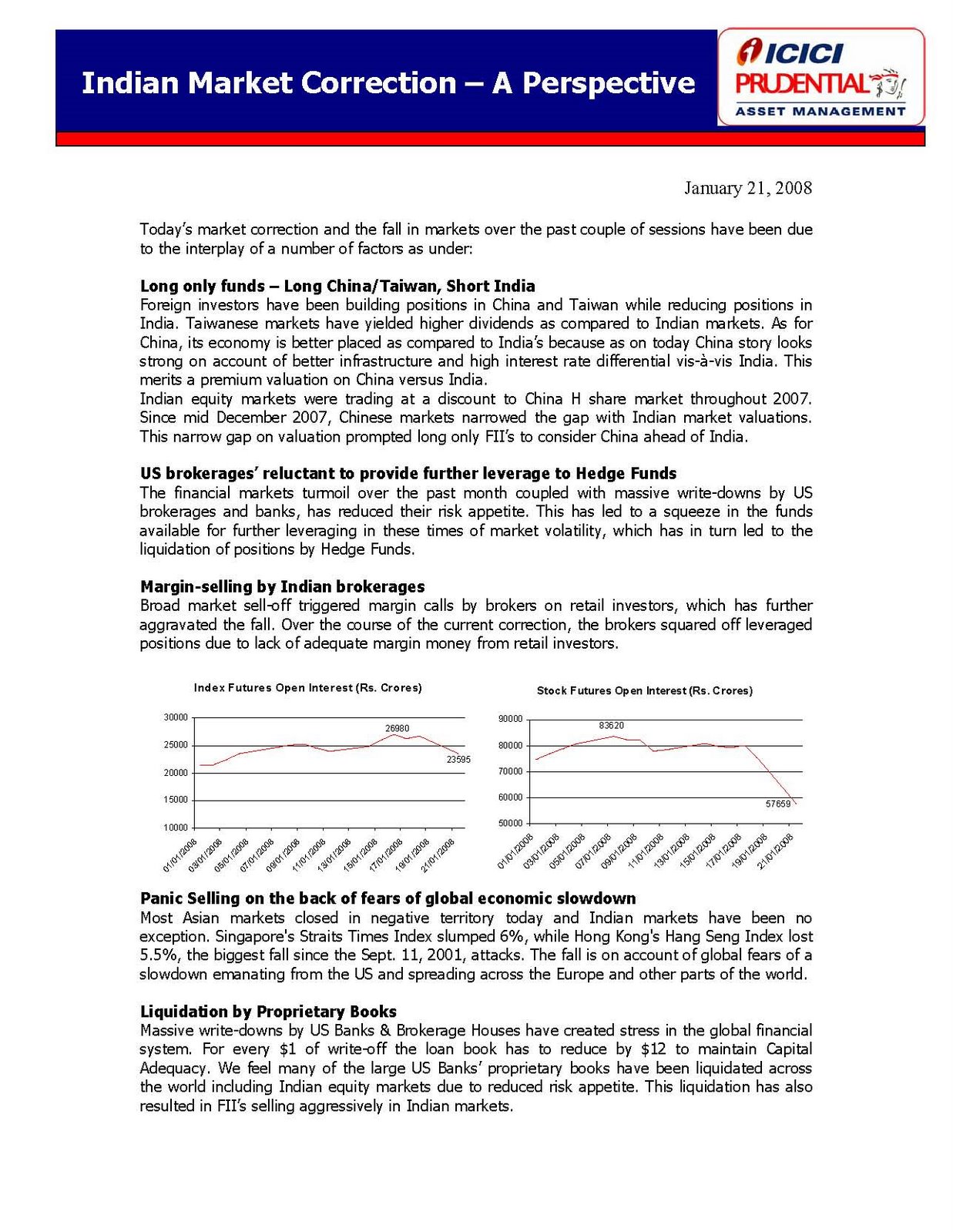
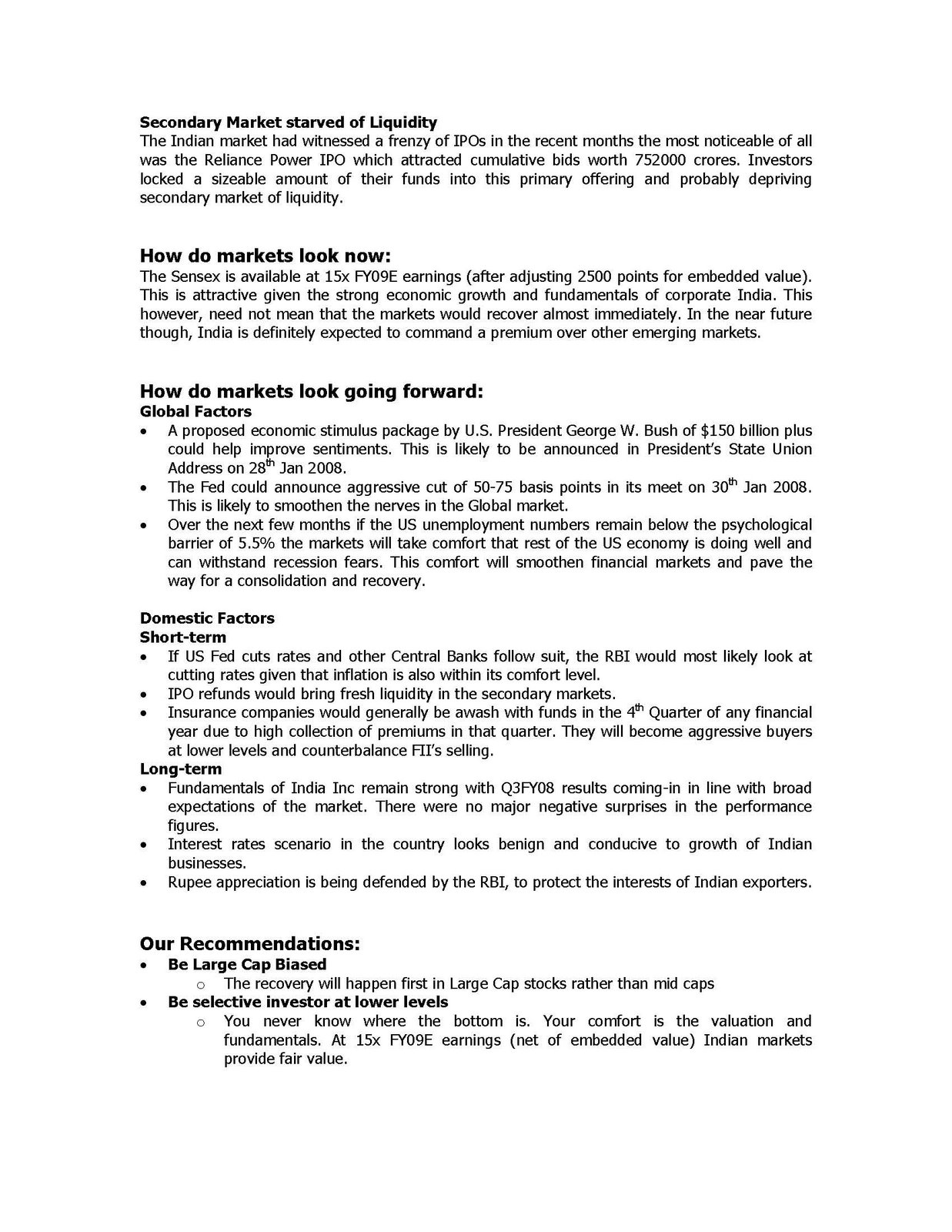
A must read for every investor -Recent Indian Market Volatility
Dear All:
Attached please find a very good report from Prudential AMC which has not
only taken into consideration the domestic factors but also the
international factors that have resulted in the drastic fall in Indian as
well as all global markets.
It is a mail, which each and every investor should read.
One get only one or two such occasions in a year to make entry into the
equity market. This is one golden opportunity. Don’t miss it. The following
Indian as well as Offshore funds are strongly recommended. Please avoid
funds that have exposure to Pharma, IT and FMCG. Concentrate on funds that
are more domestically oriented like Infrastructure Funds, Capex
Opportunities Fund, UTI Infrastructure Fund, ING Domestic Opportunity Fund,
power sector fund and in the Midcap space Reliance Growth Fund.
It will be a great idea to get investors sign up for ING ZIP and choose ING
Domestic Opportunities Fund as it give an investor Daily Rupee Cost
averaging facility. Please don’t ignore this fund any more as responsible
Advisor.
On the offshore front our top recommendation is Prudential IOIF
Infrastructure Fund.
Stay away from SE Asian markets and European markets which may get badly hit
on account US economy slowdown. Our only recommendations beyond the
boundaries of India is Templeton BRIC Fund.
Apart from this recommend Birla Sunlife India Advantage Fund.
Finally, in view of the attractive valuation one of the biggest beneficiary
will be Reliance Natural Resources Fund NFO. The fund is having fresh funds
and it is getting deployed at very attractive valuations. I am sure this
will be on the top of the performance chart 1 year from now. Stocks which
the fund proposes to invest into have got battered and are available at
substantial discount.
With today’s fall the Indian Markets are trading at around 13.5 forward p/e;
which is something no investor can afford to ignore.
Anyone who is weak hearted make he/she may invest in ICICI Prudential FMP
(which is currently on) which can deliver a return of over 15% p.a. with
capital protection at the downside.
With warm regards,
Ramesh Krishnamurthy
Senior Vice President
Barjeel Geojit Securities LLC
Tel: +9714 3555900 Extn 202
Fax:+9714 3555903
Cell: +97150 6244740
Email: ramesh@barjeel.ae


Investors lose trillions; FM says don’t panic
Investors lose trillions;FM says don’t panic
January 22, 2008 11:32 IST
Last Updated: January 22, 2008 13:11 IST
Finance Minister P Chidambaram sought to calm investors panicked by a meltdown of over 2,000 points on Tuesday morning leading to suspension of trading, saying that enough liquidity would be provided to market players.
Investors lost over Rs 6 lakh crore (Rs 6 trillion) within minutes of the opening of the Bombay Stock Exchange on Tuesday.
“I am assured by the Reserve Bank of India [Get Quote] and all the banks that enough liquidity will be provided to brokers and market players. Liquidity will not be an issue,” Chidambaram said.
Ahead to his visit to Davos for participating in the World Economic Forum, Chidambaram exuded confidence that investors would return to market as fundamentals of the economy were strong.
“Worries of western world should not be allowed to overwhelm us… our economy is very different from some economies of developed countries. Our economy is a strong economy and corporate sector is very strong,” he said after the exchange authorities suspended trading within minutes after the bourses witnessed a sharp plunge.
Even after the market opened at 1100 hours, the sentiments were heavily toward sell and within an hour the BSE Sensex was reading down by over 2200 points.
To a query, Chidambaram said there is no ground for sentiments to be negative in the long run as fundamentals of Indian economy are strong.
“We will grow at nine per cent this year. Even Rangarajan Committee (Prime Minister’s Economic Advisory Council) has said we will grow at 8.5 per cent next year,” the finance minister said.
Banks have reported that investments in the economy are running very high as the demand for credit is strong, he said.
“RBI has stated that investment in pipeline is also strong. Fundamentals (of the economy) are very sound. Corporate profits are high and corporate income tax is at an all-time high,” he said.
When asked whether institutions would be advised to buy stocks at this moment, Chidambaram said: “We are not advising institutions to do this or that. Institutions are good judge of what are valuations today.”
However, he said analysts and advisers have advised investors to stay calm. “I am sure investors will take informed and matured decisions and not give any room to unwarranted apprehensions and market rumours,” he added.
In the morning, stock market suspended trading for an hour after the benchmark Sensex hit the lower circuit limit.
Investors lose Rs 6 trillion within minutes of opening
Investors on Tuesday lost over Rs 6 lakh crore (Rs 6 trillion) within minutes of opening of the Bombay Stock Exchange, which was immediately suspended for an hour after the 30-share barometer index, Sensex, hit the circuit limit of 10 per cent.
This loss of Rs 6,54,887.85 crore (Rs 6.548 trillion) comes on top of over Rs 11 trillion loss suffered by investors on the Dalal Street [Get Quote] [Get Quote] in the last six days.
“Small investors should stay away from the markets as of now. Let the market normalise and the volatility reduce,” domestic brokerage firm SMC Global Vice President Rajesh Jain told PTI.
“Better to out when in doubt” he said, adding that there is too much of panic in the markets and it is better to stay away from it.
The Sensex lost 5,251.15 points in last seven trading sessions including today’s early morning trade till suspension, while investors’ wealth — measured in terms of cumulative market capitalisation of all the listed companies — has declined by a whopping Rs 18,40,173.31 crore (Rs 18.401 trillion).
As per information available on the Bombay Stock Exchange Web site, the total market capitalisation stood at Rs 59,53,525.87 crore (Rs 59.535 trillion) at the end of on Monday’s trading against Rs 71,38,810 crore (Rs 71.388 trillion) before bourses began business last week on January 14.
The 30-share barometer tumbled 2,029.05 points to 15,576.30 within minutes of start of trading. The barometer index on Monday lost 1,408 to 17,605.35 points on concerns regarding the US economy going into recession.
 ClicksandWrites
You must be logged in to post a comment.