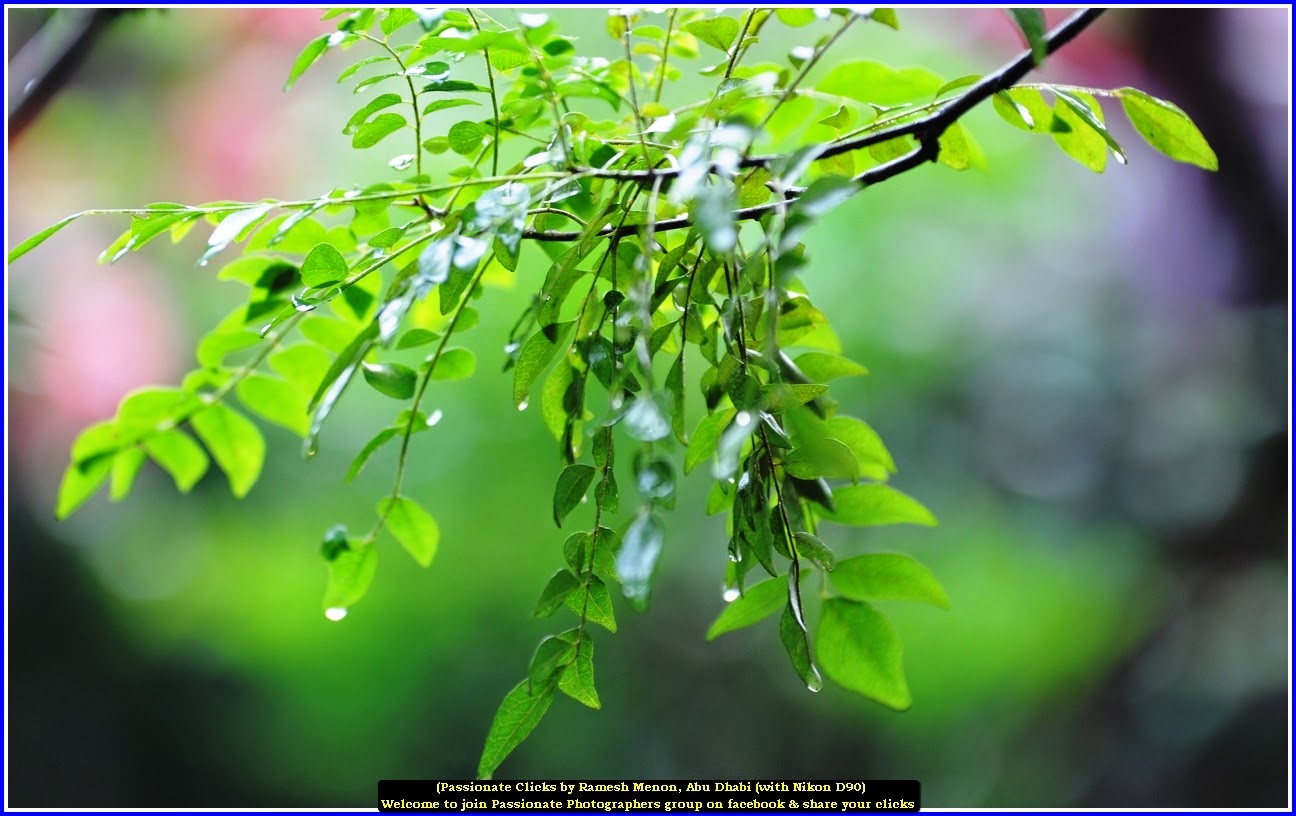
Photo Speaks : Home is where the heart is. A curry tree from Kerala.
Posted on Updated on

Home is where the heart is. A curry tree from Kerala.


The curry tree (Murraya koenigii or Bergera koenigii) is a tropical to sub-tropical tree in the family Rutaceae (the rue family, which includes rue, citrus, and satinwood), which is native to India and Sri Lanka.
Its leaves are used in many dishes in India and neighbouring countries. Often used in curries, the leaves are generally called by the name ‘curry leaves,’ although they are also literally ‘sweet neem leaves’ in most Indian languages (as opposed to ordinary neem leaves which are very bitter and in the family Meliaceae, not Rutaceae).
Description
The small flowers are white and fragrant.
It is a small tree, growing 4–6 m (13–20 feet) tall, with a trunk up to 40 cm (16 in) diameter. The aromatic leaves are pinnate, with 11-21 leaflets, each leaflet 2–4 cm (0.79–1.57 in) long and 1–2 cm (0.39–0.79 in) broad. The plant produces small white flowers which can self-pollinate to produce small shiny-black berries containing a single, large viable seed. Though the berry pulp is edible — with a sweet but medicinal flavor — in general, neither the pulp nor seed are used for culinary purposes.
The species name commemorates the botanist Johann König.
Uses

The leaves are highly valued as seasoning in southern and west-coast Indian cooking, and Sri Lankan cooking ( කරපිංචා), especially in curries, usually fried along with the chopped onion in the first stage of the preparation. They are also used to make thoran, vada, rasam and kadhi. In their fresh form, they have a short shelf life and do not keep well in the refrigerator. They are also available dried, though the aroma is largely inferior.
The leaves of Murraya koenigii are also used as an herb in Ayurvedic medicine. They are believed to possess anti-diabetic properties. [unreliable medical source?]
Although most commonly used in curries, leaves from the curry tree can be used in many other dishes to add flavor. In Cambodia, Khmer toast the leaves in an open flame or roast it until crispy and then crush it into a soured soup dish called Maju Krueng.
In the absence of tulsi leaves, curry leaves are used for rituals and pujas.
Propagation
Seeds must be ripe and fresh to plant; dried or shriveled fruits are not viable. One can plant the whole fruit, but it is best to remove the pulp before planting in potting mix that is kept moist but not wet.
Stem cuttings can be also used for propagation.
Chemical constituents
Girinimbine structure. Some of the primary alkaloids found in the Curry Tree leaves, stems, and seeds are as follows: Mahanimbine, girinimbine, koenimbine, isomahanine, mahanine, Indicolactone, 2-methoxy-3-methyl-carbazole.
A 2011 study of girinimbine, a carbazole alkaloid isolated from this plant, found that it inhibited the growth and induced apoptosis in human hepatocellular carcinoma, HepG2 cells in vitro.

#‎ClicksandWrites #‎PassionatePhotographers
Text source: Wikipedia
Photo by Ramesh Menon, Abu Dhabi

Changing world – Gulf Today – Short Take – Dt 11th April 2015

Posted on Updated on

Changing world
Every morning when I go to office, I see a little girl going to her school. She will be struggling to smile and say good morning as she is yet to awake from her sleep. Her mother will be carrying the bags and bottle and literally carrying her to the waiting bus.
Days went on and suddenly one day as I was going to office, I noticed all the three members of the family together. The girl was in a cheerful mood and said to me, “We are leaving for India!” I thought, they were going for school holidays. Then the father corrected, “No, we are leaving for good.” I felt sad.
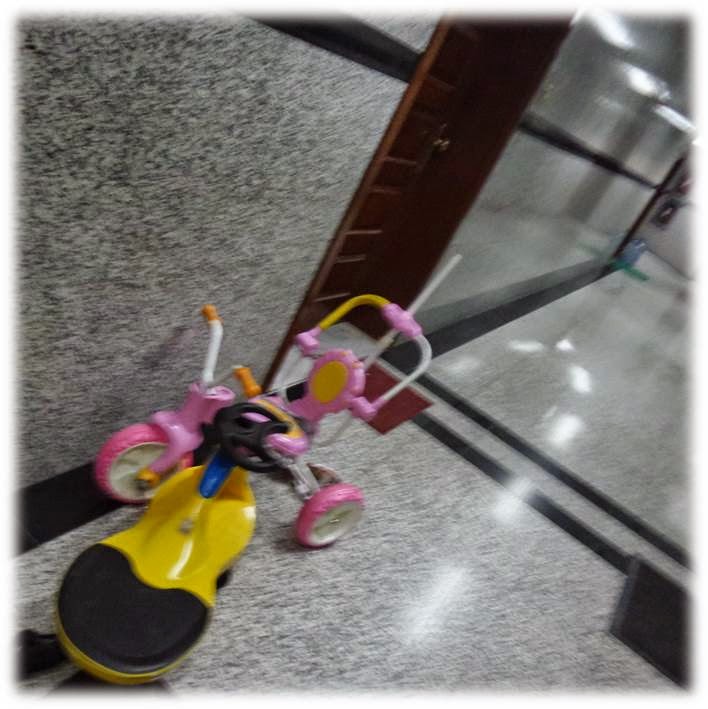
The other day while going to the office, I saw a pair of old tri-cycles at their doorstep. Abandoned and reminding of a childhood that had moved on.
This brought many thoughts in my mind. The modern age children are victims of several circumstances. When I go to my home in Kerala, I get to see the books, toys and many other items I used during my childhood days. Neatly kept and displayed in my room at our home. The fact that parents remained in one place and availability of place and personnel made those items remain intact for years for me to be reminded of my young age.
How many children these days get this privilege? How many parents have time to think about their children and their personal preferences and choices? Even if they do, can they accommodate those demands, if they have a job that makes them move around the world?
Are these the reasons for children becoming non-materialistic and non-emotional? A point to ponder as I wish this little fairy a blessed journey ahead in her home state.
Ramesh Menon

Gulf today – Short Take Dt 11 April 2015
To read it in original, please visit, Gulf Today online.

A pair of tricycles and many points to ponder
Posted on Updated on

Every morning when I go to office, I see a little girl going to her school.  She will be struggling to smile and say good morning as she is yet to awake from her sleep. Her mother will be carrying the bags and bottle and literally carrying her to the waiting bus. Days went on and suddenly one day as I was going to office, I noticed all the three members of the family together. The girl was in a cheerful mood and said to me. The girl said to me uncle, we are leaving for India. I thought, they are going for school holidays. Then the father corrected, no we are leaving for good. I felt sad.

This morning while on to the office, I saw this pair of old tri-cycles at their door steps. Abandoned and reminding of a childhood that had passed away in front of our eyes.

The site brought many thoughts in my mind. The modern age children are victims of several circumstances. When I go to my home in Kerala, I get to see the books, toys and many other items I used during my childhood days. Neatly kept and displayed in my room or many other rooms in my home. The fact that parents remained in one place and availability of place and personnel made those items remain intact for years for me to be reminded of my young age. How many children these days get this privilege? How many parents have time to think about their children and their personal preferences and choices? Even if they do, can they accommodate those demands, if they have a job that makes them move around the world?


Are these the reasons for children becoming non-materialistic and non-emotional? A point to ponder as I wish this little fairy a blessed journey ahead in her home state.

Ramesh Menon, Abu Dhabi
Tuesday, 7th April 2015

About me

Posted on Updated on

About Me

Trying my best to create a family of Positive and Quality minded people. Bringing Creativity in to life and Never give up are the two wheels of my life cycle (it has been revolving and evolving a lot and it will continue too). You may visit my related blogs to watch my small steps towards the above cause.

I believe that all great achievements and success in life, and all changes for the better, have one powerful characteristic in common: The First Step. Take the first step, and the journey has a way of taking care of itself.” This is the motto behind my Team 1 blogs and associated groups intended to promote TQM and Positive Thinking values.

Achievements:

I am an active participant in various HAVE YOUR SAY Programmes happening within UAE and around. This has resulted in winning a few prestigious achievements over the last few years like:

• Distinguished Contributor for Dubai Municipalities Have Your Say Programmes in 2006

• 2nd amongst the Top 10 Contributors for Dubai Municipalities Have Your Say Programmes in 2007.

• Winner – Malayala Manorama Jeevajalam Photography Competition 2009

• Hit 96.7 FM Hit Hero of the Month of June 2009.

• 1st Prize Winner July 2010 for Community Reporting Competition by GULF NEWS.

The report can be read at:

Gulf News Community reports published in July 2010: Winning entry – Spilt fuel can have dire consequences

A Certificate of Appreciation from Sharjah City for Humanitarian Service (SCHS), a non-profit organization located in the United Arab Emirates under the Director Generalship of Sheikha Jameela bint Mohammad Al Qasimi for my contribution in the recently conducted 4th Used Book Fair.

 Participating artist in the Photography Exhibition “Vantage Point Sharjah” by Sharjah Art Foundation, which was inaugurated on 7th September 2013 and will be till 7th December 2013.
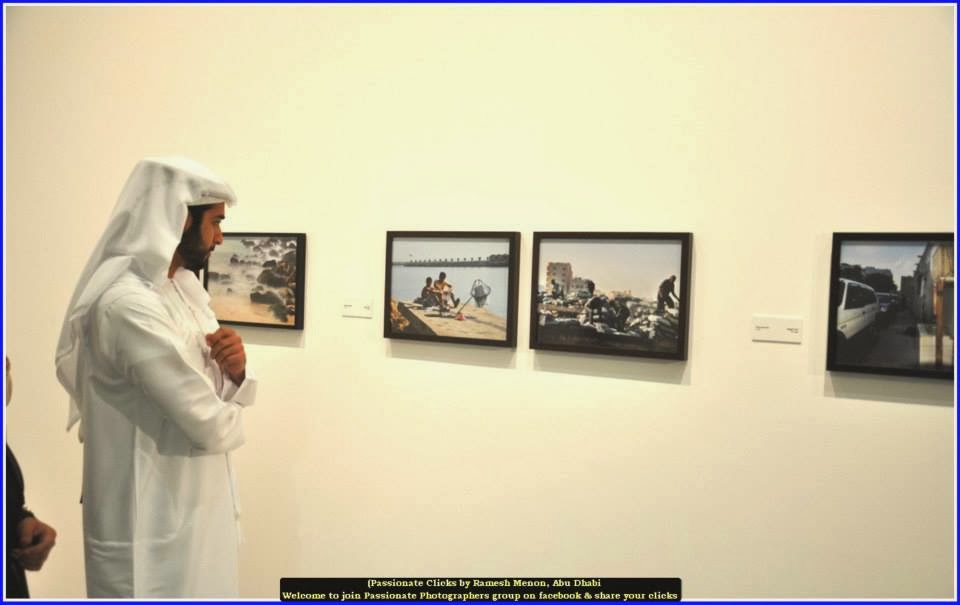
Winner – Gulf News Readers Pictures competition – July 2013.

Participating exhibitor at Venice Architectural Biennale – The National Pavilion of United Arab Emirates. – July 2014

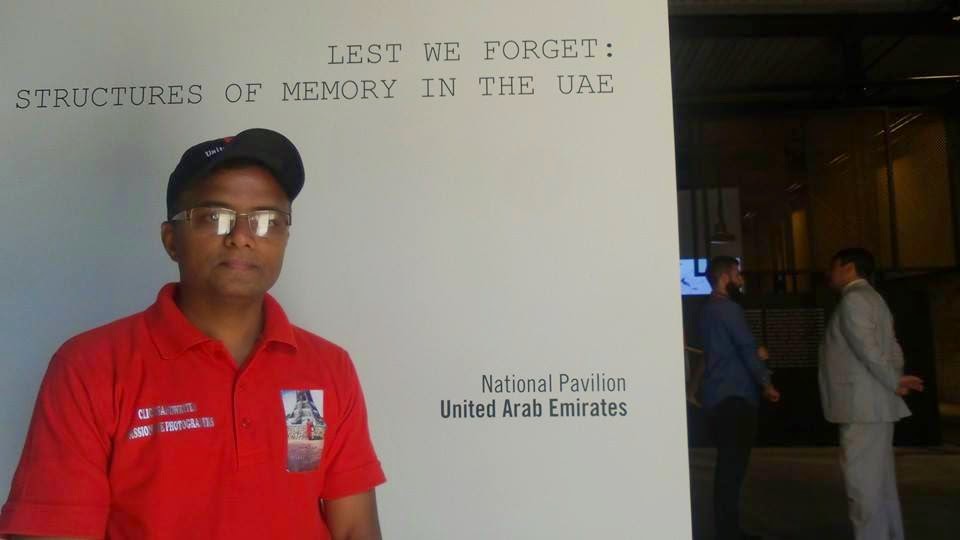
Ministry of Interior Excellence Award for contribution to HSE and Community Issues – January 2015

Please find below a random listing of my creative suggestions which have been accepted/ implemented partially or fully or under discussion by the UAE authorities:

With Dubai RTA/Dubai Municipality


– Introduce speed breakers on public transport vehicles

– Introduce road safety kit in new vehicles

– Introduce Speed Awareness Campaign- by way of training, leaflets etc , on going.

– Initiation of safety training for 15 seater drivers

– Display of contact numbers on 15 seater vans and heavy vehicles

– Digital ID card for school children to monitor arrival and return to school from home using various transport options.

With Abu Dhabi Authorities:

– Abu Dhabi Mall pedestrian signals – Adjust the Pedestrian crossing signal timing in front of Abu Dhabi Mall as it is dangerous for public

– Hygiene hazards – Public trash bins in Hamdan street – create health hazards.

– Close the broken barriers on the prominent street before you fine – accepted by Abu Dhabi Police and the authorities have instructed Municipality to close these broken barriers before they fine the public.

– Introduce a system of giving compulsory training for those who do minor traffic offenses and those who accumulate black points – suggestion partially carried out in Dubai, under study in Abu Dhabi.

– Banning of Heavy vehicles, especially trucks from Salam Street during day time and use alternate road of Sadiyat Island to get in and out of Abu Dhabi town.

– Introduction of Bus Route No. 6 to benefit ISCC Abu Dhabi members and Mina Bird Market users.

– Automatic and moveable LCD Road signs on Abu Dhabi – Dubai high way to give warnings during bad weather conditions and other emergencies.

– Increase the frequency of buses to Ruwais and Al Ain during public holidays and rush hours.

– Introduce Free Wifi spots in all major clubs including ISCC Abu Dhabi

Implemented, Ongoing or under finalisation status:

– Bring back the Volcano Fountain – – most historic monument of Abu Dhabi – got demolished during the recent developments and did not find a place. Suggestion to bring it back and persistent follow up to bring it back in a prominent location on the corniche of Abu Dhabi or its new development has resulted in the formation of a committee to finalise their decision.

– Introduce QUEUE system in bus and taxi stops – ongoing vigorously with all major authorities of Dubai and Abu Dhabi.

– Ban Smoking Corners from front of shoping malls and public places

– Introduce a U-Turn and Signal at Mina Bird Market area to resolve traffic safety issues.

– Bus stop on Electra street requires complete renovation – city image – refer his report in Gulf news.

– Introduction of a special stop for Bus Routes No. 11 and 12 in front of ISCC Abu Dhabi to benefit members and Mina Bird Market users.

– Introduce warning notice at pubs about dangers of drunken driving

– Suggestions to the Ministry of Labour in conjunction with Ministry of Information and Police to utilise the extended summer break to create a Safety and Health Awareness Campaign benefiting the numerous work force who avail this free time.

– Lady drivers for school buses transporting girl students

– Formation of a mandatory committee at schools comprising of Management, Teachers, and parents to monitor and control bullying by students and teachers and also to initiate regular steps for academic improvement.

– Consider special concession to schools, for daily operating items, such as, Telephone, Electricity, Water, followed by discounts on school bus registration fees, staff immigration and naturalisation costs etc.

– Banning of three wheeled electronic cycles from the streets of Abu Dhabi as it creates danger to the rider as well as fellow road users.

– Request for a petrol station at the exit of Mina towards Dubai or somewhere on the new road after the exit from Abu Dhabi city to ease the refuelling difficulties of motorists.

– Call for added participation of organisations, various regional associations and Embassies through public awareness campaigns.

– Call for voluntary participation by Television and Radio media to reach safety related announcements and warnings to reach more public.

– Request to Education Ministry and School authorities should make it a point to create Health, Safety and Environment as a regular topic in the curriculum of children.

– Request to the Department of Transportation and Police authorities to install speed restriction signs and measures on the road towards Mafraq Hospital and also insist Mafraq Hospital authorities to have a circular to their staff educating them not to speed while coming for work, even if they are late.

– Request for modification to the high-tech waste disposal system newly installed in Abu Dhabi city to accommodate easy disposal keeping hygeine issues.

– Request for initiating “Adopt a Zoo Animal” at the Al Ain and Dubai ZOO.

– Request for strict controls and increased Community Policing in Abu Dhabi and other Emirates to eradicate illegal alcohol sales and public drinking.

– Request to start awareness campaign for using mass transport options in UAE to save fuel.

– Request to Central Bank to initiate progressive reforms to control excessive interest charges by banks from customers in UAE.

– Request to start awareness campaign for initiating reading news from print media at schools in UAE.

– Request to increase the frequency of Abu Dhabi bus within city limits during peak travel hours.

– Request to ETISALAT to provide more staff at business centres like Abu Dhabi Mall and also operate a separate counter for corporate customers so that individual customers need not wait for long.

– Request to Sabarimala authorities to modify and improve the Swami Ayyappan road going towards Sabarimala Sannidhanam.

– Request to Sabarimala authorities to improve pilgrimage facilities for the devotees visiting Sabarimala during Mandala Makaravilakku season.

– Request to PET SENSATION, Banglore to urgently install European closet facilities in their Tower for the ease of patients who visit this famous diagnostic centre for specialised test. Currently, the facility has only traditional Indian style closet, which are extremely difficult for patients with Pelvic, Bone problems to use immediately after the scan is done.

– Request to PET SENSATION, Banglore to initiate a combined effort with Banglore City Traffic Police to see that no cars are parked wrongly in front of the hospital as it creates an extremely dangerous situation for pedestrians as they walk passing these cars through the busy street in front.

– Request Abu Dhabi authorities to fix the  walkway in front of Abu Dhabi Mall keeping necessary instructions and maintaining proper hygiene throughout.

– Request Abu Dhabi authorities to restrict children playing cricket and football at the underpasses meant only for pedestrians.

– Request to Department of Transportation Abu Dhabi to install an additional coin slot for male passengers to conveniently enter the bus through the middle door and deposit the coins, instead of the current practise of getting through the front door, insert the coin and then get inside using the middle door during rush hours.

– Request to introduce effective measures to control Property exhibitors to submit and get necessary authorisations from UAE authorities to approvals pertaining the property/design structure and quality of the exhibit before they campaign in the UAE to avoid UAE NRI residents getting cheated.

– Request to Cochin International Airport Authority to create a passenger lounge and special amenitis for passengers

– Request to Kerala Government to initiate the sale of Kerala Government lotteries through special kiosks at shopping malls, railway stations, bus terminals and airports.

– Request to UAE Police authorities to initiate special safety compliance affirmation from road users through written assures to be distributed through petrol stations within the country.

– Request to Bangalore Traffic Police to initiate various road safety measures programme through intensive online participation.

– Request to intoduce online registration process to control crowd at Sabarimala, implemented by Kerala Police for this Sabarimala season starting in November 2011.

– Request to stop using of ropes to block and control flow of crowd in queue at Sabarimala implemented by Kerala Police for this Sabarimala season starting in November 2011.

– Request to utilise clean up activities at Sabarimala in co-ordination with various voluntary organisations implemented by Devaswom Board and Kerala Government  for this Sabarimala season starting in November 2011.

– Request to Kerala Forest Department and Devaswom Board to take good care of the temple elephant of Irinjalakuda Koodalmanikym Temple accepted and prompt actions taken by Minister for Forests, Kerala Government.

Interests:

Writing, Driving, Computer graphics, Photography, Painting, Playing Tabala and other percussion instruments, Swimming, Playing & Coaching Cricket and Football, Cooking, Promoting Arts, Culture & Tradition, Positive Thinking and Total Quality Management.

Favorite Movies

A movie which I dream to create…. Working on it. One day very soon.

Favorite Music

I love music and I like diversity. So from hard rock to classical Indian carnatic and classical western I find it interesting. As a self learner I listen to music and learn the beats of the instruments while I find solace in it.

Favorite Books

I love to read and reads whatever comes on my way. However, How to Win Friends and Influence People by Dale Carneige is precious. I also read Lalita Sahasra Namam book (with meanings) and Sai Sat Charita daily.

Writing Interest:

My interest in Community Journalism urge me to pick up various subjects with interest and my photography and drawing interest complements it with the right photos to give those reports life, meaning resulting it to reach the public with added value. This has also resulted in achieving a more than 60 % of my suggestions to the various Have Your Say programmes to be listened and acted upon in favour by the authorities concerned.

With the above interest, I regularly write and present photographs of interest in letters section and other columns of relevance in the major newspapers like The National, The Gulf News, Khaleej Times, Gulf Today, Malayala Manorama etc and even have an exclusive page dedicated for NRIs at http://www.irinjalakudalive.com a website of my home town.

I promote:

Manzil – a destination, a home, a hope. A highly profession care giving and learning environment for individuals with special needs enabling them to explore their potential to the fullest. Visit http://www.manzil.ae/ to know more about the organisation.

Sharjah City for Humanitarian Services (SCHS) – Sharjah City for Humanitarian Services (SCHS) is a local non-profit organization founded in 1979 as a branch of the Arab Family Organization in the Gulf region, aiming to advance the Arab family and develop the social services it needs. SCHS was authorized under decree number 6/1981 issued by the Government of Sharjah on March 11th, 1981. On October 10, 1995, His Highness Sheikh Dr. Sultan bin Muhammed Al-Qasimi, Member of the Supreme Council and Ruler of Sharjah, issued a decree under edict number 4/1995, declaring SCHS as an independent organization in the Emirate of Sharjah aiming at serving people with disabilities in the UAE.

Visit http://www.schs.ae/ to know more about Sharjah City for Humanitarian Services.

Team 1 Talent Share Fan page and Passionate Photographers group.

Team 1 Talent Share blog and fan page is dedicated to promote non-performing and performing art forms amongst children and adults. A Talent or Knowledge within you is to be shared is the motto of it.

Passionate Photographers group on Face book is created and dedicated to promote those who are passionate in photography to click and exhibit more. Every photo clicked is a history. You will never be able to re-create that precious moment. I consider photography as the best tool to promote positive thinking values because you never click an object with a negative output in mind. You are free to upload photos as you passionately take them in your daily life.

My blogs and groups are listed in this blog page and profile.

I also list below some of my favorite blog posts and links for your easy access and reference:

Shiva Sakthi Collections – a series of art work presentations done by me:

http://www.clicksandwrites.blogspot.com/2009/07/shiva-and-sakthi-collections.html

My presentations at Team 1 Talent Share blog:

http://team1talentshare.blogspot.com/search/label/Ramesh%20Menon

Navarathri greetings:

http://www.clicksandwrites.blogspot.com/2009/09/nava-rathri-greetings-amme-narayana.html

My video contributions:

http://www.clicksandwrites.blogspot.com/search/label/My%20videos

My contacts:

E-mail: team1dubai@gmail.com

Phone: 00 971 50 81 22 319

My blog: http://www.clicksandwrites.blogspot.com/

Partial Update on: 05/02/2015

Feel at home with Breadfruit
Posted on Updated on

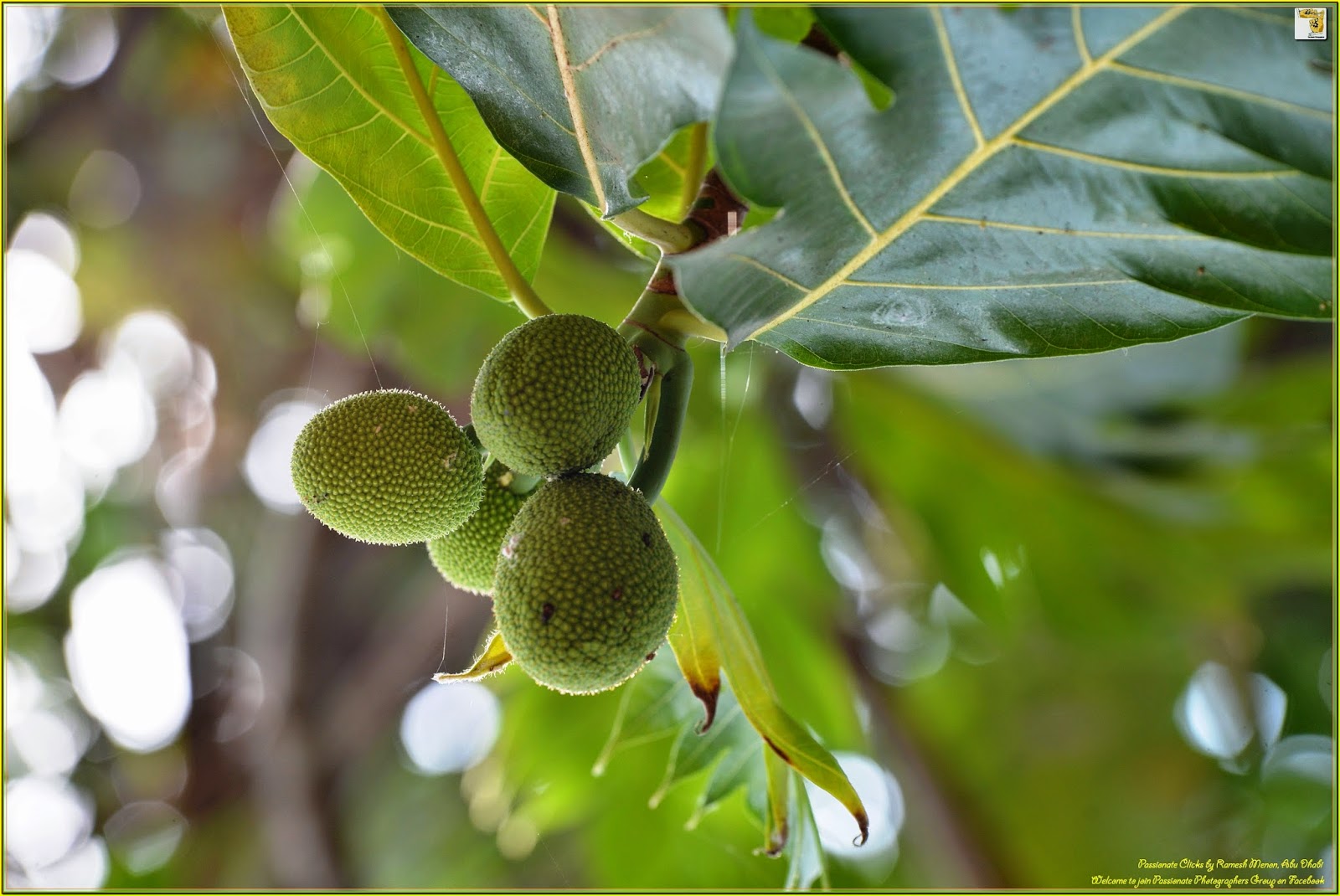
Feel at home with Breadfruit.


Breadfruit (Artocarpus altilis) is a species of flowering tree in the mulberry family, Moraceae originating in the South Pacific and that was eventually spread to the rest of Oceania. British and French navigators introduced a few Polynesian seedless varieties to Caribbean islands during the late 18th century and today it is grown in some 90 countries throughout South and Southeast Asia, the Pacific Ocean, the Caribbean, Central America and Africa. Its name is derived from the texture of the cooked moderately ripe fruit, which has a potato-like flavor, similar to freshly baked bread.
Ancestors of the Polynesians found the trees growing in the northwest New Guinea area around 3,500 years ago. They gave up the rice cultivation they had brought with them from Taiwan, and raised breadfruit wherever they went in the Pacific (except Easter Island and New Zealand, which are too cold). Their ancient eastern Indonesian cousins spread the plant west and north through insular and coastal Southeast Asia. It has, in historical times, also been widely planted in tropical regions elsewhere.
Breadfruit trees grow to a height of 25 m (82 ft). The large and thick leaves are deeply cut into pinnate lobes. All parts of the tree yieldlatex, a milky juice, which is useful for boat caulking.
The trees are monoecious, with male and female flowers growing on the same tree. The male flowers emerge first, followed shortly afterward by the female flowers, which grow into capitula, which are capable of pollination just three days later. The compound, false fruit develops from the swollen perianth, and originates from 1,500-2,000 flowers. These are visible on the skin of the fruit as hexagon-like disks.
Breadfruit is one of the highest-yielding food plants, with a single tree producing up to 200 or more grapefruit-sized fruits per season, and only requires very limited care. In the South Pacific, the trees yield 50 to 150 fruits per year. In southern India, normal production is 150 to 200 fruits annually. Productivity varies between wet and dry areas. In the Caribbean, a conservative estimate is 25 fruits per tree. Studies in Barbados indicate a reasonable potential of 16 to 32 tons per hectare (6.7-13.4 tons/acre). The ovoid fruit has a rough surface, and each fruit is divided into manyachenes, each achene surrounded by a fleshy perianth and growing on a fleshy receptacle. Most selectively bred cultivars have seedless fruit.
The breadfruit is closely related to the breadnut, from which it might have been selected, and to the jackfruit.
Uses
Breadfruit is a staple food in many tropical regions. The trees were first propagated far outside their native range by Polynesian voyagers who transported root cuttings and air-layered plants over long ocean distances. Breadfruit are very rich in starch, and before being eaten, they are roasted, baked, fried or boiled. When cooked, the taste of moderately ripe breadfruit is described as potato-like, or similar to freshly baked bread. Very ripe breadfruit becomes sweet, as the starch converts to sugar.
The fruit of the breadfruit tree – whole, sliced lengthwise and in cross-section
Because breadfruit trees usually produce large crops at certain times of the year, preservation of the harvested fruit is an issue. One traditional preservation technique is to bury peeled and washed fruits in a leaf-lined pit where they ferment over several weeks and produce a sour, sticky paste. So stored, the product may last a year or more, and some pits are reported to have produced edible contents more than 20 years later. Fermented breadfruit mash goes by many names such as mahr, ma, masi, furo, and bwiru, among others.
Most breadfruit varieties also produce a small number of fruits throughout the year, so fresh breadfruit is always available, but somewhat rare when not in season.
Breadfruit can be eaten once cooked, or can be further processed into a variety of other foods. A common product is a mixture of cooked or fermented breadfruit mash mixed with coconut milk and baked in banana leaves. Whole fruits can be cooked in an open fire, then cored and filled with other foods, such as coconut milk, sugar and butter, cooked meats, or other fruits. The filled fruit can be further cooked so the flavor of the filling permeates the flesh of the breadfruit.
The Hawaiian staple food called poi, made of mashed taro root, is easily substituted for, or augmented with, mashed breadfruit. The resulting “breadfruit poi” is called poi ʻulu. In Puerto Rico, breadfruit is called panapen or pana, for short and in some in-land regions it’s also called mapén.Pana is often served boiled with a mixture of sauteed bacalao (salted cod fish), olive oil and onions. It is also served as tostones or mofongo. In the Dominican Republic, it is known by the name buen pan or “good bread”. Breadfruit is also found in Indonesia and Malaysia, where it is called sukun. In the South Indian state of Kerala and coastalKarnataka, especially on the sides of Mangalore, where it is widely grown and cooked, it is known as kada chakka or seema chakka and deegujje, respectively. In Belize, the Mayan people call it masapan.
A polished basalt breadfruit pounder used by the Tahitian people of French Polynesia. From the Honolulu Academy of Arts collection.
Breadfruit is roughly 25% carbohydrates and 70% water. It has an average amount of vitamin C (20 mg/100 g), small amounts of minerals (potassium and zinc) and thiamin(100 μg/100 g).
Breadfruit was widely and diversely used among Pacific Islanders. Its lightweight wood (specific gravity of 0.27) is resistant to termites and shipworms, so is used as timber for structures and outrigger canoes. Its wood pulp can also be used to make paper, called breadfruit tapa. It is also used in traditional medicine to treat illnesses that range from sore eyes to sciatica. Native Hawaiians used its sticky latex to trap birds, whose feathers were made into cloaks.

In a 2012 research study published in the Journal of Agricultural and Food Chemistry, scientists at the Agricultural Research Service (ARS), a division of the USDA, and collaborators at the University of British Columbia in Okanagan, Canada, “identified three breadfruit compounds — capric, undecanoic and lauric acids — that act as insect repellents.” These saturated fatty acids were “found to be significantly more effective at repelling mosquitoes than DEET. 

Text courtesy: Wikipedia
Photo by: Ramesh Menon, Abu Dhabi

Family values – Gulf Today – Short Take Dt 28 March 2015

Posted on

Family values
The trend these days is to have a dedicated day to remember someone or something special. So we have a day for water, earth, father, mother etc.
Looking at each one of them and the current upbringing style of children makes me really worried.
Are we becoming fully dependent on these dedications to remember our duty and commitment to all these beneficiaries?
Let us take the example of water. In the early days, it was passed on to children from a young age that water is precious and to be preserved in all possible ways. Likewise the affection of mother. It is perennial. Whatever be our actions towards them, their love and care will continue to follow till the end.
Then comes the important lady in the life of a married man: Wife. The culture and tradition is different among many, but the duty remains the same globally. After marriage, there is always a sense of togetherness in everything one does. If not there, it should be that way.
In many cases these days both husband and wife are working. Activities are in plenty for those who want to socialise around. However, share the duties together, give as much time for each other as possible. Show affection and continue to promote and pamper each other with a sustained interest.
It is a special feeling. The affection and care after your mother, only your wife can give. She is the best person who can judge your best and worst days in advance. Only she will have the patience to adjust the environment according to your mood syndromes.
I am thankful to God for giving me a loving wife. No special day is required to promote her as every day is special. I am sure it is vice versa. That has been the case with my parents too. It is a special feeling when I see that they are nearing the golden jubilee of their married life.

Let love, affection and family values prosper worldwide without the need for any special days or dedications.

Up, Close and Personal with a Squirrel
Posted on Updated on

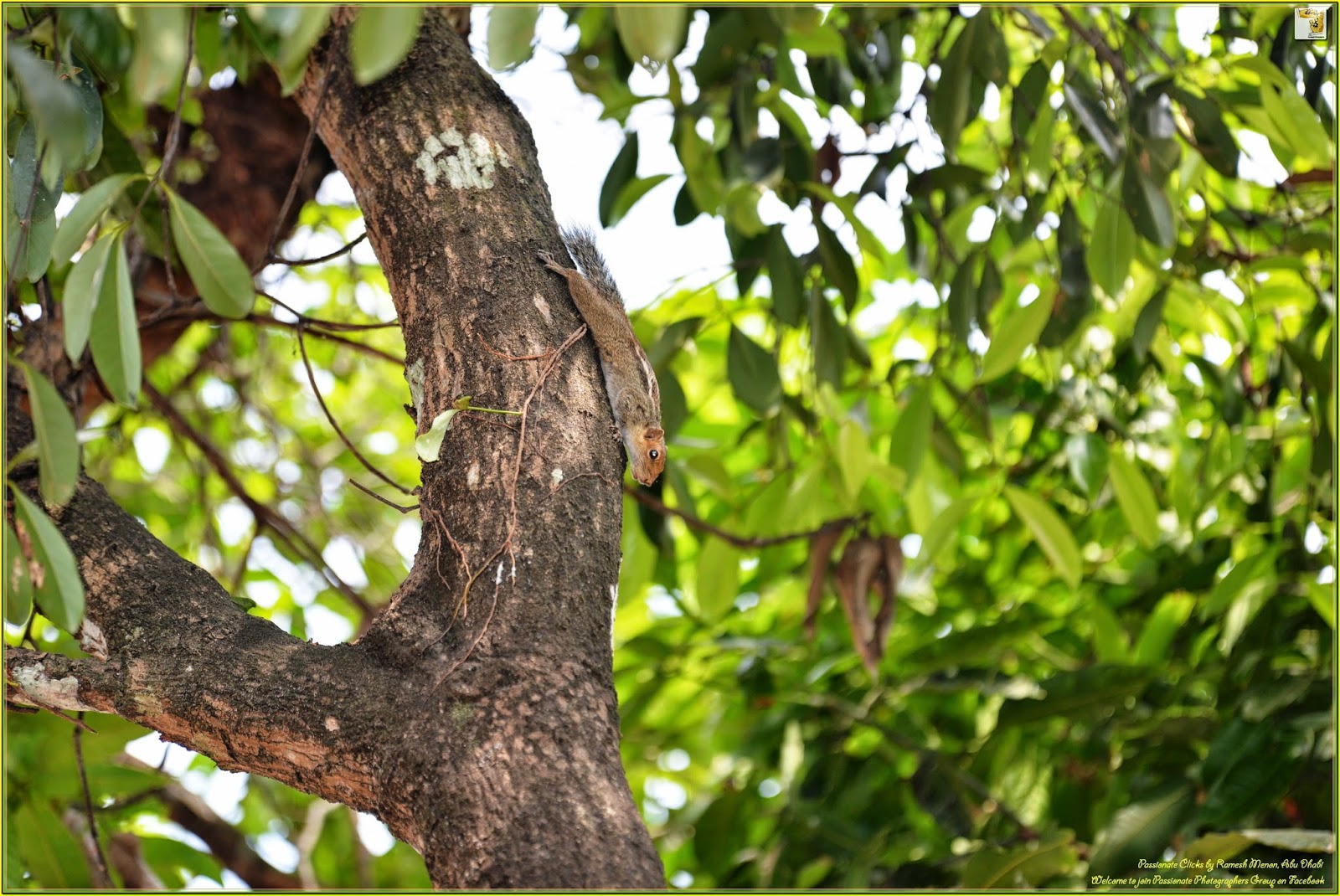
Squirrels are members of the family Sciuridae, consisting of small or medium-size rodents.
Squirrels are generally small animals, ranging in size from the African pygmy squirrel at 7–10 cm (2.8–3.9 in) in length and just 10 g (0.35 oz) in weight, to the Alpine marmot, which is 53–73 cm (21–29 in) long and weighs from 5 to 8 kg (11 to 18 lb). Squirrels typically have slender bodies with bushy tails and large eyes. In general, their fur is soft and silky, although much thicker in some species than others. The color of squirrels is highly variable between—and often even within—species.
In general, the hind limbs are longer than the fore limbs, and they have four or five toes on each paw. Their paws include an often poorly developed thumb, and have soft pads on the undersides. Unlike most mammals, Tree squirrels can descend a tree head-first. They do so by rotating their ankles 180 degrees so the hind paws are backward-pointing and can grip the tree bark.
Squirrels live in almost every habitat from tropical rainforest to semiarid desert, avoiding only the high polar regions and the driest of deserts. They are predominantly herbivorous, subsisting on seeds and nuts, but many will eat insects and even small vertebrates.
As their large eyes indicate, in general squirrels have an excellent sense of vision, which is especially important for tree-dwelling species. They also have very versatile and sturdy claws for grasping and climbing. Many also have a good sense of touch, with vibrissae on their heads and limbs.
Most squirrels die in the first year of life. Adult squirrels can have a lifespan of 5 to 10 years in the wild. Some can survive 10 to 20 years in captivity.
Behavior
Squirrels breed once or twice a year and give birth to a varying number of young after three to six weeks, depending on species. The young are born naked, toothless, and blind. In most species of squirrel, only the female looks after the young, which are weaned at around six to ten weeks of age and become sexually mature at the end of their first year. In general, ground-dwelling species are social animals, often living in well-developed colonies, but the tree-dwelling species are more solitary.
Feeding

Squirrels cannot digest cellulose, so they must rely on foods rich in protein, carbohydrates, and fats. In temperate regions, early spring is the hardest time of year for squirrels, because buried nuts begin to sprout and are no longer available for the squirrel to eat, and new food sources have not become available yet. During these times, squirrels rely heavily on the buds of trees. Squirrels’ diets consist primarily of a wide variety of plants, including nuts, seeds, conifer cones, fruits, fungi, and green vegetation. However, some squirrels also consume meat, especially when faced with hunger. Squirrels have been known to eat insects, eggs, small birds, young snakes, and smaller rodents. Indeed, some tropical species have shifted almost entirely to a diet of insects.

Text source : Wikipedia
Photo by: Ramesh Menon, Abu Dhabi

Hibiscus rosa-sinensis – a flower with full of medicinal values

Posted on Updated on

Hibiscus rosa-sinensis is a bushy, evergreen shrub or small tree growing 2.5–5 m (8–16 ft) tall and 1.5–3 m (5–10 ft) wide, with glossy leaves and solitary, brilliant red flowers in summer and autumn. The 5-petaled flowers are 10 cm (4 in) in diameter, with prominent orange-tipped red anthers.
National symbol
Hibiscus rosa-sinensis is the national flower of Malaysia, called Bunga Raya in Malay. Introduced into the Malay Peninsula in the 12th century, it was nominated as the national flower in the year 1958 by the Ministry of Agriculture amongst a few other flowers, namely ylang ylang, jasmine, lotus, rose, magnolia, and medlar. On 28 July 1960, it was declared by the government of Malaysia that Hibiscus rosa-sinensis would be the national flower.
The word bunga in Malay means “flower”, while raya in Malay means “celebratory” or “grand”. The Hibiscus rosa-sinensis is literally known as the “celebratory flower” in Malay. The red of the petals symbolizes the courage, life, and rapid growth of the Malaysian, and the five petals represent the five Rukun Negara of Malaysia. The flower can be found imprinted on the notes and coins of the Malaysian ringgit.
Uses
The flowers of Hibiscus rosa-sinensis are edible and are used in salads in the Pacific Islands.[citation needed] The flower is additionally used in hair care as a preparation. It is also used to shine shoes in certain parts of India. It can also be used as a pH indicator. When used, the flower turns acidic solutions to a dark pink or magenta color and basic solutions to green. It is also used for the worship of Devi, and the red variety is especially prominent, having an important part in tantra. In Indonesia, these flowers are called “kembang sepatu”, which literally means “shoe flower”.
Hibiscus rosa-sinensis is considered to have a number of medical uses in Chinese herbology. It may have some potential in cosmetic skin care; for example, an extract from the flowers of Hibiscus rosa-sinensis has been shown to function as an anti-solar agent by absorbing ultraviolet radiation.
Medicinal uses
The chemicals in hibiscus flower helps in growth of hair. It reduces dandruff and makes the hair black.
The natural oil in this flower acts as a good conditioner
This flower can be used as natural dye for hair
The oil in this flower can be applied to the skin of patients who are suffering from cellulite which makes the skin to glow
The ash obtained by burning the flower and leaves of this flower can be applied to eyebrows which glazes them black
This flower can be used as shoe polish by rubbing it on the shoe
Hibiscus flower can be used as contraceptive. The oil from this flower is used for abortion in some tribes in Jamaica.
Jamaicans use this flower in herbal tea as it contains many minerals and vitamins
The juice from these leaves and flowers can regularize the menstrual cycle
Ayurveda says the medicine made from its roots can be used as a prevention of venereal diseases.
According to traditional medicine if we eat the buds of white hibiscus flowers early in the morning on empty stomach it should cure all the diseases. We can mix sugar if we are unable to eat directly.
This flower improves digestion. Hence raw flowers are eaten by Hawaiian people, and Chinese eat this flower by making pickle.
The fiber from this stem is qualitative. This can be used in manufacturing of clothes, nets and paper.
The roots of hibiscus are boiled in oil until the water gets evaporated. Then the oil can be applied to the wounds caused by cancer. This can be very useful in initial stage of cancer.
According to the traditional medicine, the flowers of white Hibiscus can be dried in the shade of neem tree. Then they can be powdered and it can be used to fight all cancers.
According to Ayurveda it is good for increasing blood count among anemic people. The bright Red variety that is commonly found in tropical countries is supposed to be the best . The flowers are boiled in a little water and blended in a mixer with roasted cummin seeds and salt and consumed after diluting it to the required level ,for increasing the quantity of hemoglobin .
The flower is also used for hair care. The leaves and flowers are added to hot coconut oil and slowly heated for a few minutes , after which the oil is completely cooled and filtered. The Oil is then stored in bottles and used to apply to the hair . The oil should be massaged into the hair and left for an hour or two after which it can be washed with a shampoo. This treatment when done regularly has been proved to be  very helpful in stopping hair loss and promoting new hair growth.
Hibiscus is famous for its ability to improve hair. Hibiscus when applied to hair promotes hair growth and gives black color to hair. The beautiful flower of the hibiscus plant should be rubbed against head and hair and washed off after 15 minutes. Hibiscus would cool head and promotes hair growth. 
Hibiscus would also prevent hair graying. Applying hibiscus regularly would ensure good health for hair. In Kerala women regularly apply hibiscus flower (chembarathi poovu) and leaves on hair. Kerala women are traditionally having long beautiful hair. Hibiscus is the secret behind the long beautiful hair of Kerala women. Hibiscus flowers are used to prepare oil that promoted hair growth. 
Hibiscus flowers should be cut into small pieces and boiled with oil. Boil till the flowers are cooked in oil. This oil has great medicinal value. This oil would cool head and eliminate headache. It would prevent graying and ensure hair growth. Hibiscus oil also fights off dandruff in hair. If you experience hair loss, dandruff or baldness you can try hibiscus. Hibiscus flowers should be applied on hair (paste of hibiscus flower). Hibiscus can fight skin infections also. Allying hibiscus on hair would clear off any skin infections. Rubbing hibiscus flower paste on skin infections would also be good.
Hibiscus leaves is the best natural shampoo. In Kerala women use hibiscus leaves as shampoo. Hibiscus leaves should be grind and applied on hair. This would thoroughly clean your hair. Using hibiscus shampoo also promotes hair growth.
Hibiscus for weight loss, mouth ulcer, heart problem, constipation and hypertension
Hibiscus (chembarathi chaya in malayalam) decoction helps lose weight. Regular usage is found to help shed weight. Hibiscus flowers is a home remedy for canker sores or mouth ulcers. Apply paste of hibiscus flowers on canker sores. It will be healed soon. Eating hibiscus flowers is found to be strengthening body’s circulatory system. People with high cholesterol and heart problems would be benefitted by hibiscus flowers. Boiling hibiscus flowers in water and drinking this water would be beneficial. Hibiscus is rich in vitamin C. Consuming hibiscus decoction would prevent cold and fever. Being rich with vitamin C hibiscus would boost the immune system. Drinking hibiscus decoction is found to be benefitting hypertension patients also. Hibiscus can refresh people by lessening the feeling of stress.

In India certain varieties of Hibiscus flowers are used for cooking. Hibiscus is supposed to contain some vital nutrients that are essential for the body and in the southern parts of India it is regularly used in cooking.

Text source: Various online sites including Wikipedia
Photo: Ramesh Menon, Abu Dhabi

Wolrd Water Day 2015

Posted on Updated on

World Water Day 2015 – 22nd March 2015
This is one of the winning entries of Malayala Manorama Jeevajalam Photography Competition 2009 – a photo taken by me at Athirappally Waterfalls, Chalakudy Kerala.

To know more about WORLD WATER DAY, please visit 
http://www.unwater.org/worldwaterday — atAthirappilly WATER FALLS.