The god of smallest things
The god of smallest things
7 Sep, 2007, 0214 hrs IST, By Mukul Sharma /ECONOMIC TIMES
I write this as I lie almost totally incapacitated in bed with a virus infection that’s turned out to be so virulent that I have no choice but to marvel at the miracle of the infinitesimally small.
I’m continuously thinking of my own suffering here when actually millions of these creatures are either being created every second somewhere inside my body, or dying there without a trace of ambition. I don’t know these creatures.
They don’t know me either. The “me” that resides as my personality and is sometimes supposed to be unique in the grand scheme of things, makes absolutely no difference to them whatsoever. For some reason, apparently they have a job to do — just like a plumber, politician or rock drummer does.
Nor do I know my immune system. My white blood cells have a job to do too which they go about doing without a “by your leave” or permission granted by me — exactly as if I didn’t exist at all for all they cared. You sometimes think: are they concerned only about their own existence or what — a la the selfish gene? But then, luckily, I’m comforted by the thought that they don’t have the capacity to think along those lines.
In other words, I also have my work cut out for me. When I’m infected, I suffer and wait impatiently, and often unfairly, for parts of me to get rid of parts that were never intended to be me. Ultimately, I’m glad all three of us manage this exquisite ménage remarkably well.
Does this mean that at some deeper level our dependency and symbiotic relationship with one another has to be more than just an amazing feat of coincidence? Or is it perhaps merely evolutionary mechanics which has no “goal” as such but only thrives on each doing the best for itself?
So I’m thinking now, what if a virus could indeed think. In order to make some sense of a human body it incarnates in from time to time, it might well say to itself: “I came into this body-world to procreate and multiply, only to find forces of hostility and evil committed towards my destruction.
All odds are stacked against me. Yet what am I doing wrong here? Is there no fairness, or is this world only a mindless creation of chance encounters between atoms which have no regard for the fact that I exist as a thinking being who can question its impetus and inspiration? If there’s a God it definitely doesn’t reside in this little universe. Why would there be so much evil around otherwise? Maybe when I die, I go to a far, far better place than I’ve ever been before.”
Enoc appoints new chief executive to oversee future growth strategy

Enoc appoints new chief executive to oversee future growth strategy
Staff Report GULF NEWS Published: September 10, 2007, 00:16
Dubai: Emirates National Oil Company (Enoc) yesterday announced the appointment of Saeed Khoury as group chief executive designate.
Hussain M. Sultan, Enoc group chief executive, said, “Saeed Khoury is a proven expert in the oil and gas industry with 28 years of solid experience in the UAE. I am delighted to welcome him to a new strategic role that will drive Enoc’s future growth and help us maintain our leadership position.”
Khoury joins Enoc from Abu Dhabi National Oil Company (Adnoc) where he was assistant general manager, technical. He has also served as a board member in a number of oil and gas service companies.
Established in 1993 as a wholly-owned company of the government of Dubai, Enoc aims to promote the interests of its shareholders through the development of further downstream and upstream activities in the oil and gas sector and beyond and to encourage the economic diversification of Dubai and the rest of the UAE.
Enoc’s joint ventures with major international companies allow partners to pool their technology, know-how and expertise along with resources to further commercial success.
When you converse at a personal level
When you converse at a personal level
B.S. WARRIER for HINDU
Personal conversation accounts for a substantial part of our daily communication. Here are ways of making it effective and result-oriented.
“Unless one is a genius, it is best to aim at being intelligible.” – Anthony Hope (1863-1933), British novelist
In personal conversation you have to take care of many things. An expert in interpersonal communication advises that you should be TACTFUL in conversation. What he suggests is the following;
T – Think before you speak
A – Apologise quickly when you commit a blunder
C – Converse, don’t compete
T – Time your comments
F – Focus on behaviour,not personality
U – Uncover hidden feelings
L – Listen for feedback
In strange company, it is good manners to introduce yourself to others, since that would not leave them guessing who you are. So also, you may greet others first; this shows that you are not plagued by ego feelings. It is most likely that you do get a favourable response.
There is no harm in asking a person’s name if you do not know it. After knowing the name, repeat it during the conversation. The sweetest word for anyone is his/her name. Try to remember the names of people whom you would meet again. Be liberal in showering praise, if you feel someone deserves it.
Intellectual curiosity
When ideas are discussed, you should not give an impression that you are too conventional to accept a new idea. Intellectual curiosity will be appreciated in cultured groups. Conversation would sour if you enter into arguments on trifles.
Never try to offer unsolicited advice. Though it is not advisable to bore others by narrating dull events in your life, you need not feel shy in sharing your interesting experiences if the occasion demands. Keep your general awareness up to date, if you want to partake actively in an interesting conversation. You would be able to switch to new subjects when a subject has run out of steam.
Maintain a balanced outlook. Extreme positions may lead to controversial remarks that may mar smooth dialogue among the members of a normal group. Do not go after any contentious issue, unless it is unavoidable. Be tolerant to differing views. Never be dogmatic. Be a good listener. In personal conversation humour has a place, though it should not jar, given a situation. If you are not gifted with the fine art of making humorous conversation, do not attempt it.
Body language
You may encourage others to speak by paraphrasing their statements for confirmation and through pleasing body language, including facial expression. Never try to be another person through your language or gestures. People who speak in a natural way are liked by others. Do not try to put on airs. You cannot wear a mask for a long time; you are likely to be exposed. Eye contact and a pleasant smile would add spice to your words. Find areas of common interest during conversation. You can ask questions on subjects that are of interest to the other person, when you are in a one-to-one mode. Everyone likes to speak on areas in which he is well versed. Enjoy the conversation, and show that you are enjoying it. Be enthusiastic.
You should never adopt a stance of arrogance, since none would like to communicate with such a person. Never be rude. Never assume a patronising attitude. But you should not surrender your self-esteem. Avoid insinuation. Show patience; never try to be unduly smart before others. You have to display empathy by entering into the other person’s world of thought, and trying to think the way he thinks.
You can ask leading questions to confirm your interest in his conversation. Questions seeking clarification are generally welcomed by people. Confessing your own weakness would generate sympathy and keenness in the other person and prompt him to listen to you further.
Key to success
Any communication succeeds only when it has been received, understood, accepted, and the intended action has been effected. If such a success has to be achieved, there are several measures we should follow in the process of communication. Ideas and the words that carry them are certainly important. But you should realise that your voice, tone, appearance, and body language are also equally important in oral communication.
Making a presentation
If you intend to make a presentation, not only the structure but the content, logic, and main phrases have to be planned. The right strategies for effective presentation have to be followed. These include:
•Getting over nervousness
•Wearing proper dress
•Proper body language
•Speaking with clarity
•Not reading from a prepared text
•Stating your objective in the beginning
•Following a logical order in presenting ideas
•Choosing the right mode for each item (for example, statistical trends to be displayed through graphs, histograms, pie diagrams, etc.)
•Using charts or computer software such as the PowerPoint or Flash
•Avoiding cluttered display on the screen
•Ensuring that your voice can be heard and the projection seen well
•Synchronising spoken words with gestures
•Not keeping a projected slide on the screen for too long a duration
•Avoiding mannerisms
•Ensuring voice modulation
•Keeping eye contact
•Adopting the language to suit the comprehension level of the audience
•Maintaining appropriate speed of delivery
•Keeping consistency in logic
•Using controlled humour
•Avoiding frequent corrections during speech
•Emphasising significant points
•Interacting effectively with the audience
•Watching the body language of the listeners and making changes in style, if necessary
•Listening carefully to questions from the audience
•Handling of tricky questions wisely
•Not talking beyond the permitted duration
•Giving a summary at the end
It is easily said that you should look at the type of your listeners before choosing your language. But the characteristics of a group are not susceptible to generalisation. Suppose you are addressing a group of rural farmers. All of them may not be the same, in the matter of information or perception. There would be individuals who are much more informed than many others in the group. There may be persons who are far below the general level of awareness. Perhaps in such situations, one strategy that can be adopted is to address the average among the group. This is the style that is followed by good teachers in a classroom comprising a heterogeneous group of pupils, so that the very bright do not get bored and the underachievers do not feel left out.
Persuasion
You are often faced with the problem of convincing others of your standpoints. You might have observed that most of the time, politicians are engaged in this exercise. Marketing professionals and businessmen have to be good in this kind of communication. What are the aspects to be kept in mind when you attempt to convince others on some point or other?
First and foremost you should find out what type of person is your target – on the bases of educational background, culture, language comprehension, age, sex, attitude, and so on. You should ensure that the person listens to you when you speak. If the mood is not proper, you have to generate an appropriate atmosphere congenial to effective listening. The person should be in a listening mood throughout.
What you say should have the qualities or clarity and accuracy. You should plan beforehand your strategy of presentation. You have to be enthusiastic. You have to be confident. You should continuously watch the listener’s expression and body language, and make sure that the person is not emotional when you try to apply logic through your words.
In any persuasive talk, you will have to emphasise the significant points of interest to the listener. Your logic has to be convincing. Use illustrations. Be consistent. If the listener wants to raise a question, make him fell free to do so, thereby making way for smooth exchange of ideas. Make him feel important. If there is a problem to be settled through negotiation, split it into parts and identify portions of agreement, and try to tackle the other portions in stages. Try to build trust at every stage. Never make the listener hostile, lest he should block further communication.
Who is a good teacher?
Who is a good teacher?
Here is a systematic look at the capabilities, skills and traits that will help one attain the goal of being an ideal teacher. It follows last week’s responses from various campuses in the State on this topic, highlighted in a lead story.
A friend and guide: Good teachers are excellent facilitators.
The lead story on the ideal teacher (Educationplus, August 27) had thrown up interesting insights into the perceptions of several students and teachers on the topic. Let us go on to examine this topic in a systematic manner.
The ‘ideal teacher’ is a concept. It is a goal that teachers should aspire to attain.
There is no ideal teacher as there is no perfect musician. Let us look at an eastern concept. Seekers of knowledge are sometimes compared to the musk deer. The deluded deer that does not know that the scent emanates from one of its own glands runs hither and thither in search of the source.
The eastern scriptures tell that all knowledge is within us. But there is a thin film of ignorance covering the knowledge. The teacher does not teach, but removes the thin layer and brings out the knowledge for our benefit. True teachers are not knowledge shopkeepers, but are those who help us to remove the cover of ignorance. Perhaps this is what is meant by guidance from the teacher. “Discover” or “unveil” are good synonyms for “teach.” Good teachers are excellent facilitators.
The teacher in the eastern scheme of things stands on a very high pedestal. He is called the Guru and the disciple the Sishya. The process of teaching and learning is treated as a sacred course of action, and not commercial activity. Knowledge stands head and shoulders above every other kind of wealth. Scholars are respected much more than those who are rich in money, or great in power. Now, let us come down to the ground and look at the essential attributes of a good teacher in our colleges and institutions of higher learning.
Personal characteristics
The significant personal characteristics of a good teacher are: appreciates students’ problems; articulate; accessible to students; avoids mannerisms in the classroom; believes in the potential of each student; caring; clarity in speech; committed to the teaching profession; communicates effectively; concern for student learning; conducts practical experiments wherever necessary; creates good learning environment for students; creative; dedicated; desire to teach; develops student-centred classroom; displays exceptional people skills; does more than just teach; does not belittle students before others, or otherwise; dynamic model of contagious enthusiasm; effective interaction with all students; effective techniques; employs different teaching methods to suit the subject and the pupils; encourages interdisciplinary approach; ensures interaction of pupils, and not keep them as passive listeners; ensures pupil participation in lecture classes through questioning techniques; evaluates student assignments in time, points out errors, and offers corrections; excellent communication skills; gets feedback from students on classroom performance in order to improve; gives practical examples for illustrating concepts; gives the details of the syllabus in the beginning of the academic year; good academic qualifications; innovative; instils mutual respect among teacher and pupil; interacts with parents; joy and pride in teaching; knowledge of different learning styles; knows his subject thoroughly; lifelong learner; links the lesson with the pupils’ everyday experience and kindles their interest; maintains a spirit of research; maintains punctuality and discipline through his own example; passionate in teaching; has a positive relationship with students; prepares well before each class; presents himself / herself as part of “real people”; promotes hands-on student learning; provides clear expectations for assignments; provides frequent feedback to students on their performance; provides the relevance of information to be learned; respects individuality of students; responsible; role model to students; seen and heard well in the classroom; sense of humour; sensitive to cultural differences; speaks in a lucid style; employs special methods to handle difficult subject areas; spends extra time with students; states lesson objective and lesson summary; strong work ethics; student-centred approach; suggests good textbooks, reference books, and websites; takes constructive criticism; tries to know students; uses appropriate teaching aids; wide knowledge and experience in teaching techniques and willingness to learn from students and other teachers.
One may doubt whether one individual can have all these attributes. This indeed is possible. Many trained teachers have acquired all these through deliberate effort.
Lecture method
Although the lecture method of teaching has several disadvantages, it would continue to be an important component of our classroom teaching, because of many points of convenience. Teachers adopting this style should invariably ensure student participation in the classroom. One of the important methods for achieving such participation is the use of the “questioning” technique. Teachers who use the questioning technique may keep the following points in mind – Precise, simple wording; prepare in advance; pose, pause, point; don’t use YES / NO type; not with several good answers; avoid vagueness; use elliptical questions for slow learners; avoid tricky/very hard questions; never make sudden jumps; don’t rephrase in a hurry; avoid saying “Can anyone tell me?,” “What rubbish ?,” “Do you work hard ?,” etc; repeat right answers; don’t accept unsolicited answers; give due credit for right answers; comment, “Aha, that’s a fine idea,” “Could you improve the answer?,’ etc and encourage reverse questions.
Questioning in the classroom has other applications as well such as eliciting information (prior learning / depth of assimilation); revision; consolidation; logical development of the lesson; probing into difficulties of the pupils; forcing the class to think; rousing curiosity and interest; feedback to measure success of teaching; evaluation of pupils etc
This write-up has the limited objective of highlighting the desirable attributes of a good teacher in the environment of our temples of higher education.
B.S. WARRIER
for HINDU
Carnatic Flute thru online lessons
My name is k.t.dasarathy,an online carnaric flute teacher from chennai.i teach carnatic flute thru cds,mail attachment lesons,sound files,voice chat lessons etc to around 400 plus students all over the world.most of my students started from zero level only.
in case you need reference for verifaction about me and my method of teaching,i shall give you the contact nos of my students.
please mail me in case any of your friends is interested.
immediately on enrolment to my online coaching programme,i will record around 40 months lessons in cds and send them by speedpost to the contact address of my students.if they want flutes that also i will arrange to send with cds.
i have now built up a student strength of around 459 students now so far.
i have also recorded aroung 18 popular rags alongwith notationss for them manually in a note book.that will be useful for any one learning any carnatic instruement.they will have to simply listen to the instructions the cds alongwith the notations in the note book and they can learn the rags comfortably within a short time.for details about me,see the flwg:
http://dasarathy-onlinefluteteacher.blogspot.com
all the best
KT Dasarathy [ktdasarat99@yahoo.com]
Mind speaks – Lack of agression = Indian Cricket & Chak De Indian Hockey
We dream of several things, plan and work on them and at times unknown hands come and play unexpected things, which turn the life upside down. We get bogged down by the event, and then never comes out of it and continues with the empathy and trauma associated with it for the rest of the life.
Lack of aggression = Indian cricket
Welcome to read through the Mind Speaking column from Team 1 news. This is what happened for the Indian Cricket Team at the Lord’s cricket ground yesterday. If you have read through my previous posting before the match, I had cautioned about 12 pairs of safe hands for the Indian team. Strangely, when all the 11 pairs of hands of the Indian team members worked safely in favour of the team, the most crucial pair – of the Umpire, worked against the team. Not once, but twice. It was more than enough for the team, and they never came out of it. One over of the match where Yuvraj Singh was playing was enough to project the mentality of the team, there was no power in his shots, no ambition and no aggressiveness. From nowhere, they created a cricketing icon of Dimitri Masceranhas, who walked away with 3 wickets and minimum runs against him. It’s a shame that we didn’t play aggressive cricket. I didn’t sit to see the match in full. I am sure many others. No wonder, Shasi Tharoor wrote in his weekly write up with the Times news column that he wasted five valuable days of his life watching the final test India played against England.
Callous journalism and Teaching Profession
It was really shocking to read the news report about a teacher Mrs. Uma Khurana arrested in Delhi for molesting girl students is all cooked up and fabricated in order to get a break through for an upcoming journalism student. This is hugely deplorable for all from the journalist community and also from the teaching. Teaching is a noble profession, and those who take up teaching does it with due diligence and respect for the profession. Except for some, who takes undue advantage by prompting students to join for tuition or take extra money from them for the same. These are all one off cases. But, when we compare the actual scenario happening in the Teaching profession, we will realise the bigger gap between Teaching and other profession. If we take up the Professional educational colleges and the remunerations earned by Teaching staff there and that of the start up salary offered to a student passing out by them from Industry leaders who come for campus recruitment, we will realise the financial disparity that is being followed these days. If we get a little deeper, we will then realise what is offered to the Professors and Teachers who are supposed to bring out the future generation. This situation happens not only in India but here in the Middle East as well, where a teacher’s salary is almost the same as that of a house maid. No wonder, children now show scant respect towards their teachers who are at mercy and think many times to raise their fingers against those mischievous ones.
The above story also raises a question or two about the speed with which the communication media operates these days. There is no time for a second level authenticity checking or many ignores it in the rush to spread hot news.
As usual, I know we all like to not respond and close our eyes to realities as long as it doesn’t affect us.
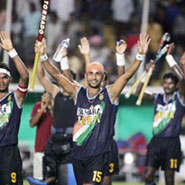
Chak De Indian Hockey
Whether it is Chak De effect or not, Indian Hockey is doing extremely well. I congratulate the Indian Hockey Team on their victory in Asia Cup Hockey tournament. I wish Indian Cricket team members also get to play 15 minutes of hockey during their training session, they will realise what it means to be staying fit in sports. Here is the latest from the Hockey field:
Chennai: Goals rained as hosts India on Sunday thrashed Asian Games champions Korea 7-2 to win the Asia Cup final here. Defending champions India on Sunday retained the BSNL Asia Cup, defeating Asian Games hockey champions 7-2 in the final in Chennai.
India led 3-1 at the lemon break. India’s scorers were Prabhjot Singh (3), Rajpal Singh, Shivendra Singh, SV Sunil and Roshan Minz. Oh Dae Keun and Jang Jong Hyun pulled back one each for the losers.
God bless and have a great week ahead.
Ramesh Menon
09092007
Bin Shafya strikes gold for the UAE
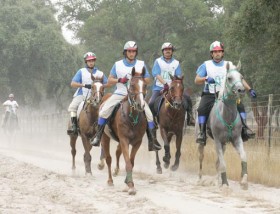
Bin Shafya strikes gold for the UAE
By M. Satya Narayan, Staff Reporter GULF NEWS Published: September 08, 2007, 23:14
Alcochette, Portugal: Mubarak Khalifa Bin Shafya gave the UAE its fourth successive individual gold medal in the European Open Championship which concluded in dramatic fashion late yesterday.
The UAE’s Asian Games bronze medallist Sultan Bin Sulayem crossed the finish line, first but had the misfortune of seeing his horse failing to clear the final vet check.
Mubarak’s triumph follows the wins in 2001 by Shaikh Rashid Bin Mohammad Bin Rashid Al Maktoum, 2003 gold medal by His Highness Shaikh Mohammad Bin Rashid Al Maktoum, Vice President and Prime Minister of the UAE and Ruler of Dubai and in 2005 by Shaikh Hamdan Bin Mohammad Bin Rashid Al Maktoum.
Finishing second was French rider Jean Phillipe Francas while the Dubai-based Spanish couple of Jaume Punti Dachs and Maria Alcarez were third and fourth, respectively.
Shaikh Hamdan Bin Mohammad Bin Rashid Al Maktoum finished fifth.
Earlier, Shaikh Mayed Bin Mohammad Bin Rashid Al Maktoum’s horse Kevin De Narthou slipped and fell just half a kilometre from the end while Shaikh Rashid Bin Mohammad Bin Rashid Al Maktoum’s horse was eliminated in the penultimate stage with 27 kms remaining for the finish.
Earlier in the day, the UAE riders looked set for a comfortable golden double after completing four of the six stages.
Five of the six-member UAE team claimed the top five positions after the first stage in the 160-km ride which has attracted a strong field of 88 competitors from 20 countries.
The UAE came close to capturing all six positions at the top, but Shaikh Ahmad Bin Mohammad Bin Rashid Al Maktoum, the 2002 world champion, suffered a setback when his horse lost one of its shoes early in the ride. Shaikh Ahmad lost crucial time until a farrier was rushed to the scene. He finished in 78th place but soon progressed to 12th place.
In the team event, the UAE had then mustered a healthy lead of 60 minutes over traditional rivals France and looked headed for a double triumph in the individual and open categories of the Championship.
While some leading riders from the host country Portugal fell by the wayside in the first half of the ride, Bahrain’s Shaikh Duaij Bin Salman Al Khalifa, Saudi Arabia’s Prince Abdullah and France’s Sophie Arnaud also made an early exit.Earlier in the morning, the 88 riders battled foggy conditions and a light drizzle to start the four-star event in which the UAE were the defending champions.
POSITIONS
1. Mubarak Khalifa Al Shafya (UAE) Horse: Zakah Zahara 8:22.30
2. Jean Phillippe Francas (France/ Hanaba du Bois) 8:23.12
3. Jaume Punti Dachs (Spain/ Elvis Ahb) 8:23.18
4. Maria Alvarez Ponton (Spain/ Nobby) 8:23.43
5. Shaikh Hamdan Bin Mohammad Bin Rashid Al Maktoum (Kaysand Farrazah) 8:25.07.
1.5 crore house waiting for you and Team India’s day out
1.5 crore house waiting for you
I have always tried to promote sports other than cricket whenever there is an opportunity. Now, there is one and any one of you can take it. It’s just simple, win an Olympic Gold medal for India. However, the offer is extended only to players from Kerala and this house is given by Trinity Builders.
I am sure other state governments will follow Kerala Government’s initiative, which will encourage our non-cricket sports person to perform better.
RIL buys GAPCO to flag off its African safari
Reliance Industries (RIL) has agreed to buy a clutch of fuel stations and storage facilities in one of the fastest growing regions in Africa, in an attempt to build a complete business chain from refineries to fuel stations in overseas markets.
Team India’s day out
Saturday, 8th September 2007 is going to be a special day for Indian Cricket. It is a day of opportunity to create history. India is going to play England on this day for the 7th and final one day match the Lord’s Cricket ground in England. Considered to be the most privileged ground, it is the dream of all cricket lovers to come and watch a game here. So, you can imagine the state of mind of the players who dream of playing here and create history here. The Indian team, after their sensational 6th match victory should be on a high moral.
Saurav Ganguly and Sachin Tendulkar are in good form. The opening combination should not be changed. It is a great occasion for Sachin to end this match with a good score, a century within less number of balls is a wish from every Indian Cricket fan. Let us see, whether he break the jinx of the saying that Sachin cannot come up matching winning performance. Ganguly, has just to continue his aggressive form, with a little more effort and concentration on singles and running between the wickets. Ganguly will also have a role to play as a time bowler in the middle overs.part
Gautam Gambhir has a big opportunity if he gets play at no. 3. It will help him to cement his place in the team.
The player to watch tomorrow will be Yuvaraj Singh. Knowing his aggression and mindset, tomorrow he will be waiting for his opportunity to settle scores with Dimitri Masceranhas. When Robin Uthappa hit the winning run, Yuvraj came running to the ground in relief and joy, of what he had to undergo in the last over the England innings where Masceranhas scored 30 runs from his over. So, I am eagerly waiting to see the biggest six of this series from Yuvraj as revenge from him. He is one player who plays shots with power and elegance, and tomorrow is an opportunity for him to prove that he is a player of class who can shoulder responsibilities for India.
Rahul Dravid is in good form, but has not come with a classic innings so far. He has shown that he can score quickly. Field placing and bowling changes at the right time and bowlers performance and luck factor supporting him, we may see him smiling tomorrow.
Mahendra Singh Dhoni is another player who will have a great role in this match. His keeping has improved and we all are waiting for his hitting.
Ajith Agarkar may get his final opportunity of playing for Team India in England. If he gets it, it has to be the match of his life with his swinging bowls. We have not seen his sharpness in bowling during this series except once or twice and tomorrow is a big day for him if he is selected to play.
Zahir Khan has been bowling throughout the series and before. The responsibilities have started taking a toll on him and we hope he stays in good shape tomorrow and get quick wickets in the initial overs itself.
Ramesh Powar is one player whom I like to watch any number of matches. He is bold and courageous and really deceives the opposition batsmen.
Piyush Chowla is another favourite to play a big role in tomorrows match. He has done well against the top class English players like Kevin Peterson and Alastair Cook. He will definitely have more to them tomorrow.
Last but not the least, Robin Uthappa will be the player the entire English Team will be looking forward to play with. By now, through modern technology, they might have already seen, analysed and devised plans on his batting and fielding style. He has set the finals for India and if continues his courage, confidence and cool head tomorrow, we will be able to see a great game. Uthappa playing with either Dhoni or Yuvraj, we will have more than fireworks on the field.
Sreesanth is one player whom I look forward to in case they decide against Agarkar. He has the pace, seam and swing and we home, he will get a chance and will play a great game leaving aside his Sreesanth Syndrome. The way he has been playing recently, I feel he has realised his mistakes and now has great focus on the ground and what is happening or going through the mind of opposition players.
If India wins the toss, I hope Rahul Dravid will opt to field first and allow England to bowl as they have not shown good temperament to set a target. With good bowling from our bowlers, we should restrict England within 275 runs. In case India bat first, more than the openers, the middle order batmsen has to play their innings well and score runs.
As of now, it is advantage India due to their current bowling and batting form. We all pray that Indian team gets 12 safe pair of hands today in the field (11 players and Umpire – whose decisions are crucial. It is going to be a close game.
Ramesh Menon
07092007
UAE the team to beat in endurance event

Shaikh Rashid Bin Mohammad Al Maktoum , Shaikh Hamdan Bin Mohammad Al Maktoum, Shaikh Ahmad Bin Mohammad Al Maktoum and Shaikh Mayed Bin Mohammad Al Maktoum will lead the UAE’s challenge, along with Sultan Bin Sulayem in tomorrow’s 160-km endurance ride in the World Endurance Games.
UAE the team to beat in endurance event
By M. Satya Narayan, Staff Reporter GULF NEWS Published: September 06, 2007, 23:53
Alcochette, Portugal: Nearly 90 riders from 20 countries will start tomorrow’s 160-km FEI European Open Endurance Championship here about 25 kms away from the capital Lisbon and the team to beat will be the United Arab Emirates.
Ever since the UAE won its first-ever international championship, which was here in Portugal when the 1999 European Open championship was jointly held with Spain, the UAE riders have dominated the open category.
His Highness Shaikh Mohammad Bin Rashid Al Maktoum, Vice President and Prime Minister of the UAE and Ruler of Dubai, was the architect of that first win in 1999 when the UAE won the team gold and after that the UAE has virtually dominated the Open championships.
Shaikh Mohammad himself won the 2003 individual gold in 2003 while Shaikh Rashid Bin Mohammad Al Maktoum won the individual gold in 2001 and now Shaikh Hamdan Bin Mohammad Al Maktoum starts as defending champion having won the gold in Compiegne, France in 2005.
Medal fight
Shaikh Mohammad announced the team last month which includes Shaikh Rashid Bin Mohammad Al Maktoum, Shaikh Hamdan Bin Mohammad Al Maktoum, Shaikh Ahmad Bin Mohammad Al Maktoum, Shaikh Mayed Bin Mohammad Al Maktoum, Sultan Bin Sulayem and Mubarak Khalifa Bin Shafya. The 160-km European Championship will have medals on offer for the Open event as well as the European event and the UAE will be challenged by traditional European powers France, Italy, Germany and hosts Portugal while two other GCC countries, Bahrain and Qatar along with the US add another dimension to the medal fight.
Ali Moosa, Endurance Head at the Dubai Equestrian Club said the UAE horses have been based in Newmarket through the summer and have been well prepared for the event.
The UAE, who last swept honours in the Doha Asiad winning the team gold and the individual gold and bronze are once again expected to be a strong force here.
Strong advantage
While the final team composition and the horses will be known today after the final pre-event veterinary check, the championship has attracted a strong field of 90 entries with at least 14 countries in the team championship.
Hosts Portugal will have a strong advantage as they will have 12 runners in the fray while all other countries will have just six.
Italian and former world silver medallist Fausto Fiorucci, who won a 160-km event at the same venue last year is back on the same horse Jaifar.
“It is really hot and one can expect a fast race. When I won we averaged around 18 kmph and you can expect a faster race tomorrow. The UAE will be the team to beat.”
Paul Branco, Vice President of the Portuguese Equestrian Federation said, “The venue is one of the best. With the river Tejo along with its estuary and marshes, large stretches of paddy field with cattle and the famous cork-oak trees all make it a scenic venue.”
Tomorrow’s ride will get off to a mass start and will be run in six phases of 34.5 kms, 21.75kms, 27.50kms, 21.75kms, 27.50kms and 27kms.
BP ready to take opportunities in Iraq
BP ready to take opportunities in Iraq
Reuters / Published: September 04, 2007, 00:37
Dubai: BP is ready to compete for the opportunities that arise in Iraq’s oil and gas sector once the country passes its oil and gas law, a senior executive said on Sunday.
Iraq’s parliament has yet to debate the controversial oil law, but was expected to consider it this month. Washington has pushed Iraq for months to speed up passage of the oil law, which is among legislation it sees as pivotal to reconciling warring Iraqis and attracting foreign investment.
“We’ve studied all of Iraq and absolutely have a view on which are the relatively good looking prospects,” Steve Peacock, president of BP’s Middle East and South Asia Exploration and Production unit, told Reuters on the sidelines of a conference in Dubai. “Whether it turns out to be a licensing round or some other form of offering, we’re ready.”
Open tender
Iraq’s oil minister said last month the government hopes to call an open tender to develop its oilfields as early as this month if the law was passed. Developing the oil sector and boosting export revenues are key to reconstructing the country’s shattered economy.
The contracts and terms that Iraq may offer oil companies to work on its prized oilfields have yet to be defined.
The type of contract was much less important than ensuring the terms were attractive for both the oil company and the government, Peacock said.
“There are many forms of contract that can find that sweet spot in the middle,” Peacock said.
Oil companies tend to regard short-term service agreements as less of a lure than longer-term production sharing agreements.
Service agreements could be attractive if the terms compensate for the skills, tools and experience that international oil companies bring to the table, he said.
BP would be unable to send people to work in Iraq until the security improves, he said.
“We hope that happens soon for the sake of Iraqi people, not just so that we can go in and do business,” he said.
Recommendations that BP has made to Iraq on the southern Rumaila oilfields have had a positive effect on output there, he said.
Studies that BP carried out on Rumaila, one of Iraq’s largest oilfields, showed that production could be boosted quickly with application of modern techniques, he added. He declined to detail the potential increase.
“This ought to be encouraging for Iraq, although I can’t say if all the fields look lie Rumaila.”
Years of war and sanctions and more recently insecurity have led to chronic underinvestment in Iraq’s oil sector and led to concern of permanent damage to oil reservoirs at fields such as Rumaila.
 ClicksandWrites
You must be logged in to post a comment.