


Can’t focus on work? Hire a mind trainer
Can’t focus on work? Hire a mind trainer
20 Jan 2008, 0329 hrs IST,Amrita Singh,TNN
January is usually the time for resolutions. But if you find yourself breaking them as you slip into February, don’t lose heart. Try hiring a mind trainer. That’s someone who would help you understand your emotions and show why you haven’t been able to keep your promises. Mind trainers work on making your brain more fit so you are better equipped to excel in life and face various situations with a collected mind.
However, it’s not as easy as it sounds. Training the mind involves an understanding of how your mind works, visualisation techniques and exercises for the brain — popularly called brain gym.
There are people who swear by its effectiveness. Indian cricket coach Gary Kirsten has requested the BCCI for a mental conditioning coach for the team and even recommended his own mind coach Paddy Upton for the job. Kirsten apparently believes Upton was instrumental in shaping his career by making him understand and deal with his emotions while batting.
But it’s not just Team India who is getting a mental coach. As urban Indians are feeling the stress of a more competitive life, even young professionals, students and sportspersons are hiring a mind trainer to help them excel.
In the last two years, several mind training institutes like Brainobrain, Mindtrainers and Mind Gym have come up in the country. At the Delhi Police Public School’s brain gym center, students are encouraged to try out exercises that help them keep their mind strong and agile. Chennai-based SIP Academy, that uses brain exercises to make children learn faster, has grown at more than 60% annually and has over 300 branches in India now. Even individual mind trainers have never had it better. N Renuka, a mind trainer based in Hyderabad, has interacted with over 150 clients in the last two years.
The current interest in mind training focusses on enhancing performance. “Broadly, all the mind trainers, irrespective of the technique they use, work on making the brain cognitively fit,” says Pawan Choudhary, mind coach and author of the book When you are sinking, become a submarine. Among the most popular options for mind training is the brain gym. Sareylom Poole, one of the two instructors approved for India by the US-based Braingym International Foundation, says, “Brain exercises could help just about anyone, whether you are wanting to lose weight or learn faster or improve sales.”
“Brain gym exercises increase the flow of energy between the right and left brain, which in turn increases alertness, concentration, focus and other brain functions,” says Dinesh Victor, a master trainer who also happens to be cricketer Sreesanth’s coach.
To start with, a private session with a gym instructor is recommended, which typically lasts one-two hours and focusses on a specific goal like increasing creativity, imagination, focus etc. At the end of the session, says Sareylom, one typically experiences what is termed as a ‘balance’, which means that the process of learning is complete.
Though the concept of a mind coach has been there for centuries (in the Mahabharata, for instance, Krishna turned into a mind coach for Arjun, while Napoleon is said to have employed the services of Indian hypnotist Abbe Faria, who even accompanied him to several battlefields, including the wars against Italy and England), mind training in the country is at a very nascent stage. Which is why, before you settle on a mind coach for yourself, ask for past experience and proof and only then, enroll for a mind training session.
amrita.singh@timesgroup.com
Chocolate is injurious to bones
Chocolate is injurious to bones
25 Jan 2008, 1109 hrs IST,PTI
NEW YORK: Chocolate, the most widely and frequently craved food, may be good for your heart. But, if a study is to be believed, its regular consumption could weaken your bones and raise the risk of suffering a fracture.
A team of researchers has carried out the study and found that people who eat chocolates daily are likely to have less dense and weak bones, which in turn could increase the risk of health problems such as osteoporosis and fracture.
“Cocoa and chocolate have been promoted as having a range of beneficial cardiovascular properties. But the effect of chocolate intake on other organ systems has not been studied,” according to lead researcher Jonathan Hodgson of the University of Western Australia.
In fact, according to him, though chocolate contains flavones and calcium, both linked to having a positive effect on bone density, it also contains oxalate an inhibitor of calcium absorption and sugar, linked to calcium excretion.
The team came to the conclusion after analyzing the effect of chocolates on a group of 1,000 women aged between 70 and 85, who were randomly assigned either calcium supplements or a matched placebo for a period of several weeks.
During this period, the participants were also asked to keep a dairy of how often they consumed chocolate.
Metro man gets public service vote

Metro man gets public service vote
HT Correspondent New Delhi, January 25, 2008
Anybody who can bring order to a mad city like Delhi deserves the highest award in the world. Delhiites are monumentally unruly on road, and famously callous with public property. They love to scribble graffiti on monuments, rip open bus seat covers, etch romantic messages (for God knows who) on trees and, worse, of it all, relieve themselves whenever it becomes unbearable.
Next time you ride the metro, look for all the familiar signs associated with Delhiites. You won’t find many. People are magically behaving themselves – it’s hard to believe but it’s true.
And making all this happen is, of course, the Metro chief E Sreedharan. And the best part is, he is known more for the other things that he has brought to the city – a good and efficient public transport. Sreedharan is changing Delhi, its geography and its attitude. He is the choice of voters and the jury of the Indian of Year award — instituted by CNN-IBN in partnership with the Hindustan Times – from the category of people in public service.
Former police officer Kiran Bedi, who has a long and eventful association with Delhi, says this for Sreedharan: “What he has done for his country and at his age (70 years) is remarkable. People think it’s time to retire and live in the past but he has given the metro concept to this country with commitment, integrity, vision and remarkable professionalism…”
The metro chief fought off competition for the slot from Bangalore surgeon Dr Sharan Patil, HIV campaigner Kousalya, Sushma Iyengar of the Kutch Nav Nirman Abhiyan, Patna teachers Abhay anand and Anand Kumar and Dr Oscar Rebello of the Goa Bachao Abhiyan.
Sreedharan now joins finance minister P Chidambaram, SBI chairman O P Bhatt, Chak de director Shimit Amin and scriptwriter Jaideep Sahni and chess champion Vishwanathan Anand as category winners in the fray for the Indian of the Year. These nominees have been elected/selected by votes sent through SMS or online and a jury comprising six eminent Indians – lawyer Soli Sorabjee (he is the chairman of the jury), HDFC chairman Deepak Parekh, actor Mohanlal Viswanathan Nair, Hindustan Times Media Limited vice-chairperson and editorial director Shobhana Bhartia, billiards champion Geet Sethi, Infosys co-chairman Nandan Nilekani and former police officer Kiran Bedi.
The Indian of the Year will be declared on January 29.
‘Fight with spouse & live longer’
‘Fight with spouse & live longer’
24 Jan 2008, 0038 hrs IST,REUTERS
NEW YORK: Fighting with your spouse can actually be good for your health with people who bottle it all up found to die earlier, a new study shows.
Researchers at the University of Michigan School of Public Health and its psychology department released preliminary findings after 17 years of following 192 couples.
The couples fell into four categories: where both partners expressed anger when they felt unfairly attacked, where neither partner expressed their anger, and one category each for where the wife suppressed her feelings and where the husband did so.
“I would say that if you don’t express your feelings to your partner and tell them what the problem is when you’re unfairly attacked, then you’re in trouble,” said Ernest Harburg, lead author of the study, in an interview.
The study found that those who kept their anger in were twice as likely to die earlier than those who don’t.
There were 13 deaths in the group of 26 pairs where both partners suppressed their emotions, as opposed to only 41 deaths in the remaining 166 pairs. “When couples get together, one of their main jobs is reconciliation about conflict,” Harburg said.
“Usually nobody is trained to do this. If they have good parents, they can imitate, that’s fine, but usually the couple is ignorant about the process of resolving conflict.”
Harburg said resentment was the real threat – and suppressing anger led to resentment.
He said it is the resentment that interacts with any medical vulnerabilities, a person might have, increasing their chances of succumbing to that medical problem.
“It’s healthy to recognise that you’re being attacked unfairly and it’s even more healthy to speak up and to talk about it and try to resolve the problem if you want to live longer,” said Harburg.
This study comes within a week of a survey that said that it is the price of divorce that is holding many couples together.
In a survey of married men and women in Britain, the majority of wives – 59% – said they would divorce immediately if their future economic security was assured.
Among both sexes, more than one in ten wished they had married someone else. The survey found than half of husbands thought their marriage was “loveless”. Relationship experts in the United Kingdom have warned couples to avoid getting stuck in a rut – or risk the trauma of divorce.
Coping with high EMIs
Coping with high EMIs
Ramganesh Iyer for Express Money Posted online: Monday , January 21, 2008 at 1339 IST
If you took a home loan at rates prevailing in 2005 (around 7.5 per cent), you must be feeling the heat now. If you had borrowed Rs 20 lakh for 20 years, your EMI would have increased by Rs 3,500 or more. What options do you have today?
Increase tenure. If you are not near retirement, and if your original tenure was less than 20 years, your bank should increase the loan tenure. The other benefit of this is that due to inflation, the real cost of your loan will decrease over the years.
Prepay. If you have surplus cash, prepay part of your loan. The EMI on remaining principal will remain the same as earlier.
Switch banks. This involves a sizeable transaction cost, besides time and hassle. Your old bank may charge a prepayment penalty, and the new bank, processing and administration fees. Switch banks only if the rate differential is at least 0.5 per cent.
Avoid a bad deal New borrowers should do their groundwork. First, avoid taking on an EMI that is too close to your monthly surplus. Expenses have a tendency to shoot up over the years, while income is more unpredictable. By keeping an adequate buffer, you ensure that interest rate increases do not hurt you.
Scout around for the best deal. PSU banks are slower in processing the application, but usually offer slightly lower interest rates.
Finally, before signing the papers, read the fine-print carefully. Of special importance are the clauses that permit the bank to reset interest rates, and pre-payment related clauses. Change the bank if you find a clause that is not acceptable.
The author is a certified financial planner.
Royal Bath
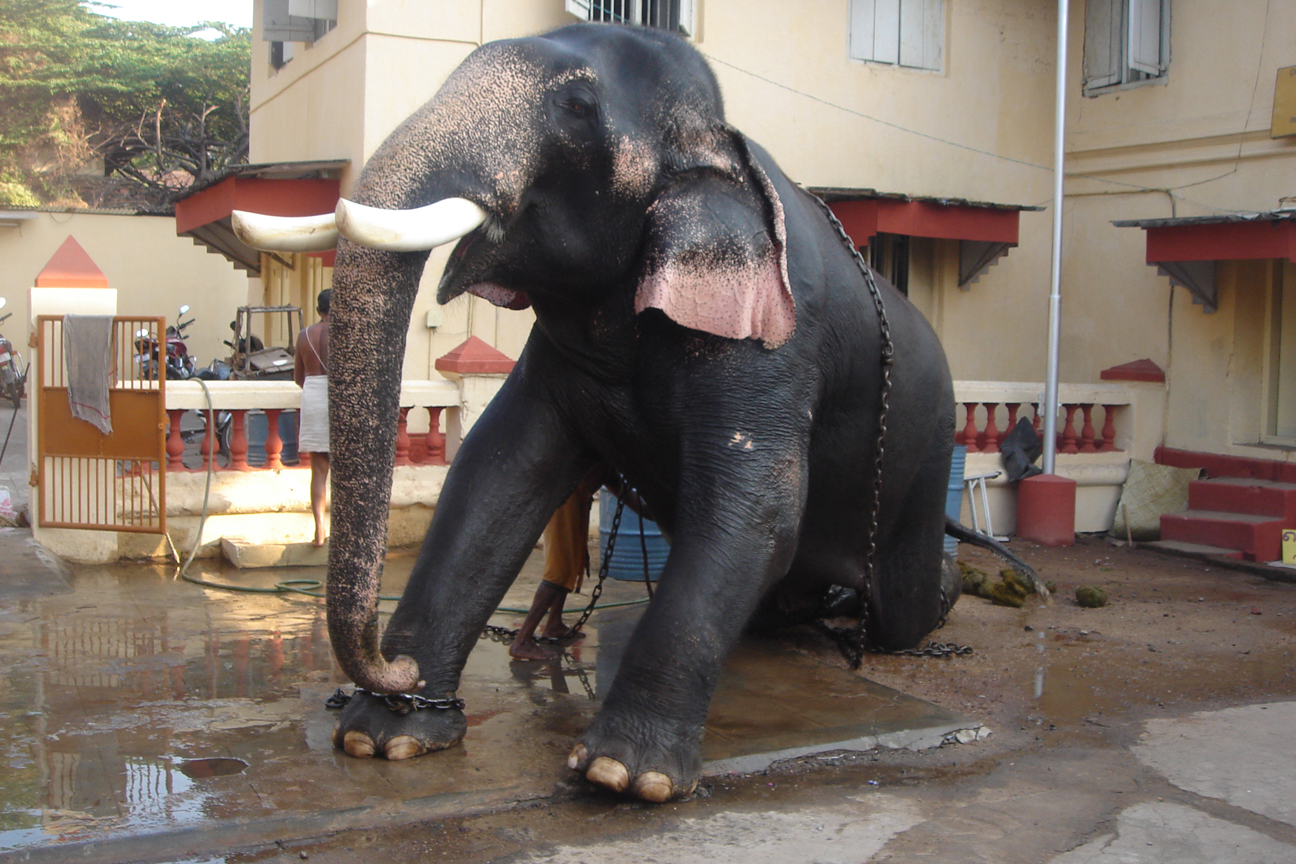
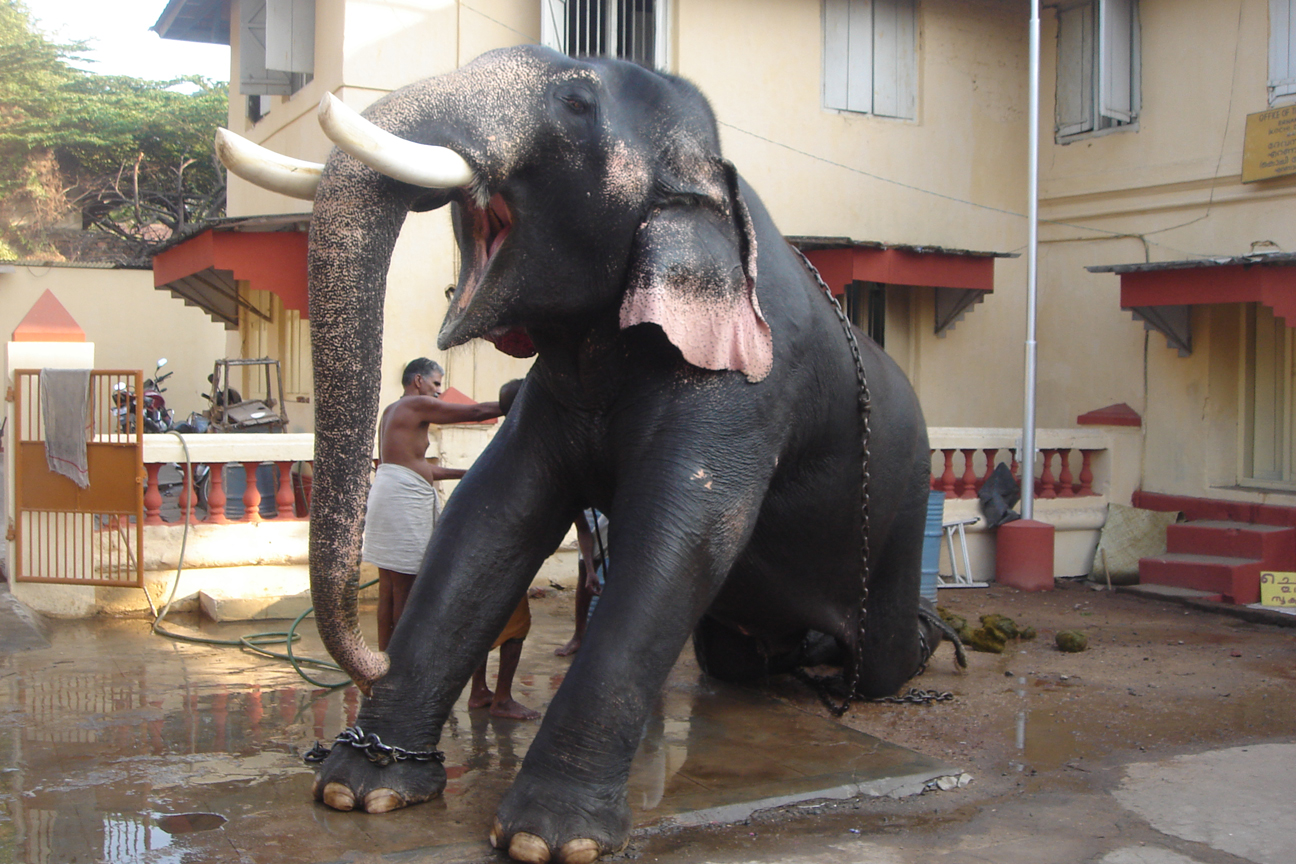

A temple elephant being given a royal bath, before it is taken out for procession at the festival.
Lessons from January 2008
The thing about life is that one makes mistakes. Many mistakes were made in the second half of 2007 and those sins have to be washed away by blood, such is the way of financial markets. Some participants will go down under and never be able to get back to the market again but most will survive. The pain will linger for many months, maybe years but lessons have to be learnt. Every such debacle has lessons for us and the sooner we forget them the more we suffer.
The first lesson is not to let stock price performance become the sole reason for buying, a mistake which was made in abundance in the last 3 months. What couldn’t be explained by fundamentals was credited to liquidity. The present lost all relevance as people chose to focus on the distant future, perhaps simply because the present could never justify those ticker prices; only a hazy dream of the future could. Traders and investors had no time for fundamental analysts, in many cases they were labelled “cribbing fools”. Chartists became the most celebrated tribe on the street as only they could see and predict the one way run to glory for many of the hot stocks even as fundamental watchers cringed at valuations….till the music stopped. Don’t get me wrong, charts do work in trending markets but once stock prices veer away completely from fundamental value, people need to get careful. But they never are. Now that the blinkers are off, people should ask themselves why stocks like RNRL, Ispat, RPL, Essar oil and Nagarjuna fertilisers have lost 50-70% of their value. It is simply because their stock prices had snapped all connection with underlying business fundamentals, earnings and value. Their stock prices became the only reasons for buying them which works for a while but not forever.
The other big lesson, one which should have been driven in earlier in May 2006, is the danger of overextending oneself in the futures market. The lure of stock futures is easy to understand. Put in some margin, take a big exposure on a fast moving stock, make a killing when prices shoot up. Repeat exercise. Just that people forgot that prices may also come down and at a pace which noone can even imagine, maybe their friendly stockbrokers forgot to tell them that part of the story. The result : unbridled speculation that ran into lakhs of crores, excesses that we are paying for today. Even this fall will not cure investors of their love for futures speculation but if at least some amount of caution is injected it would have been a worthwhile learning. Futures are not toys for amateurs, they are time bombs in the hands of inexpert and inexperienced traders, it’s only a matter of when the fuse runs out.
The other learning which I hope will play out in the future, as it has in the past, is that it pays to be brave in times of panic such as these. If I was allowed to invest myself , which I am not, I would have no hesitation in deploying serious money into the market today, knowing fully well that prices may fall more tomorrow. And I would be standing there tomorrow to buy more of the same, till my money ran out. India is going to be a terrific stock market story for many years to come, even an intermediate bearish patch cannot shake that conviction of mine. At best, one will have to wait a bit for the returns to follow. That’s alright. You are happy to put money in a bank FD and then wait for one full year to collect that measly 8%, aren’t you? Then why does the stock market need to give you 20% every month? In the last one year, I haven’t seen so many good stocks trade at such mouth watering levels. Forget trading, avoid the duds which were fuelled up by operators, just go out and buy those bluechips. They will deliver, even if there is a global market meltdown for a while, and if you are a bit patient you will be rewarded. But do remember January 2008, as history will repeat itself again in the future. Just that our memories tend to be too short and our greed too much.
Udayan Mukherjee / MONEYCONTROL
Diversity in All Its Diversity Conference

Diversity in All Its Diversity Conference
The Diversity in All Its Diversity Conference, was organized by Université Total on October 9, is now available in english and french versions.The synthesis of the Diversity in All Its Diversity Conference, organized by Université Total in 9th October.
The all-day event focused on three central diversity challenges: hiring more women, hiring more non-French people and integrating new recruits.
Open to both employees and the public, the conference attracted a number of representatives of other companies, such as Catalyst Europe AG, Microsoft, Vedior France, Communication et Systèmes, as well as Total managers wishing to share their diversity experiences and objectives.
To offer a broader viewpoint and suggest different approaches, researchers and academics also provided historical, social and economic insights on the various aspects of diversity. Dominique Méda, philosopher and sociologist, gave a comparative analysis of the role of women in the economies of the world’s major regions. Françoise Héritier, professor at Collège de France, spoke on the anthropological origins of gender inequality. Suzanne Berger, professor at MIT, addressed the issue of new managerial responsibilities required by globalization.
Shashi Tharoor, diplomat, writer and former Under-Secretary-General of the UN, shared his views on plurality and identity as illustrated by the case of India. Christophe de Margerie delivered the closing remarks for the conference.
Computer upgrades that make sense
Computer upgrades that make sense
(DPA)19 January 2008
WASHINGTON – With notebook and desktop computer prices at an all-time low, you have to think carefully about upgrading them.
That’s because the cost of a few upgrades may come close to equalling the price of an entirely new system.
In general, aside from adding memory or a new hard drive to your computer, you’ll probably want to avoid upgrades designed to improve performance.
The fact is, components in a modern computer – whether desktop or notebook – operate more synergistically than they do independently. So if you upgrade a computer’s main processor, for example, your system may still be hampered by memory that is not optimally paired to the processor or a graphics card that cannot fully unburden the processor enough to allow you to see its full potential.
But that doesn’t mean that all upgrades short of buying a new computer are folly. In general, upgrades that add functionality to your computer – and especially those that might be transferred to a new computer, should you buy one later – can be smart investments. Let’s look at a few.
RAM
Both memory (RAM) and hard drive upgrades make good sense if you know that your system is hampered by insufficient RAM or too little hard drive space. Windows systems today need 1 gigabyte (GB) of memory, at least, and most recent computers can accept up to 4 gigabytes. If you do a lot of multitasking, photo or video editing, or advanced CAD work, you’ll probably benefit from more RAM, especially if you’re using Vista. Bear in mind that a memory upgrade is unlikely to be transferable to a new machine, since memory technology changes about as quickly as processor technology.
Media card reader
Computers sold today often have a media card reader as optional equipment. Media card readers allow you to transfer files from your camera or other portable device much more quickly than if you have to search for a cord and plug the device in directly.
A media card reader is a great convenience, too – and something that’s usually transferable to a new machine or even between machines. If you buy an external media card reader that connects by USB, you can plug it in to just about any computer.
The media card reader is typically seen by your computer as just another drive. Plug in a CompactFlash or other removable storage medium into it, and you can read files from it just as you can by copying files from one disk to another. Internal media card readers are also available, but these will require that you pop open your computer and install them yourself – or have a technician do it for a fee.
USB scanner
The purpose of computers is to be able to store information digitally. But if you have a bunch of paper-based material around the office, you’ll need the services of a flatbed scanner to get the data into your computer.
The good news about flatbed scanners is that they’ve become a lot smaller and less expensive than in previous generations. And best of all, there are lots of models on the market today that are powered solely from a USB port, meaning you won’t even need to plug them into the wall.
A scanner is a no-brainer, useful accessory. They’re so small, light, and thin today that you can easily transport them from notebook to desktop, and many models, such as the Canon Lide series, are available for under 100 dollars.
Expand with SATA
External hard drives are essential today, either as a backup device or as an additional storage pool. The trouble is that most external hard drives connect to your computer or notebook via a USB port, which provides data transfer speeds that are too slow.
Enter SATA. Now the industry standard for internally connecting hard drives to motherboards, SATA ports can also be added externally to your PC or notebook. With an external SATA port and an hard drive enclosure that supports SATA, you can transfer files to a backup device as quickly as you can move data from one folder to another on your PC.
For desktop computers, search for a SATA PCI card at retailers such as Newegg.com. These plug directly in to a free PCI slot inside your computer and give you one or more SATA ports on the outside of your case into which you can plug an external SATA hard drive. You shouldn’t have to pay more than 20 dollars for such an upgrade, and you can take it with you if you upgrade your computer later.
Similarly, you can find plenty of SATA PCMCIA cards for notebooks on the market. These typically provide two external SATA ports to a notebook computer, and since they come in a standard PCMCIA card, you can transfer those ports to any notebook with a PCMCIA slot. Expect to find these expansion cards on the market for 25 to 40 dollars.
Duplexing printer
Lots of folks who have migrated to Windows Vista are finding that the manufacturer of their printer has been slow in getting a compatible printer driver out. That might be as good an excuse as any to consider upgrading your general-purpose printer. But there are other reasons, as well.
First among them is cost. Not only have the prices of laser printers come down drastically from just a few years ago – with models on the market at 100 dollars or less – but green features of some of the better ones will save you money over the lifetime of the unit.
For instance, duplexing – the ability to print on both sides of a piece of paper – can save you significant money in paper costs and, of course, reduce the amount of paper you use. If your printer is on its last legs – and giving you fits with Windows Vista – it could be time to move on to something better.
 ClicksandWrites
You must be logged in to post a comment.