Biggest ever UAE Yearbook released
Biggest ever UAE Yearbook released
(Wam)16 March 2008
ABU DHABI – The 2008 UAE Yearbook’s Arabic edition is the most comprehensive yearbook ever published on the country. With 96 more pages than the 2007 edition, it is an up to date compendium of information covering a wide range of topics, from history to modern economic and social development.
The 464-page book has also been produced in a new more interactive page design that is aimed at helping readers find the most important information in the shortest possible time. The prime purpose of the annual publication is to cover events that occurred over the previous twelve months and it plays a valuable role in chronicling the UAE’s rapid development.
Published in Arabic, English and French the UAE Yearbook also looks at present and future developments and its publishers chose the iconic shape of the planned Guggenheim Abu Dhabi for its front cover pictures. Maintaining a tradition established over ten years ago, the front cover flap contains a ‘Cover Story’ that explains the thinking behind the choice of cover image. The 2008 Yearbook’s Cover Story states that, in the publisher’s view, the announcement of the new Saadiyat Island Cultural District was one of the most significant initiatives in ‘raising the global profile of the UAE’.
A Foreword to the 2008 UAE Yearbook, written by Shaikh Abdullah bin Zayed Al Nahyan, Minister of Foreign Affairs, draws attention to the wide range of initiatives being taken to raise the living standards and general economy of the UAE. In this regard he highlights the launching of the new National Strategy together with complimentary strategies set forth by Abu Dhabi and Dubai. Strengthening of the Federal National Council, enhancement of public-private partnerships, major infrastructure projects such as the Dolphin gas pipeline, Dubai Metro rail system, Khalifa Port, expansion of key airports and the construction of the world’s largest airport, Al Maktoum International Airport, combine to make the past year one of tremendous advancement. Shaikh Abdullah also draws attention to the achievements in health, education, and social welfare. It was, he says, a great year for UAE sport with the country’s football team winning the 2007 Gulf Football Cup and many individual sportsmen and women bringing home trophies from international events.
The sheer scale of some infrastructure and real estate projects has had a strong impact in terms of focussing worldwide attention on what the UAE is achieving. As the first new owners took up residence on the Jumeirah Palm and the world’s tallest building, Durj Dubai, continued to climb skywards, other major development projects were announced throughout the Emirates. The 2008 Yearbook provides a valuable source of information that avoids the hype and presents the facts behind these impressive projects.
Meanwhile, 2008 itself began with a major international conference and exhibition devoted solely to to future energy. Coinciding with the announcement that the Government of Abu Dhabi is allocating 15 billion US dollars to develop alternative energy projects, Abu Dhabi in particular and the UAE in general has once again placed itself firmly on the world stage in a key area of research and development that will benefit not just its own people but the entire global community.
In the closing remarks of the Foreword to the book Shaikh Abdullah draws attention to the core strengths of the UAE and its people. “But however we plan for the future, and however grand our development projects may be, we have not forgotten who we are or where we came from. We in the Emirates are a people who retain strong cultural links with our past and who have huge respect for the leaders who have guided our nation’s growth.It has been an exciting year and there are clearly even more exciting times to come. I believe this book gives a good sense of where we have come from and where we are going”.
The 2008 Yearbook is distributed worldwide and is available under special request from the National Media Council. In addition the book may be purchased at UAE bookshops and digital versions are available free of charge, online, at http://www.uaeinteract.com.
Want emergency leave? Don’t ask your employer
Want emergency leave? Don’t ask your employer
Ahmed Abdul Aziz (Our Staff Reporter) KHALEEJ TIMES 16 March 2008
ABU DHABI – An employee can take emergency leave without seeking permission from the workplace or the sponsor, provided he/she has completed two years with the current sponsor and has leave balance, said an informed source in the Ministry of Labour (MoL).
Goumaa Al Roumaithi, Legal Advisor to the Disputes Department in the MoL, told Khaleej Times on March 16 “According to the labour law, if a worker has completed two years with the current sponsor, he/she can apply for any number of days as emergency leave.
“In such cases, workers should have enough leave balance, otherwise the employer has the right to make deductions from the worker’s salary,” said Al Roumaithi.
He pointed out that about 90 per cent of the labour complaints are about their rights regarding the annual leave, overtime and air tickets.
The MoL’s Disputes Department has received many complaints from workers demanding their rights after employers deducted amounts from their salaries although they had leave balance.
M.S., a Syrian accountant, said that the company he works at deducted about Dh1,300 from his salary after he had applied for one week’s leave to travel to his country to attend to serious family matters.
The accountant was shocked when he received the salary slip to find the deduction from his salary. “I asked the administration and they told me that I’m not allowed to apply for further vacation other than the annual leave despite there being more than 20 days leave balance,” he said.
“In case a company deducted an amount for the number of days a worker went on leave, it would pay the deducted amount back to the employee because he/she has already completed two years with the company. Moreover, he has leave balance. Hence, there were no justification to deduct the days of the additional leave,” added the MoL’s legal advisor.
Workers who face such violations of their rights by employers can go to the Disputes Department of the MoL in Mussafah Industrial Area and lodge a complaint.
The legal advisor warned the companies not to victimise and terminate any employee arbitrarily because he/she has complained to the ministry.
“If a company does that the employee can demand three months’ compensation, the right to transfer his sponsorship without referring to the current sponsor, and inform the Inspection Department at the ministry to inspect the erring companies,” said Al Roumaithi.
Sociable parents’ kids better at exams
Sociable parents’ kids better at exams
15 Mar 2008, 1150 hrs IST,PTI
LONDON: Here’s another reason to party – a new study has showed that children born to sociable parents are better at exams.
Researchers in Britain have found that parents who are involved in clubs such as political parties, voluntary groups or religious organisations are likely to have kids who succeed at school, The Daily Telegraph reported on Saturday.
According to the University of Sheffield study, children score better in reading, maths and vocabulary tests the more socially active their parents are.
“Children’s scores in reading, mathematics and vocabulary tests are positively associated with the extent of their parents’ formal social interaction. The results suggest lack of social interaction may have adverse intergenerational effects in terms of educational attainment.
“Children of parents who engage in relatively low levels of social interaction attain relatively low scores in reading, maths and vocabulary,” according to the study’s lead author Professor Sarah Brown.
Meditation can keep BP in control
Meditation can keep BP in control
15 Mar 2008, 1523 hrs IST,ANI
WASHINGTON: Meditation is not only a stress buster, it also helps in regulating high blood pressure with an added benefit of bypassing possible side effects and hazards of anti-hypertension drugs, says a new study.
In the new meta-analysis, researchers from University of Kentucky conducted nine randomized, controlled trials with Transcendental Meditation as a primary intervention for hypertensive patients.
The findings revealed that practicing Transcendental Meditation led to approximate reduction of 4.7 mm systolic blood pressure and 3.2 mm diastolic blood pressure.
Dr. James W. Anderson, lead author and professor of medicine at the University Of Kentucky College Of Medicine, insisted that reduction the blood pressure could significantly reduce the risk of atherosclerotic cardiovascular disease without the side effects of drugs.
“Adding Transcendental Medication is about equivalent to adding a second antihypertension agent to one’s current regimen only safer and less troublesome,” he said.
Fine for jaywalkers upped by Dh150
Fine for jaywalkers upped by Dh150
By Adel Arafah (Our staff reporter) KHALEEJ TIMES 16 March 2008
ABU DHABI – The fine for crossing the street from non-designated places by pedestrians will go up from Dh50 to Dh200, Colonel Hamad Adeel Al Shamsi, Director of Traffic and Patrols Department at Abu Dhabi Police, told Khaleej Times recently.
The department had started to impose Dh50 as fine against violators from February but the amount had increased to Dh200 following the penalties stipulated by the black points system and the amended rules.
The fine would be paid by the jaywalker on the spot. In case he/she did not pay, the policeman would take away his/her identify card, which would be returned only after the offender paid the fine at the Traffic Department, he noted.
The Dh200 fine against jaywalking is being enforced throughout the country, he added.
Jaaju Jaaju Stories – Time-transcending Remedies

Jaaju Jaaju Stories – Time-transcending Remedies
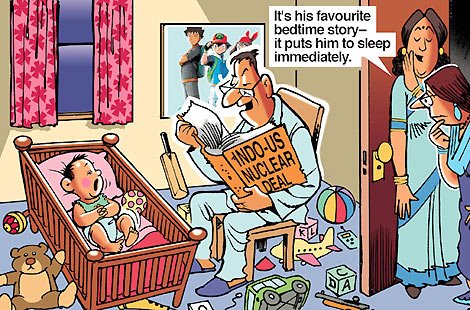
Jaaju Jaaju stories are bed time stories narrated by a loving father to his son each night before going to sleep. These stories are collected from various sources. Besides the little one (who loves to listen to the story and sleep with his head on his dad’s shoulder sucking his little thumb), there are three other characters who listen to this daily – they are Kesavan – the elephant, Chakki – the cow, and Sundari – it’s little daughter. Each night, the story is ended at some point, to give curiosity to the listeners and it is started the next night with a question answer session. Enjoy reading each day as it is posted and pass it on to your little loved ones.
The story this time is one recounted by Kottarathil Sankunni reflects the relevance of the life style prescribed in modern times also. It seems that a pair of birds used to sit a on the branch of a tree near a bathing ghat and ask of everyone coming to bathe, ‘ko rukku?’ No one was able to understand the nature of the query and give a suitable reply.
One day Alathur Nambi, who was passing by, heard the cry of the birds and turning towards them composed a Sanskrit sloka. The sloka was acceptable to the birds and they flew away, after blessing the family of the Nambis. They were actually Aswini devas, the celestial physicians, who had come to check up on the technical efficiency of Ayurveda practitioners on earth.
What is relevant to us in modern times are the question and the answers. The question was actually ‘Kah arukku’, meaning ‘who is there who is disease free’. Nambi answered that he who eats lightly and at proper times, he who walks a little after taking food, he who sleeps turning to the left side, he who passes urine and stools promptly without delay and he who is controlled in satisfying his sexual urges will be free of diseases.
How modern is this advice! Even today, modern doctors suggest the same regimen as an antidote against modern lifestyle diseases like hypertension, elevated cholesterol levels, obesity and so on.
Ayurveda is a very scientific and systematized body of medicine. There are a number of popular stories as well as a body of scientific literature that attests to the efficacy of the treatment systems of Ayurveda. It is up to modern Indians to take up the cause of Ayurveda in a systematic manner as a life style regulating mechanism, which will appeal to the West also.
The “Garland of Legends”, Ithihya Mala, is a collection of legends prepared by Kottarathil Sankunni, a revered Sanskrit – Malayalam scholar who lived in the latter part of the nineteenth and early part of the twentieth century in Kerala.
Jaaju Jaaju Stories – The Alathoor Nambis Celebrate the Ayurvedic Medicine Tradition

Jaaju Jaaju Stories – The Alathoor Nambis Celebrate the Ayurvedic Medicine Tradition
The “Garland of Legends”, Ithihya Mala, is a collection of legends prepared by Kottarathil Sankunni, a revered Sanskrit – Malayalam scholar who lived in the latter part of the nineteenth and early part of the twentieth century in Kerala.
Ayurvedic Medicine in Ancient Kerala.
In Kerala, the system of specialization in medicine was institutionalized and practiced since ancient times. The tradition of ‘Ashta vaidyans’, a group of eight physician families, was an innovative concept that was borne out of the system. Each of these families specialized in a certain area of Ayurvedic medicine.
Once, when some young Nampoothiris, Kerala Brahmins, were spending their free time talking in the verandah of a huge Illam, thier traditional house, the discussion veered around to who was the best among the Ashta Vaidyans. An elderly member of one of the Ashta Vaidyan families, who happened to pass by, explained to the young men that there was no question of which family was better than which. He said that each family was specially trained in a particular aspect of medicine and together the Ashta Vaidyans represented the best of Ayuvedic medicine.
The Renowned Alathoor Nambi Family
One of the more renowned of the Ashta Vaidya families was the family of Alathoor Nambi. The family hailing from what is now known as the Malappuram district of North Kerala, near the ancient port of Ponnani, was specially known for their prowess in finding out the exact nature of a disease and prescribing the correct and proper medicines.
One story recounted in the Ithihya Mala throws light on the awesome power of the Alathoor Nambis. Once, a handsome Brahmin approached the Nambis with the complaint of itching all over the body, which in the course of time was marring his handsome body with black sores. The Brahmin was in tears, since all the other Vaidyas he had approached were of the opinion that the disease was irreversible.
Nambi examined the Brahmin and said that the only effective remedy for the disease was to consume oil collected from a python. The Brahmin was aghast. With a heart filled with sorrow, he slowly wended his way back home. On the way was the famous temple of Chamravattam. (Chamravattam is a place near Tirur, in Malappuram district of modern North Kerala). The Brahmin decided to stay at the temple and spend his last days there in fasting and prayers.
That night he had a dream. A bearded man, very authoritative, approached him in the dream and asked him to ensure that he takes a bath every day in the nearby Bharatapuzha River and to drink some of its water every day after bathing. The Brahmin religiously followed these instructions. Lo and behold, within a couple of months, the itching stopped completely and the blackened sores had also disappeared.
Overjoyed, the Brahmin went to Alathur Nambi to share the joy of his recovery. Nambi asked him how he had managed to procure python’s oil. The Brahmin replied that he had not taken any python’s oil, but had only prayed at the divine temple of Chamravattam. He also recounted the dream. Nambi then went along with the Brahmin and after seeing the temple and the bathing place; he walked along with the Brahmin on the banks of the river. They had only gone a short distance upstream when they saw a python lying dead on the riverbank, oil from the carcass flowing downstream along with the river water to where the Brahmin used to bathe.
The story shows that even the Gods had accepted the veracity and exactitude of the treatment meted out by the Alathur Nambis. Once the Nambis have chalked out a course of treatment it is virtually impossible to better upon it.
Height of jealousy
Height of jealousy
Press Trust Of India
London, March 13, 2008
Shorter men are more likely to be jealous husbands and boyfriends than their taller counterparts, suggests a fascinating research, which may finally have proof for the controversial ‘Napoleon complex’.
The studies, reported in the New Scientist journal, believes it reflects insecurities among men who are not society’s “ideal” height. The much-talked about ‘short man syndrome’ is a phenomenon where short men compensate for their lack of height by inculcating aggressive tendencies, often associated with Napoleon, Mussolini, Hitler and Attila the Hun.
In the study carried out by the University of Groningen in the Netherlands, researchers asked men and women how jealous they were in their current relationships.
In another similar study, involving 119 male and 230 female students, the participants were quizzed on their reaction if they saw their girlfriend, or boyfriend, flirting with a stranger. The findings suggested that shorter men were far more likely to say they were jealous than taller ones.
“Taller men tended to be less jealous, and the tallest men were the least jealous,” the Daily Mail of Britain quoted the researchers, led by Dr Abraham Buunk, as saying. Among the women, average sized females were the least jealous- while tall and short women were the most.
Repeated studies have shown that women rate taller men as more attractive and powerful than shorter ones, while men prefer “average” women, usually who are a couple of inches shorter than them in height.



Education makes you live longer
Education makes you live longer
13 Mar 2008, 0039 hrs IST,AFP
WASHINGTON: If you have been contemplating going back to school to get a degree, this might convince you: a study by the Harvard School of Medicine has shown people with a better education live longer.
“Between the 1980s and 2000, life expectancy increases occurred nearly exclusively among high-education groups,” the study said.
While life expectancy for people with a high school degree or less did not change between 1990 and 2000, the better-educated gained more than 1.5 years over the same period, the study showed. “A 25-year-old with a high school degree in 1990 could expect to live another 50 years, or for about 75 years,” lead author Ellen Meara said.
“Looking at a similarly educated 25-year-old in 2000, you have the same expected life span,” said Meara, assistant professor of healthcare policy at Harvard Medical School.
“For the better educated, you have an expected life span of 80 years in 1990, but it’s 81.6 by the year 2000. So it’s quite a big gain.” The reasons for such longevity appear to be that more educated people have better access to both information about disease and medical advances.
“Quite literally, why are the better educated living longer? They’re less likely to die of diseases,” said Meara. Life expectancy grew across the board for all races and genders between 1990 and 2000, showed the study, which looked only at non-Hispanic blacks and whites to “limit the impact of immigration on estimates.”
 ClicksandWrites
You must be logged in to post a comment.