Finding taxi ‘is a nightmare on Abu Dhabi streets’
Finding taxi ‘is a nightmare on Abu Dhabi streets’
By Binsal Abdul Kader, Staff Reporter GULF NEWS Published: April 10, 2008, 00:28
Abu Dhabi: A sales executive of a bank waited for a taxi for about two hours, from 7pm to 9pm, last Thursday, at the end of Hamdan street but in vain.
“Finally I had to walk for one hour … to reach my flat in Tourist Club Area,” said Fahad Abbas, an Indian.
Even after the introduction of new taxis, such complaints are common among the residents in the city, Gulf News found.
And the scorching sun of the summer adds to their woes, complained many residents.
Woes
Fahad was sharing his worst experience on getting a taxi on Abu Dhabi streets with several others. Weekends are the worst but other days are not different either, said Fahad who commutes every day on taxis to meet his clients all over the city.
“I have to wait for at least half an hour, on average to get a taxi on any street in the city.” Fahad said lunch time is the worst on week days as most of the drivers either go for prayers or a break. “It was okay till March end but now the summer does not allow you to be under the sun in the afternoon,” said Fahad.
Ahmad Sulaiman, an Emirati technician, also echoed the same problem. On average he waits half an hour for taxis. “I have a car but I have to depend on taxis … when the car is in garage.” He said the most difficult time to find a taxi is morning and afternoon. One of my friends told me he had to wait for one and a half hours at Al Maria Cinema, in the afternoon last week, said Sulaiman.
Habib Ali, a Pakistani technician, also said he has waited more than half an hour for taxis several times. “We need more taxis in the city,” said Ali.
Sagar Thonikkadavil, an Indian visitor, said the situation is worse in Abu Dhabi than in Dubai and Sharjah. “When I was in Dubai and Sharjah one month ago, I did not find it much of a problem to find a taxi,” said Thonikkadavil.
Many of the women passengers told Gulf News they found it difficult to wait for the taxis on the streets.
“Last week I waited for 40 minutes on Electra Street in the afternoon for a taxi,” said A.B., who works as a secretary.
Phasing out
Trans AD, Centre for Regulation of Transport by Hire Cars in Abu Dhabi, in a statement issued to Gulf News said 200 new taxis will be added to the present fleet of 8,300 taxis in the emirate, including new and old ones.
“We phased out about 700 old Taxis and introduced about 1,000 taxis,” said the statement.
Eight mistakes to avoid while investing
Eight mistakes to avoid while investing
26 Mar, 2008, 0358 hrs IST,Dhruv Agarwala & Kartik Varma,
Investing is not just about picking winners, but also about avoiding mistakes. Retail investors can be better off if they avoid making the following mistakes.
Overconfidence – Don’t be unrealistically optimistic
A bull market makes retail investors believe that they are geniuses – after all, anything they put money into goes up. This overconfidence in their own abilities leads to a complete disregard of the risks involved. Every new generation that invests in the market ignores past experience. These new investors wrongly believe that stock prices only go up.
Don’t be overconfident and don’t start believing that you have superior skills compared to the market. Recognise that in a bull market you are benefiting because the whole market is going up. If those around you are getting unrealistically optimistic, start managing your risk accordingly. Remember that sometimes markets do come crashing down.
Over enthusiasm to trade – Not every ball should be hit
Good batsmen realise that some balls outside the off-stump should be left alone. Similarly, professional investors realise that sometimes its better to just stand still than to rush into a stock. Retail investors often make the mistake of “flashing outside the off-stump” because they cannot resist the temptation to trade in every opportunity. And, like an inexperienced batsman, they suffer the same fate.
Too much trading will lead to a lot of churn, extra commissions to your broker and huge tax implications for you. Some of the world’s best investors follow a buy and hold strategy – you should too.
Missing the benefits of compounding of capital – Learn from Einstein
Albert Einstein is reputed to have said that compounding of capital is the 8th wonder of the world because it allows for the systematic accumulation of wealth. Even though any one in class 5 could tell you how compounding works, retail investors ignore this basic concept.
Compounding of capital can benefit you only if you leave your money uninterrupted for a long period of time. The sooner you start investing, the bigger the pool of capital you will end up with for your middle-aged and retirement years.
Don’t wait to start investing only when you have a large amount of money to put to work. Start early, even if it’s with a small amount. Watch this grow to a very large amount with the passage of time.
Worrying about the market – But there is no answer to your favourite question
Smart investors don’t worry about the direction of the market – they worry about the business prospects of the companies whose stocks they own. Retail investors are obsessed with the question “Where do you think the market will go?” This is a wrong question to ask. In fact, no one knows the answer.
The right question to ask is whether the company, whose stock you are buying, is going to be a much bigger business 10 years from now or not? Don’t take a view on the market, take a view on long-term industry trends and how your chosen companies can create value by exploiting these trends.
Timing the market – Around 99% of investors will fail in this strategy
Its very difficult to time the market, i.e, be smart enough to buy at the absolute bottom and sell at the absolute top. Professionals understand that timing the market is a wasted exercise.
Retail investors always wait for that elusive best opportunity to get in or to get out. But by waiting they let great investment opportunities go by. You should use systematic or regular investment plans to make investments. You’ll have to make fewer decisions and yet can accumulate substantial wealth over time.
Selling in times of panic – You should be doing the opposite
The best opportunity to buy is when the markets are falling and there is fear in the minds of investors. Yet, many retail investors do exactly the opposite. They sell when the markets are falling and buy only when the markets are high. This way they end up losing twice – by selling low and buying high, when they should be doing exactly the opposite.
If nothing has changed about the long-term outlook for the company that you own, then you should not sell this company’s stock. Use this opportunity to buy more of the same stock in falling markets. Some of the world’s biggest fortunes were made by buying when others were selling in panic.
Focusing on past performance – Its like driving forward while looking backwards
It is a very common perception that because a stock has done well in the past one year, it’s the best stock to invest in. Retail investors do not realise that often the best performers will underperform the market in the future because their optimistic outlook has already been priced into the stock.
Don’t go after hot sectors that are currently producing high returns. Don’t let greed drive your investment decisions. Look forward to see whether the gains produced in the past can get repeated or not. Short-term trends of the past might not get repeated in the future.
Diversifying too much will kill you – Investing is all about staying alive
Beyond a point, having too many names in a portfolio can be counterproductive. You might end up duplicating, or end up taking too much exposure to a sector. Over-diversification can upset your portfolio, especially when you have not done enough research on all the companies you have invested in.
If you are an active investor in the stock market, maintain a manageable portfolio of 15-25 names. Instead of adding new names to this portfolio, recognise ideal ones. Then back them with more capital. In the long-run, this will produce better returns for you than adding another 20 names to your portfolio. Investing is all is about patience and discipline. By avoiding mistakes you can improve the long-term performance of your portfolio, whatever the economic conditions prevailing in the market.
Courtesy: http://www.iTrust.in / The Economic Times
AKCAF to hold business seminar tomorrow
AKCAF to hold business seminar tomorrow
By a staff reporter KHALEEJ TIMES 10 April 2008
DUBAI — All Kerala College Alumni Forum (AKCAF) will hold “AKCAF Business Meet 2008”at Jumeirah Beach Hotel, Dubai tomorrow from 4:30 p.m.
The event, to be inaugurated by Mons Joseph, Kerala Minister of Public Works, will be presided over by Mahmood B. A., president of AKCAF.
“The objective of the summit is to bring the Indian business community and members of AKCAF onto one platform to facilitate the interaction and discussion of various aspects related to the current business and investment opportunities in the UAE and Kerala,” said Mahmood.
The event, comprising four sessions, will commence with the inaugural session at 5.00 p.m. Atiq Juma Faraj Naseeb, Director of Commercial Services, Dubai Chamber, will speak on business opportunities in Dubai, followed by felicitation by Raju Menon, Managing Partner, Morison Menon, the presenter of the event. After an overview of the event by Sudhir Kumar of Morison Menon, session two will focus on the Trends and Opportunities in UAE. Captain Saleem Alavi, Director of Business Development, Dubai Maritime City, will give an overview on Maritime Investments, followed by a speech by Jade El Khalil, Chief Sales and Marketing Officer of Dubai Properties, on opportunities in the Dubai properties market.
In Session 3, panel discussions initiated by Issac John Deputy, Business Editor, Khaleej Times, as moderator, will throw light on various investment perspectives of successful NRI’s, such as Joy Alukkas, Chairman of Alukkas group, Sudhir Gopi, Chairman and MD of Sudhir Gopi Holding, K. V. Shamsudheen, Director of Barjeel Geojit Securities. Some of these elite achievers will narrate their challenges and success stories.
In the closing session, Abbas Ali Mirza, President of the Indian Business and Professional Council (IBPC), Dubai, will deliver a speech on India vision 2020. K. Kumar, Convener of Indian Community Welfare Committee (ICWC), will be felicitated for winning the Bharathiya Pravasi Award.
Rajesh Pillai, AKCAF General Secretary, will deliver the welcome speech and Juby Kuruvila, AKCAF Treasurer, will give the vote of thanks. AKCAF Business Meet Conveners, Sasi Kumar Nair and Paul T. Joseph, will chair the technical sessions 2 and 3.
Dh10 million plant will recycle edible oil waste
Dh10 million plant will recycle edible oil waste
By a staff reporter KHALEEJ TIMES 10 April 2008
DUBAI — The Dubai Municipality and Al Serkal Group have announced the launch of a Dh10-million waste treatment facility in Al Aweer, dedicated to recycling edible oil waste from hotels, restaurants and food processing factories. The plant will start functioning early next month.
Hussain Nasser Lootah, Acting Director-General of Dubai Municipality, said the new plant has been constructed in accordance with the highest international standards. It is equipped with state-of-the-art machinery to handle separation of oils and grease accumulated in grease traps and lift stations, and at food processing companies, restaurants, hotels, hospital kitchens and other food-related industries.
These wastes will be collected and transported by trucks to the waste treatment plant, where it will be classified either as hazardous material and sludge, or as recyclable material (re-usable water or oil and dry solids) that will be further treated for future use.
“This is the first treatment plant for edible oil wastes in the entire region. At Dubai Municipality, it’s our policy to join hands with the private sector to set up such ventures,” Lootah said.
The municipality has urged these establishments to abide by the rules and regulations laid down by the civic body. The municipality has asked them to allow only certified companies to collect and transport waste edible oils from the grease trap of food industries to deliver to the new plant.
The treatment plant has been built and managed by Al Serkal Group, on a 15-year build, operate and transfer (BOP) agreement with the municipality.
The new plant will alleviate pressure on the existing station in Al Aweer, and also, will create several job opportunities for those qualified in the field. The plant now has an optimum capacity to treat and process 50 cubic metres of grease and other wastes. In its second phase, capacity will be enhanced to handle 100 cubic metres of wastes.
A circular, issued by the municipality, makes it mandatory for food preparing establishments to instal grease traps and interceptors in their drainage system to separate the fats, oils and grease and maintain them by cleaning regularly.
The circular also stipulates that cleaning, maintenance and transporting of wastes from the grease traps and interceptors need to be carried out by the companies approved and authorised by the municipality and they must deliver these wastes to the Waste Edible Oil Treatment Plant in Al Aweer.
The food establishments are also required to maintain a register in which all data related to the process of getting rid of fats, oils and grease is to be recorded, especially showing the date of their collection and their quantity as well as the name of the company which cleaned and collected the waste oil.
While Al Serkal Group will build and operate the facility, the Dubai Municipality, acting through its Sewage and Environmental divisions, will implement the rules and regulations, supervise all operations and play an active role in implementing and adhering to safety policies.

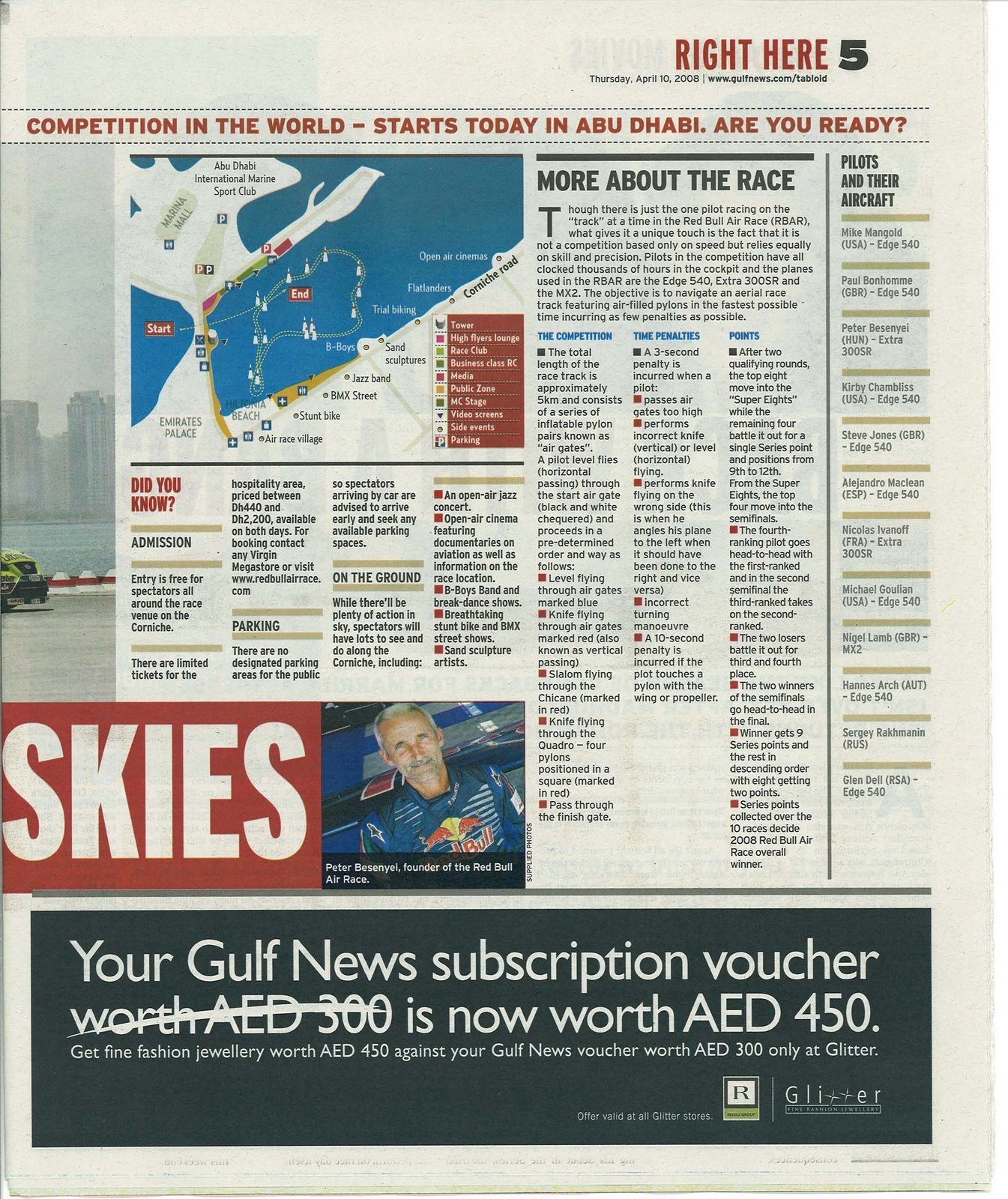

All gas cylinders to have improved safety valves
All gas cylinders to have improved safety valves
By Alia Al Theeb, Staff Reporter GULF NEWS Published: April 08, 2008, 23:39
Dubai: All domestic gas users will have new cylinder valves with improved safety features, a senior official announced on Tuesday.
The changeover will be executed with immediate effect in Dubai by Emirates Gas in partnership with Emarat. The valves and regulators are available from all authorised LPG (liquefied petroleum gas) cylinder distributors for a one-off payment of Dh40.
The move comes following a decision by the undersecretary of the Ministry of Interior in conjunction with Dubai Civil Defence. Major General Rashid Thani Al Matroushi, Director of Dubai Civil Defence and head of the committee that put in place a structure to enforce the decision, stressed the importance of all bottling and distribution companies’ commitment to the clauses under the Ministry’s decision.
Colonel Ahmad Al Sayegh, Deputy Director of Dubai Civil Defence, said faulty gas cylinder valves were time bombs and there had been many fires at houses, labour accommodation and Portakabins and this had led to a study on the reasons behind the fires.
“Experts said gas leaks or errors in the valves were the main reasons behind those fires,” he said.
The civil defence will implement the mechanism to ensure the use of the new attachments and initiate an awareness programme for residents. It will also perform checks on restaurants and other public places to ensure the new regulators and valves are being used.
Ali Mustafa, General Manager, Emirates Gas, said considering Dubai alone has 300,000 to 400,00 domestic gas cylinders in use, the environmental and safety advantages of the new valves will be tremendous.
Several advanced safety features
Dubai: The new valve has several advanced safety features and is being introduced after extensive research and trials.
It has a short one-piece body with high impact strength. It also has a protective gasket preventing the entry of dust and water and a self-closing valve preventing accidental leaks.
The regulator is equipped with an automatic cut-off mechanism to stop the flow of gas in case of a leak or cut in the rubber hose. The cylinder valve will close in case of a fire. The current cylinders when empty will be exchanged for a cylinder with a new valve by the distributor. Cylinders with this new valve can be operated only by a regulator supplied by Emirates Gas or Emarat. It is estimated that about 1,000 cylinders with new valves will be changed per day.
– Staff Report
Timeline: Blast history
March 29, 2008: Gas cylinder blast injures three workers in Ras Al Khaimah.
February 20, 2008: Seven hurt in villa gas cylinder explosion in Deira, Dubai.
May 19, 2005: Ten hurt and 22 shops and 70 vehicles damaged after a gas pipe leak caused a massive explosion in a restaurant on Al Wahda Street, Sharjah.
February 28, 2005: Massive gas cylinder blast wrecks Sharjah cafeteria.
December 19, 2004: Three injured in cylinder blast in the Al Wathba district, Abu Dhabi.
December 7, 2003: Gas cylinder blast destroys restaurant and shop in Ras Al Khaimah.
September 30, 2001: Gas cylinder explodes in apartment in Al Rifaa, Dubai.


You must be logged in to post a comment.