‘Sexy voice implies a sexy body’
‘Sexy voice implies a sexy body’
18 Jul 2008, 0038 hrs IST,ANI
WASHINGTON: If you find the voice on the phone sexy, chances are that the person is physically attractive too, says a new American research.
The study, led by Susan Hughes, an evolutionary psychologist from Albright College in Reading, Pennsylvania, suggests that people with voices deemed sexy and attractive tend to have greater body symmetry upon close inspection.
“The sound of a person’s voice reveals a considerable amount of biological information,” LiveScience quoted Hughes, as saying. “It can reflect the mate value of a person,” she added.
The study cautions that an attractive voice does not necessarily indicate that this person has an attractive face.
A symmetric body is genetically sound, scientists say, and in evolutionary terms, in the wild, it can be an important factor when selecting a mate. However, sometimes changes during prenatal development can slightly skew this balance. For instance, the length ratio between index and ring fingers, known as the digit ratio, is fixed by the first trimester, a time that corresponds with vocal cord and larynx development.
If the hormone surge that affects vocal development also affects finger growth, there should be a connection between an individual’s voice and digit ratio.
Hughes could not demonstrate a connection between voice attractiveness and digit ratio in her previous work, possibly due to vocal changes that occur during puberty.
So in the new study, about 100 individuals listened to previously recorded voices and independently rated them on nine traits important during mate selection: approachability, dominance, healthiness, honesty, intelligence, likelihood to get dates, maturity, sexiness and warmth.
Study participants generally agreed on what made a voice attractive. But when Hughes used a spectrogram to analyze these voice ratings according to different acoustic properties such as pitch, intensity, jitter and shimmer, she could not find a common feature that made these voices seem attractive.
This indicates our perceptual system may be more advanced than expected, Hughes said. “We can agree on what’s an attractive voice yet I can’t capture it with a computer,” Hughes said.
Investigating if a combination of these properties can define an attractive voice may shed light on a connection, she said. The study is published in the June 2008 edition of the Journal of Nonverbal Behavior.
Jeetu – A promising singer from Mumbai
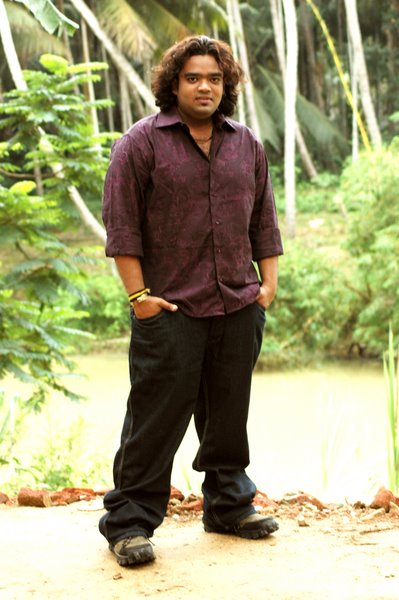
Amrita TV has recently concluded one of it’s prestigious Reality show which had a tough competition all throughout amongst the contestants and it’s active followers. You may not have witnessed a massive swing of fortunes and votes even in the lok sabha polls but that was the case amongst the scores of SMS votes for the last 3 contestants during the final day of this programme. All throughout the show, we were ecstatic and supported all the contestants but with awe watched the progress of a honest, moderately speaking and very hard working Mumbaikar boy, originally from Triprayar of Thrissur District. Due to his natural style and open attitude to acknowledge his limitations he was liked and disliked by many and also happened to fall under my mischievous eyes which even prompted me to create a whole new set of cartoon based on the Super Star Global. Obviously in most of them, he happened to be the main character. We have seen that the finals of such reality shows are always a surprise and at the end of the show both the winner and losers will have plenty of stories to say with regards to their journey till then.
Out of my passion to promote these talents who took an effort to give us some memorable months of musical fun and festivity and also as a TQM activity to see that they are not left aside, I approached Jeetu and his family for a short session with me. I had several questions running in my mind when I approached them as throughout the show I have been constructively criticising him and showering him only limited complements through my write-ups as well as cartoon series and was not sure about the direct reactions towards me for such an attempt. All those apprehensions melted down when I communicated and today, I am presenting to you all to read about Jeetendranath Ramachandran alisa Jeetu:
Greetings to you Jeetu. You have been one of the finalists of the recently concluded Super Star Global programme conducted by Amrita TV. It was a close finish and almost a sure winner for the title, last minute swing of votes resulted in you reaching the 2nd position. However, when we look at it, overall it gave a feast to all the music lovers and the contestants. It is the same interest of these music lovers that made me now approach you for a brief and casual talk to find how your progress is after the post-elimination from this show.
1. Jeetu, congratulations for participating in the Super Star Global Competition and getting selected to the top 3 level. How did you hear about this programme?
From amrita tv ads.
2. How did you find the different stages of the competition? Particularly on the challenges thrown to you to perform various dance and duet rounds?
Challenges are part of realty shows. To be frank I had difficulties at the beginning stages. The main problem was to dance but I got used to it as I had to survive.
3. Who is your Guru? Could you please give us an idea how you went about preparing for each round.
I believe that I’m blessed one because I had an opportunity to learn music under 5 gurus.
1. Smt. Shantha Venkatraman (Trichi) (carnatic vocals)
2. Smt. Prasanna Varrior (carnatic vacals)
3. Mr. Biju (Trivandrum) (Carnatic vocals)
4. Smt. Radha Varrior, deciple of late Guru Shemmangudi Bhagavathar. (carnatic vocals)
5. Smt. Panth (Hindustani vocals)
During the show I didn’t get any training from professionals. It was all done by myself, but off course George sir’s vocal training helped me a lot and I used to practise it regularly.
4. How was the support given by the Amrita TV channel in terms of co-ordination and arrangements for contestants like you who were situated away from Trivandrum?
They created a friendly environment so that we were able to practise more freely. But one thing I’ve to say is that the food was Pathetic. Accommodations were just ok. but one thing is that we could practise our song freely without any disturbances and i believe thepurpose was served.
5. How do you rate the grooming sessions before each stage of this competition? Did you all get sufficient notification about each stage and also did you get sufficient guidance about how your performance should be for each one of them?
As I said George Sir’s tips were useful. It helped me to act as a professional. I consider him as my God Father.
6. How do you rate the other contestants who participated along with you? Did you all get along well?
Initially all were good but then you know as the pressure increased everyone changed. Only Suraj, Subin, Latha, Sruthi And Charu were with me.
7. Was there any stress on you with regards to the SMS votes / campaign which was a part of the requirement for getting through to the next level in each stage? How did you work on this, especially in your case, being an outsider from Kerala, being a Mumbai based Malayalee and coming all the way from there to participate in this prestigious programme.
Actually I had no problem with regards to the campaign. My fans used to campaign votes 4 me. Many banners and voting format cards were issued to the public by fans themselves. Being a Mumbai malayalee was not at all a probs because they considered me as there own.
8. What do you rate amongst the various stages for this particular competition as the toughest round? What was the reason that made you say this particular round as very challenging.
Performance round was the most toughest coz it was very difficult for me to dance while singing.
9. Looking back at this competition after the finals, do you feel, the stages set after your elimination makes you feel that you could have performed well in those?
Yeh, I always felt that I could do better after some of my performances.
10. How often you give concerts? How many hours normally you practise?
I had a concert with G.Venugopal in the month of April. I’ve commitments in the month of oct. nov. and dec. My practise sessions are really tiring, mostly I sit for minimum 3 hrs in the morning and If I get time I practise 4 another 90 mins in the evening.
11. Other than vocal, are you learning any musical instruments?
No. but I’ll learn something.
12. Tell me something about your activities other than those involved with music.
I write lyrics 4 my own composition. I’m a lead singer of a pop band “Eternity”. I had won gold medal in the state level for painting and silver medal in the nationals (2001-02). Even now I sketch out of my imagination.
13. Tell me about your academic progress. What are you doing now?
Presently studying in final year B.Com
14. Being a resident of Mumbai, did you get any support/recognition from the numerous Malayalee associations based in Mumbai?
Yes. Chembur fine arts had felicitated me by arranging a musical nite.
15. Who is your favourite singer? And who else do you like to follow closely from the music world?
Hariharan is my all time favorite. Then, Shankar Mahadevan, Rahath Fateh Ali Khan, Kailash kher, Enrique, George peter.
16. What are your future plans? What do you want to become – musically and otherwise?
I want to be a musician. Only that much I can say.
17. Do you get noticed when you travel to Kerala after participation in this show. How do you handle this popularity / recognition/encouragements.
Well it feels great when u hear someone saying that “adh super staril paadiya paiyan alle”.
18. Any funny incidents during your participation in the show which you wish to share with all of us?
No funny incidents as such.
19. Who do you rate amongst the panel of the judges as the best? And why? Did you notice any bias or partiality?
No comments.

20. Any mention or write up on Super Star Global show cannot be completed without a word or a page on Stephan Devassy. Kindly provide us your insight on this genius. How did you find your interaction with him? How this genius worked around each episode/shoot to give you the best and bring out the best.
He was the best among the whole ssg team. While preparing song tracks he explains how to deal with each and every expressions. When we come on stage 4 the shoot he just say “polikyada mone, thagarku”. That’s Stephen Devassy.
21. And the winners prize, do you enjoy driving it around in Mumbai traffic?
Well my car is in kerala at my brother’s place. I used to drive it when I was at kerala. Waiting 4 the vacation…………
22. Tell me anything additional you want to include here
Brother it was nice answering your questions. Thank you very much.
Let us get to know Jeetu more:
Name: Jithendranath Ramachandran
DOB: 27-08-1987
Age: 19
Father:P.K.Ramachandran
Mother: Baby Ramachandran
Occupation of Father: Working in Saudi Arabia
Qualification: Doing graduation in B.Com, 3rd year
Musical background:
Studying Carnatic Music since 14 yrs, Music composing, Gold medalist in Mumbai university for light vocals. ‘Best Singer’ Award received from “Jagjeet Singh” in “Josh’06 4-5 years of freestyle & Rock, Pop and New-age
Dancing Skills: Enjoy Dancing.
Address:
“Saraswathy”, Triveni CHS, Rajaji path, Dombivili(E), Thane, Maharashtra – 421201
Awards and Achievements:
Music composing, Gold medalist in Mumbai university for light vocals. ‘Best Singer’ Award received from “Jagjeet Singh” in “Josh’06
Hobbies: Music Composing, Write lyrics in Hindi
Sun Sign: Virgo
And, why not listen to some of his best performances during the recently concluded Super Star Global programme of Amrita TV:
Jeethu about Jeethu 01
Jeetu & Nidhish singing Piyare on SSG Amrita TV
ATV Super Star Global Jeetu dt 11022008
Performance of Jeetu Super Star Global dt 11022008
Jeetu at ATV SSG
Performance of Jeetu dt 13022008
Jeethu On Super Star Global
Jeetu Sung the Kalyug song…
Thuje dekh dekh sonaa…
Amrita TV Super Star Global – Jeethu – Albela
Amrita Super Star Global – Jeethu – Thane Poovita moham
Roopa & Jeethu
Roopa & Jeethu “Boom Boom”
AMRITA TV Super Star Global – Chemmanam Poothey
Jeethu singing Adnan Sami’s song
Amrita TV SuperStar Global Jeethu – Thujhe
Interviewed and compiled by
Ramesh Menon
17072008
Unlocking India’s potential
Unlocking India’s potential
11 Jul, 2008, 0543 hrs IST, ET Bureau
In India, we have always been competitive as individuals, primarily because we live with the reality of too many people chasing too few resources. This competitiveness has helped us make a mark in the global business scene; but it has also led to the over-exploitation of common goods, be it in business, government or society, leading to our systems being corrupt and clogged. We refuse to understand that our mentalities are supposed to grow along with the growth of our nation. That we are supposed to graduate from individual players focusing on personal gains to team players focusing on growth and sustenance of the entire system.
So, how do we make sure that our pure selfish individual attitudes are not standing in the way of our development ? The most common solution is regulation by a leadership authority with an iron hand, where legal coercion, in the form of penalties or punishments, is imposed so that people give up their immediate individual benefits to comply with social rules. Most developed nations have done this during the initial stages of their development itself, through a benevolent dictator who gradually gives way to a democratic environment.
However , in the case of India, since this democratic machinery is already in operation, this would be almost impossible to pull off. Privatisation is another solution where governmental regulations limit the amount of a common good available for use by any individual. One example is the reduction in corruption, once license raj came to an end in India . But this route might not work or could prove to be costly in cases like traffic or environmental protection.
There is a third way, which is probably the best way, where each one of us owns up responsibility to co-operate and improve the system, though no outside agency is enforcing this. This is indeed true leadership, where each citizen realises that the next level of growth for our nation depends on each one of us behaving responsibly towards each other and towards the system. Where leaders lead responsibly by putting people at the centre of the system, where people don’t shirk r e s p o n s i b i l i t i e s though no one is directly monitoring and where citizens behave responsibly towards the environment and traffic.
Some of us who are open to this idea might think, what is the use of just me co-operating in the system ? I would still lose out thoroughly , if everyone else refused to collaborate. As leaders, as responsible citizens , let the change start with us. Once a few of us start behaving responsibly, others will follow suit, some of them out of their own responsibility, and some out of coercion. Let the unlocking of India’s potential start from each one of us.

A date for all occasions

A date for all occasions
Rosemary Behan for THE NATIONAL Last Updated: July 15. 2008
There has to be some reward for enduring the scorching summer heat, and mine, it appears, is to be sitting in an air-conditioned majlis in the heart of the Liwa oasis, eating fresh dates. In front of me sit six exquisite boxes of the pick of this year’s harvest, carefully laid out in order of ripeness. At one end is the khadrawi, smooth, bulging, firm and green, mellowing to an orangey-yellow; in the middle are several varieties of ratb, perfectly half-ripe dates which appear to have been dipped in honey, a golden amber at one end and a translucent red or brown at the other; and at the far end are the tamr, the fully-ripe, sun-dried dates which melt in the mouth and made me almost dizzy with happiness.
Rakan al Qubaisi, the head of the organising committee for the Liwa Festival, grabs a yellow dabass, a variety of date only found in Liwa. “This one is exactly how it should be,” he said, shaking me out of my reverie. “It is exactly half-ripe. It is not flawed in its exterior aspect, and it is large.” He finds another. “This one has no chance,” he says, dismissively. “Its size is small and it’s not even regular in shape. This one has lost 30 points from the start, but the first one, the first one has 40 points already.”
Over the next 17 days, some 7,000 plates of dates will be entered into this fiercely competitive contest; a judging panel of seven will mark each out of 100, with winners walking away with Dh100,000 prizes and brand new cars, from a total prize fund worth Dh5 million. Some 40 points are given for size, 30 points for appearance and 30 points for cleanliness. Taste is only considered in one category of the competition – just as well, given the sheer quantity of fruit.
Dates are big business in Liwa. Known as the “fertile crescent”, the 60 villages and 52 oases around Mezaira’a in the heart of Abu Dhabi’s Western Region produce half of the 760,000 tons grown every year in the UAE. Over the next two weeks, some 8,000 competitors will proffer more than 10 tons of the country’s finest dates and attract in excess of 40,000 spectators. “The objective of this festival is to encourage people in the UAE to grow the best dates, champion dates,” Qubaisi said. The judging will take place in an air-conditioned dining suite while three large warehouse-style tents will house a trade fair.
Only a handful of date varieties, including the coveted khalass, dabass and bumaan, are permitted to enter the competition; other types must go for categories labelled “miscellaneous”. “This is not about good dates. It is about perfect dates,” said Qubaisi, who is not only a date farmer but a veritable connoisseur, as passionate about the UAE’s varieties and their environment as the most committed French oenophile is about grapes.
When it comes to producing a winning date, Qubaisi says size is all-important. “The bigger the date, the better. It should also be perfectly smooth, neat and clean, with no cuts, no scratches. It should be shining.”
The date palm holds a blessed position in Arab society: with its ability to thrive in the searing heat, the tree provides a reliable source of nutrients and valuable shade for the cultivation of other plants. According to an Arabic proverb, the palm tree “has its feet in heaven and its head in hell”.
The Liwa Festival began as a one-day affair four years ago; this year it will involve other activities including a group wedding, Nabati poetry and traditional arts and crafts. Yet dates are still the main focus, and it’s hard to get Qubaisi off the topic. He can, he claims, identify a type of date just by glancing at the tree. “I can also tell you if the tree is male or female,” he adds. “The male palm is slightly larger, it is harsher and more violent on top, and it has only two weeks a year in which to pollinate the females.”
The date palm, or phoenix dactylifera, to give it its botanical name, is dioecious, meaning that trees have either male or female reproductive organs. Only female date palms produce dates, while the male palms provide the pollen. “Between 20 and 30 good males can pollinate about 200 females,” says Qubaisi. First cultivated in Mesopotamia around 4,000 years ago, date palm trees produce fruit when they are between three and five years old, and reach their peak at around 12 years, when they can produce up to 120kg of fruit per season. A single bunch can contain up to 1,000 dates; palms can grow up to 30 metres in height and live productive lives for up to 150 years.
Of the competition judges, four have been drawn from the Date Palm Research and Development Programme at UAE University in Al Ain, two from commercial date companies and one from the Department of the Environment in Abu Dhabi. There will be a prize for the biggest single branch of dates (last year it was a staggering 68kg and won its owner Dh100,000), the most beautiful bunch of dates and even for the cleanest and best-run farm. The biggest plate of dates, at about six metres long and three metres wide, is expected to make it into the Guinness World Records. Import and export companies will trade plants and expertise, young farmers will attend lectures and the UAE University will give away thousands of young date trees artificially propagated in its laboratory, to help boost the country’s production.
The UAE is the world’s fifth-largest date producer, behind Saudi Arabia, Iraq, Egypt and Iran. And although there are currently more than 40 million date palm trees in the country, about 10 for every person, pushing date production further and developing the inland regions is a central plank of government policy. The figures for date production in the UAE have risen in line with the country’s development: in 1971, the year the UAE was established, production stood at just 8,000 tons a year; in 2005 it was over three-quarters of a million tons, with massive exports to countries such as India, Indonesia, Malaysia and Pakistan.
Most of the dates produced and sold in the UAE are ratb, soft and moist at one end and crunchy at the other. Yet I preferred the divine, fully-ripe khalass. As Qubaisi tries to interest me in some handmade baskets and satchels, made in the traditional way from rolled and flattened palm leaves and date branches, my mind drifts back inexorably to the box at the other end of the room and the soft, moist, silkily fibrous flesh with an almost-juicy sweetness. Had I not been in the company of Qubaisi’s friends and family, I would have finished the box entirely. But it’s as if Qubaisi can read my mind. “The khalass means the final one, because it’s the best of the best. There are some dates where you would take one but you wouldn’t take another, but there are ones where you’d eat a whole box and you’d still want more, though you’d need an ambulance to get you out.”
Considering the fact that dates contain 3,000 calories per kilo, six times as many as oranges and three times more than bananas, that’s not an unrealistic possibility. Yet before the discovery of oil and when food was scarce, dates and camel milk were staple foodstuffs to the UAE’s native Bedouin population. It wasn’t an unhealthy diet: nutritionally, dates are one of the world’s most complete foods, containing carbohydrates, protein, vitamins A, B and D, iron, magnesium, calcium and potassium. Dates are also around 75 per cent sugar, a higher percentage than most fruit. In some Saharan countries, the fruit still provides vital sustenance in a largely barren desert landscape, and according to UAE University’s research programme, the average annual per capita consumption of dates in date-producing countries is between 150 and 185kg a year.
Reclining in the majlis, which is also known as a palm-hut, or arish, I enjoy views over a large wooden veranda across a palm canopy to the sandy hills of Liwa. While this is a large, permanent arish, with air-conditioning, a widescreen television and modern bathroom facilities, it is still made mostly of date palm material – its wood, leaves and branches woven together to form the roof, the internal covers and the rope tying it all together. Traditional Bedouin, who had no use for permanent housing, used to build similar makeshift shelters and live in them during the hot summer months. Qubaisi laments the loss of traditional crafts, but hopes to revive interest in these skills by awarding cash prizes to women who continue the tradition. He shows me a saroud, a traditional mat made out of woven palm fibres, and a methben, a basket which used to be used to carry male flowers to pollinate the female trees. Then he shows me a wooden clothes airer complete with an oud burner to perfume the garments from underneath – yet sadly even he cannot remember its name.
According to Qubaisi, today’s highly developed competition started in an oasis majlis just like the arish we are sitting in now. Until four years ago, the date festival was an unofficial “battle between majlises”. Qubaisi’s own son Abdullah, nine, who has his own date farm, won a car at last year’s festival for one of his submissions. But isn’t there a lot of in-fighting over who does and does not win prizes? “Not any more,” Qubaisi says. “There used to be fights over who won prizes, but this was before when it was tribe against tribe. If the judging team was from one family there would be trouble. But now all the dates are submitted anonymously – they are all transferred to plates of the same design and are barcoded, and we make sure that the judging committee is recruited from outside Liwa.”
Mohammed Musa Salem al Qubaisi , a beautifully wizened date farmer, remembers a time when the date industry wasn’t streamlined at all. Now 85 or 91 (he claims not to know his exact age), Mohamad started working on his family’s date farm at the age of 10, long before the UAE was created. “Life was very hard,” he tells me. “The people then were real fighters. None of this was here. Before planting a date palm you had to dig down 30 metres to make sure there was water there.” As if his work on the farm was not enough, Mohamad also used to spend five months of the year as a pearl diver off the coast of Abu Dhabi. “I had no money. I used to trade pearls at sea with merchants from all over the Gulf, including Iran. I used to spend the summer on the seashore and the rest of the year working in the oasis. Things got easier after Sheikh Zayed redistributed the land around here in the 1970s and brought roads and electricity.”
In today’s world of piped water and hybrid trees grown in tissue culture laboratories, Mohamed’s experiences seem to chart several lifetimes. Yet although Emirati society has moved on since his working days, and many of the cottage industries related to date production have all but died out, date farming is still a bastion of traditional values. “For me, dates are more than just a business,” Rakan al Qubaisi says. “It’s a passion. Nowadays everybody is looking for immediate profit but you can see from the dates that the best things take time. My parents used to work the land and my kids will do the same.”
rbehan@thenational.ae

New Mid Day break – an opportunity for educating labour class

New Mid Day break – an opportunity for educating labour class
UAE government has come out with a strict rule requiring all construction and other on-site job involving companies to allocate approximately 3 hours of rest during the time 12:00 noon to 3:00/4:00 pm. Temparature during the last few days have been going on the higher side of 50 degrees.
It is really a humanitarian move from the government for the welfare of the labourers working in this extremely hot climate. It is very refreshing to see these poor workers relaxing on the shades during noon. It has also proved as a good business opportunity for the small grocery shops nearby the huge construction areas as these workers go for snacks or cool drinks during this forced leisure time.
Looking at this scene during the last few days, I wonder why not social groups and associations or even companies utilise this leisure time to educate these poor working class about various savings methods, insurance schemes, awareness on health/welfare measures etc.
Good to see your comments and any possible implementation/assistance plans for this cause if you are in favour.
Ramesh Menon
16072008
Bio-Medical Engineering is GVP’s added advantage
Bio-Medical Engineering is GVP’s added advantage
Tuesday July 15 2008 13:24 IST
GAYATRI Vidya Parishad offers the following courses at their respective institutions. The courses offered, and the infrastructure, faculties are of world class. All the programmes are accredited. All eligible candidates will get at least four to five opportunities to appear before different companies to get a very good job in “CAMPUS SELECTIONS” with a better package.
Till now 229 students have got good placement with reputed companies for the year 008-09.
GAYATRI IDYA PARISHAD COLLEGE OF ENGINEERING: Offers CSE, IT, ECE, EEE, MECH, CHE, CIIL, MCA GAYATRI VIDYA PARISHAD COLLEGE OF ENGINEERING FOR WOMEN: offering courses – CSE, IT, ECE and BIO-MEDICAL GAYATRI VIDYA PARISHAD DEGREE & PG COLLEGE: offering courses – MBA and MCA Bio-Medical Engineering is an electronics instrumentation course besides courses common for ECE branch.
It deals with instruments used in the health and medical field. The engineers are trained to design and maintain the above instruments and help the medical professionals in using the electronic technology in the medical field. This course is available in a very few colleges in Andhra Pradesh.
Gayatri Vidya Parishad will have a tie-up with reputed hospitals to run this course. The students are eligible for jobs in software companies as well as the jobs in medical field. They have also bright prospects abroad, claims secretary Prof P Soma Raju. Limited Hostel facility, limited college transport from city to colleges are available.
Placements, Seminars for all institutes will be centrally organized.
AVP launches new hospital
AVP launches new hospital
Tuesday July 15 2008 09:28 IST Express News Service
KOCHI: The new `AVP Ayurveda Chikitsalayam’ promoted by the Arya Vaidya Pharmacy (Coimbatore) was launched in Kochi on Monday.
The new treatment centre is located on the first floor of AVP’s Valanjambalam branch.
The centre was jointly inaugurated by V S Chackochan, in-charge, AVP Kochi centre and Beena Chackochan in presence of G Prathish, chief physician AVP Kochi.
The new centre offers genuine ayurveda treatment as practised by the AVP at Coimbatore in the traditional way. The Centre has also plans for special `Karkkidaka Treatment’ from Wednesday, with offer of `Karkkidaka kanjikkoottu’, said the centre authorities.
For details call 9446960877/9388604141. The AVP is also organising `Arogya-2008’, an international convention on ayurveda, to mark the culmination of the year-long birth centenary celebrations of Arya Vaidyan Rama Varier, physician and founder of the organisation.
The convention will be held at Coimbatore from August 21 to 24.The three major subjects in healthcare – geriatric, metabolic disorders and nutrition will be discussed at the convention.
RTA to launch webpage for car pooling
RTA to launch webpage for car pooling
By Joy Sengupta (KHALEEJ TIMES staff reporter)15 July 2008
DUBAI — A dedicated webpage to register private car pooling service, part of the government’s efforts to reduce traffic congestion, is set for launch next week, a senior Roads and Transport Authority (RTA) official told Khaleej Times recently.
The service is expected to also help eliminate the illegal taxis plying on Dubai roads, the official said on condition of anonymity.
He said: “The new car pool webpage on the RTA web site — http://www.rta.ae — will allow interested motorists to register themselves online after which the authority would conduct investigations about the applicants and grant them the permit.”
A decision on allowing six- and eight-seater vans to start similar car pooling services will be taken in the near future. But, currently, only light vehicles are approved to offer this service in Dubai, he said.
He clarified that family members travelling together in the same vehicle need not register for the permit.
Once the car pool service is formalised by the RTA, the motorists have the permits will not have to worry about fines and penalties.
Explaining the procedure to register, the official said, “Motorists can log on to the RTA web site and view the car pool registration page. Personal details and the details and identity of three others who will be travelling in the vehicle, who should be employed in the same organisation, should be furnished in the application form, besides the details of the vehicle, he said.
Several motorists reacted positively to the new car pooling initiative.
“Around three months back, I was in the Al Baraha area. I had given my friend a lift in my vehicle but as was fined Dh4,000 by an RTA inspector. He just issued the ticket without enquiring about or listening to my pleading. This move sounds good as people would not be fined unnecessarily. The question remains whether the RTA inspectors would listen to motorists when they are taking their family or friends on a trip?” said Pragyan Ganesh, a motorist.
“Not many people would be interested in the car pooling service. In Dubai, almost everyone has got own car and car pooling in general has not caught up with the people. The reason behind this is the lack of interaction among the people. Moreover, the RTA norm says that people wishing to register should be working in the same organisation. This is yet again a disadvantage,” said Aarti Mathur Sinha, who works with ABN Amro Bank in Dubai.
“Though the RTA should be congratulated on this new initiative, it must also train its inspectors in a better way. The inspectors must give a proper chance to the motorist to explain his problem,” said Kundan Singh, who works with another bank.
joy@khaleejtimes.com


You must be logged in to post a comment.