TQM
Making a valid deed
Making a valid deed
11 Nov, 2007, 0230 hrs IST,Ashish Gupta, TNN
In case of property transactions, various types pf deeds need to be drawn up. These may relate to agreement to sell, sale agreement, power of attorney and so on. Certain basic points need to be taken into account while drawing out these legal documents. The main content of a deed includes:
1. The names of the parties -buyer and seller, lessor and lessee etc
2. Terms and conditions related to the sale or transfer of the property
3. Details of the parties
4. Details of property in question
5. Sale consideration agreed on 6. Advance amount paid 7. Mode of payments 8. Time limits for payment of consideration
9. Timeframe for handing over original documents of the property 10.Timeframe for handing over possession of property 11. Indemnity provisions for the parties.
The deeds should be prepared on non-judicial stamp paper of requisite value as prescribed by the Stamp Act of the State concerned. Different States have different valuations and stamp rules related to property transactions in respect of sale, mortgage and leases.The purchaser is liable to pay the stamp duty in accordance with the applicable stamp rules. Normally, a deed should be executed by all the parties concerned.
All pages of the deed are to be signed. The deed should be witnessed by at least two witnesses giving their full names, signatures, particulars and addresses. Most deeds related to immovable property need compulsory registration at the jurisdictional sub-registrar’s office. All the parties concerned need to be present at the time of registration. All documents should be presented in original.
In case the purchaser cannot be present personally before the sub-registrar, he can give a power of attorney to someone to sign and present the documents on his behalf. The photos of the purchaser, thumb prints and signatures are entered on the deed. The documents should be presented for registration within four months from the date of execution. If it is not done within four months, a grace period of another four months is allowed on payment of a penalty.
A maximum penalty of 10 times the registration charges may be levied by the registrar. The liability to pay the stamp duty as well as registration charges lies with the purchaser of the property. The terms and conditions contained in the deeds should be clear and unambiguous. Any vague references and ambiguous connotations may give rise to misinterpretation and disputes between the parties.
The details of the property should be specifically and clearly defined. The exact location of the property, whether the property is a leasehold property or a freehold property etc should be mentioned. The details of how the owner of the property got ownership should also be mentioned. The details of registration already done with the office of the registrar should be mentioned as well. It should also be stated whether the property is free from any encumbrances or not, or whether there are any charges on the property.
The date from which the transaction is going to be effective should also be mentioned in the deed. The purpose of drawing the deed should be clearly mentioned – whether it is an agreement to sell, a sale agreement, a lease agreement, or a licence agreement. The law will go by the nomenclature used to find the true nature of the agreement. The deed should be signed, preferably by the parties themselves, in person.
In case the person cannot be present due to unavoidable circumstances, the executor should have proper power of attorney from the original party to enter into the transaction on behalf of the original party. Such power of attorney should be registered with the office of the registrar. The signatures of the parties should be properly attested.
There is a solution to every problem

There is a solution to every problem
Mr Alok Kejriwal is a new media entrepreneur and founded the contests2win business in 1998. He has successfully created new-age businesses in India and China. In his non-working hours Mr Kejriwal meditates and collects Indian contemporary art. Here’s his take on four questions from Business Line:
Two things that my education/training taught me:
God is in the details.
There is a solution to every problem.
Two things I learnt from my work/real life:
The greatest value creation comes from people — value them the most.
If something is difficult — it’s a great sign. That’s what will make the effort valuable.
One quality I look for the most in a new recruit:
Passion, passion, passion.
A book that I read recently:
After Dark, by Haruki Murakami.
Do not procrastinate

Do not procrastinate
Ms Harinder Singh
Ms Harinder Singh is General Manager at Grand Ashok, Bangalore. She is responsible for implementing strategies to streamline the entire operations of Grand Ashok. She has also served as General Manager, Hyatt Regency, Kathmandu. An amateur golfer, Ms Singh is nine times national trap shooting champion. Here’s her take on four questions from Business Line:
Two things that my education/ training taught me:
Knowledge is wealth.
Thoroughness and hard work in all predicaments.
Two things I learnt from my work/real life:
Do not procrastinate.
There is no ideal situation — everything is subjective.
One quality I look for the most in a new recruit:
Positive attitude.
A book that I read recently:
The World is Flat, by Thomas Friedman.
The process of learning must continue

The process of learning must continue
Mr Sreeram Iyer is the CEO of Scope International and CIO of Standard Chartered Bank, India. An MBA from the UK, he is also a Chartered Financial Analyst, Company Secretary and a qualified Cost and Management Accountant. Here’s his take on four questions from Business Line:
Two things that my education/ training taught me:
The process of learning must continue regardless of success achieved.
Try and share your learning with your team members.
Two things I learnt from my work/real life:
There is no substitute to delivery, execution and action.
Every individual brings new talent and capabilities. Identify those and maximise returns.
One quality I look for the most in a new recruit:
Right attitude — to change, learning and ethics.
A book that I read recently:
Plato and a Platypus — Understanding Philosophy through jokes, by Thomas Cathcart.
Problems are not stop signs, they are guidelines

Problems are not stop signs, they are guidelines
Mr Ashish Kirpal Pandit is the CEO of Fortis HealthWorld Ltd, the retail arm of the Fortis Group. An MBA from Indiana State University, Mr Pandit’s tryst with Fortis HealthWorld began in early 2006. His focus on detail has been instrumental in powering the company to its current leading position. Mr Pandit is a traveller by spirit and an avid golfer. Here’s his take on four questions from Business Line:
Two things that my education/training taught me:
Honing my analytical skills — this has helped me in identifying trends.
Clear and effective communication is the key to success.
Two things I learnt from my work/real life:
To take up challenges and turn them into opportunities.
Problems are not stop signs, they are guidelines.
One quality I look for the most in a new recruit:
Energy, enthusiasm and eye for detail.
A book that I read recently:
The Pursuit of Wow!, by Tom Peters.
Principled life leads to success

Principled life leads to success
Himanshu Baid
Mr Himanshu Baid, Managing Director, Poly Medicure, started his business of manufacturing healthcare disposables in 1997 under the brand name Polymed. His aim is to build his company as the most reputed and trusted company in the medical disposables industry.
Mr Baid, after completing his BE, joined Philips in Germany where he gained vital experience in international trade. His stint in Philips helped him understand the psyche of international marketers.
An avid follower of tennis and cricket, Mr Baid likes spending time with his wife and two sons in his spare time. Here’s his take on four questions from Business Line:
Two things that my education/training taught me:
Principled life leads to success.
Punctuality and self-confidence.
Two things I learnt from my work/real life:
To be strong and face the challenges.
Passion and enthusiasm to learn from every aspect of life.
One quality I look for the most in a new recruit:
The ability to understand the needs and requirements of the organisation and being honest towards the company and to himself.
A book that I read recently:
The Tipping Point, by Malcolm Gladwell.
Be fact-based

Be fact-based
Mr Pradeep Nevatia
Mr Pradeep Nevatia, President and CEO, Ninestars Information Technology Ltd, is credited for bringing the ‘Integrated Six-Sigma Program’ and TQM (Total Quality Management) practices from the manufacturing to the BPO industry. Mr Nevatia is a post-graduate in industrial engineering from NITIE, Mumbai, and a alumnus of Birla Institute of Technology, Ranchi. He has co-authored Brand-Wise, Leveraging People to Create Powerful Brands (2004, East West Publications). Here’s his take on four questions from Business Line:
Two things that my education/ training taught me:
Structured thinking.
Systemic planning and analysis.
Two things I learnt from my work/real life:
Be balanced.
Be fact-based.
One quality I look for the most in a new recruit:
The capability of the person to go beyond oneself.
A book that I read recently:
Lie and a Truth, by Nandan Gautam
Take success and failure in the right spirit

Take success and failure in the right spirit
Mr Hasan Abdul Kader
Mr Hasan Abdul Kader is the Managing Director of CCS Infotech Ltd. A BE (Computer Science) from National Institute of Technology (formerly Regional Engineering College), Tiruchi, he has more than 18 years of experience in management, public relations, product branding and overseas marketing. Here’s his take on four questions from Business Line.
Two things that my education/training taught me:
Improved analysing and decision-making abilities.
Believe in social responsibilities.
Two things I learnt from my work/real life:
Success and failure have to be taken in the right spirit.
Broad vision coupled with strategic effort will yield results.
One quality I look for the most in a new recruit: The ability to take/see every opportunity as a commitment and challenge.
A book that I read recently:
The Argumentative Indian, by Amartya Sen.
‘It’s vital to connect with yourself’
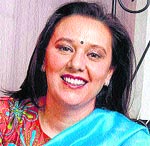
‘It’s vital to connect with yourself’
Viren Naidu, TNN
Shailja Dutt, Founder and Managing Director, Stellar Search and Selection Pvt Ltd speaks about her love for dance and the eagerness to solve crosswords!
Mantra
I think it is vital to connect with “yourself” and find the time I call ‘ME TIME’ – my time away from work, home, responsibilities, chores and duties – to do the things I enjoy and those that energise me to go back to work and my kids completely recharged. Several professionals with very hectic schedules and tenuous work-life balance will probably share the same thought. Eventually, when you have worked hard to achieve your goals, you must play hard to enjoy!
Dance
I have always loved to dance. A couple of years ago, I thought it would be fun to learn to Tango, and ended up learning Salsa, Cha Cha, etc. I attended classes with my younger brother but unfortunately, now I do not get the time. Personally, I think both business and dance are about passion and being nimble on your toes!
Art
I have been singing since I was a child and have been often complimented on having a great voice. So, after having kids and after taking my business to the next level, I thought why not train my voice? My guruji would come home to give lessons and even though I haven’t performed professionally, my friends are always being regaled by impromptu my performances.
Puzzle
Solving the crossword has become a habit. Before, I go to sleep, I have to finish the daily crossword in the newspaper. I have been doing that for years now. But in Sudoku, I am actually finding my feet and my son is better than me.
Style
To me pursuing an interest is a priority as is work and family. I also learn Spanish and do Yoga a couple of times a week. Though my days are hectic, I have never missed a single important event in the life of my children or my family.
Transforming idea into a product
Transforming idea into a product
Mahul Brahma, TNN
It was a bit of ‘jealousy’ towards a classmate that made Phani N Raj a businessman. School time memory of a student who had personalised clothing and stationery continued to be etched strong in his mind till much later, making him leave his PricewaterhouseCoopers job and start the branding company eYantra. “He was from the US and his cap, pencil box, T-shirt, everything had his name on it. I yearned for such personalised stuff, but there was nothing in India then to meet my demand.”
This got him thinking until he arrived at an idea to set up virtual stores where buyers can choose personalised stuff and get them delivered at their doorsteps. Mr Raj is one of the very few with the entrepreneurial spirit who have managed to be lucky enough to convert an idea into business. But most people end up thinking and discussing their bright ideas, but stop short of converting them to prototypes. Experts say there is a set of easy steps that could help any one to nurture a thought and take it forward to see if the kernel of a viable business is contained in it.
Look for it
The first thing, of course, is to remain alert to the sights and experiences one comes across, because big ideas may be lurking in the most unlikely corners. For Shalabh Sahai, who co-founded the volunteering service MITRA, it all started at the college canteen over tea.
He had been trying to understand why there was a communication gap between individuals who wanted to volunteer for social service and the groups that were organising such efforts. “It became our favourite topic of discussion at the canteen,” he says. Thus arose an idea for setting up an online exchange for volunteers.
It also helps to jot down an idea to see if it stands the test of time. A great idea may not sound all that great, when considered a day later. An idea is just of a few words long. Only when you sit down and pen it you realise the real picture. It is crucial to go into the details.
You need to ask yourself the right questions — what is the compelling need it fulfils, who will benefit from it, is there demand for it and who will fund it? Preparing a business model answering these questions is vital, says Mr Sahai. The answers will tell you whether to pursue the idea or drop it.
Read the market
An idea from a rookie entrepreneur would be worthless if the product or service doesn’t have the prospect of demand in the market. Industry associations, websites, journals and professional agencies can all help, but an innovator needs to have well-defined ideas on whether a market exists. This is but the first step to gain confidence that an idea can work.
If the demand picture is hazy or non-existent, one should have the courage to drop the idea and move on to other things. Sometimes, ideas emerge from necessities. When you have too many projects to handle and too few people and you can’t be at the office 24×7.
Emails and phone calls may not be sufficient to handle the complexity of the work. Sahil Parikh, founder and president of Synage, came up with a solution for his office — Deskaway. A software program that helps execute projects online. “The concept was new in India, but I was sure if it is a hit in my office it will be in the market,” says Mr Parikh.
Ideas can be ahead of their time
Latent demand doesn’t immediately translate into a viable business opportunity and some ideas, attractive as they seem, might simply be ahead of their time. But there are people who have stuck to their business and made it a success in due course of time. An idea who time is yet to come need not necessarily fail, but the entrepreneur must be able to envision the trend of the future that might make it succeed.
“I thought of specialising in cyber law and starting cyberlawcollege.com, when even the concept of internet was new,” Bangalore-based consultant Naa Vijayashankar (Naavi) says. “An idea ahead of times is not accepted well,” but perseverance pays. “Now, I have become a specialist in cyber law by default. So, you need to wait for the right time to come and don’t lose faith in your idea. Believe that if not today, five years down the line, it will click,” he says.
When criminal lawyer KS Kohli wanted to start a seven-day cabin crew training for airlines, everyone thought he was crazy as all other institutes offered full-year courses. But, he knew that Indian skies were going to be opened up for competition and there would be a surge in the need for flight crew. He stuck to the idea and built a successful operation, branded Frankfinn.
Customise to market needs
The aim should be to gain a general sense of the type of customer your product or service will serve. Identify your clients well enough so that you can modify your product as per their need. If the business is designed to serve the domestic market, it should have that flavour. “People work differently in different countries. So, it is very important to give Indian touch to your product,” says Mr Parikh.
eYantra’s Mr Raj says that he moved over from personalised stuff to corporate brand recall after the internet bust and it worked. MITRA’s Mr Sahai agrees: “We start as novices so we should never be too rigid. We need to learn and adjust our ideas to changes and be open to modifications.”
It is also important to hear people out. Because sometimes your business idea may come from the person you least expect it from, just casually, even over beer. M Sanjay Kanth, CEO, founder, ESS Solutions, was originally in the medical transcription business. But, the industry was losing its sheen. He knew the president of a title company based out of Baltimore. That person told Mr Kanth that there was refinance boom in the US which has resulted into a huge backlog in terms of production.
Incidentally, his brother M Sujay Kanth, who is now the COO of ESS, happened to be in US to explore business opportunities. They took up this opportunity. This was their first break. “Initially, we had no clue of what was going on and it was very hard to grasp. We took it as a challenge and Sujay got trained in their office for about 40 days after which we started the transition to my India office from 2004,” says Mr Kanth.
Sell the idea to investors
Money is often the biggest bridge that a first-time entrepreneur has to cross. It is important to sell the concept to potential investors. The startup should also detail a proper plan of how much money needs to be raised and how it would be spent. Projecting cash flow milestones will become easier if the homework to understand the demand had been done. There are also investment bankers who help you get venture capital against a ‘success fee’ i.e they will only charge you if you get funding.
But, there is another way in which entrepreneurs get going. They first start a small establishment, may be in a garage with a bit of furniture, and ramp up as the business builds itself. Frankfinn’s Mr Kohli started his business Frankfinn Medico Infoservices by borrowing Rs 40,000 from his friend. But, when the right time came, he used his own fund for starting cabin crew training business. Remember, the customer must eventually “pay” for your business. Everybody else is waiting to get paid. Loss-making as a business virtue perished with the dotcom bust.
Start now
All the risk you have taken by giving up your cosy job or turning down a big offer has finally paid back. Well, once things are in place just get started. Your idea is now a viable business proposition and has a funding. So, what are you waiting for? “It is very important when starting out is to be mentally prepared for a different journey filled with uncertainty and excitement. This entrepreneurial journey will teach you more about yourself than you would have ever known doing anything else,” says Mr Parikh.


You must be logged in to post a comment.