TQM
Black points await errant drivers
Black points await errant drivers
By Rayeesa Absal, Staff Reporter GULF NEWS Published: February 24, 2008, 23:29
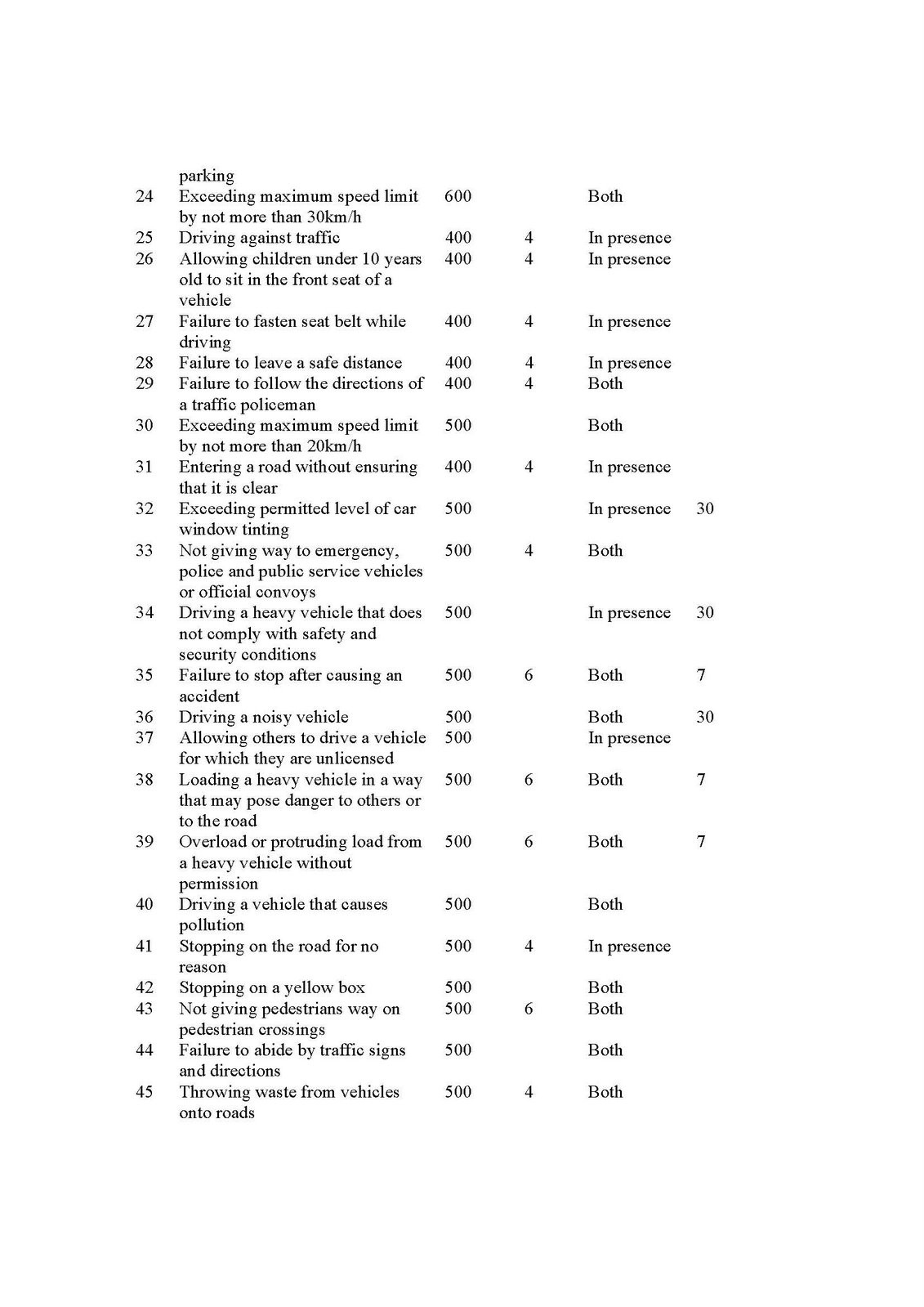
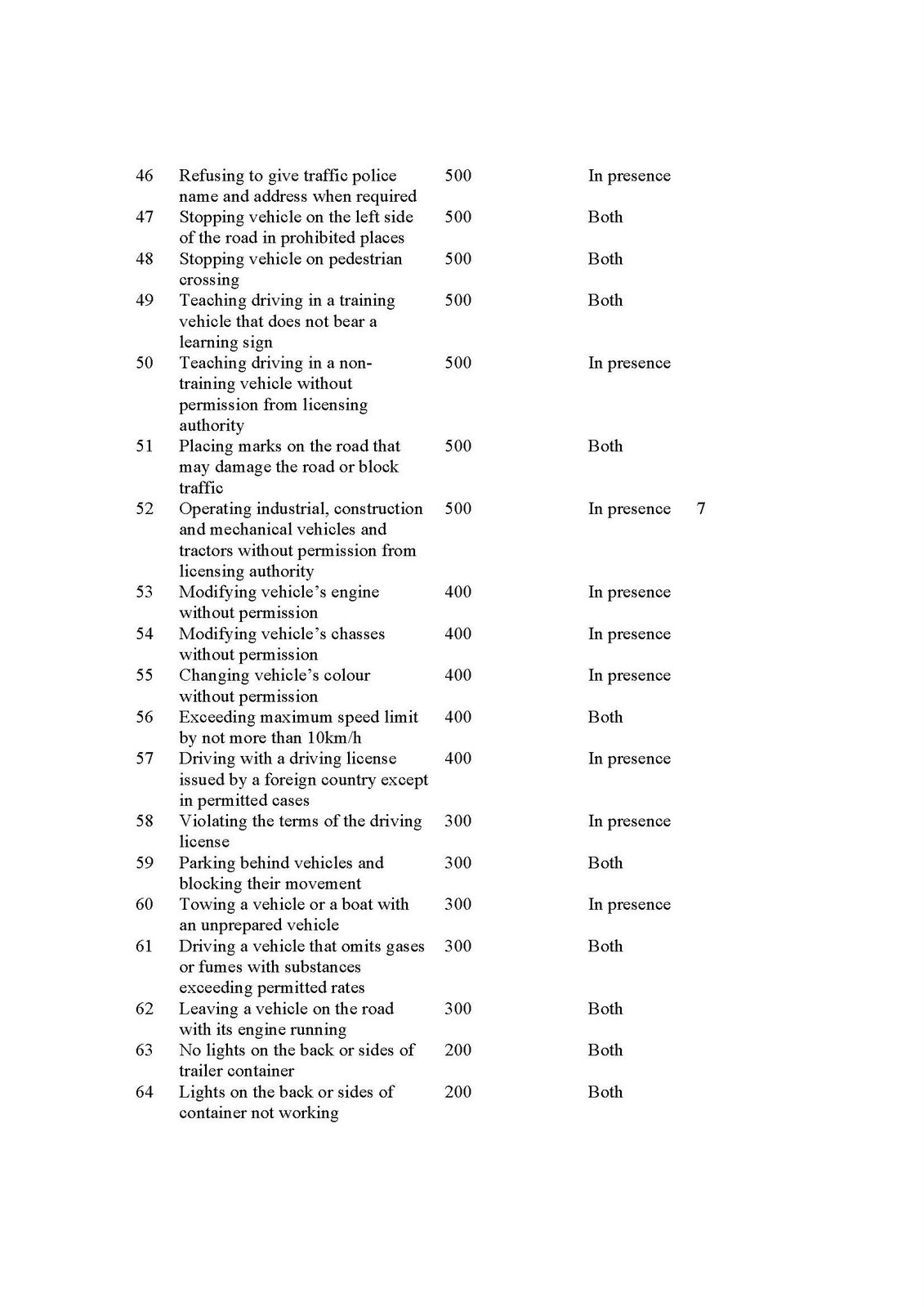
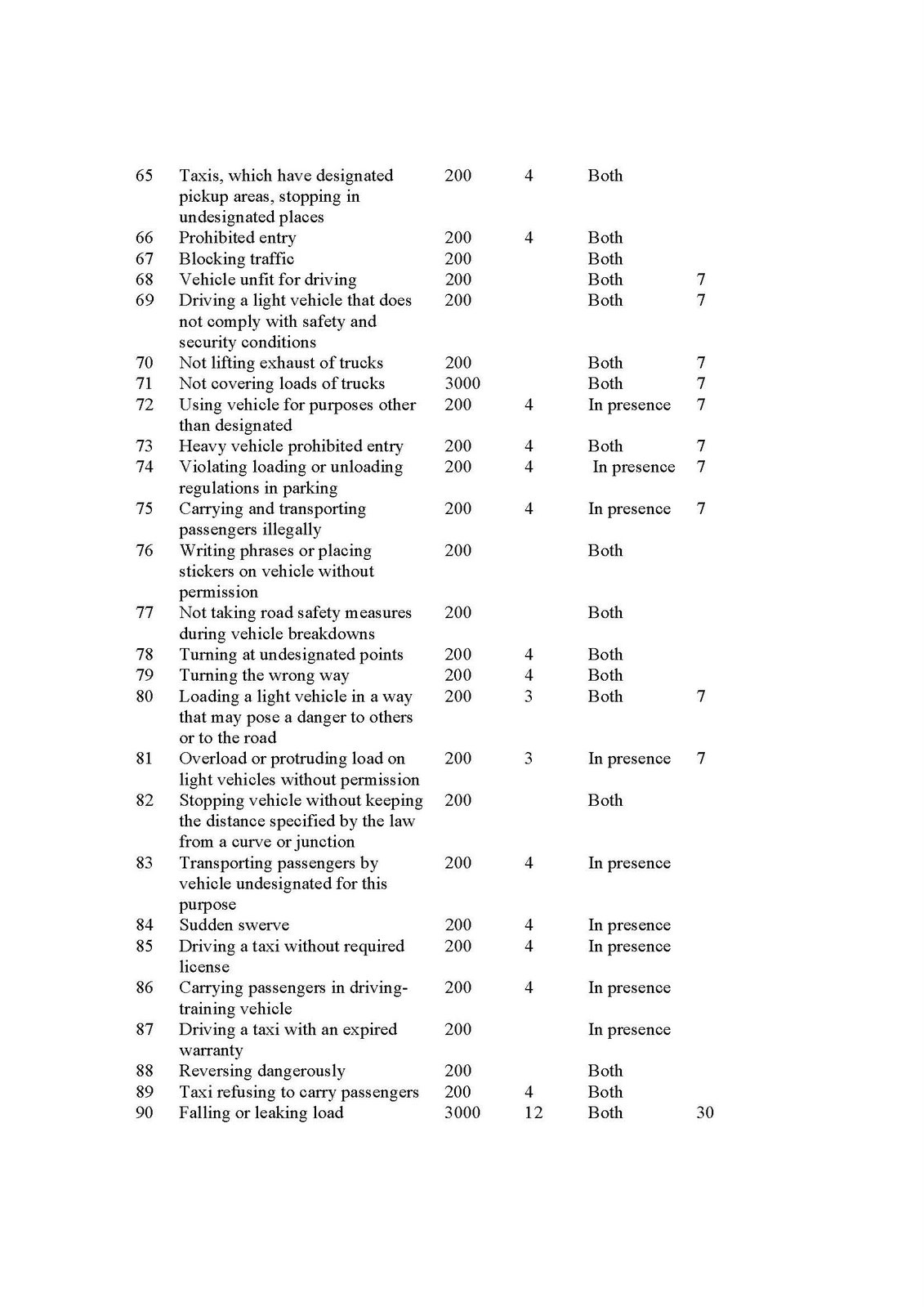
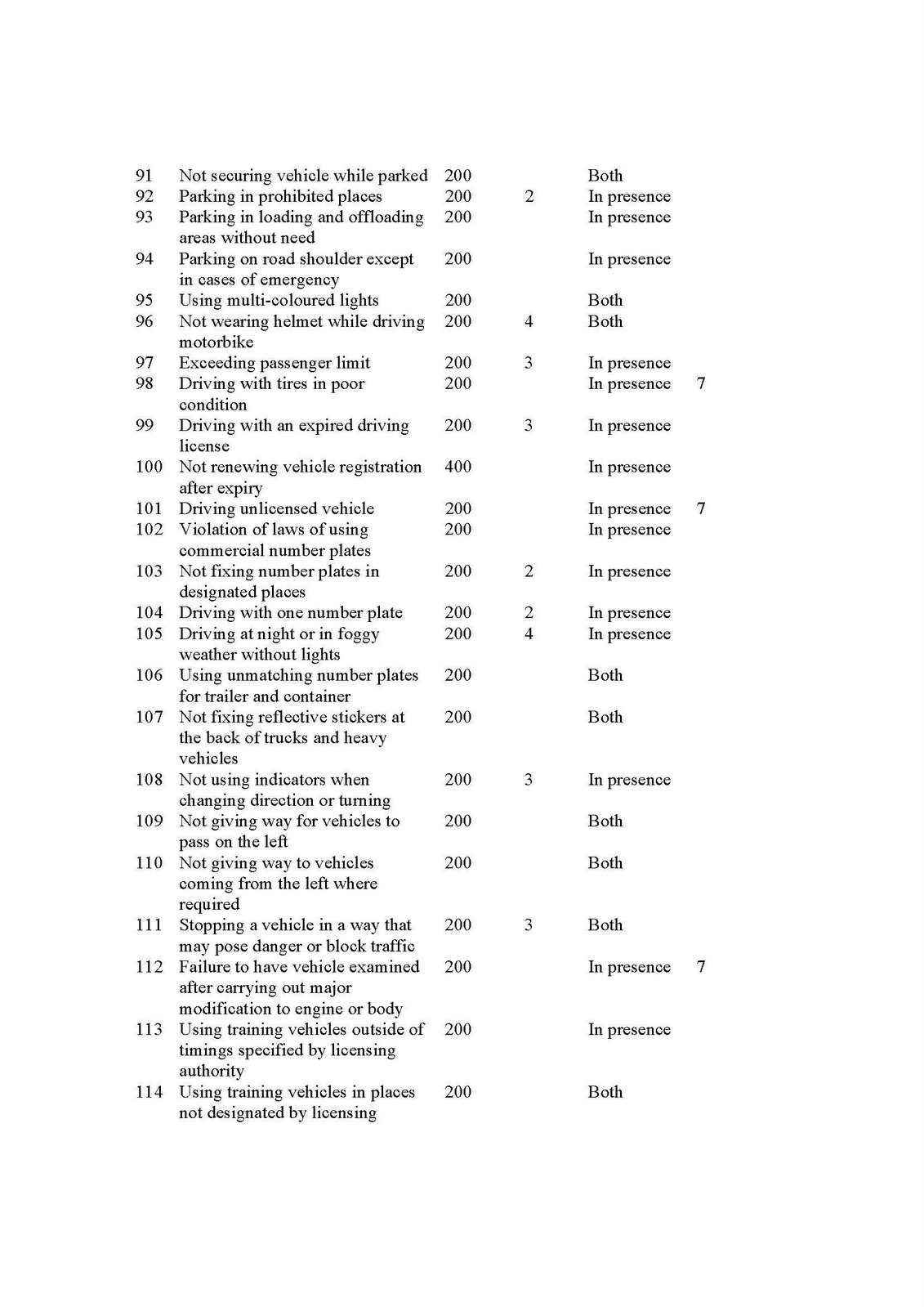
Abu Dhabi: A black point system for traffic offences is to be implemented across all the emirates starting March 1, senior Ministry of Interior officials said on Sunday.
On March 1, the new Unified Federal Traffic Law comes into effect putting in place hefty penalties for serious traffic offences as well as black points against the licence of the driver.
“Earlier errant drivers could get away with paying comparatively low fines, but from now on the rules are getting tough”, said Lieutenant General Saif Al Shafa’ar, Undersecretary of the Ministry of Interior, at a press conference, announcing amendments made to the Federal Traffic Law. Fourteen amendments have been made to the traffic law.
“The lives of 1,056 people were lost in 2007 alone all over the country in traffic accidents. This number is what forced the ministry to come up with the changes,” he said.
The strategy of the ministry is to cut down traffic deaths as much as possible by effective changes in the traffic law clubbed with stringent implementation techniques, Al Shafa’ar said, adding that the new law will save lives and create a safe environment for all road users.
The maximum number of black points a motorist can incur in a year is 24 at which point his licence is suspended. Once a person collects 24 black points, the licence will be suspended for three months. If a motorist collects 24 points for the second time, the license will be suspended for six months. If it happens for the third time, the licence will be taken away for one year and will not be returned until the driver passes a training course from an institute authorised by the traffic department.”
Senior officials said that if a motorist has collected, for example, 20 black points and feels that his licence could soon be taken away if he accumulates 24 points, he can take a training course at an authorised driving institute. Police will then remove 8 points. This option can be utilised only once a year.
Impounded
If a driver is below 21 years and collects 24 black points, then the licence will be impounded for six months. It will be returned after the driver passes a driving course. Also, if a driver gets 24 black points within six months of issuance of his licence the licence will be cancelled and the person cannot apply for a test only after one year following the date of cancellation.
All government owned vehicles are exempt from these rules. The traffic department will inform the owner about details of the offences. If the vehicle was driven by another driver, the owner must send the driver to the traffic department within a month of notice. Otherwise the vehicle may be impounded for a month.
If the driver of a heavy vehicle has caused an accident which results in the flipping over of vehicles, or he has jumped a red light or overtaken in places not allowed, the vehicle will be impounded for one month and licence will be suspended for one year.
The ministry has already started an awareness campaign to reach out to all sections of society to familiarise them with the new law. Arabic, English, Urdu and Malayalam brochures will be distributed to the public as part of the campaign.
As part of the new law some vehicles have been exempt from registration and licensing fees such as vehicles belonging to those with special needs.
New leaf: Cancelled every year
In case a person gets five black points in May 2008 and gets another five in October, the points incurred in May 2008 will be cancelled in May 2009 unless the motorist has incurred 24 points in the year when the licence will be suspended.
Similarly, the points incurred in October 2008 will be cancelled in the same month the following year.


12 things your CV should NOT have
12 things your CV should NOT have
Kshipra Singh
Your CV is your marketing brochure through which you try to sell a commodity, ie your skills to the potential buyer ie the prospective employer. The sole purpose of your CV is to fetch you an interview call. Nothing more, nothing less.
However, creating a CV isn’t as simple as just using flowery language and pretty fonts. There are certain things that put recruiters off and if you want to make a good impression, make sure you do not commit these mistakes in what is arguably the most valuable document of your job hunt.
While the rules listed are well-founded, they are not carved in stone. At times you will need to break the rules. If you want to add these things knowingly and purposefully to your CV we advise you to do that.
The points mentioned here are not listed in the order of priority; instead they are listed in the sequence in which they usually appear on a CV.
~ Colorful or glossy paper and flashy fonts
Your CV is a formal, official document. Keep it simple.
~ Resume or CV at the top
Many people tend to add headings to their CV. The usual are CV, Curriculum Vitae and Resume. Do not do this.
~ Photographs until asked
Do not add your photo to the CV until you have been asked for it. Photographs are required only for certain types of positions like models, actors etc.
~ Usage of ‘I’, ‘My’, ‘He’, ‘She’
Do not use these in your CV. Many candidates write, ‘I worked as Team Leader for XYZ Company’ or ‘He was awarded Best Employee for the year 2007’. Instead use bullet points to list out your qualifications/ experience like: Team leader for XYZ Company from 2006-2007.
~ Spelling mistakes and grammatical errors
Proofread your CV until you are confident that it doesn’t have any spelling mistakes or grammatical errors. These are big put-offs for the recruiters. Moreover, sometimes these mistakes might land you in an embarrassing situation.
A candidate who submitted his CV without proofreading it committed the mistake of wrongly spelling ‘ask’ as ‘ass’. Now you can imagine the type of embarrassment he must have faced during the interview, when the interviewer pointed it out. These mistakes tend to convey a lazy and careless attitude to the interviewer.
~ Lies about your candidature
Do not lie about your past jobs or qualifications or anything which might have an impact on the job. You may be able to secure a job with these lies today but tomorrow you may lose it as well.
~ Abbreviations or jargon that is difficult to understand
People screening your resume usually belong to the HR department. If they do not understand what the abbreviations and jargon mean, they will simply dump your CV in the trash can. Avoid over-using such terms as far as possible.
~ Reasons for leaving last job
Leave these reasons to be discussed during the personal interview. For example, some candidates write: Reason for leaving the last job: Made redundant. Avoid making such statements in your CV, they add no value. Besides, if you do get an interview call, chances are the interviewer will address the issue.
~ Past failures or health problems
Mentioning these immediately slash your chances of getting an interview call.
For instance, you have a gap in your employment because you started your own business which did not do well. Some candidates might write — Reason for gap in employment: Started own business which failed. Do not do this type of injustice with your job hunt at this stage of writing the CV.
~ Current or expected salary
Leave it to be discussed while negotiating the salary.
~ Irrelevant details
Leave out the details like marital status, sex, passport number, number of kids, age of kids. These are usually irrelevant for most interviewers but at times could be used as a basis for discrimination.
~ References
Do not include them until asked. In fact, it is not even required to mention the line ‘Reference available on request’. If the recruiter requires a reference, he/she will ask you to bring it along for the interview.
Now that you have run through the list, take a fresh look at your CV and prune away unnecessary details and unaffordable blunders that could have cost you your dream job.
The author is a contributor to http://www.CareerRide.com, a website that addresses technical and personal aspects of an IT interview.
Class X exams: 7 tips to finish your maths paper before time
Class X exams: 7 tips to finish your maths paper before time
Suresh Kumar, TCYonline.com
Many students, even some really intelligent and talented ones, have a strange enemy. They often find it difficult to finish the paper within the allotted time. They are forced to leave a few questions just because they run out of time and often it has been found that the questions they leave are those which they otherwise could do very easily. It can be very disappointing if you are forced to skip such easy questions.
But how can you avoid a situation like this? Many people suggest a single tablet for this “Time management”. But how to manage time and how to stop it from running out is a difficult proposition, especially for an average 14-15-year-old tenth grader.
Here are certain tips by experts from TCYonline.com to help you out to finish your paper well before time.
1. Understand your exam
The most important thing is to understand the examination you are about to take. In the class X mathematics paper, there are 30 questions in four sections A, B, C and D and we have 180 minutes to answer these questions. Here, a rough calculation is that we get about six minutes to answer a question. But that is not the fact.
The question paper contains ‘very short answer’ type, ‘short answer’ type and ‘long answer’ type questions and the time requirement for each type is different. An ideal allotment for the four sections is as shown below:
Section A 10×2 20 minutes
Section B 5×4 20 minutes
Section C 10X5 50 minutes
Section D 5×10 50 minutes
2. Use the first 15 minutes effectively
You get a good 15 minutes in the beginning to read the question paper — use this time to do just that, READ. Read all the 30 questions in 15 minutes. While reading, mark the questions into categories viz easy, manageable and tough. This is done to have an overall idea about the questions and make a rough plan.
3. Don’t worry about the tough ones
The moment you find that there are a few tough questions; it is natural that you start worrying about them. This is not required and will only harm your performance.
The fact is that they may look a bit tough on the surface, but when you actually work on them you will find most of them to be much easier than they seemed. So be happy about the easy ones and don’t get unduly worried about the tougher lot.
4. Prioritise your attempt
Always attempt the easy questions first and then move on to the manageable ones and ensure that you complete them before taking on the difficult ones. This will ensure that you are not leaving any question that you know.
Once you successfully attempt all the easy and manageable questions, your confidence will grow and you will be mentally ready to take on the more challenging questions.
5. Ensure speed and accuracy
Use quicker methods in calculations to ensure that you are not wasting time and your answers are correct. Mostly, we take a lot of time to solve a problem if we happen to make some error in the process.
For example, if you make an error in the sign of a term (+/-), you may not be able to solve questions involving quadratic equations or linear equations. Therefore avoiding silly mistakes is very important to save time. Always follow the tricks we discussed in speed strategies.
6. Keep an eye on your watch
Keeping an eye on your watch is of course not to increase your stress. This is just to see that you are broadly adhering to the time allocation we discussed in the beginning. A minor variation is not at all a reason to worry.
7. Avoid thinking too much about a question
Thinking about the questions before you attempt them is essential; but not to such an extent that you waste a lot of time on one question.
Also you need not write a very lengthy answer to a question just because the question is easy and you know it very well. Remember, you need to just answer the question and nothing more. Any over-attempt will be a mere waste of time.
Additionally, you must practice the habit of finishing samples papers in 140-150 minutes. This will help you simulate and exercise examination pressures better.
Empost launches new goods shipment service
Empost launches new goods shipment service
Staff Report GULF NEWS Published: February 19, 2008, 00:35
Dubai: Empost, on Monrday launched the Heavies Express Service that will provide commercial and residential customers access to a range of value-added benefits on their large shipments.
This service will enable door-to-door transportation of shipments that weigh 5kg or more without any maximum weight, with special discounted rates to South Asia and parts of Europe.
Customers will also be empowered with control over their shipments through the online tracking facility via the company’s website, http://www.empostuae.com
Empost Corporation, an official subsidiary and fully owned by Emirates Post Holding Group was established in May 1997 with the express aim of fulfilling all courier and communication needs for quick delivery across the country.
Speaking on the occasion of the launch, Empost’s CEO, Sultan Al Midfa said: “With trade activities on the rise easy day, Empost is well positioned to provide its customers with true end-to-end solutions while giving them the added advantage through medium like the internet and the benefit of better rates on their shipments as well as the possibility of dedicating a special representative to collect shipments on pre-agreed schedules.”
Empost has evolved over the past decade to cater to growing and diverse business needs through a host of services such as Ezimail, Total Mailroom Management System, Economy Express, Ezidox, Track and Trace, and a stream of other services. A reliable logistics solutions provider, Empost’s multi-pronged approach is put into practice by a team of 1,000 specialised staff members to make it the UAE’s fastest growing integrated freight forwarding and logistics solutions provider.
Join us in the Clean up campaign
Join us in the Clean up campaign

Abu Dhabi’s coastline is in dire need of your help. Waste from construction sites, boats and from the land have littered our coastline, not only causing an eye sore but also endangering precious marine life such as dugongs and sea turtles, our health and our fragile environment. Abu Dhabi Government is really very concerned about this issue.
There is still time to show your commitment.
Join us in the Clean up campaign as we move along the Abu Dhabi coast in our endeavour to keep our coast clean
How do we join in this time?
Join us in our Clean-Up Campaign on Saturday February 16th, 2008 at the Public beach at Mirfa in the western region
A tent will be set up at the site. Gloves, trash bags and refreshments will be available. The clean up will start at 8.30Am in the morning. The clean up will go on for about 2 hours.
Interested volunteers from Abu Dhabi will collect at 6.30am at Spinneys parking lot in Khalidiyah. The clean up site is at Mirfa public beach. The plan is for all volunteers to collect and move together from Spinneys Khalidiya in Abu Dhabi. Buses are being arranged for all those who don’t have cars to commute.It would take about one and half an hour to reach Mirfa coast in the western region. After the event, volunteers who traveled by bus will be dropped back at Spinneys supermarket. For those who want to travel by bus, please do contact and reserve your seats latest by 13th of February.
Who all can participate?
Social centers, general public, Private sector, Government organizations, youth etc
How do I/ we participate?
To volunteer in this important campaign, kindly complete the Registration form and submit it online to graghwa@ead.ae or moali@ead.ae or mhaneefa@ead.ae or ralmadfai@ead.ae
Please note spaces are limited so it is based on a first-come first-serve basis. Those companies / organization who can bring in their own buses or cars with their group, do inform us how many of you are coming
Did you know that we collected 6,720 kg of waste from the Mussafah Industrial area for the February 09 clean up campaign!
For more details, please visit: http://www.ead.ae/en/?T=4&ID=3554
Internet outage a boon to tech firms
Internet outage a boon to tech firms
BY LUCIA DORE (Assistant Editor, Business) KHALEEJ TIMES 11 February 2008
DUBAI — The recent internet outage across large parts of Middle East is proving a boon for technology companies providing business continuity planning and disaster recovery services.
“We have definitely seen an increase in interest in business continuity planning,” said Aruba Networks’ vice-president Middle East and Africa, Khalid Ishruq Laban, but added, “Disaster recovery has always been there, the new trend is secure mobility.”
Speaking to Khaleej Times, he said that following the Internet outage he has “definitely seen an increase in interest in his firm’s mobility solutions, which allow data to be accessed everywhere, at all times. Organisations in the region are seeking not only to upgrade their current solutions to cater for longer outages but are looking to find ways to increase their productivity as well, he said.
“Firms have increased their productivity with mobile phones and now they want to do with same with mobile data,” he said, adding that this strategy goes one step beyond business continuity planning for which most reputable companies already plan.
Without giving specific figures, he said the company aims to “at least double business every year” in the Middle East. Whereas three years ago a big deal was $10,000 to $20,000 it is now $1 million to $2 million, Laban said. “Mobility is a must have,” he added.
But if organisations adopt secure mobile solutions in an attempt to increase productivity it becomes even more important for them to have contingency planning in place to cover any lengthy internet outage. But, according to data from Gartner, a research consultancy firm, organisations have not been very good at planning for a business outage lasting longer than seven days. The recent regional wide Internet outage in the Middle East, as a result of damage to undersea cables, could take weeks to repair.
“The fact that most organisations plan for an outage that lasts up to seven days indicates a huge hole in those organisations’ ability to sustain business operations if a regional disaster strikes,” said research vice-president at Gartner, Roberta Witty. “The impact of a disaster that lasts more than one week can have enormous negative impact on revenue, reputation and brand. Regional incidents, service provider outages, terrorism, and pandemics can easily last longer than seven days. Therefore, organisations must be prepared. More mature business continuity management/disaster recovery programmes plan for outages of at least 30 days.”
Although the data is gathered from organisations in the US, Canada and the UK, the results are deemed indicative of trends in other regions as well. It shows that more organisations are planning for a pandemic for example.
When planning for specific types of disaster scenarios, 56 per cent of the companies surveyed also have plans for key service providers’ failure, IT outages, computer-virus attacks and terrorism. “With the growing use of third-party service providers to conduct mission-critical business functions, organisations that don’t plan for this type of business outage can find themselves in a tough position in the event that this scenario becomes a reality,” said Witty.
The importance of business continuity planning is vital. According to an IDC report commissioned by data storage company, Commvault, losing control of data has a two-fold impact on Middle East organisations: risk and cost. Organisations risk being unable to comply with international regulations and face the risk of failing audits, being fined, ruining their reputation and losing customers due to unresponsive service, the report says.
And CommVault’s marketing director, Fiona Moon, said: “Data growth in the Middle East is progressing faster than most emerging markets, and we believe that this trend will continue.
“IDC’s view that the region is on the verge of a data boom fully supports our existing position that regional organisations should be moving now to establish a clearly defined storage investment policy the places crucial importance on leading-edge back-up and recovery technologies.”
Second-tier retailing is a Smart Idea
Second-tier retailing is a Smart Idea
Rajiv Banerjee & Ravi Balakrishnan with Preethi Chamikutty , TNN
Even within India’s retail solar system, not many would have heard of Anil Adamane from Nagpur or Rajasekar Reddy Seelam from Hyderabad . And if the names do ring a bell, it certainly won’t be beyond the vicinity of the cities they dwell in. They don’t enjoy the nationwide fame that’s reserved for the likes of the Biyanis, Ambanis and Mittals — yet Adamane, Reddy Seelam and their ilk are charting a course which, sooner or later, will bring them national recognition .
For they are the second tier of marketers who’re building up retail networks far away from the glitz and glare of the major metros. They have painstakingly built equity in their home turf and are now spreading their wings. From Bellezza saloon to 24Letter Mantra to Khadim’s to Witco, they are the emerging faces of specialised second-tier retailing in India.
Adamane and Reddy Seelam are shining examples of mini-metro entrepreneurship that stemmed from the desire to break out of the daily rut and chase opportunity . Adamane, an MCom graduate, was forced to start a daily provision shop in Nagpur for want of good job prospects. To augment his income, Adamane converted part of his shop into an ice cream parlour and STD booth, starting work at four in the morning and shutting shop by midnight. During his visits to the neighbourhood saloon for a shave, Adamane observed the business closely. “It was a dirty ramshackle hole in the wall, with hygiene being the last thing on the barber’s mind. Yet it was doing brisk business, and the wait sometimes was as long as 30 minutes,” he reminisces. That’s when he hit upon a unique service proposition: a saloon with an emphasis on hygiene, ambience and value pricing. Bellezza came into existence in 2003 with the first outlet in Nagpur. Today, Adamane runs 22 Bellezza saloons across Maharashtra, Gujarat , Madhya Pradesh and Chattisgarh. From a two-man outfit — with Adamane learning the craft on the job — Bellezza employs 300 people, and has a turnover of Rs 9 crore.
Out in Hyderabad, it took nearly two years for Reddy Seelam to get an efficient supply chain in place before he rolled out 24Letter Mantra, a retail format specialising in organic farm produce. Reddy Seelam says that launching the format was a culmination of a dream from the time he started working to starting a light engineering firm, which he later sold off. “It was a pure profit venture,” he admits.
His hailing from an agricultural family helped ease the task of convincing farmers to be a part of the venture. The first 24Letter Mantra started in 2005, and since then three more stores have been launched in Bangalore and Pune. “The spread has been slow. But in such a venture , one requires efficient procurement processes, given the nature of products we retail,” explains Reddy Seelam.
The evolution of formats like Bellezza, 24Letter Mantra, Yo! China and Khadim’s indicates an interesting geographic spread these players have envisaged. Yo! China, a quick service restaurant and takeaway chain specialising in Chinese cuisine, has outlets across tier I and tier II cities across India. Likewise, footwear retail chain Khadim’s started operations in Kolkata before moving to states in the east, south and then west. In Maharashtra, Khadim’s has presence in cities like Aurangabad, Nagpur, Sangli and Satara.
These players have adopted a bottom-up strategy, where the brand gets built in markets devoid of cut-throat competition, and then gets scaled up to major metros. Jim Lucas , director of retail ecology, Draftfcb, states that this phenomenon is largely unique to India, where small retailers are innovating even when it comes to expanding their network . “Ten years back, the move was always from the centre to the periphery.
But now formats are been launched from the periphery and are coming to the centre,” explains Lucas. Operating from the fringes has enabled them to tap enormous opportunities which exist in tier II and III towns and cities. “In cities like Patna, we are pretty much the only branded food chain,” says Ashish Kapur, MD, Yo! China. Adamane is clear that the small towns are where the potential is. His strategy is to look at small towns with populations of 40 lakh and target 1% of the population which owns cars and bikes.
Chennai-based premium luggage retailer Witco, however, presents a contrasting case of a regional brand which has shed its ‘small-pond aspirations’ and wants to compete across major metros. VP Harris, MD, Witco, reveals that five years back, the format gave up the positioning of a retailer of travel goods and accessories, a positioning that’s been in existence for nearly four decades. Harris says that post liberalisation, competition from overseas prompted Witco to relook at not only its positioning but also its physical presence.
Premium luggage and accessories was chosen as a plank, and Witco decided to exit small towns like Ooty, Salem and Trichy to focus on metros like Chennai and Bangalore. “In the premium segment, 90% of the market is in the top 12 metros, with maximum consumption coming from international air travelers. Once we have exhausted the metros, we will look at tier II cities,” says Harris. With 12 Witco stores across Chennai and Bangalore, Harris’ plans for forays into Western markets have hit a barrier — high real estate costs. Harris says Witco has now hired the services of an investment banker to help identify a strategic partner. “More than infusion of funds, the partnership will enable us to speed up the process of identifying real estate for store expansion,” he explains.
Kapur of Yo! China says that his format is present in tier II and III towns as restaurants and food courts because in these centres, acquiring volume is important. “Consumption is great and the cost structures are far better. Real estate is more reasonable,” he explains. Kapur believes that the biggest mistake players make is assuming expansion has to be retail-driven , with the approach invariably being to begin in a mall. “Now we know who the target audience is. We want to go where he resides and be in the format best suited to him. My target is young professionals and so we are at tech parks. Even in Tier II towns, we study where the target segment resides and situate ourselves irrespective of the new property being developed,” he says. Vikram Thaploo, VP – projects & marketing, Express Retail Services, which owns Big Apple stores with formats across Delhi and NCR — with Gujarat and Karnataka on the anvil — agrees, saying the company doesn’t have any store in malls and isn’t planning any either . “We offer convenience of time and neighbourhood. We are for customers coming in daily or weekly — not as a destination supermarket,” says Thaploo.
With expansion, these regional players have to contend with establishing a presence in markets with near-zero brand recall. It also means working on distribution, logistics, manpower and understanding unique purchasing behaviour as well. While foraying into other eastern states was easy for Khadim’s given the presence it already had through its wholesalers, Suman Barman Roy, president, Khadim’s , admits that the move to the southern market in 2000 was a challenge. “Dealing with the different cost structures in terms of logistics, transportation as well as taxes which, in those days, were in wide variance from state to state… Other issues were recruiting and training manpower, setting up a distribution chain, revamping the IT backbone,” explains Barman Roy. He says that in 2000, the company chose to open self-owned outlets to gain acceptance amongst the local vendors, before opting for the franchisee route. Also, each state has specific size assortment requirements , making distribution a logistical nightmare.
“We have styles and size assortments suited to the needs and tastes of specific regions . Eastern and southern India will have more basic styles, while the north and western India requires ‘fashion items’ . Also footwear being fashion driven, there is rapid obsolescence of style, which makes the situation even more complex ,” he explains. Kapur of Yo! China believes that supply chain problem solutions is a high-cost one, and he hopes that riding piggyback on overall retail growth makes distribution easier. “Vendors across India need to be far more innovative. They are currently waiting for retailers to work with them rather than coming up with innovative solutions and products that cater to the food services industry,” he states.
Having acquired scale, most second-tier marketers are looking at new formats. Adamane plans to start a gents-only saloon called Bello — Bellezza is for both sexes — with a low-cost value offering as its proposition . Khadim’s , for its part, has opened a large format department retail called Khadim’s Egaro in Kolkata, which it plans to take it national . Reddy Seelam says that his company is experimenting with smaller shop-in-shops formats of 24Letter Mantra with a national chain, and if successful, wants to rapidly scale up to around 150 shop-inshops by next year. “We are also looking to brand the produce we export to Europe and other markets once we acquire a retail portfolio,” he states.
The blueprint to the future appears to have been well chalked out. These tier-two retailers have spent decades polishing their skills and are now limbering up to play in the big league. It’s obvious that not everyone will succeed. Over time, some will falter and would have to go back to the drawing board. A few others will inevitably get acquired by the heavyweights. The most patient , persistent and innovative of the lot, however, will go on to rewrite the rules of the game. And maybe even end up writing a book on how It Happened in Nagpur. Or Hyderabad. Or Kharagpur.
How a boat could sink the internet
How a boat could sink the internet
By Scott Shuey, Chief Business Reporter Published: February 02, 2008, 01:39
For those of us who grew up listening to stories about how the internet was invented with the goal of establishing a communications network that would even function in the event of a nuclear war, we have to ask: How did a boat off the coast of Egypt manage to destroy internet access to every continent in the Northern Hemisphere?
The answer to that question is rather disturbing and quite complex. For starters, internet access wasn’t destroyed; it was just that the capacity of the remaining connections was severely strained. While the internet may have been designed to withstand global thermonuclear war, it wasn’t really designed to make sure you could access MySpace on the Day After.
etisalat and du, by all appearance, did a good job of rerouting the internet to where they could. That doesn’t mean that internet access was still available to all, but it did mean that essential communication still happened, just via different routes.
The problem is that the internet has evolved beyond just being a means to communicate. It is now how we do business and share our lives with our friends and family. The original concept behind the internet as envisioned back in the 1960s centred mainly on sending e-mail. We still do that, but we also shop, send pictures, bank, play games and a host of other things that eat up more bandwidth than was even imaginable back in the ’60s.
But despite advancements in software, the physical structure of the internet is still ’60s technology. It’s still an array of servers connected by chords. That’s vastly simplifying things, because these chords are more complex than most things we encounter during the day. According to one Cisco engineer whom I spoke with, these cables break down light and use the individual colour of the spectrum as virtualised cables to carry information. It other words, these cables turn all your data into waves of red (just to pick a colour at random) light and send it on its way. The whole thing is amazing, but still somewhat fragile since it can all be brought down by someone trying to do something as crazy as stopping a boat.
That’s a huge problem. It’s impossible to gauge the amount of money lost since Wednesday, but even some basic guessing shows loss is huge. The internet interruption meant there was no tech support from India, downloads from iTunes were stopped, and business deals didn’t get signed. I listened to one person yesterday having a nervous conversation with a colleague because a contract that had been sent via e-mail was apparently lost. “Why didn’t you send it by fax?” he asked. His colleague apparently gave him an answer along the lines of “because no one does that anymore.”
We’ve become so dependant on the internet that we never consider what could happen if it goes down, and now we’re losing money because of it.
It’s obvious that the internet’s infrastructure needs an upgrade. e-commerce cannot afford to let itself be subject to the whim of the boating industry. Laying new anchor-proof cables will be a multi-billion project for every existing cable, but it may become a necessity if we want to continue to have confidence in the new industry we’ve created.
Supermarkets start charging for plastic bags
Supermarkets start charging for plastic bags
By Emmanuelle Landaisand Mahmood Saberi, Staff Reporters GULF NEWS Published: February 04, 2008, 23:31
Dubai: Geant became the first supermarket in the UAE to start charging for plastic bags on Monday as part of the celebrations for the UAE’s national Environment Day and two more hypermarkets will soon introduce similar charges.
Environmental protection is a top priority in spite of the UAE’s huge investment in the oil and gas sector said Shaikh Hamdan Bin Zayed Al Nahyan, UAE Deputy Prime Minister and Chairman of the Environment Agency-Abu Dhabi, in a statement for Environment Day, celebrated for the last 11 years on February 4.
Mohammad Numan, environment and health education department officer at Dubai Municipality did not name the other two hypermarkets, saying that an agreement will be signed with them next week. He said Dubai was the first emirate to initiate this campaign against plastic bags.
Geant has 70,000 tonnes of plastic leaving its store per year in the form of plastic bags according to Gabriel De Andrade, group merchandise manager.
Ordinary plastic bags will cost 25 fils each. Customers will be able to reuse the bags at any time. For each bag returned a credit note of the same value of the bags will be issued. An alternative reusable jute bag is also available to shoppers for Dh5.
The plastic-reducing campaign is being held under the umbrella of My Bag My Earth launched last year in collaboration with Dubai Municipality with the aim of reducing plastic bags in stores and providing shoppers with alternatives.
Shoppers had a mixed reaction to the new fee at Geant hypermarket yesterday. A group of volunteers from the International Association of Human Values was at hand to explain the move.
Ramiah, a construction worker, said he could not understand why he had to pay for the bags which he earlier got for free.
“We reuse them for throwing out our garbage,” he said, when told about the pollution hazards.
“I am paying more for everything else anyway,” said Mehta, a housewife from India.
Litter-free: 300 take part in clean-up
About 300 volunteers including fishermen, students and dhow workers took part in a voluntary clean-up of Dubai’s Al Hamriya Port to mark Environment Day.
The event was supported by professional divers as well as volunteers from oil firms and shipping companies
In conjunction with the UAE Environment Day the Middle East premiere of Leonardo DiCaprio’s environmental documentary film, The 11th Hour aired in Dubai last night and will be released on February 14 in the Grand Megaplex and Cinestar Mall of the Emirates.

 ClicksandWrites
You must be logged in to post a comment.