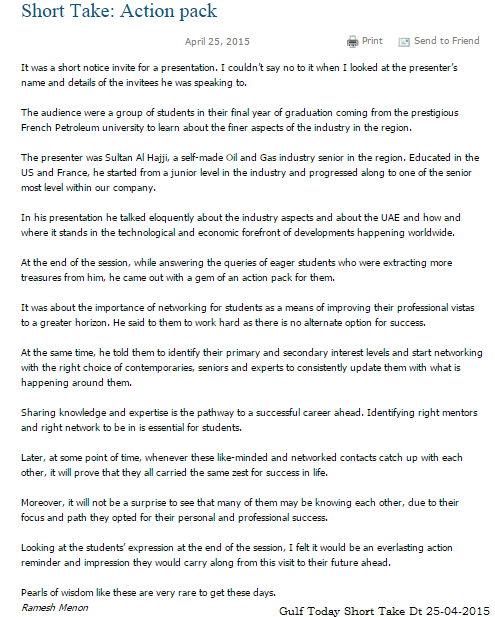
It was a short notice invite for a presentation. I couldn’t say no to it when I looked at the presenter’s name and details of the invitees he was speaking to.
The audience were a group of students in their final year of graduation coming from the prestigious French Petroleum university to learn about the finer aspects of the industry in the region.
The presenter was Sultan Al Hajji, a self-made Oil and Gas industry senior in the region. Educated in the US and France, he started from a junior level in the industry and progressed along to one of the senior most level within our company.
In his presentation he talked eloquently about the industry aspects and about the UAE and how and where it stands in the technological and economic forefront of developments happening worldwide.
At the end of the session, while answering the queries of eager students who were extracting more treasures from him, he came out with a gem of an action pack for them.
It was about the importance of networking for students as a means of improving their professional vistas to a greater horizon. He said to them to work hard as there is no alternate option for success.
At the same time, he told them to identify their primary and secondary interest levels and start networking with the right choice of contemporaries, seniors and experts to consistently update them with what is happening around them.
Sharing knowledge and expertise is the pathway to a successful career ahead. Identifying right mentors and right network to be in is essential for students.
Later, at some point of time, whenever these like-minded and networked contacts catch up with each other, it will prove that they all carried the same zest for success in life.
Moreover, it will not be a surprise to see that many of them may be knowing each other, due to their focus and path they opted for their personal and professional success.
Looking at the students’ expression at the end of the session, I felt it would be an everlasting action reminder and impression they would carry along from this visit to their future ahead.
Pearls of wisdom like these are very rare to get these days.
Ramesh Menon, Abu Dhabi Short Take – Gulf Today Dt. 25th April 2015
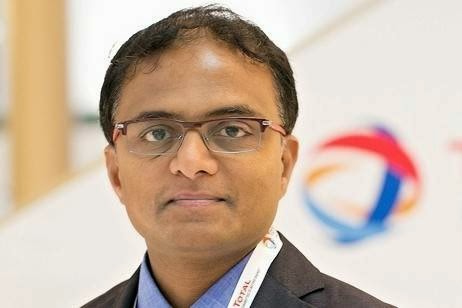
Ramesh Menon, Indian, living in Abu Dhabi I’ve been writing letters to The National since its inception and have always found its best qualities are to raise important issues and to reflect the pulse of those living in the UAE. Letters to the editor bring important topics to the attention of the relevant authorities and there have been several instances when quick action has been taken on issues raised in this way. These include pedestrian problems, road safety, labour welfare, consumer issues and others. I am always optimistic of a positive outcome when I raise a community-related issue through the letters section of The National. http://www.thenational.ae/opinion/feedback/20150408/thenational7-a-truly-national-conversation-with-our-regular-letter-writers#page1
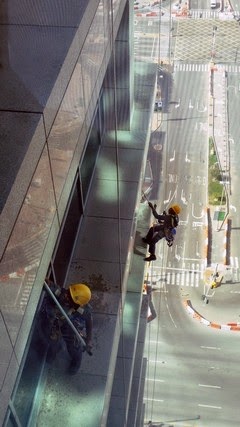
They were equipped with the proper safety gear but had detached themselves from their safety ropes, leaving them at risk of falling to their deaths on the bustling street below.
The startled witness to this casual disregard of safety was Ramesh Menon, a technical officer at an oil firm who recorded it with his camera then alerted both the building management and also The National.
The effect was swift and emphatic: the window washers’ employer had its contract with Abu Dhabi Mall cancelled with immediate effect.
But because it was also featured in The National, publicity about the incident sparked a debate among those living here about the sometimes lax culture of safety in the UAE, including an editorial calling for zero tolerance towards those who take safety shortcuts as well as a flurry of letters to the editor on the subject.
What it also demonstrated in a wider sense is the way in which The National is an active part of our community. The newspaper does not just inform and entertain those living in the UAE – that flow of information goes both ways.
In Mr Menon and countless other ordinary people going about their lives, the newspapers’ eyes and ears in the community extend far beyond those of our reporters.
This is what the American playwright Arthur Miller was getting at more than half a century ago when he defined a good newspaper as “a nation talking to itself”.
Anyone who wants to know the hot topics of UAE society need only see how our readers express themselves, either through letters or on The National’s social media feeds on Facebook and Twitter.
Rising rents and the general cost of living, the plight of children caught in conflict zones, driver behaviour on the country’s roads, animal cruelty, the property market’s fluctuations, whether mothers should be compelled to breastfeed new babies, gratitude for the UAE’s accommodation of followers of other faiths, the process of Emiratisation and concern with the welfare of those on the bottom rungs of the economic ladder are all topics on which The National’s readers voice strong views.
We have learnt to listen and take heed when an issue ignites our readers, shaping our response with the input of the community.
In the best cases, this dialogue can both highlight a problem and lead to its solution. In the window washers’ case, it meant there did not need to be a tragedy – for the negligent window washer or any innocent pedestrian walking below – before action was taken.
The same dynamic applied when another reader’s tip alerted us to theplight of two puppies – one with a paw deliberately hacked off and the other with damage to its foot pads – that were abandoned in the desert outside Dubai and left to die.
Our readers were shocked by this wanton act of cruelty, but it ended happily for Stumpy and Bernard, as the two puppies were named by their rescuers. Readers donated more than Dh7,000 – enough to pay for their medical treatment – and this included Dh3,000 from an American reader who saw the story on The National’s website.
The best news came from a couple who read The National. Hank Harrington, a helicopter pilot with Dubai Royal Air Wing, and his wife, Lynn,adopted the puppies, who will have a large garden to play in when the couple relocate to Britain in six months.
These are but a couple of examples of the wave of instances of what has been dubbed “citizen journalism”.
This mirrors the changes that have taken place since The National’s first edition was published seven years ago. It seems like ancient history now, but social media networks, microblogging sites and smartphones were all in their infancy on April 17, 2008.
Facebook had only 80 million members then, compared to 1.4 billion now; Twitter members were collectively sending an average of just about 1 million tweets per day, a fraction of the 50 million now; and the iPhone had been launched in the United States less than a year earlier. Today the UAE has the highest per capita use of smartphones in the world.
These forces combined to enable those living here to interact with The National in a way unimaginable to previous generations of journalists. Now, when there is a multicar pile-up on a foggy road or a major fire in the UAE, we receive images from readers in minutes. Comments on The National’s website come from every corner of the world.
This is as it should be, when a newspaper is having a dialogue with the community it was established to serve.
It was surprising to see a special mention about me in the 7th Anniversary edition of The National! Safety First. Let the mantra within us be “Safety for Me, Safety for You and Safety for ALL”.
This is an important topic with modern day relevance connecting academic and family values. Literally, every school-going child in the UAE is exposed to digital media in one way or another. Social media like Facebook and WhatsApp are good when used with parental assistance. Prolonged one-on-one correspondence and interactions on these online platforms without supervision will definitely give opportunities to peep into one another’s personal matters and many times it can go outside the boundaries of etiquette and morality. A school-going child up to his graduate level does require parental monitoring. Absolute care should be taken to follow them, their activities within and outside school to make sure they are progressing on the right path.
Children are exposed to knowledge and information much easier than us and it is a parent’s duty to make sure that their children is not going astray from his or his family’s goals and dreams. The educational authorities and schools should give this subject greater thought and study the probability of taking the right measures to define which medium and up to what extent teachers and students can interact on social media.
Every morning when I go to office, I see a little girl going to her school. She will be struggling to smile and say good morning as she is yet to awake from her sleep. Her mother will be carrying the bags and bottle and literally carrying her to the waiting bus.
Days went on and suddenly one day as I was going to office, I noticed all the three members of the family together. The girl was in a cheerful mood and said to me, “We are leaving for India!” I thought, they were going for school holidays. Then the father corrected, “No, we are leaving for good.” I felt sad.
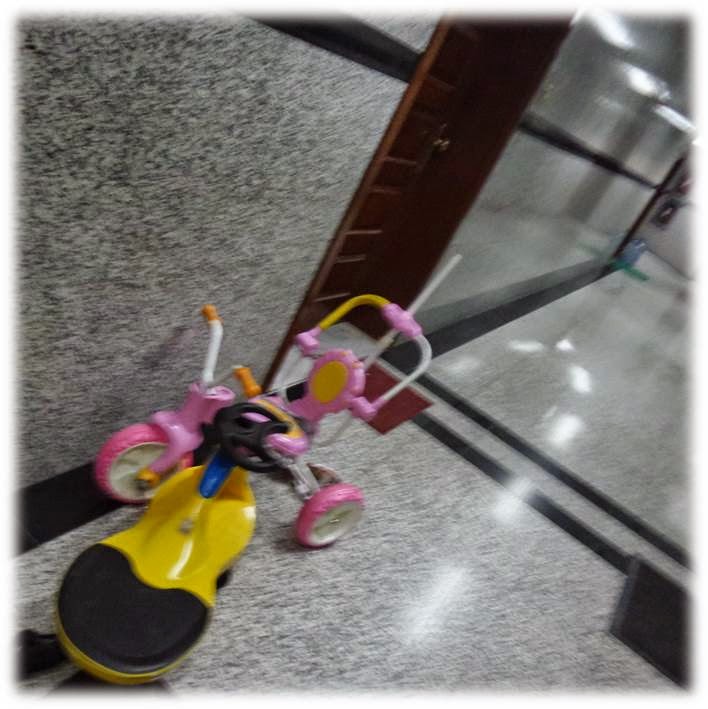
The other day while going to the office, I saw a pair of old tri-cycles at their doorstep. Abandoned and reminding of a childhood that had moved on.
This brought many thoughts in my mind. The modern age children are victims of several circumstances. When I go to my home in Kerala, I get to see the books, toys and many other items I used during my childhood days. Neatly kept and displayed in my room at our home. The fact that parents remained in one place and availability of place and personnel made those items remain intact for years for me to be reminded of my young age.
How many children these days get this privilege? How many parents have time to think about their children and their personal preferences and choices? Even if they do, can they accommodate those demands, if they have a job that makes them move around the world?
Are these the reasons for children becoming non-materialistic and non-emotional? A point to ponder as I wish this little fairy a blessed journey ahead in her home state.
Ramesh Menon
Gulf today – Short Take Dt 11 April 2015
To read it in original, please visit, Gulf Today online.
Every morning when I go to office, I see a little girl going to her school. She will be struggling to smile and say good morning as she is yet to awake from her sleep. Her mother will be carrying the bags and bottle and literally carrying her to the waiting bus. Days went on and suddenly one day as I was going to office, I noticed all the three members of the family together. The girl was in a cheerful mood and said to me. The girl said to me uncle, we are leaving for India. I thought, they are going for school holidays. Then the father corrected, no we are leaving for good. I felt sad.
This morning while on to the office, I saw this pair of old tri-cycles at their door steps. Abandoned and reminding of a childhood that had passed away in front of our eyes.
The site brought many thoughts in my mind. The modern age children are victims of several circumstances. When I go to my home in Kerala, I get to see the books, toys and many other items I used during my childhood days. Neatly kept and displayed in my room or many other rooms in my home. The fact that parents remained in one place and availability of place and personnel made those items remain intact for years for me to be reminded of my young age. How many children these days get this privilege? How many parents have time to think about their children and their personal preferences and choices? Even if they do, can they accommodate those demands, if they have a job that makes them move around the world?
Are these the reasons for children becoming non-materialistic and non-emotional? A point to ponder as I wish this little fairy a blessed journey ahead in her home state.
The trend these days is to have a dedicated day to remember someone or something special. So we have a day for water, earth, father, mother etc.
Looking at each one of them and the current upbringing style of children makes me really worried.
Are we becoming fully dependent on these dedications to remember our duty and commitment to all these beneficiaries?
Let us take the example of water. In the early days, it was passed on to children from a young age that water is precious and to be preserved in all possible ways. Likewise the affection of mother. It is perennial. Whatever be our actions towards them, their love and care will continue to follow till the end.
Then comes the important lady in the life of a married man: Wife. The culture and tradition is different among many, but the duty remains the same globally. After marriage, there is always a sense of togetherness in everything one does. If not there, it should be that way.
In many cases these days both husband and wife are working. Activities are in plenty for those who want to socialise around. However, share the duties together, give as much time for each other as possible. Show affection and continue to promote and pamper each other with a sustained interest.
It is a special feeling. The affection and care after your mother, only your wife can give. She is the best person who can judge your best and worst days in advance. Only she will have the patience to adjust the environment according to your mood syndromes.
I am thankful to God for giving me a loving wife. No special day is required to promote her as every day is special. I am sure it is vice versa. That has been the case with my parents too. It is a special feeling when I see that they are nearing the golden jubilee of their married life.
Let love, affection and family values prosper worldwide without the need for any special days or dedications.
A short break of two weeks. In a way tried my best to keep silent from as many activities as possible. It was an effort to join a divine bliss. In the process I learnt a lot of things including an increased confidence to practise the art of not to react impulsively to circumstances and realities.
The silence was indirectly to show my tribute to join the sorrow of a friend whose mother passed away. I know the feelings and void created when a person we love a lot in our life suddenly departs. I had experienced it the recent times, when my mother in law and my grandmother passed away. Many times, I was stuck with whom to ask certain things when I needed guidance. Of course, life went on and will.
Motherhood is a special feeling beyond explanation. Back from my leave, at work on a busy morning, I listened to a colleague of mine busily phoning and ordering birthday cake for her son. It was a hectic day and in between the busy tasks, she found time to order the cake specially decorated with her son’s favorite football teams design. She was arranging other gifts too to the little boy.
It brought tears in my eyes as I suddenly remembered, how my mother who was a teacher during my childhood days, come back from her school with a gift, either a shirt or a colouring set. Those days transportation was not easy and she had to change three buses to get back home from the school. It used to be late by the time she reach back home. But even then, she never missed to show her affection and love for us.
A casual talk with my colleagues revealed the general trend with children these days. They are pampered with costly gifts; mobiles, Ipads, laptops and what not. So, it is a big challenge now for parents to offer them with a gift which will remain impressive with the children at least for some amount of time.
Challenges aplenty for the modern day mothers. But, their affection and love will remain forever, however fast modernisation happens. This is a fact proven many times in the world around.
Ramesh Menon
To read it in original, please visit Gulf Today online
Your article, Taken at walking pace, Abu Dhabi becomes a very different city (February 23), has prompted nostalgic memories of earlier days in Abu Dhabi.
There were limited taxis and buses so most people used to walk to work and back home. This provided the opportunity to see the city progressing and also led to more sun exposure. I believe there were fewer cases of vitamin D deficiency then than there are now.
Back in those days, the electronic gadgets of the modern era did not exist so people lived in the present more. It meant it was easier to meet people, possibly starting long friendships.
Now people are so distracted that I feel concerned when I see them ignoring their own safety by walking or crossing the road while using mobile phones.
I believe The National’s #startwalking campaign will be a great success, but it is also important for the authorities to ensure the streets and pathways are more user-friendly for pedestrians.
Ramesh Menon, Abu Dhabi
To read it in original, please visit The National online




 ClicksandWrites
You must be logged in to post a comment.