Month: October 2008








Selling Betel Leaves? You’ll be Deported Immediately

Selling Betel Leaves? You’ll be Deported Immediately
Joy Sengupta KHALEEJ TIMES 9 October 2008
DUBAI — Have you seen a shopkeeper selling betel leaves (paan) or its variants like Pan Parag or Pan Masala etc.? Well, in that case you stand to earn a reward of Dh5,000 if you pass on this information to civic authorities.
Dubai Municipality was earlier giving a reward of Dh2,000 for the same, which has been hiked to Dh5,000.
Any shopkeeper caught selling betel leaves, Pan Parag, Pan Masala or chewing tobacco etc., will be deported immediately, Hussain Nasser Lootah, Assistant Director General of Dubai Municipality (DM) announced on Wednesday.
Launching the first phase of the DM campaign against spitting and littering, named “Say Yes to a Clean Naif”, Lootah reiterated that manufacturing and selling of such products is banned in the emirate.
The import, sale and use of betel leaves and its alternatives has been banned according to the Local Order No 11 of 2003.
“From now on, we are not going to give the guilty a first, second or third warning. They will be deported immediately.
“Shops found selling these products will be closed down without any delay,” Lootah made it clear.
Besides being exposed to many a health risk, a majority of people chewing betel leaves and other such products spit on the roads, which tarnishes the beauty of the city.
“This is a serious problem and we need to get rid of it. Many shops and groceries are selling these products secretly. Inspections will be intensified to trace the violators. People need to be aware about the laws and regulations,” Lootah said.
The Municipality imposes a fine of Dh500 on a person found spitting in public.
Meanwhile, the DM’s month-long campaign, which continues until November 13, is aimed at restoring the old charm of Naif area, DM officials said.
“The campaign aims to transform the busy Naif area into a cleaner place that suits the name and fame of Dubai.
The campaign will create awareness among residents about general cleanliness, and will ask them not to throw cigarette butts and other wastes on roads. They will also be asked to stop spitting in public places, aside from discouraging the practice of hanging clothes on the balconies,” Lootah said.
Subsequently, the campaign will be taken to other areas of the city such as Al Ghubaiba, Al Sabkha, Al Fuhaidi, Al Karama, Al Qusais and Al Qouz.
joy@khaleejtimes.com
An open invitation to mouth cancer
DUBAI — Chewing betel leaves with tobacco can lead to pre-cancerous conditions, says a senior health expert.
Though chewing a plain betel leaf (paan) might not be that harmful for a person’s health, but adding tobacco or ghutka (flavouring) creates pre-cancerous conditions in the mouth, stomach and throat, and damages gums,” says Dr Murali Srinivasan, Specialist Dentist, Head of Department, Advanced Dentistry, Jebel Ali Hospital, Dubai.
“A socially repulsive habit, people tend to spit anywhere and everywhere after chewing plain betel nut and leaf,” explains the doctor. “The added colours in the betel nut can also lead to staining of teeth which require special cleaning,” he says.
Dr Murali says that if the paan is chewed with tobacco or ghutka, it could cause the softer tissues of the mouth and cheeks to harden, leading to oral cancer. “This thickening of the mouth means that pre-cancerous conditions have been created, which of course are harmful to health,” he adds.
Betel chewing is addictive and has effects of alkaloids, which are comparable to nicotine in its stimulating, mildly intoxicating and appetite-suppressing effects on the mind. — Asma Ali Zain
Opportunity to become more religious
Opportunity to become more religious
Warning signs and brochures to be issued to regular long distance drivers
I don’t know whether I am getting older or I don’t know whether I am getting added opportunities in life to become more religious. One thing is sure, each time I take my car on the Abu Dhabi – Dubai Highway these days, I am thanking almighty GOD infinite number of times for the near misses.
A drive down on the way to Dubai from Abu Dhabi at around 2:30 and 3:30 pm, several times you will be passed by speeding cars from both sides at unbelievable speed. Most of these drivers are those who stay out of the city and come to work and rush back to join their family. How many of them succeed to continue with this erratic road behaviour is a question to be checked with casuality sections of major hospitals. In their urge to reach back home for lunch and then an afternoon snap before they hit their evening union, they forget that they are risking their own life as well as the fellow drivers’ who are on the road at the same time. I wish the authorities issue necessary warning letters and brochures to those employees working on both sides, i.e. Abu Dhabi and Dubai and drive back home long distances after office to stick on to speed limits and respect driving rules.
Personally, I do not say any more with confidence that I will have a safe return on this route whenever I start.
I WISH AUTHORITIES ISSUE NECESARY WARNINGS AND BROCHRUES TO REGULAR LONG DISTANCE DRIVERS, ESPECIALLY FROM THE GOVERNMENT SECTOR, WHO LIVE FAR FROM THE CITY AND DRIVE DOWN DAILY TO HOME AND WORK TO MAKE THEM AWARE OF THIS DANGER.
Ramesh Menon
09102008
Ramesh Menon
09102008
2008 Onam Pookalam competition conducted by AKCAF
2008 Onam Pookalam – competition conducted by All Kerala Colleges Alumni Forum
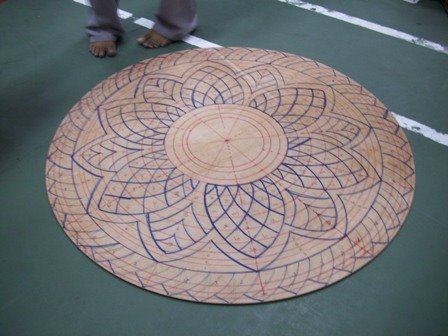
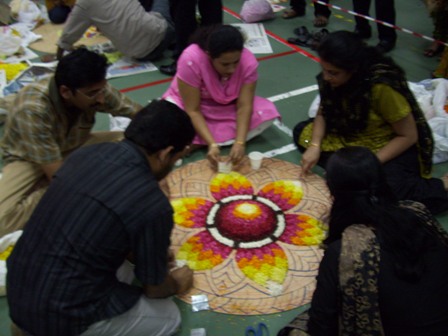

2nd prize – Christ College Irinjalakuda
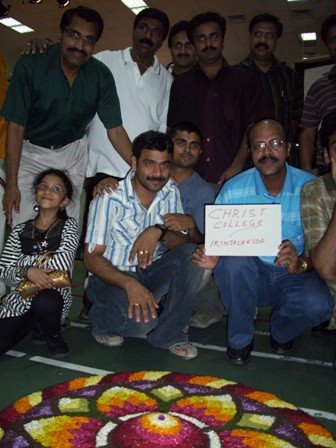
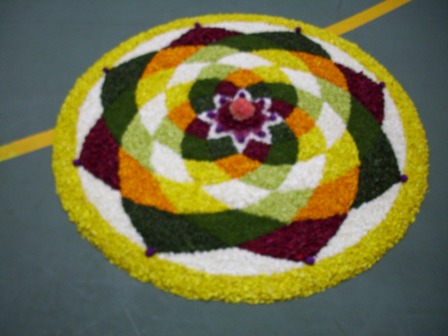
1st prize – Sree Kerala Varma College, Trichur


French scholarships for engineering students
French scholarships for engineering students
THE HINDU
Twenty-five full scholarships of around 20-25,000 Euros are being offered for two years for Indianstudents planning to join MS course
France is offering scholarships to meritorious students of engineering from India for post-graduate studies for two years from the academic year starting September 2009.
For this ALTEN; a leading European research and development consulting and advanced engineering group; “n+I”; a network of 75 renowned French engineering institutes, and the French Embassy have come together to fully finance such students.
ALTEN and the French Ministry of Foreign Affairs are offering 25 full scholarships of around 20-25,000 Euros for two years for Indian students who wish to enrol in an MS programme.
Core engineering fields
The programmes will in all core engineering fields through “n+i” that works in collaboration with the higher education office of the French Embassy in India.
Last date
The application form for the corporate scholarship is available online at the website of “n+I” – http://www.nplusi.com and the last date to apply is November 15, 2008.
No prior knowledge of French is required at the time of application and there is no bond that students need to sign with the Company.
No qualifying tests
Students do need to take qualifying tests such as GRE/GMAT etc.
Selection will be done on the basis of academic merit, coherence of the statement of purpose, quality of recommendation letters and a personal interview. Students who make the admission applications need to be present at New Delhi for a personal interview in the month of January 2009.
For more details students can contact r.arole@nplusi.com.
Last year, 10 outstanding engineering students from India were awarded the scholarship.
Non-profit network
The “n+I” is a non-profit making network which brings together over 70 premier post-graduate engineering institutions from France.
It aims at developing academic ties between our two countries in the domain of scientific and technical education and spreading awareness about higher education in France in engineering.
To revamp higher education in the country
To revamp higher education in the country
THE HINDU
The UGC review committee headed by Professor Yash Pal is to submit its interim report to the government soon. G. MAHADEVAN outlines some of the issues that were discussed at the committee’s sittings.
What began in early 2008 as an attempt to review the functioning of the University Grants Commission (UGC) and the All-India Council for Technical Education (AICTE) now appears to have undergone transformation as an endeavour to ‘rejuvenate and renovate’ higher education.
The committee headed by noted educationist Professor Yash Pal—set up in February 2008 as a UGC review committee—now expects to cast its net wider to prepare a blueprint for the overhaul of the higher education system in India.
The committee, Professor Yash Pal told The Hindu EducationPlus, will submit an interim report to the government in about a month from now.
Among the points about which the committee may make recommendations are the issue of upgrading UGC to a full-fledged Higher Education Commission, the granting of greater freedom and autonomy across a range of issues for universities, making the inter-disciplinary approach a norm in higher education, the need to revamp the manner in which Vice-Chancellors are appointed and ways to minimise interference by the State and Central governments in institutions of higher learning.
A major question that Professor Yash Pal and other committee members threw up for discussion at sittings held in various places, including Thiruvananthapuram, Pune, Amritsar and Varanasi, was whether the UGC needs to be upgraded into a full-fledged Higher Education Commission—a body that can integrate the functions of as many as 17 agencies which regulate higher education in the country now. The moot point was that funding and overall policy making will be made more efficient under an apex body that will act as a catalyst for quality improvement in higher education. The idea seems to have caught on with the academic community that participated in the Committee’s sittings.
At the sitting in Pune—held in May 2008— some participants pointed out that UGC was now over regulated and under governed. Universities were bound to do, to a large extent, what the Central agencies desired. Varsities had to run to these Central agencies for effecting even the smallest changes in their academic profile. This needs to be put an end to and universities need to be given the autonomy to decide what they want to teach and how, of course, within certain broad parameters laid down as part of a national policy, the participants felt.
At the Thiruvananthapuram sitting—in June 2008—another aspect of the Central agency-State university relationship was among the topics discussed. While there was no open disagreement on the need of an integrated agency for guiding higher education, a couple of participants pointed out that now the Central agencies and State universities sometimes worked at cross purposes.
The AICTE has been known to grant recognition to institutions which were not affiliated by State universities. So, if at all Central agencies function they should do so in a non-intrusive, constructive manner, they opined.
The nature and number of universities in the country came up for discussion at the other sittings of the committee also. There were many academics who were concerned about the size and spread of the universities in the country and some who argued for doing away with the system of affiliation.
Gangan Prathap, Vice-Chancellor, University of Kerala and Cochin University of Science and Technology—in an email interaction with The Hindu EducationPlus—pointed out that India now has nearly 400 universities and nearly 20,000 colleges affiliated to them. Even if the nation plans to have universities with an average enrolment of 10,000 students, there needs to be 1,500 universities here.
“We could plan to continue the 400 universities as unitary universities and after disaffiliating the 20,000 colleges, re-cluster them into about 1,000 universities so that each of these newly formed cluster universities will have about 20 colleges each. It will be a good idea for the newly formed universities to actually be a universe of knowledge having, apart from arts and science colleges, their own medical and engineering, and as required, agricultural, pharmacy and management schools, colleges or faculties. This will facilitate the growth of inter-disciplinary activities, which are now missing in the academic sector in the country. While some specialised universities (e.g. technological, medical universities and so on) will continue to function as they do now, the cluster universities will have a more integrated outlook, combining general and specialised education within the same university,” Dr. Parathap noted.
However, it would then be next to impossible for any agency to control such large numbers of universities, nor would it make sense. In fact, Dr. Prathap is of the view that there should not be such a single agency doing the controlling. Agencies such as UGC should, on the other hand, act as polestars, setting standards and benchmarks. There should not be any ideological hang-ups about accepting funds from the private sector, for the State will never be able to fully meet the prohibitive requirements of this sector.
According to Professor Yash Pal one crucial area where the Committee is seeking to make changes is the ‘cubicle’ approach to education that many universities have adopted.
“A university should be a universe of knowledge. It cannot be divided into cubicles called departments. Departments should have porous boundaries. Only then can universities create insights that are required for a nation. Our universities cannot claim to have produced many such insights,” he explained. (At the committee’s sitting at Thiruvananthapuram the chairman of UGC Sukhadeo Thorat had pointed out that most of the applications received by the commission for conferring deemed university status were from single-faculty institutions.)
The educationist also expressed displeasure over the manner in which governments interfere in the running of universities. Universities, he reasoned, should be places where academicians are in control and get primacy of position. But in many universities this is not the case. The manner is which Vice-Chancellors are appointed leaves much to be desired. This is one of the problems that the committee will seek to redress.
Recommendations
Apart from the Yash Pal committee, another committee headed by the educationist is contemplating curricular reforms and still another committee of UGC is studying ways of restructuring universities. A common feature of such committees is that they hold sittings in many places.
At the same time other recommendations regarding higher education—views that are diametrically opposite to those professed by members of the above mentioned committees—are being sought to be implemented.
A draft consultation paper on Public-Private-Participation in higher education brought out by the Planning Commission was sent to the Chief Secretaries; consultation of any sort is yet to take place over that. There is also pressure on the government to implement the recommendations of the National Knowledge Commission(NKC). There are academics who believe that the UGC’s committees are a desperate move to try and checkmate NKC.
With an army of experts showering a torrent of recommendations, it will be interesting to see which will be the ‘road not taken’ for higher education in the country.
Importance of Learning the Basics – story of Raghu and Appu
Importance of Learning the Basics – story of Raghu and Appu
Eid Al Fitr is over and the holy week of Navaratri is on. As I wrote here earlier, I was really enjoying each moment of this year’s Eid break. Traveling with the minds of a group of creative children, I was literally following the management mantra for happiness – enjoy each moment of what you are doing and find happiness in whatever you do.
This is a week dedicated to Goddess Saraswathi and let me come to you with a true life story happened.
It was not very long ago. And as usual, it happened in my home state Kerala. There was a master who taught Tayambaka (a percussion form of performing arts using chenda – the traditional Keralite drums). He was a legend and had many students. It is not very easy to learn this instrument and students have to practice first, on a stone with wooden sticks before they were given an opportunity to play on the real drum. At one stage he had two students who came to him to learn this art. One boy, let us call him Raghu, who had a flare for percussion instruments, joined our master to learn this art along with his friend Appu.
Day’s passed, weeks passed, the master made both of them play only the basics steps on the stone, repeatedly as the students came for their class each day. Those were the days which students have to come every day to learn and practice an art or a subject of knowledge from their Gurus residence. It was not like now, when you find an hour per week for an art at one institute or one master’s place and sit and then rush to the other class the same day or the next day and try to seek a different subject or art from a different master. It is all capsule form of learning arts now.
After a couple of months continuing with the basic steps, and not happy with the way he was being denied of an opportunity to switch to the real drums to play, Raghu asked his master, why he was being sidelined?
Whereas, Appu was quite and totally followed whatever his master taught him daily and practiced it home too.
One day, impatient as ever he is, Raghu argued with his master, Sir, I feel I am proficient enough to play in real times. Why don’t you give me an opportunity to prove it?.
The master smiled and said, ok, both you and Appu started together. So both of you come with your drums on Sunday to the temple with me for a performance. Only one condition, you should show the confidence and concentration to play without missing even a single beat for the entire duration of the performance.
Accepting the challenge, the students came with their drums to join the master and his team. For traditional way of performing a Tayambaka, the lead player will be accompanied by a group of others, who plays accompanying beats in rhythm and they follow several routines. The master before the performance began, announced that today he is going to introduce his two students to perform for the first time. While carrying on his praise for his students, the intelligent and observant master also announced that for the first time he will introduce a new method of performance where the students will switch in between their performance and not play throughout.
With lots of enthusiasm both Raghu and Appu started playing with the group and Raghu was smiling in full glee looking at the master and the others how he was managing. The performance started well and as the stage progressed along with it, Raghu started getting cramps on his hands and legs. The Chenda he was carrying was very huge for his age and he was getting to realize the feel of performing live with focus and concentration. Sweat particles started coming in and body was itching here and there. However, he had to hold on to his master’s words of guidance to never miss even a beat while performing. It was significant too, as a second delay in any of the beat will be realized by all and he will be exposed.
The master too, as ever watching his student’s each movements, noticing the twists and twirls of his student. All the instructions and communications between the performers on stage happened through eye contacts, master told Raghu to switch over with Appu, who was playing in the second line that time, concentrating on his rhythmic beats rather than the lead beats.
Appu, bowing his master, came forward and continued from there on. The master gave him opportunity to transfer from one stage to another in tempo and beats while performing. Alt throughout the leraning time, he had been concentrating on the basic notes, and during those precious time he was with his master, Appu was listening to various types of beats and rhythms his master was practicing and was playing and visualizing them all in his mind during his free times. When the time came to perform live, and when he finished the initial stage phobia, Appu was slowly transforming into his creative elements automatically. Constant practice had given him focus, strength for his hands and stamina to play longer and in higher tempo and everyone who watched him perform thoroughly enjoyed.
What to tell, by the time, the performance was completed, all present realized who the real student was and also the value of learning thoroughly the basics before putting it into practice. Both Raghu and Appu prostrated in front of their master and Raghu apologized to him profusely for his over enthusiasm.
In real life, we get to see many students like this. Some are over enthusiastic and try to forget to learn the basics thoroughly. Some, of them, even if they know the basics, get carried away from it, due to other obstructions. As I wrote here earlier, this is the time when many children get to learn a new art, craft or talent. Dear Children, and Dear Parents, do not rush to get to see your children perform in the real life and real scenes. Give them time and favorable environment to learn the basics. There will be many instances when you will be tempted by influences to enroll your child to perform without learning and mastering the basics. It will kill the creativity and in-born artistic talents in your child to improvise on their own at a later stage.
Wishing every child and every parent who reads this article a Happy Navarathri, blessed Vijaya Dashmi, Vidhyarambam and a successful saga of continuous and sustained learning.
Ramesh Menon
07102008
 ClicksandWrites
You must be logged in to post a comment.