Month: May 2008
Temperatures soar in the UAE
Temperatures soar in the UAE
By Mahmood Saberi, Senior Reporter Published: May 12, 2008, 13:51
Dubai: It was extremely hot and dry throughout the emirates on Monday, with the mercury going past 44 degrees Celsius in Abu Dhabi and 45 degrees Celsius in Jebel Ali and Minhad Air Base in the desert.
“Summer is here officially,” said the duty forecaster at National Centre for Metereology and Seismology in Abu Dhabi.
In Dubai and Sharjah the temperature was hovering around 44 degrees Celsius and dropped slightly as a north-westerly wind developed.
“The temperature has reached a high this month.” said the duty forecaster in Sharjah. The wind blew up dust reducing visibility to 3000 meters, but not dusty enough to affect flights.
When cool sea breezes mix with the high surface temperatures usually it throws up dust, according to the forecaster.
The sea breeze blowing inland will drop temperatures to 38 degrees Celsius over the weekend making it pleasant in the evenings, said Dr S.K. Gupta, duty forecaster at the Dubai Met Office. The Comfort Index is at 2 as humidity is low between 24 to 30 percent.
It was cloudy over Qatar on Monday with a few spots of rain but the cloud cover was unlikely to head for the UAE.

Sampradaya Bhajans
Sampradaya bhajans is a particular form of bhajans where devotional songs are sung in a systematic order covering almost all gurus and gods. This particular format is lengthy and as I repeat, this is extremely interesting, once you attend the session in full a few times and gradually you will become a fan of it. The tempo gradually created during the session is amazing. The instruments are played in tandom but in a very disciplined manner. There is lots of noise, with bhakti around, but these all may seem to be a disorganised commotion from an outsider (just like a Rock band performance for a country music fan) but for a devotee who has attended these sessions and enjoys the pattern, it will be a wonderful experience traveling through the sannidhi of devotion.
For your further information, I provide below little more detail about Sampradaya bhajans:
Sampradaya Bhajana or Dakhshina Bharatha Sampradaya Bhajana is the tradition of Bhajans in India and as the name suggests particularly in South India. It’s the collection of Kirtanas and Namavalis in a specific order. Mainly the order has been evolved by Sri Marudhanallur Sadguru Swamigal, Sri Pudukottai Gopala Krishna Bhagavathar.
Sampradaya Bhajans Background
The trinity of gurus as far as Bhajans are considered as Bodhendra Swamigal, Sridhara Ayyaval and Marudhanallur Sadguru Swamigal.
The sampradaya bhajana paddhati has mainly evolved due to the tradition and efforts of Marudhanallur Sadguru Swamigal.
The bhajans are typically rendered in the following order:
1. Dhyana Slokam
2. Sangraha Thodaya Mangalam (Thotakam – Beginning with a praise, Mangalam – End)Thodaya Mangalam is different from Thotaka Ashtakam of ADI SANKARA
3. Guru Dhyanam
4. Guru Abhangs
5. Sadhu Keertanas (hymns on Sadhus and sants. It can be abhangs also)
6. Jayadeva Ashtapadi
7. Narayana Teertha Krishna leela Tharangini
Panchapati (Five songs in Telugu (Bhadrachala Ramadas), Kannada (Sri Purandara dasa), Sanskrit (Sri Sadasiva Brahmendral), Tamil (Sri Gopalakrishna Bharati) and compositions of Sri Tyagaraja
1. Badrachala Bhakta Ramdas
1. Purandara Dasa
1. Sadasiva Brahmendra
1. Thyagaraja Swamigal
1. Kabir Das
1. Meera Bai
1. Tulsi das or Surdas
1. Marathi Abhangs on Lord Panduranga
Now comes the turn of Dyana keertanais (hymns on Gods)
1. Vinayaka
2. Saraswati
3. Murugan
4. Shiva
5. Ambika
6. Nrusimha
7. Ram
8. Krishna
9. Vishnu or Dashavatara stuti
10. Venkatesha
11. Vittal or Pandurang (Abhangs)
12. Lakshmi
13. Sita or Radha
14. Anjaneya
15. Garuda
16. Aiyappan
17. Nandikeshwaran
18. Chandeeswaran
19. Chaitanya Mahaprabhu
20. Sri Gopalakrishna Bhagavatar (or Guru Keertanai)
Then comes Pooja Sampradaya Kritis
1. Baro murare (welcom)
2. Sharanagata vatsala (request)
3. Kastoori gana.. (pooja)
4. Chita juni… (aarati)
5. Shobane
6. Jay Jay aarati…
7. kanjadalakshiki..
8. Prartana Abhang
9. Rajadi rajaya.. (pushpanjali)
10. Kattiya vachanam (verses from variety of books)
11. Chatur veda parayan
12. Kshetra mahatmiyam (verses on importance of tirta kshetras)
13. Upacharamu.. (upachara sankeertan)
14. Vinnappa gadyam (praying to God – shlokas)
15. Sri Krishna Govinda hare murare.. (naamaavali)
Pooja ends here and Divya namam starts.. (deepa pradakshinam – With lighted lamp in the middle considering the lamp as God, bhagavatas will do sankeertan by doing pradakshinas) This equals going around the earth.
Then comes dolotsavam (making God sleep)
1. Anjaneya Keertanai
2. Mangalam
The Thotaka Ashtakam was composed by Thotakachariyar. It is sung in praise of Sri Adi Sankara of Kaladi. Legend says that Thotakachariya( or Thotakar) was a devotee of Aadi Sankara. Do not combine this Thodaya Mangalam of Bhagavathas with the Thotaka Ashtakam of Thotakachariyar.
You may please listen to these links to get a feel of it and listen a few Sampradaya Bhajans
Anjaneya Keertanai
Ramalakshmana Janaki jai jai bholo re hanuman ki jai
Mangalam
Importance of religious chantings with Bhakthi and Sradha
Importance of religious chantings with Bhakthi and Sradha
Many people say that they are able to excel in the field due to Saraswathi’s leelavilasangal. I am just modifying it and saying that it is all due to Sree Lalithambika’s leelavilasam. Because, it is this Sree Lalithambika who is coming in front of us in various forms in Sree Lalitha Sahasra namamam as Devi, Sarawathi, Lakshmi, Durga etc etc. It’s all different forms according to our own imagination and application of these imaginations at various times. From closely following Sree Lalitha Sahasranamam what we can understand is how we see the various forms of Devi according to our liking and circumstances. It is also the same as to how we create any concept and continue with it with our mind and focus fully involved in it.
Consider a simple example. Many of us like Sambhar. Many times we remember some particular occasion or place or even from our own mother or grandmothers cooking, a particular day’s taste and even after many years we cherish that taste. Same mother or grandmother may be cooking the same quantity of sambhar every day using the same quantity of toovar dal, pumpkin, tomato, onion, brinjals, drumstick, potato, etc. But we may not get the taste which we had on that particular day. It may be either due to the difference in quality of the vegetable we had today and that day or due to the difference in quantity of masala which she included today than that day or due to the difference in adding of the relevant quantity of ingredients like tamarind pulp or salt or may be due to the quantity difference in mustard seeds and curry leaves used in tempering or may be even due to the minute difference in asafoetida added today than that day. As you know and as many others know, making of a good sambhar with unforgettable taste is a systematic process with the right elements and content added at the right time. Even if do take the right elements and contents, may be we do not get it right according to that particular taste which we wanted to have it. Here comes the two most important factors, the first one is attentiveness (sradha) and the second one is devotion (bhakthi). These were the two important factors which our mother or grandmother filled with care on that particular day while preparing it. These are the two, if followed with the right principles, will never miss to take us from our objectives.
Coming to your question of Purusha sooktham chanting or rather, any other devotional chanting, it all depends on our mind set. According to me, there is no harm in chanting Purusha sooktham by looking at printed text and learning from a cassette. This again leads us to the question, which cassette, which style and version of rendering. For each of these there are many different versions available now. For example, I have at least more than 30 different versions of Lalitha Sahasranamam cassettes and CDs and about 100 or more different live chanting sessions from various bhajans. Each CD and cassette projects the vibration which existed on that day and also highlights to some extend the gathering present on that occasion. This leads us to one important factor before chanting these stothrams. This is none other than bringing our mindset to the frame of chanting these relatively long namavalis. This is the reason why before any satsang, they start slowly with repeated Om chanting, followed by other small stotras to invite our mind to the place we are, i.e. the sannidhi of our Devi or Devan. Slowly, we gain the momentum and along with that we would (or the group) would reach and would have started chanting the main namavali and continue to travel in the divine flow.
So, select a version which is convenient for you to play keeping in mind the tradition and sastras. For Purusha Sooktha series, I think, there is one particular series of cassettes and CDs released by Giri Trading (Giri Cassettes) Madras and they strictly follow traditional way of rendering by releasing good devotional CDs and cassettes. I think there is a cassette by Sri Hari Achuta Sastri (if I remember the name correctly) and it is relatively good style of chanting to follow. Here again, there is an element of core pronunciation and rendering style involved in these cassettes by these revered singers who follow mostly Tamil, Sanskrit or Telugu style. So, you may select your own convenient and simple style with comfortable pace, However, it is always good to keep in mind the earlier mentioned two important factors, Sradha and bhakthi. You will see the best way of rendering coming to you right in a gradual and automatic way.
To sum it, our mind is always like a playful little monkey. It is really difficult to focus it in one objectgive as it wander around with various thoughts, especially when one sits to chant a long namavalli like Lalithasahasranamam or Vishnu Sahasranamam or series of Sookthams. This is also the reason why one suggests devotees to attend satsangs and bhajan sessions in group as it prompts or tempts and take his mind to travel to that focal point, which is the divine sannidhi, along with everyone. It is therefore important for us to calm down this little monkey to sit idle for some time and focus on one particular thing, here in this case discussion with the supreme god during our prayer. If we achieve this, whatever format or form we use will have no significance.
More about the basics of Carnatic music
Let us discuss the issue of difficulty in understanding Carnatic music by all. It’s true that initially for a novice, there is always a fear to go near Carnatic music. The phobia is similar to several others, or for instance the most common one, i.e, many people had towards chanting of Sree Lalitha Sahasranamam. The more you put an effort, go nearer to it, see it, feel it and start enjoying it, you will definitely get addicted to it. Therefore, the best possible way is to get to know Carnatic music through movie songs, various forms of it are easily available for us.
There is also another illusion. Many people tend to believe that most of the Carnatic musicians know nothing else. Earlier I too believed the same. The belief changed gradually and it got cemented even further by watching the re-cap shows of Raga Ratnam the other day, in which they were focusing on our little Mahadevan.
Talent comes as a complete package, and that package has to be nurtured every moment. Each moment, if you have a vidhya in you or you know you have an affinity for it, or if you long to learn it, you have to be focused and try to acquire as much information from all sources and polish it in every opportunity available. This is also one thing I learnt long back from an interview of Ustad Zakir Hussain, the Tabala maestro. In his interview, he was asked a question that how and where he practice during his hectic globe trotting schedule? Immediately he answered back by taking a match-box lying in front of him and tapping on it, answered that he practice in his mind and on every object he could lay his hands on during travel.
This belief has further holds the fact that training in Carnatic style, either vocal or instrumental, can lead to later improvisation to any music style around the world. We have many examples and most easy one is Shivamani on the drums. Our own Stephen Devassy is another example.
Talking about continuous practice within mind also bring another very lively example. Recently, I had put on this forum a video upload of a Shiveli melam at Irinjalakuda Koodalmanikyam temple. If you have not watched it, kindly watch. Look at the rhythm, tempo and co-ordination of all the 250 odd artists participating in it. And the devotees who cheer them up in front of them. They all raise their hand rhythmically waving and cheer the artists. Many times, we even get the feeling that the artists perform in such a high tempo, purely because of the highly devoted fans in front of them. When you look at it seriously, can you tell how many of these performers actually get to practice on real chenda or ilathalams or kurumkuzhal or kombu in that tempo which is created live at the venue. Not even one. It all comes from within.
To make an effort to listen Carnatic music takes a bit of getting used to is required. Some knowledge of the theory as well as an appreciation of what goes into it will really help you understand Carnatic music. Unlike other popular music, it doesn’t always have a catchy tune, usually isn’t sung by people in cool clothes and with great hair, and isn’t over in three-and-a-half minutes. Plus, you don’t always understand the words. These are big barriers to learning Carnatic, but some listening and learning will get you started. So, do you have a few minutes to sit patiently and read what is going to be put in here. If YES, is the answer, within few months, I bet you will be in front of a Kacheri, in the front row, enjoying it better than anyone else.
Beware, if you take more interest, soon you’ll be collecting tapes and CDs and MP3s of your own and start to be a true rasika.
Many times, you could be humming a tune, and believe it or not, you’re already understanding Carnatic. The language some times is hard to understand because it is either in one of these languages, usually Sanskrit, Telugu, Tamil, Kannada, or Malayalam. Since the languages are pretty different, it’s hard for people to understand them. Don’t worry, sometimes even the singers don’t know what the words mean!
Raga
As for the tune, you can start learning to like it by listening. You can hear a few songs on tape (or hey, MP3), and slowly you’ll start to recognize them, because maybe you can hum them, or maybe you’ve heard something similar before. You’ll notice that each song has a particular kind of tune to it – it tends to stick to the same sorts of notes. That’s what is meant by the term raaga.
Carnatic uses only particular notes in a particular song or section of a song. So you might think, hey, this song sounds a lot like that one I heard last night – and you’d probably be wrong because you were sleeping. But with practice you’d be right a lot, because songs are sometimes written in the same raagas! So they’re supposed to sound similar.
Tala
The other component of a song is rhythm. People on stage and in the audience keep beating their thighs or clapping their hands to the rhythm – no, this is not some strange masochistic ritual or a weird way of showing appreciation (appreciation is usually expressed with shaking of the head as if you’re saying no, closing your eyes, and exclaiming Wa! Aahaa! or Besh!), these people are keeping time. This rhythm or system of keeping time is called Taala.
How can YOU keep time? Watch someone who seems to be pretty good. Make sure the person on stage appears to be going at the same beat (sometimes the audience can be really confident and really WRONG). Now copy their movements. You can do this softly on your thigh or hand without inflicting horrendous pain which will make you scream and make everyone else lose their beat!
Slowly you’ll start to see a pattern arising – usually of 8 beats or 3 beats on your thigh. Each cycle of the pattern determines what taala it is.
If it’s 8 beats (or 16) it’s usually aadi taala, and if it’s 3 (or 6), it’s usually roopakam. The trick is keeping track of the beat even during complicated parts of the music. Learn to do that, and you’ll be a pro! Then, you’re worthy of sitting in the front row.
The notes of Carnatic music are not usually fixed. In this sense they are much like the do re mi fa so la ti of western music. A performer tunes an instrument to the desired pitch (accompanists of course tune to the main performer’s pitch) or sings at whatever pitch is most comfortable. This is called the Kattai. Traditionally, the G above middle C is kattai 5, F is 4, A is 6, etc. Most Indian instruments do need tuning for each performance, according to the main artists’ pitch – even percussion instruments are tuned.
The notes used correspond to do re mi, but are called sa ri ga ma pa da ni. Sa is shadjamam, the basic note that exists in all scales. It is used as a drone note (played on a tambura), along with Pa, pancamam, its fifth. In concerts, you will hear sa pa Sa playing in octaves in the background to allow musicians to stay in tune. The other notes are rishabam (ri), gaandaaram (ga), madyamam (ma), daivatam (da), and nishaadam (ni). These notes are called swaras.
While all scales have sa, not all have the other notes. Though sa ri ga ma pa da ni sa comprise the main vocalized notes of Carnatic music, the actual notes (relative frequencies) that they form number 12. There is only one sa (not counting octaves) and one pa, but there are 2 types of ma and 3 each of the other notes.
Relation between Taalam and rhythm
Rhythm in carnatic music changes for each composition. Songs are set to a specific taalam, or beat. Each taalam comes in cycles of a number of beats, called an aavartanam.
For example, one of the most common taalam is called aadi.
In aadi taaLam, 8 beats (commonly 4 swaras to each beat) make one cycle. Thus, up to 32 swaras may comprise one cycle, lengthened and shortened to accomodate the taalam. Taalam is kept by beating the right hand gently against the right thigh while seated with your legs crossed (“Indian style”).
For aadi taaLam, first beat the palm of the hand (1), then tap the fingers pinky (2), ring finger (3), middle finger(4). Then beat palm (5), turn the hand over and beat the back of the hand (6), palm (7), back 8. This is one cycle.
This cycle will repeat throughout the song. Although often the number of swaras per beat will change during a carnatic song, the actual beat changes within a song VERY rarely, and even then, it is a fixed change, not a slowing down or speeding up of the beat itself.
A Carnatic classical Concert and compositions
Compositions are composed in a fixed raga. This means that they do not deviate from the notes in the raga. In carnatic, there are no “accidentals” or variations in rhythm (there are exceptions but rarely). Each composition is set with specific notes and beats, but performers vary widely in their presentation. Improvisation occurs in the MELODY of the composition as well as in using the notes to expound the beauty of the raga.
As you enter the hall, you will notice the main performer(s) sitting in the middle. The musical sound you hear first is the drone (tambura) playing sa, pa, Sa. Accompanists like violin and veena sit to the main performer’s left (your right), and percussion instruments are usually to your left. All performers sit on the stage without chairs or stools.
A concert (called as Kutcheri) will usually begin with a piece called a varnam. This piece is composed with an emphasis on swaras of the raga. It is lively and fast to get the audience’s attention. Varnams also have words, the saahityam.
After the varnam, compositions are performed called kritis or keertanams. Most often, these compositions are religious in nature. These stick to one raga, although a few have sections composed of different ragas (a raagamaalika).
Let us wind our study (reading) class here today and enjoy some good music.
Madhyamavati – continued
Before that let us try to work out a way how we can listen to a song, here movie song and analyse the raga which the song is based on. A tough objective, isn’t ? . The way we look at it, some people have it easy, and can directly see the patterns and recognize a raga very easily. Some others learn by going to a guru, but for a casual listener, it might take some practice and some intuitive thinking. For those with no formal education of music, then there is a really fun, good and easy way to try and learn ragas. Listen to a song and get someone to identify the raga initially for you. Learn this raga, by listening to the song and try humming along with it. Then turn off the song, and try humming along the same tune, but with variations. Some songs are already listed above. Giving it a try?
Today, let us take a look at the popular pentatonic raagams (of which the discussion now is on Madhyamavathi) that have been handled in Carnatic music and inspired several movie song sequences over the years.
As the name indicates, pentatonic ragams have a scale consisting of 5 notes in the ascent (aarohanam ) and 5 notes in the descent (avarohanam ) of the scale. These are also called AuDava – AuDava raagams, meaning 5 note – 5 note raagams. In other words, out of the usual seven possible notes, S, R, G, M, P, D and N, two notes are left out to form the scale of the raagam. Mohanam, Madhyamavati, Hindolam, Shuddha Saveri and Shuddha Dhanyasi form a family of pentatonic ragams. They are part of one pentatonic family because, each of these raagams are similar in their structure and can be derived from the other by shifting the reference of the sa note. This kind of tonic shift is called Shruti ( Pitch ) Bedam or Graha( Location ) Bedam.
The inter-relationship between these ragams can best be summarized by the following table:
Raagam Scales ( Aarohanam or Ascent )
Mohanam S R2 G3 P D2 S+ R2+ G3+ P+ D2+
Madhyamavati S R2 M1 P N2 S+ R2+ M1+ P+
Hindholam S G2 M1 D1 N2 S+ G2+ M1+
Shuddha Saveri S R2 M1 P D2 S+ R2+
Shuddha Dhanyasi S G2 M1 P N2 S+
Note that S, R, G, M, P, D, N, denotes the commonly known Sa, Ri, Ga, Ma, Pa, Dha, Ni and the number suffix is the type of that particular note. The suffix “+” represents the note in the next octave.
The blank cell in the table after the S in each row represents the note in that position is not being used for that particular raagam. (However, due to space constraints – I was unable to project the note spacing correctly here).
For example, the scale ( Aarohanam ) for Madhyamavati is attained by shifting the Sa of Mohanam to its R2 position and playing the other notes in the scale successively. Similarly, when you shift the reference Sa along G3, P, D2 of Mohanam, you get the other raagams in the family, namely Hindholam, Shuddha Saveri and Shuddha Dhanyasi respectively. There are also many other raagams based on the pentatonic scale other than the ones mentioned above.
As we slide one step over from Mohanam’s AarohaNam (ascent ) by performing a tonic shift ( Graha Bedam or Shruti Bedam ), we land on the second raagam in our pentatonic family, Madhyamavati. This implies that the R2 of Mohanam is taken as the Sa of Madhyamavati. Being an Audava – Audava raagam, Madhyamavati’s AarohaNam is Sa Ri2 Ma1 Pa Ni2 Sa and the AvarohaNam (descent ) is Sa Ni2 Pa Ma1 Ri2 Sa. This raagam is unique in that it is the only raagam in this pentatonc family that is very gamakam (oscillation) oriented and it requires to be performed by accurately oscillating the Ri2 and the Ni2 notes above their respective base frequencies.
Sruti/Graha Bedham is the technique in which a new raga can be derived from the original raga, by changing the sruti (shadjam) . For example, if a singer is singing the raga mohanam (aro: S R2 G3 P D2) and he/she makes the rishabam (R2) of mohanam as the shadjam, then we get the madhyamavati raga (aro : S R2 M1 P N2 ). This is because (R2 G3 P D2 S) is equivalent to (S R2 M P N2) when R2 is assumed to be s. This is the essence of graha bedham.
There is also another theory involved. If raga B can be derived from A and raga C can be derived from B then raga C can be derived from A. That is, A*I–>B and B*J–> C implies A*K–>C for some swara K. For example, madhyamavati can be derived from mohanam (by letting R of mohanam be the S) and hindolam can be derived from madhyamavati (by letting the R of madhyamavati be the S). This implies that hindolam can be derived from mohanam — this is true. (by letting G of mohanam be the S).
As I wrote earlier yesterday, Madhyamavati is the janya (child) raagam of the 22nd Melakartha (parent) raagam Karaharapriya. It is said to be a Suraagam – an auspicious raagam or Shubhakaram – that which brings goodness. Performing the raagam is said to ward off sins (doshams) caused by singing other raagams at inappropriate times. It is well suited to be rendered in virutthams, raagamaalikaas and shlokams usually performed close to the end of the concert. Arunachala Kavi has employed this raagam for many songs in his RamanaTakam. This raagam is capable of portraying Bhakti and KaruNa rasam. Madhyamavati aalaapanai is traditionally performed after the concluding number called the Mangalam (auspicious) number – Pavamaana Sudutu Pattu in Saurashtram raagam. Hindustani raagams Madhyamaadi or Madhyamaditi Sarang of the Kafi thaat have the same scale as Madhyamavati and hence form able counterparts. Madhyamavati is suitable to be performed in the late evenings.Carnatic music composers have zestfully fancied utilizing Madhyamavati in their compositions probably due to its natural ability to lend a propitious aura to their devotional lyrics.
Popular Carnatic compositions include:
Palinthsu kamakshi pavani (Shyama Shastri),
Venkatesha Ninnu, Alakalalla lADaga, Nadupai Balikeru, Ramakatha Sudha (Thyagaraja),
Dharmasamvardhini, Pannaga Shayana Padmanabha (Muthuswami Dikshitar),
Karpagame KaN Paaraai, SharavaNabhava Guhane (Papanasam Sivan),
Shankari Shri Rajarajeshwari, AaDaadu Asangaadu Vaa (Ootthukadu Venkata Subbaiyer),
Parthasarathi Nannu (Ramanathapuram Shrinivasa Iyengar ),
Vandaan Vandaan Bharatan (Arunachala Kavi),
Saarasamukha Sarasijanaabha, Shri Padmanabha Kalayitum (Swati Tirunal),
Nannu brova raada, Raamabhiraama (Mysore Vasudevachar),
Shri Parameshwara, Shrimad Tripura Sundari (Mutthaiah Bhagavatar),
the ever popular Bhagyada Lakshmi Baaramma (Purandaradasar) to name a few.
The aesthetic elegance of Madhyamavati has apparently fascinated film music directors from all over India, especially the ones in the south. Particularly in the 60s and 70s the popular tamil movie songs tuned in Madhyamavati :-
Pon Ondru Kanden (Paditthaal mattum podhuma, 1962, Viswanathan-Ramamurthy), Aagaaya Pandalile (Pon Oonjal, 70s), MutthukkaLo KaNgaL (Nenjirukkum Varai, 1967, MSV) are still unforgettable.
Ilayaraja seems to have been so mesmerized by this raagam that he has atleast a couple of dozen songs tuned in Madhyamavati. Significant ones in his compositions are En Kalyana Vaibhogam (Azhage Unnai Aaraadhikkiren, 1979), Nee Daane Endan Pon Vasantham (Ninaivellam Nithya, 1982), Aagaaya Gangai (Dharma yuddham, 1979), Thaazham Poove (Kai Kodukkum Kai, mid 80s), Aananda Ten Sindum (MaN Vaasanai, 80s), Malargalil aadum (Kalyana Raman 1979) , Thulli Thulli (Chippikkul Muthu, 80s), Solai Kuyile (Ponnu Oorukku Pudusu, 80s), Kavidai Paadu Kuyile (Thendrale Ennai thodu, 1985, partially Brindavana Saaranga) and Nila Kayudu (Sakalakalaa vallavan, 1982, partially SriRaagam).
There are indeed several compositions influenced by Madhyamavati, in Kannada, Telugu, Malayalam films and even Punjabi Bhangda. Perhaps the auspicious, joyous and peaceful nature of Madhyamavati makes it such a sought-after raagam in the field of music.
Let us also try to discuss Madhyamavati (of 22 Mela Kartha) and it’s equivalent Hindustani Ragas:
Hindustani Raga That
Chanchaldas Malhar 10
Madhumad Sarang 10
Madhyamadi Sarang 10
There are some more interesting information on this auspicious raga:
Madhyamavati is one of the select twenty eight Ragas in which there is at least one composition by each member of the Trinity. The distribution of the total twenty two is as follows:
Tyagaraja – 15, Dikshitar – 4, Shyama Shastri – 3
The composition suited for rendition at the conduct of “Nalangu” (Nalangu is a tradition that dates back to times when marriages used to occur at a younger age) is: “Nagumomu Galavari” by Tyagaraja.
The composition that link Devi, Madhyamavati and Tyagaraja is “Vinayakuni Valenu”.
The Mangala-Kriti in Raga Madhyamavati, specifically composed as a Mangala Kriti is “Kamakshi Lokasakshini” by Shyama Shastri.
Too much of theory and history, so let us enjoy some great Madhyamavati songs.
More on Madhyamavati Raga:
More on Madhyamavati Raga:
—————————
I believe a lot in nimitham and the raga which came to me to begin this thread happened to be Madhyamavathi. This is a very auspicious raga. Even though it can be sung at all times ,morning 9-12 is considered to be the most appropriate time for singing this raga. Being a mangala raga mostly concerts are concluded with a piece in this raga. There is a belief that all the ill efects of any mistakes made in the concert is nullfied by singing this raga.
More on the theory part of this Raga:
Madhyamavati is a janya raga derived from 22nd melakartha kharaharapriya. Audava raga (5swaras in arohana and avarohana). The swaras taken are shadjam, chatusruti rishabham, sudha madhyamam, panchamam and kaisiki nishadam. ri ma and ni are the raga chaya swaras. This is a sampurna murchanakaraka ragam. The swaras ri, ma, pa and ni when taken as tonic note give the ragas hindolam, sudha saveri, sudhadhanyasi and mohanam.
Some compositions in this raga are:
Ramakadha suta- adi- Tyagaraja
Naadupai- khanda chapu- Tyagaraja
Kosalenda- adi- Swati thirunal
Palimsu kamakshi- adi- Syamasyastri
Sharavanabhava-adi- Papanasam sivan
More later and would definitely include a summary each time so that anyone interested can keep it as a reference.
Madhyamavathi – basics
Raga : Madhyamavathi
Mela: Kharaharapriya, 22
Arohana : S R 2 M 2 P N 1 S S Ri Ma Pa Ni S
Avarohana : S N 1 P M 2 R 2 S S Ni Pa Ma Ri S
Rasa : devotion
Jeeva Swaras : R, N
Special Considerations: Allows janta swaras and dattu swaras. Can be sung in madhyamakala.
Usually sung at the end of kutcheries. Srutibhedam of this raga results in Hindolam, Sudha dhanyasi, Mohanam, Udayaravichandrika etc..
Famous Kriths and compositions: sadaram ha bhajare – varnam, Vinayakuni, Rama Kadhasuta etc.
Sancharas: ni..pa.. pa.ma.ni.pa….pa.ma.ri….sa.ri.ma.pa.ni…ma.pa.ni.SA. RI. SA.
You may find more about this raga by visiting these links:
http://www.esnips.com/_t_/madhyamavathi
Another, more interesting fact is this is the raga in which the famous ayyappa slokam Harivarasanam is set:
A knowledge which is not shared has no value
Dear friends,
Curtain down for the music reality shows. I believe and repeatedly remind myself, Music is Magic, Music is Divine and the whole WWW is ours. So much to learn, listen and enjoy. Time, i.e. is the only constraint. So, whenever you have a few minutes or whenever you wanted to listen some good music, do not miss an opportunity. Wherever you are whatever you do.
With this in mind, and to give company to our online news journal, I am opening a new thread, Sapthaswarangal in Amrita TV web forum. Each day, presenting to you one or two music videos, which I hope you will love to watch and enjoy. To start with, I am focusing on Carnatic classical music. As it progresses, I hope to include many different styles, varieties and languages, as music has no barriers.
With each one, I would also try to include, as much information I could collect with regards to each presentation.
I am sure there are more experienced and knowledgeable members here in this forum, who has bigger and better collection. I invite them to participate and share their knowledge so that our interaction become more beneficial by each day.
Sincerely looking forward to your whole-hearted participation.
With this in view, I begin my first dedication today.
Pranams and regards to all my forum friends.
Ramesh Menon
Obituary – Korumbu Subramanian Nampoothiri
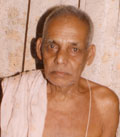
I have to pass on an obituary news here. It’s related to a veteran from the field of music. Sri Korumbu Subramanian Nampoothiri (76), a veteran mridangam teacher passed away yesterday. A visionary in the field of teaching classical percussion instruments, he struggled in his earlier stages and with sheer devotion and dedication, used to combine his profession as a priest at the famous Peruvanam temple, Cherpu and during the spare time go by walking to distant places to teach mridangam to his students. Later on he started the concept of Mridangamela, which was very unique and this has been a regular programme at various temple festivals and even during the 50th birhtday of Guru Sri Sri Ravishankar.
More about him can be read by visiting the following links and I take this opportunity to offer my pranams to his departed soul.
http://www.korambumridangakalari.com/Profile.html
http://www.korambumridangakalari.com/events.html
http://www.mathrubhumi.com/php/showObituary.php?general_links_id=2&Farc=®id=9
 ClicksandWrites
You must be logged in to post a comment.