Month: April 2008
A lesson in good behaviour

A lesson in good behaviour
By Mohsen Rashid and Preeti Kannan (Our staff reporters)KHALEEJ TIMES
25 April 2008
The recent incident of a private school’s Grade III student allegedly slapping the library teacher after she prevented him from running inside the library had raised disturbing questions on the upbringing of children.
Even as the parents of the child were summoned, the student’s mother, grandparent and the housemaid walked into the library and beat up the teacher.
Neeta Metra, the principal of the school, said, “What happened was far from proper conduct and behaviour which we are all familiar with. The problem is not only the assault on a teacher by a student, but also the reaction by the student’s family, who behaved in an indecent way instead of minding the conduct of the son. This manner is thoroughly unacceptable.”
She added that the student was suspended for seven days by the administration of the Knowledge and Human Development Authority (KHDA). As for the student’s mother, grandparent and the housemaid, a case was registered by the police based on the medical report and the statements recorded by the police.
She said she could not dismiss the student and deprive him of a year. “We see cases where teachers beat students and stringent action is taken against those teachers, but what about students who assault teachers? Who will protect the teachers’ dignity?” demanded the principal.
The Grade VI students were seen weeping when they watched the teacher being attacked, she pointed out.
Meanwhile, a similar incident in another private school was equally shocking. A Grade XI student of a school, located near the Ministry of Education, verbally abused his teacher. When the teacher called the supervisor, both the teacher and the supervisor were subject to verbal abuse by the student and his father. The student was, however, suspended for 10 days.
Mahasen Sa’d, principal of the school, said, “Students and their parents have dared to assault the teachers verbally because of the wrong policy and approach adopted by the MoE years back, where the ministry insisted that the client always has the power, implying that the students’ parents are always on the right side.”
She pointed out that when the student’s father was summoned by the school authorities, he came dressed in army suit as he was working for the Armed Forces and tried to assault the supervisor.
Even the Grade III student’s father worked in the police department and was reportedly always threatening the school management and teachers.
An official with the Knowledge and Human Development Authority, who preferred not to be named, observed these problems were not new, but were the result of poor upbringing and a clear absence of the role the family played in rectifying the flaws of their children.
“Since the regulations governing the students’ conduct did not include any penalty for the parents in both cases, the two cases were reported to the police on the insistence of the management of the schools,” the source added.
Senior officials at the Ministry of Education have strongly condemned the incidents and insisted that the ‘miscreants’ should not go unpunished.
Corporal punishment was an old way to discipline unruly students but does not exist any more, observed Abdullah Mousabbah, Director-General in the Ministry of Education (MoE).
The rights, prestige and dignity of the teachers are supreme, and no one, be it the ministry, school management or parents should be allowed to undermine them, he noted. The problem could not be dubbed as a phenomenon since it was reported in one or two private schools, because every school is keen on preserving its name and reputation.
The physical punishment of students by some teachers is unacceptable, said Obaid Al Qawood, Director of Umm Al Quwain Education Zone. But any attempt by a student to beat up his teacher should also be regarded as a crime, which should not be ignored and allowed to go unpunished. The ministry, however, will not tolerate such acts, he pointed out. The student who is found guilty of physical assault on a teacher will be expelled from school.
The director of Sharjah Education Zone, Fawziyya Hassan, emphasised that a policy of disciplinary action should be drafted.
Parents often defended the mistakes of their children. They should rather keep an eye on their children and hold them accountable for their offences, she suggested. The role of the school is being confined to education while its responsibility of raising and educating students on discipline and conduct is fading away, she added.
KHDA officials said they were keen on working with the school which had been unfortunate to witness an act of violence and would set up mechanisms to help victims of such incidents.
A statement from KHDA said, “The Knowledge and Human Development Authority will not tolerate violence in schools. They should be an environment in which everyone feels safe and protected. Incidents of violence are, of course, logged in the schools’ records. As an authority we will be working on the best way to collate this material so that we can identify problem areas or any trends that may emerge.
“We are also keen to set up a mechanism for following up on such incidents, so that victims and everyone else who has been involved can feel they are being supported for as long as they need.”


Laws proposed to limit debt
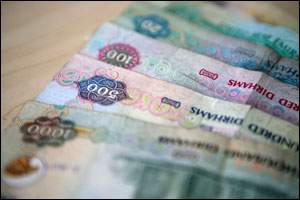
Laws proposed to limit debt
Mahmoud Habboush The National Last Updated: April 23. 2008 3:41AM UAE / April 22. 2008 11:41PM GMT
People using credit cards are getting trapped into a cycle of high-interest payments they had very little hope of escaping. Sammy Dallal / The National
ABU DHABI // The Federal National Council has proposed stringent rules for personal loans to prevent more people falling deep into debt. At a meeting yesterday, officials urged the speedy creation of an independent credit bureau to regulate the multi-billion dirham lending industry.During the session, attended by Obeid al Tayer, the State Minister for Financial Affairs, and Sultan al Suwaidi, the Central Bank Governor, members also recommended a credit reporting system to stop people borrowing more than they can afford to repay.
UAE courts have to settle thousands of debt-related cases despite the overall amount of personal debt in the UAE being a relatively low Dh43 billion (US$16bn). There is also no system to track credit history and assess people’s borrowing capacity. A special FNC committee reported that while banks were required to limit personal loans to Dh250,000, some were lending customers with low salaries more than 55 times their monthly wage.
The institutions also offered them several credit cards with spending limits above Dh50,000, which trapped them in a cycle of high-interest payments they had very little hope of escaping. About 560,000 people borrowed nearly Dh700bn last year, according to the committee. The lawmakers approved a recommendation that banks provide personal loans in proportion to a customer’s salary, and that the amount not exceed 25 times their total income.
Banks were also urged to stop a practice whereby customers were required to sign cheques guaranteeing the amount of their loan. Several lawmakers complained this was a common practice and said many people had been jailed for dishonoured cheques.One of the lawmakers, Yousef al Noaimi, who represents Ras al Khaimah, noted that some banks offered “marriage loans” that were repaid over 14 years.“Is fair to do that to the citizens?” he asked.
The proposals will be forwarded to the Cabinet for approval.Some lawmakers further suggested that the Central Bank was failing to protect ordinary lenders.“The Central Bank hasn’t fulfilled its role as a monitor. I hope the Central Bank will wake up and realise the gravity of the situation,” said Mohammed al Zaabi, a lawmaker from Sharjah. “We need transparency. Personal loans have become a rolling snowball.”
Another member, Dr Abdullah Shaheen, from Ras al Khaimah, said the Central Bank had been “inactive” and was being too lax on banks that helped customers to circumvent the rules to borrow amounts exceeding their means.“The Government needs to decree a political decision to control loaning policies. People have become portable banks with salaries not exceeding Dh3,000,” he said.Mr Suwaidi responded that the Central Bank was working with banks to limit extravagant personal loans. He said car loans should not exceed Dh150,000 dirhams and not be more than 80 per cent of the value of the vehicle.
The Central Bank chief added that the institution was working on new regulations for property loans. “We’ve been improving our control apparatus along with the increasing population and international developments in the field,” he said, noting that the Central Bank last month launched a programme to train some 80 Emiratis in auditing standards to be part of loan monitoring teams. Mr Suwaidi added that about three-quarters of 33,000 debt-related cases handled by the courts last year were disputes between landlords and tenants. A significant amount involved disputes between businessmen or bounced checks, while only seven per cent cases related to banks.
“Bank disputes only constitute 5,710 [of the cases] and they barely end by jailing people,” he said.Mr Tayer also said the Government was drafting a law to regulate real estate loans. He rejected suggestions that the Government pass a law prohibiting lenders from guaranteeing loans with salaries. The minister said that would prevent too many people whose only guarantees were their salaries from obtaining small business loans. “We shouldn’t prevent this layer of society from benefiting from loans,” he said.
The FNC committee also recommended the establishment of specialised courts to examine cases of Emiratis unable to pay their bank loans, as well as the establishment of a government fund in co-operation with charities to help people with heavy debts.
Abu Dhabi Police unveil ambitious proposal to cut crime
Abu Dhabi Police unveil ambitious proposal to cut crime
By Rayeesa Absal, Staff Reporter GULF NEWS Published: April 23, 2008, 00:17
Abu Dhabi: Abu Dhabi Police is aiming to cut the crime rate in the city by five per cent over the next five years.
Plans and a course of action have also been laid out to cut by 20 per cent road accidents causing serious or fatal injuries. The ambitious plans were unveiled as part of the police’s five-year strategy for 2008 to 2012.
“Our strategy is focused on the control of crime by prevention, control of its rates and eradication of its impact, to maintain general safety and security, make the roads safer and establish mutual trust between the public and police force as well as ensuring optimised use of human resources by adopting the best international practices without ignoring the provision of all operational support to the police operations”, said Lieutenant General Shaikh Saif Bin Zayed Al Nahyan, the Minister of Interior.
He was addressing the media and officials in video footage presented at the unveiling ceremony held at the Police Officers Club on Tuesday morning.
Named the Abu Dhabi Police Strategic Plan 2008 to 2012 new progressive development plans have been put forth under the theme Progressive Police for a Modern City.
The plan identifies six priorities which have five year targets to achieve. Concrete courses of actions have been mapped, alongside stages of execution, by police officers with the cooperation of international experts.
“We are looking forward to achieving our priorities with extreme determination and faith in a close partnership with all parties and strategic partners. Through this we are endeavouring to satisfy the needs of all community segments be they Emirati, residents, visitors, service or security agencies, in full integration with Abu Dhabi government’s strategy and political agenda and in harmony with the general strategy of the UAE Federal government,” the minister said.
The strategy establishes the vision, mission and values of the police department, apart from the strategic steps they will be implementing towards achieving the objective of becoming “the most operationally effective police force in one of the safest countries in the world.”
Announcing the plan, Brigadier Nasser Al Nuaimi, Director-General of the office of the Minister of Interior, said it focuses on modernising the department and improving its function and role in society to be on a par with the best police services in the world.
“The continuous process of modernisation and developing of Abu Dhabi Police, motivated by the wisdom and insight of the leadership of the UAE, is aimed at transforming the capital into an important economical regional power. The role of the police has been of great significance during the past decades in promoting this ambition,” Al Nuaimi said.
Faisal Sultan Al Shuaibi, Head of the Strategy department at Abu Dhabi Police, said: “We have kept the crime rate and traffic statistics of 2007 as a baseline. Our focus will be to achieve the targets we have set.”
Although the UAE and Abu Dhabi are considered to be safe, Al Shuaibi said the need is to anticipate new threats which may raise their heads as the city is growing by the day.
“Our priority is also to keep track of high profile crimes and curb them. Reaching out to all communities within our society is another important aspect.”
Surveys conducted by the police showed very high satisfaction levels amongst the public of up to 90 per cent.
Blueprint: Important areas
* Controlling crime
* Making the most of staff through the implementation of the best international practices, qualified staff will be recruited and the focus will be on increasing efficiency
* Increasing community confidence
* Maintaining the security of Abu Dhabi
* Making the roads safer. Various structural bodies and an action plan for casualty reduction will be developed
* Providing all policing operations with functional support
* Financial and administrative powers will be delegated to speed up decisions. To ensure technical efficiency of the plan, it will be assessed from time to time.
Stages
1957-1966 – Foundation stage
1966-1979 – Building stage
1979-1995- Progress stage with the merging of Abu Dhabi Police with the interior ministry
1995-2007-Qualitative and strategic development with Lt. Gen Shaikh Saif Bin Zayed Al Nahyan taking over as General Commander of Abu Dhabi Police
Emirates Palace wins international recognition
Emirates Palace wins international recognition(Wam)
23 April 2008
ABU DHABI — Emirates Palace was named the world’s leading conference hotel at the 14th annual world travel awards (WTA) ceremony this week.
Its grand suites were also named the world’s leading suites over elite collection of renowned hotels and resorts.
“Since its launch two years ago, Emirates Palace has consistently been recognised as the leading hotel and resort in Abu Dhabi with the most lavish suites and the best conference and convention facilities,” said Noel Massoud, General Manager of Emirates Palace.
He added that “we have now taken this to the worldwide hospitality arena and are extremely proud to receive such prestigious awards.
At a glittering ceremony held at the island of providenciales, Turks Caicos in the Caribbean, the WTA celebrated some of the people and companies behind the year’s best travel products. Over 330 representatives from the travel trade, VIPs and local and international media from 30 countries across the globe converged for the event.
Director of sales and marketing for Emirates Palace, Janet Abrahams attended the ceremony to receive the awards on behalf of Emirates Palace.
With over 7,000 square metres of space available, Emirates Palace is the largest meeting and conference venue in the Middle East and North Africa. The luxury resort hotel boasts a state-of-the-art auditorium with a seating capacity of 1, 100.
Earlier this year, Emirates Palace affirmed its position as the leading hotel in the region when it received nine of the most important coveted awards, including leading conference hotel and leading suite at the Middle East and Africa leg of the awards.
Nine Dubai schools to scrap bus service
Nine Dubai schools to scrap bus service
By Preeti Kannan (Our staff reporter) KHALEEJ TIMES
23 April 2008
DUBAI — Nine schools under the Gems group in the emirate will stop running their own school buses and instead outsource the service from June 1. The announcement comes in the wake of the recent decision by education authorities in the emirate to turn down requests to increase tuition fee above the set fee cap of 16 per cent.
However, the circular has sparked concern among parents who now anticipate rising transportation fees, tuition fees and fear disruption of services. They say that this would mean the school is now free to hike transport costs. HC, a parent said, “This is definitely an arm-twisting tactic on the part of the school. Since their request for a 16 per cent fee hike has been turned down, they are resorting to smarter ways to increase costs.”
Another parent, NM, said, “If they had informed us earlier, we would have probably changed school as I do not want my child to travel with a new conductor and driver everyday. The safety of my children is of high priority and we cannot afford to risk it, especially in the light of the numerous molestation charges against bus conductors.”
Students from the group’s Dubai schools, including Our Own Indian School, Our Own English High School, Our Own High School, Al Warqa’a, Dubai Modern High School, The Kindergarten Starters, The Millennium School, The Westminster School, The Winchester School and Cambridge International School have received the circulars or are in the process of receiving them this week.
It states, “Fuel costs have alone risen by 300 per cent. Rising cost of buses together with over 50 per cent remuneration increase for our bus drivers and conductors have contributed to this astronomical rise in the cost of operating the school bus.”
Adding further, the Dubai Modern High circular elaborates, “In the absence of approval from regulatory authorities, we have been unable to increase transport fees. We wish to remind the parents that the transport service has been an optional service. We are no longer in a position to subsidise this service, regrettably, as of June 1. Modern High School will no longer operate a school provided transport service but will outsource this provision to an external provider.”
According to the school, its transportation costs are as low as Dh1,500 per annum in comparison to external providers ranging from Dh5,000 to Dh8,000 and cites that there has been no increase in transport charges since April 2006. Families, who have paid transportation costs for the full term will, however, be refunded in full.
Confirming the decision, Monica Harter, head of Corporate Communications at Gems, said, “We cannot continue to sustain the losses anymore and have been providing transportation to our students at subsidised costs. However, there will be no disruption of services.”
She added that since the service was being outsourced there will be a definite increase in transportation costs, though she did not state the figure since they were still on the lookout for a provider.
Knowledge and Human Development Authority (KHDA), which supervises private and public schools in the emirate, maintained that schools which provide transport as an optional service have the choice of increasing costs to suit market rates, irrespective of the fee cap.
Mohammed Darwish, Chief of Licensing and Customer Relations, said, “In the case of optional services provided in addition to the basic tuition, and not imposed on the parents, the school or service provider is free to set costs in line with market forces. Logically, no school which provides a truly optional service need suddenly outsource this service as they may charge a fair, market rate for it if the parent has a choice.”
He added, “The Authority is not responsible for a school’s decision to outsource optional services nor for the regrettable and undesirable disruption that such a decision is likely to cause. Schools which do so may have other motives as fee regulation is not at issue.”
School heads, who didn’t want to be named, said that KHDA should have clarified the stand earlier as many would then prefer to run their own buses instead of outsourcing, if this was the case.
“It could mean that Gems could do a volte face and run its own buses, probably after an astronomical rise in transport costs, since they are under no obligation to include school bus cost in the fee ceiling,” said a parent.
IPLT20 – Match # 7, If it is Symonds, then obviously it is Sehwag

IPLT20 – Match # 7, If it is Symonds, then obviously it is Sehwag
Delhi Daredevils beat Deccan Chargers by nine wickets
A brilliant 94 off just 41 balls by skipper Virender Sehwag helped Delhi Daredevils crush hosts Deccan Chargers by nine wickets in the seventh match of the Indian Premier League (IPL)
A brilliant 94 off just 41 balls by skipper Virender Sehwag helped Delhi Daredevils crush hosts Deccan Chargers by nine wickets in the seventh match of the Indian Premier League (IPL) Twenty20 tournament at the Rajiv Gandhi International Stadium, Uppal, here Tuesday.
Daredevils achieved the target of 143 in just 13 overs by losing the wicket of Gautam Gambhir (12). Shikhar Dhawan was unbeaten on 25.









Advantages of multicultural teams
Advantages of multicultural teams
By Carole Spiers, Special to Gulf News Published: April 21, 2008, 23:40
As Dubai becomes steadily more multicultural, it is worth examining, from the London experience, the two differing reactions that may greet a new workplace colleague who has arrived from another place and another culture.
On the one hand there can be the defensive attitude, viewing the new arrival as a problem, whilst the other can be the welcoming attitude, viewing them as an opportunity to become familiar with another culture.
The defensive attitude believes that unfamiliar customs – including language, dress and food – can be in poor taste or lacking in sensitivity. Many ‘cultural diversity’ programmes are aimed at identifying and examining such scepticism and resentment, reducing insensitivity and instructing all staff how to avoid giving unintentional offence. The welcoming attitude appreciates the stimulating effect of new blood and new ideas that come with different perspectives.
Added value
By way of example: if there is an increasing trade between Dubai and (say) Sri Lanka, your team will clearly be strengthened by the inclusion of some Sri Lankan nationals and their different work philosophies and styles of problem-solving will, no doubt, enrich the managerial mix. The new team members would normally prove to be an asset as they would bring added-value to the organisation as well as contributing knowledge regarding the Sri Lankan culture – essential to increasing contact and trade.
If the UK experience is anything to go by, the defensive attitude gradually gives way to the welcoming, in most companies. But the change in attitudes can occasionally be difficult when emotion and prejudice obstruct logical debate. Cultural diversity can, all too often, bring out irrational statements that can lead to serious problems unless handled with care. Adequate training to understand and value the differences is important.
For this reason, central government may have to issue recommendations and directives, with a department dedicated to the issue of multiculturalism. All experience shows that the way to encourage positive attitude of welcoming and acceptance is to demonstrate it in action.
The primary learning comes through repeated impressions drawn from observing communication and interpersonal contact in a multicultural context, in the handling of business – as compared to that in a mono-cultural setting. Ideally, a majority would slowly observe the corporate and commercial benefits taking shape in improved performance, and come to their own conclusions about the advanta-ges of multicultural teams.
The alternative route, which is diversity legislation, may look like a quicker way of enforcing good habits, but it will strengthen resistance among those who are defensive. However, after seeing for themselves the success of the new-style multicultural teams, in their own organisations, they will often be among the converted!
Key points: Diversity
New work colleagues of different culture are often viewed as a problem
In time, the greater strength of multicultural teams begins to appear
Corporate diversity policies are more effective than government directives
– The writer is a BBC broadcaster and motivational speaker, with20 years’ experience as CEO of Carole Spiers Group, an international stress consultancy based in London.
 ClicksandWrites
You must be logged in to post a comment.