Achieve calmness with meditation
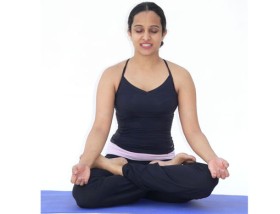
Achieve calmness with meditation
By Bharat Thakur, Special to Unwind / GULF NEWS / Published: January 11, 2008, 23:40
All over the world, people are turning to meditation — some seeking answers and the meaning of life while others practise it for its stress-relieving benefits.
With so many different techniques being taught, the question is — what really is meditation?
Let’s start with what we know. It is a scientifically proven fact that meditating regularly has immense health benefits.
In fact, the significant difference in health parameters between those who practise meditation and non-meditators is sufficient for anybody to start a simple practice.
Ask any doctor and he or she will gladly tell you how people who meditate are less prone to heart attacks and other diseases.
For a healthy mind
We must understand that all diseases are rooted in the mind — being psychosomatic in nature.
So, while we devote a lot of time and attention to the body and how we look, we must also spend time relaxing the mind and delving into the more subtle areas of our being.
Research also shows that people who meditate display lower stress levels than those who do not.
So, where does yoga fit into all this? Yoga begins with the physical body and goes deeper within, to the core of the being.
Most of you must be familiar with the different postures of yoga — asanas, the often crazy-looking movements that contort the body.
In fact, there are 8.4 million asanas. They are there just to make the body flexible and strong to master one meditation asana, that in which the practitioner can sit comfortably meditating for a long time.
Similarly, pranayama (breathing) practices train the mind and the body’s energy system for dhyaan (meditation).
Yoga has always been a spiritual science in India. It is only in the last 100 years that modern science and medicine have studied and understood the health benefits of yogic practices.
Therefore, today we see people taking up yoga to reduce high blood pressure or control diabetes.
Deeper understanding
This is good for all, but one must not forget that, ultimately, all yoga practices will direct the person to a calmer state of mind and an infinitely deeper understanding of oneself.
This deep understanding of who you really are is the scope and final goal of meditation.
So begin a yoga practice and slowly delve deeper into life’s eternal question — “Who am I?”
Wishing you all the best in your search.
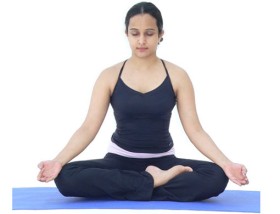
Meditation asanas
The main purpose of meditation asanas are to allow the practitioner to sit for extended periods of time without moving the body and without experiencing discomfort.
Only when the body has been steadied for some time will the benefits of meditation be felt. Deep meditation requires the spinal column to be straight and very few asanas can satisfy this condition.
Sukhasana
(Easy pose)
Sit with the legs stretched out in front.
Bend the right leg and place the foot under the left thigh.
Bend the other leg and place the foot under the other thigh.
Place the hands on the knees.
Keep the head, neck and back upright, but without straining.
Close the eyes.
Relax the whole body — the arm should be relaxed and not held straight.
Ardh padmasana
(Half-lotus pose)
Sit with the leg stretched out in front of the body.
Bend one leg and place the sole of the foot on the inside of the opposite thigh.
Bend the other leg and place the foot on top of the opposite thigh.
Without straining, try to place the upper heel as near as possible to the abdomen.
Adjust the position so that it is comfortable.
Keep the back, neck and head straight.
Close the eyes and relax the whole body.
Padmasana
(Lotus pose)
Sit with the legs stretched out in front.
Slowly and carefully, bend one leg and place the foot on top of the opposite thigh.
The sole should face upwards and the heel should be close to the pubic bone.
When this feels comfortable, bend the other leg and place its foot on top of the opposite thigh.
Ideally, the knees should touch the ground in the final position.
The head and spine should be straight and shoulders relaxed.
Place hands on the knees.
Close the eyes and relax the whole body.
Vajrasana
(Thunderbolt pose)
Kneel on the floor.
Bring the big toes together and keep the heels separate.
Lower the buttocks onto the inside surface of the feet with the heels touching the sides of the hips.
Place the hands on the knees, palms down.
The back and head should be straight but not tense.
Avoid excessive backward arching of the spine.
Close the eyes and relax the arm and the whole body.
Bharat Thakur is the founder of Bharat Thakur’s Artistic Yoga. For questions on yoga, write to dubai.artisticyoga@gmail.com. For information, log on to http://www.bharatthakur.com
It’s a Rainy rainy day
Hai friends,
So, the rain has come to Abu Dhabi, Dubai and all over UAE. Passing shots passing by you to comment. More rain and more photos as and when it happens.
Ramesh Menon
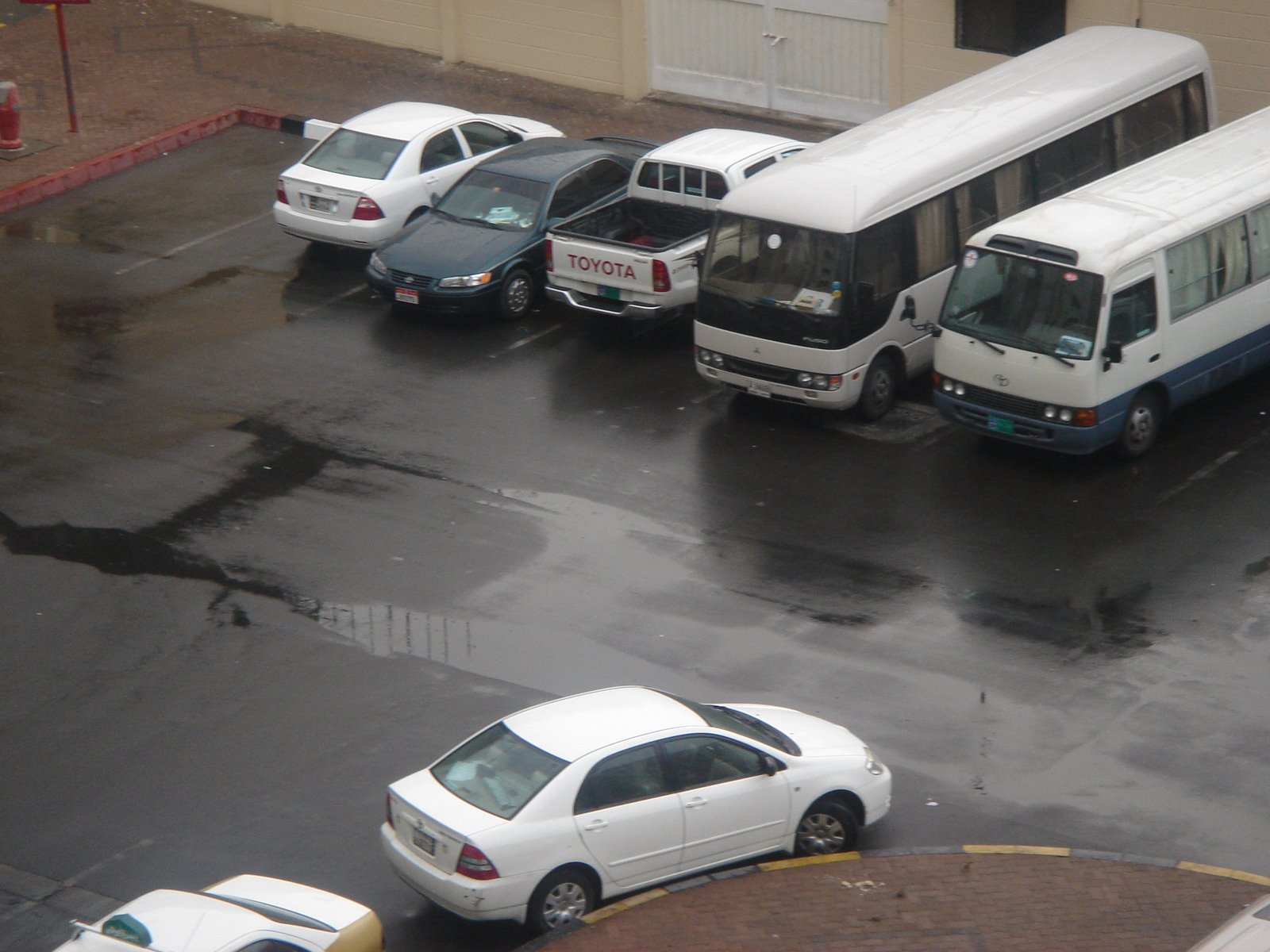
Reflections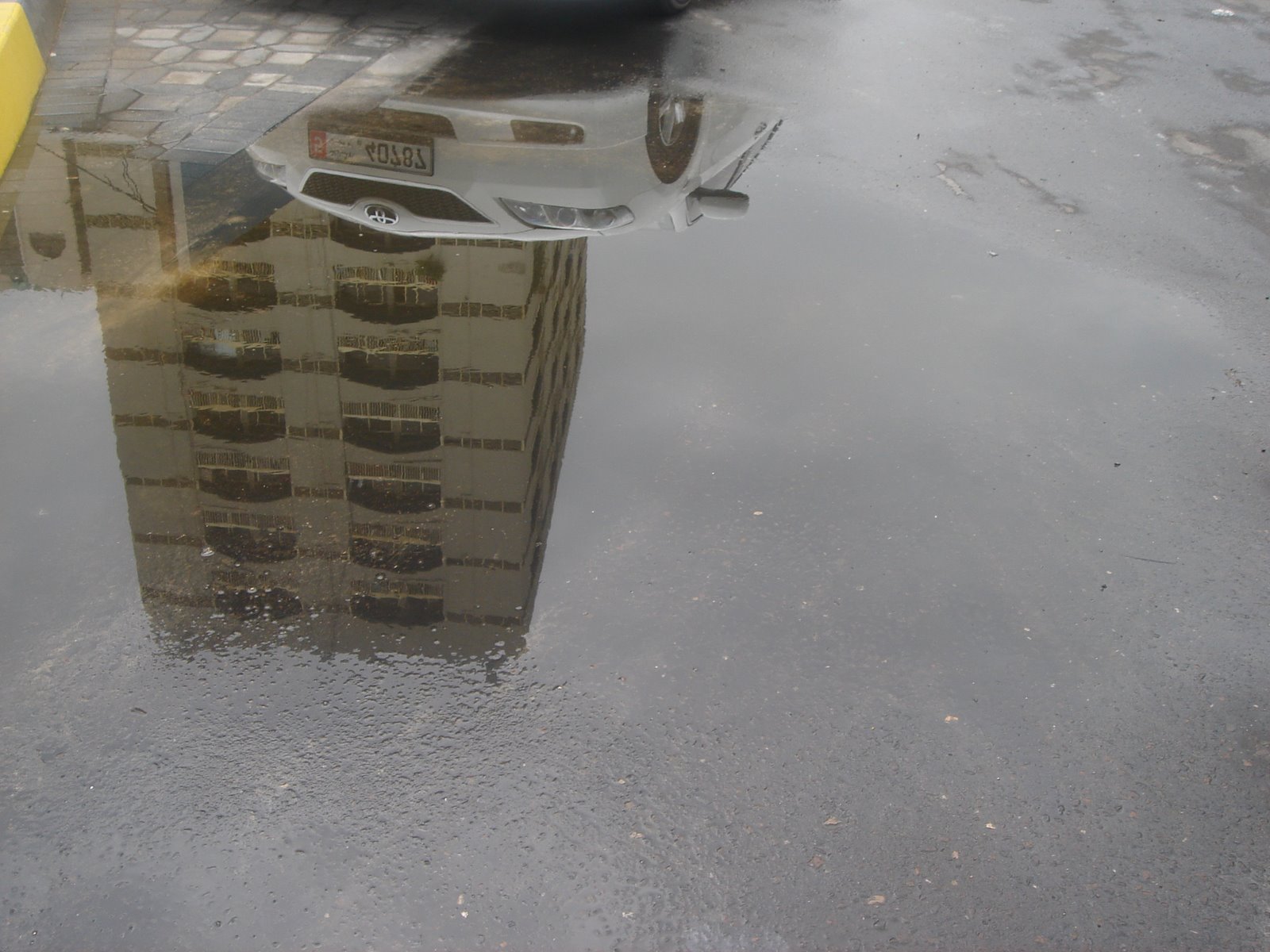
Organisational Stress Tips
Organisational Stress Tips
The effects of Organisational Stress:
Stress reduces morale, performance and productivity of the workforce.
Stress increases poor timekeeping.
Stress increases workplace absenteeism which has a knock domino effect on colleagues who have to cover.
Stress is a major contributor to staff turnover resulting in additional recruitment and retraining costs.
Insurance premiums increase with increased stress claims.
Litigation costs for stress claims are increasing.
Absence
20% (approx 5 million) workers feel very or extremely stressed at work (Bristol survey 1998-1999)
563,000 people are actually suffering from work related stress anxiety and depression. Second only to musculoskeletal disorders. (Household survey 2001/2)
Length of time taken off 29 days per case. (Household survey 2001/2)
Cost
Ill health from work – cost to Britain is £2.5 billion. Cost of stress to British industry is £350 – 370 million (1995 review)
Cost of stress to British society as a whole £3.7 – 3.8 billion.(1995 review)
Legal Implications
Under the Health and Safety at Work Act etc (1974) employees now have a legal duty to ensure health and safety is not at risk due to excessive and sustained levels of stress.
Under the Management of Health and Safety at Work Regulations 1999 employees are required to carry out regular risk assessments. This now includes risk assessments for work related stress.
Guidance from the HSE (June 2001) explains how stress should be tackled in the workplace following the HSE 5 step to risk assessment process.
To help organisations implement this the HSE have produced Management Standards and accompanying guidance. These Standards are not new legislation but are intended to help organisations fulfil their legal obligation.
So what can you do?
Following are 10 tips for managers to help reduce organisational stress:
1. Adopt the attitude that stress is not a weakness and try to develop this culture in your own department.
Nobody is perfect we all have too much pressure from time to time. Stress can affect anyone given an accumulation of circumstances. Foster the mind set that it is not a weakness to seek help if we are not coping- it is a strength to admit it and do something about it. Promote it as a developmental issue. Handling stress is a proactive intervention to prevent ill health of the employee and the organisation.
2. Ensure that you yourself are not suffering from stress.
A stressed manager has a “knock on effect throughout the organisation.” Dealing with your own stress will prevent your staff from suffering and results in a more relaxed and productive atmosphere.
3. Analyse your own management style and behaviour (honestly); ask is your management style causing any stress?
* Good management is the best proactive way of reducing organisational stress
* A good manager
* Ensures a realistic knowledge of the workload and the time it should take
* Sets individual work objectives and targets, consults and discusses before setting
* Gives clear effective instructions
* Makes sure he/she define roles and tasks adequately – discusses priorities
* In times of high workload prepares workforce for this
* Varies work where possible and provides opportunities for individuals to influence the way they do there jobs
* Delegates effectively (and not just the boring bits!!)
* Ensures staff have adequate training to do a good job. Coaches where training is not possible
* Gives fast feedback. Both positive and negative. Praises when appropriate. Does not shy from giving negative feedback. Gives constructive criticism when criticism is necessary
* Be approachable – really. Admits to own weaknesses and takes responsibility for own mistakes
* Be honest which of these could you improve upon?
4. Regularly do an informal risk assessment of your staff to check nobody is subjected to work related stress.
Think of yourself in your employees shoes. What causes your staff stress may be healthy pressure to you, but do not belittle it. Just because it is not a problem for you does not mean it is not a problem for them. Remember They may cope easily with issues that cause you stress.
5. Provide information to staff telling them where to go for help and what to do if they are suffering from stress.
6. Encourage staff to attend a personal stress management course or provide staff with tips to help themselves.
7. Carry out a risk assessment process to reduce stress in your department.
Familiarise yourself with the HSE guidelines for tackling work related stress.
* Determine the causes of stress in your organisation
* Communicate these to staff and involve staff in finding solutions
* Put an action plan into place and regularly review your progress making amendments where necessary.
8. Improve communication.
* Where possible keep workforce informed of all changes and major decisions
* Listen to your staff. Hear what they are saying
* Observe your staff, you learn a lot from watching
* Talk to your staff informally and regularly. It will be easier for them to come to you or for you to approach them if there is a problem.
9. Help your staff to cope with change no matter how big or how small.
* Before introducing change listen to views and opinions of staff. How will it be for them?
* Where possible update workforce on any changes taking place
* Explain the reasons for the changes
* Identify those who resist change and help them accept, listen to doubts and fears, explain, coach, boost self esteem
Check how things are progressing during and after change.
10. All in all create an environment that promotes well being.
Remember relaxed and happy employee will work more effectively thus increasing performance and productivity. This will inevitably result in increase the organisational performance.
10 tips to reduce your stress
10 TIPS TO REDUCE YOUR STRESS
Introduction
According to the Health and Safety Executive stress is :
“The reaction people have to excessive pressures or other types of demands placed upon them. It arises when they worry the cannot cope.”
The HSE distinguish between stress and pressure. Pressure is seen as positive and improves our performance. However, when pressure becomes too much or too prolonged it turns to stress. It is important therefore that we try to achieve a balance. We need to feel stimulated and involved but need to act to ensure that our pressures do not get too great or accumulate.
The HSE definition does not however take the concept of perception into the equation. As different people perceive the same event in different ways this is extremely important. For example, some people will see an event such as public speaking as extremely stressful while others will see it as a challenge. We therefore can cause our own stress by the way we perceive a situation. – The way we see life, our perceptions may affect our receptivity to stress.
Exposure to prolonged or extreme pressure whether real or perceived can lead to behavioural changes and to physical and psychological problems.
Causes of stress may be short term, longer term or ongoing. Short term pressures are pressures which are short lived and from which we can easily recover e.g. a traffic jam or a disagreement with a teenage daughter. Longer term and on going pressures are more of a problem as we have less opportunity to recover. For example caring for an elderly or sick relative can have a great effect on our health and well being as the stressor is there continuously and we perceive we have no respite.
So what can we do ?
Try to manage your balance between pressure and stress by adapting your behaviour and thinking. Also make sure you take time out to recover from the pressures you find yourself under. Exercise and relaxation are paramount.
Tips for preventing pressure turning to stress
1. Adopt a healthy lifestyle – If we eat a healthy diet, exercise regularly and ensure we get adequate rest our body is better able to cope with stress should it occur.
2. Know your limitations and do not take on too much. We cause ourselves a great deal of stress because we do not like to say no to people. We like people to like us and do not want to let people down. We then end up doing more than we should. Learn to be assertive and how to say no without upsetting or offending people.
3. Determine what causes you stress and try to change your behaviour to reduce it
4. Avoid unnecessary conflict. Don’t be too argumentative. Is it really worth the stress? Look for win – win situations. Look for a solution to a dispute where both parties can achieve a positive outcome.
5. Learn to manage your time more effectively – We waste a lot of time doing unimportant tasks. Prioritise your day and do the important jobs first. The unimportant ones can wait, and often they will disappear completely leaving you time to do other things. Also do not put off the unpleasant tasks. Every time we think about them we cause ourselves stress. Give an unpleasant task a high priority and do it first.
6. Practice saying No without feeling guilty
7. Take time out to relax and recharge your batteries – You will perform much better after a break and easily make up the time you used relaxing.
8. Try to see things differently – If something is bothering you try to see it differently. Talk over your problem with somebody before it gets out of proportion. Often, talking to somebody else will help you see things from a different and less stressful perspective. Try to see the funny side of a situation. Laughter is a great stress reducer.
Accept the things you cannot change. – When things cause us stress, try to change the situation. Sometimes however, this is not possible. If this proves to be the case recognise this and accept things as they are.
9. Find time to meet friends. Friends help us see things in a different way. The activities we engage in with friends usually help us relax and we will often have a good laugh. Laughter is a great stress reducer. It boosts the immune system which is often depleted during stress. If you do become stressed engage in some form of physical activity and relaxation technique. Physical activity will work off the biochemical and physical changes that occur within your body due to stress. Relaxation helps your body return to its normal healthy state. Good relaxation techniques include breathing exercises, massage and a variety of complimentary therapies.
10. Avoid alcohol, nicotine and caffeine as coping mechanisms. – Long term, these faulty coping mechanisms will just add to the problem. For example, caffeine is a stimulant and our body reacts to this with the stress response.
Ministry to collect statistics on those with special needs

I don’t know where to direct parents when they ask me for a private school suitable for their special needs child, says Noura Al Moutawa, Director of Special Education section at Administrative Services Unit.
Ministry to collect statistics on those with special needs
By Siham Al Najami, Staff Reporter GULF NEWS Published: January 10, 2008, 23:32
Dubai: The Department of Special Needs Education in the Ministry of Education (MOE) is willing to integrate various cases and increase the capacity of special needs pupils only if they have the equipment, facilities and sufficient training programmes.
However the MOE still does not have reliable statistics on the number of pupils with special needs that are partially and fully integrated into schools.
Dr Aisha Al Jalahma, Director of the department said they are working on compiling this data to create a report on the list of materials, human resources and programmes needed to develop special education.
“Special certificates” for special needs pupils integrated into public schools will be issued upon their completion of an academic year and upon their graduation from their schools, she said. The department has also developed an Individual Education Plan (IEP) for these students, which is in line with the integration of pupils with Down’s Syndrome and with the recent initiative of including pupils with autism.
Modified curriculum
Special needs pupils included in mainstream schools will study with peers in their age group but will have a modified curriculum.
Noura Al Moutawa, dir-ector of the Special Education section at the Administrative Services Unit in Dubai said much is needed to improve special needs education in private schools.
“I don’t know where to direct parents when they ask me for a private school suitable for their special needs child. We hardly have any private schools catering for these children,” she said.
There are also negative consequences in taking in children with special needs without the approval of the MOE as many of the schools are inaccessible for children with special needs. At the same time, teachers and the administration are not trained to deal with these special cases.
Before enrolling a student with special needs, the Special Education Unit looks into the applicant’s forms and documents. The child is then interviewed by the speech therapist; special needs specialist and psychiatrist followed by a comprehensive report sent to the MOE for approval.
Tackling cases of severe disabilities

Isphana Al Khatib, Director of Al Noor Centre says that it takes around Dh35,000 to train a child with special needs.
Tackling cases of severe disabilities
By Siham Al Najami, Staff Reporter GULF NEWS Published: January 10, 2008, 23:32
Dubai: Al Noor Training Centre for Children with Special Needs caters to children with severe cases of disability or with multiple disabilities especially to help parents with very low incomes.
The centre offers individualised academic programmes, vocational training, self awareness programme, behaviour modification programmes, physical education and computer training along with work placement and therapy.
Isphana Al Khatib, Director of Al Noor Centre said that it takes around Dh35,000 to train a child with special needs and faced many challenged cases as parents are not aware of early intervention procedures or where to take their children.
Since graduates from most special needs centre do not get an official graduation degree, Al Noor Centre in collaboration with the National Institute of Open Schooling based in India offered 7 of their students the opportunity to register for courses with which the graduate gets an official certificate on the courses completed such as English, word processing, economics, business studies, and home sciences.
“The area of special needs has developed in the country but still we have a long way to go especially on public awareness. We need structured systems to support people with special needs. From a medical point of view, we need more extensive diagnosis and certainly early intervention. Most people with special needs go without care or support in their first five years, which is the most crucial for their physical and mental growth,” she said.
The director of a special needs centre in Abu Dhabi, who wished to remain unnamed, said a number of her students are fit to join regular schools but face limitations and endless procedures from the Education Ministry and Education zone. “The ones that succeed in getting their children into mainstream schools battle passionately to get permission from senior officials and pay a lot of money to hire an assistant teacher with the special needs child to accompany and monitor the pupil,” he said.
Wheelchairs fail to ground 10-year-old pupil’s dreams
Wheelchairs fail to ground 10-year-old pupil’s dreams
By Siham Al Najami, Staff Reporter GULF NEWS Published: January 10, 2008, 23:32
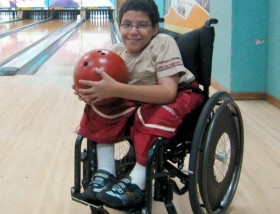
Dubai: Abdullah is a 10-year-old boy born with spina bifida – a neurospinal disease that causes paralysis from waist down.
He has been using a wheelchair for years. Other than his physical disadvantage Abdullah has no other health problems, and is mentally and socially capable and sound.
Yet the ambitious child faces a tremendous challenge daily since society does not cater to the basic needs of people with special needs. Abdullah’s parents worry every year about his schooling.
Last year he was forced to leave a school because of his physical disability and missed the first three weeks of the academic year. Most schools in the UAE do not have ramps or are inaccessible for people with special needs.
Fatima, his sister, is frustrated by the education system and believes there should be a department or authority willing to cater and support children with special needs.
“The Ministry of Education couldn’t do anything about the previous school or help direct me to a school accessible for people using wheelchairs,” she said.
In his previous school, Abdullah was enrolled in grade 4 with the hope of progressing to grade 5 in the same establishment despite the fact it is on the second floor.
Now Abdullah is in a different private school after visiting 15 schools and contacting over 25 schools to find one that is willing to enrol him and has the necessary facilities. Although he likes his new school and is well-adjusted, he still faces the same challenge of having the upper level classes on the second floor along with the laboratories.
Teenager wins right to join class
By Siham Al Najami, Staff Reporter GULF NEWS Published: January 10, 2008, 23:32
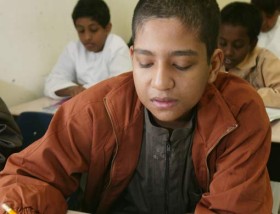
Dubai: Thirteen-year-old Abu Bakr Shaikh Al Alawi recently joined a public school after his parents battled fiercely for over four years to convince the authorities that he is fit to be in a mainstream school.
“My son is very talented. He memorised the Quran and won a lot of prizes and passed his exams set by the Ministry of Education. So I questioned myself: why can’t he be enrolled in a regular school?” asked his Emirati father.
The ministry agreed to integrate Abu Bakr, a child with autism, on condition that a special tutor monitors his progress in school and at home, said his father.
He said he finally found a teacher in Saudi Arabia. “Even though it is the duty of the ministry to cater to the needs of my son I had to find him a teacher for him to get accepted into a regular school,” said the father.
Abu Bakr is the first child with autism to be fully integrated into a regular school. “Abu Bakr is a very good child and deserves to have the same opportunities as the rest of the students,” said Amal, Abu Bakr’s older sister. Her brother had to go through unnecessary procedures such as repeating the same curriculum as he moved between many schools to prove he is capable of being a “normal student in a regular school”.
His teacher, Mustafa Mahmoud, at the Abu Dhabi Autism Centre praised the efforts of parents.
First UAE student to learn Mandarin graduates
First UAE student to learn Mandarin graduates
WAM Published: January 10, 2008, 17:59
Beijing: The first UAE student to study Mandarin language graduated here on Thursday.
In a ceremony organised by the Beijing Language and Culture University (BLCU), Hassan Hussain Zafer was awarded a Bachelor’s degree in Mandarin, becoming the first UAE national to study the Chinese language.
BLCU is the only institution in China which teaches Chinese language and culture to foreign students, according to the BLCU website. The graduation ceremony was attended by UAE Ambassador Mohammad Rashid Al Boot, BLCU President and faculty members.
Heavy showers forecast in UAE
Heavy showers forecast in UAE
By Mahmood Saberi, Staff Reporter GULF NEWS Last updated: January 11, 2008, 17:03
Dubai: It will be dark, overcast and wet over the weekend with heavy thundershowers in the northern parts of the emirates, according to the Dubai Met office.
An intense low pressure is moving rapidly towards the emirates already drenching Doha, Qatar, Bahrain and Dhahran, Saudi Arabia, and the heavy showers will hit UAE on Monday and Tuesday, Dr. S.K. Gupta, duty forecaster, said.
He expects the rainfall will exceed the maximum this time of the year and will reach 16.5 mm.
Strong winds will whip up six to eight foot waves offshore. “A marine warning will be out,” said the forecaster. The winds will whip up a dust haze initially but it will not affect flights, he said.
The usual bright sunny days will return only on Wednesday. The low pressure will dissipate the cold and nights will not be as freezing.
“The daytime temperature will rise to 24 degrees Celsius and the minimum will go up to 16 to 17 degrees,” according to the forecaster.
The temperature had dropped to a minimum 8 degrees Celsius at some places Like Abu Dhabi and Ras Al Khaimah, which recently experienced hailstorms. “The cloud cover will lift the temperatures higher,” said the forecaster.
The low pressure will move on to Oman and beyond from Wednesday onwards.
 ClicksandWrites
You must be logged in to post a comment.