Maha Shivarathri – the universal Pati-patni day
Today is Maha Shivratri.
These days, we blindly follow several different types of days, for eg: Valentines day, mothers day, fathers day, friendship day, no-smoking day and the list goes on and on. When we look at it Shivarathri is the truly traditional family day or pati-patni day, as I term it. Because, from the ancient times, devoted wife’s pray and observe fast on this day for the well being of their husband and children and vice-versa, husband’s observe religious rituals and prayers like chanting Rudram and chamakam to give grace and prosperity to the well being of own family and the society.
There are many stories associated with Shivaratri and its origins.
One is about lord shiva drinking a poison and he held it in his throat by binding it with a snake. The throat became blue due to the poison (Thus Lord Shiva is also known as Neelakantha) and Shiva remained unharmed. In another story, it is said that the whole world was once facing destruction and the Goddess Parvati worshiped her husband Shiva to save it. Parvati named the night for the worship of Iswara by mortals Maha-Sivaratri, or the great night of Siva. After creation was complete, Parvati asked Shiva of which rituals pleased him the most. The Lord replied that the 14th night of the new moon, during the month of Maagha, is my most favourite day. It is known as Shivaratri. Parvati repeated these words to her friends, from whom the word spread over all creation. Another story is about a hunter. Lubdhaka, a poor tribal man and a devotee of Shiva, once went into the deep forests to collect firewood. At nightfall, he became lost and could not find his way home. In the darkness, Lubdhaka climbed a bel tree, and sought safety and shelter in its branches until dawn. All night, he could hear the growls of tigers and wild animals, and was too frightened to leave the tree. In order to keep himself awake, he plucked one leaf at a time from the tree and then dropped it, while chanting the name of Shiva. By sunrise, he had dropped thousands of leaves on to a Shiva lingam, which he had not seen in the darkness. Lubdhaka’s all-night worship pleased Shiva. By the grace of Shiva the tigers and wild animals went away, and Lubdhaka not only survived but was rewarded with ‘divine bliss’.
While most Hindu festivals are celebrated during the day, Mahashivratri is celebrated during the night and day that come just before the new moon. Each new moon is dedicated to Shiva, but Mahashivratri is especially important because it is the night when he danced the ‘Tandav’, his cosmic dance. It also celebrates the wedding of Shiva and Sati, the mother divine. Night represents evil, injustice, ignorance, sin, violence, and misfortune. Tradition says that Shiva, like his symbol the new moon, appeared in order to save the world from darkness and ignorance, before the world entered complete darkness. Those who observe the Mahashivratri fast only break their fast the next morning, and eat the prasad offered to Shiva. Young girls observe the fast and worship Shiva so that he may bless them with good husbands. They sing devotional songs in praise of the lord, and holy texts are chanted throughout the night. The pandits in the temples perform the puja according to the scriptures. This is done four times during the night.
Dedication:
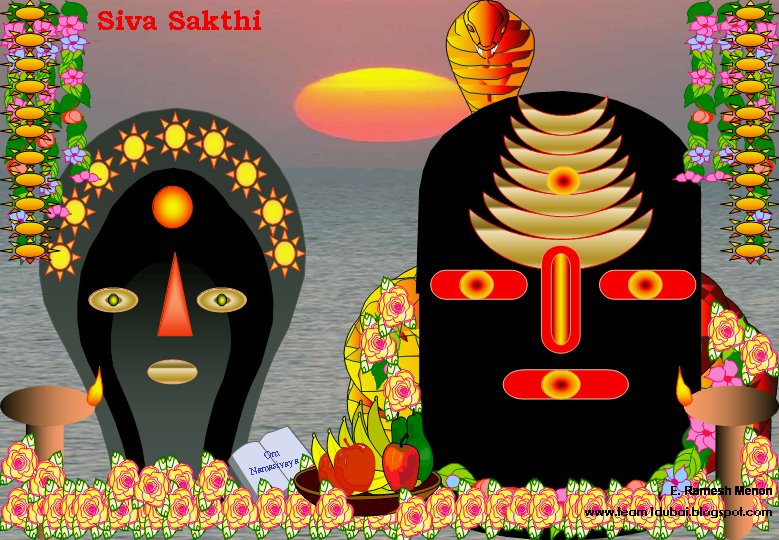
On this auspicious day, I would like to dedicate to AMMA and to our global forum a painting named Shivasakthi. It is also a dedication to all the loving mother’s, wife’s and sisters and also to all our fellow brothers for keeping our tradition and values always high, wherever we are.
I would like to also add a few words about this painting. This is created purely using powerpoint tools and it was done as a result of a few minutes of quite time at a small temple near REC Chathamangalam, Calicut. On that particular monsoon evening (somewhere in 1995), it happened to be that there was no power in that area, and the darshan of the deity at the time during deeparadhana created an everlasting memory in my mind. The decoration of the Devi idol, simple and small, by the melshanti (priest) was simply superb. I added to it a similar devotion at another temple, which is Avittathur Mahadeva temple. And the result is this creation – Shivasakthi.
At both these places, the time available by the melshanthis to decorate the idols during the time the sanctum sanctorum closed for pooja, is barely 10 minutes or so. And imagine yourself the result when the doors are opened. It is the epitomisation of the ultimate sraddha, the dedication and devotion to provide us a blissful presence. Can you imagine them practising this art somewhere else? Or re-doing it, if a little more of water has been added to the chandan and kunkum or bhasmam they mix in order to create these decorations.!!
There are many unsung heroes and these are a few among them. And it is also my way of tribute to the many who remain within the four walls of our own religious boundaries, who do not get to watch or listen to any of the niceties which we are blessed with.
No one has the patience these days, and to add ease to it, we have a wonderful creation called remote control. It makes things easy for our wandering minds to switch from one programme to another and to refrain from keeping focussed on one. We undergo severe rituals and follow procedures for many days and ultimately visit our favourite temples and the moment we are in front of the deity, we close our eyes and fall into deep prayers. At this moment, we go back to the old thoughts, photos etc, forgetting about the opportunity to meet the real lord who is in front of us in full – paadadi kesham. And we are pushed away for someone else to do his minutes or seconds of closed eye prayers. The moment you close your eyes, you forget your objectives. So, open your eyes, look at the realities, and react to it. As the prayer song “Geet nahi, Sur nahi, phir bhi mem gavoom”, in this spiritual sphere of mental peace and inner joy, the responsibility for success or failure is entirely one’s own.
Offering two special namams to AMMA, who has reached Lalitha Sahasra namam to all and every one, irrespective of caste, creed, religion, nationality:
Om sree sadacharapravarthikayai nama (She who makes things happen through good conduct)
Om Sree Shivasakthyaikya roopinyai nama (She who is unification of Shiva and Shakthi)
God bless and have a great time blogging.
Drinking may boost blood pressure
Drinking may boost blood pressure
REUTERS
LONDON: Drinking alcohol, even moderate amounts, may boost blood pressure more than previously thought, British researchers said on Tuesday. People with a genetic mutation that makes it difficult to consume alcohol had significantly lower blood pressure than regular or heavy drinkers, the researchers found.
People without the mutation who had about 3 drinks per day had “strikingly” higher blood pressure than people with the genetic change who tended to drink only small amounts or nothing at all. “This study shows that alcohol intake may increase blood pressure to a much greater extent, even among moderate drinkers, than previously thought,” Sarah Lewis, a researcher at the University of Bristol’s Department of Social Medicine, and colleagues wrote in their report published in the Public Library of Science journal PLoS Medicine.
The researchers said there was more than a two-fold risk for high blood pressure among drinkers and a 70 per cent increased risk for “quite modest” drinkers compared to people with the genetic mutation. High blood pressure, which affects more than a billion adults worldwide, can lead to stroke, heart failure, heart attack and kidney failure.
Previous studies have linked heavy drinking with high blood pressure while others have suggested that moderate alcohol intake provides health benefits such as lower cholesterol. The genetic mutation is common in some Asian populations and discourages drinking because alcohol triggers facial flushing, nausea, drowsiness, headache and other unpleasant symptoms. Comparing people with the mutation and volunteers without the genetic variation helped the researchers better gauge long-term effects of drinking, they said. “Reporting of alcohol (in other studies) is likely to be subject to considerable error, and this error may be differential — for example, people who have been advised to reduce alcohol intake for medical reasons may under-report alcohol intake,” the researchers wrote.
Eat breakfast, avoid obesity
Eat breakfast, avoid obesity
IANS
WASHINGTON: Those who eat breakfast every morning are more physically active than those who skip the first meal of the day, especially during adolescence.
That’s the conclusion of a study in which researchers examined the link between breakfast frequency and five-year body weight change in more than 2,200 adolescents.
The results of the study indicate that breakfast eaters consumed a healthier diet and were more robust than those who skipped the meal.
Five years later, daily breakfast eaters also tended to gain less weight and had lower body mass index levels, an indicator of obesity risk, compared with skippers.
Mark Pereira, co-author of the University of Minnesota project EAT, points out that this study extends the literature on the topic of breakfast habits and obesity risk because of its size and duration.
“The dose-response findings between breakfast frequency and obesity risk, even after taking into account physical activity and other dietary factors, suggests that eating breakfast may have important effects on overall diet and obesity risk, but experimental studies are needed to confirm these observations,” he added.
Over the past two decades, rates of obesity have doubled in children and nearly tripled in adolescents.
It is estimated that between 12 and 24 percent of children and adolescents regularly skip breakfast. This percentage of skippers, while alarming, has been found to increase with age.
Dianne Neumark-Sztainer of project EAT said researchers have found further evidence to support the importance of encouraging youth to eat breakfast regularly.
“Although adolescents may think that skipping breakfast seems like a good way to save on calories, findings suggest the opposite,” she said.

Bring fine arts to front pages
‘Bring fine arts to front pages’
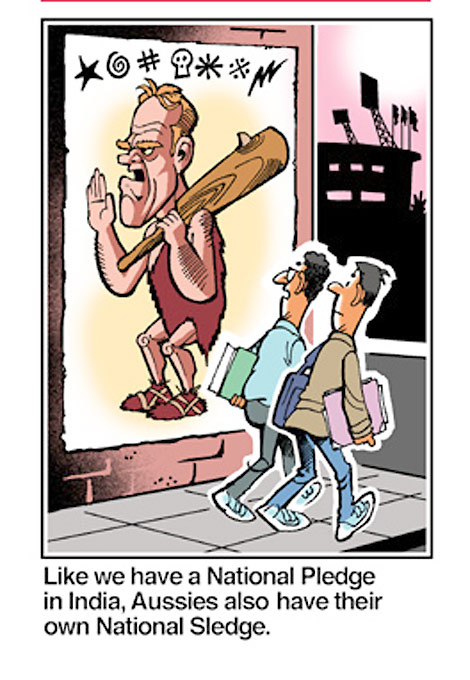
Ridiculing the importance accorded to page-three items in newspapers, a group of famous musicians today appealed to the print medium to bring fine arts to the front page.
“Bring the news of fine arts and artistes to the front page and take unpleasant things to the subsequent pages. We don’t want to read unpleasant things in the morning,” remarked eminent carnatic singer M Balamurali Krishna at a joint press conference here, addressed by the who’s who of the Indian music world.
The musicians, representing both Hindustani and carnatic music styles, have come together under the umbrella of the All India Musicians Group (AIMG) to preserve the art and support up-and-coming artistes and indigent (poor) musicians.
“I think the front page is reserved only for cricket,” commented renowned tabla player Zakir Hussain. Coming down heavily on the page-three culture, he said “now-a-days people first look only at page three where they get to read about persons whom they don’t know”.
But those persons were in the news just because they went to a party.”
Stressing on the importance of media’s role in taking any art form to the masses, the musicians appealed to newspapers to give more space for arts.
The AIMG, formed two years ago, held its third meeting here to “take stock of the current scenario in the music world and to identify issues which are prejudicial to its moving in the right direction.”
Eminent classical vocalists Ajoy Chakrabarty, Rajan Mishra, Sajan Mishra, santoor player Shivkumar Sharma, sitarist Arvind Parikh, carnatic singer Sudha Raghunathan and Mandolin artiste U Shrinivas were also present.
The musicians noted that the wave of globalisation that was sweeping across the world had moved the Indian music to the masses — away from the patronage of the elite.
Expressing concern over the “meagre” financial and related support extended by the Governments — both at the Central and state levels — to the cause of music, the musicians said Prasar Bharathi had increased the allocation for culture from Rs 33 crore to Rs 49 crore, consequent to their meeting with officials concerned.
Stating that there could be around 25,000 artistes, including those who were not graded, in the country, Parikh said slots had been obtained from All India Radio in cities like Mumbai, Chennai and Kolkata for up-and-coming artistes with the sponsorship of corporate houses.
“Our most important agenda will be to collect money from corporate houses and promote young talents,” he said. He said the AIMG had also held talks with insurance companies like Oriental and New India Insurance to evolve special policies for aged and indigent musicians at a subsidised premium. The musicians also stressed the need for music education in schools and colleges in order to create a next generation of musicians as well as audience.
“In a nutshell, our appeal is to adopt an artiste and nurture her/his career. In this world of globalisation, let the roots of our culture remain strong and intact,” Zakir said.
Abu Dhabi taxis to be fitted with tracking system
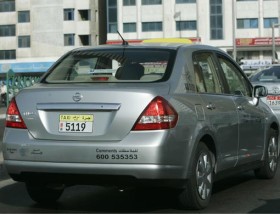 Photo by Ravindranath/Gulf News
Taxis with toll free number plying in Abu Dhabi. The Tracking and Dispatch system has been tested on about 70 new taxis.
Abu Dhabi taxis to be fitted with tracking system
By Binsal Abdul Kader, Staff Reporter GULF NEWS Published: March 03, 2008, 12:11
Abu Dhabi: Residents will soon be able to pay taxi fares through credit cards, Trans AD, the Centre for Regulation of Transport by Hire cars in the capital, announced on Monday.
This is one of the features of the Tracking and Dispatch system which has been implemented in a sample of cars, said Khalid Saleh Al Rashedi, General Manager of Trans AD at a press briefing in Abu Dhabi on Monday.
“Apart from the credit card facility, we are planning to introduce prepaid smart cards which is being studied,” he said.
The Tracking and Dispatch system has been tested on about 70 new taxis in the capital now and it will be fully implemented by the end of June 2008. “We are trying hard to complete the implementation in four phases even before the stipulated time.” It will help the people to avoid waiting for taxis. They can just call up the call centre which can track the taxis available nearby and dispatch them to the passengers.”
The officials said taxis can be booked in advance or planned future trips. The nearest available taxi to the customer’s location will be automatically dispatched using the Global Positioning System (GPS) satellite system. The system will inform the customer of the taxi number and the estimated time for arrival through the state-of -the-art Interactive Voice Response System (IVRS).
Taxis are fitted with an advanced mobile data terminal that displays fare details and progress from pick up point to destination on a map. Customers can monitor the progress and make sure that the taxi is taking an appropriate route from pick up point to drop -off point.
Transport: Fleet to be increased
Trans AD said the number of new taxis in the emirate will be increased to 1,500.
“More than 850 new taxis are on the streets now”, said an official. About 500 old taxis (Gold and White) have been phased out since January 2008. Compensation ATM cards have been given to old licensed taxi owners to receive monthly payment of Dh1,000.
Almost all 8,000 taxis have been given identification numbers to enable passengers to easily file complaints.
Khalid Al Rashedi, General Manager of Trans AD urged the public to report complaints at the call centre 600535353.
Big fall in night temperature predicted on Tuesday
Big fall in night temperature predicted on Tuesday
By Aftab Kazmi, Bureau Chief GULF NEWS Published: March 03, 2008, 10:04
Al Ain: A significant fall in night temperature is expected on Tuesday in the country due to strong shamal winds, the met office has forecast.
The wind will begin blowing in the western areas by this afternoon kicking up dust.
“It will gradually reach rest of the areas [of the UAE] by evening,” according to the forecaster of the National Centre for Meteorology and Seismology (NCMS).
The strong winds would make the sea very rough with eight to 11 feet of waves offshore. Fishermen and small boat riders have been advised to stay away from the sea.
A Met official said day time conditions would, however, remain fair and rather hot in general, but would get cold by night.
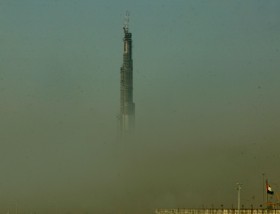
Thick fog blanketed on Monday some coastal areas such as Dubai, Sharjah and Ajman. Reduced visibility forced drivers to be extra careful in their early morning drives.
Drunk drivers face court and Dh20,000 in fines
Drunk drivers face court and Dh20,000 in fines By Alia Al Theeb and Rayeesa Absal, Staff Reporters GULF NEWS Published: March 02, 2008
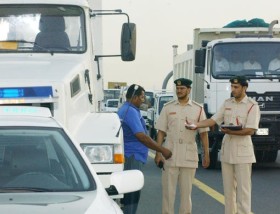
Dubai/Abu Dhabi: Starting on Saturday, police across the UAE began implementing a federal traffic law which introduces harsher penalties for traffic violations.
Lieutenant General Shaikh Saif Bin Zayed Al Nahyan, Minister of Interior, said the new law and the black point system, which were recently endorsed by the UAE’s leadership, aim to curb accidents resulting from indisciplined driving and speeding.
Brigadier Mohammad Saif Al Zafein, Director of Dubai Traffic Department, told Gulf News that the new law protects road users from motorists who violate rules and endanger lives of others.
He said the punishment for drunk driving stands revised at a Dh20,000 fine and possible jail term.
“Updating laws is normal and is also necessary so as to keep pace with the new developments in all domains for the sake of the nation’s higher interest,” Shaikh Saif was quoted as saying by WAM.
As per the new law, the black point system for traffic offences has been implemented across all the emirates aiming to cut down the number of deaths due to traffic accidents.
Last year alone, 1,056 people lost their lives in road accidents in the UAE.
As the law became effective all over the country, Dubai Police’s Traffic Department on Saturday also started implementing it in the emirate.
Dubai Police’s Traffic Department has intensified patrols and implemented strict penalties.
Brigadier Al Zafeinsaid motorists need special traffic education and called on motorists and family members who have more than one car or drivers to inform the drivers of the new law.
Fines can now be issued on the spot and in absentia.
Brigadier Al Zafein said the traffic department will send letters to the owners of offending vehicles, who will be given a month’s time to reveal the name of the person who was driving the vehicle when the offence was caused. If the owner fails to do so, the vehicle will be confiscated.
Motorists can object to the fines at the traffic department and an investigation will be launched.
The maximum number of black points a motorist can incur in a year is 24 at which point the licence is suspended. Once a person collects 24 black points, the licence will be suspended for three months.
If a motorist collects 24 points for the second time, the licence will be suspended for six months.
If it happens a third time, the licence will be taken away for a year and will not be returned until the driver passes a training course from an institute authorised by the traffic department.
The black points a person incurs will be cancelled the following year on the same date.
Senior Interior Ministry officials said if a motorist has collected many black points and feels that his licence could soon be taken away if he accumulates 24 points, then he can take a training course at an authorised driving institute. Police will then remove eight points. The option can be utilised only once a year.
Besides the black point system, another major change is that the minimum fine for serious traffic offences has been fixed at Dh20,000. Besides the fine, the penalty may or may not include a jail term.
Lieutenant Colonel Saif Al Mazroui, acting deputy director of Dubai Police Traffic Department, said the department organised lectures for traffic policemen on the new law.
On road: Charges hiked
Salah Bu Faroosha, Traffic Public Prosecutor, said the traffic public prosecution has changed the traffic charges according to the new federal law that came into effect on Saturday.
Bu Faroosha said the new punishment will be implemented for the offences that have been committed since it came into effect yesterday, while they will not be implemented on offences and accidents that took place before the changes came into effect.
He said the implication of the hard shoulder changed according to the new law, and it cannot be used on internal roads or highways, except in emergencies. Bu Faroosha said driving under the influence of alcohol or drugs now draws stricter punishment.
He said any motorist who drives under the influence of drugs, even with a doctor’s prescription, will be prosecuted in case of causing a road accident or damages to others.
Traffic law violators may face deportation
Traffic law violators may face deportationBy Adel Arafah (Our staff reporter)KHALEEJ TIMES 2 March 2008
ABU DHABI — The Minister of Interior can order deportation of expatriate violators of the new federal traffic law and the black points system that came into effect yesterday, a senior official has clarified.
The deportation as a penalty for some cases of violation has been incorporated in the amended law on the instructions of Lt-Gen. Shaikh Saif bin Zayed Al Nahyan, Minister of Interior.
Lt-Gen Saif Abdullah Al Shafar, Under-Secretary of the ministry, said at a Press conference here, “Deportation is a penalty which the minister can enforce against rash motorists who pose a danger to public safety.
“Shaikh Saif is keen about the safety of the public. His order to deport truck drivers whose vehicles dropped rocks on the roads fell within this context. The minister can enforce this penalty when it deems necessary.”
Al Shafar was replying to a question raised by this reporter about the possible enforcement of deportation on frequent violators who drive dangerously and put the lives of road users at risk. The amended traffic law aimed to restrain the rash motorists and reduce traffic accidents.
Al Shafar said a motorist had to become a self watcher now. He/she must be eager not to commit any violation due to the newly fixed tough penalties, he said, adding the ministry had launched awareness campaigns in cooperation with the traffic departments nationwide to spread awareness about the new law and the black points system.
Meanwhile, Colonel Ghaith Al Za’abi, Director of the Department of Traffic, Ministry of Interior, detailed the mechanism of implementing the new traffic law and the black points system.
He said: “The e-link between all emirates of the country is our best instrument to put the new system in place.”
Under the e-system, he explained, the traffic police would register the offence and send it to the traffic department which would, in turn, transmit it through the e-visual sender to all traffic departments. An SMS would be sent to the offender notifying him/her about the type of the violation and the number of black points.
Engineer Mohammed Al Dali of the Abu Dhabi Municipality said, “I think the black points system will make motorists more compliant with the traffic rules. The matter goes beyond paying fines to registration of black points on the motorist’s traffic record.”
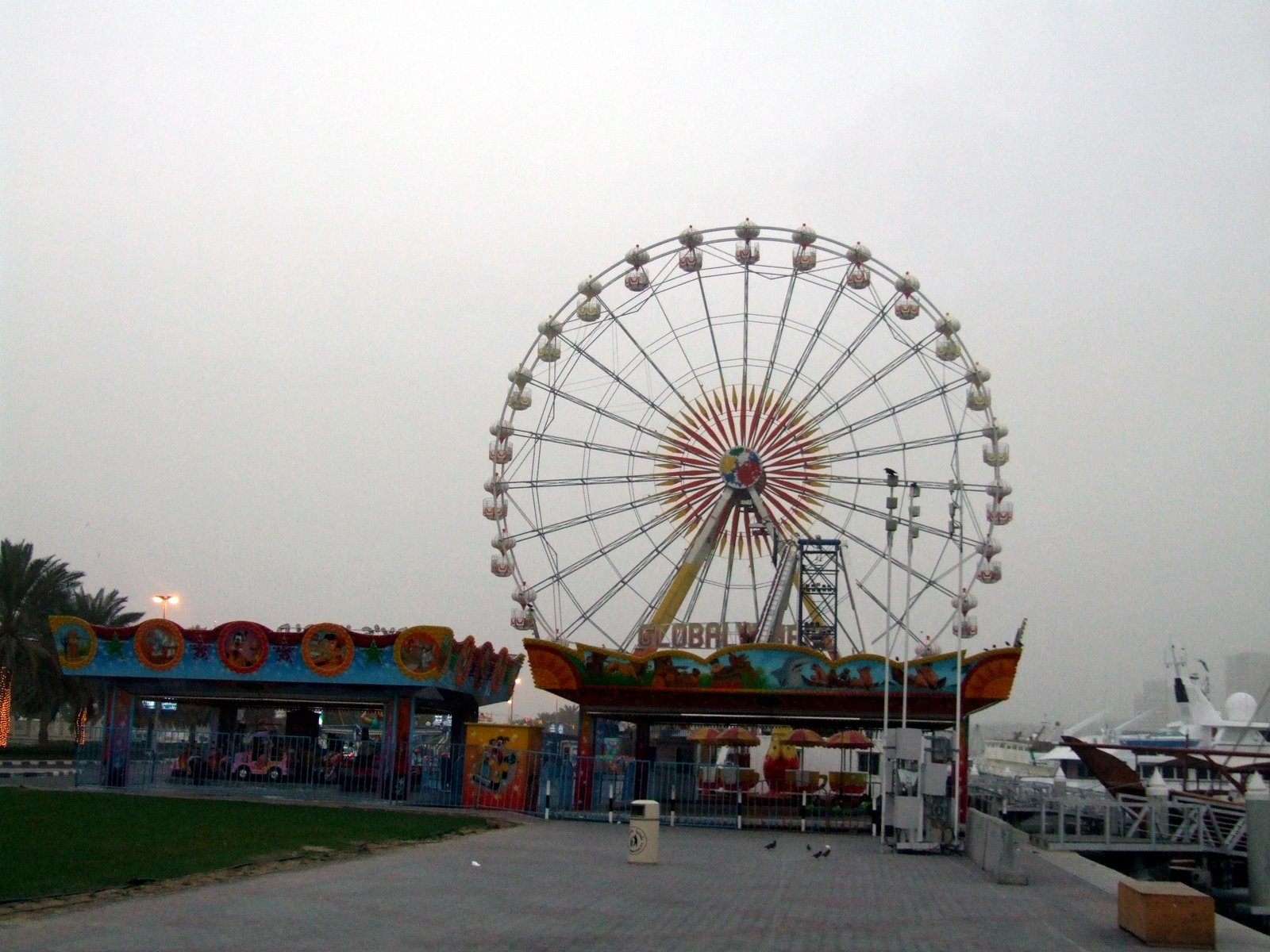
Photo Speaks – Now some rest
Photo Speaks – Now some rest
Curtain down for DSF and still the fun goes on. This was an early morning scene from the fun station at the Dubai Creek.


 ClicksandWrites
You must be logged in to post a comment.