UAE may buy Pakistan farms
UAE may buy Pakistan farms
Sarmad Khan and Vivian Salama
ABU DHABI // Inflation and the spectre of long-term food shortages have prompted the Government to consider a new strategic investment – the purchase of large-scale farms in Pakistan and other countries.
The aim is to protect the country from the turmoil of soaring wheat and rice prices and export bans by producing countries that could lead to food shortages.
The Government is holding exploratory talks with Pakistan on the proposal, according to a senior Pakistan government official and the Emirates Society of Consumer Protection, a division of the Economy Ministry.
The Government was looking to acquire large land holdings and import food at 20 to 25 per cent less cost, a senior Pakistani government official said.
There are six parties in the chain between the farmer and the time the product reaches retailers including the farmer, broker, exporter, importer here, wholesaler and retailer.
According to a Pakistani official each party retains a 5 per cent margin on each transaction, and by eliminating several steps the government can bring the cost of food down by 20 to 25 cent, according to a senior Pakistani government official.
“The talks have been going on between Pakistan’s government and the UAE’s Ministry of Economy for some four months, however no concrete decision is made yet,” he said. The ministry was seeking support and guarantees from Pakistani counterparts before getting into large-scale corporate farming, he added.
Rising inflation is one of the driving forces behind the Economy Ministry’s decision to consider alternative food sources that would secure supplies for the country while cutting costs.
“We believe that, if we get products directly from the farms, it will encourage market competition,” an official at the Emirates Society of Consumer Protection said, adding that the government was studying similar options in other countries.
Pakistani officials say their government will facilitate negotiations between farmers and UAE representatives but it is not involved in growing food and cannot help the UAE set up government-supported farms.
Last week Pakistan announced the introduction of tax exemptions, duty free import of equipment and 100 per cent land ownership in specialised free zones in its agriculture, livestock and dairy sectors to lure potential investors.
It is expected to announce more concessions to entice investments.
“Agricultural free zones will be set up within the next four to five months, which will open up doors for the nations to own sources of food supply,” the Pakistani official said. “It is a good opportunity, especially for GCC countries which are dependent on food imports.”
GCC countries rely heavily on imported food and the UAE imports nearly 85 per cent of its supplies for an estimated Dh11 billion (US$3bn) annually.
The GCC is the largest importer of food from Pakistan, according to Pakistani officials. A number of GCC-based companies have already turned to Pakistan for alternative resources. Qatar Livestock Company is to invest $1bn in corporate farms in Pakistan, according to Huma Fakhar, an adviser to the Bahraini government. Some Saudi Arabian groups, particularly Al Rabie Group, a dairy company, have expressed interest in buying land in Pakistan.
“There is a global crisis right now,” said Miss Fakhar. “If you do not prepare these reserves now, then three to four years down the line it will turn extremely critical.”
Several UAE-based retailers including Baniyas Co-operative Society, Carrefour, Union Co-operative Society and Lulu hypermarkets have agreed to help the government to curtail inflation by putting price caps on basic commodities.
Last week the Economy Ministry urged retailers to start stockpiling basic food items to prevent shortages resulting from export bans by countries like India, Egypt and Brazil.
The UAE government has also urged retailers to consider eliminating middlemen when importing commodities to cut costs. While executives like José Luis Durán, the chief executive of Carrefour, encourages supermarkets to work directly with farms, others are concerned that this carries a hidden catch.
“If you want to make money as a farmer, go to a place where the farmers are making money, not a place where the land is cheap,” said Jannie Holtzhausen, chief executive of Spinneys in Dubai. “What has now suddenly changed in the world that the economic model drives governments to become farmers?”
Concerned about what the initiative means to their businesses, local importers are speaking out against it.
“Eliminating traders from this process would be a mistake,” said Burhan Turkmani, the general manager of Dubai-based Al Rabiah Trading Company.
“Farmers are not exporters and governments are not importers,” added Riaz Hussein Bhojani, the general manager of Rashwell Company, another trading company.
Brief rainstorm hits UAE
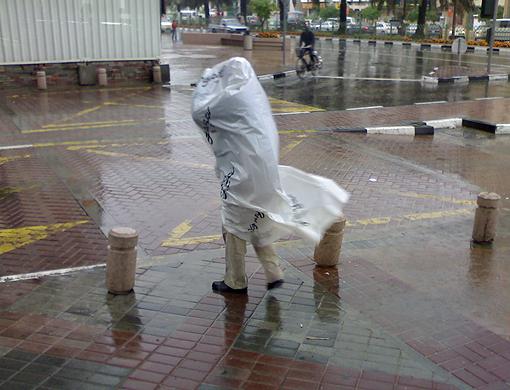
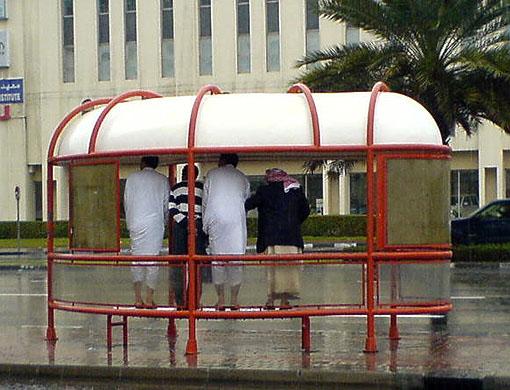
Brief rainstorm hits UAE
By Mahmood Saberi, Senior Reporter GULF NEWS Published: May 06, 2008, 08:53
Dubai: The skies grew dark and gave a brief display of thunder and lightning but there were only a few spots of rain as commuters headed to work early morning on Tuesday.
The Dubai Met office sent out a brief warning to sailors and those working offshore but everything cleared up quickly, said Dr S K Gupta, duty forecaster. “There was no significant rain,” he said.
But the spots of rain and gusty winds left dirt marks on vehicles and dirtied overnight washing hanging out on the clotheslines.
Late Monday night many people woke up in surprise as heavy thunder and isolated rain showers hit Ruwais and some areas of Abu Dhabi.
The thunder activity was because of the rising high temperatures and a band of cloud coming in from the West, where Bahrain and Doha earlier experienced thunder, said the forecaster.
For the first time the mercury rose past 40 degrees Celsius, according to Gupta. Dubai on Monday recorded 43C, Jebel Ali, 42C, Sharjah, 44C and Abu Dhabi, 43C.
A Shammal will hit the UAE on Wednesday bringing dusty conditions and haze. The gusty winds will whip up waves of 15 to 25 feet offshore. But temperatures will go down significantly to around 36C.
Harishankar RRJ – Pancharatna krithis – judgement
Harishankar RRJ – Pancharatna krithis – judgement
High BP among world’s biggest killers
High BP among world’s biggest killers
4 May 2008, 0354 hrs IST,Kounteya Sinha,TNN
NEW DELHI: High blood pressure, a largely ignored physical condition, is now turning to be one of the world’s biggest killers. What’s worse, it’s causing high mortality among people in developing countries like India and China.
A study to calculate high BP’s real effects has found some chilling facts —about 54% of all strokes, 47% of ischaemic heart disease, 75% of hypertensive disease and 25% of other cardiovascular disease globally resulted from high BP.
Conducted by a team of scientists from the University of Auckland in New Zealand and reported in medical journal ‘The Lancet’ on Saturday, the study also estimated that 7.6 million people died prematurely because of high BP in 2001.
The study also breaks the myth that high BP was a major problem in high-income countries, and says that more than 80% of high BP related diseases occur in developing countries like India and mostly among younger adults.
Over 92 million of all disability adjusted life years were also attributable to high BP.
The study says that 52% of deaths from such disorders in India occur before 70 years of age, compared with 23% in established-market economies.
Reacting to the study, Dr Anoop Misra from Fortis hospitals says that hypertension is directly responsible for 57% of all stroke deaths and 24% of all coronary heart disease deaths in India.
“We estimate there are 31.5 million hypertensives in rural and 34 million in urban India. It’s mainly due to high salt intake, obesity, diabetes, stress and genetic factors,” he said.
Cardiologist Dr K K Agarwal said even a slight reduction of high BP can greatly benefit people. “If pre-hypertension is reduced, 40% of heart attacks can be prevented. If 5 mm of BP is reduced, 21% mortality can be reduced. For every kg you lose, your BP will come down by 1 mm.”
Cardiologist Dr Deepak Natarajan added: “India has a scandalously high number of hypertensives, thanks to the fact that we are the world’s most sedentary nation. Both the poor and the rich are suffering from high BP.”
Dr Carlene Lawes from the University of Auckland, who used data from WHO’s Global Burden of Disease study to calculate the statistics, said rates of disease are generally much higher in developing than in developed countries and occur most in people aged 45-69 years.
Gadgets review
Gadgets review – The Etisalat 3.5G Wireless Router for Technology Product Review.
Ryan Carter / The National
Etisalat 3.5G Wireless Router, Dh1000, plus mobile data plan
As a concept, the 3.5G wireless router is brilliant: a little white box with a SIM card that beams wireless internet throughout the home or office, with no phone line or DSL connection required.
You can take it anywhere in the UAE and, as long as there is a power supply, you have a wireless high-speed internet connection for up to 32 computers. Even if you do not have a power supply, you can plug it straight into your computer through the USB port and get a single connection.
As an extra feature you can plug a regular landline telephone into the box and the phone will work as normal, on the mobile plan and phone number of the SIM card being used by the router. This is an interesting feature — not hugely useful, but a welcome add-on.
In our experience, Etisalat’s product, manufactured by Huawei of China, comes close to living up to its potential. It is easy to use, well designed and worked well both as a network hub for computer-to-computer sharing as well as a wireless internet router.
But we would still not trust this thing to be the primary source of internet for a small office or a household that takes its net connection seriously.
Reliability was an issue. We found the internet connection dropping out on more than one occasion and, because the minimal design of the box features only one button — the on/off button — you need to physically restart the device to force a reconnection. We have heard the same problem from people using 3.5G USB modems, which apparently are also prone to dropping out and needing resetting.
Regardless, there is no doubt that this is a promising product. If you have the money to spare — Dh1000 for the router and Dh450 per month for a 10 gigabyte data connection — it is a useful, fun device to have.
If you regularly use the internet in public places that price becomes a lot less intimidating. Hotels and their price-gouging business centres often charge Dh20 per hour (and up to ten times that at some places) and Etisalat’s public Wi-Fi service charges Dh10.
We wouldn’t trust this as our primary connection. But if you can afford it, long for freedom from overpriced public Wi-Fi or regularly spend time in a place far from a regular connection, this product will make a welcome addition to your gadget bag.
Taweelah to host chemical city
Taweelah to host chemical city
Chris Stanton The National
ABU DHABI // The capital’s Kalifa Industrial Zone, which already includes plans for a deep-water port and the world’s largest aluminium smelter, will also play host to the biggest integrated plastics and chemicals complex on the planet, officials said yesterday.
The multi-billion dirham Chemicals Industrial City, which will produce basic plastics and chemicals, is part of the emirate’s drive to build a viable petrochemicals industry and diversify its economy away from simple crude oil exports.
“The location of this large-scale petrochemical complex is a major milestone for the development of the industrial cluster at the Khalifa Industrial Zone,” Ahmed al Calily, the chief executive and managing director of the Abu Dhabi Ports Company said in a statement.
The backers of the new complex, the International Petroleum Investment Company (Ipic), a Government investment fund, and Borealis, a chemical company based in Austria that is majority-owned by Ipic, chose the Khalifa port over Abu Dhabi’s existing petrochemical centre in Ruwais, in the Western Region, to take advantage of easy access to global markets.
The first stage of the complex, to be called Chemaweyaat Complex 1, is scheduled to be completed by 2013.
“It provides us not only with the physical space for major development, but also helps us to export our future production efficiently,” said Mohamed al Azdi, the chairman of the Chemaweyaat development committee.
Chemical Industrial City will produce seven million tonnes of chemicals by 2013, which Ipic has said would make it the largest plant of its kind in the world. At the moment, the biggest chemical complex is BASF’s Lunwigshafen site in southwestern Germany.
Before yesterday’s announcement, the site for Chemicals Industrial City was undisclosed but recent media reports suggested that Borealis, Ipic, and the Abu Dhabi Investment Council, a third backer of the complex, were leaning toward the Taweelah site over Ruwais, where the Abu Dhabi National Oil Company’s oil terminal, major refinery and plastics plants are all located.
The site in Taweelah will be near Abu Dhabi’s main power stations, the new Khalifa deepwater port and the world’s largest aluminium smelter, which is being built by Emirates Aluminium.
The statement suggested that Abu Dhabi’s planners see the complex as a catalyst for the development of other chemical plants that will use Chemicals Industrial City’s products as feedstock for their own operations.
“We also look forward to attracting further downstream industries to Taweelah through the broad range of chemical and petrochemical products to be produced there,” Mr Azdi said.
Officials said the chemical plant would attract spin-off industries to Taweelah.
“Chemaweyaat, as an anchor tenant will attract additional investments from all parts of the supply chain and will create a viable chemical and petrochemical cluster,” Mr Calily said.
The Chemicals City complex will include facilities for producing plastics from propylene and ethylene, a reformer to make gasoline, and sophisticated machinery to make xylene, benzene, cumene, phenol and their derivatives. All are basic ingredients used in the modern chemical industry.
The complex will also have a large naphtha cracker, which will provide the plant with feedstock derived from a component of crude oil.
The naphtha cracker is crucial because it means the plant will differ substantially from existing plastic plants in Ruwais since it will be fed by crude oil instead of natural gas. The country is facing a shortage of gas due to booming demand for electricity but has ample supplies of naphtha.
The plants in Ruwais are owned by Borouge, which was launched seven years ago as a joint venture between Adnoc and Borealis. Borouge and Borealis both produce plastics but avoid competing against each other by dividing the world into two distinct markets. Borealis sells to Europe while Borouge concentrates on the Middle East and Asia.
Abu Dhabi to set up world’s largest chemicals complex
Abu Dhabi to set up world’s largest chemicals complex
By Haseeb Haider KHALEEJ TIMES 5 May 2008
ABU DHABI – Abu Dhabi, which is setting up Chemicals Industrial City in Taweelah’s Khalifa Industrial Zone, has finalised its plan to establish the world’s largest chemicals complex.
The multi-billion dollar project, due to complete in 2013, will manufacture olefins, aromatics, oxide and ammonia derivatives.
The Chemaweyaat Complex-1 will be the first project to be completed at the Chemicals Industrial City. It is expected to be the world’s largest grassroots fully chemical integrated complex with a total production of around seven million tonnes per annum of olefins, aromatics, oxide and ammonia derivatives.
Abu Dhabi Ports Company (ADPC), which owns Khalifa Industrial Zone, has signed an MoU with Chemaweyaat, an initiative launched by ADIC and the International Petroleum Company (IPIC) to develop the mega project in Chemicals Industrial City.
“The location of this large scale petrochemical complex is a major milestone for the development of the industrial cluster at the Khalifa Industrial Zone,” said Ahmed Al Calily, CEO and MD of ADPC.
“Chemaweyaat, as an anchor tenant, will attract additional investments from all parts of the supply chain and will create a viable chemical and petrochemical cluster. This will deliver valuable collective benefits to the port and the industrial zone,” he added.
Mohamed Al Azdi, Chairman of the Chemaweyaat Development Committee, said the new Chemicals Industrial City will not only provide the physical space for major development, but also help export future production efficiently.
He said that Chemaweyaat will look forward to attracting further downstream industries to Taweelah through the broad range of chemical and petrochemical products to be produced there.
KPIZ is a multi-purpose facility strategically located in Taweelah between Abu Dhabi and Dubai. It includes the construction of a world-scale container and industrial port, and the development of over 100 square kilometres of industrial, logistics, commercial, educational and residential special economic and free zones.
E-pet could soon replace passwords
E-pet could soon replace passwords
3 May 2008, 0016 hrs IST,PTI
LONDON: If scientists are to be believed, portable electronic pets able to recognise their owner’s voice and walking style could soon replace passwords and PINs as a way to keep personal details and accounts secure.
A British team, led by Pamela Briggs of Northumbria University, is developing a gadget called biometric daemons which will match the security of biometric security systems and avoid the privacy fears these systems raise.
According to Briggs, instead of a person’s biometric signature being stored on a distant database, they will reside only in the daemon carried around by its owner.
Like a real pet, that daemon would learn to imprint itself on its owner. After that it would thrive on their unique biometric signals, such as voiceprint, fingerprints or walking style.
The human-daemon bond would be further cemented by games and interaction between the two. “Think how people bond with babies. You would do the same things with your daemon – cuddle it, stroke it, play verbal games,” Briggs said.
In the presence of its owner, those nourishing signals make the daemon “happy” and able to verify the owner’s identity, just like a PIN or password. However, separated from its owner, a daemon would no longer receive nourishment in this way and would pine away and die.
The researchers are reluctant to discuss exactly what form that the daemons would take. “The key thing is not the daemon’s physical form, but the way one interacts with it,” Briggs was quoted by the media as saying.
According to her, the daemon could be made in any form, she says, depending on what people relate to best – for example, a toy animal. “If a person lost their daemon, their access to their online life would be lost too, so a way to get a new one would be needed.”
Reaction to the idea from security experts is mixed. “Work on agents and daemons do not tend to be very rigorous,” says John Daugman at the University of Cambridge, UK. “It is difficult to find very much scientific or mathematical content to sink one’s teeth into.”
Alec Yasinsac at Florida State University, Tallahassee, US, says the idea is interesting, but so far immature. “It is hard to predict its potential,” says Yasinsac.


You must be logged in to post a comment.