Super Star Nite in Abu Dhabi – Friday, 01st August 2008 – a memorable evening
Super Star Nite in Abu Dhabi – Friday, 01st August 2008 – a memorable evening
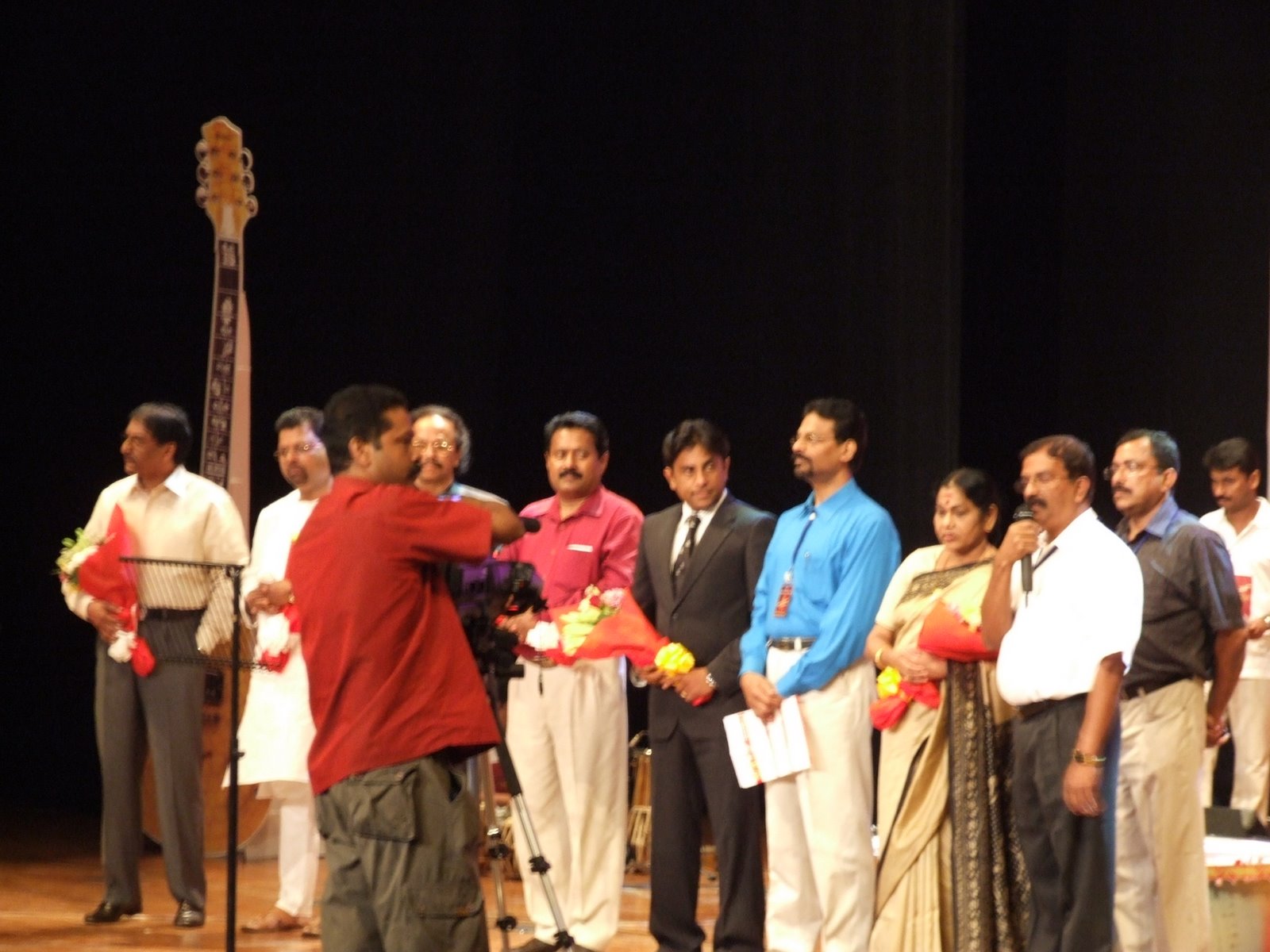 Super Stars Nite in Abu Dhabi – inaugural ceremony – Chief guest – Smt KPAC Lalitha with sponsors and organisers of the event.
 Sri Regi Mannel introducing the Super Stars to the audience.
 Super Stars in UAE – Rashmi, Praveen, Latha, Ratheesh, Roopa and Anand.
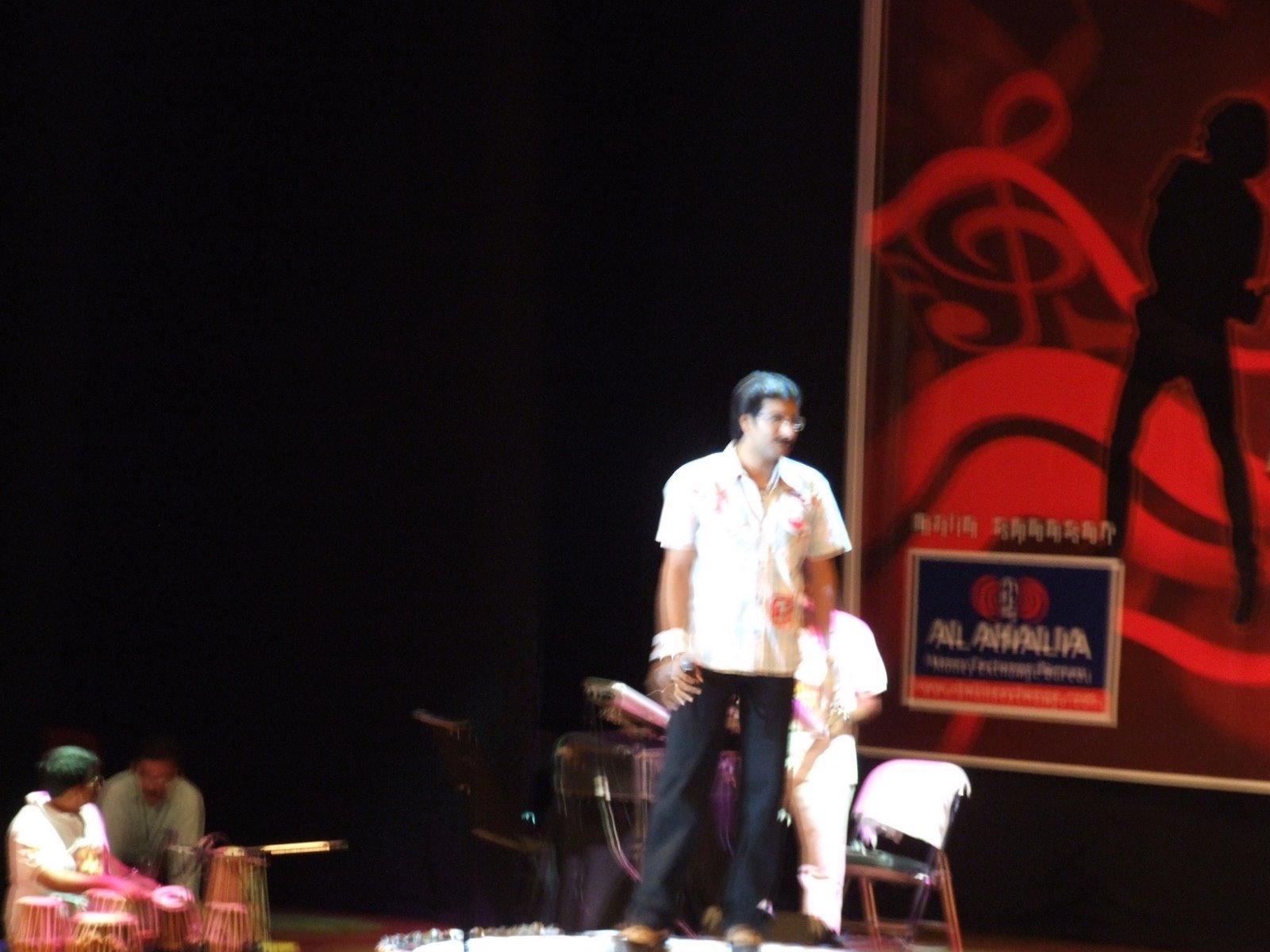 Praveen on stage.
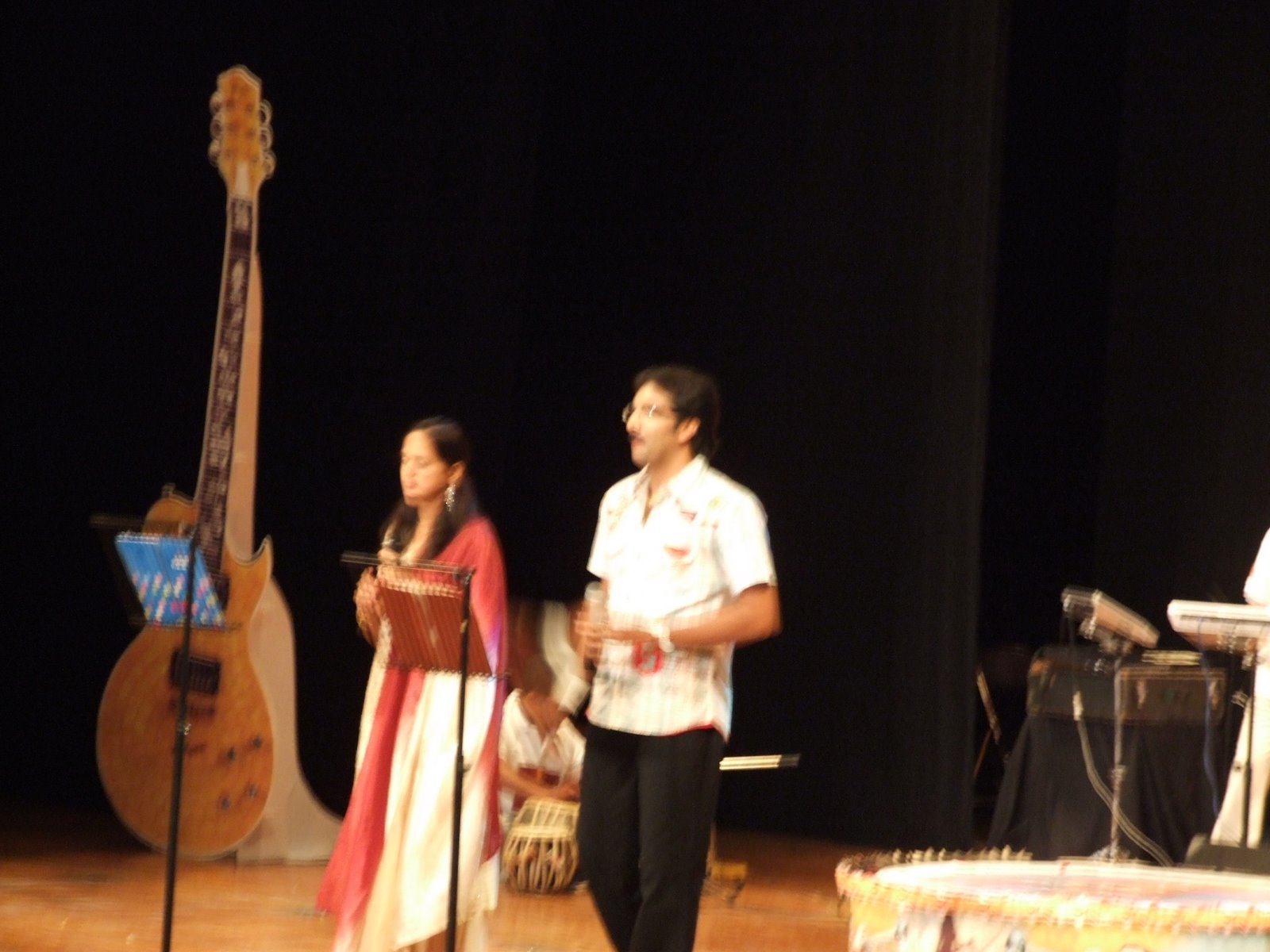 Roopa and Ratheesh.
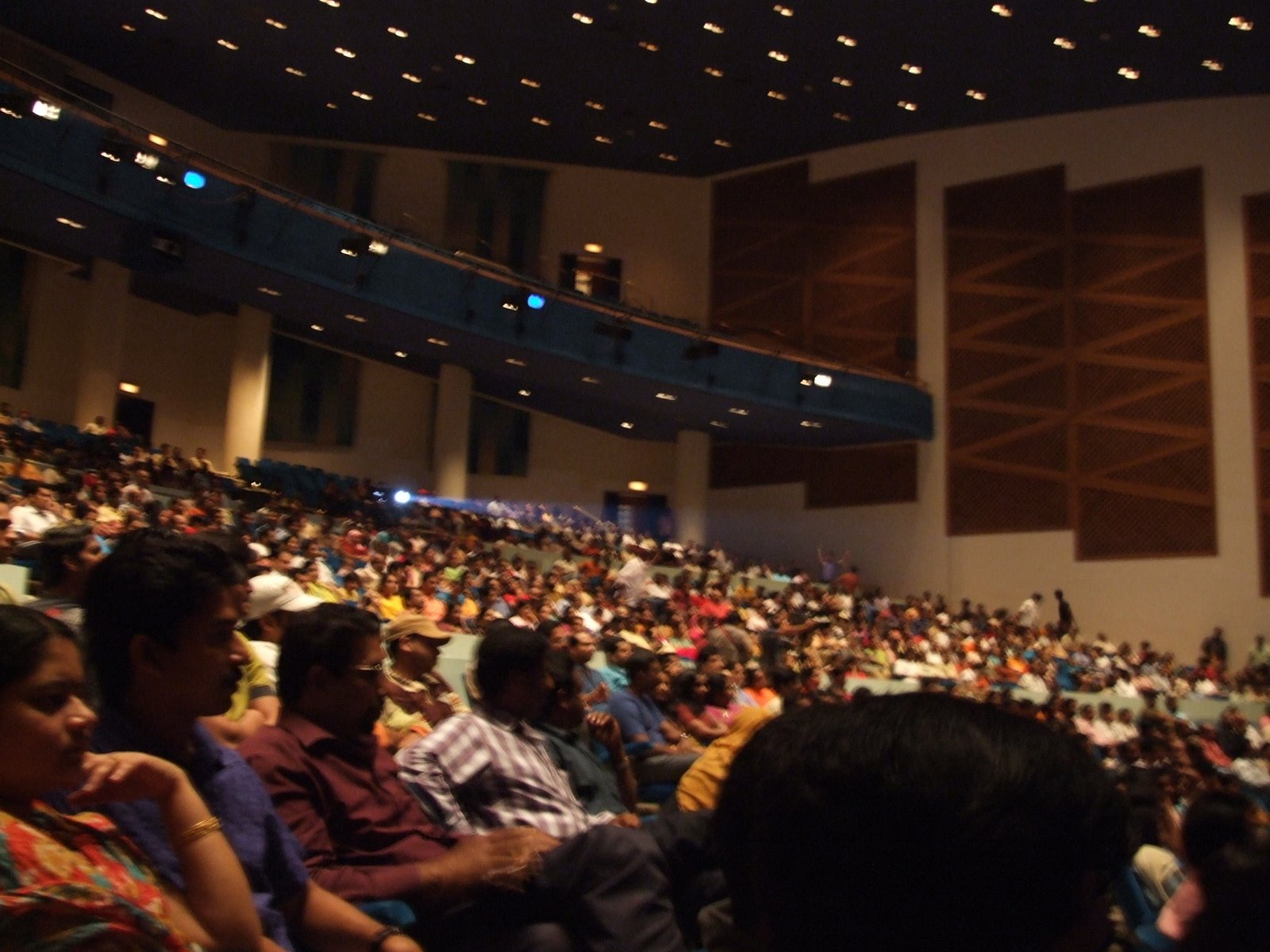 Fully packed National Theatre Auditorium in Abu Dhabi.
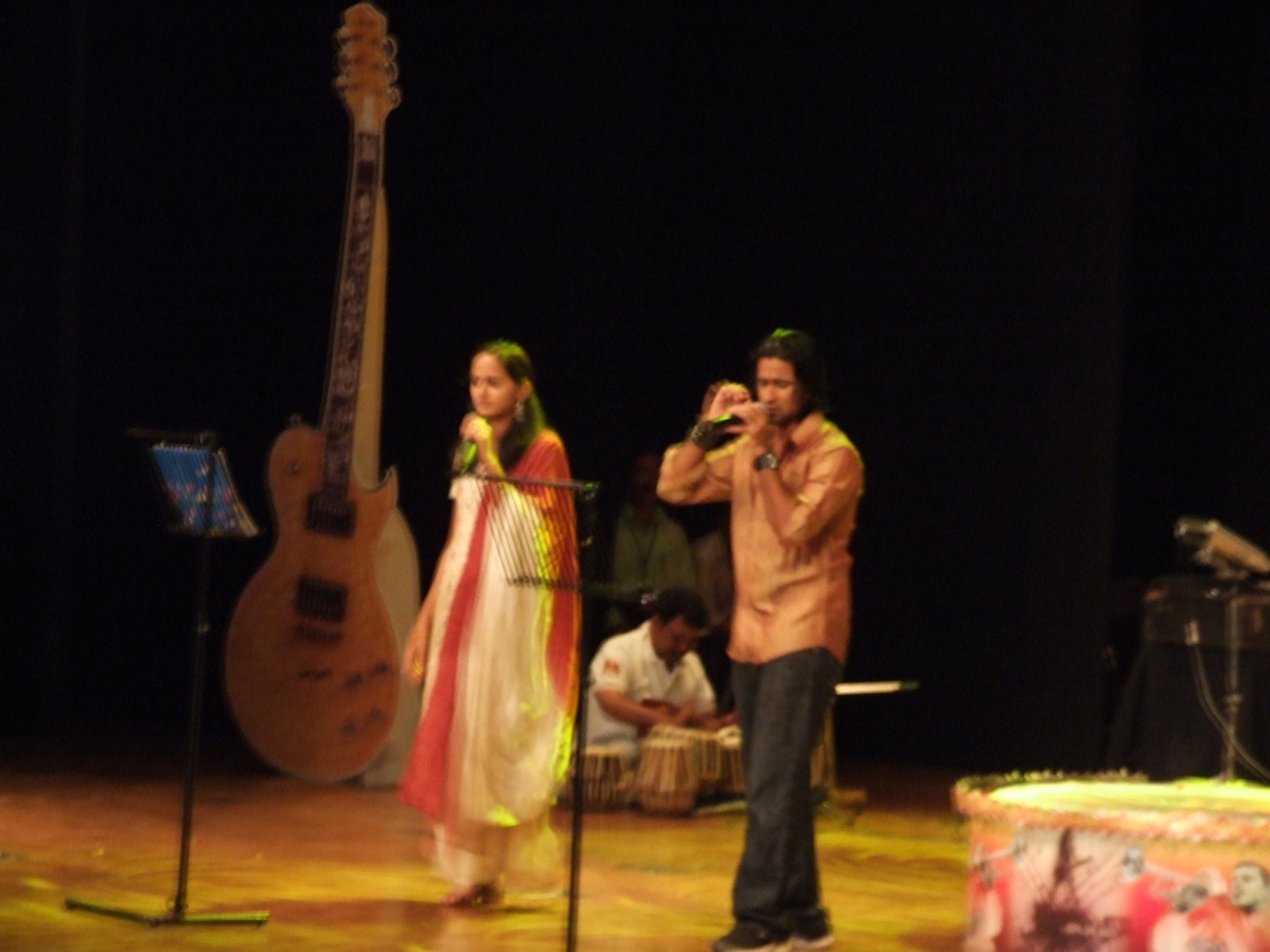 Roopa and Praveen.
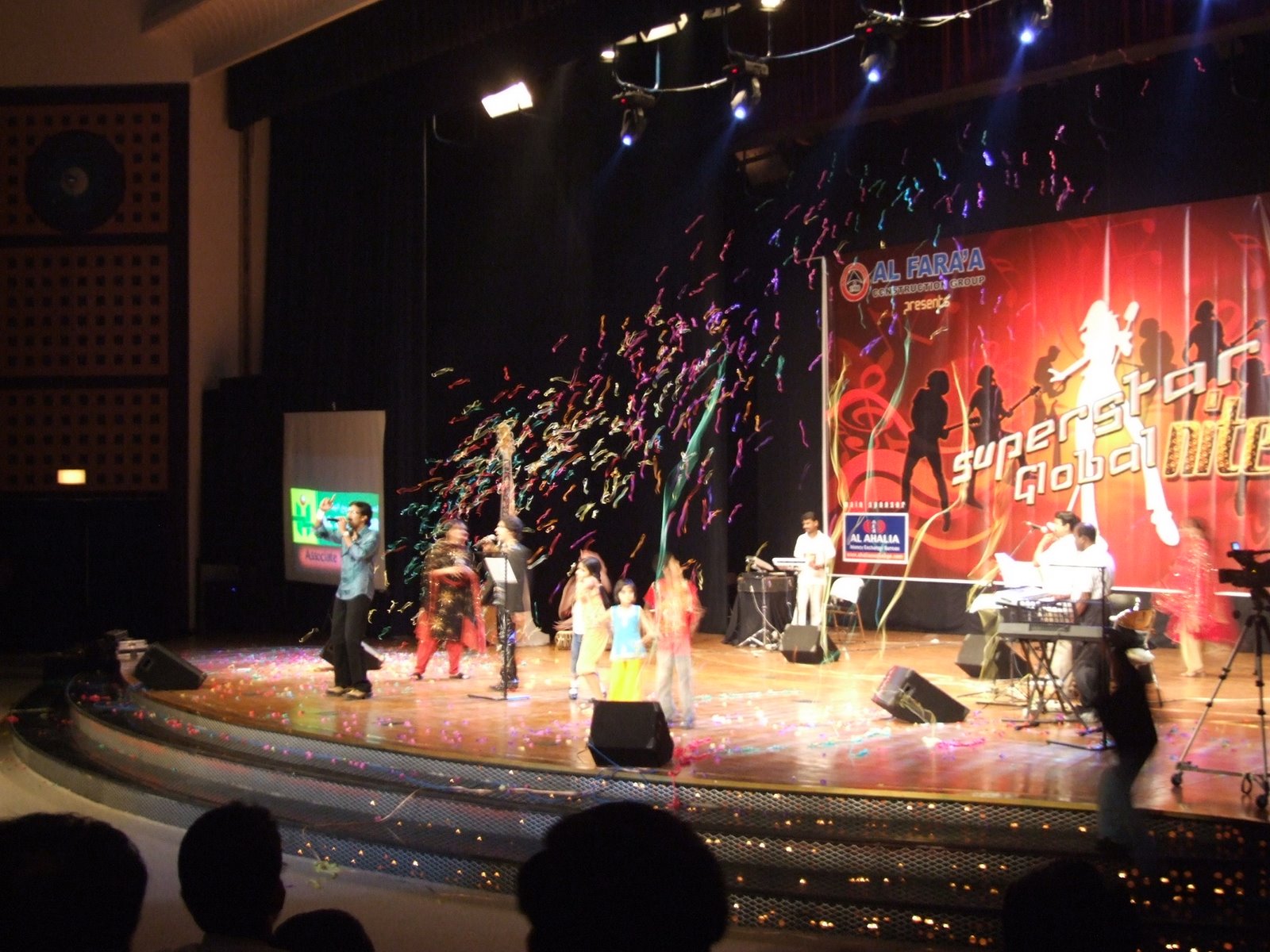 Super Stars interacting with children.
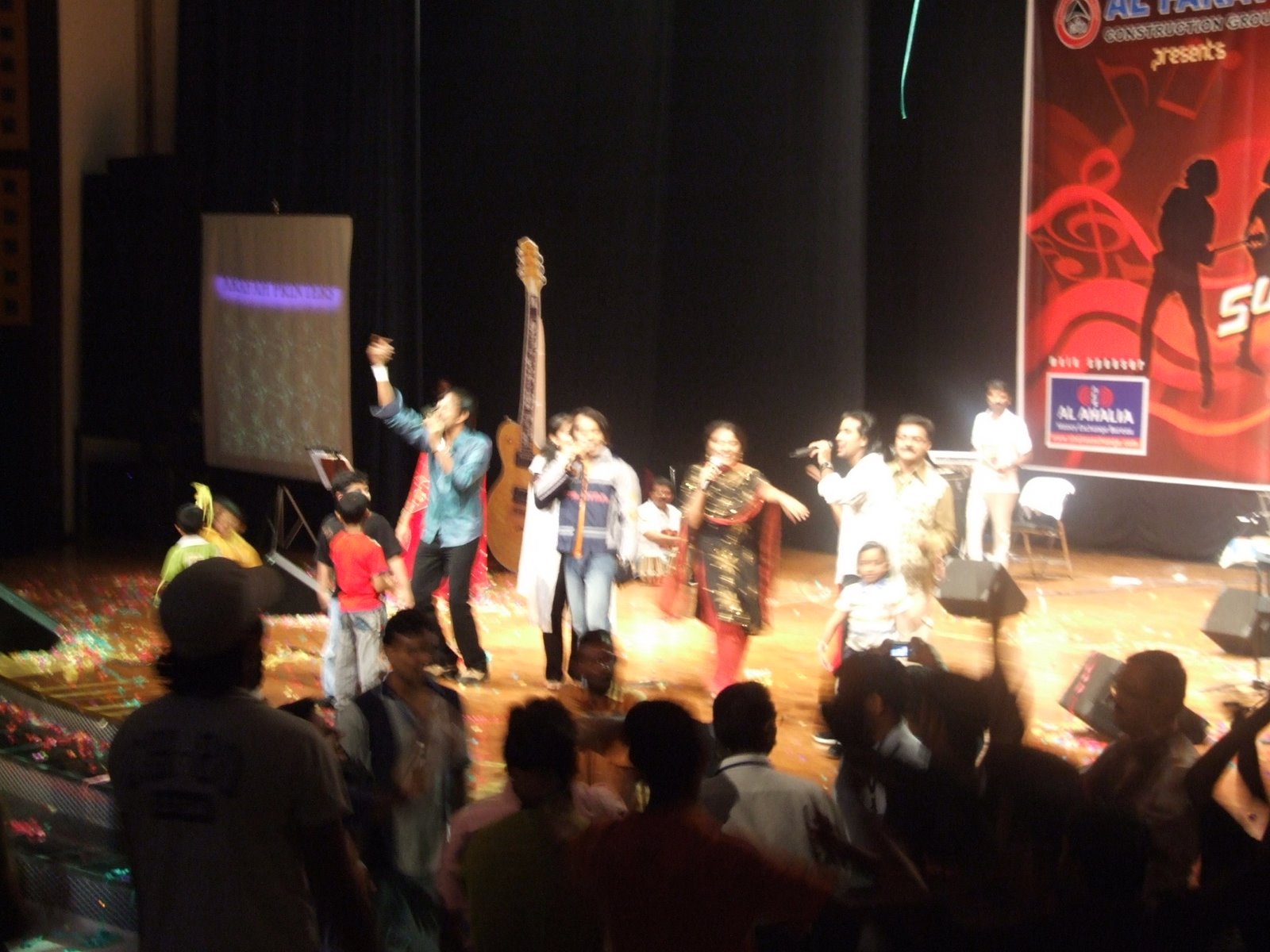 Super Stars rocking for the final time on stage with audience for this memorable evening. I am sure this will be the beginning of a series of successful programme for these young talents and may get to perform many more such packed venues in INDIA, UAE, OMAN, BAHRAIN, QATAR, KUWAIT and other parts of the world.
Let us look at the details of the show as it evolved.
Vow!!! Reality Stars in Real. Amazing performance by the team of Anand, Roopa, Ratheesh, Praveen, Latha and Rashmi.
The 2000 plus seat National Theatre Abu Dhabi was full – a surprise to many of us considering the summer holiday period. What would have been the scenario if this programme was held during normal time?.
Full round of applause to Anand and team for their good preparation and execution of the programme from start to end. Every one enjoyed the programme to the full.
A surprise was in store for them and for all when the show was inaugurated by Smt. KPAC Lalitha.
Sri Reji Mannel, famous radio presenter based in UAE compered the show.
Anand was the first one to be introduced, then followed by Rashmi Vijayan, Praveen, Latha Krishnan, Ratheesh and finally Roopa. The introduction itself brought variety as the singers mixed with the audience and came out from amongst them when introduced.
They sang 28 songs in the following order:
1. Ratheesh – Hrudaya sarassile
2. Roopa – Aa nimishathinte
3. Roopa/Ratheesh – Odakkuzhal Vilikketto
4. Latha – Maarghazhi Thinkallallava
5. Anand – Voh Lamhe
6. Praveen – Oru Pushpam Mathramen
7. Praveen/Roopa – Akale Akale Neelakasam
8. Rashmi – Chandralekha from Thiruda Thiruda
9. Ratheesh – Sankrutha pamakari
10. Roopa – Minsaara poove poove
11. Ratheesh/Praveen – Padakaali chembada from Yodha
12. Roopa/Anand – Muthumazha konchal pole
13. Praveen – Pramadhavanam
14. Rashmi – Rasikira vanra
15. Latha – Oo mama mama chanda mama
16. Roopa/Latha – Kasthoori Thailamittu vala kilukki
17. Ratheesh – Kadukkittu varuthoru from Hallo
18. Praveen/Rashmi – Muthal Murai Janal Thuranthathai
19. Anand / Roopa – Karuppanu kayyala
20.Ratheesh/Latha – Mambazhama mambazham
21. Roopa/Latha/Rashmi – Aarumukhan
22. Anand/Roopa/Ratheesh/Praveen/Latha/Rashmi – Pennale, Pennale, Karimeen Pennale from Chemmeen
23.Anand/Latha – Ram bam bam Ram bam bam perimbam
24. Rashmi – Mayya mayya. Too neel samundar hai
25. Anand/Rashmi – Theri ankhem bhool bholayya
26. Praveen/Latha – Madhuraikku pokamedi
27. Rashmi/Anand – Kannum kannum maafia
28. Final songs – Melodious medley of several hit Hindi/Tamil/Malayalam mix by all 6 Super Stars.
Irrespective of age, everybody was dancing – so much fun filled moments that when Rashmi announced her song Mayya mayya – audience replied by saying that Vayya vayya. Ratheesh and Roopa were applauded each time when they came on stage. Praveen and Latha mesmoriesd the audience with their numbers. Anand – a total leader – held on to the steering and controlled it very well. Not to leave out Rashmi – if you ask a question – who will be the next Usha Uthup – we have an answer – Rashmi Vijayan from UAE. Overall, it was a memorable musical evening which one and all present in the packed National Theatre Abu Dhabi auditorum will remember for ever.
A very big thanks to KERALA SOCIAL CENTRE organisers for inviting them to Abu Dhabi to perform in live and real. I am sure their objectives for social cause were also duly achieved by this event.
Let this be the golden beginning for these young talents and May God bless them all to give many more such venues and opportunities in future.
Ramesh Menon
02082008
And the videos:
Chin up for a slender neck
Chin up for a slender neck
By Bharat Thakur Published: July 25, 2008, 23:42
The double chin is one of the more common cosmetic problems today. It is caused by a layer of subcutaneous fat that accumulates around the neck.
This layer of fat sags and creates a wrinkle, giving the appearance of a second chin.
There are three main reasons why a double chin develops:
Excessive weight
Some double chins are caused by weakness in the muscles of the face, neck and jaw. Incorrect posture often results in such weakness.
Age is definitely a big factor. As a person starts ageing, his or her skin starts losing its elasticity. This leads to a double chin.
Simpler ways
Going under the surgeon’s knife is not the only way to get rid of this problem. A balanced diet and regular exercise are effective and less drastic.
In cases where bad posture is the cause, exercises and correction techniques can reduce the double chin. This is where yoga can help.
Yogic asanas strengthen and tighten the neck and jaw muscles, and help reduce the double chin.
Today’s article describes some asanas meant for the chin area.
The exercises stretch and contract the muscles connecting the chin to the neck. Your awareness of the chin area is key to getting results.
The intensity of the exercises, along with your focus, will remove that nagging double chin and enhance your facial features.
Ushtrasana (camel pose)
Kneel with knees a little apart, feet stretched out.
Lean back, place palms on soles of feet as shown. If difficult, hold right heel with right hand and then left heel with left hand.
Push the abdomen forward, drop head back and arch backwards to as far as you can.
Hold as long as comfortable, breathe normally.
Slowly release one hand, then other and return to start position.
Bhujangasana (cobra pose)
Lie on stomach, keep legs straight, feet together, soles pointing upwards, forehead on floor.
Place palms to side of shoulders, elbows tucked in close to body.
Inhale and slowly raise head and upper body, straighten arms as shown. Hold the position, breathing normally.
Exhale as you slowly return to start position.
Veerabhadrasana (warrior pose)
Stand with legs wide apart and hands on hips.
Turn one leg and upper body to one side and bend front knee.
Raise arms straight up over the head, palms held together.
Lower the hips and bend backwards as much as comfortable. Look up.
Hold for 10-30 seconds.
Repeat with other leg.
Neck exercises
Sit with legs stretched out, back straight.
Bend one leg, place ankle on opposite thigh close to groin. Bend other leg and place ankle on thigh of bent leg, close to groin. Place your hands on your knees.
If you find the above posture (Padmasana or lotus pose) difficult, sit comfortably with legs crossed.
Close eyes, keep body straight. Slowly drop your head towards left shoulder — don’t turn the head or lift the shoulders.
Raise the head and drop towards right shoulder as above.
Slowly move the head as far back as comfortable. Do not strain.
Slowly bring head up and move it forward so chin touches chest.
Gently turn the head left so chin is in line with the shoulders.
Now gently turn the head to the right as far as comfortable.
Slowly rotate the head clockwise down to chest, to the right, back, to left side in a relaxed, smooth, rhythmic, circular movement.
Now, gently rotate anti-clockwise — in opposite direction.
Note: Those who have severe back and shoulder conditions and people with peptic ulcers, hernia or hyperthyroidism should avoid these asanas. Pregnant women, too, should avoid these exercises.
Au revoir double chin! A beautiful and slender neck is now just a few asanas away.
— Bharat Thakur is the founder of Bharat Thakur’s Artistic Yoga. For questions on yoga, write to dubai.artisticyoga@gmail.com. For more information, log on to http://www.bharatthakur.com


A vehicle that stands
A vehicle that stands
31 Jul 2008, 0010 hrs IST,AGENCIES
LONDON: A British designer has come up with a sports car that can be folded in half to park it in tight spaces.
Daniel Bailey, 22, has revealed that the BRB Evolution jacks up on its nose with its back wheels sliding underneath on two rollers, and thus uses 50% less parking space.
Bailey says that motorists will have to step out of the car before it morphs into its “upright” parking pose.
He adds that the car will run on electricity or hydrogen fuel, and will be more “sexy, sleek and mean” than other eco-cars.
According to him, his invention is inspired by the Lamborghini Murcielago and Peugeot 908.
“I figured two of the main problems of future cities would be pollution and over population,” the Telegraph quoted him as saying.
“With more vehicles needing more places to be stored, I came up with the concept of a folding car.
“The car folds up to 50% of its original size, and uses the negative vertical space, usually disregarded. This potentially doubles the amount of parking spaces,” he added.
Bailey has revealed that he has submitted his concept to Peugeot as part of a design competition.
Scientists at the Massachusetts Institute of Technology are also planning to knock up a full-scale model of their “City Car” — an experimental vehicle which “folds” itself in half and snuggles up to other City Cars in the manner of supermarket trollies.
The MIT team, led by architecture professor Bill Mitchell, reckons its revolutionary wheels would solve urban transportation problems at a stroke, with pollution-free electric drive and the ability to park in one-eighth of the space of a conventional car.
Photo Speaks – Abu Dhabi city scene
Abu Dhabi City Scene during an evening
 Mina port road
 A fish cleaner at the Mina Fish market Abu Dhabi
 Children play area at Mina Cooperative market
 Children play area at Mina Cooperative market
 Children play area at Mina Cooperative market
 Etisalat building at Airport road Abu Dhabi
 Electra Street Abu Dhabi

A view of the Electra Street / Mina road junction

A view of the Electra Street / Mina road junction
 An evening at Mina road
New visa rules: the facts
New visa rules: the facts
Last Updated: July 29. 2008 12:18AM UAE / GMT from THE NATIONAL
Exempted countries
Citizens of 33 countries are exempted from any visa fees, no matter what the purpose of their trip, and will be granted an entry visa free of charge at airports, seaports and border crossings. Such visas are valid for one month and can be renewed for another month for Dh500. Those wishing to stay more than two months can apply for a long-term visit visa, which is good for three months. These are issued by the Ministry of Interior and UAE embassies and consulates. Nationals of exempted countries are not required to pay deposits or have health insurance.
These countries are: Andorra, Australia, Austria, Belgium, Brunei, Canada, Denmark, Finland, France, Germany, Greece, Hong Kong, Iceland, Ireland, Italy, Japan, Liechtenstein, Luxembourg, Malaysia, Monaco, New Zealand, Norway, Portugal, San Marino, Singapore, South Korea, Spain, Sweden, Switzerland, the Netherlands, the United Kingdom, the United States and Vatican City.
Tourist Visas
The tourist visa is initially issued for one month for Dh100. It can be renewed for another month for Dh500. Nationals of all countries are eligible to apply for tourist visas. The visas are issued directly by travel agencies and companies involved in the tourism industry such as hotels.
Expatriates
Expatriates living in GCC countries can obtain a one-month entry visa for Dh100. The visa can be renewed for a second month for Dh500.
Deposit and Insurance
Financial deposits and health insurance are prerequisites for obtaining any of the 16 types of visas to gain entry into the UAE, including tourist visas, except for citizens of the exempted countries.
Visit visas
There are two types of visit visas. Short-term ones, issued for one month, are non-renewable and cost Dh500. Long-term ones, issued for three months, are also non-renewable and cost Dh1,000. The new law allows residents to sponsor their spouses and direct relatives. Distant relatives can only be sponsored after obtaining approval from the Ministry of Interior’s under secretary. Only Emiratis are permitted to sponsor friends. A visit visa does not permit visitors to work in the country. If a person happens to find a job while visiting, they should fly to their home country before entering on a work permit, which the employer should secure. Officials say they will not grant visit visas to those who reapply for one immediately after leaving. The same applies for other types of visas.
mhabboush@thenational.ae
New visa system launched
New visa system launched
The National Staff
Last Updated: July 29. 2008 11:18PM UAE / July 29. 2008 ABU DHABI/DUBAI // The new visa system was inconsistently applied on day one, with some officials saying they did not have key information about the new rules.
The changes, which mainly affect non-exempt people from countries such as India, Pakistan, the Philippines and Russia, came into effect yesterday, but staff at Abu Dhabi International Airport and a major embassy said they had not received official notification of the new regulations, and were still working under the old rules. At Dubai International Airport officials said the rules were applied, although some requirements – such as compulsory health insurance – were waived because the necessary infrastructure was not in place.
People entering the UAE now must apply for a tourist visa, through a registered tourist company or hotel, a visit visa sponsored by a direct relative living in the UAE, or one of 14 other visa types, such as a conference or a medical visit visa.
Anyone wanting to work in the UAE needs a work permit sponsored by an employer. The regulations also require people to leave the country when any existing visa expires, and those seeking to re-enter immediately are unlikely to be granted another visitor visa.
The rules, from which 33 nations are exempted, are intended to give officials better information about people entering the country, including the specific reason they are here. A Ministry of Interior official said immigration departments had implemented the new system nationwide. “It has been applied across the board,” he said.
However, officials at centres affected by the changes such as embassies and airports said they had been unable to implement the new rules fully.
It was “business as usual” at Abu Dhabi airport, said an airline official who did not wish to be named because he was not authorised to comment. Airline staff, responsible for checking the validity of passengers’ visas before they board a plane, were not given clear instructions about the visa changes. The official said no one at the airport knew what the new policies were or whether immigration or airport staff should be collecting fees for tourist visas.
He also questioned whether immigration staff had installed the infrastructure for the changes.
“Whilst these proposed changes are well-intentioned, the way they have been communicated to date could certainly have been better. There appears to be an information vacuum regarding exactly when the changes come into force and, critically, what airport processes are being put in place to make them run smoothly,” he said.
“Clarification is urgently required on these matters so that the airport authorities and airlines can best advise passengers of how these changes will affect them.”
All passport systems at Dubai Residency and Naturalisation Department (DRND) border points were shut down for 10 minutes for the system changeover at 11.50pm on Monday.
Brig Obaid bin Suroor, the acting director of the DRND, said: “We supervised the transition at the Dubai International Airport departure and arrival passport control counters to ensure the switch was completed smoothly. The systems were switched off at exactly 11.50pm and restarted at 12.00am to handle the large number of passengers on both sides.”
According to the DRND, the main offices and centres also had a smooth transition to the new visa regime. “There were no issues to mention. We continue our campaign to raise awareness amongst the public and offer an overview of the requirements to our key strategic partners about the new amendments and the list of visas and prerequisites.”
The DRND assigned 44 extra IT staff to supervise and follow the transition process of the new system. Brig Suroor also formed a team of senior officers to answer queries from individuals, corporations and public relations officers about the new visa regulations.
The Indian Embassy said yesterday it had not received any official letter from the immigration office about the new visa rules. A spokesman said the only information it had was from media reports.
Travellers said they were largely unaffected by the changes and many passed through immigration on visas arranged under the old system. But some said they were concerned about the impact when the rules were fully implemented.
Tarik Shehzad, who was waiting with his family at the entrance to Abu Dhabi airport, said: “I haven’t a clue what is changing or what is going on.”
Another visitor, Mr Jai from India, said: “I came on a tourist visa expecting lots of problems but I walked through with no problems, which surprised me. My uncle applied for me a few weeks ago, so it was all organised for my arrival.”
A man representing a Jebel Ali-based electrical company who was waiting for 90 men to start work for the company in the free zone said there had been no difficulties getting them into the country.
“About half of them are out already,” he said outside the arrivals gate. “None of them have said anything about problems passing through. Our company’s HR department organised all their work visas. There are no problems if the paper work is in order.”
It was calm at the Al Hili border crossing between Al Ain and Buraimi in Oman. Hundreds of people made visa runs across the border before today, according to a hotel operator in the area.
“Daily, I normally have around 150 guests in the hotel, staying to change their [UAE] visas,” said Jamal al Safar, the manager of the Al Salam Hotel in Buraimi. “But, in the last few days, I have had around 250 people trying to change their visas before [yesterday].”
newsdesk@thenational.ae
Seats vacant for educational courses
Seats vacant for Islamic History
The Department of Islamic Studies has few vacant seats for MA Islamic History course. Apply before 10th August. More information can be had from 0471-2417115.
Seats vacant for MA Linguistics
The Department of Linguistics has few vacant seats for MA Linguistics course for both general and SC/ST categories. Those with a degree with not less than 50% marks in any subject are eligible to apply. SC/ST candidates will get statutory preference. More information can be had from 0471-2418469.
Refresher course in Computer Science
Applications have been invited from college teachers for a refresher course in Computer Science which will held from 16th August to 6th September at Academic Staff College, Karyavattom. Application forms can be had from the Academic Staff College or from the here. Phone 0471-2418989.
Bharathidasan MBA admission
Bharathidasan MBA admission
July 17 : Bharathidasan Institute of Management (BIM), Tiruchirappalli provides excellent study facilities for two year full time residential MBA programme with specializations offered in marketing, finance, operations, systems and human resource management.
Bachelors / PG Degree holders in any discipline with 50% marks or final degree students are eligible to apply.
All applicants to BIM should take IIM-CAT-2008. BIM uses CAT Score for only short listing the applicants for Group Discussion and interview.
Prospectus and application can be obtained by sending DD for Rs. 1400/- (Rs. 920/- for SC/ST) drawn in favour of Bharathidasan Institute of Management, payable at Tiruchirappally along with two self addressed slips to Bharathidasan Institute of Management, P.B. No. 12, MHD Campus, BHEL Complex, Tiruchirappalli – 620 014, Tamil Nadu, Phone: 0431 – 2520796, 2520502 (E-mail: admissions@bim.edu). Forms will be distributed from 1st September 2008.
Online registration facilities are also provided from 1st September 2008 onwards through the website http://www.bim.edu.
IGNOU In move to train Private Security
IGNOU In move to train Private Security \
New Delhi, Jul 29: A leading distance university and a security company got together today to train and qualify private security guards– an industry hitherto itself a source of concern.
Indira Gandhi National Open University and newly-formed Security Skills Council of India signed a Memorandum of Understanding this afternoon to ”design, develop and deliver” skills and diplomas and certificates for guards and supervisors.
The MoU was jointly announced by IGNOU Vice Chancellor V N Rajasekharan Pillai and SSCI Chairman and Managing Director R K Sinha as effort to bridge a yawning gap between law and the ground reality.
Law requires personnel to be trained in everything from ”correct wearing of uniform” to handling weapons and spotting improvised explosive devices, and includes fitness, firefighting, crowd control, checking identities, and even giving first aid.
Prof Pillai also released a student prospectus-cum-programme guide for short term, non-credit vocational programmes for security guards and security supervisors.
”Terrorism cannot be checked only by law enforcement agencies,” Sinha said as he and other speakers pointed to the key role private security men or even citizens play in securing a nation by detecting suspicious activity or individuals early on.
India’s private security industry currently employs some five million individuals, many of whom are not educated or qualified or even trained. The agencies came up as a result of demand from businesses and homes. Many companies themselves are accused of offering poor wages and work conditions.
Authorities readying to regulate the industry three years ago noted how these agencies helped meet businesses’ security needs, but caused ”a growing concern” by the manner of their functioning.
”Many of these agencies conduct their operations without due care for verifying the antecendents of the personnel employed as private security guards and supervisors.
”Certain private multinational security agencies have also established their branches in the country, which unless properly regulated may have serious security implications.” In some instances personnel employed by these agencies have been involved in criminal activities.
In 2005, the Private Security Agencies (Regulation) Act was enacted followed by the Private Security Agencies Central Model Rules a year later.
The law requires private security agencies to get a licence within a year or fold– but most States have yet to enforce it, industry sources say.
As D K Kotia, an officer of the Home Ministry, put it in a speech delivered in absentia, ”When fully implemented, this Act will help bring in desired professionalism in security industry in a big way.”


You must be logged in to post a comment.