Education +
Significance of reading habit to promote learning of a language.
Significance of reading habit to promote learning of a language.
There is no easy way to learning and executing a language other than reading, Reading and READING. The more you read, the more you understand the nuances of presenting a language in paper and person. Self interest and efforts are two basic requirements to start this process. Then comes SUSTAINED INTEREST. Today, your interest may be to learn how to present what you studied. Tomorrow, it differs. This is quite natural. It is therefore very important to have a clear objective connected with sustained learning and then work on it every day a few minutes. The subject you plan to learn may be literary, scientific or artistic. 5 to 10 minutes of concentrated effort per day will be more than enough. You will realise it as your self learning exercise progress.
How to do this? It’s very easy. Get as many newspapers or magazines in English or any other language you want to master. Read them with interest. Keep a dictionary aside to clear your doubt. It is always good to keep a dictionary, however knowledgeable you are. Read through the main pages and come to the letters to the editors section. Never leave it. This is where you get to see different personalities, their way of presenting a problem, an applause, and most important of all how their mind analyse that particular idea and how they present it to public. One week into this exercise, you will realise, how your language skills are improving – to understand the thought process and to present it in a better way. You will also learn to identify the different presentation styles, punch and will be able to choose the one which you want to follow yourself.
In order to assist further in case if you are learning to improve your English language skills, I suggest you to follow regularly the following newspapers and their websites:
THE NATIONAL http://www.thenational.ae
GULF NEWS http://www.gulfnews.com
KHALEEJ TIMES http://www.khaleejtimes.com
THE HINDU http://www.hinduonnet.com/
TIMES OF INDIA http://timesofindia.indiatimes.com/
I suggest you also the following dictionary website for onsite assistance:
Another very important site which is extremely beneficial in leaning several useful languages as well as other topics is to visit http://www.about.com/ and select the topic of your choice.
Wish you all the very best in your self and sustained efforts to progress in life.
Ramesh Menon
19102008
Write it right
Write it right
By Daniel Ough for GULF NEWS Published: October 10, 2008
In Part 1 of this series we dealt with the importance of having well-written correspondence. We looked at the format, the content, the length and the appropriate way of writing letters to enhance your job search and help you become the preferred candidate.
In Part 2 we looked at some specific examples of letters to understand the rationale behind not only how we write but what we say, including letters responding to an advertisement, speculative letters and letters seeking to register with a recruitment company.
This week we will be looking at other types of letters that you may need to write during your job search. It may be helpful to first review a few tips on letters, generally.
Length
All letters should be crisp and to the point, clearly explain their purpose, and convey information in a professional way. Letters should be ideally one page, but no more than two, and printed only on one side. Sentences should be no more than 15 to 20 words and there should be no more than three sentences per paragraph.
Content
Make sure that your letterhead provides your name, mailing address, telephone number (including voice mail) and e-mail address. The content of the letter should only include what the reader “needs to know”, avoiding embellishments, flowery language and trite or cute wording.
Format
Good quality plain white paper is fine. Coloured paper is not a good idea as, if it is faxed or photocopied, it can come out grey or even blurred. The paper used should be A4 size, the same as that used for your CV. Always have letters typed. Use white space and bullets in formating your letter to help make your points stand out. Use a business-like font like Arial or Times New Roman, in font size 12. No copperplate writing or clip art or
fancy borders should be used.
Addressee
Always address letters to specific individuals with both name and title, and always check that you have the correct information about the recipient of the letter.
Spelling and punctuation
Check for spelling and punctuation mistakes. Don’t rely on spell-check.
Follow-up letters
Many jobseekers find it a challenge to know what to do when they have heard nothing following an interview. There is a fine line between being persistent and being a pest. Being persistent very often pays off; being a pest turns people off.
Follow-up letters should be timed correctly.
The timing of a follow-up letter is generally governed by what was said or understood at the interview. If it was mentioned that the company would let you know their decision in, say, two weeks and you do not hear anything, it is professional to send a letter a few days after the end of the two-week period. Sending it before the end of the two weeks can be interpreted as being a pest or being desperate. You don’t want to be seen as someone who is impatient.
When you are sending a follow-up letter because you have not heard the outcome of the interview, be polite. Don’t show your annoyance or be too demanding. The tone of the letter needs to be such that the reader feels that you are still interested without putting them on the spot or “putting them right” for not responding in the time stated.
Always give companies the benefit of the doubt; even though you were told two weeks, people (even interviewers) get sick and have crises in their lives they must cope with. Although to you the job is a top priority, the employer’s priorities may have changed.
Sometimes you don’t get a follow-up letter after an interview simply because you have not been selected for the position. Sometimes companies overlook the fact that they need to write to you promptly, advising you that you have been unsuccessful. Sometimes e-mails and letters get lost and a well-worded follow-up letter may bring that to light, or may bring up a genuine oversight in advising you of the current status of your application. You should still write a follow-up letter, and even if you don’t get the response you are looking for (ie, a job offer) it does help you to close the chapter and move on in your job search.
Letters asking for clarification or consideration after receiving a job offer
You may have received a job offer that is not clear and you feel you need additional information in order to make a decision or you need clarification about some detail of the offer.
It may be that the offer is not what you are expecting, in particular relating to the remuneration or conditions of employment. Letters asking for clarification or consideration need to be very carefully worded. A badly-worded letter could result in your actually losing the job.
Letters of clarification or asking for consideration are “safe” provided no part of the letter can be construed as a counter-offer. An example of a counter-offer is a response to a company saying that you would not accept a salary of X, but would if it were Y; or that you would only accept the post if the leave stated in the offer were increased from four weeks to six weeks.
Another example would be where the company offers one return air ticket per year back to your home country, and you state that you must have two tickets in order to accept the offer. By sending a letter making a counter-offer, from a legal standpoint, you are turning down the employer’s offer. The employer is then free to offer the position to another candidate.
A letter asking for clarification or consideration does not put the job offer at risk. During the period of correspondence being exchanged the offer is still on the table. Typically you could write, “Thank you for the offer of employment. I am writing to seek clarification whether the medical cover stated in the contract extends to my family and also whether there is an excess to be paid for each claim.”
A letter of consideration could be as follows, “I note that you have offered a salary of X. This is lower than I expected and I am writing to ask whether you could give consideration to including the provision of a performance bonus at the end of each 12-month period completed with the company.”
Although it may not be specified in the offer letter, the period that the offer is available to you is time limited and an extended period of correspondence seeking clarification or consideration could also result in your losing the offer.
Letter withdrawing from consideration for a post.
If you are withdrawing from a selection process, while it is important that you phone the company and advise them, it is always best to follow up with a letter.
Some jobseekers don’t feel there is a need to send a letter to a company if they are withdrawing from a position, perhaps because they have been offered another job. However, in the future you may want to be considered for another post in that company and you want to be remembered as someone who acted professionally and who showed respect for the company.
Write a letter expressing your thanks for having the opportunity to attend an interview, but explaining that as you have been offered another position you wish to
be taken off the company’s short list. Doing this professionally and with tact will not damage your relationship with the company, which may be important in the future.
Letter resigning from your present company
Although you may have a face-to-face meeting to tell your boss that you are resigning from the company, legally you must always put your resignation in writing. Any notice period will start from the date your company receives the letter (not the date you are sending it).
Keep your resignation letter factual and short. You do not need to disclose why you are leaving the company or details about your new position. Typically your letter should say, “I am writing to inform you that I am resigning my position from (date). In accordance with my contract I am giving X months notice and my last day will be (date). Thank you for the opportunity of working in your company.”Never use a letter of resignation to tell the company what you think of them or to criticise the company.
Some jobseekers are tempted to “tell them a few home truths” in their resignation letter, or to get things off their chest, saying things they have wanted to say for a long time.
Don’t be tempted to do this. Remember, you will still need to work out your notice period and receive your last salary, and those are sufficient reasons in themselves. But you may also need to have a reference from your last job for your new employer.
Letter accepting an offer
When you have been offered a job, legally you have to respond in writing to accept the job. Keep it brief and professional and don’t go overboard with flowery language. It will be sufficient to say, “Thank you for your offer of employment dated (date) which I am pleased to accept. I am looking forward to joining your company on (date).”
Letter rejecting an offer
This letter should be professional. Don’t be drawn into making any emotive comments. Keep it brief. It is not necessary to explain why you are not accepting the offer. Your letter might say, “I regret that I am unable to accept the position you have offered.
I am very impressed with your company and would be grateful if you would keep me in your database in the event that other positions related to my skills and experience might arise.”
Letter advising friends and colleagues of your new position
During your job search it is quite likely that you have benefited from talking with friends, colleagues and people
in your network.
It is important to show appreciation to those who have assisted you. A personal letter to your friends and colleagues advising them of your new position provides
an ideal opportunity for you to thank them for the part they have played in your success.
And finally, remember that well-written correspondence can enhance your job search, and poorly-written letters dramatically reduce your chances of success.
Schools to Send SMS to Parents if Children Bunk Classes
Schools to Send SMS to Parents
if Children Bunk Classes
Ahmed Abdul Aziz KHALEEJ TIMES 17 October 2008
ABU DHABI — Truant students will not be able to get away with bunking classes anymore. For, their parents will receive SMSes on their mobile phones from the school asking, “Where is your child today?”
The SMS information project to cover all public and private schools is part of a plan to set up a call centre being studied by the Ministry of Education (MoE).
According to the plan, the SMS service will be used by the schools to inform parents about all details about their children’s schooling, including exam results, attendance, bus delays, detailed evaluation reports, due dates for fees, holidays and anniversary celebrations as well as events such as sports and cultural competitions.
Rashid Al Nuaimi, General Manager of the MoE, had earlier said the ministry’s officials were studying a project to set up a call centre that would facilitate communication among the ministry, schools and parents.
K. Rajiv, general manager of Sharjah-based Good Luck Systems Co., which has developed the project, said the new system would monitor the students and update the parents with the news, whether good or bad.
“We offer a new software featured with facilities for back-to-back communication between a parent and school to ensure that every child is disciplined,” Rajiv said.
The company will provide the system for free to the ministry. After the ministry endorses it, the schools can register with the new service. “We will provide training to teachers and administrative staff of schools without charging any fees,” Rajiv said.
The parents will have to pay Dh10 for 10 SMSes and Dh100 for a one-year membership.
‘I used Gulf News to further my career’
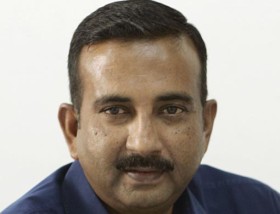
‘I used Gulf News to further my career’
By Anupa Kurian, Readers Editor GULF NEWS
Published: September 30, 2008
Dubai: As the mist rolled in Cumulus puffs across the acres of parrot green paddy fields of Thanjavur, the 16-year-old boy gripping the metal handle bar of the train coach door dreamed of belching mills, curving roads and fame. He was running away to Mumbai, where women wore beehives on their heads and men swaggered in fancy prints.
His home was “the rice bowl of Tamil Nadu”, his destination “the money capital of India”.
It was 1977, everybody he knew was trying hard to find a job in the “Gulf”, specifically Dubai. His friends were doing the same, although an agent had already cheated them once.
Abdul Jabbar had failed six subjects in his final higher secondary exam. His family wanted him to try again, but he was tired of waiting and made the decision to drop out of school.
One of the Gulf News readers for the longest time – 30 years to be precise – Jabbar has lived and prospered with the newspaper. A dream that a teenager left home with has been realised among the golden desert sands of the UAE.
His family had a wholesale vegetable business and he was the second eldest child of 11. Once in Mumbai, Jabbar struggled to make ends meet. Finally he wrote to his family for some money to help him get to Dubai.
His father sold a patch of land and sent him Rs6,500 (Dh650). Within months he made it to the land of his dreams – the UAE. It was April 11, 1977. The only hitch was that the job was that of a construction labourer.
“The villa I helped build with my hands still stands in Jumeirah 3. I was paid Dh25 a day. After three weeks I quit,” Jabbar said.
“I went to stay with family friends and started work at a motel in Sharjah. While I was there, I met a very kind Mexican couple.
“The wife would insist I eat some food before cleaning the room. One of the subjects that I had failed in at high school was English. I could read the letters, understood to some extent but spoke very little of it.”
One day, the couple called him to the room and the husband offered him a job at his company Dresser Rand, a multinational firm in the field of oil and gas.
“I couldn’t understand what he was saying. He advised me to call the Indian receptionist to help translate. But, I refused, as I feared that the receptionist might take up the offer,” Jabbar said.
Finally an understanding was reached and Jabbar realised the need to be able to communicate in English. He had a job at the man’s company to assist in administrative duties for a salary of Dh800 per month and a daily taxi allowance of Dh4.
He accepted. but there was a hitch.
Jabbar’s passport was with the first company, who were reluctant to release the document.
On the first day that Jabbar joined the new company, August 1, 1977, the government declared that every person working for any organisation had to be sponsored by it. Deadline after deadline expired but Jabbar failed to convince his first employer. When all looked lost, a UAE national from the Ministry of Labour stepped in to help. The employer relented and Jabbar had a permanent job.
Thirty-one years later at the same company, Jabbar looks back and feels that it was like a “new beginning”.
He said: “All my problems vanished. Since then, I have not looked back. I am now an office administrator and handle the spare parts segment of the business.”
The climb up the corporate ladder was not easy.
Jabbar worked hard at it, with the help of a dictionary and Gulf News.
“In my office there are mainly Americans. It was important that I could speak and understand English,” he said.
Jabbar got his hands on a Tamil-English dictionary and set to work. “Every morning I would read Gulf News and refer to the meaning of the words in the dictionary,” he said. Today he is a fluent speaker.
“I can talk well now, but I am still learning. Every day I come to work by 6.40am, even though my shift starts at 8am. I read the paper from cover to cover.
“The paper stays with me the whole day and whenever I get the time, I read,” Jabbar said.
The father of three has inculcated the same love of language in his children, as it has helped him turn his life around.
“Gulf News helped further my career, along with my company that has been extremely supportive. Gulf News helped me learn and improve my English – knowledge is power.”
While he would never dream of criticising Gulf News, he does have a few observations.
“I miss debates among people on issues in the letter to editor section. Nowadays, people only seem to be complaining about traffic and rents. I don’t blame them, life has become tough,” he said.
Every day he reaches office at 6.40am so he can read Gulf News before his shift starts at 8am.
KU: MUsic Therapy – Apply before Oct 15
KU: MUsic Therapy – Apply before Oct 15
Those interested join the PG Certificate Programme jointly conducted by Centre for Adult Continuing Education & Extension and Pankaja Kasturi Ayurveda Medical College in Music Therapy can apply till Oct 15. Course fee is Rs 12000. Admission will be on the basis of aptitude test and interview. For more information 0471-2302523, 2295919, 2295920, 2295921
MBA in Agri-Business at Punjab Agricultural University
MBA in Agri-Business at Punjab Agricultural University
Aug 31 : Applications are invited for admission to Master of Business Administration (MBA) programme in Agribusiness at Punjab Agricultural University, Ludhiana for the academic session commencing in 2009.
Graduate in Science, Engineering/Technology, Agriculture, Agricultural Engineering, Veterinary Science, Home Science, Commerce, Business Administration / Management, Computer Application with at least 60% marks or OCPA of 6.00 (out of 10.00) are eligible for admission. Candidates belonging to reserved categories are eligible for a relaxation of 5% marks.
Candidates who have appeared in the qualifying examination may also apply for admission. However, their selection will be subject to the condition that they fulfill the prescribed qualifications.
Applicants have to appear in Common Admission Test (CAT) to be held by Indian Institute of Management on November 16, 2008. The University uses CAT score for short-listing the candidates for its 2-year full time Programme.
The group discussion and Interview of the candidates who qualify the entrance test with minimum of 40 percentile (total) in CAT will be held from 2.3.2009 onwards at PAU Ludhiana.
Application form and Information Brochure can be obtained from the Additional Director of Communication, Centre for Communication & International Linkage, Punjab Agricultural University, Ludhiana from 05.09.2008 either by sending crossed Bank Draft for Rs. 775/- drawn in the favour of Comptroller, PAU and payable at any schedule Bank at Ludhiana or personally on payment of Rs. 725/-in cash at the counter on all working days. Application form can also be downloaded from University website http://www.pau.edu
Completed application forms along with group discussion and interview fee of Rs. 1200/- (Rs. 1975/- for downloaded forms) by way of bank draft in favour of the Comptroller, PAU and payable at any scheduled bank at Ludhiana should reach the office of the Registrar, PAU, Ludhiana on or before 10.11.2008 and with late fee of Rs. 500/- on or before 18.11.2008 at 5.00 p.m.
For details visit http://www.pau.edu
French scholarships for engineering students
French scholarships for engineering students
THE HINDU
Twenty-five full scholarships of around 20-25,000 Euros are being offered for two years for Indianstudents planning to join MS course
France is offering scholarships to meritorious students of engineering from India for post-graduate studies for two years from the academic year starting September 2009.
For this ALTEN; a leading European research and development consulting and advanced engineering group; “n+I”; a network of 75 renowned French engineering institutes, and the French Embassy have come together to fully finance such students.
ALTEN and the French Ministry of Foreign Affairs are offering 25 full scholarships of around 20-25,000 Euros for two years for Indian students who wish to enrol in an MS programme.
Core engineering fields
The programmes will in all core engineering fields through “n+i” that works in collaboration with the higher education office of the French Embassy in India.
Last date
The application form for the corporate scholarship is available online at the website of “n+I” – http://www.nplusi.com and the last date to apply is November 15, 2008.
No prior knowledge of French is required at the time of application and there is no bond that students need to sign with the Company.
No qualifying tests
Students do need to take qualifying tests such as GRE/GMAT etc.
Selection will be done on the basis of academic merit, coherence of the statement of purpose, quality of recommendation letters and a personal interview. Students who make the admission applications need to be present at New Delhi for a personal interview in the month of January 2009.
For more details students can contact r.arole@nplusi.com.
Last year, 10 outstanding engineering students from India were awarded the scholarship.
Non-profit network
The “n+I” is a non-profit making network which brings together over 70 premier post-graduate engineering institutions from France.
It aims at developing academic ties between our two countries in the domain of scientific and technical education and spreading awareness about higher education in France in engineering.
To revamp higher education in the country
To revamp higher education in the country
THE HINDU
The UGC review committee headed by Professor Yash Pal is to submit its interim report to the government soon. G. MAHADEVAN outlines some of the issues that were discussed at the committee’s sittings.
What began in early 2008 as an attempt to review the functioning of the University Grants Commission (UGC) and the All-India Council for Technical Education (AICTE) now appears to have undergone transformation as an endeavour to ‘rejuvenate and renovate’ higher education.
The committee headed by noted educationist Professor Yash Pal—set up in February 2008 as a UGC review committee—now expects to cast its net wider to prepare a blueprint for the overhaul of the higher education system in India.
The committee, Professor Yash Pal told The Hindu EducationPlus, will submit an interim report to the government in about a month from now.
Among the points about which the committee may make recommendations are the issue of upgrading UGC to a full-fledged Higher Education Commission, the granting of greater freedom and autonomy across a range of issues for universities, making the inter-disciplinary approach a norm in higher education, the need to revamp the manner in which Vice-Chancellors are appointed and ways to minimise interference by the State and Central governments in institutions of higher learning.
A major question that Professor Yash Pal and other committee members threw up for discussion at sittings held in various places, including Thiruvananthapuram, Pune, Amritsar and Varanasi, was whether the UGC needs to be upgraded into a full-fledged Higher Education Commission—a body that can integrate the functions of as many as 17 agencies which regulate higher education in the country now. The moot point was that funding and overall policy making will be made more efficient under an apex body that will act as a catalyst for quality improvement in higher education. The idea seems to have caught on with the academic community that participated in the Committee’s sittings.
At the sitting in Pune—held in May 2008— some participants pointed out that UGC was now over regulated and under governed. Universities were bound to do, to a large extent, what the Central agencies desired. Varsities had to run to these Central agencies for effecting even the smallest changes in their academic profile. This needs to be put an end to and universities need to be given the autonomy to decide what they want to teach and how, of course, within certain broad parameters laid down as part of a national policy, the participants felt.
At the Thiruvananthapuram sitting—in June 2008—another aspect of the Central agency-State university relationship was among the topics discussed. While there was no open disagreement on the need of an integrated agency for guiding higher education, a couple of participants pointed out that now the Central agencies and State universities sometimes worked at cross purposes.
The AICTE has been known to grant recognition to institutions which were not affiliated by State universities. So, if at all Central agencies function they should do so in a non-intrusive, constructive manner, they opined.
The nature and number of universities in the country came up for discussion at the other sittings of the committee also. There were many academics who were concerned about the size and spread of the universities in the country and some who argued for doing away with the system of affiliation.
Gangan Prathap, Vice-Chancellor, University of Kerala and Cochin University of Science and Technology—in an email interaction with The Hindu EducationPlus—pointed out that India now has nearly 400 universities and nearly 20,000 colleges affiliated to them. Even if the nation plans to have universities with an average enrolment of 10,000 students, there needs to be 1,500 universities here.
“We could plan to continue the 400 universities as unitary universities and after disaffiliating the 20,000 colleges, re-cluster them into about 1,000 universities so that each of these newly formed cluster universities will have about 20 colleges each. It will be a good idea for the newly formed universities to actually be a universe of knowledge having, apart from arts and science colleges, their own medical and engineering, and as required, agricultural, pharmacy and management schools, colleges or faculties. This will facilitate the growth of inter-disciplinary activities, which are now missing in the academic sector in the country. While some specialised universities (e.g. technological, medical universities and so on) will continue to function as they do now, the cluster universities will have a more integrated outlook, combining general and specialised education within the same university,” Dr. Parathap noted.
However, it would then be next to impossible for any agency to control such large numbers of universities, nor would it make sense. In fact, Dr. Prathap is of the view that there should not be such a single agency doing the controlling. Agencies such as UGC should, on the other hand, act as polestars, setting standards and benchmarks. There should not be any ideological hang-ups about accepting funds from the private sector, for the State will never be able to fully meet the prohibitive requirements of this sector.
According to Professor Yash Pal one crucial area where the Committee is seeking to make changes is the ‘cubicle’ approach to education that many universities have adopted.
“A university should be a universe of knowledge. It cannot be divided into cubicles called departments. Departments should have porous boundaries. Only then can universities create insights that are required for a nation. Our universities cannot claim to have produced many such insights,” he explained. (At the committee’s sitting at Thiruvananthapuram the chairman of UGC Sukhadeo Thorat had pointed out that most of the applications received by the commission for conferring deemed university status were from single-faculty institutions.)
The educationist also expressed displeasure over the manner in which governments interfere in the running of universities. Universities, he reasoned, should be places where academicians are in control and get primacy of position. But in many universities this is not the case. The manner is which Vice-Chancellors are appointed leaves much to be desired. This is one of the problems that the committee will seek to redress.
Recommendations
Apart from the Yash Pal committee, another committee headed by the educationist is contemplating curricular reforms and still another committee of UGC is studying ways of restructuring universities. A common feature of such committees is that they hold sittings in many places.
At the same time other recommendations regarding higher education—views that are diametrically opposite to those professed by members of the above mentioned committees—are being sought to be implemented.
A draft consultation paper on Public-Private-Participation in higher education brought out by the Planning Commission was sent to the Chief Secretaries; consultation of any sort is yet to take place over that. There is also pressure on the government to implement the recommendations of the National Knowledge Commission(NKC). There are academics who believe that the UGC’s committees are a desperate move to try and checkmate NKC.
With an army of experts showering a torrent of recommendations, it will be interesting to see which will be the ‘road not taken’ for higher education in the country.
Spotting Calibre
Spotting Calibre
22 Sep 2008, Sakshi Khattar (TIMES OF INDIA)
Visualise this: A mathematics class in progress and the teacher explaining the concept of length and breadth. When it comes to describing a ‘point,’
which has neither, a student raises his hand from the last bench arguing that it has both, but just a miniscule of it. The entire class is in splits but the teacher is left with a big question, as the child made sense.
Similarly, a question is thrown to the class to measure the rate of evaporation of a swimming pool if everyday it evaporates at a constant rate. And there comes an unexpected question – what if it rains?
Most teachers encounter loads of such questions everyday and often ignore them, as their job is to finish the syllabi. As a result, these children are often neglected. Few teachers would also describe such students as those with ‘behavioural problems.’ This is the biggest myth, feels Usha Pandit, an educational consultant, Mindsprings. She explains: “These children are the gifted children, who are not easily identified in a class and hence, often get ignored.”
Pandit, who specialises in curriculum development in gifted education, shares: “Under the learning curve, the two neglected ends in a classroom include students with learning difficulties (LD) and the other – the gifted ones. Those with LD are easily identified as their behaviours are frank whereas the gifted ones are mostly the quiet lot and hence, often get neglected.”
Susan Baum, author, Multiple Intelligences in the Elementary Classroom: A Teachers Toolkit and director of International Center for Talent Development, US, suggests that it is important to nurture the needs of gifted students. She gives J S Renzulli’s model for identifying giftedness in a child.
Renzulli, in his book, The Schoolwide Enrichment Model said: “Research has consistently shown that people who have achieved recognition because of their unique accomplishments and creative contributions possess a relatively well defined set of three interlocking clusters of traits. No single cluster “makes giftedness.” Rather, it is the interaction among the three clusters that research has shown to be the necessary ingredient for creative or productive accomplishment. Other factors that seem to impact gifted behaviour are personality and environment.”
According to Baum, it is not always that gifted students display their abilities. Teachers and schools need to continuously provide circumstances to get all these abilities together.
Problem
In a regular classroom, the teacher teaches to the average and uses left over energy and time to deal with the remedial. Therefore, the bright end of the spectrum is generally neglected or undernourished mainly because they are not as visible or volatile as the handicapped at the other end of the learning curve.
Most teachers and even counselors have a common perception that a gifted child is a one who is a ‘genius.’ So when it comes to sending students for a mathematics quiz, for instance, the names that come to a teacher’s mind would be of the first three toppers in maths in a class. And the child who solves the question first and solves it right, even without following the steps that the teacher and class is following, is often ignored.
“This kind of a child (called an intuitive learner) might not even know as to how he arrived at the solution and yet have it answered right, but the teacher would never acknowledge or appreciate, rather ask him to follow the rote methods, so such an attitude might kill a child’s creativity forever and hit his confidence badly, so much so, that he never raises his hand in the class again” says Pandit.
Veena Dhyani, counsellor, Cambridge School, Noida, says: “These children are usually labeled by teachers as the ‘disturbing elements’ of a class.” Talking about some common traits, she says: “They are restless and want something creative every time. They would finish their work much ahead of their peers and when their work is over, they interrupt the class.”
Says Shreshtha Madhwal, teacher, CRPF Public School: “These students have very high IQ levels and hence, they won’t really listen to a teacher as they know most concepts already, in fact, they might even add to what is being taught.” Also, most teachers are quite ‘insensitive’ towards these students because of time constraints, she adds.
Most teachers also feel that because of the high teacher student ratio in a classroom, it is difficult to pay attention to each and every child. As a result, these students get neglected. The need therefore is, as Pandit puts it, “to identify and nurture their talents.”
Possible Solution
Giftedness is a special need, says Pandit. “If these children are neglected, many of them will become under achievers, anti-social or even self-destructive. More importantly, it is deprivation of the child’s right to a happy and fulfilled childhood and future. Just as we cater to the lower end of the spectrum by differentiated programmes, we must respond to the need of the upper end by making sure that they do not lose their way.”
She recommends: “First and foremost, identify the gifted child in your class, which is not easy. They may vary from mildly-gifted, moderately, exceptionally, profoundly to even dysfunctionally gifted.”
Gifted children can be excellent peer-tutors, says Dhyani. In addition, she says: “Teachers can prepare worksheets to keep them involved.” Similarly, Madhwal says: “If there are two or three such children in a class, they should be grouped together and given a task which is above average as these children are very restless and enjoy challenges.”
Pandit sums up: “Accept children as what they are. A teacher has a major role to shape up the child, so the next time you come across such a child in your classroom, nurture his abilities.”
(With inputs from Surbhi Bhatia)
Now, IGNOU courses on mobiles, broadbandE
Now, IGNOU courses on mobiles, broadband
29 Sep 2008, Sapna Verma,TNN (TIMES OF INDIA)
NEW DELHI: For students enrolled with Indira Gandhi National Open University (IGNOU), especially those staying abroad or in remote areas of India, IG
NOU has some good news. Getting information about IGNOU for its students will now be as simple as SMSing one’s friends. As IGNOU kicks off the first level of its mobile services in the next 15 days, sending SMSes in a prescribed format will be enough to get all information about its courses such as exam dates, updating personal details etc.
“This service will make information gathering and other exhausting procedure very simple and instant. It is a first of its kind experiment to be used by a university or educational institution in India. Most of the students enrolled with IGNOU are either students who are pursuing their regular courses or students who are already working. This service will save their time,” said P V Suresh, senior lecturer in School of Computer and Information Sciences.
Explaining the project, Suresh said, “The project has three levels. The first level will be started within 15 days wherein bulk messages will be send to millions of students enrolled with IGNOU containing information about various courses, subjects and also about this SMS service.”
Elaborating on the other two levels, Suresh said, “The second level will involve enabling the students to send SMSes to the university to get information on various courses, subjects, related projects, examination and its results. In the third level, the students will be able to update their personal details in their profiles, like address, phone number etc, directly through the software designed by us.”
While this service intends to make things simple for all IGNOU students, the main beneficiaries will be students staying abroad or in far off areas of the country. Said the IGNOU electronic media production centre director V K Arora, “As IGNOU does not hold regular classes, student can be updated about exams, fees instalments, study material, subjects and their related projects and other things, which earlier were very difficult to be communicated about. A student staying in some remote area might not have access to Internet, but can get information through a mobile phone. Similarly, it will be very difficult for a student in some other country to come every time as it is very time consuming, but sending an SMS is instant.”
P V Suresh, talking about the credibility of the service said, “The SMSes have to be sent in a particular format as prescribed by the university, which will ensure privacy and credibility of the service.”
 ClicksandWrites
You must be logged in to post a comment.