Month: August 2008
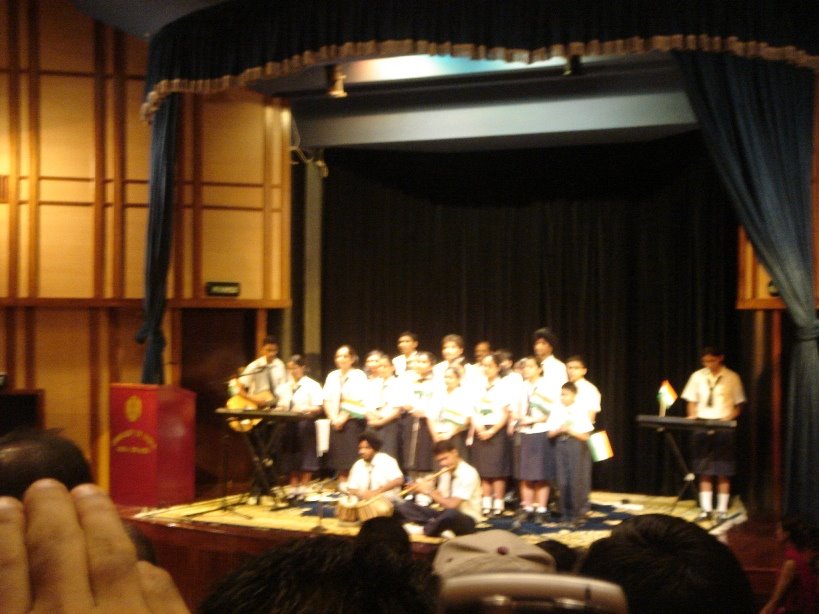
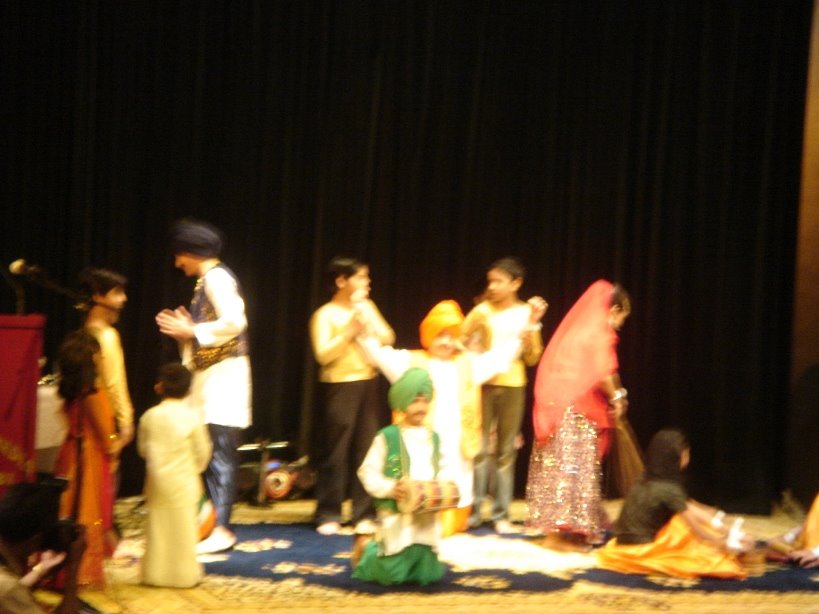
അബുദാബി ബസ്സ്

തുടക്കത്തില് സംശയാലുക്കളായ യാത്രക്കാര് തിങ്ങി നിറഞ്ഞ ബസ്സുകള് ഒരു വന് വിജയം. പുതിയ റൂട്ടുകളില് കൂടി ഈ ബസ്സ് സര്വീസ് ഉടന് തുടങ്ങനെ എന്ന പ്രാര്ത്ഥനയിലാണ് ഇപ്പോള് അബുദാബിയിലെ യാത്രക്കാര്.
Athaani
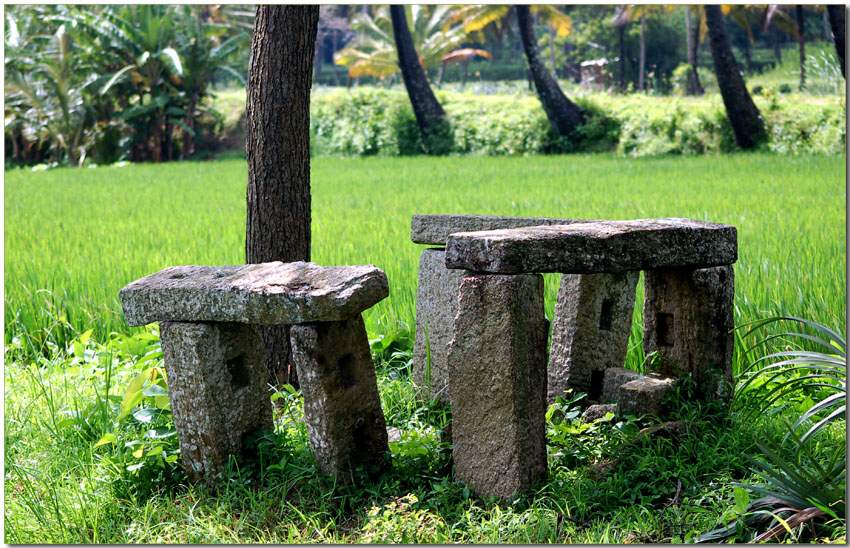 അത്താണി…
സുഹൃത്തുക്കളെ,
നിങ്ങളുടെ എല്ലാവരുടെയും അകമഴിഞ്ഞ അനുഗ്രഹാശിസ്സുകള് പ്രതീക്ഷിച്ചു കൊണ്ടു,
സസ്നേഹം,
രമേഷ് മേനോന്
Sushiri by G Jayaprakash – For Guinness, this is not the smallest yet
Sushiri by G Jayaprakash – For Guinness, this is not the smallest yet
M. Harish Govind for THE HINDU
The musician G. Jayaprakash is annoyed at the Guinness Book of Records refusing to accept his innovative `sushiri’ as the smallest musical instrument. The musician G. Jayaprakash is annoyed at the Guinness Book of Records refusing to accept his innovative `sushiri’ as the smallest musical instrument.

SMALL IS MUSICAL: G. Jayaprakash plays on the tiny wind instrument, `sushiri’. Photo: C. Ratheesh Kumar for THE HINDU.
THIRUVANANTHAPURAM: The efforts of a city-based musician, G. Jayaprakash, to get into the Guinness Book of Records for developing the smallest musical instrument have come to nought, with the global organisation refusing to alter the existing record being held by a nano-technology device developed by US scientists in the laboratory.
Jayaprakash’s instrument, `sushiri,’ is a chip of sandalwood 4.5 cm long, 1.5 cm wide, one mm thick and weighing just half a gram. The chip has four rows of minute holes on it, and when held close to the lips and played with fingers, it produces notes similar to those of a saxophone or a flute.
In response to Jayaprakash’s application, Guinness wrote to say that his achievement does not better the existing record held by the nano-scale guitar developed by scientists at Cornell University, USA. The silicon `nano-guitar’ is only as big as a single red-blood cell; it is `played’ in a vacuum chamber, using a laser in place of a guitar-pick.
When a laser hits a string, the heat makes it vibrate at frequencies a thousand times higher than what the human ear can pick up. However, scientists say that they can detect the vibrations and electronically scale them down to audible tones. Interestingly, the device was developed not to make music, but to try out small devices that vibrate at very high frequencies — to find ways to create cheaper electronics that save energy.
Unfazed by the reply, Jayaprakash wrote back pointing out that his `sushiri’ is a conventional wind instrument which produces the same sound frequencies as other such instruments. It can produce notes loud enough to be heard by about 100 persons in a room. Its notes could blend with those of other wind, string and percussion instruments in a concert, he said.
But the Guinness authorities refused to budge. “We are not at present interested in splitting the category into instrument types, and so the smallest guitar as mentioned takes precedence,” they wrote back, adding that the decision was final.
Jayaprakash, 44, says that he developed the instrument after 15 years of research.
“I did not expect a prestigious global organisation such as Guinness to be so biased. How can they can call a laboratory device, which cannot be seen or heard, a musical instrument?” he asks.
A self-taught musician, Jayaprakash coaxes classical compositions such as `Om mahaganapathim…,’ `Ennathapam cheithane…’ and `Jnanappazhathe…’ out of the `sushiri’ with the finesse of a maestro. He played the instrument at the Soorya Art & Dance Festival held in the State capital in July last. He has now submitted a proposal to the Limca Book of World Records and is awaiting their response.
Three types of health policies announced by Dubai for visit visa seekers to the UAE
Three types of health policies announced by Dubai for visit visa seekers to the UAE By Anjana Sankar, Senior Reporter GULF NEWS Published: August 12, 2008, 11:32
Dubai: The Department of Naturalisation and Residency in Dubai (DNRD) has announced a mechanism to offer mandatory health insurance coverage to visitors, ending speculations among insurance providers, tour operators and residents regarding the new system.
Ministerial decision number 322 for the year 2008 makes health insurance mandatory to obtain any type of visit visa to the UAE. The new rule came into effect from July 29.

Brigadier Obaid Bin Surour, Acting Director of DNRD, announced yesterday that the department has concluded an agreement with two insurance companies; Oman and Aman to issue health insurance policies for visitors to Dubai with a minimum coverage of Dh150,000 per person per visit.
As per the agreement, the two insurance companies will offer three different types of health policies according to the visit periods. Prices start from Dh40 for short-term visas valid for 30 days; Dh90 for visas valid for 90 days; and Dh185 for multiple entry visas valid for 180 days. Bin Surour explained that these policies will cover accidents and emergencies during the visitor’s stay in the country.
The agreement implied that the beneficiary will receive treatment in a shared hospital room in case of emergencies. It indicated that the two companies will cover 100 per cent of services to be offered to the patient through a network covered by insurance companies in the country.
The agreement also obligates the insurance company to return the body of the insured person to his country in case of death, paying up to Dh7,000 of the costs incurred.
Bin Surour added that the agreement does not cover medical treatment outside the health services providers’ network, except in the case of emergency life threatening cases.
The policy also does not cover chronic illnesses and it will include treatment of serious complications of already existing chronic illnesses in the emergency room only. It also does not cover pregnancy, delivery and ophthalmology or dental treatment.
Health insurance policies for visitors can be obtained from special counters to be set up at the Dubai Naturalisation and Residency’s headquarters in Bur Dubai, and other branches in Abu Hail, the Jebel Ali Free Zone, Dubai Airport, DNATA office on Shaikh Zayed Road, Umm Suqeim, Jebel Ali and Bin Souqat Centre in Rashidiya.
Electronic link
Bin Surour added that the system will be linked electronically with the DNRD main electronic online services soon.
When asked why the two companies were selected by the department, Bin Surour said, “The department received a number of proposals from several companies and appointed the companies that offered the most suitable offers and quality of services in order to streamline the procedures for all visitors and ensure a comfortable stay in the country.”
However, he added that health coverage policies issued by other companies will also be accepted provided they meet the same criteria including the minimum limit of Dh150,000 and the types of services offered like emergencies and repatriation of bodies.
Meanwhile, visitors who are already covered under a international insurance policy need not take local coverage. Likewise, companies and tour operators that bring in visitors should arrange for health insurance policies for their guests.
Meanwhile, National Health Insurance Company (Daman) has announced it will offer three schemes valid for 30, 60 and 90 days at premiums of Dh40, Dh70 and Dh90 respectively.
This covers emergency medical treatment at Daman’s UAE network, with the upper limit being Dh100,000 per person. The coverage would exclude out-patient consultations and services such as dental care and child delivery.
By Shakir Husain Staff Reporter
Dubai Insurance companies said yesterday they are well-prepared to offer health coverage to foreign visitors but want official guidelines on the subject in order to better design their policies.
They welcomed the introduction of compulsory travel health insurance requirement for people entering the country.
Good system
“We think it is a good system because the country relies a lot on tourism. We have visitors [annually] more than the population of the country, so it is also good for insurance companies,” said Saleh Bin Rashid Al Daheri, vice-chairman of Emirates Insurance Association, an industry group representing 50 insurers.
The UAE receives about 10 million tourists a year and their numbers are growing with the rapid expansion in local tourism infrastructure.
He said most insurance companies have the necessary experience in providing medical coverage and would be able to deliver products to visitors as required by the new visit visa regulation.
Al Daheri, who is a board member of Al Dhafra Insurance Company, however regretted that the industry was not consulted before the government introduced the scheme.
This led to some confusion in the market about financial limit of the coverage, premiums and legal requirements.
“We are hoping that the authorities concerned will issue guidelines to all insurance companies in this regard soon,” said Mustafa Vazayil, secretary-general of the Insurance Business Group under the Dubai Chamber of Commerce and Industry.
Vazayil, who is also managing director of Gargash Insurance, said the local insurance was already providing medial and travel coverage to outbound travellers.
Rules: Dh1,000 deposit
* Tourist visas can only be applied for by a licensed hotel or a tourism agency.
* Residents can apply for a visa for their spouse or blood relative.
* Expatriates are no longer be allowed to sponsor friends, and all visitors should have a health insurance cover.
* People applying for any visa will have to pay a refundable deposit of Dh1,000.
* Medical treatment visas can only be applied through licensed hospitals and clinics.
* Education visas can only be applied by a licensed educational institution.
* Exhibition and conference visas can only be applied for by the organisers.
* Visitors have to go back to their home country to renew the visit visa.
Executive MBA Entrance
Executive MBA Entrance
The Xavier Institute of Management Education, Electronics City, Bangalore, has announced its one-year Executive Programme in Management, leading to the Post-Graduate Diploma in Management (PGDM) in 15 months. Applicants must have five years of executive experience. The programme comprises four terms of 12 weeks’ duration and an industrial project of three months. The classes start on September 15.
A boost to hotel management studies
A boost to hotel management studies
J.S. BABLU for THE HINDU
A new State Institute of Hospitality Management has started functioning in Kozhikode.
The State Institute of Hospitality Management, Kozhikode, established by the State government with funds from the Centre, began functioning at the Yathri Nivas in Kozhikode on August 4.
The new institute is an addition to the State’s other prestigious institutions in the field of tourism and hotel management such as the Institute of Hotel Management and Catering Technology, Kovalam, and the Kerala Institute of Tourism and Trave l Studies (KITTS), Thiruvananthapuram.
The Institute is temporarily functioning from Yathri Nivas, run by the Tourism Department, at West Hill, Kozhikode. The government had identified five acres of land, currently with the Kerala Soaps and Oils Limited, for setting up the institute. The institute is expected to be shifted to the new campus within three years.
Course
The institute offers B.Sc. hospitality and hotel administration course. This three-year regular programme is offered jointly by the National Council for Hotel Management and Catering Technology (NCHMCT) and the Indira Gandhi National Open University, New Delhi.
NCHMCT, an autonomous body under the Ministry of Tourism, Government of India, conducts a national-level Joint Entrance Examination (JEE) for admission to hospitality and hotel administration courses and other courses in 21 Central institutes, five State institutes and a few private institutes. The institute at Kozhikode, like the one at Kovalam, bases its admissions on the JEE rank list.
Entrance test
The minimum qualification for appearing for JEE is a pass in Plus Two or equivalent with English as one of the compulsory subjects. Those appearing in the final examination are also eligible to appear in JEE 2008. They will be considered on provisional basis. (For more details, visit http://www.nchmct.org).
The upper age limit for candidates belonging to the general and differently-abled categories is 22 years. In the case of candidates belonging to the Scheduled Castes and Scheduled Tribes categories, the upper age limit is 25 years.
The three-hour test will have questions covering numerical ability and scientific aptitude (30 questions), reasoning and logical deduction (30 questions), general knowledge and current affairs (30 questions), English language (80 questions) and aptitude for service sector (30 questions). For each right answer the candidate will get one mark. Wrong answers will invite negative marking, half mark for every wrong answer. There will not be any negative marking for aptitude for service sector section. The test for the academic year 2008-09 was held on May 10, 2008 and admissions are almost over in majority of institutes across the country.
The B.Sc. programme equips students with the skills, knowledge and attitude required to efficiently discharge supervisory responsibilities in the hospitality sector. It provides in-depth laboratory work for students to acquire required knowledge and skill standards in the operational areas of food production, food and beverage service, front office operation and house keeping and provides managerial inputs in hotel accountancy, food safety and quality, human resource management, facility planning, financial management, strategic management, tourism marketing and tourism management.
The institute at Kozhikode has 60 seats for its B.Sc. programme. Already 48 students have joined, only four or five of them are from Kerala. “Good communication skills in English is very important to get an admission and also to excel in the course and afterwards,” says Krishnan Namboothiri, principal of the institute.
Placement
According to reports, majority of the students passing out of these institutes under NCHMCT across the country get placement in the hospitality and other service sectors. “Many of the students who have learned this course are working in prominent star hotels run by the Taj and Oberoi groups,” Mr. Namboodiri says.
Abu Dhabi and Dubai pass on Sharjah visa rule
Abu Dhabi and Dubai pass on Sharjah visa rule
By Anjana Sankar, Senior Reporter GULF NEWS Published: August 11, 2008, 23:23
Dubai: Dubai and Abu Dhabi will not follow suit with Sharjah to make tenancy contracts a pre-requisite to get residency permits for families, officials have confirmed.
Brigadier Obaid Bin Surour, Acting Director of Dubai Naturalisation and Residency Department said there is no need to submit tenancy contracts while applying for family visas in Dubai.
“We are getting queries from people. But we are not introducing any changes to the existing rule. There is no need to state where you are staying while applying for a visa,” said Bin Surour.
An official at the Ministry of Interior confirmed that Abu Dhabi will not be introducing the regulation either.
Sharjah introduced the new regulation beginning this month according to which applicants of family visa should produce attested copies of tenancy contracts in their own names of in a close relative’s name.
The move is to curb the practice of illegal shared accommodation and to ensure that only those who can afford to house their families in decent accommodations are given the residency permits.
Lieutenant Colonel Salim Ali Mazaini, Head of visa section at the Sharjah Naturalisation and Residency Department clarified that those who are residing outside the emirate can provide tenancy contracts from the respective emirate they are staying.
Those living in company accommodations can also submit tenancy contracts in their employer’s name.
Three types of health policies announced by Dubai for visit visa seekers to the UAE
Three types of health policies announced by Dubai for visit visa seekers to the UAE
By Anjana Sankar, Senior Reporter GULF NEWS Published: August 12, 2008, 11:32
Dubai: Oman and Aman insurance companies have been selected by Dubai Naturalisation and Residency Department to provide health insurance to visit visa seekers, it was announced at a meeting on Tuesday.
The UAE government revamped visa requirements, which came into effect on July 29, 2008.
Under the new regulations, visitors to the UAE are required to purchase health coverage as a condition of obtaining visit visas.
The department on Tuesday announced three types of health policies: Dh40 for a short-term visa of 30 days, Dh90 for 90 days, and Dh180 for multiple-entry visa valid for 185 days.
Residents of 34 countries, mainly those from Europe and North America, are exempt from this health insurance rule.
Tips to prevent back pain
Tips to prevent back pain
Tuesday August 12 2008 09:57 IST Express Features
WHAT can cause low back injuries?
Many things can cause low back injuries-muscle strain or spasm, sprains of ligaments (which attach bone to bone), joint problems or “slipped disk”.
A slipped disk (also called a herniated disk) happens when a disk between the bones of the spine bulges and presses on nerves. This is often caused by twisting while lifting.
What can I do for relief when I’ve hurt my lower back?
The best position for relief when your back hurts is to lie on your back on the floor with pillows under your knees, with your hips and knees bent and your feet on a chair, or just with your hips and knees bent. This takes the pressure and weight off your back. You may need 1 to 2 days of this sort of rest for a hurt back.
What else can I do for relief?
Heating pads can help to relax painful muscle spasms. Ice packs and massages may also give relief. Nonprescription medicines that reduce pain or swelling include aspirin, acetaminophen (brand name : Tylenol), naproxen (brand name : Aleve), ketoprofen (brand name : Orudis), and ibuprofen (brand name : Motrin).
You can talk to us if you have:
Your leg, foot, groin or rectal area feels numb
You have fever, nausea or vomiting, stomachache, weakness or sweating
You lose control over going to the bathroom
Your pain was caused by an injury
Your pain is so instense you can’t move around
Your pain doesn’t seem to be getting better after 2 to 3 weeks
Tips for preventing Back Pain
Don’t lift by bending over. Lift an object by bending your knees and squatting to pick up the object.
If you must sit at your desk or at the wheel of a car or truck for long hours, break up the time with stops to stretch.
Wear flat shoes or shoes with low heels (1 inch or lower).
Exercise regularly. An inactive lifestyle contributes to lower back pain.
The Back and Neck Clinic
No. 1 B Block 2nd Avenue, Anna Nagar East, Chennai – 600102 Phone : 044-26204455.
 ClicksandWrites


You must be logged in to post a comment.