Month: July 2008
Certificate/Diploma Course in German at University of Kerala
Certificate/Diploma Course in German at University of Kerala
Applications have been invited for one-year part-time Certificate/Diploma course in German. Those with degree can apply. Course fee Rs 250. Those with degree and certificate in German can apply for Diploma course. For application forms one will have to send the pay-in-slip for Rs 25 (Rs 35 in case of DD from SBI/SBT favoring the Finance Officer and payable at Service Branch, Thiruvananthapuram). Filled application forms along with a pay-in-slip for Rs 100 as registration fess (Rs 110 in case of DD) will be accepted till 8th August 2008. Address: Prof & Head, Department of German, University of Kerala, Thiruvananthapuram – 34.
Public Relations Management Course
Public Relations Management Course
Applications have been invited for PG Certificate Public Relations Management Course to be conducted by Centre for Adult Continuing Education & Extension under University of Kerala. Graduates in any discipline are eligible to apply. Course duration is 5 months. Course fee Rs 4500. Classes will be held during Saturdays and Sundays. Application fee Rs 100. For application forms one has to produce a receipt of having remitted Rs 100 favouring Director, CACEE at A/c 57002299878 of SBT. Applications should reach the office on or before 21st July. For more information call 0471-2302523
University of Kerala offers courses under Distance Mode
University of Kerala offers courses under Distance Mode
The University of Kerala has invited applications for various degree, PG, PG diploma and certificate programmes to be offered under distance mode. The scheme and syllabus of these programmes will be similar to that of regular courses. Contact classes and assignments will be there as part of the study programme. The details of academic programmes and eligibility can be had from the university’s website http://www.keralauniversity.edu Applications should reach the office on or before 31st August 2008.
PG Diploma in Forestry Management
PG Diploma in Forestry Management
July 15 : The Indian Institute of Forest Management (IIFM), Bhopal – 460003 (MP), has invited applications for admission to the following programmes.
Post Graduate Diploma in Forestry Management (PGDFM) two year full time residential programme approved by AICTE. Selection is through IIM-CAT Score by short listing applicants.
Fellow programme in Management (FPM). Four year AICTE approved doctoral programme open to meritorious Post Graduates. This programme is designed to develop and equip students for career opportunities in Management educations and research. IIM-CAT score will also be considered for selection.
Details of admission procedure for both programmes are available in the website. http://www.iifm.ac.in/admission.
For any information write to admission@iifm.ac.in.
Aviation management degree from Poland
Aviation management degree from Poland
The University of Information Technology and Management (UITM) at Rzeszow, Poland, is offering B.Sc. degree with specialisation in aviation management. The course is offered in collaboration with Bonn University, Germany, and includes a one-year practical training with Lufthansa airlines. The course is being offered in English medium.
Bartosz Pomianek, deputy vice-president for International Students of the university, said: “We have an international profile of students, and Poland is safe.”
Explaining the potential of the aviation management course, Nagendran Shanmugam, managing director, Kasturi Europe Placement Services, Malaysia, said the university was now tapping more students promising low tuition fees and placement prospects.
“More brand new airports are coming up in India and the aviation sector as a whole is booming. So, the specialised course in aviation management can help in getting professionally-qualified hands to meet the demand,” he said.
Admissions for the current academic year in Poland are now underway and classes commence in October.
UITM also has twinning programmes for various Bachelor’s degree courses in which the first year can be studied in Malaysia and the remaining two years in Poland. The degree will be awarded by UITM.
The university also offers three-year Bachelor’s programmes in Information Technology, International Management and Hospitality Management. Tuition fee per year comes to Euros 3,150. Students who have passed Plus Two are eligible. The university has a tie-up with Jayendrar College of Arts and Science, Coimbatore.
For more details about admissions, phone 9790271277.
IA slashes UAE fares
IA slashes UAE fares
18 Jul 2008, 1745 hrs IST,PTI
DUBAI: At a time when major carriers operating in the UAE have hiked their fares, Indian Airlines has adopted a new aggressive marketing strategy by reducing fares to most Indian destinations.
IA has cut fares on the UAE to Delhi and Mumbai routes by 20 per cent. The one-way fare has been cut from Dh500 (about Rs 5,500) to Dh 400 (Rs 4,400), while the fuel surcharge remains same. The new fares came into effect from July 14.
Indian Airlines Regional Manager Abhay Pathak said the airline had introduced special fares to Delhi and Mumbai last Monday.
On May 5, fuel surcharge was hiked to Dh 390 from Dh 350. During the peak summer period, the fare would be Dh 100 cheaper although the fuel surcharge would remain the same. “We have a large number of blue-collared workers. We don’t want to distance our customers. I think we’ll maintain the fare,” he said.
He said the fares reduction was aimed at getting more volumes since the India-UAE sector was seeing over deployment of capacity. It will help us maximise our revenues, he added.
Most of the airlines, including Emirates, increased the fares citing the staggering rise in fuel prices.
Both Indian Airlines and Air India operate 19 flights daily from Dubai and Sharjah to Indian destinations. With the reduced fares, one-way ticket from Dubai to a destination in Kerala costs Dh 790, including taxes, down from Dh 900.
A single journey to New Delhi and Mumbai, too, is costing 790 against the previous Dh 1,070 and Dh 880, respectively.
Passengers flying from Sharjah to any Indian destination also stand to benefit from the reduced fares as Sharjah-Mumbai ticket price has come down to Dh690 from Dh840, while Sharjah-New Delhi ticket price is down to Dh 740 from Dh 1,070.
No limits to excellence
No limits to excellence
The important lesson in the Nadal-Federer match is that people who operate at high levels of excellence pull each other up the scale.
V. K. Madhav Mohan for THE HINDU
CEOs and organisations can learn important lessons from the history that unfolded on Centre Court at Wimbledon on July 6, 2008. The gentlemen’s final of 2008 was arguably the greatest tennis match of all time. Noted tennis historian Bud Collins had no hesitation in classifying it as the greatest Wimbledon final ever (also the longest at 4 hours and 48 minutes).
What Rafael Nadal and Roger Federer achieved on that rain-swept day was unimaginable. As the rest of the world looked on in disbelief, they shifted the frontiers of excellence upward by an order of magnitude.
This was not just tennis, as Vijay Amritraj said during live commentary. The match had everything anyone could hope for: drama, fortunes swinging like a pendulum, brute power laced with consummate finesse, court speed fuelled by fighting spirit and above all, mental strength beautified by sportsmanship.
What has all this got to do with CEOs and organisations? Quite simply, the classic encounter reveals finer points that are as applicable to individuals as they are to organisations. Both Nadal and Federer competed on their own respective scales and yet propelled each other to the next level. They fed on each other’s performance and so transcended from good to great. That transition points the way for the rest of us, lesser mortals!
The important lesson that stands out is that people who operate at high levels of excellence pull each other up the scale. Peter Drucker posited that the difference between the top and the average is constant and so the way to shift the average upwards is to help the top shift upwards. The common practice however is to help the bottom shift upwards.
Both in academic and corporate environments, the focus is almost always on the weaker, poorer performers. More resources are lavished on them in terms of training and counselling; if the same resources were directed at the top performers, they would move even higher. Then the average would move upwards since the difference between the top and average is constant.
This has important implications for organisational performance. If more people improved their performance and if top performers went even higher the entire organisation would migrate to new standards. This is more or less what happened during the Nadal-Federer epic. Both have been top performers consistently as their respective ATP rankings of two and one in the world respectively, denote. On July 6 both pushed the other into a new zone of performance, a zone that that is the stuff of dreams.
Their achievement is bound to raise the standard of tennis on both the men’s and the women’s circuit because Nadal and Federer have demonstrated what is possible. This is much like Roger Bannister breaching the four minute barrier for the one mile run on May 6, 1954, with a time of 3 minutes 59.4 seconds; a month after this feat another runner, an Australian named John Landy, bettered Bannister’s record with a time of 3 minutes 57.4 seconds.
New performance zones
The CEO should think about ways to move his team into these new zones of performance. By focusing his own time and the organisation’s resources on the top performers (mentoring, training, new assignments, exposure, travel, scholarships) he can create an environment in which every individual pushes others up their own scales. A collective lift ensues, thereby scaling up organisational performance, much like the flight of geese in formation generates collective lift.
Wining formula
Coming back to the Wimbledon final, I believe Nadal won this time because of the following, each of which has lessons for CEOs:
His backhand is hit with perfect balance in all situations since he is a natural right-hander converted into a lefty. So Nadal actually has two equally powerful sides, his powerful lefty forehand and his backhand beefed up by the strength and control in his natural right hand. Organisations need to learn from this by creating and innovating new strengths while augmenting the existing strengths. This more than compensates for weaknesses.
Nadal’s swinging slice serve which curves away from the opponents on either side. Even the great Federer’s perfect ground-strokes were always under pressure on the Nadal first serve because the ball was always either going away from Federer (on the deuce court) or curving into his body (on the advantage court).
The lesson here is to develop one particular weapon to specifically neutralise a competitor’s core strength. That means understanding the opponent’s strength and designing a product, service or policy to eliminate its effectiveness in the market
Unrivalled court speed and unrelenting aggression. Nadal is probably the fastest man ever on a tennis court. That allows him to retrieve even impossible winners and forces the opponent to play interminably long points, thereby sapping his stamina.
Companies need to build reserves of cash and talent that will force opponents downhill with every competitive encounter. No matter what strategy or tactics the competitor employs, the CEO must always be ready with a counter thrust. In fact, the reserves of organisational stamina must be built up with contingency plans and resources, careful husbanding of cash and constant honing of talent
Continuous adaptation and evolution in his game. Nadal has made the crossover from a clay court specialist to a complete tennis player. From being able to hit mostly heavy top spin ground strokes he’s graduated to drop shots, sliced backhands, deft angles and serve and volley tennis. Similarly organisations must adapt continuously and develop all-round capabilities much like pilots with all-weather ratings. That calls for continuous market analysis and organisation development to map the market.
Mental toughness. Nadal’s mental toughness prevented him from wilting even when he had lost several match points. That strength is evidently practised and polished with visualisation exercises. Mental rehearsals are as important as physical practice. CEOs must develop this capability for personal visioning by repeatedly visiting the scene of future physical performance mentally and “seeing” a perfect performance every time. By encouraging everyone around him to develop this skill the CEO can make a very strong impact on organisational performance.
Supreme physical fitness. No other tennis player has demonstrated Nadal’s unremitting aggression, court speed or mental toughness. The basis of all that is his almost superhuman physical fitness which gives him the balance, breath control and stamina to deploy his technique and weaponry with devastating effect.
The peerless Federer revealed fleeting glimpses of fatigue only in the last two games of the match but that, sadly, was enough to make the difference between victory and defeat.
So too must CEOs , business owners and managers be committed to physical fitness. This is the key to mental toughness and clarity. Gym workouts, sports, walking, yoga, pranayama are all de rigueur for today’s leaders. Personal discipline leads to fitness, physical and mental, and that goes with the territory of leadership.
What the world experienced during the Nadal-Federer encounter was indeed a demonstration of possibilities for personal and organisational growth. The dynamic duo proved beyond doubt that limits to growth and excellence do not exist. For that we have be eternally grateful to those two great sportsmen.
TheLonelyCEO@gmail.com
1 in 5 UK MPs mentally ill: Survey
1 in 5 UK MPs mentally ill: Survey
16 Jul 2008, 1320 hrs IST,PTI
LONDON: One in five parliamentarians in Britain suffers from mental illness caused by the stress of their public lives, a confidential survey of MPs and peers has found.
Those questioned said they feared disclosing their struggles because of stigma and discrimination.
The All-Party Parliamentary Group on Mental Health questionnaire was completed by 94 parliamentarians, 100 lords and 151 parliamentary staff.
According to the survey, more than a quarter had a mental health issue, while 86 per cent of MPs said their job was stressful.
The group’s report is critical of the law forcing MPs to give up their seat for life if they are sectioned under the Mental Health Act for six months.
Liberal Democrat parliamentarian Mark Oaten said he was treated with anti-depressants after his private life was exposed in the press.
“The truth is many politicians, myself included, have found the job enormously stressful,” he told The Independent .
“I was regularly taking Prozac.” He said he had now “got back his life” and was looking for other career opportunities after the next election.
One of those serving MPs surveyed, speaking told the paper: “I would love as an established MP to talk openly of the serious depressive illness I endured long before I became or even thought of being a MP”.
Labour MP Howard Stoate said he had advised MPs to seek help. “A lot of people underestimate how much pressure their MPs are under but it is no more stressful than some other jobs,” he said.
‘Sexy voice implies a sexy body’
‘Sexy voice implies a sexy body’
18 Jul 2008, 0038 hrs IST,ANI
WASHINGTON: If you find the voice on the phone sexy, chances are that the person is physically attractive too, says a new American research.
The study, led by Susan Hughes, an evolutionary psychologist from Albright College in Reading, Pennsylvania, suggests that people with voices deemed sexy and attractive tend to have greater body symmetry upon close inspection.
“The sound of a person’s voice reveals a considerable amount of biological information,” LiveScience quoted Hughes, as saying. “It can reflect the mate value of a person,” she added.
The study cautions that an attractive voice does not necessarily indicate that this person has an attractive face.
A symmetric body is genetically sound, scientists say, and in evolutionary terms, in the wild, it can be an important factor when selecting a mate. However, sometimes changes during prenatal development can slightly skew this balance. For instance, the length ratio between index and ring fingers, known as the digit ratio, is fixed by the first trimester, a time that corresponds with vocal cord and larynx development.
If the hormone surge that affects vocal development also affects finger growth, there should be a connection between an individual’s voice and digit ratio.
Hughes could not demonstrate a connection between voice attractiveness and digit ratio in her previous work, possibly due to vocal changes that occur during puberty.
So in the new study, about 100 individuals listened to previously recorded voices and independently rated them on nine traits important during mate selection: approachability, dominance, healthiness, honesty, intelligence, likelihood to get dates, maturity, sexiness and warmth.
Study participants generally agreed on what made a voice attractive. But when Hughes used a spectrogram to analyze these voice ratings according to different acoustic properties such as pitch, intensity, jitter and shimmer, she could not find a common feature that made these voices seem attractive.
This indicates our perceptual system may be more advanced than expected, Hughes said. “We can agree on what’s an attractive voice yet I can’t capture it with a computer,” Hughes said.
Investigating if a combination of these properties can define an attractive voice may shed light on a connection, she said. The study is published in the June 2008 edition of the Journal of Nonverbal Behavior.
Jeetu – A promising singer from Mumbai
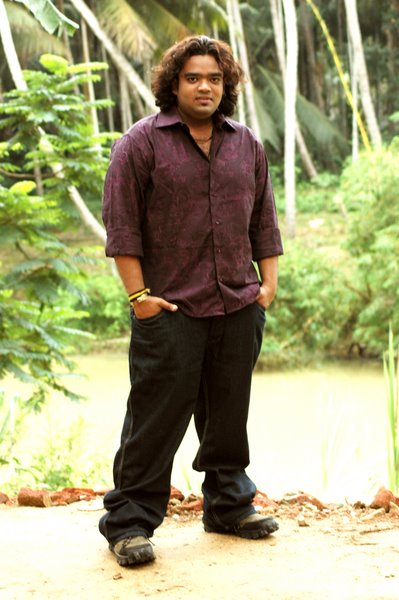
Amrita TV has recently concluded one of it’s prestigious Reality show which had a tough competition all throughout amongst the contestants and it’s active followers. You may not have witnessed a massive swing of fortunes and votes even in the lok sabha polls but that was the case amongst the scores of SMS votes for the last 3 contestants during the final day of this programme. All throughout the show, we were ecstatic and supported all the contestants but with awe watched the progress of a honest, moderately speaking and very hard working Mumbaikar boy, originally from Triprayar of Thrissur District. Due to his natural style and open attitude to acknowledge his limitations he was liked and disliked by many and also happened to fall under my mischievous eyes which even prompted me to create a whole new set of cartoon based on the Super Star Global. Obviously in most of them, he happened to be the main character. We have seen that the finals of such reality shows are always a surprise and at the end of the show both the winner and losers will have plenty of stories to say with regards to their journey till then.
Out of my passion to promote these talents who took an effort to give us some memorable months of musical fun and festivity and also as a TQM activity to see that they are not left aside, I approached Jeetu and his family for a short session with me. I had several questions running in my mind when I approached them as throughout the show I have been constructively criticising him and showering him only limited complements through my write-ups as well as cartoon series and was not sure about the direct reactions towards me for such an attempt. All those apprehensions melted down when I communicated and today, I am presenting to you all to read about Jeetendranath Ramachandran alisa Jeetu:
Greetings to you Jeetu. You have been one of the finalists of the recently concluded Super Star Global programme conducted by Amrita TV. It was a close finish and almost a sure winner for the title, last minute swing of votes resulted in you reaching the 2nd position. However, when we look at it, overall it gave a feast to all the music lovers and the contestants. It is the same interest of these music lovers that made me now approach you for a brief and casual talk to find how your progress is after the post-elimination from this show.
1. Jeetu, congratulations for participating in the Super Star Global Competition and getting selected to the top 3 level. How did you hear about this programme?
From amrita tv ads.
2. How did you find the different stages of the competition? Particularly on the challenges thrown to you to perform various dance and duet rounds?
Challenges are part of realty shows. To be frank I had difficulties at the beginning stages. The main problem was to dance but I got used to it as I had to survive.
3. Who is your Guru? Could you please give us an idea how you went about preparing for each round.
I believe that I’m blessed one because I had an opportunity to learn music under 5 gurus.
1. Smt. Shantha Venkatraman (Trichi) (carnatic vocals)
2. Smt. Prasanna Varrior (carnatic vacals)
3. Mr. Biju (Trivandrum) (Carnatic vocals)
4. Smt. Radha Varrior, deciple of late Guru Shemmangudi Bhagavathar. (carnatic vocals)
5. Smt. Panth (Hindustani vocals)
During the show I didn’t get any training from professionals. It was all done by myself, but off course George sir’s vocal training helped me a lot and I used to practise it regularly.
4. How was the support given by the Amrita TV channel in terms of co-ordination and arrangements for contestants like you who were situated away from Trivandrum?
They created a friendly environment so that we were able to practise more freely. But one thing I’ve to say is that the food was Pathetic. Accommodations were just ok. but one thing is that we could practise our song freely without any disturbances and i believe thepurpose was served.
5. How do you rate the grooming sessions before each stage of this competition? Did you all get sufficient notification about each stage and also did you get sufficient guidance about how your performance should be for each one of them?
As I said George Sir’s tips were useful. It helped me to act as a professional. I consider him as my God Father.
6. How do you rate the other contestants who participated along with you? Did you all get along well?
Initially all were good but then you know as the pressure increased everyone changed. Only Suraj, Subin, Latha, Sruthi And Charu were with me.
7. Was there any stress on you with regards to the SMS votes / campaign which was a part of the requirement for getting through to the next level in each stage? How did you work on this, especially in your case, being an outsider from Kerala, being a Mumbai based Malayalee and coming all the way from there to participate in this prestigious programme.
Actually I had no problem with regards to the campaign. My fans used to campaign votes 4 me. Many banners and voting format cards were issued to the public by fans themselves. Being a Mumbai malayalee was not at all a probs because they considered me as there own.
8. What do you rate amongst the various stages for this particular competition as the toughest round? What was the reason that made you say this particular round as very challenging.
Performance round was the most toughest coz it was very difficult for me to dance while singing.
9. Looking back at this competition after the finals, do you feel, the stages set after your elimination makes you feel that you could have performed well in those?
Yeh, I always felt that I could do better after some of my performances.
10. How often you give concerts? How many hours normally you practise?
I had a concert with G.Venugopal in the month of April. I’ve commitments in the month of oct. nov. and dec. My practise sessions are really tiring, mostly I sit for minimum 3 hrs in the morning and If I get time I practise 4 another 90 mins in the evening.
11. Other than vocal, are you learning any musical instruments?
No. but I’ll learn something.
12. Tell me something about your activities other than those involved with music.
I write lyrics 4 my own composition. I’m a lead singer of a pop band “Eternity”. I had won gold medal in the state level for painting and silver medal in the nationals (2001-02). Even now I sketch out of my imagination.
13. Tell me about your academic progress. What are you doing now?
Presently studying in final year B.Com
14. Being a resident of Mumbai, did you get any support/recognition from the numerous Malayalee associations based in Mumbai?
Yes. Chembur fine arts had felicitated me by arranging a musical nite.
15. Who is your favourite singer? And who else do you like to follow closely from the music world?
Hariharan is my all time favorite. Then, Shankar Mahadevan, Rahath Fateh Ali Khan, Kailash kher, Enrique, George peter.
16. What are your future plans? What do you want to become – musically and otherwise?
I want to be a musician. Only that much I can say.
17. Do you get noticed when you travel to Kerala after participation in this show. How do you handle this popularity / recognition/encouragements.
Well it feels great when u hear someone saying that “adh super staril paadiya paiyan alle”.
18. Any funny incidents during your participation in the show which you wish to share with all of us?
No funny incidents as such.
19. Who do you rate amongst the panel of the judges as the best? And why? Did you notice any bias or partiality?
No comments.

20. Any mention or write up on Super Star Global show cannot be completed without a word or a page on Stephan Devassy. Kindly provide us your insight on this genius. How did you find your interaction with him? How this genius worked around each episode/shoot to give you the best and bring out the best.
He was the best among the whole ssg team. While preparing song tracks he explains how to deal with each and every expressions. When we come on stage 4 the shoot he just say “polikyada mone, thagarku”. That’s Stephen Devassy.
21. And the winners prize, do you enjoy driving it around in Mumbai traffic?
Well my car is in kerala at my brother’s place. I used to drive it when I was at kerala. Waiting 4 the vacation…………
22. Tell me anything additional you want to include here
Brother it was nice answering your questions. Thank you very much.
Let us get to know Jeetu more:
Name: Jithendranath Ramachandran
DOB: 27-08-1987
Age: 19
Father:P.K.Ramachandran
Mother: Baby Ramachandran
Occupation of Father: Working in Saudi Arabia
Qualification: Doing graduation in B.Com, 3rd year
Musical background:
Studying Carnatic Music since 14 yrs, Music composing, Gold medalist in Mumbai university for light vocals. ‘Best Singer’ Award received from “Jagjeet Singh” in “Josh’06 4-5 years of freestyle & Rock, Pop and New-age
Dancing Skills: Enjoy Dancing.
Address:
“Saraswathy”, Triveni CHS, Rajaji path, Dombivili(E), Thane, Maharashtra – 421201
Awards and Achievements:
Music composing, Gold medalist in Mumbai university for light vocals. ‘Best Singer’ Award received from “Jagjeet Singh” in “Josh’06
Hobbies: Music Composing, Write lyrics in Hindi
Sun Sign: Virgo
And, why not listen to some of his best performances during the recently concluded Super Star Global programme of Amrita TV:
Jeethu about Jeethu 01
Jeetu & Nidhish singing Piyare on SSG Amrita TV
ATV Super Star Global Jeetu dt 11022008
Performance of Jeetu Super Star Global dt 11022008
Jeetu at ATV SSG
Performance of Jeetu dt 13022008
Jeethu On Super Star Global
Jeetu Sung the Kalyug song…
Thuje dekh dekh sonaa…
Amrita TV Super Star Global – Jeethu – Albela
Amrita Super Star Global – Jeethu – Thane Poovita moham
Roopa & Jeethu
Roopa & Jeethu “Boom Boom”
AMRITA TV Super Star Global – Chemmanam Poothey
Jeethu singing Adnan Sami’s song
Amrita TV SuperStar Global Jeethu – Thujhe
Interviewed and compiled by
Ramesh Menon
17072008
 ClicksandWrites
You must be logged in to post a comment.