Month: March 2008
Maitha to represent UAE at Beijing
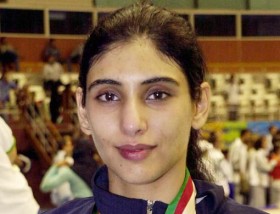
Maitha to represent UAE at Beijing
By Alaric Gomes, Senior Reporter GULF NEWS Published: March 25, 2008, 00:34
Dubai: Shaikha Maitha Bint Mohammad Bin Rashid Al Maktoum will be representing the country during this summer’s Olympic Games in Beijing.
Shaikha Maitha’s participation at the Olympics was announced by the UAE National Olympic Committee yesterday.
Shaikha Maitha has been cleared to participate in taekwondo in the 67kg category for women.
The UAE NOC received a letter dated March 18 from the International Olympic Committee endorsing Shaikha Maitha’s participation.
Joining the UAE national team captain will be Saeed Rashid Al Qubaisi in Judo in the 73kg category for men.
The UAE athlete was last week endorsed as the Best Female Arab Sportsperson for the second consecutive year following a poll conducted throughout the Arab region by popular website Maktoub.com.
Shaikha Maitha had polled the highest number of votes from among the 13 sportswomen from the 10 Arab countries.
Shaikha Maitha’s training schedule is supervised by renowned former world karate champion Sameer Jumaa in the company of the experienced trainer Moeena Jadeed. Earlier this year, Shaikha Maitha had been bestowed with the World Fair Play Award for 2006.
Memorable effort
Shaikha Maitha created history when she became the first UAE woman to win an international gold when she won gold in the +65 kg category at the 10th Pan Arab Games held in Algeria in 2004.
Probably her most memorable performance came during the 2006 Doha Asian Games when Shaikha Maitha won the silver medal in the +60 kg category.
$50m steel factory opened in RAK
$50m steel factory opened in RAK
By a staff reporter KHALEEJ TIMES 25 March 2008
DUBAI — Shaikh Saud bin Saqr Al Qasimi, Crown Prince and Deputy Ruler of Ras Al Khaimah, on Sunday inaugurated the $50 million RAK Steel factory in Al Ghail, Ras Al Khaimah.
RAK Steel, a joint venture with Ras Al Khaimah Investment Authority (RAKIA), is an energy-efficient, environment-friendly mill that will manufacture 500,000 tonnes of deformed steel reinforcement bars per year. The inauguration ceremony was attended by senior officials of RAKIA, dignitaries from Ras Al Khaimah Government, customers and suppliers.
The establishment of RAK Steel comes at a time when the demand for steel is at an all time high, thanks to the continued construction boom in the UAE and the Middle East region. The value of projects under construction in the UAE alone is estimated at $220 billion, while it is in excess of $800 billion in the GCC as a whole. A significant amount of this value will be for steel. Moreover, the Gulf Organisation for Industrial Consulting (GOIC) recently estimated that the UAE would use 44-66 million tonnes of rebar products over the next 15 years.
RAK Steel produces rebars from 8mm to 40 mm diameter in variable lengths of 6 to 18 metres to both British and American standards. The company uses the superior TEMPERIT process for manufacturing the rebars.
World’s biggest shopping mall to open in Dubai
World’s biggest shopping mall to open in Dubai
(DPA)/KHALEEJ TIMES 25 March 2008
Berlin -The biggest shopping centre in the world is being built in Dubai beside the Burj Dubai skyscraper and is due to open in early September.
“The Dubai Mall will have about 1 million square metres of space,” says Rene Hingst of Dubai Tourism at the recent ITB travel fair in Berlin.
There will be about 1,200 shops, an ice-rink and an aquarium, according to the real estate company behind the venture.
On completion, the Burj Dubai will be highest building in the world.
In addition to offices and private apartments, the building will also house the first hotel laid out by Italian fashion designer Georgio Armani which is due to open in 2009.
Tourists, who do not plan on staying in the hotel, will also be able to visit the building. There will be special tours with the highlight a trip to the tower’s viewing platform, which according to Hingst, will be the highest in the world.
At the moment, the tower has over 165 floors and will have a few more before it is finished.
The building’s final height has not yet been decided on, but the 600 metre mark has been passed. Total height will exceed 700 metres.
Moves for people on the move
Moves for people on the move
Bharat Thakur, Columnist GULF NEWS Published: March 21, 2008, 23:47
Today, life has become very hectic. We are always on the move — going to work, travelling, taking children to school and carrying on with other activities.
Sometimes, it becomes difficult to find time to take some time off to exercise. So, this is for all those people who are on the go.
All it takes is 15 minutes to follow the routine outlined below.
These contractions and stretches will work and relax the major muscles, get the endorphins flowing and get the body ready for action.
Warm Up
To warm up, jog in one spot and loosen your limbs. Do not raise your knees high and the feet should come up just a little; for a minute.
Surya Namaskara (Sun salutation)
This is a set of 12 asanas, which flow from one to the next. It works on your entire body and your cardiovascular system.
Repeat 11 complete rounds; for 7 minutes.
Tadasana (Palm tree posture)
Stand with the feet together and your arms by the sides.
Raise the arms over the head. Interlock the fingers and turn the palms outwards.
Inhale and pull the arms, shoulders and chest upwards. Raise your heels and stand on the toes.
Feel the stretch in the whole body — without losing balance or moving your feet.
Hold the posture for a few seconds.
Practise 5 rounds.
Benefits: Helps develop physical and mental balance. The entire spine is stretched. Helps clear congestion in the spinal nerves.
Tiryaka Tadasana (Swaying palm tree posture)
Stand with the feet about 2 feet apart.
Interlock the fingers and turn the palms outwards.
Inhale and raise the arms over the head.
While exhaling, bend to the left side from the waist.
Hold posture for a few seconds.
Inhale and come back to the upright position. Repeat on the right side. This will complete one round.
Practise 5 rounds.
Benefits: This asana massages, loosens and works the sides of the waist.
Natarajasana
Stand straight with the feet about a metre apart.
Turn the toes out to the side.
Slowly, bend the knees and lower the buttocks, about 20cms.
The knees should bend outwards over the toes and the spine should be straight.
Bring your palms together and take them up.
Hold for 10 seconds.
Return to upright position.
Repeat 5 times.
Benefit: This asana strengthens the muscles of the middle back, the pelvis — including the uterus — and the thighs, knees and ankles.
Naukasana
Support yourself on your elbows and then raise your legs 45 degrees.
Stretch your arms out towards your knees. Exhale.
Push your upper body towards your legs.
Hold for 10 to 15 seconds. Breathe normally while holding the posture.
Practise 5 rounds.
Benefits: Strengthens the core body. Tones the abdominal muscles.
Meru Wakrasana
Sit with the legs outstretched.
Bend the left knee and place the foot outside the right knee.
Push the left knee with the right elbow and place the left hand behind, next to the buttocks.
Keep twisting the body to the left, while keeping the spine straight.
Hold the final position. Look over the shoulder, as far as you can.
Re-centre trunk; relax for a few seconds.
Repeat on the other side.
Practise up to 5 times on each side.
Benefits: Stretches the spine. It helps alleviate backaches and neck pain.
Nadi Shodhana Pranayam (alternate-nostril breathing)
Sit in padmasana — with legs stretched out and the back straight.
Bend one leg; place the ankle on opposite thigh, close to the groin. Bend the other leg and place the ankle on the thigh of the bent leg, close to the groin. Place your hands on your knees.
Bend the forefinger and the middle finger of your right hand.
Next, close your eyes and practise deep breathing.
Close the right nostril with the thumb, place ring finger between eyebrows and inhale to a count of 5.
Close the left nostril with the ring finger. Hold the breath till a count of 10.
Take the thumb to the space between the eyebrows; exhale slowly through the right nostril — to a count of 10.
Now, breathe in again through the right nostril to a count of 5.
Close the right nostril with the thumb and hold your breath till you count to 10. Place the ring finger between the eyebrows and exhale through the left nostril — again to a count of 10.
Repeat complete cycle for 2 to 5 minutes.
Bharat Thakur is the founder of Bharat Thakur’s Artistic Yoga. For questions on yoga, write to dubai.artisticyoga@gmail.com. For information, log on to http://www.bharatthakur.com
Knot Just a Tie
Knot Just a Tie
By Nitin Nair, Features Editor GULF NEWS Published: March 03, 2008, 00:47
Want to look spiffing for the big interview? Learn how to tie a Windsor knot
And you thought this was just a thick, fat knot. Somewhere in that knot is a story about love and the abdication of the British throne.
Though he denies having invented it, the Windsor knot is widely attributed to the Duke of Windsor. The Duke was King Edward VIII before he gave up the title of the king of the British Empire to marry American divorcee Wallis Simpson.
Something of a style icon in his times, the Duke patronised Hawes and Curtis, a London-based clothing company that made bespoke lounge suits, blazers and shirts for him.
Now that he was doing so much for its brand in British aristocratic circles, the company created a bespoke tie that had a thicker inner lining in the part of the tie that formed the knot.
The result was a thicker, broader tie knot, a style that pleased the Duke. In his honour, the knot was christened the Windsor knot – the most formal of all tie-knots.
REMEMBER: The Windsor knot needs space, so forget the button-down shirts; this works best with spread collar shirts.
“Any tie can create the knot, but of course a thicker tie creates the best knot as this is the whole point of it. Although it is the way that it is knotted and not the tie that makes it definitive as the Windsor knot,” says Damien Paul, menswear buyer, Harvey Nichols Dubai.
WHEN TO WEAR IT: Ideal for men with long necks since the wide form shortens the perceived height of the neck. The Windsor is best suited for presentations and job interviews because it supposedly projects confidence. “Since it is thought of as a sign of high society, it is best suited for formal events, interviews, weddings etc,” says Paul.
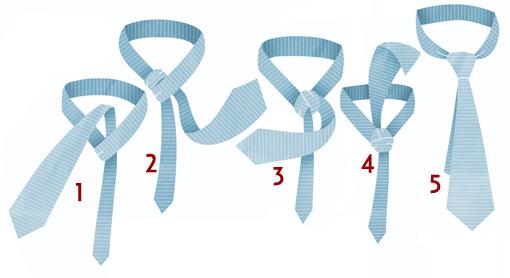
The Windsor in Five steps
Hang the tie around your neck with your right hand holding the narrow end. Transfer the narrow end to your left hand and with your right, cross the wide end of the tie over the narrow end. Bring the wide end up through the inside of the loop.
Bring the wide end down to your right, around and behind the narrow end, on your left. Now, bring the wide end over and down through the neck loop and pull it out to your left side.
Next, cross the wide side in front of the tie and to the right.
Now go up through the neck loop and down the loop made by the previous cross at the front of the tie.
Tighten the knot, draw up to the collar and straighten.
More insight into cataracts found
More insight into cataracts found
22 Mar 2008, 1203 hrs IST,ANI
WASHINGTON: A research team, led by an Indian scientist, has shed important light on cataracts, the leading cause of vision loss and blindness in older people, by finding that tiny pieces of a perfectly normal protein turned toxic during the aging process.
A cataract is caused due to deterioration in the highly ordered assembly of crystallin proteins in the eye lens. Usually, the ordered structure keeps lenses clear and able to efficiently transmit light.
However, crystallins slowly break down during aging, causing the lens to become opaque and scatter light instead. Besides age, other risk factors such as diabetes, ultraviolet radiation, or drugs like corticosteroids can also contribute to cataracts.
Like cataracts themselves, the exact mechanisms governing their formation are still a mystery, but K Krishna Sharma and colleagues from the University of Missouri School of Medicine, Columbia found that tiny bits of crystallin contribute to this process to a great extent.
The team compared a range of human donor lenses and found that aged and cataract lenses accumulated about four times as many short (~10-20 amino acids) crystallin fragments compared to young lenses.
These fragments could readily bind full-length crystallins, which disrupted their natural shape and organization and caused them to become insoluble, the researchers discovered.
Ironically, these tiny fragments are a by-product of the eye’s efforts to stay healthy; when a crystallin becomes damaged, other proteins chew it up to remove it; but occasionally the process is incomplete, leaving tiny pieces that can cause greater damage.
Writing eases stress of cancer
Writing eases stress of cancer
23 Mar 2008, 1245 hrs IST,PTI
NEW YORK: The simple act of writing down their deepest feelings can help cancer patients improve their quality of life, according to a new study.
A team of researchers in the United States has found that cancer patients who express their fears through writing can experience changes in thoughts about their illness, The Oncologist journal reported.
According to lead researcher Nancy Morgan of Lombardi Comprehensive Cancer Centre, “Previous research have suggested that expressive writing may enhance physical and psychological well-being.
“But most of those studies involved three to five writing sessions that were conducted in a controlled setting. Here, we found that just one writing session in a busy cancer clinic where the patients are frequently interrupted can still have a positive impact on patients.”
Morgan and her colleagues came to the conclusion after a research on a group of over 70 patients waiting in a clinic at a cancer centre in Washington from July to November 2006.
It included a pre-writing survey, just 20 minutes of expressive writing, a post-writing survey, and an optional follow-up survey that was completed by telephone three weeks later.
Snake and spider phobias unlocked
Snake and spider phobias unlocked
24 Mar 2008, 1156 hrs IST,PTI
NEW YORK: A large number of people count snakes and spiders among their fears. Now, a new study claims to have unlocked the psychology of the common phobias.
Researchers have found that contrary to assumptions that humans possess an evolutionary predisposition to fear the creepy creatures, it is the exposure to negative information about snakes and spiders, which causes phobias.
“Previous research shows we react differently to snakes and spiders than to other stimuli, such as flowers or mushrooms, or even other dangerous animals… or cars and guns, which are also much more dangerous.
“(In the past, this) has been explained by saying that people are predisposed by evolution to fear certain things, such as snakes and spiders, that would have been dangerous to our ancestors.
“(However), people tend to be exposed to a lot of negative information regarding snakes and spiders, and we argue this makes them more likely to be associated with phobia,” said Dr Helena Purkis of University of Queensland.
In their study, the researchers compared the responses to stimuli of participants with no particular experience with snakes and spiders, to that of snake and spider experts.
“Previous research has argued that snakes and spiders attract preferential attention and that during this early processing a negative response is generated… as an implicit and indexed subconscious (action).
“We showed that although everyone preferentially attends to snakes or spiders in the environment as they are potentially dangerous, only inexperienced participants display a negative response,” Dr Purkis said.
Rash drivers get hefty fines as tough law takes effect
Rash drivers get hefty fines as tough law takes effect
By Bassam Za’za’, Senior Reporter GULF NEWS Published: March 24, 2008, 00:43
Dubai: A reckless motorist caught drink-driving in the early hours of March 1 has become the first person to be sentenced in Dubai under the updated traffic law, which came into force the day he was caught.
The Dubai Traffic Court of First Instance gave the 34-year-old Emirati motorist a hefty Dh20,000 fine for reckless and drunk driving and jumping a red light.
The same court fined a 30-year-old female flight attendant from former Yugoslavia Dh10,000 for driving her car under the influence of liquor.
A similar fine (Dh10,000) was given to a 50-year-old Pakistani driver who was also found guilty of jumping a red signal when he drove his car inattentively and under the influence of alcohol.
“These rulings are considered the first amongst others verdicts to be handed down by the Traffic Court in Dubai since the updated traffic law came into effect as of March 1. We will be appealing these rulings to the Dubai Court of Appeal and ask for the implementation of the toughest punishments applicable under the newly revised law,” Salah Bu Farousha, the Head of Dubai’s Traffic Public Prosecution told Gulf News on Sunday.
The newly-amended Federal Law No. 12 (2007) came into effect on March 1 at midnight and at 4am the 34-year-old driver crashed into another vehicle after he jumped a red light under the influence of alcohol.
The court seized his driving licence for three months. He was also fined Dh500 for tinting his car windows 50 per cent. He confessed to the charges and asked for leniency.
 ClicksandWrites
You must be logged in to post a comment.