Month: February 2008
Black points await errant drivers
Black points await errant drivers
By Rayeesa Absal, Staff Reporter GULF NEWS Published: February 24, 2008, 23:29
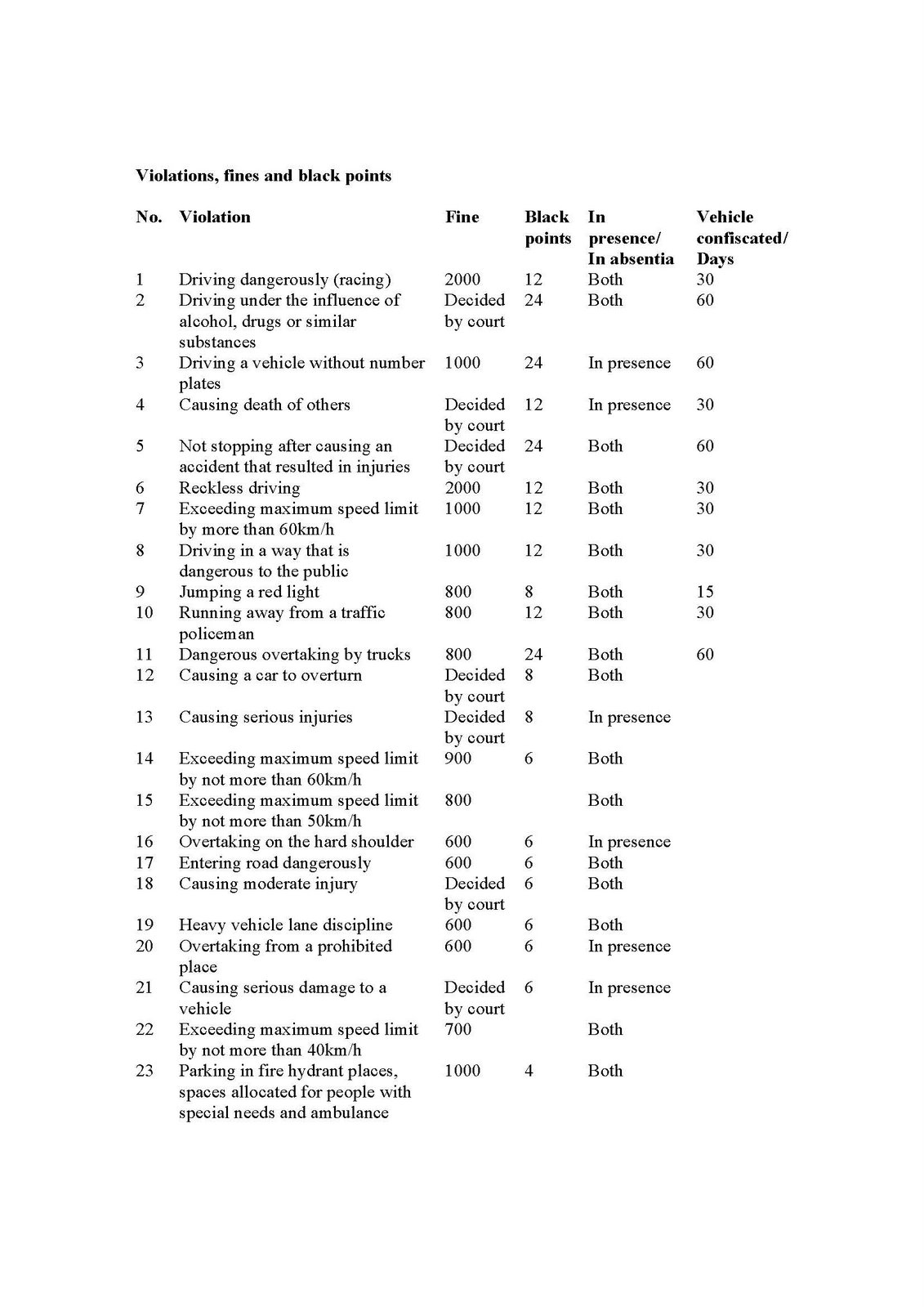
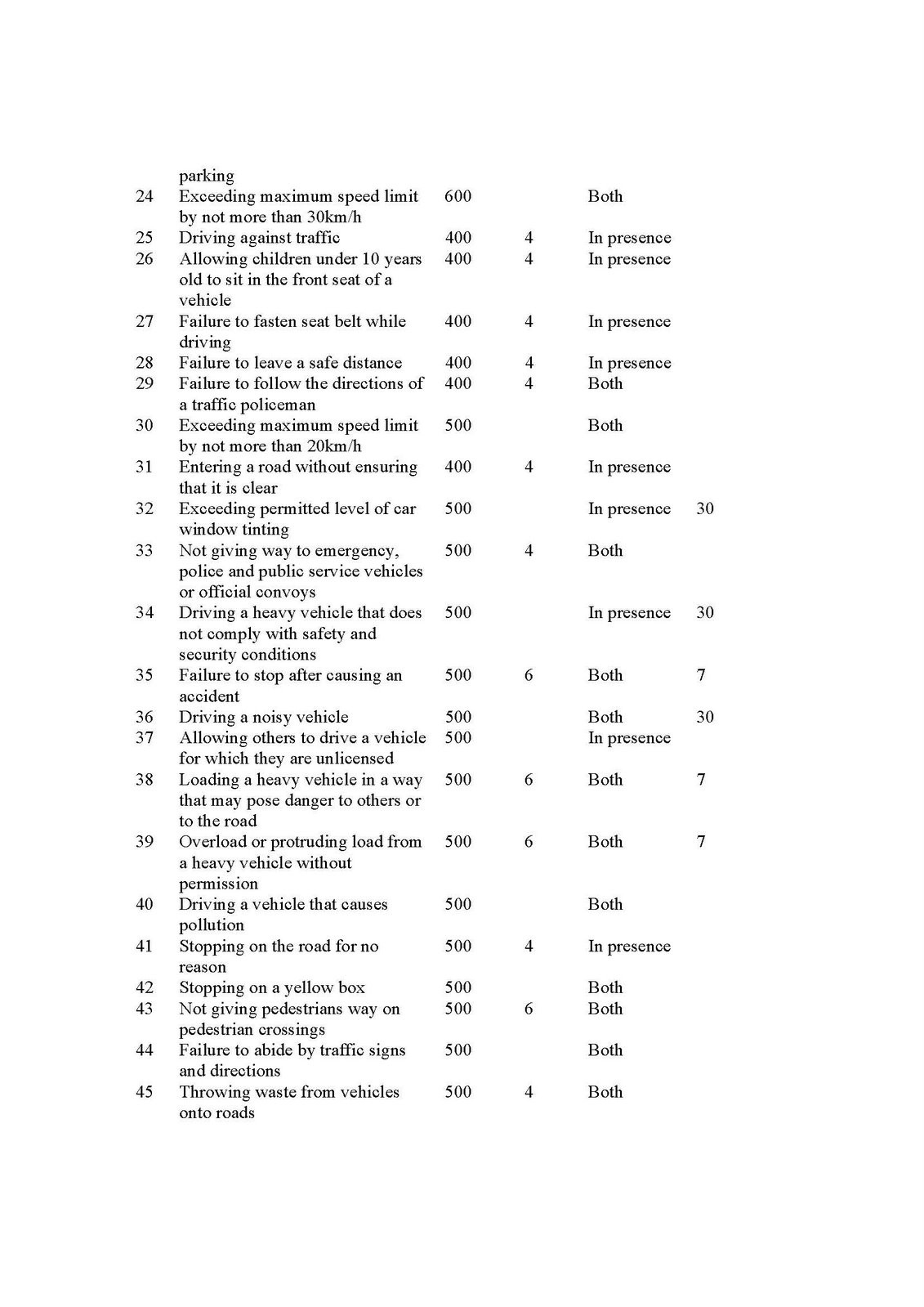
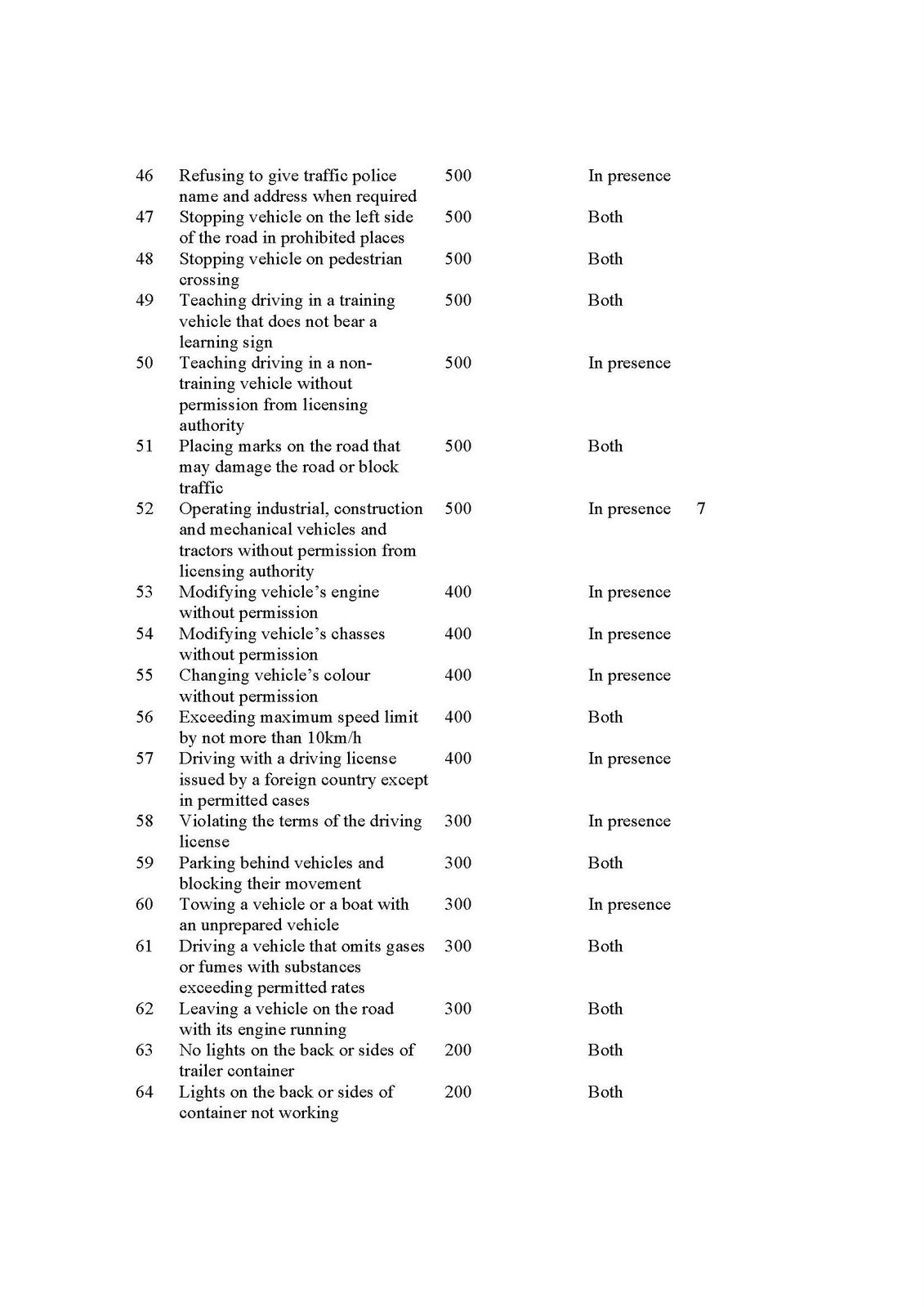
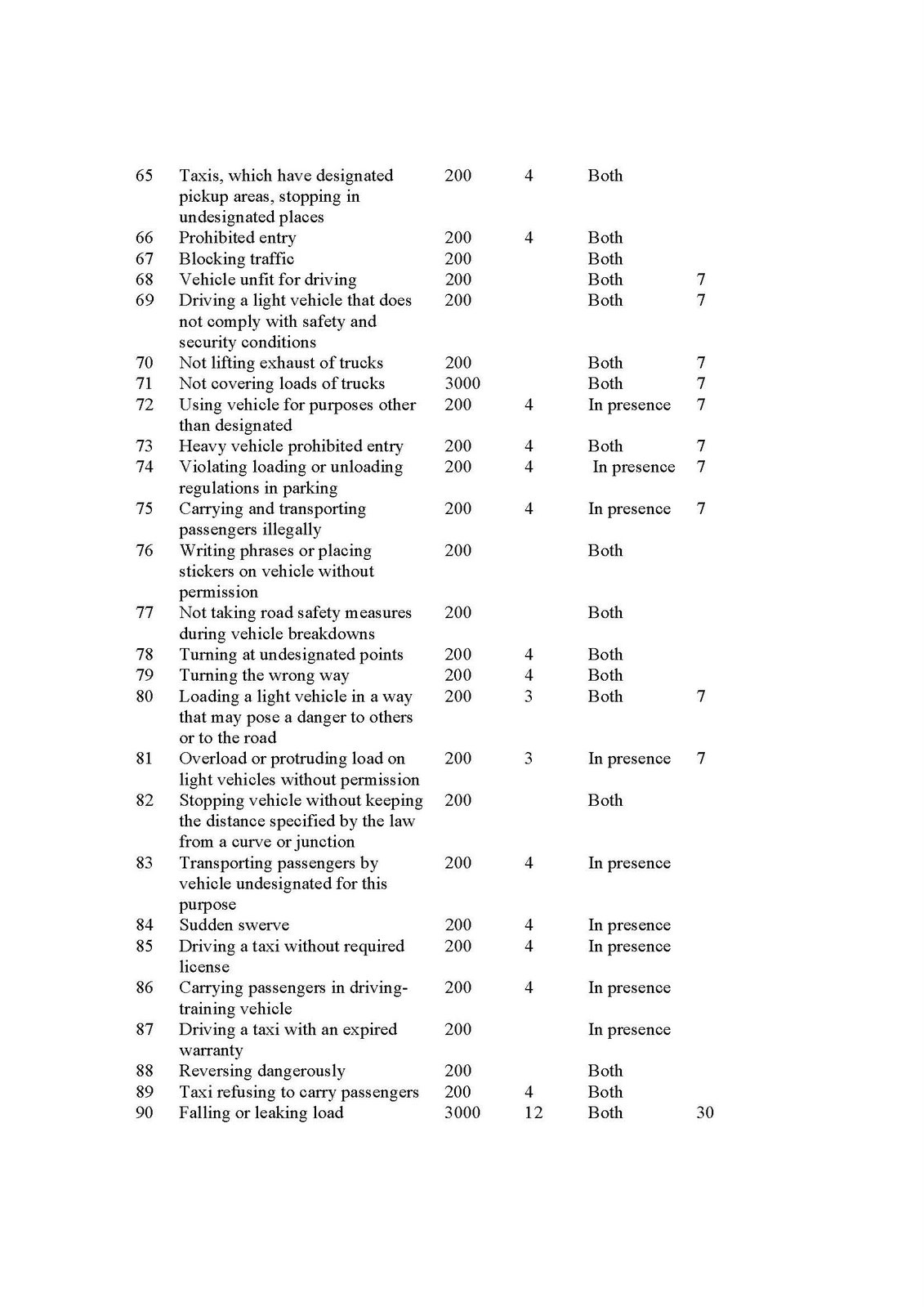
Abu Dhabi: A black point system for traffic offences is to be implemented across all the emirates starting March 1, senior Ministry of Interior officials said on Sunday.
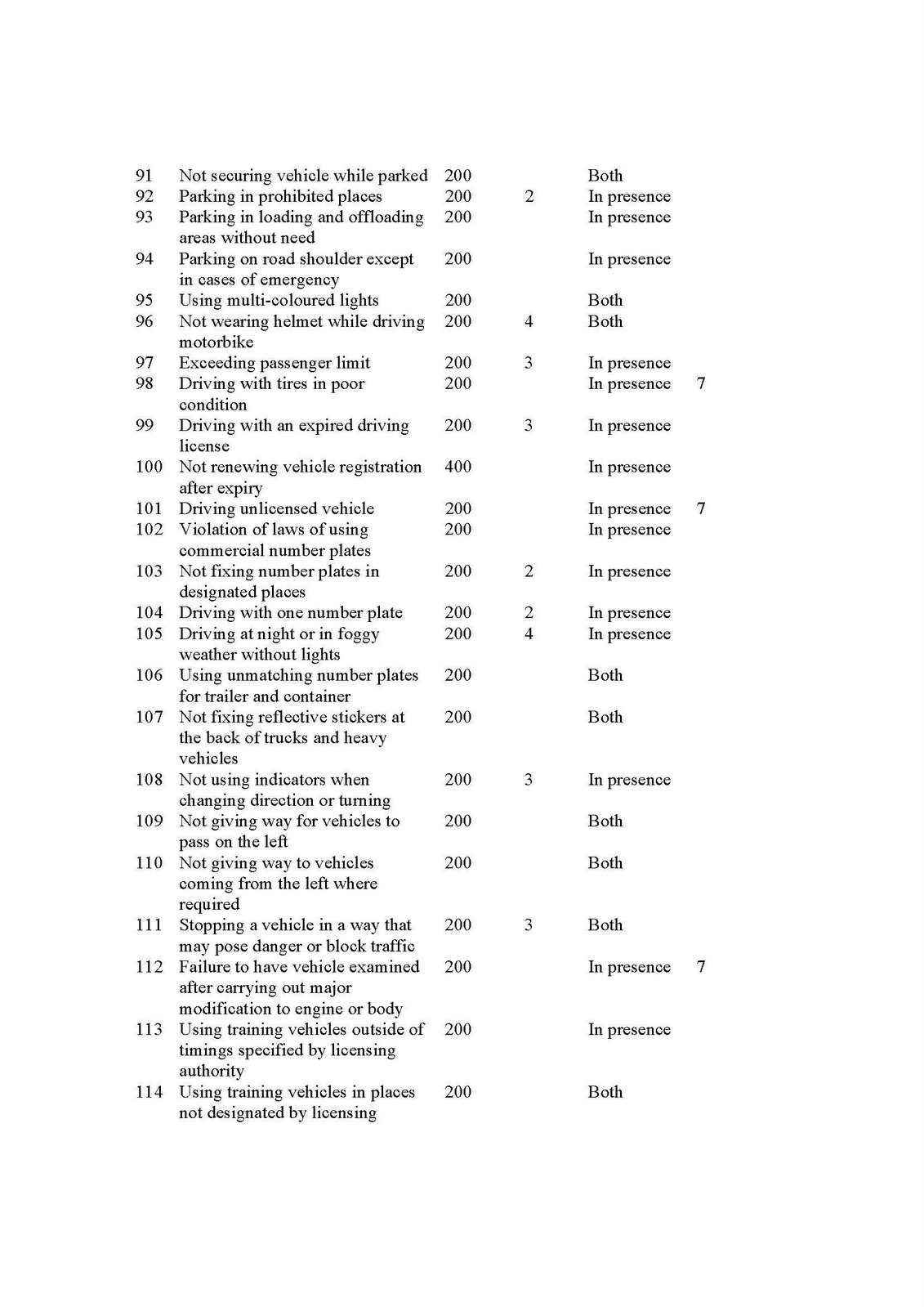
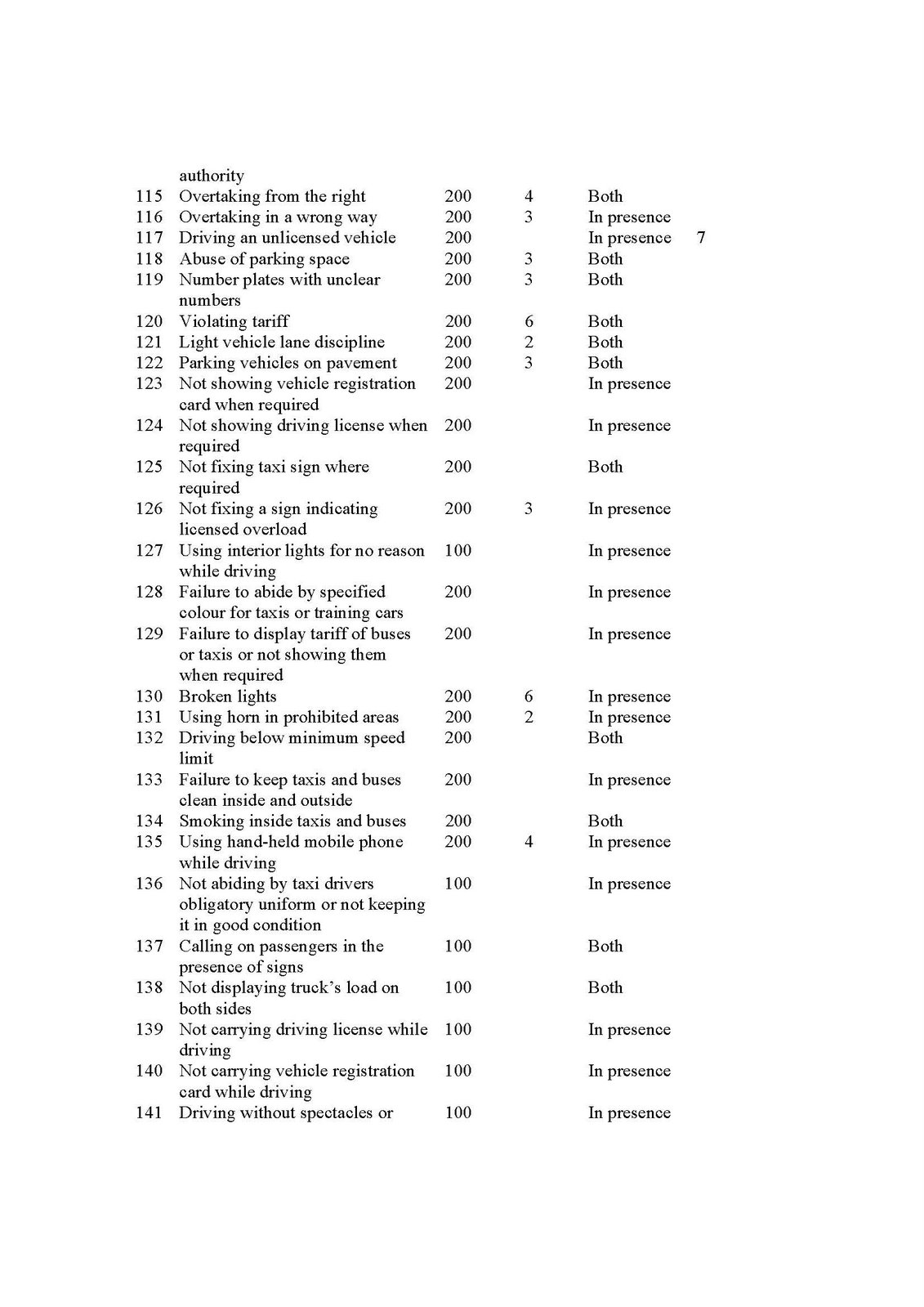
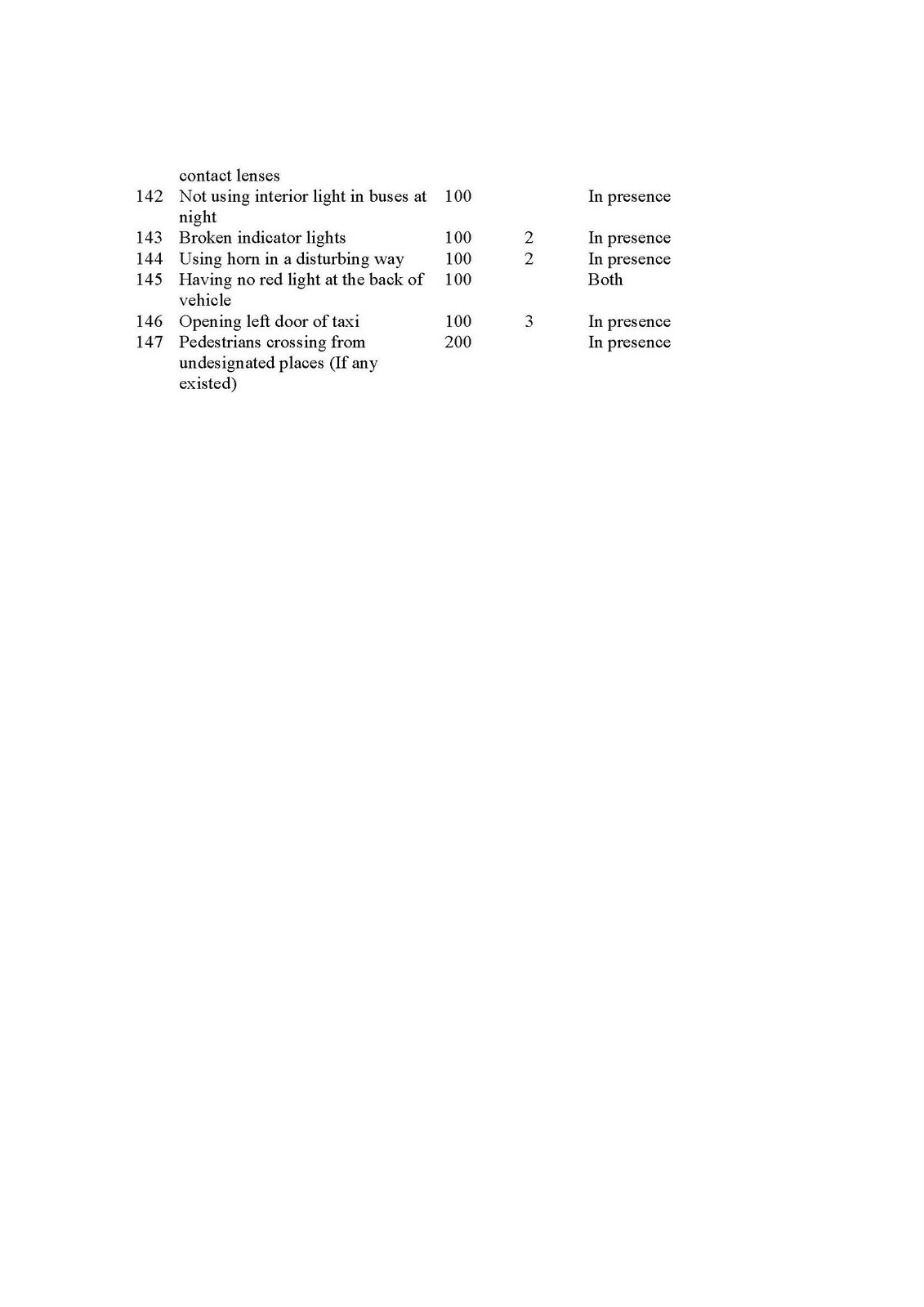
On March 1, the new Unified Federal Traffic Law comes into effect putting in place hefty penalties for serious traffic offences as well as black points against the licence of the driver.
“Earlier errant drivers could get away with paying comparatively low fines, but from now on the rules are getting tough”, said Lieutenant General Saif Al Shafa’ar, Undersecretary of the Ministry of Interior, at a press conference, announcing amendments made to the Federal Traffic Law. Fourteen amendments have been made to the traffic law.
“The lives of 1,056 people were lost in 2007 alone all over the country in traffic accidents. This number is what forced the ministry to come up with the changes,” he said.
The strategy of the ministry is to cut down traffic deaths as much as possible by effective changes in the traffic law clubbed with stringent implementation techniques, Al Shafa’ar said, adding that the new law will save lives and create a safe environment for all road users.
The maximum number of black points a motorist can incur in a year is 24 at which point his licence is suspended. Once a person collects 24 black points, the licence will be suspended for three months. If a motorist collects 24 points for the second time, the license will be suspended for six months. If it happens for the third time, the licence will be taken away for one year and will not be returned until the driver passes a training course from an institute authorised by the traffic department.”
Senior officials said that if a motorist has collected, for example, 20 black points and feels that his licence could soon be taken away if he accumulates 24 points, he can take a training course at an authorised driving institute. Police will then remove 8 points. This option can be utilised only once a year.
Impounded
If a driver is below 21 years and collects 24 black points, then the licence will be impounded for six months. It will be returned after the driver passes a driving course. Also, if a driver gets 24 black points within six months of issuance of his licence the licence will be cancelled and the person cannot apply for a test only after one year following the date of cancellation.
All government owned vehicles are exempt from these rules. The traffic department will inform the owner about details of the offences. If the vehicle was driven by another driver, the owner must send the driver to the traffic department within a month of notice. Otherwise the vehicle may be impounded for a month.
If the driver of a heavy vehicle has caused an accident which results in the flipping over of vehicles, or he has jumped a red light or overtaken in places not allowed, the vehicle will be impounded for one month and licence will be suspended for one year.
The ministry has already started an awareness campaign to reach out to all sections of society to familiarise them with the new law. Arabic, English, Urdu and Malayalam brochures will be distributed to the public as part of the campaign.
As part of the new law some vehicles have been exempt from registration and licensing fees such as vehicles belonging to those with special needs.
New leaf: Cancelled every year
In case a person gets five black points in May 2008 and gets another five in October, the points incurred in May 2008 will be cancelled in May 2009 unless the motorist has incurred 24 points in the year when the licence will be suspended.
Similarly, the points incurred in October 2008 will be cancelled in the same month the following year.
FXLabs, Zapak, Sify Launch "Agni"
FXLabs, Zapak, Sify Launch “Agni”
Techtree News Staff
Game company, FXLabs, has launched its first PC adventure game, “Agni” starring Malaika Arora Khan as the lead character. For which, the company has partnered with Zapak and Sify.
FXLabs claims “Agni” is the first PC game developed in India. “Agni” is designed as a third person shooter-role playing game or TPS-RPG that features more than 10 original scenic stages, and four different characters named Tara, Ghayab, Adhira, and of course, Agni.
Speaking at the launch, Sashi Reddi, founder and chairman of FXLabs, said, “Agni will provide Indian gamers with international quality, and content with local flavor at Indian prices. We have followed international ‘AAA’ production standard that rivals the best PC games in quality.”
Zapak will be the Buzz Marketing Partner (360 degrees) for “Agni” and will promote the game both online and offline via Gameplexes. While Sify will market the game online and through their GameDromes.
Also present at the occasion, Arun Mehra, chief marketing officer of Zapak Digital Entertainment, said, “We would get our users to sample the game through a 60 minutes trial version, which we will launch on Zapak.com soon. We will be promoting the game offline through our Gameplexes in 11 cities and host a tournament around it, to be flagged off by Malaika Arora Khan in Delhi next week.”
Meanwhile, those who want to try their hand at “Agni”, can download the game from the FXLabs Web site.
Change your signature, change your life
Change your signature, change your life
Ever wonder how much your handwriting says about you? Sure, you’ve heard about handwriting analysis and how the way you write a particular alphabet or sign your name can say a lot about your personality, but did you know that changing the way you write can improve your career or help you get over your inhibitions?
Sounds improbable but Chandraprabha Pupala helps people do exactly that. A trained graphologist and graphotherapist, Chandraprabha has been training people to improve themselves by improving their handwriting for the last five years.
In a telephone interview with rediff.com’s Shifra Menezes, she talks about the relatively unknown field of handwriting analysis and how she stumbled on to this unusual career choice.
Graphology is an unusual choice for a career. What initially got you interested in it?
Honestly, as a child I was very curious about why people behave the way they do. So I would observe them and study them but I never found any interesting way to know more about what made them tick. That’s why I decided to become a psychiatrist.
So I took the medical entrance exams, and got into homeopathy. There was no scope to get into an MBBS course as per my score. I finally got tired of the whole process and took a one-year break.
It was then that I came across this book on graphology. As I learnt more about it, it was so interesting. In fact, my handwriting indicated that I would not have made that great a doctor.
It can be that specific?
I can be. The specific traits required by a doctor, say memory association needs to be stronger while creative association is much less compared to say an architect.
So I dropped the idea of becoming a doctor and decided to do a degree in management and I studied for the international certificate in handwriting analysis from the US, which I completed in 2003.
How did you get started professionally?
By the time I completed my course I had started reading quite a bit about it. There were people on whom I practiced my skills and I kept experimenting. A college friend of mine, Hitesh Jirawla (he is now my business partner), kept pushing me to try it professionally. At that I point I wasn’t very confident about the acceptance of the whole concept.
I remember the first time — we decided to approach one of the country’s leading coffee shops. So we went and met people there but the response was very disappointing. They were pretty resistant to the idea and said that if at all we wanted to do it, we couldn’t charge anything.
So that was disappointing, there was no real acceptance for this kind of work.
After that we did some more research how to approach people with our idea and I gathered the courage to approach Cafe Coffee Day. There we got a nice response. They introduced this process in their HR procedures, for recruiting area managers and higher-level personnel.
After some time, I started working with the outlets as part of their marketing activities where I would sit at various outlets across Mumbai and analyse the handwriting of their customers where they could get a coffee for free.
Tell us a bit about graphology and what you do.
I have noticed that many people do know quite a bit about handwriting analysis, but that’s not all there is to it. You also need to understand behavioural patterns, how a person reacts, what are their defence mechanisms.
When we label a particular trait, saying the handwriting indicated it, most of the time people refuse to accept it — they get offended, or they have their inhibitions about revealing their weaknesses. So the process has to be handled as a counselor, which is the most important thing.
We are working on spreading awareness and we want people to get into this particular stream.
We also follow up on the people we work with, to measure efficacy and also, this kind of business will not survive without case studies and actual proof that it works.
We say your public image is your signature. In the corporate world, the biggest challenge people face is portraying one’s talent. The biggest gap is between what you are and what you want to project to the world.
We don’t realise that we might just be portraying a negative aspect or an unhealthy aspect of ourselves. This then becomes a habit. Most people reflect different personalities with different groups of people, this is because somewhere along the line one is projecting oneself on a wrong frequency. By changing the signature or designing one’s signature we attempt to align what you are and what you want to project to the rest of the world.
There are a lot of people who use standardised signatures, which I find a little funny. Everybody has their own ambition or life patterns and what works of one person will not work for another.
What people must understand is that it is not about having a simpler life but about helping you achieve your true potential. The compatibility between what you are and what you want to be is the most important, which very few people actually get.
How accurate is graphotherapy in addressing a person’s fears etc?
I believe the accuracy in ascertaining an individual’s personality from their handwriting has an accuracy of 90-95 per cent.
Tell us about your company.
Chandraprabha wasn’t a formal company until two years back. Up until then we were just freelancing, and the tie-up with Cafe Coffee Day was on for about a year or so. At that point we hadn’t even thought of making a company out of it because there was a lot of resistance and questions about the whole thing.
After we completed the course, Hitesh and I decided that we would take up working on the therapy aspect of graphology. At that point there was nobody in India who addressed this aspect professionally. The concept was usually confused with other concepts. People usually undertake teaching and training at times but those are not that specific.
The application on graphology and graphotherapy has huge scope, so we decided to explore this route.
What were the challenges you faced?
Firstly, people were not really aware of how graphology works and didn’t really believe that it was effective. There was a lot of energy that we had to put in to convince them that it works. That was the biggest challenge.
Right now we don’t have any competitors as such, but taking this up as a full-time career has its own risks. When we take the idea to a company, we first have to begin with making them aware of the particular science, then that it does, in fact, work.
Once they are convinced it works, they begin accepting it and the business aspect comes in. This is a long process for anybody.
Do you train people in graphology?
We do train people, but that is a very select work. It’s mostly done in the HR projects.
Most of the work happens when people want to transform themselves and their lives. So that includes handwriting analysis and signature design, which means changing handwriting and changing personality which is graphotherapy.
Tell us about your clientele.
There are a lot of people in senior management positions with whom we work — CEOs and MDs. We also work with individuals who want to transform their lives and there are a number of celebrities as well.
We have worked with Devita Saraf who is director of Zenith Computers and CEO, VU Technologies, Ruchir Mody, managing director, Torrent Pharma, Sabira Merchant had got her handwriting analysed a while back.
Over the last five years, we have analysed over 10,000 individuals. However, we still rely highly on word of mouth promotion.
How many people do you have on the team?
I’m the only graphologist on the team. The rest of the team is on the admin side of things. There is a whole module clients need to follow for the therapy to be effective.
It is not a future predictive science at all. Handwriting works on a simple principle, where your brain gives instructions to your hand to write; what we are doing is using your hand to give instructions to your brain.
When you are thinking there is a chemical process happening in your brain, a chemical pathway is formed called a neuropathway. Now every time you write, a neuropathway is created. When you make a change in your handwriting you are actually altering your neuropathway.
The therapy works on exercising your handwriting. We develop a stroke looking at your requirements. It’s not that your handwriting will look beautiful after the programme, but it works on addressing a particular fear or weakness.
So, we work on a particular letter or stroke for a minimum of 45 days, and then the hand gives instructions to your brain. That’s when it begins to work in a mechanism.
How does one go about establishing a career in this field?
At this point in time in India, firstly one would require all the skills of an entrepreneur to take it up full-time — a lot of determination, a lot of courage. You have got to be persistent, and push through no matter how tough the going gets.
Another thing that people must understand is that it is not a future predictive science. Once people actually understand that, their interest level tends to just drop. It’s more like a psycho-analysis of an individual’s personality.
It is a big responsibility, because you are trying to help people improve themselves. So whether you are reading a book or getting trained by someone, you need to be aware of that responsibility.
Five years down the line, is it still a challenge to convince people?
There is still a lot of resistance to the idea, people still do have reservations. However, I have done a few media events with news channels and radio stations. That has opened people up quite a bit, but there’s still a long way to go.
Is there money to be made in such a profession?
The cost of our services ranges anywhere from Rs 5,000 for an individual to Rs 60,000 for corporates. When we started out it was Rs 50 to Rs 100.
Are there courses in graphology in India?
There are many people who claim to offer courses in the subject, but after looking at what they offer and the work they do, I would say that they were nowhere near what a training programme should be.
What are your plans for the future?
We are developing a training course, but right now the main limitation is time. We are focused on the clients and the application side for now. We are doing some training for corporates, but we will come up will a certification programme soon.
Source: rediff.com
How the Sensex is calculated
How the Sensex is calculated
Sharat Chandran, Commodity Online
For the premier Bombay Stock Exchange that pioneered the stock broking activity in India, 128 years of experience seems to be a proud milestone. A lot has changed since 1875 when 318 persons became members of what today is called The Stock Exchange, Mumbai by paying a princely amount of Re 1.
Since then, the country’s capital markets have passed through both good and bad periods. The journey in the 20th century has not been an easy one. Till the decade of eighties, there was no scale to measure the ups and downs in the Indian stock market. The Stock Exchange, Mumbai in 1986 came out with a stock index that subsequently became the barometer of the Indian stock market.
Sensex is not only scientifically designed but also based on globally accepted construction and review methodology. First compiled in 1986, Sensex is a basket of 30 constituent stocks representing a sample of large, liquid and representative companies.
The base year of Sensex is 1978-79 and the base value is 100. The index is widely reported in both domestic and international markets through print as well as electronic media.
The Index was initially calculated based on the “Full Market Capitalization” methodology but was shifted to the free-float methodology with effect from September 1, 2003. The “Free-float Market Capitalization” methodology of index construction is regarded as an industry best practice globally. All major index providers like MSCI, FTSE, STOXX, S&P and Dow Jones use the Free-float methodology. (See below: Explanation with an example)
Due to is wide acceptance amongst the Indian investors; Sensex is regarded to be the pulse of the Indian stock market. As the oldest index in the country, it provides the time series data over a fairly long period of time (From 1979 onwards). Small wonder, the Sensex has over the years become one of the most prominent brands in the country.
The growth of equity markets in India has been phenomenal in the decade gone by. Right from early nineties the stock market witnessed heightened activity in terms of various bull and bear runs. The Sensex captured all these events in the most judicial manner. One can identify the booms and busts of the Indian stock market through Sensex.
Sensex Calculation Methodology
Sensex is calculated using the “Free-float Market Capitalization” methodology. As per this methodology, the level of index at any point of time reflects the Free-float market value of 30 component stocks relative to a base period. The market capitalization of a company is determined by multiplying the price of its stock by the number of shares issued by the company. This market capitalization is further multiplied by the free-float factor to determine the free-float market capitalization.
The base period of Sensex is 1978-79 and the base value is 100 index points. This is often indicated by the notation 1978-79=100. The calculation of Sensex involves dividing the Free-float market capitalization of 30 companies in the Index by a number called the Index Divisor.
The Divisor is the only link to the original base period value of the Sensex. It keeps the Index comparable over time and is the adjustment point for all Index adjustments arising out of corporate actions, replacement of scrips etc. During market hours, prices of the index scrips, at which latest trades are executed, are used by the trading system to calculate Sensex every 15 seconds and disseminated in real time.
Dollex-30
BSE also calculates a dollar-linked version of Sensex and historical values of this index are available since its inception.
Understanding Free-float Methodology
Free-float Methodology refers to an index construction methodology that takes into consideration only the free-float market capitalisation of a company for the purpose of index calculation and assigning weight to stocks in Index. Free-float market capitalization is defined as that proportion of total shares issued by the company that are readily available for trading in the market.
It generally excludes promoters’ holding, government holding, strategic holding and other locked-in shares that will not come to the market for trading in the normal course. In other words, the market capitalization of each company in a Free-float index is reduced to the extent of its readily available shares in the market.
In India, BSE pioneered the concept of Free-float by launching BSE TECk in July 2001 and Bankex in June 2003. While BSE TECk Index is a TMT benchmark, Bankex is positioned as a benchmark for the banking sector stocks. Sensex becomes the third index in India to be based on the globally accepted Free-float Methodology.
Example (provided by rediff.com reader Munish Oberoi):
Suppose the Index consists of only 2 stocks: Stock A and Stock B.
Suppose company A has 1,000 shares in total, of which 200 are held by the promoters, so that only 800 shares are available for trading to the general public. These 800 shares are the so-called ‘free-floating’ shares.
Similarly, company B has 2,000 shares in total, of which 1,000 are held by the promoters and the rest 1,000 are free-floating.
Now suppose the current market price of stock A is Rs 120. Thus, the ‘total’ market capitalisation of company A is Rs 120,000 (1,000 x 120), but its free-float market capitalisation is Rs 96,000 (800 x 120).
Similarly, suppose the current market price of stock B is Rs 200. The total market capitalisation of company B will thus be Rs 400,000 (2,000 x 200), but its free-float market cap is only Rs 200,000 (1,000 x 200).
So as of today the market capitalisation of the index (i.e. stocks A and B) is Rs 520,000 (Rs 120,000 + Rs 400,000); while the free-float market capitalisation of the index is Rs 296,000. (Rs 96,000 + Rs 200,000).
The year 1978-79 is considered the base year of the index with a value set to 100. What this means is that suppose at that time the market capitalisation of the stocks that comprised the index then was, say, 60,000 (remember at that time there may have been some other stocks in the index, not A and B, but that does not matter), then we assume that an index market cap of 60,000 is equal to an index-value of 100.
Thus the value of the index today is = 296,000 x 100/60,000 = 493.33
This is how the Sensex is calculated.
The factor 100/60000 is called index divisor.
12 things your CV should NOT have
12 things your CV should NOT have
Kshipra Singh
Your CV is your marketing brochure through which you try to sell a commodity, ie your skills to the potential buyer ie the prospective employer. The sole purpose of your CV is to fetch you an interview call. Nothing more, nothing less.
However, creating a CV isn’t as simple as just using flowery language and pretty fonts. There are certain things that put recruiters off and if you want to make a good impression, make sure you do not commit these mistakes in what is arguably the most valuable document of your job hunt.
While the rules listed are well-founded, they are not carved in stone. At times you will need to break the rules. If you want to add these things knowingly and purposefully to your CV we advise you to do that.
The points mentioned here are not listed in the order of priority; instead they are listed in the sequence in which they usually appear on a CV.
~ Colorful or glossy paper and flashy fonts
Your CV is a formal, official document. Keep it simple.
~ Resume or CV at the top
Many people tend to add headings to their CV. The usual are CV, Curriculum Vitae and Resume. Do not do this.
~ Photographs until asked
Do not add your photo to the CV until you have been asked for it. Photographs are required only for certain types of positions like models, actors etc.
~ Usage of ‘I’, ‘My’, ‘He’, ‘She’
Do not use these in your CV. Many candidates write, ‘I worked as Team Leader for XYZ Company’ or ‘He was awarded Best Employee for the year 2007’. Instead use bullet points to list out your qualifications/ experience like: Team leader for XYZ Company from 2006-2007.
~ Spelling mistakes and grammatical errors
Proofread your CV until you are confident that it doesn’t have any spelling mistakes or grammatical errors. These are big put-offs for the recruiters. Moreover, sometimes these mistakes might land you in an embarrassing situation.
A candidate who submitted his CV without proofreading it committed the mistake of wrongly spelling ‘ask’ as ‘ass’. Now you can imagine the type of embarrassment he must have faced during the interview, when the interviewer pointed it out. These mistakes tend to convey a lazy and careless attitude to the interviewer.
~ Lies about your candidature
Do not lie about your past jobs or qualifications or anything which might have an impact on the job. You may be able to secure a job with these lies today but tomorrow you may lose it as well.
~ Abbreviations or jargon that is difficult to understand
People screening your resume usually belong to the HR department. If they do not understand what the abbreviations and jargon mean, they will simply dump your CV in the trash can. Avoid over-using such terms as far as possible.
~ Reasons for leaving last job
Leave these reasons to be discussed during the personal interview. For example, some candidates write: Reason for leaving the last job: Made redundant. Avoid making such statements in your CV, they add no value. Besides, if you do get an interview call, chances are the interviewer will address the issue.
~ Past failures or health problems
Mentioning these immediately slash your chances of getting an interview call.
For instance, you have a gap in your employment because you started your own business which did not do well. Some candidates might write — Reason for gap in employment: Started own business which failed. Do not do this type of injustice with your job hunt at this stage of writing the CV.
~ Current or expected salary
Leave it to be discussed while negotiating the salary.
~ Irrelevant details
Leave out the details like marital status, sex, passport number, number of kids, age of kids. These are usually irrelevant for most interviewers but at times could be used as a basis for discrimination.
~ References
Do not include them until asked. In fact, it is not even required to mention the line ‘Reference available on request’. If the recruiter requires a reference, he/she will ask you to bring it along for the interview.
Now that you have run through the list, take a fresh look at your CV and prune away unnecessary details and unaffordable blunders that could have cost you your dream job.
The author is a contributor to http://www.CareerRide.com, a website that addresses technical and personal aspects of an IT interview.
Class X exams: 7 tips to finish your maths paper before time
Class X exams: 7 tips to finish your maths paper before time
Suresh Kumar, TCYonline.com
Many students, even some really intelligent and talented ones, have a strange enemy. They often find it difficult to finish the paper within the allotted time. They are forced to leave a few questions just because they run out of time and often it has been found that the questions they leave are those which they otherwise could do very easily. It can be very disappointing if you are forced to skip such easy questions.
But how can you avoid a situation like this? Many people suggest a single tablet for this “Time management”. But how to manage time and how to stop it from running out is a difficult proposition, especially for an average 14-15-year-old tenth grader.
Here are certain tips by experts from TCYonline.com to help you out to finish your paper well before time.
1. Understand your exam
The most important thing is to understand the examination you are about to take. In the class X mathematics paper, there are 30 questions in four sections A, B, C and D and we have 180 minutes to answer these questions. Here, a rough calculation is that we get about six minutes to answer a question. But that is not the fact.
The question paper contains ‘very short answer’ type, ‘short answer’ type and ‘long answer’ type questions and the time requirement for each type is different. An ideal allotment for the four sections is as shown below:
Section A 10×2 20 minutes
Section B 5×4 20 minutes
Section C 10X5 50 minutes
Section D 5×10 50 minutes
2. Use the first 15 minutes effectively
You get a good 15 minutes in the beginning to read the question paper — use this time to do just that, READ. Read all the 30 questions in 15 minutes. While reading, mark the questions into categories viz easy, manageable and tough. This is done to have an overall idea about the questions and make a rough plan.
3. Don’t worry about the tough ones
The moment you find that there are a few tough questions; it is natural that you start worrying about them. This is not required and will only harm your performance.
The fact is that they may look a bit tough on the surface, but when you actually work on them you will find most of them to be much easier than they seemed. So be happy about the easy ones and don’t get unduly worried about the tougher lot.
4. Prioritise your attempt
Always attempt the easy questions first and then move on to the manageable ones and ensure that you complete them before taking on the difficult ones. This will ensure that you are not leaving any question that you know.
Once you successfully attempt all the easy and manageable questions, your confidence will grow and you will be mentally ready to take on the more challenging questions.
5. Ensure speed and accuracy
Use quicker methods in calculations to ensure that you are not wasting time and your answers are correct. Mostly, we take a lot of time to solve a problem if we happen to make some error in the process.
For example, if you make an error in the sign of a term (+/-), you may not be able to solve questions involving quadratic equations or linear equations. Therefore avoiding silly mistakes is very important to save time. Always follow the tricks we discussed in speed strategies.
6. Keep an eye on your watch
Keeping an eye on your watch is of course not to increase your stress. This is just to see that you are broadly adhering to the time allocation we discussed in the beginning. A minor variation is not at all a reason to worry.
7. Avoid thinking too much about a question
Thinking about the questions before you attempt them is essential; but not to such an extent that you waste a lot of time on one question.
Also you need not write a very lengthy answer to a question just because the question is easy and you know it very well. Remember, you need to just answer the question and nothing more. Any over-attempt will be a mere waste of time.
Additionally, you must practice the habit of finishing samples papers in 140-150 minutes. This will help you simulate and exercise examination pressures better.
Web application to track browser history
Web application to track browser history
Avid net surfers who want to keep track of information they have browsed earlier without duplicating effort, now have a unique web application that helps them locate information in a jiffy from their previously browsed pages.
“Hooeey enables internet users to re-use their browsing history in a productive manner to reduce time spent in searching for previously visited web pages, to easily share interesting web pages with others and use the provided dashboard to manage their browsing time more efficiently”, Rajiv Purnaiya, Managing Director, Hooeey, told PTI.
While providing a safe and universal platform for the entire browsing experience, Hooeey delinks the browser history from the browser. Additionally, Hooeey adds a social networking layer, allowing one to share specific sites with others, both on Hooeey network and other social bookmarking services.
Hooeey services can be accessed for free at http://www.hooeey.com.
“Our main focus is to save time and effort of the users by leveraging IT tools and adopting a different approach that combines seamless web hop recording with complete transparency and user control”, said Rajiv, the founder of CyberBazaar (acquired by WebEx), the first firm in the country to provide audio and video and web conferencing.
Hooeey allows the users to track all their browsing history from any search engine and “also has the advantage on browser’s history files as it works on both platforms like Internet Explorer and Firefox.
Some distinctive features of Hooeey include: records web hops automatically, interesting sites can be tagged while a user is online or offline, one can create a contact list and send links to friends, has self-determinable folders which help to structure links.
“It is completely automatic and does not require any user intervention. The application can be plugged into your browser and then a user can create a Hooeey online account if he wishes to store the information,” Rajiv said.
Every page that the user goes to is recorded in the application along with the time and date and one does not have to manually bookmark any page. In case, the user does not want to record the information, there is a one-click stop.
To keep track of all data, Hooeey has built-in analytics service which breaks down browsing habits with various helpful charts and graphs. Thereafter, one can hand pick any site for tagging and sharing.
User’s privacy, said Rajiv, is of paramount importance. “Our approach is based on complete transparency and the user is always in control. We have added some specific tools and features especially to make the user feel at ease.”
“We are targeting the application at avid surfers, researchers, students and even journalists. Enterprises and companies can also use hooeey to aggregate the knowledge base that their employees are adding on a daily basis”, he said.
The company has kept its options open on the suggestions made on the web application by the target audience, Rajiv said.
First 3 hours after stroke crucial
First 3 hours after stroke crucial
ANI
WASHINGTON: A new study has found that the first three hours at the start of a stroke are crucial for the treatment of the victim.
The study found that rhe damage caused by stroke can be reduced by giving tPA treatment, the only approved treatment for stroke caused by blood clots in the brain, to the patient. If given intravenously within the first three hours of the start of a stroke, or injected directly into the brain within six hours, tPA can break up clots and stop or slow the damage caused by strokes. The analysis showed that delay kept many patients away from receiving tPA.
“Efforts to speed up patients’ arrival at the hospital are absolutely crucial. We have very effective treatments; we just need to get patients to the hospital as fast as possible,” said Lewis Morgenstern, professor of neurology, emergency medicine and neurosurgery at the U-M Medical School. Morgenstern added a person experiencing a stroke really needed to get to a hospital within two hours of the start of a stroke to have the best chance of receiving tPA.
Music therapy for stroke patients
Music therapy for stroke patients
REUTERS
LONDON: A little Beethoven is good for the brain, according to a Finnish study published on Wednesday showing that music helps people recover more quickly from strokes.
And patients who listened to a few hours of music each day soon after a stroke also improved their verbal memory and were in a better mood compared to patients who did not listen to music or used audio books, the experts said. Music therapy has long been used in a range of treatments but the study published in the journal Brain is the first to show the effect in people, they added.
“These findings demonstrate for the first time that music listening during the early post-stroke stage can enhance cognitive recovery and prevent negative mood,” the experts, who were led by a psychologist from University of Helsinki, wrote. Strokes are one of the worldwide leading causes of death and permanent disability.
Kids become goal oriented at 3
Kids become goal oriented at 3
ANI
WASHINGTON: Researchers at the University of Cambridge have found that kids exhibit goal-oriented behaviour as early as the age of 3.
The study found that by around the age of 3, children appear to shape their behaviour in response to the outcomes they’ve come to expect.
Anticipated outcomes that kids value, move them to act more than outcomes that they don’t value – a hallmark of emerging autonomy.
For the study, the researchers trained 72 kids between 18 months and 4 years old, divided into three 10-month age bands (averaging 1.3 to 2.2 years, 2.3 to 3.075 years, and 3.08 to 4 years) to touch a red or green butterfly icon on a touch-screen display to see different cartoon video clips.
The children came to link one butterfly with one cartoon sequence and the other butterfly with another.
The researchers then devalued one of the outcomes by showing that sequence repeatedly, until the children became bored with it.
As a result, the less-viewed cartoon clips became, by contrast, more interesting and valuable.
The researchers then re-tested the kids, who should now have associated one butterfly with a valued cartoon and the other butterfly with a less-valued cartoon.
They found that relative to the younger children, those who were 32 months (nearly 3 years) and older touched the butterfly for the less-valued cartoon significantly less often than they touched the butterfly for the more novel cartoon.
During that test, the cartoons were not actually presented; the children had to rely on their memories of which butterfly icon produced which cartoon.
The study therefore showed that the actions of the older children behaviour depended on the current values of the outcomes, whereas the actions of the younger children did not.
Ulrike Klossek, PhD, co-author of the study, pointed out that although all the children were sensitive to changes in outcome value and preferred the less-repeated cartoon, only the older children actually acted in a way that, based on their experience, would get them their favourite cartoon.
The researchers said that although adults take goal-directed action for granted, it’s not in us from birth but rather emerges in a normal developmental timeline that appears to emerge roughly between the ages of 2 and 3 years.
“One possible interpretation is that the period between 2 and 3 years of age brings about a transition in behavioural control from stimulus-outcome learning to fully intentional goal-directed action,” the researchers said.
By age 3, kids can pursue specific goals even if they cannot directly sense those goals, which may now be more abstract.
The older kids are sensitive to how goals change in value, begin to internalise their relationship to and control over events, and start to act in ways that will help them achieve the goals they value most – such as more exciting cartoons.
“This capacity [to internalise one’s control over the environment] is an important component of becoming a fully autonomous intentional agent,” the researchers said.
The study is published in the February issue of the Journal of Experimental Psychology: General.
 ClicksandWrites
You must be logged in to post a comment.