Mind Speaks – Passing the baton, War is on & The Art of coming, Coming and Still Coming……
In the recent times in international news media we see an influx of advertisements coming out with yoga postures in them to promote a variety of produce from building projects to automobiles to investments schemes. One thing we can be proud of from these ads is the fact that we belong to a country of Tradition, Values and Culture. Even if we do not try to promote them, the roots planted by our ancestors have grown sufficiently enough to give the plants of their hard work to promote those values to current and future generations to come.
Welcome to read through Team 1 news’s Mind Speak column dated 15092007.
Passing the baton
The holy month of Ramadan started and it suddenly brings an air of devout feeling all around. People are more dutiful and accept their virtues and values during this auspicious month. It is at this point of time that I think about our immediate elders who live with us. It can be our grandfather, grandmother or uncles. How many of them now have the time to pass on stories or values of moral experience to our children. Not many, as they are all busy with their own scheme of things and worldly pleasures. Very few find a little extra time to sit with our children and pass on some extra special thing which they have in them. Probably most of them are busy with finding what they missed in someone and correct him or her or may be finding time to see what is happening with the sequence of the TV serial currently on. They miss a golden opportunity to groom a young generation immediately in front of them, who are waiting for a soft and gentle touch, which is extra special, and which they all are looking forward to. I hope they open their eyes and remember what they received from their own elders which made them more precious to the society.
War is On and the Expression of expressionless
The Twenty20 World Cup cricket is on in South Africa and by now we have seen some exciting cricket matches. One such match was the one where Zimbabwe beat the reigning world champions Australia. For the Australian team captain Rickey Ponting and his members, it was time to understand their ego. It was an expression of expressionless. Zimbabwe taught many lessons including one to West Indian team that if you field well and hold on to your catches, you can win matches. This format of cricket seems to be interesting at least from the Indian productivity point of view. Any cricket match anywhere in the world, will attract Indian viewers and if it happens to be a 50 over a side match, the productivity loss is that much. This shorter format saves a considerable amount of energy and resources at least in that aspect.
One more factor that interests me about this format is the combat element required while playing in this Twenty20 format. A player has to be fit, aggressive, alert, athletic and should have the urge to go for a kill while playing in. They are now in the same situation of a soldier from an infantry battalion, who has to go out in the battle field face the enemy straight away. It is here he claims his upper hand if he gets to kill one or many of his opponents before he himself succumbs to their bullets. This was proved when India batted against Pakistan yesterday. The urge to go for a kill was not there in the eyes and body gestures of players like Virendar Shewag and Yuraj Singh. And they failed miserably with their batting. India won the match with the bowl out going in favor of them. Full marks to Mahendra Singh Dhoni for his selection of bowlers for the bowl out as he did not give the pacers the initial go at the stumps and selected the slow and accurate bowlers who were right on target. Pakistan on the other hand, lost their scheme of things or I wonder where the mango trees in Pakistan gone these days. Even if do not have sufficient mango trees, we have proved by winning the bowl out that we have plenty of Public transport busses on the road to aim at and practice for a bowl out win. The pace bowlers did well within their limitations, especially Irfan Pathan. This is a killing field for bowlers, and whoever who comes out with less than 8 runs per over is a great bowler. There will be plenty of actions on this in the coming days.
The Art of Coming, coming, and still coming……….
It happens many time that we come across people who makes promises to us that they will deliver us a service within a stipulated time. They take up many things at the same time or due to the simple fact that they are not qualified enough to do the service which they are required to do, fail to deliver what they promise and keep on telling that, it is coming and on the way and will even give a time limit saying that – no sir, I will confirm it you before 12:30. Probably, he is too clever not to mention the day/date of this important 12:30 and we will sit and wait for such a 12:30 to happen. These days, we see many customer service representatives and authorities who practice this Art of Coming, coming and still coming…….. Unfortunately, I am suffering from one such group and my Team 1 news is specially dedicated to all of them who practice this art without knowing what they can or will be able to deliver. These days, a phone call, a sms, or an email stating the reason for the delay will very much avoid the wait, agony and planning disorder at the end of the valuable customer.

Taxi and transportation problem in Abu Dhabi.
Last but not the least, I cannot end my weekly round up with the support I am getting from unknown sources to express their feelings to the authorities through newspaper columns.
I remember seeing a movie Savage Harvest when I was a child. The story was on the famine situation in an African country, where by predatory animals coming out from the jungle and fighting it out to eat a whole village. The situation in the streets of Abu Dhabi is slowly getting to such a scene very soon, when you will see taxi users will fight their way in if ever they get to see a taxi coming.
I am doing my small bit of campaign to open the eyes of the authorities through newspaper columns and by other means. Suggestions have been made to introduce a Q system in all the taxi stops and also to introduce Circular public transport service within the main streets of Abu Dhabi to reduce the transportation problem of general public. If you wish to join me in this initiative, you may also forward your own thoughts and expressions to the situation to letter2editor@gulfnews.com. You may also send this to any of your friend or colleague who may be able to express it in a much better way to the authorities concerned. Finally, what we need is smooth transportation for general public to go and come back from work and to move around.
God bless and have a great week ahead.
Ramesh Menon
15092007
All for one, once and for all
All for one, once and for all
Khushwant Singh, Hindustan Times September 14, 2007
We are one nation: the consciousness of being one people has grown over the last 60 years and stood the test of unity whenever our borders have been encroached upon by our neighbours. But we have yet to become an integrated nation.
Community differences persist, and far too often manifests in ugly forms — sometimes by outbreaks of communal violence, other times in demonstrations by publicity-seekers pretending their religious susceptibilities are hurt by something someone has said or done. I give a few examples from recent times.
A few nights ago in Agra, a truck hit four men returning from Shab-e-barat. As it happens far too often: people in this vicinity vented their anger by setting fire to trucks, buses, cars and vandalising shops. When it was discovered that the four men injured by the errant truck were Muslims, the violence turned into a Muslim riot. The only explanation is that though outwardly we appear as one people, we have yet to become actually integrated.
Two Sikh members of Parliament, the cricketer Navjot Singh Sidhu of the Lok Sabha and Tarlochan Singh of the Rajya Sabha, were shown participating in a havan, performing a Hindu ritual. Sidhu belongs to the Hindu BJP; Tarlochan Singh was elected by BJP’s support.
At Har-ki-Pauri in Hardwar, I’ve seen many perform pooja; they come to immerse the ashes of their relatives and have pandas; all of whom are Hindus, perform Hindu rituals before immersing the ashes. No one finds it unusual. But now both Sidhu and Tarlochan Singh are being castigated for indulging in un-Sikh practices. The inference is that though Sikhs are a part of the Hindu mainstream, there are vociferous elements that are trying to prevent their integration.
All of us — Hindus, Muslim, Christians and Sikhs — have become over-sensitive and touchy about what we construe as attacks on our cherished beliefs.
Some Sikhs are out on the streets protesting against immigration officials examining Sikh turbans before letting them in. But I have not heard anyone protesting against having to surrender their kirpans before they board planes bound for foreign countries. There is no logic behind the protests but they generate the much sought-after publicity.
There are quite a few people who are forever on the look out for what they can construe as attacks on their religion.
Leading a pack are Sushma Swaraj and Murli Manohar Joshi. More than once after they have proclaimed themselves as defenders of their faith, they found that, in fact, no one had actually said or done anything that could be remotely interpreted as offensive to anyone. It is pathetic.
What remains now to knit us all together into one nation, in the true sense of the word, is a more person-to-person relationship between members of different communities. We need more family-to-family mingling, and we must abolish the feeling of ‘us and they’, and actually manage to cultivate the spirit of We Indians.
Baba and his Hen
Human-animal bonding is often more emotive than relationships between humans themselves. Without doubt dogs come first on the list. They respond to human affection more than any other animal and give much more in return for what they get.
However, if a person has more than one as his or her pet, they get half of what they get if they had only one. Cats come next. They cuddle up, love sitting on peoples’ laps and purr in self-satisfaction. But they are selfish creatures and will do the same to anyone who gives them a bowl of milk.
Birds like parrots, mynahs and partridges also get attached to their masters. My friends Romesh and his German wife Ella have a grey African parrot in their large multi-storeyed apartment in Frankfurt. It spends most of its time in a cage, even though the cage is never shut. When Romesh returns from work, in the evenings, the parrot goes wild with joy. It flies around the room, squawks loudly before settling on its master’s turban. Then it perches on his shoulders, tweeks his beard as if its kissing him.
Another friend, Tristan-Jones, kept a donkey in his large unkempt garden of his house in Birchington by the sea.
Every evening, when he returns home, as soon as it hears the sound of its master’s car, the donkey goes berserk, starts galloping wildly, kicking its hind legs in the air and braying hee haw to the skies. It then follows its master into the house, is given a few carrots or sugar cubes before it starts to cool down. Then it put its head in Tristan’s lap and looks at his face adoringly with its large soulful eyes, occasionally snorting liquid out of its flayed nostrils.
Tristan pats its head, kisses its nose and talks lovingly to it before he greets his wife, Analie, and the children. The donkey then trots back into the garden.
But one picture I have will never go out of my mind is of Baba Sohan Singh Bhakna, the founding father of the Indian Ghadar Party in America. He was then in his 80s, bent double with age and living alone in a mud hut outside his village, Bhakna, between Lahore and Amritsar.
When I went to visit him, he was lying on a charpoy talking to somebody I could not see. Just above his charpoy was an alcove in which sat a brown hen with its head sticking out. I sat down on a stool, the only piece of furniture in that room, and I started asking him about his past and his days in America (the Ghadar Party and his years in jail). I hadn’t finished this conversation when the hen started cackling. It became louder, and more persistent. Baba admonished her: “Sabar Kar — be patient.”
But it went on and on getting louder and louder. We could not carry on our dialogue, “Achha bhai, too jittee — okay, you win,” he said. And he slowly got up from the charpoy and hobbled to the alcove, put his hand in and brought a freshly laid egg to show to his hen. He patted her on her head and said, “Shabaash — well done! Ab bahaar ja kay khelo — now go and play outside.” The hen clucked in gratitude and went out of the room to let us finish our dialogue.
Nothing to Crow about

Nothing to Crow about
Nothing To Crow AboutBy Dr Reza Khan /XPRESS4ME
Recently someone suggested the local authority control the population of house crows in Dubai.
Believe it or not when I landed here in 1989 there were virtually no crows.
In 1991, the first pair built a nest in Dubai. At that time Maktoum Bridge had only two lanes on each side and it was a single bridge.
On the Deira side, by the right footpath, there was a eucalyptus tree. A pair of crows built a nest in it and raised two chicks.
My first encounter with the house crow in the UAE was in Dibba coastal area during 1986, when we used to see them resting or roosting on lamp posts and electric wire.
By 1992 we had a few more than 100 house crows in and around Dubai. Now, we possibly have more than 1,000 crows in the city.
Why are their numbers going up? Because we are careless with our waste material.
If no food is available in the streets, parks, market places and farming areas, crows cannot survive in the desert.
The only way to control their population is to manage our own domestic and city refuse in a hygienic manner. Also, the avenue and park trees should be trimmed in such a way that crows cannot build nests.
Jet gets right to fly to Gulf, Middle East from Jan 1
Jet gets right to fly to Gulf, Middle East from Jan 1
14 Sep, 2007, 1323 hrs IST, PTI
NEW DELHI: The government on Friday opened up the lucrative Gulf route to domestic private airlines, with Naresh Goyal-promoted Jet Airways becoming the first to get the nod to fly to the region from January 1 next year.
Hitherto, only Air India and Indian (now merged to form Air India) were allowed to operate on the Middle East and Gulf route.
As per the decision of the government, scheduled Indian private airlines were not permitted to operate international flights to and from Gulf till the end of 2007. The Gulf routes were served only by the Indian public carriers till then, an official statement said.
Jet Airways was granted traffic rights on the Gulf and Middle East routes at a meeting of the Directorate General of Civil Aviation last evening, it said.
Jet has been permitted to carry 3,682 passengers to Kuwait per week from three destinations in India. Of the 3,682 seats, 1,582 would be from the Delhi-Kuwait route while an equal 1,050 on Trivandrum-Kuwait and Kochi-Kuwait routes, the statement said.
Besides, Jet can also fly 3,150 passengers to Oman per week on three routes Kochi-Muscat and Trivandrum-Muscat and Calicut-Muscat.
The airliner has been given permission to connect Calicut and Mumbai to Qatar’s capital city Doha, where it can carry a maximum of 2,100 passengers per week.
Similarly, Jet can operate 2,100 seats to Bahrain, of which 1,050 can be on the Mumbai-Bahrain and 1,050 on Kochi-Bahrain route.
Jet Airways had applied for traffic rights on the India-Gulf, Middle East routes on July 18 this year.
While the government has cleared Jet’s application to operate on a majority of routes, it said the airliner’s application to fly on India-Dubai and India-Abu Dhabi route was still being considered.
“The company had asked for rights on routes to Kuwait, Oman, Qatar, Bahrain, Dubai and Abu Dhabi. Their request for grant of traffic rights on India-Dubai and India -Abu Dhabi routes is under the consideration of the Government,” the statement said.
The total entitlement for Indian carriers on the Gulf routes at present is 85,481 seats per week, of which 21,950 are for Dubai, 7,420 for Abu Dhabi, 10,206 for Sharjah, 8,000 for Kuwait, 10,892 for Qatar, 7,546 for Oman, 10,967 for Bahrain and 8,500 for Saudi Arabia.
The utilisation by Indian carriers of the available Gulf routes is 49,348 seats per week, the statement said.
Touching the heart
Touching the heart
By Saleh Al-Shaibany (Desert Classics) / for Khaleej Times WEEKEND 14 September 2007
I ARRIVED late at a business management seminar. The room was bejewelled with the cream of top business people in the country. I felt small when I entered, but the cloak of journalism that I wore gave me confidence.
As the British lady spoke on the podium, I wondered what these top shots sitting at round tables in a posh hotel could learn from her.
Ten minutes later, I realised why they were all listening intently to her. I recognised half the faces there. They were men and women who were holding senior positions in companies which have fallen behind in their businesses. In other words, they were not making good profits to please their shareholders.
I was not there to pick at people’s faults or even to learn a few management tricks from the expert speakers. I was only there because I had nothing better to do, and so I had decided to please a PR officer managing the event by turning up.
I was about to leave when the lady at the podium said something that made me stop. She asked the delegates to look at the list of words printed on the slides — words like “professionalism,” “eye contact,” “firm hand shake” and “quick decision making” were important to clinch a business deal.
I saw many in that room feverishly making notes, hanging on every word she said. I scanned the list and wondered why she had not included “honesty” and “human element”.
I waited for another 20 minutes for her to start inviting questions. I was the first one to raise my hand. I am not sure what happened. I was sitting right at the back and I thought she was looking in my direction. But instead, she just waited, or I thought she did, until another man demanded attention. I gave her the benefit of the doubt and waited for the next turn.
She ignored me repeatedly until I gave up. The man next to me said maybe I should move to a table in the front. Instead, I moved out of the room and towards the parking space.
The theme of the seminar was right, but the delivery was wrong.
Last week, there was a tribute to Bollywood legend Shashi Kapoor in Muscat. He entered the hall with clasped hands in salutation to show deep respect to his fans. During his long film career, he told the audience, he showed nothing but respect to his elders. That was one of the main reasons that had propelled him to stardom.
In Oman, what “clinches the deal” is the way you hold the coffee cup, the way you decline more coffee by gently shaking the cup. And the way you gladly drink coffee from the same cup the next person has used even when it is not washed.
Europeans who live in the Gulf respect these cultural rituals, though they don’t necessarily accept the so-called “disgusting” ones. Understanding local cultures and heritage pave the way to business agreements in a big way when a local man is the decision maker and has to choose between two people.
I remember, when I started out as a reporter, a senior company executive flatly refused to give me information just because I did not pray in the mosque near my house — the one he worshipped in. For many, it was an absurdity, but it is the way it works here.
Good professionalism provides sound business background, but so does a dagger with a strong stem, but lacking sharpness. You can hold it as a decorative piece, but can’t carve out the choicest meat. A palm on the chest when you apologise might be just a gesture, but it may touch the heart of your potential business partner.
Ramdan Fire works at Abu Dhabi Corniche














 In order to mark the beginning of the Holy month of Ramadan, a display of fireworks was organised at the Abu Dhabi Corniche by the Abu Dhabi Tourism authority. Enjoy a few moments of that wonderful event.
http://www.youtube.com/get_player
The Holy month of Ramadan and it’s significance
Ramadan Prayer Timings


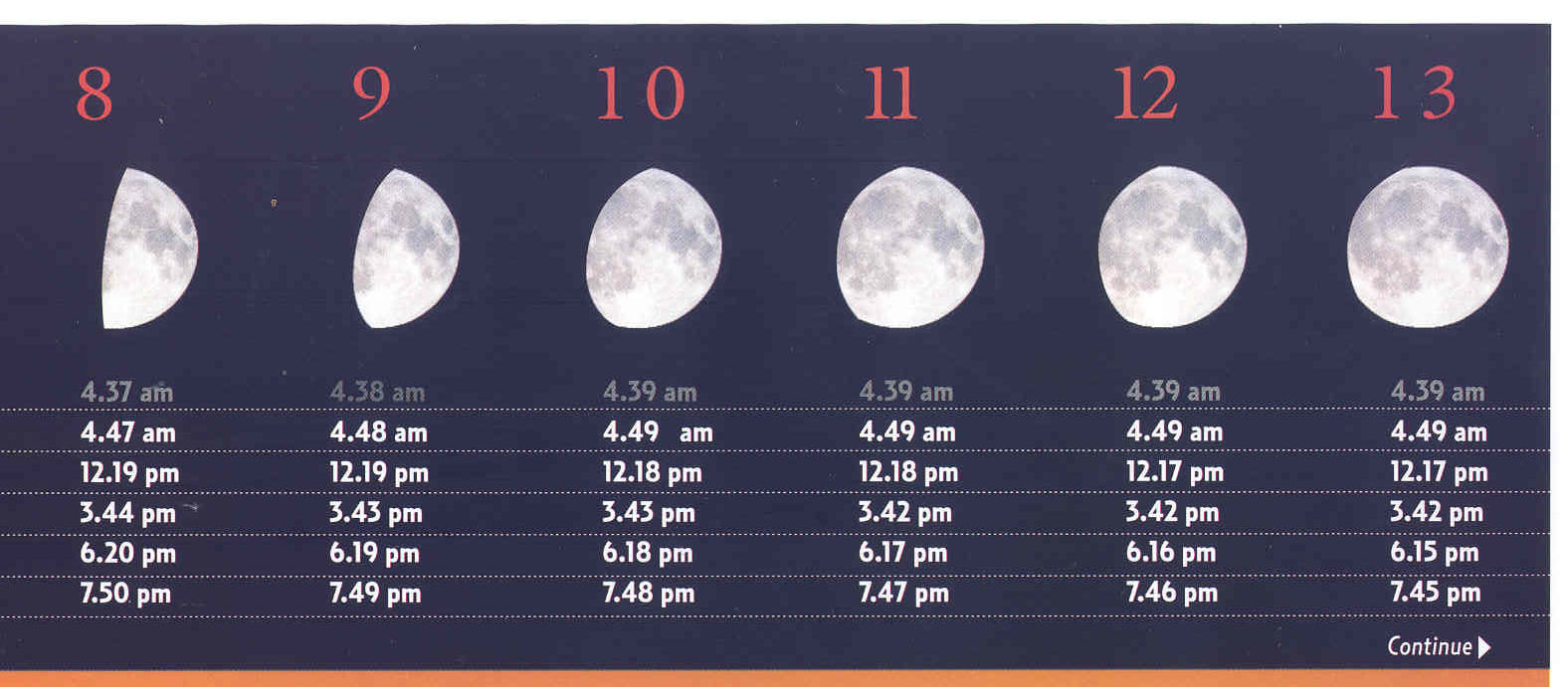
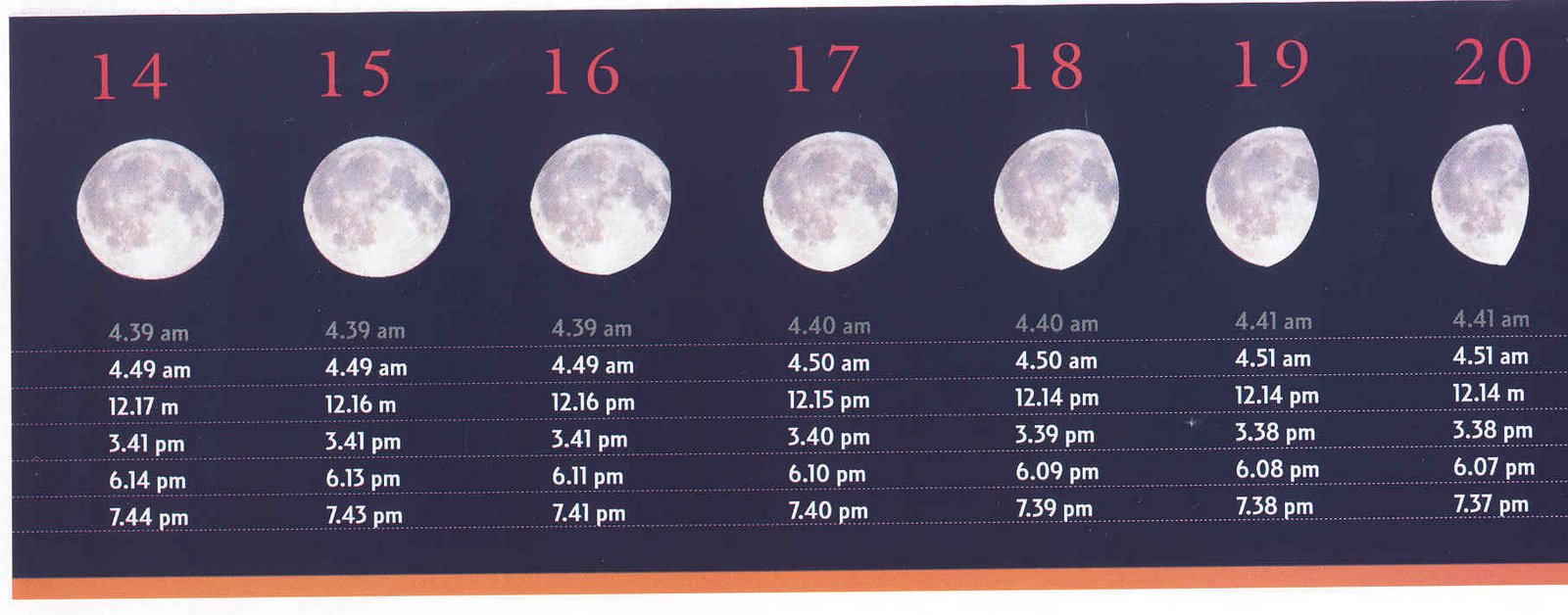
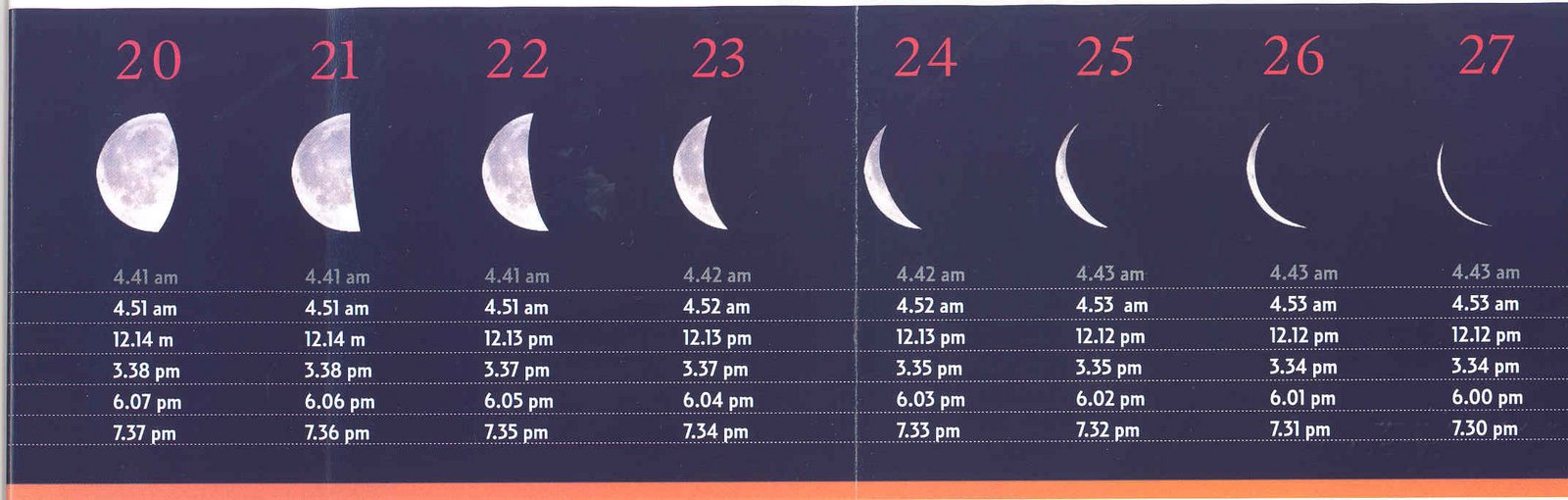
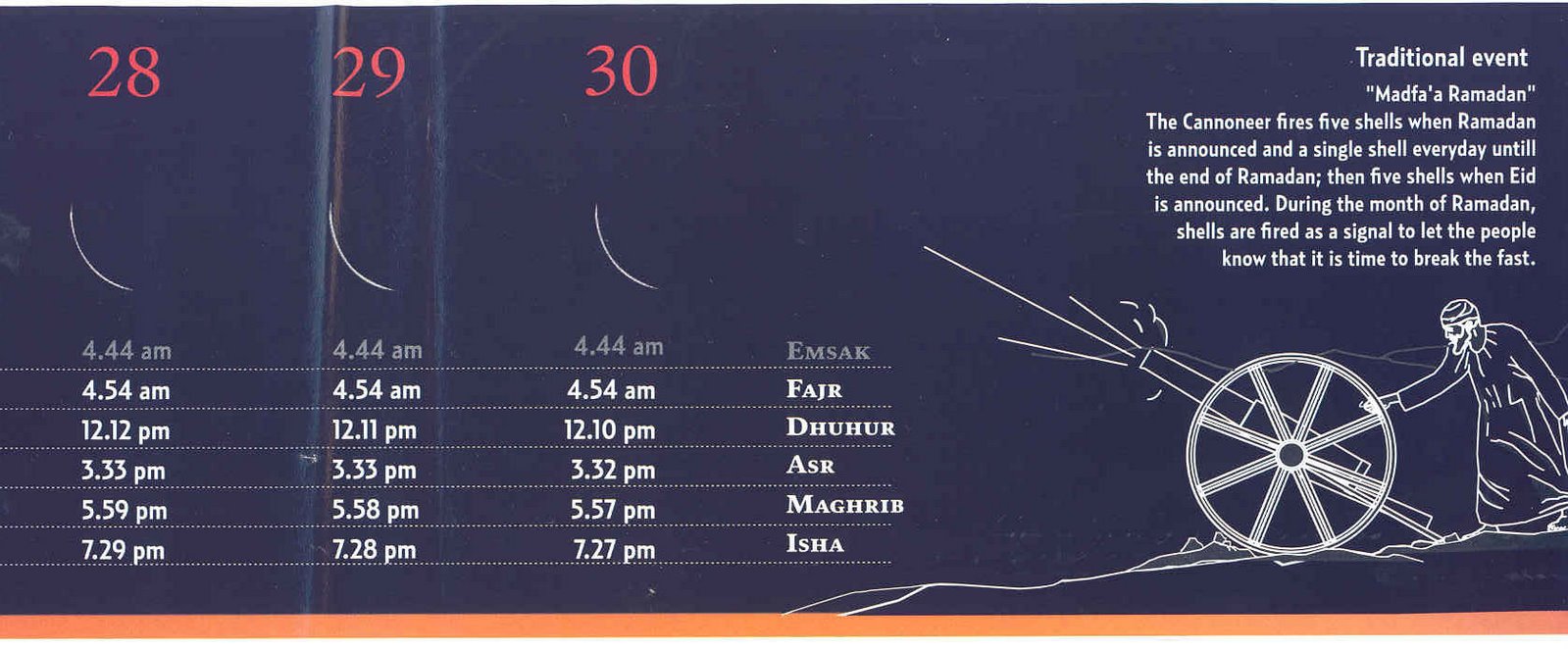
Five Pillars of Islam
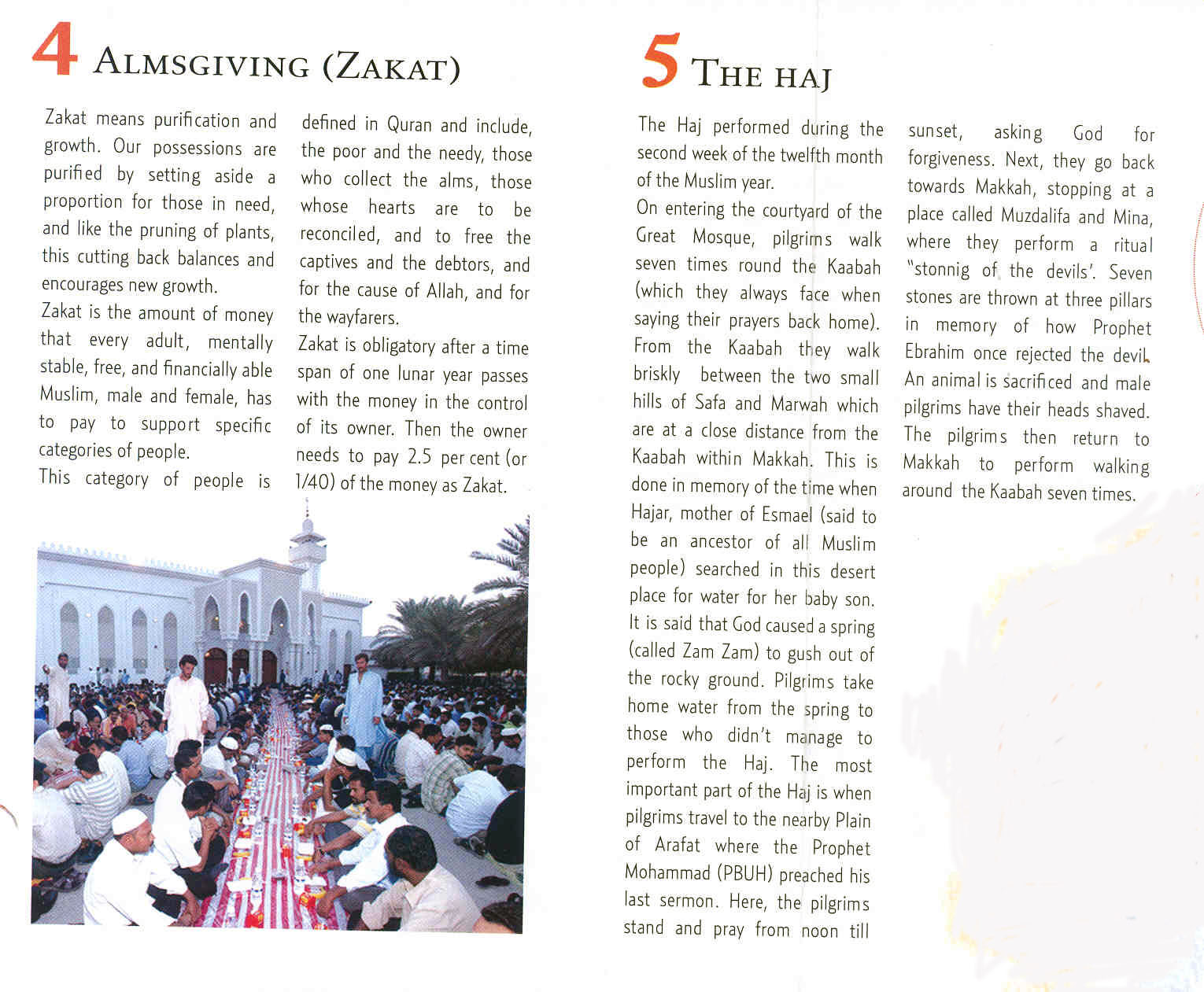
There are five formal acts of worship which help strengthen a Muslim’s faith and obedience, which are call the “Five Pillars of Islam.” They are, testimony of faith (Shahada), prayer (salah), fasting (sawm), almsgiving (zakat) and pilgrimage (Haj). Testimony of faith is to delcare there is no god but Allah, and Mohammad is the messenger of Allah. Prayer, as a Muslim prays five times a day. Fasting is one month of daytime fasting every year. Almsgiving is when Muslims give a small percentage of their annual savings as charity. Pilgrimage is when worshippers make their way to Makkah.


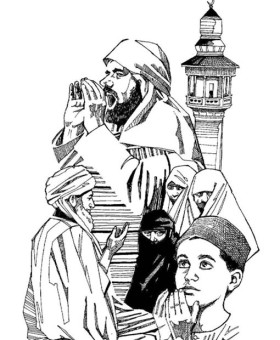
Why we fast in Islam
Why we fast in Islam
By Najla Al Awadhi, Special to Gulf News Published: September 12, 2007, 23:38
You mean you can’t even drink water?” a friend asked me this question with a bewildered look on her face, she couldn’t believe that fasting during the month of Ramadan meant I would not drink or eat from sunrise to sunset for an entire month.
As my friend stood there looking bewildered, I thought, is it really that hard to believe that Muslims refrain from food and drink during the fast? We fast the whole day knowing that we will be ending our fast with the setting of the sun, and in the context of a world where many live in poverty, where hunger and thirst for many become a way of life, our fasting really is a simple duty. This is the spirit of Ramadan, it is about understanding the feeling of hunger, it is about building empathy, self-restraint and piousness.
For myself, and for all devout Muslims, Ramadan holds such deep teachings; it is not a month about food, or about socialising in the evenings in Ramadan tents, or watching Ramadan shows on TV, Ramadan is about learning compassion, it’s about “cultivating our piety”.
What is Ramadan?
Ramadan is the ninth month of the Islamic lunar calendar (hijri calendar), we consider it to be the most holy and spiritually-beneficial month of the Islamic year. Ramadan is the month when the first verses of the holy Quran were revealed.
Fasting in the month of Ramadan is one of the five pillars of Islam, and all Muslims who are mentally and physically able and that have reached puberty are required to fast during this month.
Those who are sick, travelling, pregnant, menstruating or nursing women, are not required to fast, however, those who are unable to fast for these reasons must make up the days they missed fasting upon recovery or return, or after weaning.
In the month of Ramadan, we begin the fast with the sunrise and end the fast with the sunset, or with the fourth Muslim prayer of the day (maghrib prayer). The fast is ended each evening with a meal called iftar and the last meal we have is in the morning right before dawn which is called suhur.
Spiritual experience
The fast of Ramadan is not about physical deprivation, it is meant to be deeply spiritual experience. In the holy Quran it is stated that the purpose of the fast is to develop a quality which in Arabic we call taqwa.
Taqwa can be defined as, “worshipping God as if you see Him, because if you don’t, He sees you”. Taqwa is about cultivating an awareness that God is always watching. For example, when I fast nobody but God knows if I actually have observed the entire fast or if I secretly cheated. So in order to resist the temptation to cheat during the fast, I must remember that God is always watching and will see any lapse.
This sense of taqwa is carried over into other areas of our lives, hence by fasting we foster a habit of piousness, self-restraint, and an inner-balance. For devout Muslims Ramadan is a month of worship; prayer and recitation of the Quran during this month are pivotal, and it is common practice during this month to provide food/iftar to others especially the poor on a daily basis.
Today is the first day of Ramadan and over a billion people will be observing the fast during this holy month.
Whether you will be fasting or not, I hope that the lessons that Ramadan teaches of taqwa, compassion, piousness and charity will remain with you, and not just during this holy month, but I hope that you will carry these lessons with you every day of your life.
Najla Al Awadhi is a member of the UAE parliament (the Federal National Council), Deputy CEO Dubai Media Incorporated, and General Manager of Dubai One TV.
DNRD will work all day during Ramadan
DNRD will work all day during Ramadan
By Mary Nammour / KHALEEJ TIMES 13 September 2007
DUBAI — The working hours of the Dubai Naturalisation and Residency Department (DNRD) during the holy month of Ramadan will be from 9am to 5.30pm while the Follow-up and Investigation Section (FIS) in Jumeirah will receive amnesty seekers from 9am to 2pm and from 9pm to 2am daily. This was announced yesterday by DNRD Director Brigadier Mohammed Ahmed Al Marri.
“Our new work timings have been fixed to cope up with the potential rush that might come up as a result of the shorter working hours during Ramadan. We also want to make sure that processing the applications of amnesty seekers will continue to be as smooth as possible,” Brig Al Marri said.
“DNRD staff will also be working from 9am to 5.30pm at the external branches, including the passport sections at the Jebel Ali Free Zone and the Naturalization and Residency Sections at Bin Souqat Shopping Centre, Abu Hail and Dnata,” he added.
He also noted that the new timings would be applicable to the customer service departments, including the Entry Permit for work, visit and tourist visas, the Residence Sections, the Naturalization and Passport Section, the Establishments Sections, online services and the e-gate for both individuals and establishments.
Visitors found working will face ban for life
Visitors found working will face ban for life
By Ahmed Abdul Aziz and Lana Mahdi/ KHALEEJ TIMES 13 September 2007
ABU DHABI — Expatriates who entered the country on visit visas and are found working in companies will face a life ban, Assistant Under-Secretary in the Ministry of Labour (MoL) Obaid Rashid Al Zahmi stated yesterday.
“The ministry is studying imposing punishments on violators of labour rules and finally decided that visit visa holders, if found working in the country, will face a life ban,” explained Al Zahmi.
The decision was taken after MoL inspectors found that people on visit visas were still working in the country.
During the inspection campaign, which began immediately after the amnesty period ended on September 2, the inspectors found more than 250
companies violating the law by employing visit visa holders.
Al Zahmi pointed out that the companies must abide by the law when they need to import manpower.
“They must apply for the renewable temporary work permit of three-month validity, or get employment visa,” he added. This will protect the labourers’ rights because if they work on a visit visa they cannot demand their dues and rights.
The workers who come on employment visa or temporary work permit can go to the MoL and demanding their rights, including cost of medical treatment in case of an accident.
In another important announcement yesterday, Al Zahmi said the ministry will from January 2008 stop issuing work permits to companies which do not open bank accounts for their employees.
Opening of bank accounts for workers is being made compulsory to ensure protection of workers’ rights, he added.
Meanwhile, the Deputy Director of Naturalisation and Residency Department in Al Ain, Col. Nasir Al Awady Al Minhaly, said that during Ramadan the department will work in two shifts from 9.00am to 2.00pm and 2.00pm to 5.00pm.
 ClicksandWrites
You must be logged in to post a comment.