Congrats – Team India
Congratulations to Team India for a fantastic win over Australia. Dhoni opted for Plan B instead of my Plan A. Yuvraj Singh was focussed, elegant and ustoppable, Dhoni and Rohit Sharma batted aggressively and all bowlers kept their cool and victory was ours. Hats of to you Joginder Sharma – now we want to see your batting and in you we have a new Mohinder Amarnath. Australia did not fit into the Twenty20 scheme of things. Now, India – Pakistan final. No comments on it. Just watch it.
Ramesh Menon
23092007


Mind Speaks – Playing in the mind
Playing in the mind
Watching Yuvraj Singh’s game in the match against New Zeland on 14th September 2007, I was thinking whether his relocation from Punjab to Delhi made him a docile person or not. Within 2 days, on 16th September he proved my temporary assumptions wrong and justified my faith in the belief that many time we win matches in the mindset we keep. Those 6 sixes which Yuvraj hit of England Bowler Stuart Broad were all against quality bowling from one of the best in the game today. Broad and England captain Paul Collinwood did not have any clue where to bowl and what to do. Yuvraj is a player of class, style, aggression and power in his shots. With added advantage of his height, it is always a beauty to watch him play his shots when he is focussed. It was one such day and it was obvious that Yuvraj Sing’s pride was hurt when he was hit for 30 runs in one of the matches in England which finished recently and he was nurturing his revenge and playing and practising his shots in his mind all these days. Stuart Broad happened to be the unfortunate victim to taste and transform this practise session in to a reality.
It is not only in cricket this form of preparation, calculation and background work happens. It happens in all management field. Practising the art of visualising the scenarios and improvising our action and reaction time to any particular events that happens or can happen in life, will make a person ready to respond to any eventualities in day to day life. Even in case of death, after a certain age according to me, there should be some level of preparedness to be done, so that those close ones should never be wandering and wondering of our activities and shortfalls. In reality, I know and have heard of a visionary who carried a special note of instructions, some money along with some other contact details in his handbag, in case something unfortunate happen to him somewhere. At all stages, there should be a Plan A, and Plan B, and Plan C, and if all goes wrong a special plan X, which is filled with pure common sense.
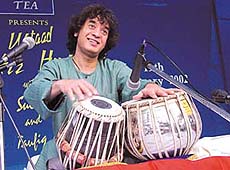
Being a Tabala enthusiast myself, I remember attending a post-performance gathering some 12 years ago by the legend Tabala player Ustad Zakir Hussain. When asked by reporters about how many hours he practise every day and how he finds time to practise even during his hectic jet setting life style, Ustad Zakir Hussain answered, by taking a small box lying down on his table, and said, “I practise all the time, every time and everywhere”. His hands were tapping on the box gently and he continued, “I play in my mind and find the rhythm composition and the placement variation within, for each of the special notes I play and I continuously practise and improvise them whenever I get an opportunity, even if it is by playing on a piece of wood or tissue box. I create a feel and then when I get to sit for real practise or performance, the natural variations will come automatically”. This was a spark of an idea for someone like me who was listening to each of the letters he spoke.
I never had an opportunity to learn Tabala till then. However, during my schooling days, my parents were kind enough to send me to a master to learn mridangam, which I used to play during the school college days initially out of force or for getting points in the arts festival for my team, and which later on developed as an interest. After college, I never got a chance to continue this form of creative talent. Additionally, there was no such venue here in the Middle East where they used mridangam for any musical events. I was stuck and after getting inspired by Ustad’s speech, I went and bought a set of Tabala and started practising on it. The nature of my job and its long hours, non-availability of an exponent to teach the intricate complexities of this form of performing art, made things much difficult in the initial days However, I did not leave the ambition there. I started listening to songs and music much more carefully, and whenever opportunity knocked, I met people who played the instrument, got to know the hand and finger placement, the initial basics required to play with a flow. Rest everything happened in the mind while driving around listening to music during my hectic life schedule. In a year or two, I was playing well and even for long hours of music for satsangs.
This again, I was able to do it, because I was given a chance by my loving parents to learn a musical instrument when I was young and thus creating an unknown (at that time) flare for an extra curricular talent in me, which became a useful tool later on in the life as a stress reliever.
How many of us have the time or patience or kindness to pass on the same to our children? Recently, I was remembering those formative days when my friend send me an invitation for his daughters dance performance. Participation in any such team events will give children a feel of what he/she can expect in different situations and will give him sufficient boldness and courage to face realities of life and opt for Plan A, B or C according to the situation. It will be his/her initial step in life to realise how team building and team work and the value of these two in day to day life. It is our duty to create an opportunity for our children to grow along and progress in all fields of life. Let it be music, performing art, or in the playground playing cricket, hockey or soccer, a child has to have multiple talents other than education from the school books and TV/Internet media which he/she is exposed to much more than we anticipate.
Coming back to Twenty20 cricket, I am very happy to see Indian team on a winning note and equally or more happy to see Mahendra Singh Dhoni’s inspiring captaincy during the 1st half when India was batting against South Africa and 2nd half of the match, when South Africa were batted. He lead from the front with determination and scored valuable runs. However, it was his move to give the wicket keeping gloves to Dinesh Karthik that made the big difference that finally ended the team on a winning note. How many of us get to get someone like Dinesh Karthik, to delegate and give a very important role to play with success as he did for Dhoni by effecting many dismissals on the field? Although, there were many extras, I felt the Indian Bowlers did an excellent job, especially R P Singh, Harbhajan and Sreesanth. R P Singh was clinically critical in the win against South Africa today. If the Indian team continue their focus and determination and game plan in the same way they played till now, I am sure, they will play well against Australia, who seems to be lost in thoughts of the Twenty20 scheme of things even though happened to win convincingly against Sri Lanka today.
So, the D-day has come and we are playing semi-finals of an important World Cup match today. I really do not want to promote cricket, but this shorter version is getting in to my scheme of things, as do many others, because of the simple reason that the match gets over just the same time as that of a football match, and there is excitement and surprise factor plenty in store. Being sensitively attached to Sreesanth and his intelligence and willingness to listen (happy to see him coming out of the Sreesanth Syndrome), I sincerely wish him to bowl just 24 unbelievable/un-playable balls of his life today. As do RP Singh and Irfan Pathan. If these 3 main bowlers hits form, line, length and accuracy, we will have a match in hand against Australia. After his game with Srilanka, in which they beat the Sri Lankans convincingly, Rickey Ponting mentioned that they still have not come to terms with this form of cricket. He is not playing today and it is an added advantage and it is up to us to capitalise this golden opportunity. Go with plenty of Fevicol in hands and hold on to all the catches that comes to us, and whenever required, remove the same glue and throw at the wickets the same way we break the glasses of our public transport, Indian team will win. My team for today will be as follows:
Virendar Shewag, Gautam Ghambir, Robin Uthappa, Rohit Sharma, Yuvraj Singh, Mahendra Singh Dhoni, Dinesh Karthik, Irfan Pathan, S Sreesanth, RP Singh and Harbhajan Singh. I leave out Joginder Sharma, who although bowled well was unlucky with wickets on both occasions he played and prefer India keeps Karthik in the playing eleven, where, if required Shewag, Rohit Sharma and Yuvraj can give a go at the stumps. My option if we win the toss is – we bowl first. In a few hours we will know what happens. Good to see that.
All the FM stations and regional TV channels here are playing the song Chak De India repeatedly, so much so that even my Arabic and French colleagues know the lines in full. After all, it is champion teams win matches that count. Today is one such day and we all wish Team India to win. Keep going and let the flag fly high.
GOD BLESS AND HAVE A GREAT WEEKEND.
Ramesh Menon
22092007
Abu Dhabi to Durban, Sharma on a roll
Abu Dhabi to Durban, Sharma on a roll
By K.R. Nayar, Staff Reporter GULF NEWS Published: September 21, 2007, 23:15
Dubai: Abu Dhabi was the launching pad for India’s latest hero who knocked out South Africa from the Twenty20 World Championship on Thursday.
Rohit Sharma, representing India ‘A’, had cracked a 56 against UAE and a sparkling 62 against Pakistan at the Zayed Cricket Stadium to walk away with the Best Batsman award.
It were these knocks that fetched him a place among the probables for the Champions Trophy and later won him a place in the Indian team for the tour of Ireland in June 2007.
Speaking about Sharma’s superb knock in Abu Dhabi, UAE wicketkeeper Abdul Rahman said: “Sharma exhibited his fine talent during his knock against us for the India ‘A’ team. I found him the most talented batsman among the youngsters that played for India ‘A’ in the match.”
Incidentally, it was Rahman who caught him off the bowling of Zahid Shah for 56.
“Sharma possessed lovely drives. His on-drives were a treat to watch. It was evident that he would soon make it to the Indian senior team,” added Rahman.
Stunning knock
On Thursday, in Durban, Sharma stunned the South Africans with a 50 off 40 balls with 7 fours and 2 sixes. He also brilliantly ran out Justin Kemp to walk away with the Man-of-the-Match award.
Speaking to Gulf News in November 2006, Kiran More, the former Indian selector, had said: “Sharma is one of the finest batsmen in the country today and will soon clinch a top spot in Indian batting line-up.”
Sharma, though born in Nagpur, lives in Borivli, a Mumbai suburb. He is a product of tennis ball cricket who went on to play for the Mumbai under-14 and under-17 teams, before making it to the Indian under-19 and India ‘A’ teams.
Sharma is also considered as a specialist batsman for the Twenty20 format. He became the first Indian batsman to hit a century in this shortest version of the game.
In the first ever official Twenty20 match played at the Brabourne Stadium in Mumbai, between Mumbai and Gujarat, Sharma had cracked an unbeaten 101.
Many Dimensions Of Heartfelt Satsang
Many Dimensions Of Heartfelt Satsang
21 Sep 2007, 0000 hrs IST,Aruna Jethwani for TIMES OF INDIA
A friend going through depression was advised by her family physician to join satsang. She flared up: “Why satsang?” The physician thought for a moment and said: “Because satsang will give you a community. It will give you a sense of belonging. Two, it will draw you out of your limited self and will help you bond with your higher self”.
Satsang helps build up a magnetic centre of spiritual life; from such a centre flows energy which purifies and stabilises our emotions. Traditionally satsang is associated with the singing of Naam kirtan, invoking the Supreme. This is only one aspect. Satsang has many dimen-sions. It may mean a gathering of like-minded people who pray together or discuss and debate issues which are of concern to humanity. Just as any good work is worship, similarly fruitful exchange of ideas which would benefit self and society is also satsang.
In a deeper sense, satsang is fellowship with an evolved person. The presence of a holy person purifies emotions and rejuvenates body, mind and spirit. It spreads ‘pure energy’ which gives a sense of well-being as it washes away our mundane worries for a while. It is for these reasons that life management courses prescribe satsang, that is, group prayer or singing. Such kirtans divert negative energy, producing circles of positivism which have multiplier and cascading effects. Such gatherings purify the gross physical and help to heal body and mind as well. Little wonder the youth of today find comfort in chanting for peace or good health or just invoke higher energies for themselves.
Satsang of the Naam kirtan type can be a higher mystical and spiritual experience. Recounting his personal experiences Sadhu Vaswani writes, “Our Calcutta Satsang was vibrant. It commenced with recitation of holy verses and readings from scriptures followed by bhajans, and culminating in kirtan. The kirtan awakened the souls of many… Some became ecstatic, others fell into a swoon. This happened so often that my Gurudev had to appoint some of us to pick up those devotees who were in an unconscious state and reach them home safely.”
During those times, Calcutta used to have long processions. Devotees of Chaitanya Maha-prabhu, particularly, took out a procession, chanting Haribol, Haribol and in that Masti of Mantra, they went into ecstasy that reached a crescendo of a higher kind. Speaking of his own intoxication, Sadhu Vaswani further says, “On more than one occasion I was so intoxicated with the mantra that I fell in a state of unconscious-ness. Even in that delirious state, I would continue to chant Haribol, and would fall down on the ground. The devotees would pick me up and reach me home. When I woke up, many hours later, I would ask, where am I?”
Such mystical and spiritual experiences are rare. But it goes without saying that satsang relieves us of latent mental burdens; it creates positive patterns; it roots us to our own real self; it takes away our frustrations, it provides a surface for interaction; and above all satsang generates pure energies which purify us. With so many benefits, it is worthwhile to participate in chanting groups, Reiki healing, Gita groups, Interfaith lunches, Peace prayers, and enjoy the vigour, enthusiasm and energy of positive living.
As You Breathe, So Shall You Live
As You Breathe, So Shall You Live18 Sep 2007, 0001 hrs IST,Linesh Sheth for TIMES OF INDIA
The simplest way to build a harmonious relationship with life is to develop a loving, joyful and a friendly relationship with your breath. Understand your breath, its ways of working and develop a friendly relationship with it. Breath is the carrier of vital life force within us that makes our body-mind organisation function and survive.
If you look at breath as life itself, your landscape will change. The love, sanctity and value you give to this great spontaneous phenomenon called ‘breathing’ will tend to completely change the way you breathe. Then if you breathe slowly, just 20 times with a smile, your eyes closed, you will experience deep within a feeling of joy in all those organs where you perceive the smooth touch of breath.
When you look at your breath as if it were your constant and unfailing friend, that quality of relationship brings about a profound change in any breathing method you practise. You will soon realise that the way you breathe, is the way you live. This is how complex life turns simple.
Eight factors that change your relationship to life with reference to the way you breathe are: the flow of breath you allow in your body, the pace with which you breathe, the rhythm you follow, the number of times you breathe or frequency of breath, body posture you hold while breathing, vibrations you produce, the attention and serenity with which you breathe, and finally, your sensitivity to experience the touch of breath in every organ it touches as you breathe.
The way you learn to synchronise all these aspects into one compact process of breathing is what will change your relationship with your body and mind. It is simply profound as well as profoundly simple.
You will begin to like yourself as you feel the pleasing, calming sensation deep breath brings about. You will experience a deep sense of undisturbed peace within. When you pay attention to the beauty with which life rests within you, for the first time, you will experience what it is to feel alive.
Our relationship with breath tends to be simple, direct and proportionate. So if you breathe slowly and attentively you feel the touch of breath as you breathe in and out. You will experience a deep sense of peace.
If you breathe with great satisfaction, you will feel the grace of life. When you breathe selectively into each of your organs like kidneys, intestines, heart or head and feel the touch of breath, you will experience great healing. How many times you breathe and how regularly you do it directly decides the proportion of well being you will feel.
If you think of life as a great struggle, or the world as a battlefield where you have to compete with and overcome others, you will turn yourself into a warrior who has no room for peace or reconciliation in life. Then if you seek freedom or happiness, you will look for it beyond this life, not while you are living. The world that appears outside you is in fact a reflection, a mirror image, of how you feel within.
A simple way of changing the way you feel is to learn how to change your relationship with life in your daily half-hour breathing session. You will soon experience that as you breathe, so shall you live.
Abu Dhabi plans big

Abu Dhabi plans big
By Saifur Rahman, Business News Editor GULF NEWS Published: September 21, 2007, 00:17
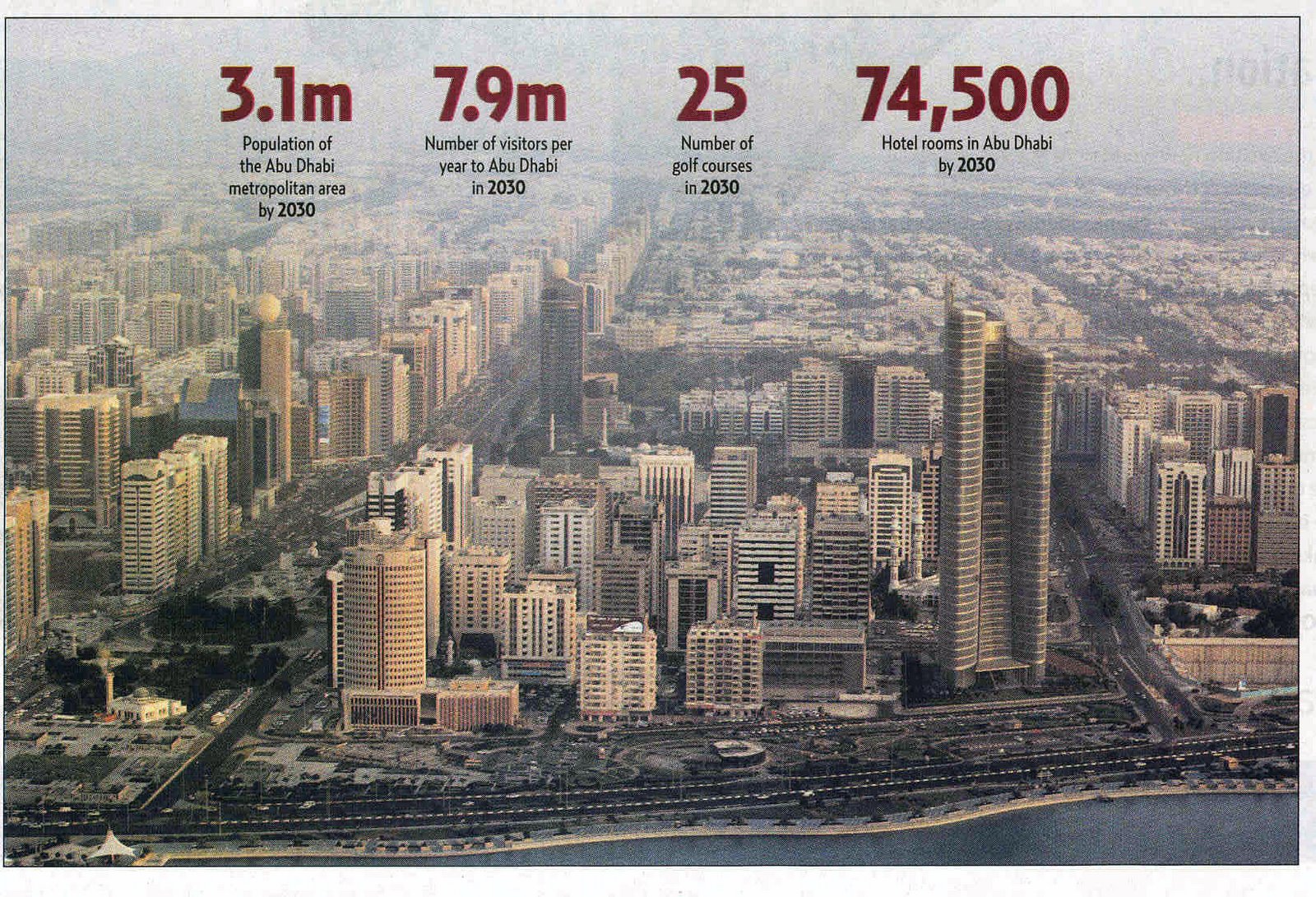
Abu Dhabi: Abu Dhabi’s urban vision for 2030, announced on Wednesday, comes at a very appropriate time when the oil-rich emirate, which occupies nearly 85 per cent of the UAE, prepares for a massive surge in economic activities as part of its diversification plan.
The Urban Structure Framework Plan 2030 has been devised to cater to the needs of a structured growth agenda for the city’s expanding urban landscape and offer a balanced diet to its economy as well as its environment. More than Dh600 billion worth of development works are already at various stages of completion in Abu Dhabi, which has 96 billion barrels of proven oil reserves – enough for a 100-year supply at current production rate. The emirate also hosts three cities.
The Dh55-billion Al Raha Beach Development, Dh100-billion Saadiyat Islands, the Dh30-billion Reem Island and the Dh40-billion Yas Island projects are some of the master developments taking shape in the emirate. Along with these, a large investment in downstream petrochemical sector, industries, aviation and tourism – Dh25 billion in redevelopment of Abu Dhabi International Airport and Dh30 billion in Etihad Airways – are all part of a larger plan to transform Abu Dhabi into an economic powerhouse in the Middle East.
The plan also envisages an additional Dh600 billion investment in projects that will more than triple the size of Abu Dhabi’s economy and quadruple some sectors.
Once ready, they will attract new residents, tourists and businesses. But the UAE capital might become a victim of its own success with heavy traffic and inflationary pressures taking their toll on the public.
Abu Dhabi residents will begin to see the fruits of the ongoing projects from around 2010, when public facilities such as transportation, housing, recreational facilities, education and healthcare, will be in high demand. Provisions for these facilities is needed to be built-in within the urban development plan.
The public facilities in Abu Dhabi could be adequate for today, but not for tomorrow. That’s why, the plan is significant. From now, all development activities will be structured in line with the broad vision that will help the UAE capital achieve a much-needed balanced growth.









 ClicksandWrites
You must be logged in to post a comment.