Opec likely to deny Bush plea for more supply
Opec likely to deny Bush plea for more supply
Bloomberg Published: January 29, 2008, 23:39
London: The Organisation of Petroleum Exporting Countries (Opec), the producer of more than 40 per cent of the world’s oil, may reject US president George W. Bush’s request to increase production and relieve the strain of rising energy costs.
Opec will keep its output target unchanged at 29.67 million barrels a day when it meets in Vienna on February 1, according to 29 of 32 analysts surveyed between January 24 and 28 by Bloomberg News. Ministers from Qatar, the UAE and Iraq said last week that more oil isn’t needed. Bush asked producers to pump more crude during a visit to Saudi Arabia.
Oil fell 5.3 per cent to $90.90 a barrel this month, and the 13-nation group wants to prevent a further decline, the analysts said. A slowdown in the US, the world’s biggest energy consumer, risks curbing demand for fuel as the end of winter in the Northern Hemisphere reduces consumption. “Opec would be shooting themselves in the foot if they increased supply,” Michael Davies, head of research at Sucden (UK) Ltd in London, said.
Recession fears
Goldman Sachs Group Inc. and Merrill Lynch & Co. predict deteriorating growth in the US will spread to other nations. Japan, the world’s third-largest oil consumer, has probably entered a recession already, Goldman’s chief Japan economist, Tetsufumi Yamakawa, said.
The US dollar, used by Opec to price oil sales, weakened 12 per cent against the euro during 2007, eroding Opec’s purchasing power. There’s “no need for additional barrels,” Hossein Kazempour Ardebili, the Opec governor for Iran said.
“There’s a 60 per cent chance they’ll increase production as the US is putting pressure on Saudi Arabia,” Hannes Loacker, an analyst at Raiffeisen Zentralbank Oesterriech in Vienna, said. “If Opec does increase, prices could come down into the $80s.”
“Opec is happy with the price above $80, and they clearly want to stop it going below $80,” said Johannes Benigni, managing director of PVM Oil Associates in Vienna.
Forecast: Output may be cut
Opec may cut its oil output in March if stockpiles increase and demand dwindles, the Wall Street Journal said, citing unidentified ministers and officials.
The 13-member group may have a tough time this year deciding whether to boost or decrease production, the newspaper said. A US recession could curb the growth in global demand, yet China and the Middle East are still using more oil, the Journal said.



Dr. Kamala Shankar, the inventor of the shankar-guitar
Dr. Kamala Shankar, the inventor of the shankar-guitar, plays Raga Yaman (vilambit gat and jhala) with Shri Pundlik Bhagwat on tabla.
More about Dr. Kamala Shankar can be read by visiting:
‘Starving mothers may have addictive kids’
‘Starving mothers may have addictive kids’
Babies born to starving mothers may develop addictive disorders later in life, Dutch researchers said after examining men and women born during a period of famine.
A famine called “Hunger Winter” hit Netherlands during the winter of 1944-1945, near the end of World War II, in which over 20,000 people died.
Researchers from the Dutch mental healthcare organisation Bouman Geestelijke Gezondheidszorg (GGZ) and the Erasmus University in Rotterdam examined men and women born in Rotterdam between 1944 and 1947.
They found that children whose mothers had suffered severe food shortages and starvation during their early pregnancy were significantly more likely to be receiving treatment for addictive disorders, reported science portal Science Daily.
Modern brain research has shown that if the brain is not able to develop at normal rates while the child is in the womb, neuro-developmental abnormalities can occur that give rise to susceptibility to addiction.
“Exposure to famine beyond the first three months did not result in a higher risk of addiction, which supports the view that the first trimester is crucial in the development of the human brain that is involved in addictive behaviour,” lead researcher Ernst Franzek said.
Jog daily, increase life span
Jog daily, increase life span
Indo-Asian News Service
Daily jogging may help you stay biologically young and live nine more years than those who don’t jog, researchers in US have suggested.
A regular exercise is already known to provide several health benefits. Regular exercise also helps prevent heart disease, blood pressure, stroke, diabetes and depression.
In the new study researchers at King’s College London and in the US studied ageing in 2,401 twins and found that there was a difference of about nine years of ageing between those who exercised regularly and those who did not.
It happened even after considering other influences, including body mass index (BMI), smoking and socio-economic status (SES), according to the researchers, online edition of Daily Mail reported.
“The US guidelines recommend that 30 minutes of moderate-intensity physical activity at least five days a week can have significant health benefits” the study said.
“Our results underscore the vital importance of these guidelines. They show that adults who partake in regular physical activity are biologically younger than sedentary individuals,” lead researcher Lynn Cherkas said.
Benefits of jogging
It speeds up the digestive system and helps get rid of digestive trouble.
It counteracts depression.
In order to be an effective means to loose weight, the jogging sessions must be at least half an hour and be repeated fairly often.
Jogging makes you sleep better.
A formula for stress-free driving
A formula for stress-free driving
By Carole Spiers, Special to Gulf News Published: January 29, 2008, 00:22
For Dubai’s motorists, the New Year has not begun well. First, the unexpected visit from President Bush, bringing instant gridlock to a city still not mentally accepting of urban traffic crawl.
Then the equally unaccustomed sight of Shaikh Zayed and Emirates Roads partially flooded during exceptionally heavy rainfall. And then the UAE road-accident figures for 2007, one of the worst in the world – 829 deaths and more than 10,000 injuries – a most unwelcome symptom of increasing traffic jams and driver frustration, in this fast-expanding emirate.
To you, all of this may look like something new and unnatural on your horizon. To me, as a UK-based stress consultant, it is something depressingly familiar and inevitable. So perhaps this is the moment for me to offer you my little rule-of-thumb guide to stress management on the road. It takes the form of a simple acronym – S.A.F.E.
S is for SURE. Be sure of your vehicle, sure of your itinerary, and sure of your own fitness to drive. Stress builds up especially when you’re driving an unfamiliar vehicle, either new or borrowed. So take trouble to check all the features, especially those that you need in an emergency. And when someone else is having to familiarise themselves with new controls, don’t raise the tension by standing over them, expressing impatience.
A is for ACCEPTING. This is an underlying philosophy which takes the heat out of many potentially stressful situations at the wheel. It is to accept that you are not master of the road, and that your journey will always be influenced by conditions you can’t change. You can’t stop it raining. You can’t stop your children grumbling. You can’t speed up that traffic jam as you approach the bridge to cross the creek. So – don’t get excited or agitated – it will not get you there any faster.
F is for FOCUSED. A driver’s first duty is to concentrate on the road. Even under perfect conditions, mistakes can be made. So when the car is full of distractions like music, quiz-games or long-running arguments with the children, driving errors can happen. Equally, the sheer familiarity of the same daily route may cause loss of concentration. To stay focused, try to make a habit of ignoring distractions, and make sure you’re properly nourished and exercised and take breaks on long journeys.
E is for EGO-FREE. Your car reflects your ego, and this lies behind many reckless actions on the road – trying to live up to that macho image, and wanting to hit back at any insults to your dignity or driving skills. Ego can be a major stressor, and you will do better to practise remaining calm and not rising to challenges that can spiral into fatal accidents.
Four little letters that may keep you safe by helping to set up the right kind of atmosphere in your car, as you learn to combat the growing pressures of driving in Dubai.
Good luck!
Key points: Safe drive
Dubai’s traffic congestion and high accident rate is predictable.
Constant pressure on the road leads to harmful stress for drivers.
Be Sure, Accepting, Focused and Ego-free.
– The writer is a BBC broadcaster and motivational speaker, with 20 years’ experience as CEO of Carole Spiers Group, an international stress consultancy based in London.
Special number plate to be exhibited at Abu Dhabi private motor show
Special number plate to be exhibited at Abu Dhabi private motor show
By Binsal Abdul Kader, Staff Reporter GULF NEWS
Abu Dhabi: Vehicle plate number 1, which is expected to set a record as the most expensive, will be exhibited at an exclusive private motor show next week, an official told Gulf News.
The world’s top 30 most luxurious supercars will be displayed at Abu Dhabi’s Emirates Palace from February 2-4, and it will be best venue to showcase the prestigious number plate, said Abdullah Mattar, Managing Director of Emirates Auction, which jointly organises the number plate auction with Abu Dhabi Police.
The exclusive automotive event held under the patronage of Shaikh Zayed Bin Hamdan Bin Zayed Al Nahyan will present the latest trends and inventions.
Plate “1” is expected to set a new Guinness world record for the most expensive plate when it goes under the hammer at the ‘Emirates Golden Auction’ on February 16, 2008 at 4 pm in Abu Dhabi.
Big expectations
It is only the third single-digit number plate to go on sale in Abu Dhabi, Mattar said, adding that Emirates Auction already holds the records for the six most expensive plates worldwide, followed by a Hong Kong plate in seventh place.
Plates “5” and “7” sold for Dh25.2 million and Dh11 million respectively. Both were snapped up by Abu Dhabi businessman Talal Ali Mohammad Khouri.
The expectations for Plate “1” are sky high,” Mattar said.
Raga Ratnam Junior – Jugal Bandhi Round
Raga Ratnam Junior is about to enter one of the most demanding aspects of this exciting competition. Scheduled for the next rounds will be what might be phrased as hard core Carnatic music. Within these upcoming rounds we will discover who the “pancharatnam” -the five diamonds- will be. If you have ever thought that Carnatic music was just for the older generation, these youngsters will change your mind in a heart beat.
Amrita TV is steadfastly pushing the envelope in its effort to find, nurture and develop talent in all fields of creativity and human interest. Raga Ratnam Junior exemplifies this effort by showcasing Carnatic musicians in the 10-15 years young age group. This programme is a first ever in the history of Malayalam televison.
From the original 15 we still have 9 talented performers left. But the competition is heating up. Watching the show is bound to expand the viewers knowledge of this unique music form by placing all us under the tutelage of veteran music maestros, V.Dakshinamurthy , K.L.Sreeram,Binni and Krishnakumar.
Raga Ratnam Junior is a perfect example of the channels commitment of providing exciting entertainment without compromising its commitment of honoring the values inherent in Malayalam culture. And its also were the action is!
Amal Shaju Jose
More to come, please continue to visit this section
Photo Speaks – Keeping clean
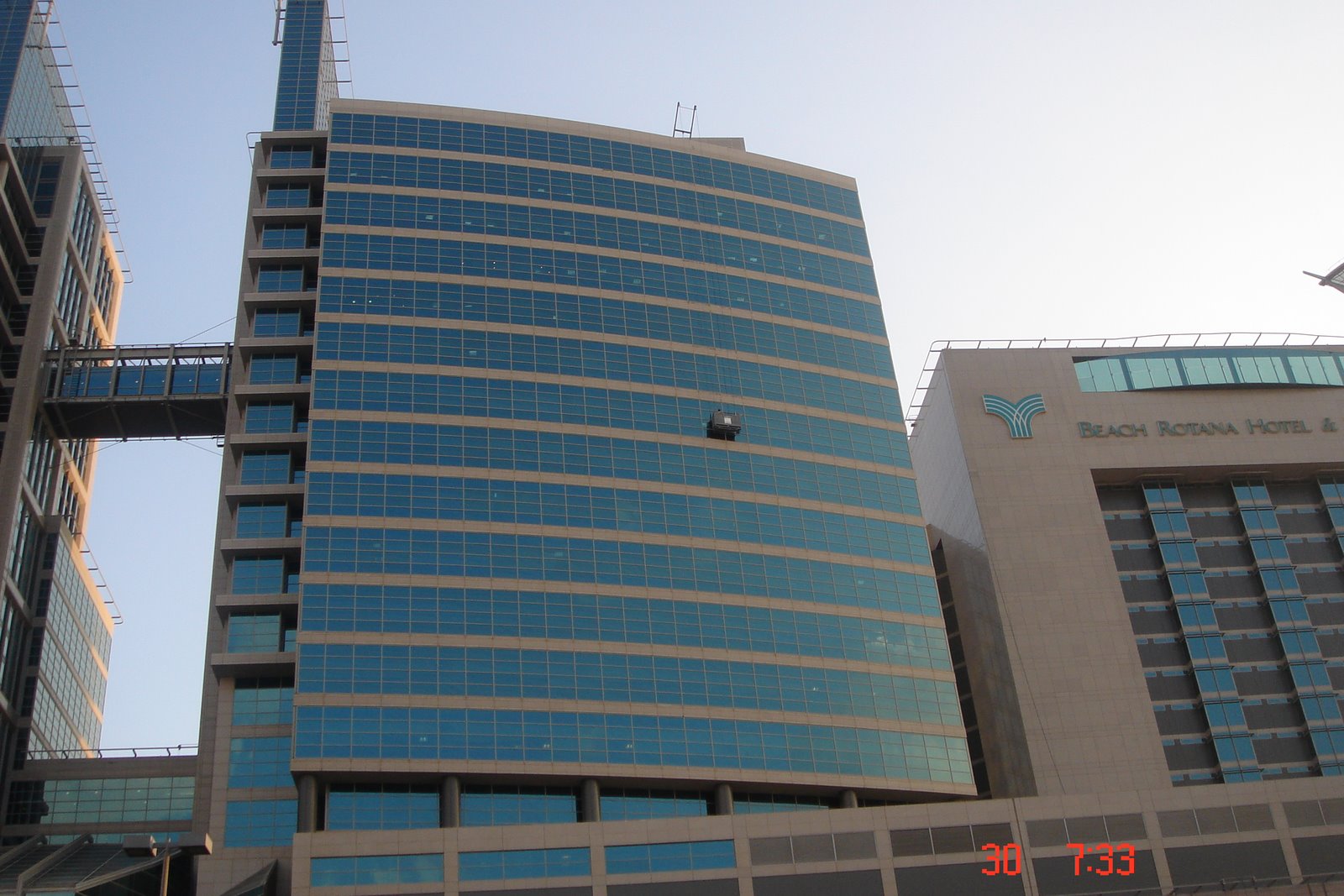
We all think our job is too difficult and only we have many problems in work and life. Just have a look at these workers who are keeping the mall neat and clean. And what about them? What do they say? And to whom?


 ClicksandWrites
You must be logged in to post a comment.