Woman hunts for Good Samaritan who saved her daughter’s life

Woman hunts for Good Samaritan who saved her daughter’s life
By Marten Youssef, Staff Reporter
Published: March 30, 2008, 17:12
Dubai: He stopped his car when he saw a screaming woman by the side of the road. She needed to get to hospital with her sick child urgently.
After helping them, the unknown stranger vanished. Now the woman is looking for her “angel”, as she calls him, to thank him properly.
Jyoti Rana from the Greens, a 34-year-old Canadian who came to Dubai two years ago, experienced a mother’s worst nightmare last Tuesday. Her two-year-old daughter, Sia, had an abnormally high fever.
“My sister-in-law and I decided to take her to hospital. We waited outside our house for a taxi. Two minutes later, I turned around and Sia had fallen flat on her face,” Jyoti said.
Sia turned pale and her lips turned blue. She was not responding to her mother’s calls.
Jyoti panicked, picked up her unconscious child and did what any mother would do. “I screamed for help. No one stopped. I picked her up and ran into the nearest hotel, but there was no-one. I sprinkled her face with water, but she still did not respond.”
After a security guard came to her aid, she was still feeling helpless. The security guards tried to stop several taxis, without success. One of them ran into the street and stopped the next car.
Without hesitation, Jyoti jumped into the car while trying to revive her child. “I wasn’t thinking straight. All I cared about was my child,” she said.
The anonymous driver asked her which hospital she wanted to go to and without any questions he drove to the Welcare Ambulatory Care Center.
“The drive usually takes 15 minutes from my house, but he did it in less than 6 minutes. All he said was, ‘it’s going to be OK.’ He kept repeating that.”
After admitting her daughter to the hospital, she was asked for Sia’s health card.
“That’s when I realised I left my purse in the man’s car. I looked down at the side of the bed and there was my purse, which meant he must have brought it in,” said Jyoti.
Sia recovered with doctor’s attention from a febrile seizure (fever fit).
“I want to find that man to thank him,” said Jyoti.
With very little memory of what the driver looked like, Jyoti recalls: “He could have been Indian or Arab. People told me he was driving a silver sedan. He must have been in his late 20s or early 30s. I cannot remember what he looked like at all, but I am hoping that he would read this and contact me. If it weren’t for him, Sia would probably not be here now,” she said.
If you know who the good samaritan is or if it was you yourself then fill in the form below, leaving your contact details and we will pass them on.
E-mail : Jyoti Rana can be contacted by email: jyoti@thebigball.org

RTA sets up a new agency to regulate driving licences
RTA sets up a new agency to regulate driving licences
By a staff reporter 30 March 2008 KHALEEJ TIMES
DUBAI — Shaikh Hamdan bin Mohammed bin Rashid Al Maktoum, Crown Prince of Dubai and Chairman of Dubai Executive Council, has ordered the setting up of the Licensing Agency within the Roads and Transport Authority (RTA). Ahmed Bahrouzyan will be the chief executive officer of the agency.
The Licensing Agency will be responsible for licensing driving institutes and centres as well as training instructors and inspectors of drivers and vehicles.
It will also be responsible for testing and licensing of drivers and vehicles along with endorsing the conditions and guidelines governing training of drivers.
The agency will regulate circulation of number plates and manage public auction of number plates.
Among the other tasks of the agency will be developing and updating database of drivers and vehicles, issuance of No Objection Certificates with respect to commercial and tourist activities related to transport, in addition to controlling the performance of driving institutes, vehicle testers and commercial activities of transport.
The CEO of Licensing Agency will oversee the administrative affairs of the agency, prepare a work plan of the agency together with its annual budget estimates for submission to the Chairman of the Board and Executive Director of the RTA.
The CEO will implement the approved annual plan of the agency, realise the targeted performance results, submit the periodical performance reports to the chairman and draft rules and regulations related to the business of the agency.
Mattar Al Tayer, Chairman of the Board and Executive Director of the RTA, pointed out that the aim of establishing an agency dedicated to licensing is to enhance the level of services rendered so as to win customer satisfaction. It also aims at educating and heightening the awareness of all types of road users.
The decision to establish the agency is also dictated by the increasing numbers of licensed drivers in the emirate. The number of driving licences issued last year reached 89,475. The number of registered vehicles was 848,357, of which 802,376 are light vehicles and 45,981 are heavy trucks
15 double-deckers to ply between Dubai and Sharjah from September
15 double-deckers to ply between Dubai and Sharjah from September
By Joy Sengupta (Our staff reporter)30 March 2008 KHALEEJ TIMES
DUBAI — A new fleet of double-decker buses would be transporting passengers between Dubai and Sharjah from September this year, the Roads and Transport Authority (RTA) has announced.
Abdullah Yousuf Al Ali, Director of the Public Buses Department at the Public Transport Agency in the RTA, said, “We will be starting with 15 double-decker buses in September this year. The number will be raised to a total of 70 in the coming months. With the number of passengers travelling between the two emirates fast increasing, these buses will be very helpful.”
Al Ali added that the buses would be linked with the control centre through the GPS system and people with special needs will be able to board the buses with their wheelchairs and also be able to move around in the bus.
The new buses will be equipped with the eco-friendly Euro IV engines.
“The service will help in the development and expansion of the bus network between Dubai and the rest of the country. The new buses will also strengthen the position of Dubai as a commercial and regional economic centre and a point of attraction for investors and businessmen from all over the world,” added Al Ali.

Jaaju Jaaju Stories – Birbal Catches A Thief
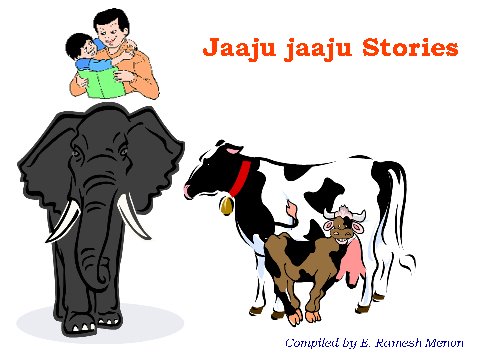
Jaaju Jaaju stories are bed time stories narrated by a loving father to his son each night before going to sleep. These stories are collected from various sources. Besides the little one (who loves to listen to the story and sleep with his head on his dad’s shoulder sucking his little thumb), there are three other characters who listen to this daily – they are Kesavan – the elephant, Chakki – the cow, and Sundari – it’s little daughter. Each night, the story is ended at some point, to give curiosity to the listeners and it is started the next night with a question answer session. Enjoy reading each day as it is posted and pass it on to your little loved ones.
Birbal Catches A Thief
Birbal was one of the nine gems in the court of emperor Akbar. He was respected by everyone for his intelligence and wit. Whenever Akbar was in difficulty, he called Birbal for help.
Akbar was very fond of jewellery. He had many rings of gold, pearls and diamonds. His favourite ring was the one with a large diamond at the centre and pearls around.
At the emperor’s palace, there were eight servants who looked after his clothes and jewellery. They also helped him get ready to go to the court. No one else was allowed to enter his room.
One day, the Emperor wanted to wear his favourite ring. But it was missing. Akbar ordered a search for the ring. But no one could find it.
Akbar then asked his men to call Birbal. When Birbal came, he told him about the robbery and asked for help. Birbal called all the eight servants who were in charge of the Emperor’s room.
He gave each of them a stick of the same size and asked them to come back with it the next day. He told them that the stick of the person who had stolen the ring would become longer by one inch that night.
The next morning, the eight servants stood in a line with their sticks. Birbal caught hold of one of them and took him to Akbar.
The man fell at Akbar’s feet and admitted that he had stolen the ring.
The king was surprised. He asked Birbal how he found out the culprit. Birbal said the thief had cut his stick by an inch fearing that it would grow.
This story is dedicated to all loving children
Why some engineers become terrorists
Why some engineers become terrorists
30 Mar 2008, 0000 hrs IST,Shashi Tharoor
An IIT graduate — so the story goes — is walking near a pond one day when a frog speaks to him. “Kiss me,” it says, “and i will turn into a beautiful princess.” The IITian does a double-take, turns back to check if he has heard right, and sure enough, the frog repeats itself: “Kiss me and i will turn into a beautiful princess.” He looks thoughtfully at the frog, picks it up and puts it into his pocket. A plaintive wail soon emerges: “Kiss me and i will turn into a beautiful princess.” He ignores it and walks on. Soon the frog asks, “Aren’t you going to kiss me?” The IIT guy stops, pulls the frog out of his pocket, and replies matter-of-factly: “I’m an engineer. I don’t have time for a girlfriend. But a talking frog is cool.”
No prizes for guessing what a literature graduate would have done in the same situation! Such is the self-image of the engineer in India: rational, hard-working, self-disciplined, steady, focused on the results of his work. Parents pray for the smartest of their kids to become engineers. Any child with better than average marks in science at school is pushed towards the profession, sustained by peer pressure that convinces him there could be no higher aspiration.
And no doubt for some there isn’t. But that clearly isn’t the whole story. Disturbing new research at Oxford University by sociologists Diego Gambetta and Steffen Hertog points to an intriguing — one might say worrying — correlation between engineering and terrorism.
If that doesn’t raise eyebrows at the IITs, nothing will. But consider the evidence: Osama bin Laden was a student of engineering. So were the star 9/11 kamikaze pilot Mohammed Atta, the alleged mastermind of that plot, Khalid Sheikh Mohammed, and their all-but-forgotten predecessor, the chief plotter of the 1993 World Trade Center bombing, Ramzi Yousef.
The Oxford scholars, after putting together educational biographies for some 300 known members of violent Islamist groups from 30 countries, concluded that a majority of these Islamist terrorists were not just highly educated, but a startling number of them are engineers. Indeed, according to Gambetta and Hertog, nearly half had studied engineering. A summary of their research in Foreign Policy magazine remarked that “across the Middle East and Southeast Asia, the share of engineers in violent Islamist groups was found to be at least nine times greater than what one might expect, given their proportion of the working male population.”
Is there something about engineering that makes its most proficient graduates vulnerable to the temptations of violent extremism? Gambetta and Hertog seem to think so. They have no patience for the more conventional possible explanation — that engineers might be sought after by terrorist groups for their technical expertise in making and blowing up things. Instead, they argue that the reason there are so many terrorist engineers is that the subject helps produce a mindset that makes one prone to radicalisation.
Engineers consider themselves problem solvers, and when the world seems to present a problem, they look to engineering-type solutions to solve it. Engineering, Gambetta and Hertog suggest, predisposes its votaries to absolute and non-negotiable principles, and therefore to fundamentalism; it is a short step from appreciating the predictable laws of engineering to following an ideology or a creed that is infused with its own immutable laws. It is easy for engineers to become radicalised, the researchers argue, because they are attracted by the “intellectually clean, unambiguous, and all-encompassing” solutions that both the laws of engineering and radical Islam provide. According to Gambetta and Hertog, surveys in Canada, Egypt, and the US have proved over the years that engineers tend to be more devout, and more politically conservative, than the rest of the population.
I’m not suggesting one should buy wholesale the conclusions of the Oxford researchers; I know a few engineers who wouldn’t harm a fly, so i’d be wary of making any sweeping generalisations about an entire profession. But the study does seem to me to open the door to make a nowadays unfashionable case: the argument in favour of studying the humanities. I have always believed that the well-formed mind is preferable to the well-filled one, and it takes a knowledge of history and an appreciation of literature to form a mind that is capable of grappling with the diversity of human experience in a world devoid of certitudes.
If terrorism is to be tackled and ended, we will have to deal with fear, rage and incomprehension that animates it. We will have to know each other better, learn to see ourselves as others see us, learn to recognise hatred and deal with its causes, learn to dispel fear, and above all just learn about each other. It is not the engineering mindset that facilitates such learning, but the vision of the humanities student. The mind is like a parachute — it functions best when it is open. It takes reading and learning about other peoples and cultures to open (and broaden) minds.
Ignorance and lack of imagination remain the handmaidens of violence. Without extending our imagination, we cannot understand how peoples of other races, religions or languages share the same dreams, the same hopes. Without reading widely and broadening our minds, we cannot understand the myriad manifestations of the human condition, nor fully appreciate the universality of human aims and aspirations. Without the humanities, we cannot recognise that there is more than one side to a story, and more than one answer to a question.
That, of course, is never true in engineering. Perhaps the solution lies in making it compulsory for every engineering student to take at least 20% of his courses in the humanities. Maybe then he might even kiss the frog.

 ClicksandWrites
You must be logged in to post a comment.