Courses in Nano-biotechnology
Courses in Nano-biotechnology
The International Centre for Nano-biotechnology of Manonmaniam Sundaranar University at Rajakkamangalam, Kanyakumari District, will offer a Master of Technology (M. Tech.) and a Master of Science (M. Sc.) in Nano-biotechnology.
The eligibility for the M. Sc. course is a bachelor’s degree in biotechnology, microbiology, biochemistry, bioinformatics, plant sciences, animal sciences, chemistry, physics, medical science, agricultural science or environmental science.
The eligibility for the M. Tech. course is a B.E. or B. Tech. in biotechnology, industrial biotechnology, pharmaceutical engineering, biomedical engineering or chemical engineering. Students who have completed a PG in any life science are eligible for M. Tech.
Details at www.msuniversity.org.in .
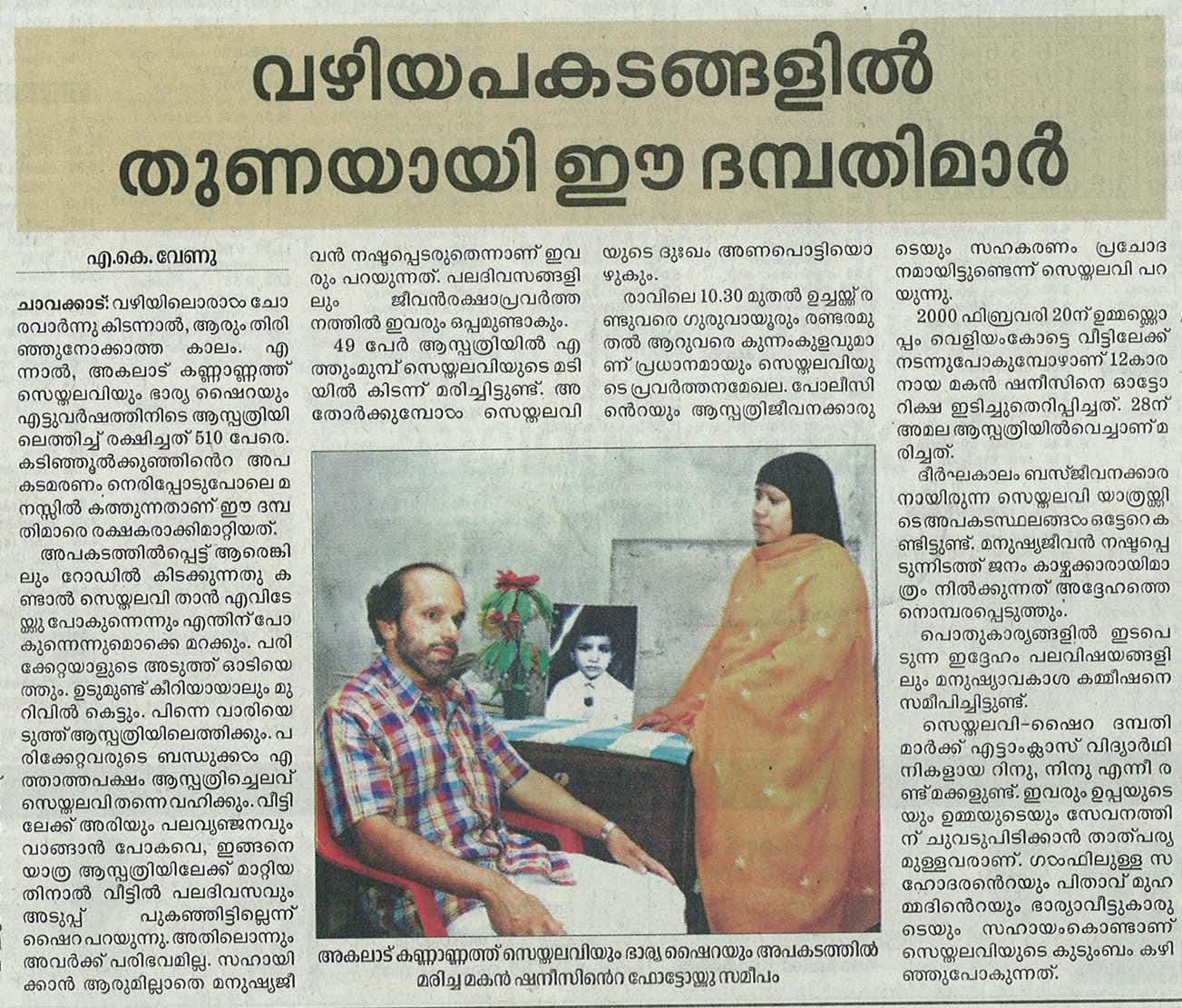
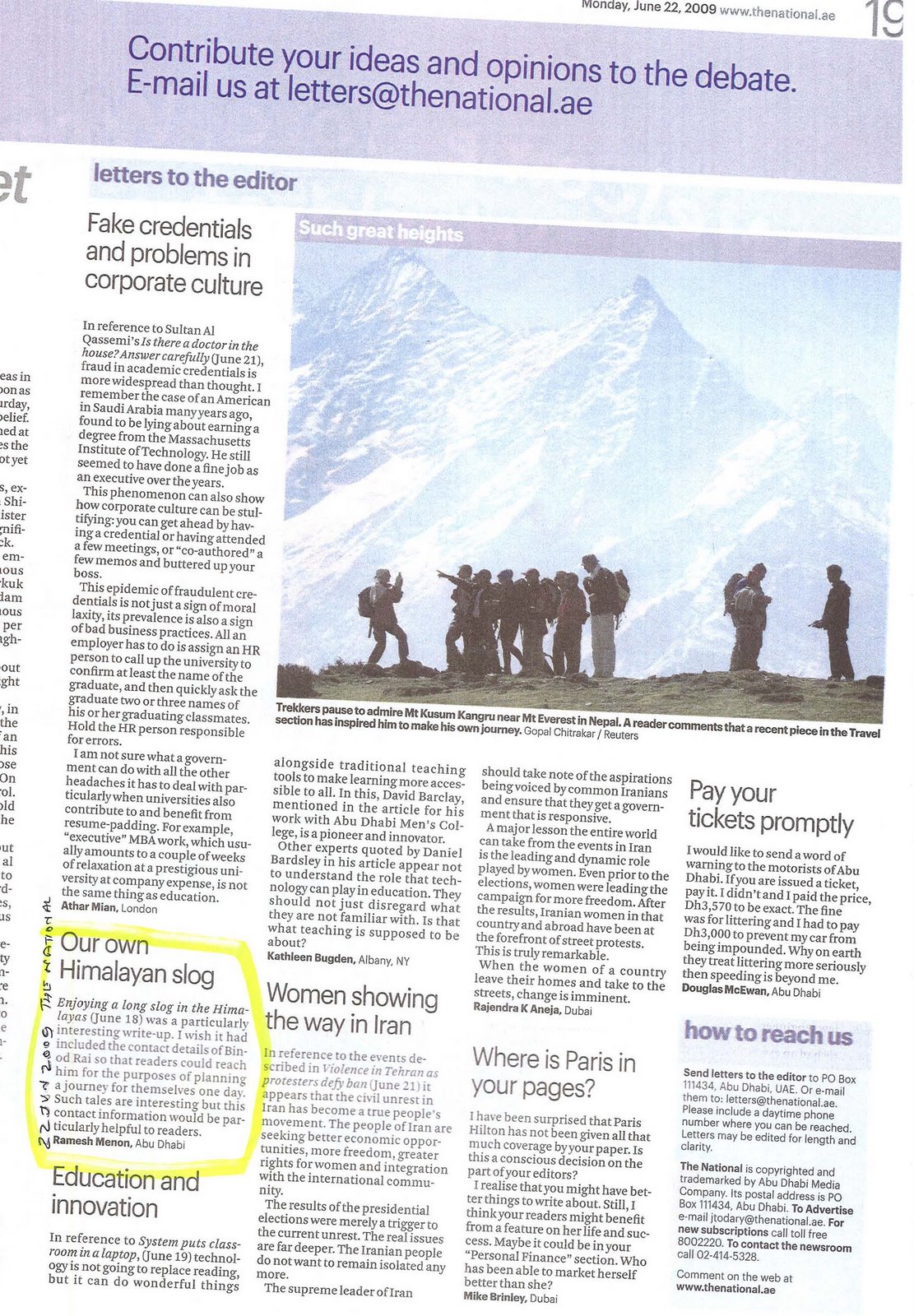
My Letters – THE NATIONAL – Our Own Himalayan Slog
To read my letters to the news, please bookmark and visit Letters to the Editor
Click here to read the oringal article Enjoying a long slog in the Himalayas.
Today in History – 22 June
1983 1st time a satellite is retrieved from orbit, by Space Shuttle
1970 President Nixon signs 26th amendment, voting age lowered to 18
1962 1st test flight of Hoovercraft
1910 1st Zeppelin with passengers sets afloat
1870 1st Boardwalk in America invented
1870 Congress creates Department of Justice
1847 Doughnut created
1832 John Howe patents pin manufacturing machine
1814 1st match at the present Lord’s, MCC vs. Herefordshire
1775 1st Continental currency issued ($3,000,000)
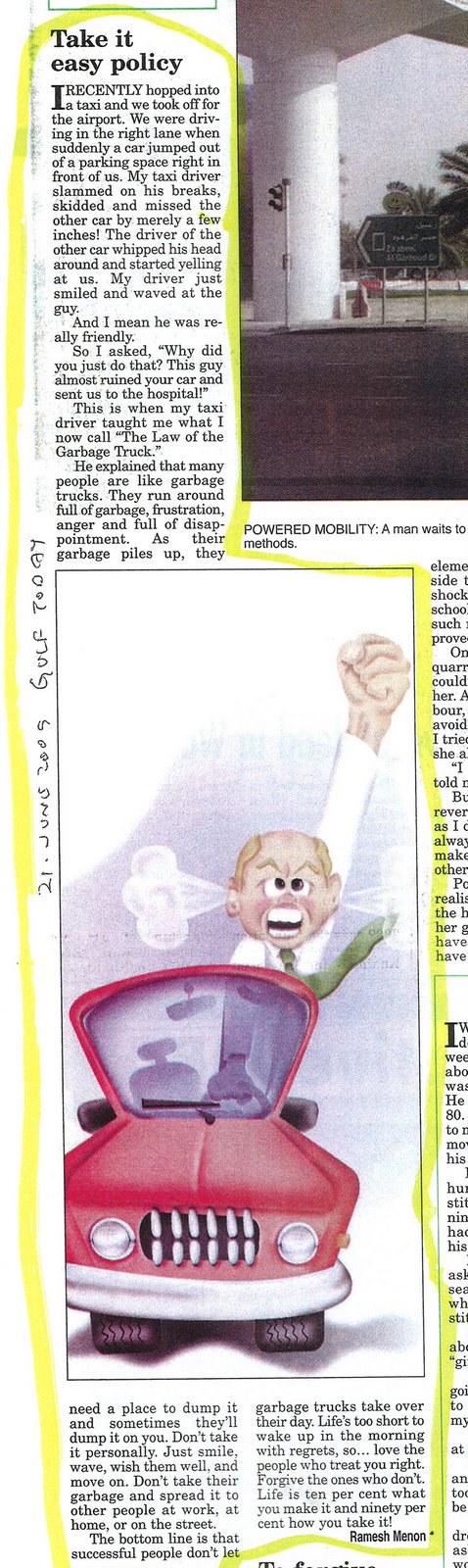
My Letters – GULF TODAY – Take it easy policy
To read my letters to the news, please bookmark and visit Letters to the Editor
Today in History – 21 June
1948 1st stored computer program run, on Manchester Mark I
1768 1st U.S. bachelor of medicine degree, Dr. John Archer
Today in History – 20 June
1966 Sheila Scott completes 1st round-the-world solo flight by a woman
1949 Central Intelligence Agency Act, passes
1909 1st balloon honeymoon (Roger Burham and Eleanor Waring)
1895 1st female PhD (science) earned (Caroline Willard Baldwin)
1895 Canal of Smock official opens
1874 1st U.S. Lifesaving Medal awarded (Lucian Clemons)
1863 1st bank chartered in U.S., National Bank of Davenport, Iowa
1837 England issues its 1st stamp, 1P Queen Victoria
Today in History – 19 June
1988 World’s Largest Sausage completed at 13 miles long
1981 European Space Agency’s Ariane carries 2 satellites into orbit
1981 Heaviest known orange (2.5 kg) exhibited, Nelspruit, South Africa
1981 India’s APPLE satellite, 1st to be stabilized on 3 axes, launched
1961 Kuwait declares independence from U.K.
1947 1st plane (F-80) to exceed 600 mph (1004 kph)-Albert Boyd, Muroc Ca
1931 1st photoelectric cell installed commercially West Haven Ct
1910 1st airship in service “Germany”
1910 Father’s Day celebrated for 1st time (Spokane, Wash)
The world of book editing
The world of book editing
SHAKTHI MANICKAVASAGAM for THE HINDU
In an expanding publishing industry, book editors with an eye for detail are in great demand.
Does reading books for a living seem like a dream job? Then book editing may be the perfect profession for you. Book editors do primarily what their job title suggests, which is editing books. However, being an editor also involves many other activities.
According to Sandhya Rao, Chief Editor of publishing house Tulika, a typical day in the life of an editor would involve such tasks as “looking at manuscripts, working with production, interacting with authors and illustrators, and in the case of books in different languages, interacting with translators.”
Book editing has many subfields and specialisations, ranging from mystery novels to biographies. This is why Rakesh Khanna, co-founder of Blaft Publications, feels that it is wise to “obtain two skills.” As an example, he cited an editor of biology textbooks, who “should be really strong in English as well as biology.”
Also, while editors at small and independent publishing houses generally edit manuscripts as well as interact with authors, editors at multinational publishing houses usually focus on one of the two tasks. Copy editors correct grammatical and spelling errors, whilst ensuring that the book is cohesive and factually accurate. Acquisitions editors are responsible for obtaining manuscripts, selecting those which show promise and communicating with the author.
The Indian book publishing industry is flourishing, and was worth Rs. 8,000 crore in 2006. Since then it has been growing rapidly. Ms. Rao of Tulika believes that there are several reasons for this. “The industry is expanding because the market has grown,” she says, adding that “so many foreign players are coming into India because India is a huge potential market, due to the large English-speaking population.” In fact, India is the third largest producer of books in English, after the United States and Britain. However, as Ms. Rao points out, the best-selling books in India are probably textbooks; with the number of school-going children increasing every year, the demand for these books should not diminish in the near future.
Qualifications
The qualifications required to become an editor are not set in stone. Manjula Ramesh, Head of Production at Emerald Publishers, says that a degree in any field is sufficient, as long as you have “a very good knowledge and a good flow in English.” The same applies if you are interested in editing books in other languages. This was reiterated by Mr. Khanna of Blaft Publications, who says that “whatever language you are editing, it should be the language you’ve grown up with and the language you read a lot.” Mrs. Rao of Tulika believes that while it is better to have a “postgraduate degree in a language,” it is not an absolute necessity.
Being a book editor calls for certain practical skills and abilities. According to Mr. Khanna, the job requires an aptitude for “paying attention to various small details.” A talent for negotiating with other people, such as authors, is also beneficial. Mrs. Ramesh of Emerald Publishers adds that an editor should “be creative, should have the patience to peruse the book once or twice or even more and should have high concentration,” but above all else, they should have a passion for books.
You can prepare to enter the industry by reading books in every possible genre, editing a school or college magazine and working part-time as a freelance editor while still in college. Gaining experience is invaluable to a budding editor. Publishing houses generally provide a pleasant environment to work in. Alternatively, if you prefer working from home, freelance editing might be a good option. Ultimately, a book editor enjoys reading, is proficient in English or other languages and actively tries to discover new writing talent. If you thrive in the world of words, there’s a great career waiting for you!
To read the original post visit here
Palghat Raghu Documentary
Palghat Raghu Documentary
This documentary chronicles the life of Shri Palghat R. Raghu, one of the most prolific and influential mridangists of the 20th century. The footage you see here was released in honor of his 80th birthday celebrations in January 2008.
Directed by Latha Menon
An Iris Films Presentation


You must be logged in to post a comment.