TQM
Youth power – Gulf Today – Short Take Dt. 22 February 2014
There has to be a way to report rash driving – Community Report – Gulf News – Dt 27th January 2014
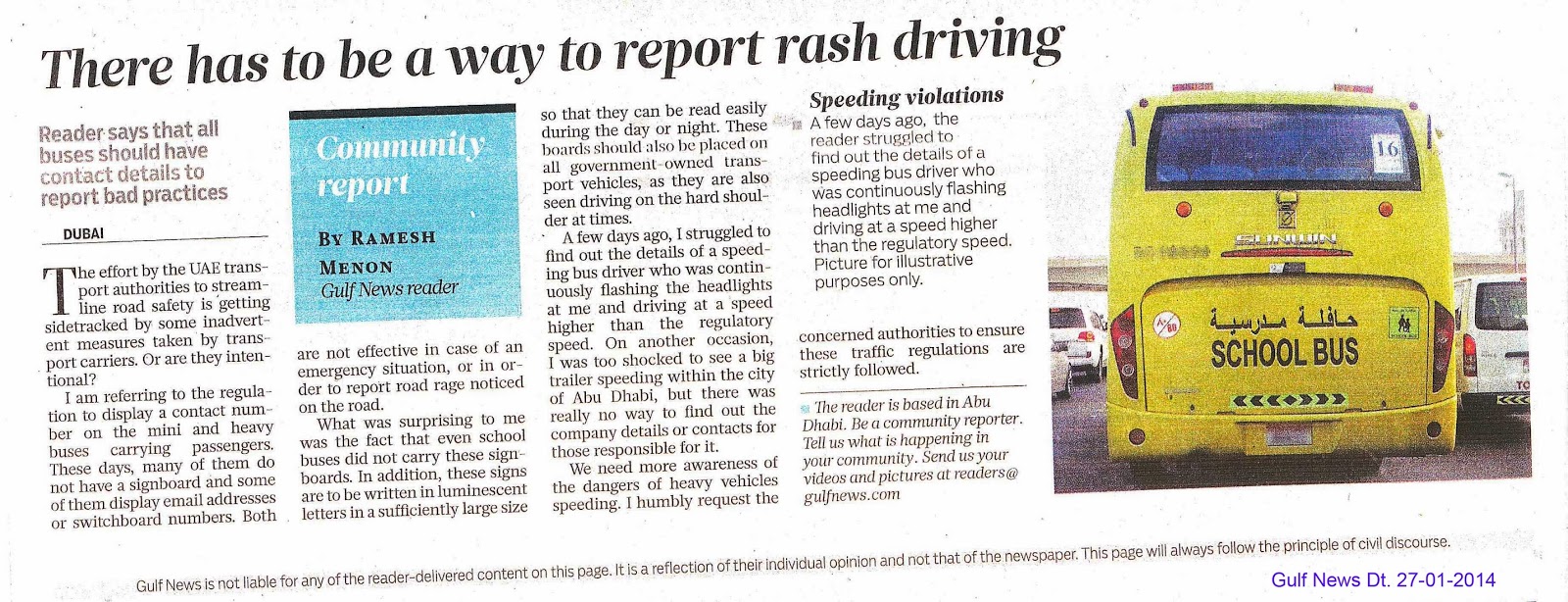
No way to report bad driving
Reader says that all buses should have contact details to report bad driving practices.
By Ramesh Menon Gulf News reader
Published: 18:07 January 26, 2014
The effort by the UAE transport authorities to streamline road safety is getting side tracked by some inadvertent measures taken by transport carriers. Or are they intentional?
I am referring to the regulation to display a contact number on the mini and heavy buses carrying passengers. These days, many of them do not have a signboard and some of them display email addresses or switchboard numbers. Both are not effective, in case of an emergency situation, or in order to report road rage noticed on the road.
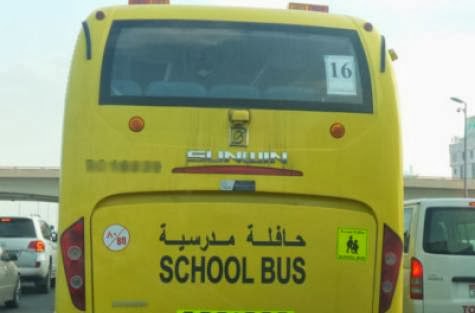
What was surprising to me was the fact that even school buses did not carry these signboards. In addition, these signs are to be written in lumniscent letters in a sufficiently large size so that they can be read easily during the day or night.
These boards should also be placed on all the government-owned transport vehicles, as they are also seen driving on the hard shoulder at times.

A few days ago, I struggled to find out the details of a speeding bus driver who was continuously flashing the headlights at me and driving at a speed higher than the regulatory speed. On another occasion, I was too shocked to see a big trailer speeding within the city of Abu Dhabi, but there was really no way to find out the company details or contacts for those responsible for it.
We need more awareness on the dangers of heavy vehicles speeding. I humbly request the concerned authorities to ensure these traffic regulations are strictly followed.
The reader is based in Abu Dhabi.
To read it in original, visit GULF NEWS online
Campaign Safety First – Start Early, Drive Carefully, Reach Safely

Start Early, Drive Carefully and Reach Safely. A campaign part of the “Safey First” series to create an awareness on rash driving scene on our roads these days. Share it with your friends and family. Let “Safety First” be your mantra. The campaign is part of a TQM project initiated through my blog http://www.clicksandwrites.blogspot.com and Passionate Photographers group on Facebook. God Bless.
Renovation work hurts commuters – Letters to the editor – The National Dt 19 December 2013
Renovation work hurts commuters

Letters to the Editor – The National 19 December 2013
Read more:http://www.thenational.ae/thenationalconversation/feedback/renovation-work-hurts-commuters#ixzz2nsonKboH
Follow us: @TheNationalUAE on Twitter | thenational.ae on Facebook
A series of road and pavement repair work being carried out in sector 73 in Khalidiya is causing major inconvenience to the public.
The entire area is marked for repair by the contracting company responsible for the project. They have also dug up the pavement and removed the bricks that have been stacked up randomly. It’s a posh residential area with a high concentration of high-rises, restaurants, banks and other commercial establishments. In normal times, before the repair work began, availability of parking spaces was limited. So one can imagine the inconvenience it has caused to residents and visitors. The pieces of bricks and concrete also pose a grave danger to children.
Apart from that, the lorries that keep plying in the area cause traffic chaos as there is limited space for vehicle movement.
I humbly request the civic authorities to facilitate convenient passage for residents and vehicles. That could have been done easily by marking smaller segments for renovation, instead of marking an entire sector. It can still be done.
Ramesh Menon, Abu Dhabi
Read more:http://www.thenational.ae/thenationalconversation/feedback/renovation-work-hurts-commuters#ixzz2nsohbda3
Follow us: @TheNationalUAE on Twitter | thenational.ae on Facebook
Humanitarian efforts by UAE should inspire all – The National Dt. 18 December 2013
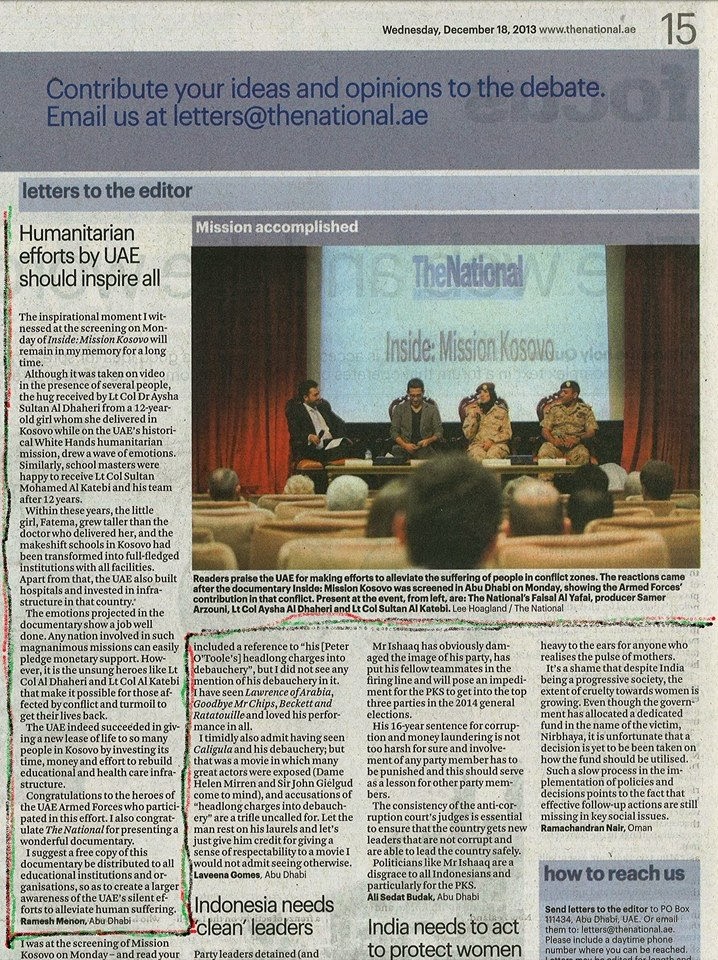
The National online 17 December 2013 / in print 18 December 2013
The inspirational moment I witnessed at the screening on Monday of Inside: Mission Kosovo will remain in my memory for a long time.
Although it was taken on video in the presence of several people, the hug received by Lt Col Dr Aysha Sultan Al Dhaheri from a 12-year-old girl whom she delivered in Kosovo while on the UAE’s historical White Hands humanitarian mission, drew a wave of emotions. Similarly, school masters were happy to receive Lt Col Sultan Mohamed Al Katebi and his team after 12 years.
Within these years, the little girl, Fatema, grew taller than the doctor who delivered her, and the makeshift schools in Kosovo had been transformed into full-fledged institutions with all facilities. Apart from that, the UAE also built hospitals and invested in infrastructure in that country.
The emotions projected in the documentary show a job well done. Any nation involved in such magnanimous missions can easily pledge monetary support. However, it is the unsung heroes like Lt Col Al Dhaheri and Lt Col Al Katebi that make it possible for those affected by conflict and turmoil to get their lives back.
The UAE indeed succeeded in giving a new lease of life to so many people in Kosovo by investing its time, money and effort to rebuild educational and health care infrastructure.
Congratulations to the heroes of the UAE Armed Forces who participated in this effort. I also congratulate The National for presenting a wonderful documentary.
I suggest a free copy of this documentary be distributed to all educational institutions and organisations, so as to create a larger awareness of the UAE’s silent efforts to alleviate human suffering.
Ramesh Menon, Abu Dhabi
Read more:http://www.thenational.ae/thenationalconversation/feedback/humanitarian-efforts-by-uae-should-inspire-all#ixzz2njogavXT
Follow us: @TheNationalUAE on Twitter | thenational.ae on Facebook
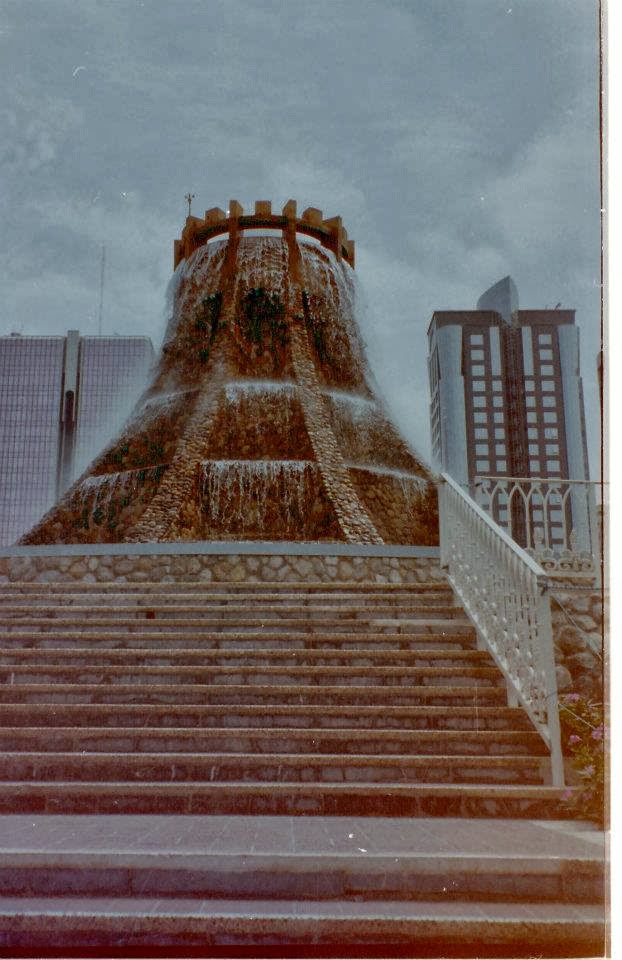
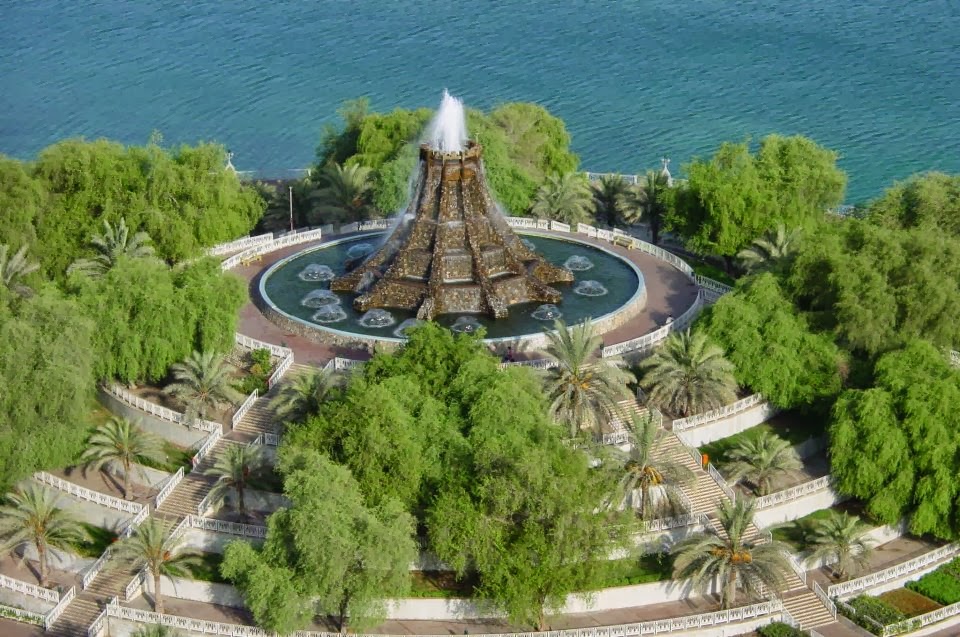
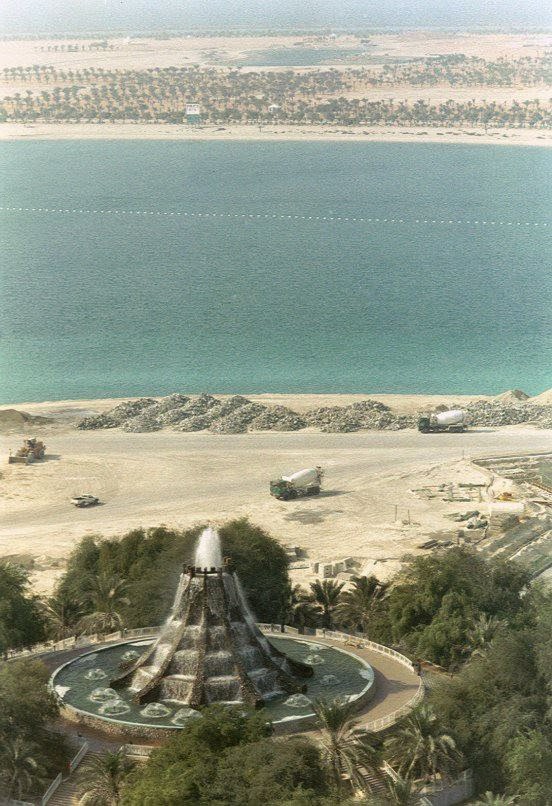
Abu Dhabi’s Volcano Fountain: a fire that never went out

Abu Dhabi’s Volcano Fountain: a fire that never went out
Read more:http://www.thenational.ae/uae/heritage/abu-dhabis-volcano-fountain-a-fire-that-never-went-out#ixzz2n8LrrFRA
Follow us: @TheNationalUAE on Twitter | thenational.ae on Facebook
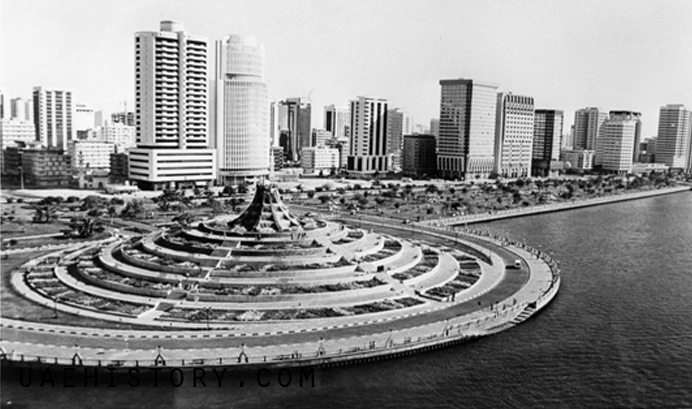
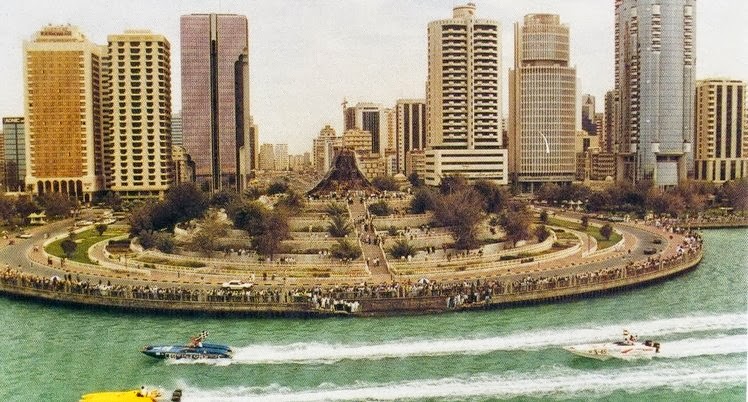
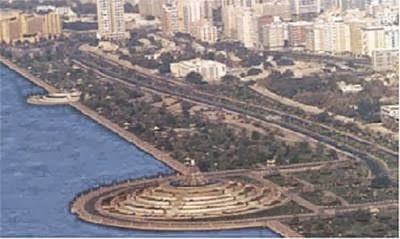
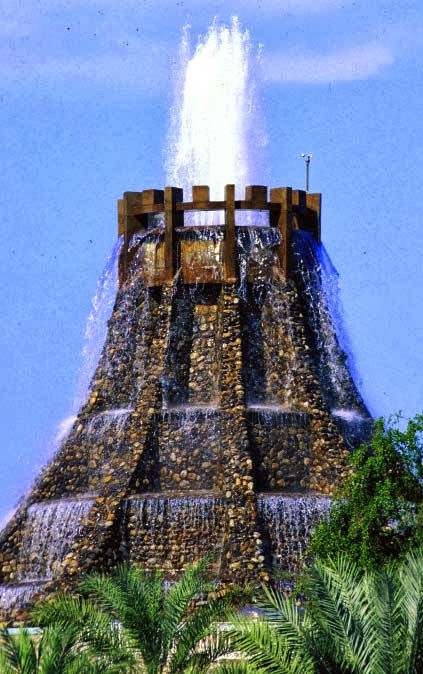
It could be a test of long-term residency. Ask anyone who has lived in Abu Dhabi for more than a decade whether they remember the Volcano Fountain and you’re likely to ignite an outpouring of memories. Built in the 1980s, elevated on a circular pier on the Corniche near the foot of Muroor, the fountain looked like something from The Flintstones, “a page right out of history”.
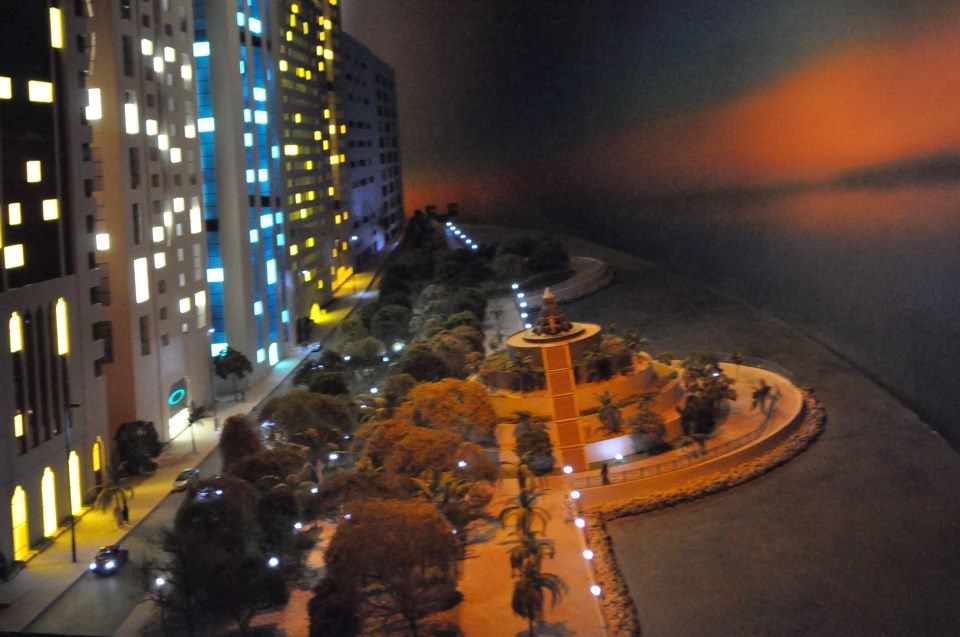
Or, as the Doha-based author Sophia Al Maria puts it on her blog: “Back in 1988, the Abu Dhabi Volcano Fountain rose out of the Corniche like Triton’s head. It burst out of the boardwalk like a long-submerged alien ship rising from the sea. Its scented water cascaded down through the prongs of a turret-like crown. That cement halo still floats sovereign over all my childhood memories of Abu Dhabi.”
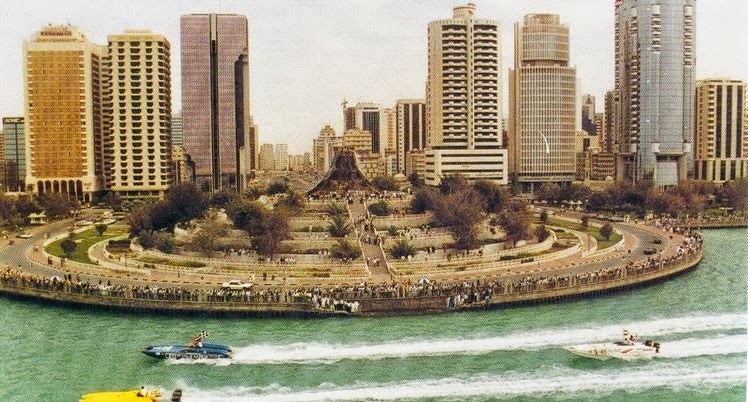
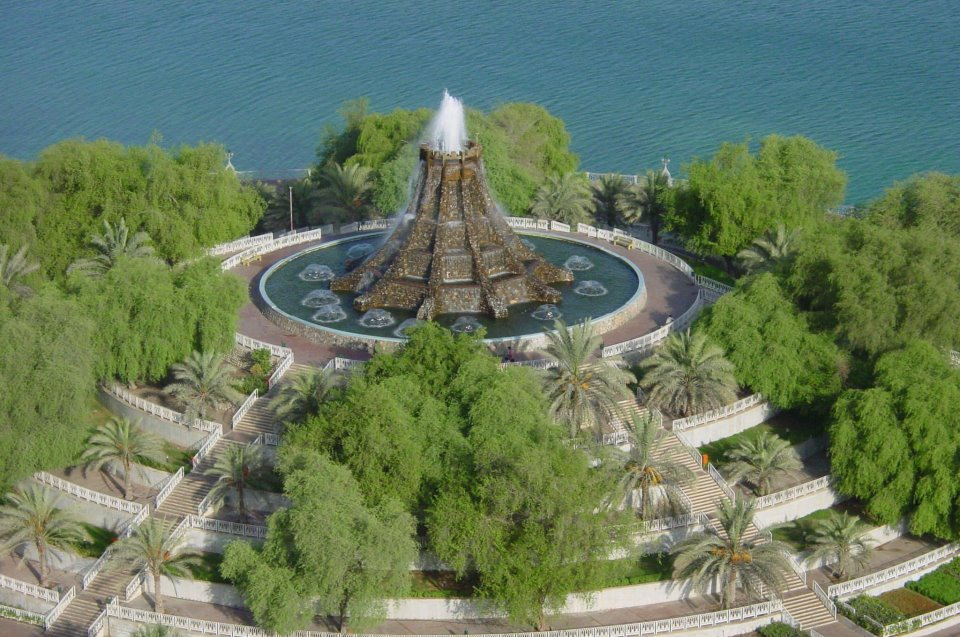
Also known as Al Shallal (waterfall in Arabic), the stone-paved fountain, surrounded by tiered gardens with flights of stairs leading up to its base, was lit up at night to give the cascading water the appearance of lava. Vendors sold fried peanuts, fresh chips, ice cream, newspapers and balloons, and photographers snapped pictures of people posing in front of it, much as they now do at the Burj Khalifa.
The fountain was called a must-see in guidebooks and featured on Abu Dhabi postcards. More significantly, it was a gathering place for the growing city’s many nationalities, at a time when there were fewer social options and no mobile phones to arrange a spontaneous meeting place.
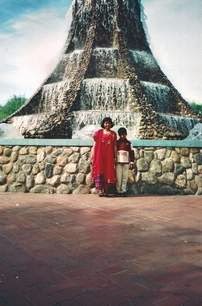
Meeting at the Volcano Fountain was almost a given. “It was the primary focal point for any visitor to Abu Dhabi during that time,” says Ramesh Menon, who came from Kerala to work in Abu Dhabi in 1987. He remembers it as a place where couples met for the first time, where proud parents brought their newborns from the nearby Corniche Hospital, where fellow Indians returning from home would open parcels and distribute letters. “It holds a special significance,” Menon says. “It created a lot of feelings within people.”
Jasmine Godfrey, who was born in Abu Dhabi 41 years ago, remembers many “joyous” times with her family and young friends at the landmark. “We used to spend most of our time there,” she says. “Wherever you are, you come over there to meet us.”

The fountain was also the site of National Day celebrations, the area surrounding it decorated with thousands of flags and lights. As Christine Nowell and Nick Crawley wrote in their 2001 book Now & Then: Abu Dhabi: “National Day is celebrated throughout the Emirates […] on the Corniche, young ladies in their finest dress dance in the traditional way to the dulcet tunes of the flute and drum. The events take place at the so-called ‘Volcano’ roundabout on the afternoon of the 2nd day of December and continue into the evening.”
Read more: http://www.thenational.ae/uae/heritage/abu-dhabis-volcano-fountain-a-fire-that-never-went-out#ixzz2n8LjsTxX Follow us: @TheNationalUAE on Twitter | thenational.ae on Facebook
Remembering Abu Dhabi’s Volcano Fountain
Please visit and view the video
http://www.thenational.ae/video-remembering-abu-dhabis-volcano-fountain
Devoted Volunteers
Volcano Fountain Abu Dhabi – a humble request to revive a great history that was
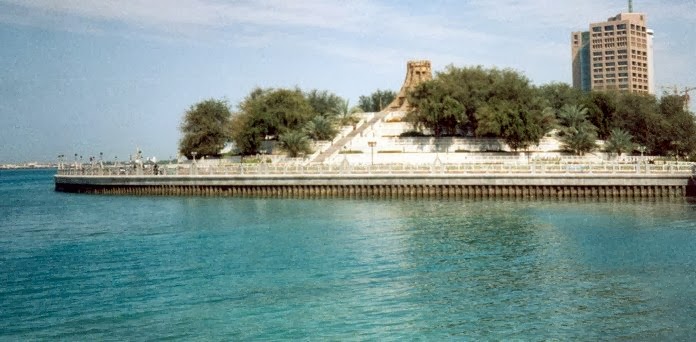

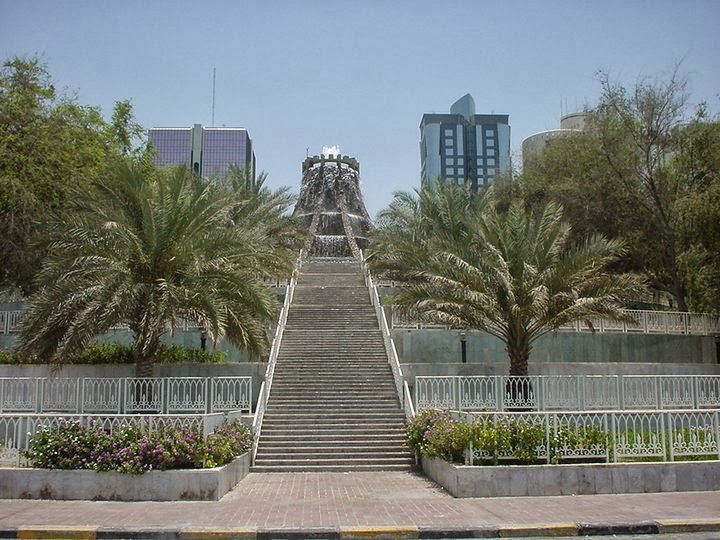



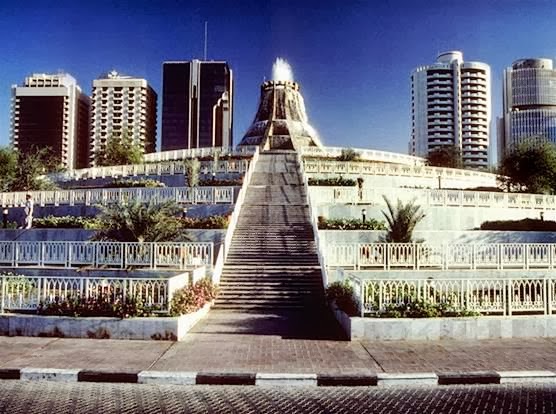
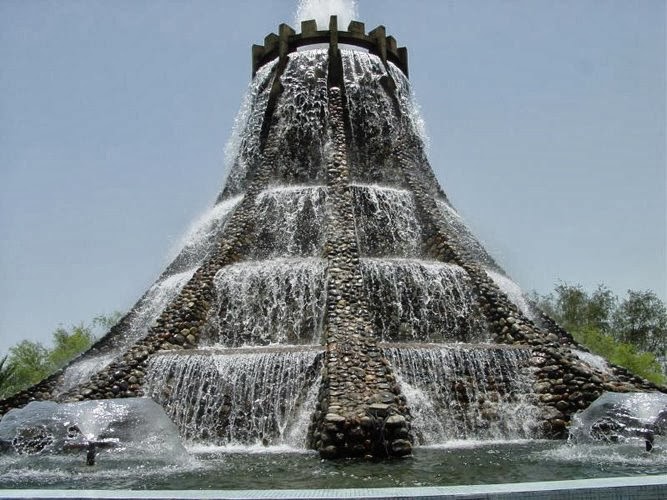
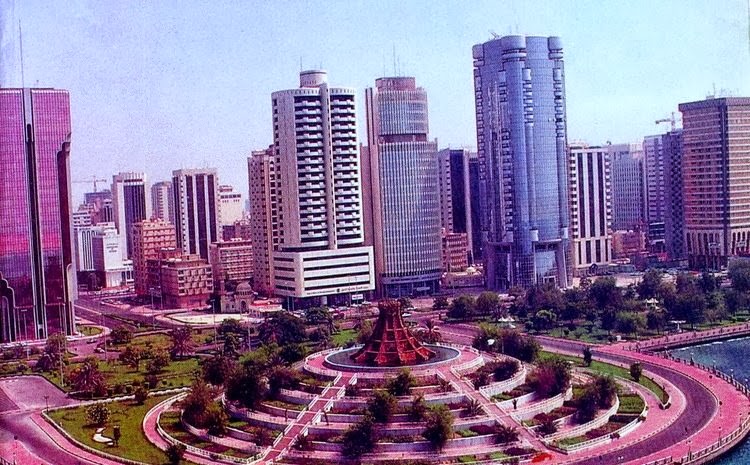
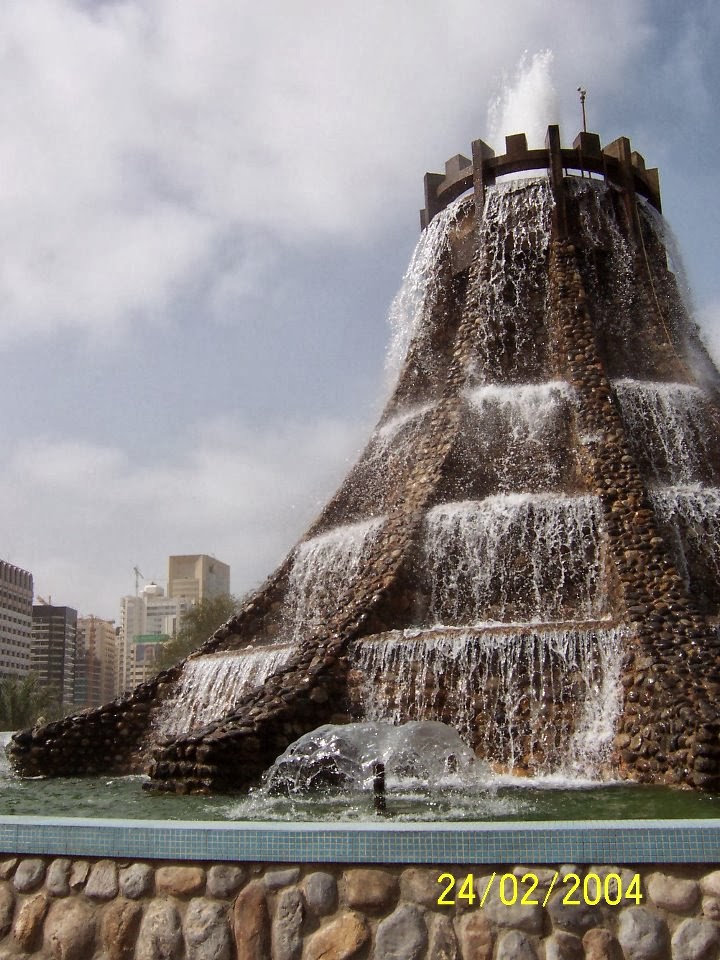
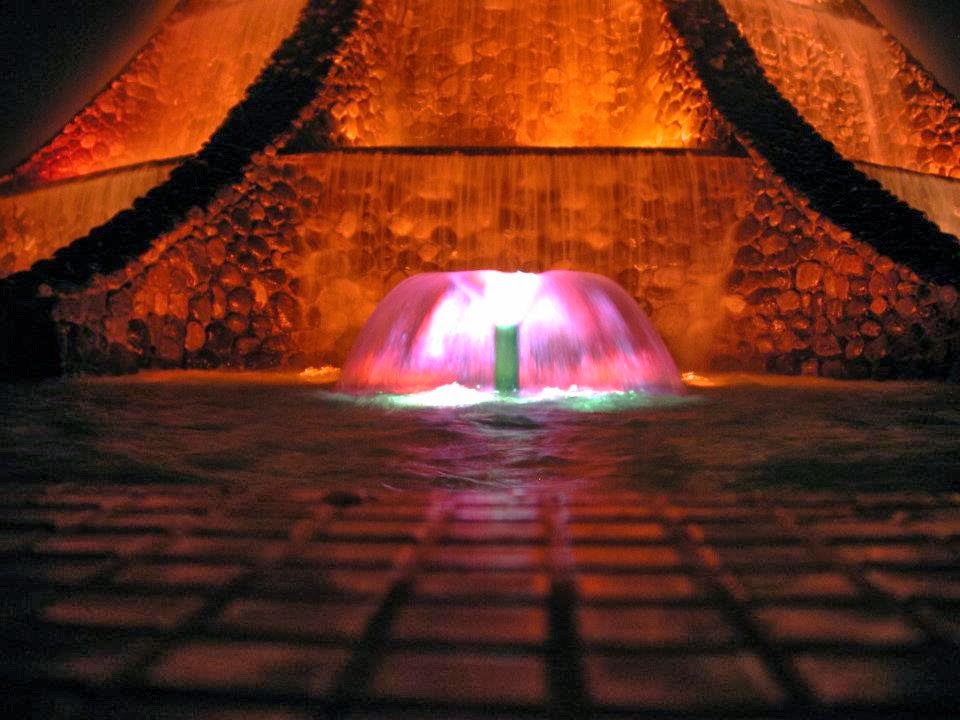
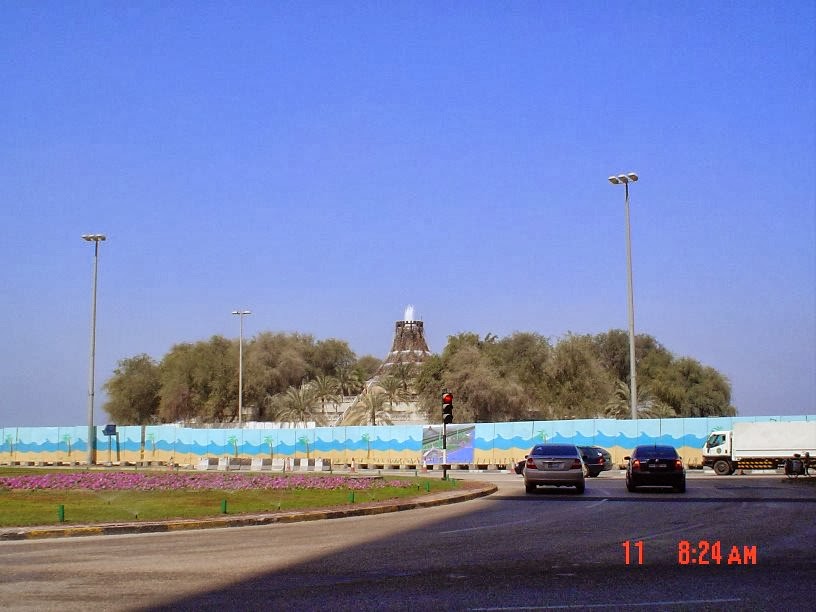
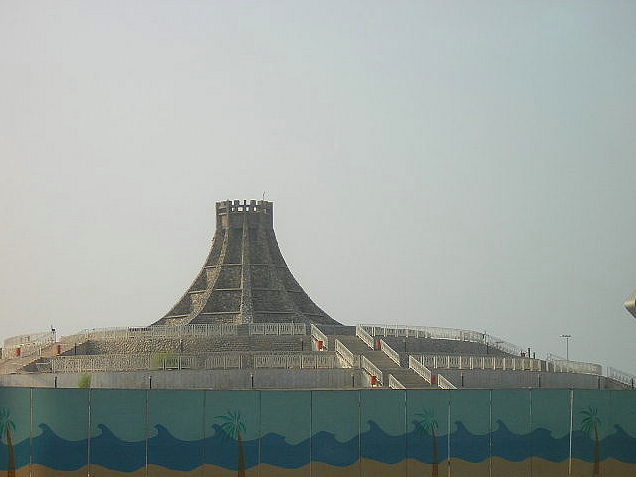
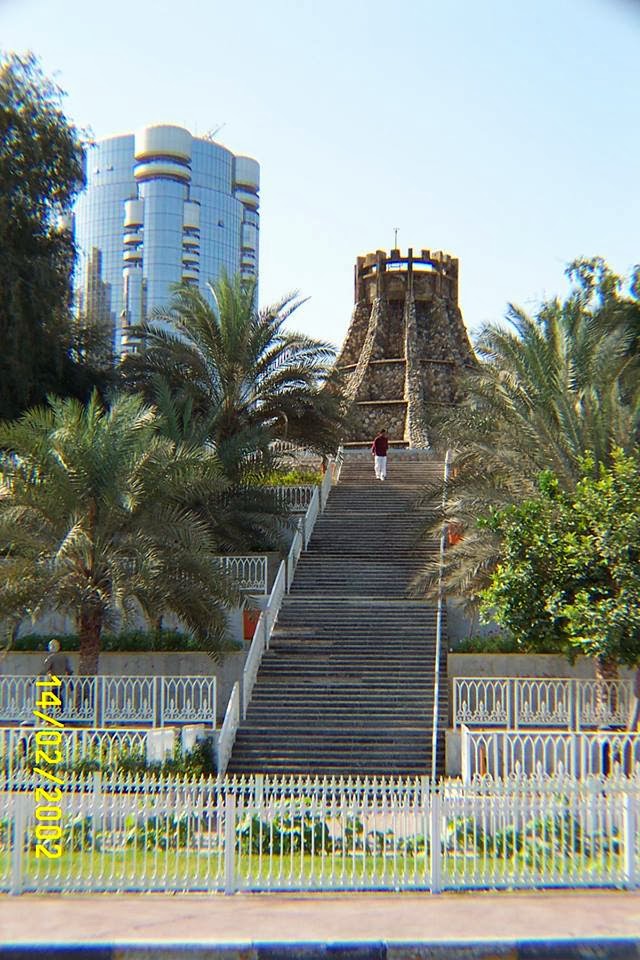
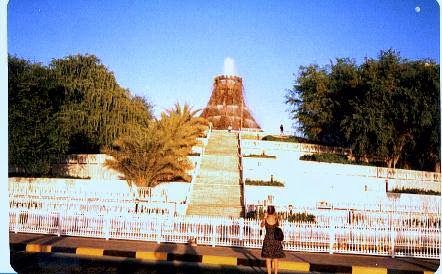

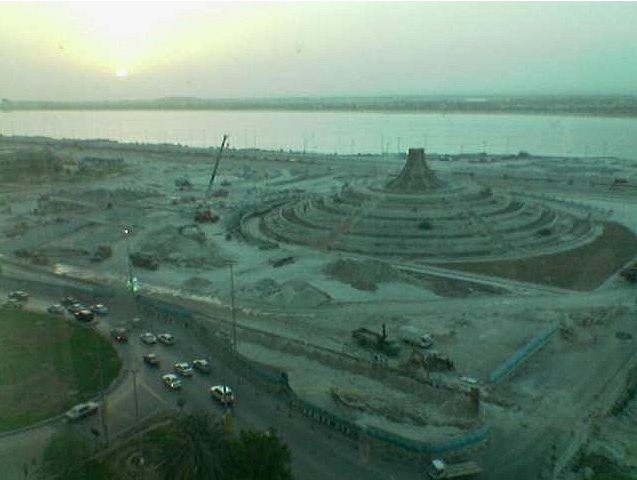

Volcano Fountain – a humble call to bring it back
 ClicksandWrites
You must be logged in to post a comment.