Sports +
Indian Football team arrives in Dubai for training

03 November 2010 (report in Mathrubhumi)

You may support this campaign by joining i’ts Fan page on Campain PASS on Face Book.
My Letters – Khaleej Times – dT. 01.11.2010 – Pakistan SA Cricket
My Letters – Khaleej Times – dT. 01.11.2010 – Pakistan SA Cricket

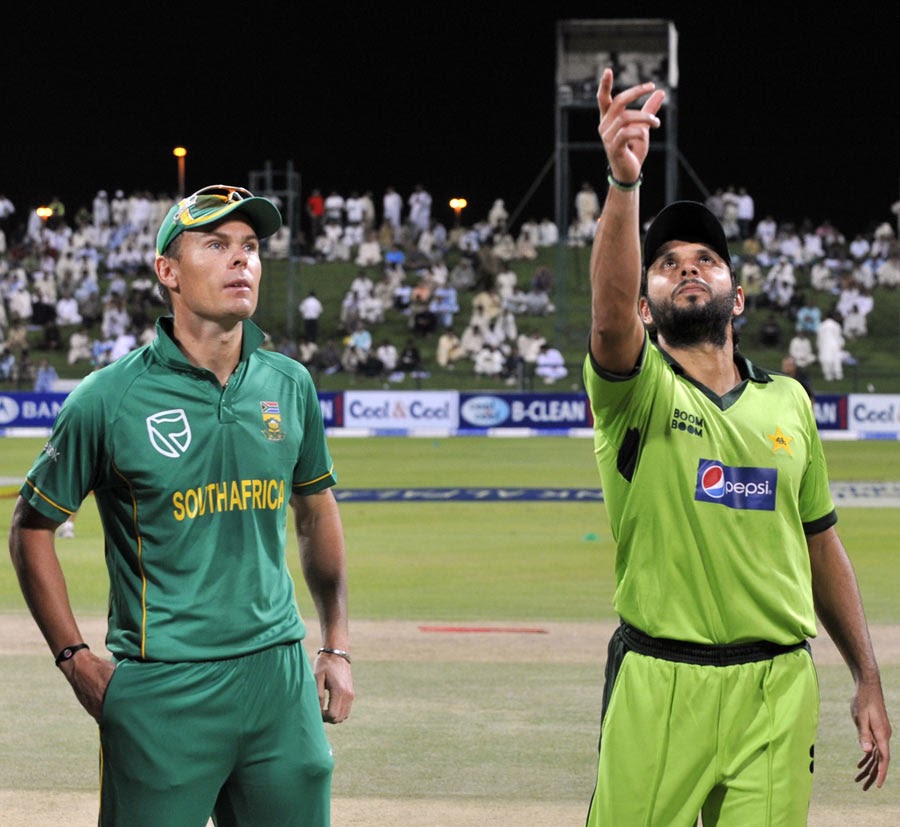
The T-20 series between Pakistan and South Africa finished with South African winning on a 2-0 margin. The series moved on to one-day matches and as cricket lovers we all expected a come back attitude from Pakistan. It looks like the Pakistan team has taken this South African team and its members very lightly.
To read this in original, please visit Khaleej Times online.
My letters – GULF NEWS – Dt. 26.10.2010 – Give them attention
My letters – GULF NEWS – Dt. 26.10.2010 – Give them attention

Give them attention
From Mr Ramesh Menon
Abu Dhabi
To read it in original, please visit GULF NEWS online.
Mind Speaks – South Africa sweep Pakistan 2-0 in the Cool-Cool T20 series at Abu Dhabi
Mind Speaks – South Africa sweep Pakistan 2-0 in the Cool-Cool T20 series
Campaign PASS – Inda’s football – a sad decline – THE NATIONAL 22.10.2010
Campaign PASS – Inda’s football – a sad decline – THE NATIONAL 22.10.2010

The article outline the importance of increased support to promote the game. Hope, our corporate giants step in.

Campaign PASS – Promote All Sports Simultaneously – Indian Football Team to train in Dubai – an opportunity to shower corporate support
Campaign PASS – Promote All Sports Simultaneously – Indian Football Team to train in Dubai – an opportunity to shower corporate support

Along with it my appeal to all Indian Social organisation’s and interested Corporate and Business units to shower them with your support and encouragement during the time they are in Dubai.
A Face Book group has been created to promote this initiative. Please click on the link and join this group and promote it amongst your contacts.
http://www.facebook.com/home.php?sk=group_143065525739332&ap=1

Mind Speaks – Common Wealth Games 2010 and way forward
Mind Speaks – Common Wealth Games 2010 and way forward
http://www.youtube.com/watch?v=kezboiU3l-w&playnext=1&videos=kA_bOn9bizc&feature=mfu_in_order
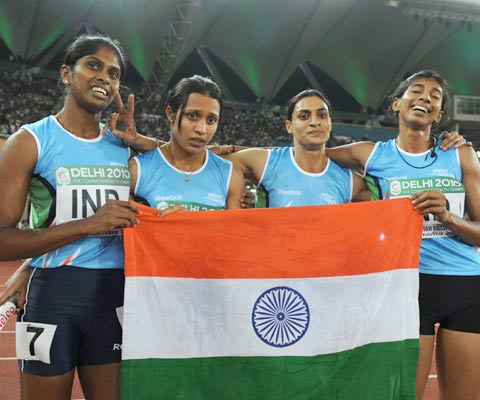
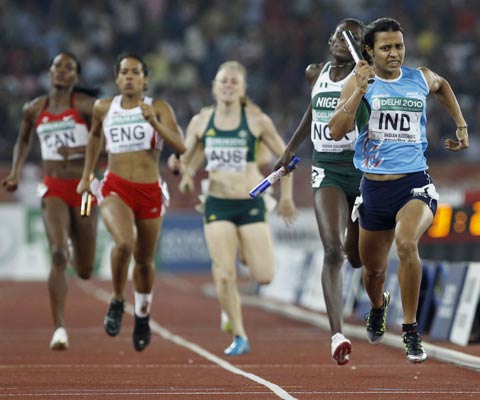
The short framed Indian athletes put their heart and soul into their feet to stay ahead till the finishing line with their swift strides. This memory will remain forever as do the winning moments from the other games played so far.

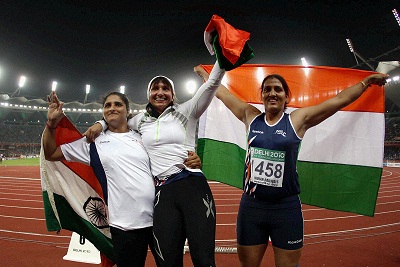
These achievements are of immense importance to overall sporting growth of the country, as well the region. It should not be considered as India’s only achievement rather should be treated as an inspirational step for the entire region to excel in track and field sporting activities.
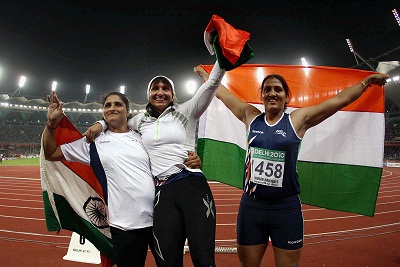

Indian women athletes performed exceedingly well winning 13 gold medals out of 38 golds won by India in the recently concluded Commonwealth Games 2010.
http://www.dnaindia.com/videos/1453132
For all those who generated such a hue and cry, it is time to revert with a word or two of congratulations to those athletes who did their best to erase entirely the bad momentum generated to the curtain raiser of CWG . It’s also because; they are and will remain unknown if necessary support from all concerned is not in place from now on.
Dhoni Damaka

Dhoni Damaka
by ADUR PRADEEP for KHALEEJ TIMES
DUBAI – India – Australia encounters are well known for producing scintillating cricket, and the latest one that ended on Monday proved no different either.
Though the initial days didn’t offer nothing more than dull draws, the last day of the final Test provided perhaps the best climax to the series, with the Indian spinners proving unplayable on a crumbling fifth-day pitch as they helped India crush the world champions by a 2-0 margin.
The entire series provided several moments of individual brilliance, lot of action, thrill and entertainment for the spectators. Khaleej Times takes a look at some of the decisive moments, turning points and key performances in the Test series.
Captain Courageous
There’s something remarkable about Mahendra Singh Dhoni and his captaincy. Many termed his Twenty20 World Cup triumph last year as just a fluke or lottery. But he proved them wrong with convincing victories in the following one-day series. Now, with a chance to captain the Test side after Anil Kumble announced his retirement, the wicketkeeper proved that there is more substance to his captaincy and tactics than mere luck and chances following a convincing 2-0 triumph over the world champions. It couldn’t be termed as a fluke any more that he led India to decisive victories over the world champions in the two matches (Mohali and Nagpur) that he led the team. The other two Tests, under the captaincy of Kumble, ended in drab draws. Despite the Australian Press blasting him for some of the ‘negative bowling tactics’ he adopted in Nagpur, he led the team superbly to victories in the matches he has led. If such tactics eventually lead a team to Test triumphs, many captains wouldn’t mind adopting those ‘negative’ tactics in the future too. His batting too improved significantly as he played some crucial knocks in Mohali and Nagpur when it mattered the most. He finished the series on a high note, scoring 307 runs at an average of 61.40. On the other hand, the Australian skipper Ricky Ponting started superbly by smashing a delightful century on the opening day of the first Test in Bangalore, but couldn’t retain the initial momentum in the latter part of the series. Ponting, with an average of 12.28 from his previous eight Tests in India before this tour, finished with a tally of 266 runs at an average of 38, including one century and half-century, each.
Turning Point
Although Harbhajan Singh didn’t pick up wickets in the first half of the series, he ensured that he ended up on a high note by taking 15 wickets – on par with the Player of the series Ishant Sharma – thanks to superb last day histrionics in Nagpur. He bagged 15 wickets at an average of 28.86 from three Tests. But it has to be noted that Harbhajan, through his batting, in the company of Zaheer Khan, was instrumental in saving the Bangalore match for India. That turned out to be the turning point of the entire series. He managed two crucial half-centuries, the first a match saving one, and the second in Nagpur ending on a winning note. The Harbhajan-Zaheer duo, with their gritty batting and 80-run stand, saved India from a precarious position in the Bangalore Test. Had India lost their initiative in the first Test, the outcome would have been different.
Man of the Moment
In an Indian series, no one would have fancied a pace bowler’s chances to emerge as the top wicket taker. But, after a sterling performance against Australia Down Under early this year, Ishant Sharma topped the charts again this time in India by taking 15 Australian wickets at an average of 27.06. His outstanding performance deservedly fetched him the Player of the Series award.
Batting Brilliance
Not many would have placed their bets on Indian opener Gautam Gambhir to emerge the top scorer in a Test series featuring the likes of Sachin Tendulkar, Ricky Ponting, VVS Laxman, Virender Sehwag and Matthew Hayden. But the Delhi opener made rapid strides in his Test career by scoring 463 runs from just three Tests, surpassing his illustrious team-mates.
Tendulkar took the second spot, scoring 396 from eight innings at an average of 56.57, with one century and two 50s. Michael Hussey took the third spot with an aggregate of 394 runs from seven innings for Australia as he scored a brilliant 146 in the first innings of Bangalore Test. Laxman too played his part by finishing fourth in the rank, scoring 381 from seven inning at an average of 95.25.
Bowling Might
The Indian pitches, favourable to spinners, are considered graveyards for medium-pace and pace bowlers. It was also considered a luxury of including two pacers in the Indian squad, while playing at home. Not any more. The success of Indian pacers – Ishant Sharma and Zaheer Khan – even at unresponsive home pitches is indeed happy news for India, with the young spinner Amit Mishra, in the company of Harbhajan Singh, showing signs of learning the tricks quickly. He finished third in the top bowlers’ list by taking 14 wickets from three matches at an impressive average of 24.07 and economy rate of 2.76. Zaheer Khan too improved his performance at home, bagging 11 wickets, including a five-wicket haul in the opening Test. For Australia, Mitchell Johnson also put up a sterling show, taking 13 wickets at an average of 40.07. It was a remarkable achievement for him considering that even his place in the squad wasn’t sure because of poor form before the series. Facing pressure from his fellow left-armer Doug Bollinger, Johnson not only proved himself, but surpassed the lethal Brett Lee, who had a poor series with only eight wickets from the entire series. One player who made rapid strides for Australia in the series was Shane Watson, who bagged 10 wickets at an average of 32.10 and an economy rate of 2.77, plus 161 runs from six innings. But the surprise package was Australia’s Jason Krejza, who took an incredible 12 wickets on his debut.
On a High
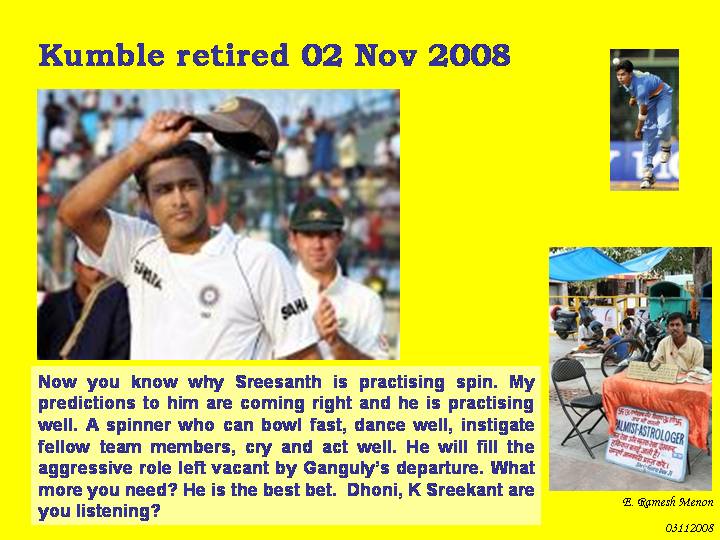
The legendary Indian opener Sunil Gavaskar retired from international cricket when he was in supreme form. Justifying his retirement, he said, the fans should ask ‘Why’ instead of ‘Why Not’ when you announce your retirement, indicating that players should retire when they are in peak form. The Prince of Kolkatta Sourav Ganguly seems to be following the Gavaskar-principle as he announced his retirement when he has plenty left to offer Indian cricket. He left his game on a high note after scoring 324 runs at an average of 54, much higher than his career average, including a century and half-century in his last series. Kumble too announced his retirement, as he assessed his own career and the future of spin bowling in the middle of the series before announcing his retirement after the drawn New Delhi series.
Causes for Concern
India was one of the places where active crowd participation was a certainty for any thing associated with cricket. But if the attendance at the venues for the Test series were any indication, the Indian public is not that keen to watch the five-day affair, at least in stadiums any more. The next one-day series — this month against England — might be a pointer to Indian moods; whether people are now likely to watch only Twenty20 rather than limited overs or Tests. Despite India’s awesome 2-0 triumph over Australia, one big cause of concern for them would be the form of their middle-order batsman Rahul Dravid. The once dependable ‘The Wall’ only scored 120 runs at an average of 17.14, much lesser than the aggregate of fellow bowler Harbhajan Singh!
Flying Rocketman Steve Hooker soars to gold
Flying Rocketman Steve Hooker soars to gold

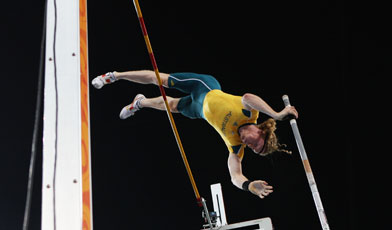
A multi exposure image shwoing Australia’s Steve Hooker clearing the bar in the men’s pole vault final during the 2008 Beijing Olympic Games. Hooker set an Olympic record of 5.96 metres to win the men’s pole vault gold medal.
Flying Rocketman Steve Hooker soars to gold
STEVE Hooker, who once feared the pole vault so much that he struggled to get off the ground, soared to an Olympic gold medal in the Bird’s Nest Stadium early this morning.
The 26-year-old became the first Australian man to win an Olympic medal in the daredevil event, completing a series of clutch jumps in a nerve-racking duel with Russia’s steely competitor Yevgeny Lukyanenko.
“Rocketman” Hooker, whose mother was an Olympic long jumper and father a Commonwealth Games runner, won Australia’s first track and field gold medal since Cathy Freeman in Sydney 2000. At 5.90m, Lukyanenko and Hooker traded misses until the Russian faltered on his third and last try. That left Hooker to clear the height, with a gold medal on the line.
He sped down the runway, pushed hard off the bar and cleared it, his mouth wide with delight as he thumped to the landing bags. His coach, Alex Parnov, jumped the fence and ran into the arms of the lanky Hooker.
STEVE Hooker, who once feared the pole vault so much that he struggled to get off the ground, soared to an Olympic gold medal in the Bird’s Nest Stadium early this morning.
The 26-year-old became the first Australian man to win an Olympic medal in the daredevil event, completing a series of clutch jumps in a nerve-racking duel with Russia’s steely competitor Yevgeny Lukyanenko.
“Rocketman” Hooker, whose mother was an Olympic long jumper and father a Commonwealth Games runner, won Australia’s first track and field gold medal since Cathy Freeman in Sydney 2000. At 5.90m, Lukyanenko and Hooker traded misses until the Russian faltered on his third and last try. That left Hooker to clear the height, with a gold medal on the line.
He sped down the runway, pushed hard off the bar and cleared it, his mouth wide with delight as he thumped to the landing bags. His coach, Alex Parnov, jumped the fence and ran into the arms of the lanky Hooker.
But the highlight was Hooker’s extraordinary performance capped by the emotional celebration with coach Parnov.
After winning the gold, Hooker went on to clear an Olympic record height of 5.96m.
Hooker, who hails from Melbourne but is based in Perth with pole vault guru Parnov – who also coached 2000 silver medallist Tatiana Grigorieva – has been one of Australia’s strongest performers on the international circuit for three years and was ranked number one in the world in 2006.
He failed to make good on that promise in 2007, bombing out at the world championships.
But he was in the process of changing his technique, with the aim of going higher than ever before. It paid off when he cleared 6m in Perth early this year and then 5.97m in his last competition in Europe before the Games, again in a duel with Lukyanenko.
They went into the Olympic final as the in-form jumpers and they played a cat-and-mouse game with each other over more than two and a half hours last night.
Hooker led early on in the event when he cleared 5.60m on his first attempt, but he dropped back when he missed his first two tries at 5.80m, while Lukyanenko went to first position when he didn’t miss.
The competition tightened at 5.90m, as Lukyanenko and Hooker went jump for jump, but it was eventually the Australian who prevailed on a day that will go down as one of the greatest for Australian athletics.
- ← Previous
- 1
- 2
- 3
- …
- 7
- Next →
 ClicksandWrites
You must be logged in to post a comment.