No News
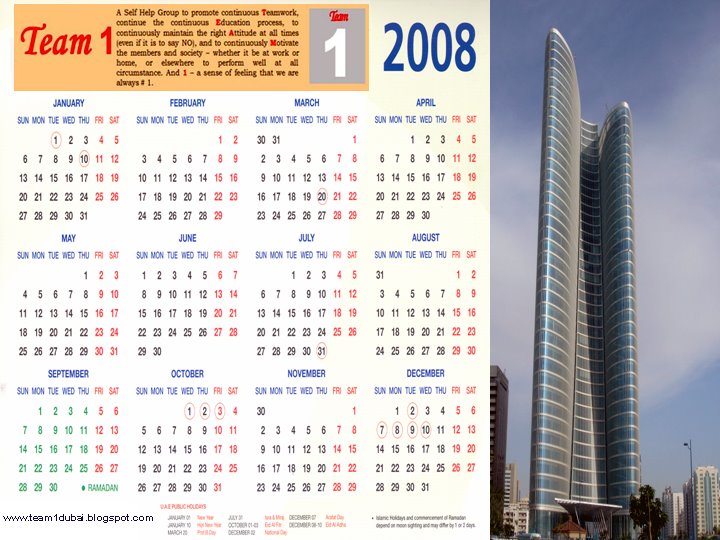
Team 1 Dubai 2008 Calendar
Dear all,
Wish you all a Quality Year 2008.
The calendar attached is with UAE Public Holidays.
God Bless,
Ramesh Menon
23122007

reddit_url='[URL]’reddit_title='[TITLE]’
Mind Speaks – Towards Building a Quality ’08
Hello friends,
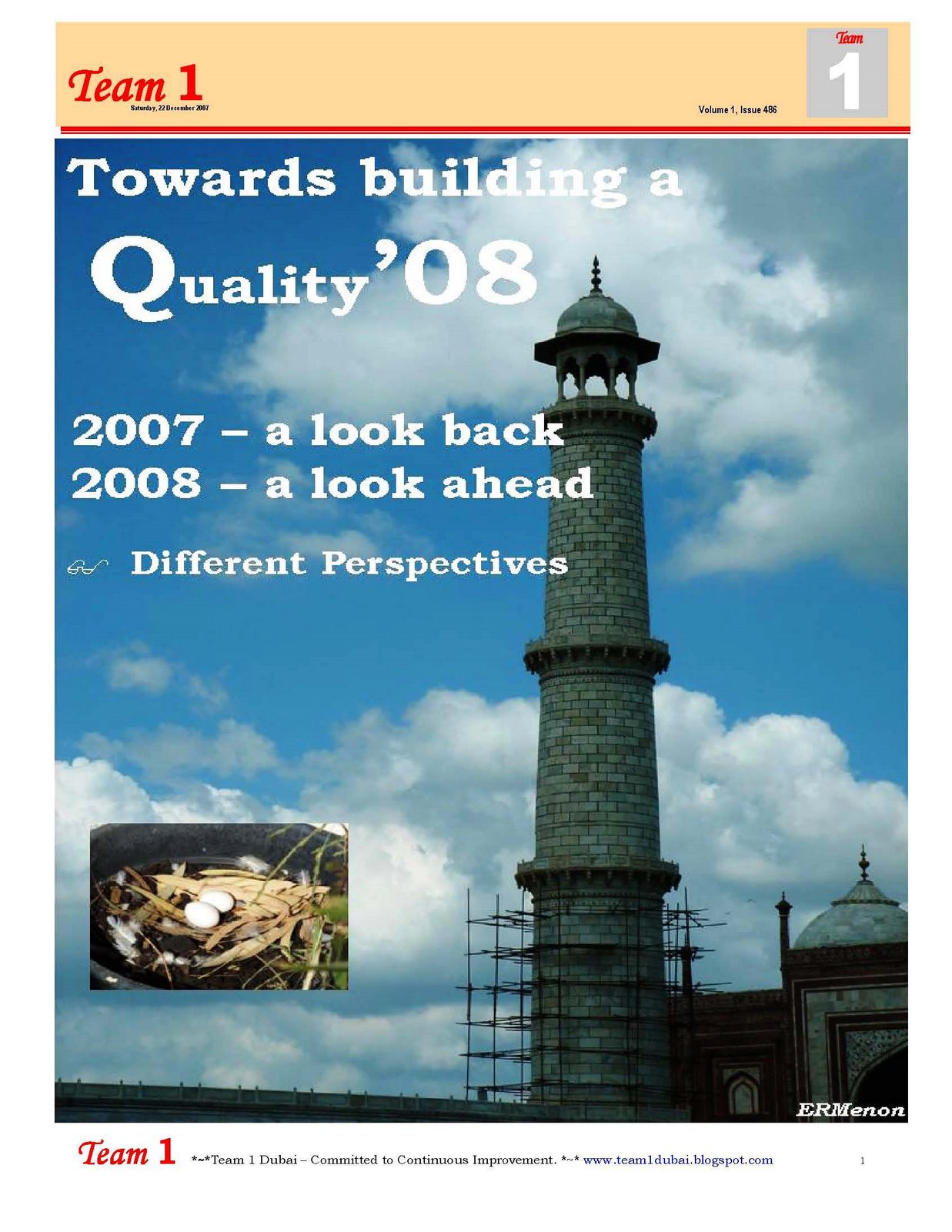
Team 1 newsletter – Issue 486 – “Towards Building a Quality ’08” is ready and available. Those readers who wish to obtain a personal copy of the same in pdf version, please email us at team1dubai@gmail.com
digg_url = ‘WEBSITE_URL’;
digg_bgcolor = ‘#ff9900’;
digg_skin = ‘compact’;
digg_window = ‘new’;
One, two, three… click

An effective photo draws your eyes into the shot and then all the way around the frame. Megan Hirons/Gulf News
One, two, three… click
By Megan Hirons
Gulf News photographer Megan Hirons is often asked for advice on how to take great photos. Here she shares 10 tips for improving the quality of your pictures.
1. Know your camera
Read the instruction manual for your camera. Get to know your camera’s features and settings. Experiment with different settings to learn what results they produce. Play. Your camera is your friend, so spend adequate time and energy with your camera. It will serve you to the best of its ability.
2. Move your subject out of the centre of your frame
If you place your subject anywhere in your frame outside of the centre, you are assured of a more dynamic shot.
3. Don’t be afraid to take too many photos
In this age of digital technology, there is no film to waste. So take more pictures than you need; you can always delete them later. Move around, get high, go low, change perspective, use your flash, turn your flash off, zoom in, zoom out. In other words, play. Find out what suits your eye. Taking photos should be fun, so enjoy it.
4. Shoot with the sun behind you
Look at where the sun lights the things around you and go with it. Shooting into the sun causes flare – those circles of light you sometimes see in photos. Flare tends to destroy the saturation and contrast of your pictures. To avoid it, shoot while the sun is on your side or behind you.
5. Get close to your subject
Stay away from zooms and get close to your subject. You can feel the presence of someone who is close to the camera in the final shot. It adds a personal feeling to pictures that tends to be lost when you shoot from far away.
6. Make use of the ‘magic hours’
Try to stay away from taking photos at noon. The light is very bright, high contrast and tends to wash out colours. Try to make use of the ‘magic hours’ – before 10am and after 3:30pm. The light is warm and soft, and colours tend to be more vibrant.
7. Use available light when possible
The flash is highly overused and can flatten images, taking away the shadows that give definition and depth. Make use of natural lighting when you can. It looks the most natural to our eyes.
8. Work with the natural lines of the scene you are shooting
An effective photo draws your eyes into the shot and then all the way around the frame. Work with strong lines, be they vertical or horizontal, to lead into the photo. Frame your image accordingly to take advantage of these lines.
9. Turn your camera to shoot vertical
Remember, you can hold the camera vertically to shoot vertical images. Shooting vertical is effective for portraits and architecture, and can suit many other kinds of photos. Don’t forget to rotate your camera from time to time to vary your shots.
10. Look at photographs
One of the best ways to improve your eye for photography is to simply look at other people’s photos. Use Internet, newspapers, magazines and coffee table books for inspiration.
Paper tole artist
Paper tole artist
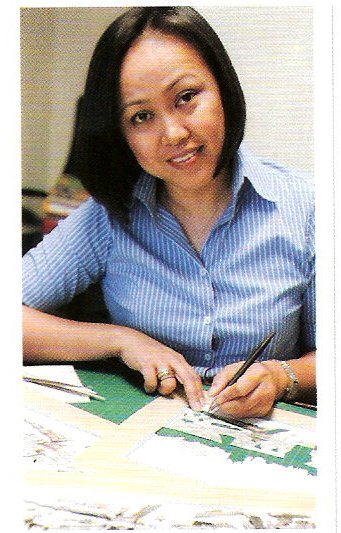
Suzan Lee, from Philippines
Lee works with paper tole, the art of creating a picture to appear in a 3-D image. “Simply stated, it is the art of creating a picture that will look lively and realistic. In paper tole, part or all of an image is raised from the surface to give a 3-D effect,” she says, adding, “It is also called 3-D decoupage.”
The most aspirational project for Lee is to work on a picture by Anton Pieck, the Dutch painter, artist and graphic artist. To her, Pieck’s work is the acme of art. “You simply have to be at your creative best. You require more imagination and resourcefulness when using his work,” she says. Pieck’s works are noted for their nostalgic or fairytale-like characters. “The reproduction of the details in his characters isn’t facile work. I find the most difficult [paper tole projects] to be ones which use of his pictures. I am inspired by his oeuvre, which includes paintings in oil and water colour, etchings, wood carvings, engravings, lithographs and textbook-illustrations,” says Lee, who is consumed by the exquisite detail of the artistic process of paper tole art.
She is also inspired by the art’s uniqueness and emphasis on detail. “I have to visualise the picture in its entirety. I then have to see which part has to be cut first. [Paper tole involves cutting and layering of various designs or prints.] The result varies depending on the project. If I work on a simple design such as fruit or kiddie stuff like a picture of a teddy bear, the result is discernible at an early stage. The more complicated the design, the harder it is to envision the outcome,” she says.
Paper tole requires the artist to make copies of each image. “These have to be cut individually, and each copy has to be reapplied directly over the original; I use four to seven copies. The method creates a sculptured and layered effect. Cutting has to be meticulous and perfect; even gluing and shaping. I have to be attentive to the most seemingly unimportant detail,” she says.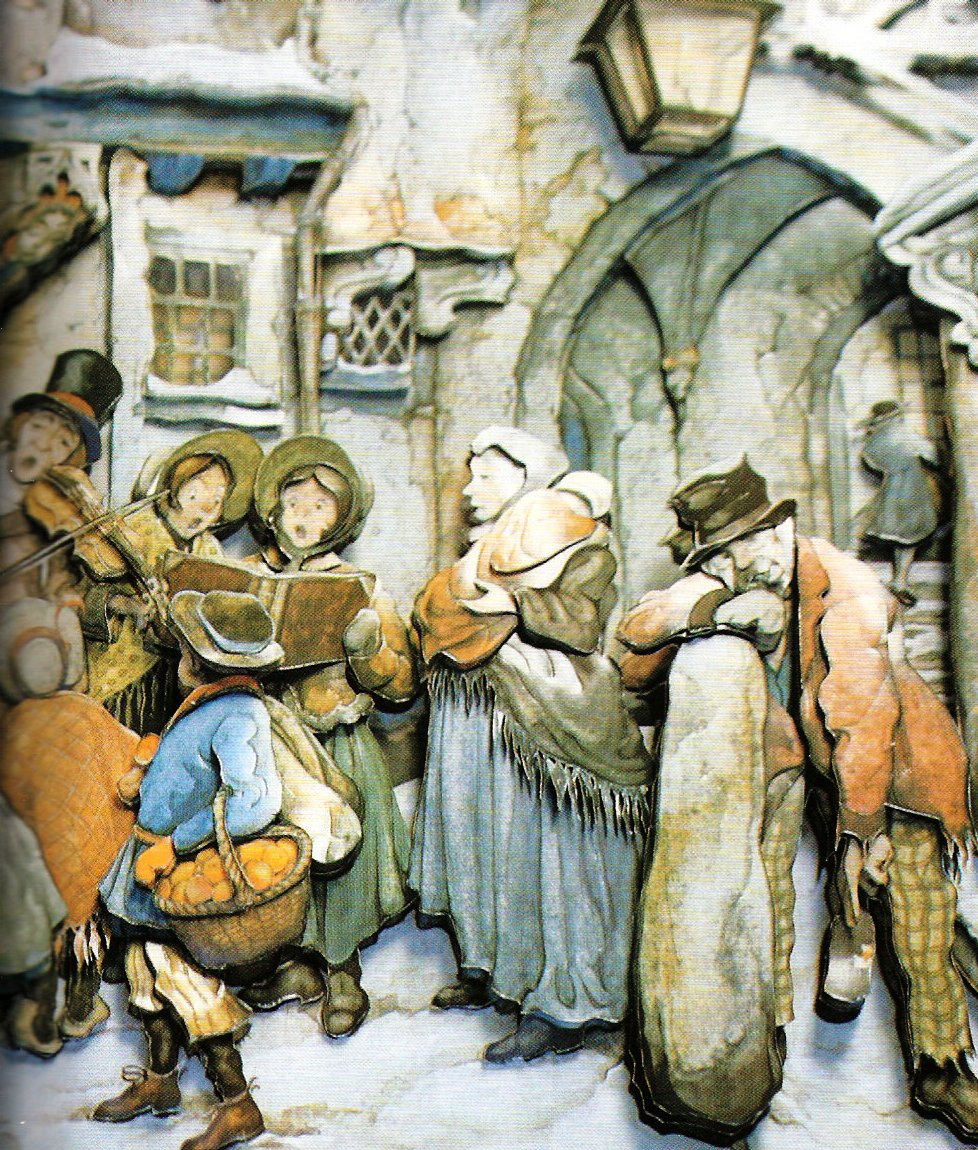
Paper tole is used to emphasise many objects from petals to buildings. And almost any image imaginable can be crafted into paper tole art. Lee loves images related to the kitchen, which is connected to her love for cooking. “I also like objects that describe happiness such as those related to weddings or a celebration. I also love pictures of children,” she says.
She can create an easy piece like a single flower in about two hours. However, designing a complicated piece like the one shown on this page (bottom left) – The Painter on the Roof by Anton Pieck – can take her six to 12 hours.
“Assembling is the most interesting part. This is where you connect your soul to the project,” she says.
Lee has been an active member at ARTE Soukh since her first participation in February this year. “At first I was hesitant. Today I am a lot more confident as many have praised my work. At every ARTE Soukh event, I conduct free demonstrations. Some of the attendees have even taken a few lessons.
“Meeting different artists and appreciating their art influences my own artistic sensibilities. The spirit among us [the art fraternity] is inspiring,” she says.
– For details, contact Lee, on mylk_007@yahoo.com
Book artist for designer book-binding and sculptural artist books
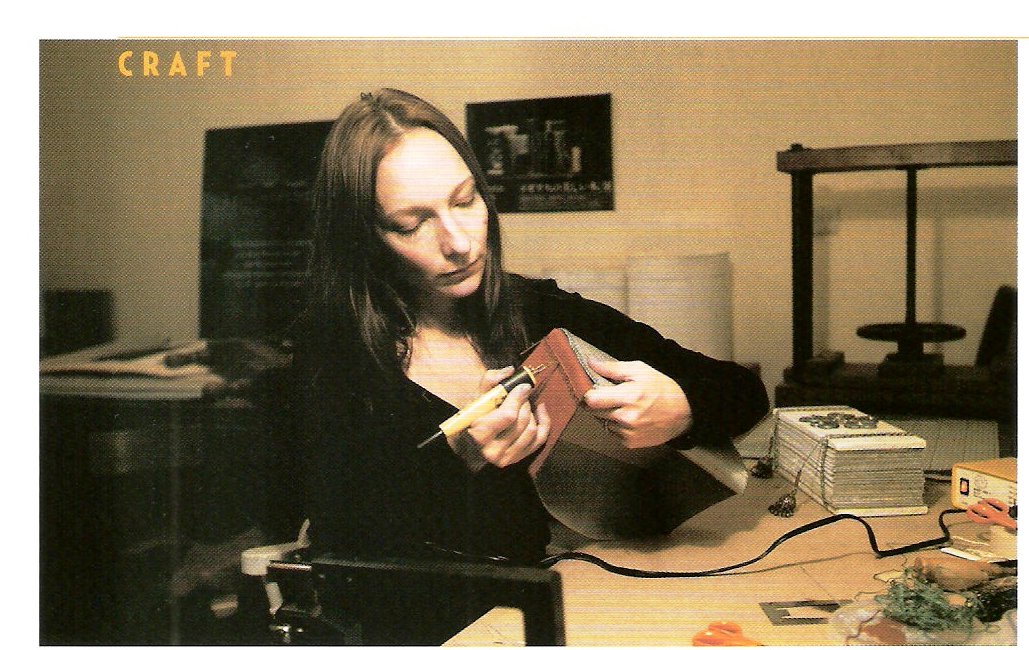
Book artist for designer book-binding and sculptural artist booksMia Leijonstedt, from Finland
Leijonstedt likes the sound of silence, and works best early morning or at night. For her, a book as a piece of art is more tactile than most other art forms. She recently bound Antony and Cleopatra by William Shakespeare for a New York-based book collector, an owner of the world’s leading miniature designer binding collection.
“I made it [binding] look like it belonged to Cleopatra. I used jewels and raw silk in purple, a colour rumoured to be her favourite. On the back of the book, I hid a lining of snakeskin in a decorative box. It is claimed she died from snakebite, where the snake was hidden in a basket. These details vivified the story,” she says.
Leijonstedt also designs sculptural artist books which are artworks in the shape of a book, where shape, material, and content express a theme; the content can be a painting or drawing. Sculptural artist books differ from designer binding in context, where the latter uses printed text.
“I make these [sculptural artist books] primarily out of paper and leather. The visual details express the theme. For example, my artist book, The Lost Spells of Merlin, creates intrigue, and draws the viewer to ‘read’ the book from all its visual and textural details,” she says.
She also designs books that combine elements of designer book-binding and sculptural artist books. “I completed one for a couple’s anniversary. It was a collection of their letters to each other from their years together,” she says.
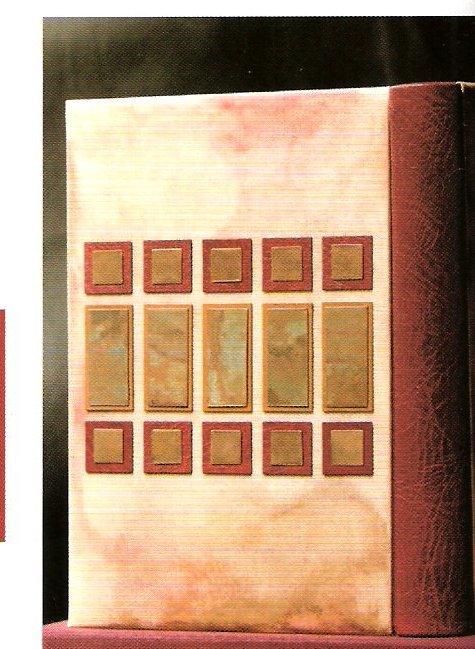
Book art has gained interest in Europe and the US as galleries host regular book art exhibitions. Leijonstedt has exhibited in more than 40 countries, including Japan, Australia, Europe and the US.
Creating art on a three-dimensional platform keeps her passionately interested more than painting, an art form she first dabbled in. “My head is full of ideas, my sketch book full of sketches … I only have time to bring a fraction into reality,” says Leijonstedt, who took part in the ARTE Soukh for the first time last month, and will exhibit this month too.
It was a fortuitous visit in the early ’90s to the British Library in London that emboldened her to take up a special university degree course in the modern and historical skills of making books by hand. At the time, she was an exchange student from the Helsinki University of Art & Design.
“It [the library] was hosting the annual competition of Designer Bookbinders. I had never seen a modern, finely-bound literary work before!” enthuses Leijonstedt, who has won six awards at the same competition between 1995 and 2005.”
Her studies covered every aspect of structural book history – from the birth of the codex to book development through medieval times. In her work, she uses the finest recherché materials like specially tanned natural grain book-binding leather, genuine 24-carat gold leaf and semi-precious stones. “It is the familiar shape of a book that allows one to enjoy the colours, textures and their combinations without worrying about identifying the art form. I deal with colour, scale, layout, symbolism, personal vision and expression.”
– For further details, contact Leijonstedt on galleriamia@gmail.com
Quilling and punch art

Quilling and punch art
Sujata Shethia, from India
The first art form Shethia learnt in 2004 was Warli, a specialised Indian tribal art, which depicts scenes of human figures engaged in everyday activities like hunting and harvesting.
She also learnt Indian Madhubani painting, an art characterised by tribal motifs and mineral pigments.
But it wasn’t till 2006 that a new art form intrigued her. It was daedal composition of quilling art used on a greeting card. “The intricacy of the designs was exquisite,” she says. So impressed was she that she asked the person who created the art to teach her. “But she wasn’t interested [in teaching]. I then spotted a brochure that listed quilling teachers,” she says.
Quilling, also known as paper filigree, is the art of rolling narrow strips of paper and then shaping them. Projects can range from simple gift tags and cards to elaborate pictures and 3-D models.
Quilling isn’t difficult to learn, but requires an eye for detail, time, patience and practice. “Quilling started with metal filigree, but scarcity of material popularised paper filigree,” says Shethia. After learning the art of quilling, which took Shethia a year, she decided to amalgamate her varied artistic knowledge to create unique artworks.
“I began to integrate painting with quilling. It doesn’t matter if it is a simple project like a card, gift box, photo frame or pencil decoration, or a large-scale project like an aquarium [pictured here]. Each creation conveys my personalised artistic message,” she says.
During one of her recent exhibitions at ARTE Soukh, a mother of two boys asked Shethia to create an aquarium for her boys. Impulsively she suggested an alien ship. “I used mixed media and quilling to create an alien world. I made use of different supplies like glitter, sequins, beads and colourful stones. I have even made earrings using the quilling technique!” she says.
Shethia, who first participated at ARTE Soukh last December, exhibits and conducts workshops for children and adults. “There is a sense of belonging, a sense of solidarity among this family of artists. The best part of the Soukh is the exclusive art pieces on offer. You will not be able to find them in regular shops or malls!” she says.
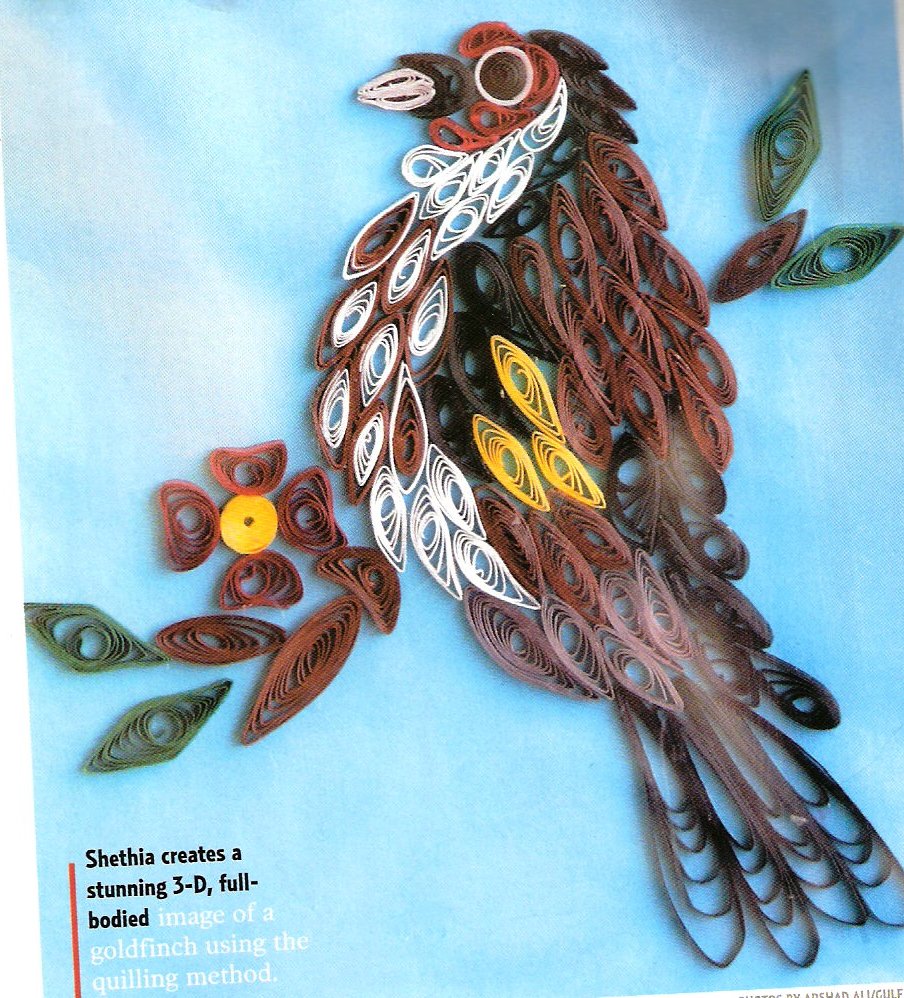
Quilling designs are made of rolled coils. Shethia says the technique needs only a few basic shapes like teardrop, rectangle, square, crescent, arrow, half circle, holly leaf, and triangle. “Once these are perfected, you can combine individual shapes to form anything.”
Interestingly, quilling can also be made to resemble other art forms like painting. “For instance, instead of a painting for a goldfinch bird, you can create the same figure by using quilling. It will give a stunning 3-D, full-bodied effect,” she says.
She enjoys the technique of combing in quilling. “It creates uniform cascading loops to make fluttering creatures or beautiful petals,” she says.
As an extension to this art form, she also learnt punch craft, and now uses both art forms. “For example, when I am making a Christmas card, I punch the Christmas tree and embellish it with beads, colourful stones and glitter. The gift boxes placed under the tree are quilled. This gives the card 3-D effect. Handmade cards express that rare sentiment not found in commercially printed ones,” she says.
– For further details contact Shethia, on sujatashethia@hotmail.com
Scrapbooking
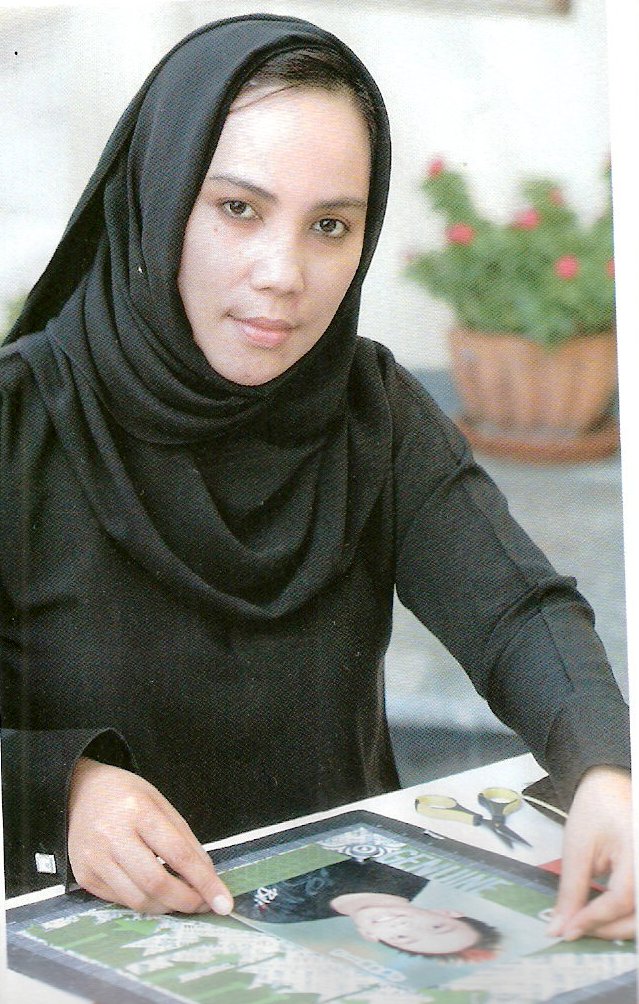
Scrapbooking
Annais Benetua Bin Haider, from United Arab Emirates
When Haider’s youngest son, Abdullah (now 10), went to grade one in 2004, she spent her mornings attending arts and crafts workshops. “I learnt decorative matting and framing of photographs. I also picked DIY craft books,” she recalls.
Her artistic potential, fuelled by an extremely creative imagination, led her to take these workshops seriously.
It also led to the online search of the use of acid-free paper in decorative matting. “I discovered its use in scrapbooking. I was hooked,” says the mother of 3 boys, Rashid, 13, and Omair, 11 and Abdullah, 10.
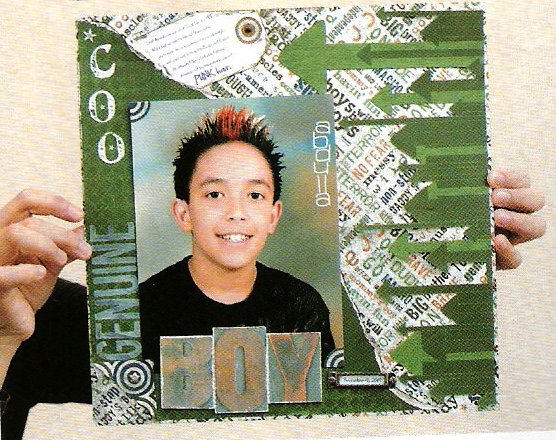
Scrapbooking is a work of art and an illustrated form of storytelling. For Haider, it is both, and an artistic expression of familial love. “A scrapbook is an interpretation of my life and my personality through art. Most importantly, it is a way to express love for my family. There is nothing more precious than the gift of a scrapbook,” she says.
Scrapbooking is often accused of being assemblage or bricolage art by artists who believe the truest form of art is creating not assembling.
“When a scrapbook artist develops his style by experimenting with different decorative techniques and a wide variety of mediums, his work becomes original. A scrapbook is an illustrated story of your life. How can somebody else have the same story or memories as you do?” reasons Haider, who has been exhibiting at ARTE Soukh since July this year, where locally made scrapbooking paper packs and Memories of UAE scrapbooking album were launched.
“All my scrapbooks are heirlooms. I use acid-free or archival quality supplies to ensure the art will not fade, yellow or turn brittle and disintegrate,” she says.
Scrapbooks can represent random, chronological or themed family life. Haider finds the entire process enjoyable. “The only tough part is choosing what to include. There are so many photographic moments I would like to record,” she says. Every stage is important, especially the layout. “The process includes the positioning of photographs, adding embellishments to support the story, and completion with written details like what, where, when, why and who. Together, these elements create the layout,” she says.
Cropping is also an important step. “It is like zooming in on your subject after the photo is taken. Through this, you can focus the viewer’s eye on a particular element of the photo or trim away the unappealing portions.”
Her fascination for scrapbooking inspired her to open her home-based scrapbook store, Creative Hands, and to offer classes tailored to support the art. “My store also deals with scrapbooking supplies because when I started out, I realised of the obvious paucity of supplies,” she says.
– For further details, log onto http://www.dubaiscrapbookingshop.com
Mind Speaks – Team 1 newsletter – Issue 485 – Born Fighters

Hello friends,
Team 1 newsletter – Issue 485 – “Born Fighters” is ready and available. Those readers who wish to obtain a personal copy of the same in pdf version, please email us at team1dubai@gmail.com.
Five skills of creativity
Five skills of creativity
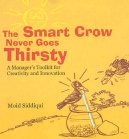
The Smart Crow Never Goes Thirsty by Moid Siddiqui Wisdom Tree
Creativity is the input, and innovation, the output, says Moid Siddiqui in The Smart Crow Never Goes Thirsty ( http://www.wisdomtreeindia.com). “Creativity is non-linear, numberless, and follows no set pattern,” he describes.
It is a tragedy, says the author, that we don’t provide our people with the ‘creativity toolkit’ even as we expect them to be creative. He faults the education system that emphasises the so-called scientific approach.
“More damage is caused, and disservice to creativity is done, by urging students and managers ‘not to be vague’. What they don’t understand is that ‘reality’ is always ‘vague’ at its ends. We encourage our people to be precisely wrong than vaguely correct.”
Siddiqui lists the five skills of creativity, as follows:
Divergent thinking (to move from the focused to the blurred, for obtaining a wider range and a broader perspective).
Lateral thinking (by creating a forced relationship between remote objects, which seem to be unrelated, and thus forging a fusion).
Intuitive thinking (through which you can know the truth, though not know how you know).
Angel’s advocate (by focusing on the positive side of every idea).
Dissection of ideas (the application aspect of creativity to get something done).
The last skill requires the sieving of ideas for attractiveness and compatibility. The criteria of attractiveness include originality, simplicity, ease of implementation and copy protection. Aligning with company objectives and resource availability ensures compatibility.
An appetising guide to creativity!
D. Murali
Creative sparks – Poem – The Criminal – by Master Suraj Menon
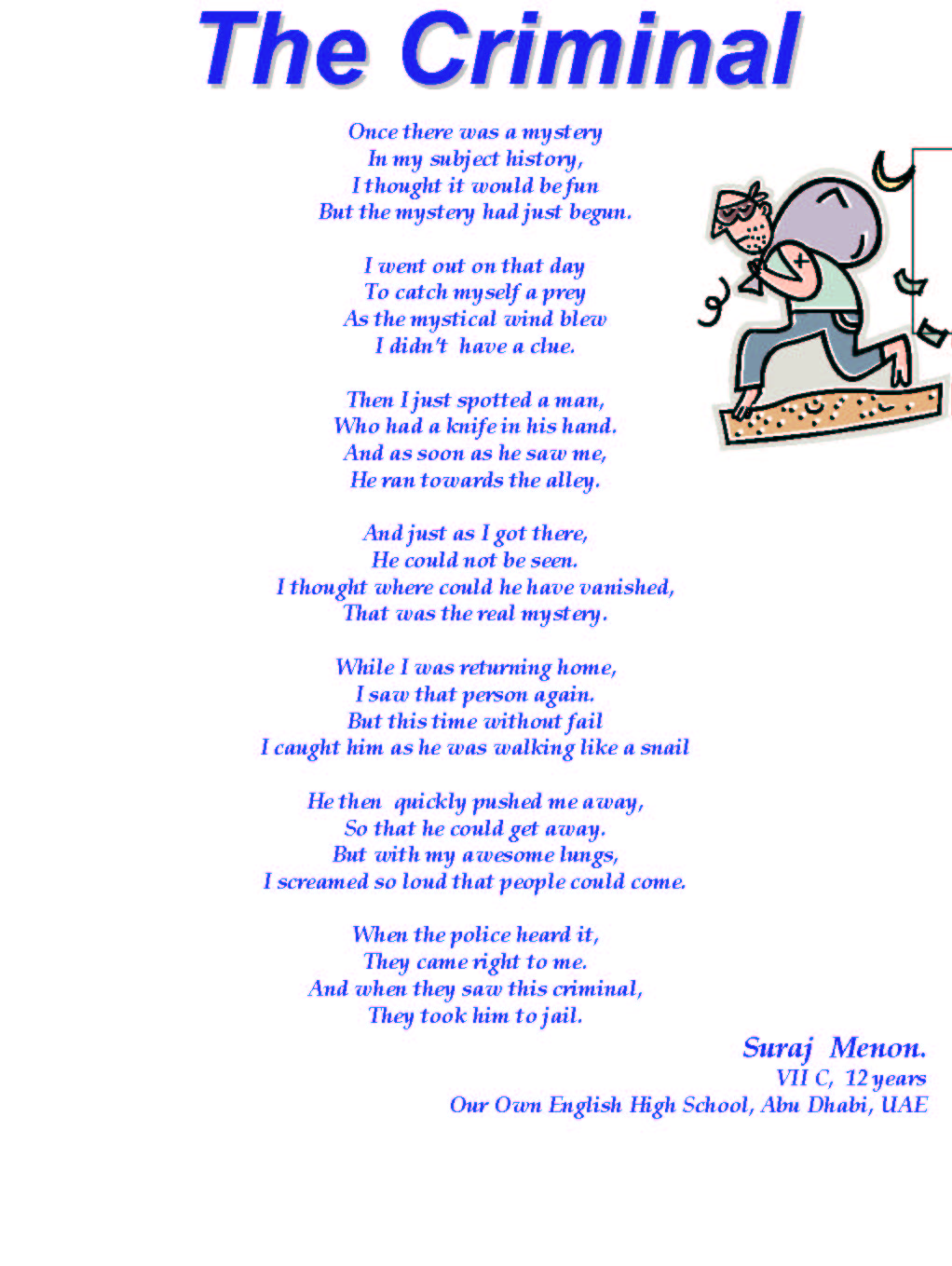
by Master Suraj Menon, Our Own English High School Abu Dhabi
 ClicksandWrites
You must be logged in to post a comment.