Education +
IGNOU will set up university for NRIs
IGNOU will set up university for NRIs
(IANS) 1 October 2007
WASHINGTON — India plans to set up a ‘knowledge bank’ to share the expertise of NRI doctors, engineers and other professionals to provide world-class education back home, Overseas Indian Affairs Minister Vayalar Ravi said here.
To this end, the Indira Gandhi National Open University (IGNOU) is preparing a project to set up an NRI university, Ravi said during an interaction with the Indian American community at the Indian embassy here Saturday.
An independent trust was also being set up in collaboration with the Confederation of Indian Industry (CII) to help Indians abroad do what they want back home.
A legislation has been introduced in the Indian parliament to encourage more collaboration with credible foreign universities to bring about the needed changes in the Indian system of education, Ravi said.
The proposal he said had run into political problems with some supporting parties having certain objections to it. But he personally felt that collaboration with foreign institutions would be good.
Ravi agreed that India’s healthcare system needed an overhaul, but in order to provide access to basic healthcare down to the district level, government and the private sector needed to work together.
There was, he said, great demand for Indian manpower abroad, particularly in the Gulf region. To facilitate and regulate this, memoranda of understanding (MOUs) have been signed with Kuwait and the UAE. Similar MOUs were in the offing with Oman, Qatar and Bahrain, Ravi said.
Educating children key to ending cycle of poverty, says Maitha
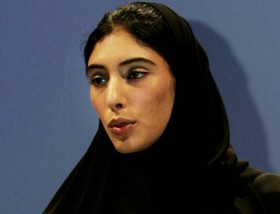
Educating children key to ending cycle of poverty, says Maitha
By Zoi Constantine, Staff Reporter Published: September 28, 2007, 00:00
Dubai: Shaikha Maitha Bint Mohammad Bin Rashid Al Maktoum has urged Dubai’s diverse, multi-cultural communities to unite under the banner of ‘Dubai Cares’ to contribute to the goal of educating 1 million children.
The call came as the amount raised for the initiative launched on September 19 by His Highness Shaikh Mohammad Bin Rashid Al Maktoum, Vice-President and Prime Minister of the UAE and Ruler of Dubai, topped Dh300 million.
Among the latest to donate are Dubai Contracting, which yesterday pledged Dh500,000, and Ahmad Siddiqui and Sons who donated Dh1.5 million to the six-week campaign at an event hosted by Shaikha Maitha, on Wednesday night. 
During the event she also announced that she will host the ‘Dubai Cares’ Walkathon, scheduled for October 19 to be attended by members of the public as well as sporting personalities and well-known names from the world of art and culture in the UAE.
“Dubai Cares is an opportunity for all of us – regardless of our race, religion or ethnic background – to bring together the different communities in Dubai’s multicultural landscape to support a common cause and contribute to a greater purpose,” Shaikha Maitha said during her address before the diverse crowd at the Dubai World Trade Centre on Wednesday evening.
“We recognise education as the best long-term solution to poverty alleviation in the developing world -educating children, especially girls, is the key to ending the global ‘cycle of poverty’.”
Present at the event to launch Shaikha Maitha’s participation were various sports personalities, artists and actors, including Abdullah Al Khair, who pledged their support for ‘Dubai Cares.’
Easy Maths
Please try it
something really exciting Multiply 777 with ur age
& then
multiply it with 13 the answer will surprise u…
Breaking the higher education logjam
Breaking the higher education logjam
14 Sep, 2007, 0030 hrs IST,Manoj Pant,
In the last few articles this columnist had argued that inclusive growth requires the universal dissemination of primary and high school education rather than higher education. In this, the government is well equipped to do the needful as more than 90% of the (primary) school-going population is enrolled in government schools.
All that is required is decentralisation of schools and eliminating political interference to ensure accountability. But, crucially, enabling participatory growth requires basic skills for which the groundwork is laid in schools rather institutions of higher learning.
The inability to appreciate this has led to a situation where the private sector complains of a lack of skilled labour while there is a growing army of the educated unemployed in most states. Last month, this column had shown that this is a problem of ‘inappropriate’ secondary education rather than a lack of universities. Yet, the mess in higher education continues.
To the government, the solution to higher education seems to lie in increasing expenditure. One example is the proliferation of distance education models. Typically, distance education is a means of reducing the expenses of face-to-face education in the standard universities without reducing the value of the basic degree. Distance education reduces the fixed costs of operating in the classical university mode.
This is hardly true in India, given the high costs of modern technology. Consider the rather absurd system now operating in India where every state is setting up its own open university. But distance education is supposed to be the alternative to setting up a host of geographically separated universities. Why then do we need an open university in each state? About a year ago this writer was invited as an expert in discussing the course content of the post graduate economics programme of the Uttarakhand open university.
When it was pointed out that a course content without emphasis on quantitative methods would be meaningless, one was told that with quantitative courses there would be no takers! And when one suggested that perhaps then the course should not be offered, there was disbelief. That was the last one heard from the authorities!
It is even stranger that distance education is supposed to provide vocational courses, which crucially depends on hands-on practical experience. There is a pressing need for such courses, but here the private sector is far ahead of the state. As argued in earlier columns, the supply of vocational education must respond to the demands of the private sector which can vary on a continuous basis. Universities, however, are not geared to meet such demands.
What then should be the objective of higher education, particularly in our state universities? The main aim should be to further the R&D requirements of the country. Anyone who has followed the history of inventions will observe that more than 90% of such inventions first happened in universities and reported in scientific publications.
It is only later that the private sector came in to fund the application of such inventions to everyday life. Yet, the link between industry and universities is the subject of great suspicion in India. It is not surprising then that very few students want to study science at the university level and even China is ahead of India in the role its universities will play in promoting R&D.
Where then are we headed? The prognosis for state run higher education is grim. For, universities have become highly politicised. In less than one year we have ‘progressed’ from the case of the late Prof Sabharwal in Bhopal to the vice chancellor of Lucknow, who needed court intervention to function, to the recent banning of all student union elections in Uttar Pradesh.
To many students, university life has become a way of promoting their political careers with little regard for academic excellence. Surprisingly, it needed a Lyngdoh committee to discover this! Even more unfortunate, universities are judged today on the basis of populous quantitative indicators (number of students per faculty, number of PhDs produced, etc.,) rather than their contribution to promoting long term R&D efforts of the country.
Yet, India has one of the best structures of higher education, at least among the developing countries. The crucial issue today is the shortage of teachers, not universities. To use modern language, the problem is software, not hardware. Universities (particularly state universities) need to be given greater autonomy from state (and hence political) control as this is crucial to serious research.
Dismantling this structure and replacing it with one of dedicated institutes and private universities seems to be the current trend. As in other matters, ten years down the line we will look at China and wonder where we failed. But it is still not too late.
(The author is professor, Centre for International Trade and Development, School of International Studies, JNU)
To retain talent, provide faster growth options
‘To retain talent, provide faster growth options’
15 Sep, 2007, 0034 hrs IST,Shreya Biswas,
An unknown entity just two years ago, Subhiksha Trading Services has now become a household name in Northern India. In existence for almost 10 years, the company set foot in NCR two years back and rapidly expanded its presence to 125 stores in nine months. Subhiksha Trading Services’ president (manpower) Shashi Kanth S S explains the company’s strategy and people issues.Excerpts:
Shashi Kanth S S
President(Manpower), Subhiksha Trading Services
Your focus on cost cutting extends to your selection of office place too. Please
elaborate.
We look at affordable locations as we try to save at least 40% of the cost. But we do provide good interiors and comfortable working environment. However, what is critical is that we make a clear distinction between necessity and waste. This principle always governs our actions at Subhiksha. In fact, we try to cut costs so that we can pass it on to the consumers.
In terms of job stability, are employees from small towns more stable than their metro counterparts?
Yes, they are more stable. And it’s due to a number of reasons. These guys leave their hometowns for employment; they come with various inhibitions and don’t want to switch jobs frequently. Consequently, they stay back with a company, build up their confidence, try to understand the business and the job market scenario. Besides, these people are not culturally-inclined to job-hopping. Moreover, most of the people in small towns are employed in government organisations and a job for them means stability.
With retail sector facing severe talent crunch, how do you think players would get the best talent?
Organisations with strong fundamentals always attract good talent. Good learning climate, aggressive growth (both business as well as rewards), good people practices, defined career progression plan and an objective reward system would help in attracting best talent. Specifically, if we talk about retail, it will be cutting down hierarchy. That way, it will allow junior employees or anyone in the organisation reach out to the top bosses directly, share their problems and ideas. Globally, too, if you see, retail companies had people rising through the ranks. Hence, in the Indian context, if you need talented people to stay back, you have to give them the fast growth option.
Companies are increasingly providing opportunities to their employees to pursue higher studies. Do you think such firms will eventually become universities for youngsters who otherwise couldn’t afford quality education or didn’t have the time?
Creating employability is the cornerstone of tapping and using the vast potential of human capital available in India. Most organisations would like to nurture talent and it’s true for retail organisations too, where people grow from within to occupy higher positions. We also run internal schools where we nurture talented people in order to make them employable in the retail industry. This has been one of the a key initiatives of Subhiksha. And most of the talent that the school has churned out so far, has been enough for us to meet our expansion plans
Understanding central bank autonomy
Understanding central bank autonomy
10 Sep, 2007, 0442 hrs IST,Mythili Bhusnurmath, TNN
NEW DELHI: Research has already established that there are significant benefits for macroeconomic performance from central bank autonomy (CBA). CBA helps countries achieve lower average inflation, cushions the impact of political cycles on economic cycles, enhances financial system stability, and boosts fiscal discipline without any real additional costs or sacrifices in terms of output volatility or reduced economic growth.
Now an IMF paper that looks at trends over time in CBA of 163 central banks representing 181 countries (India is not included in the sample) delves deeper into the issue, more specifically into two aspects of such autonomy: political and economic autonomy.
Political autonomy is defined as the ability of central banks to select the final objectives of monetary policy, based on eight criteria: (1) governor is appointed without government involvement; (2) governor is appointed for more than five years; (3) board of directors is appointed without government involvement; (4) board is appointed for more than five years; (5) there is no mandatory participation of government representative(s) in the board; (6) no government approval is required for formulation of monetary policy; (7) central bank is legally obliged to pursue monetary stability as one of its primary objectives; and (8) there are legal provisions that strengthen the central bank’s position in the event of a conflict with the government.
Economic autonomy assesses the central bank’s operational autonomy on the basis of seven criteria: (1) there is no automatic procedure for the government to obtain direct credit from the central bank; (2) when available, direct credit facilities are extended to the government at market interest rates; (3) this credit is temporary; (4) and for a limited amount; (5) the central bank does not participate in the primary market for public debt; (6) the central bank is responsible for setting the policy rate; and (7) the central bank has no responsibility for overseeing the banking sector or shares responsibility.
Assessing the performance of the sample group of central banks against these two yardsticks, the paper concludes: Average CBA scores have increased significantly over the last couple of decades: overall CBA (political and economic autonomy) has about doubled, but the economic element of autonomy is significantly ahead of the political component.
Advanced economies started off from relatively high levels of autonomy in the late 1980s but continued to strengthen their CBA in the subsequent years. Since their economic autonomy was already quite high, most progress has been towards boosting the political autonomy. However, the political component of autonomy still lags behind the scores for economic autonomy.
Among emerging markets, overall CBA has more than doubled over time and has surpassed CBA, typical in the advanced countries in the late 1980s. Measures of economic and political autonomy show similar levels of improvement, with economic autonomy remaining higher than political autonomy.
In developing countries, political autonomy of central banks has improved only marginally and remains low. The good thing, however, is that economic CBA has increased significantly over the past couple of decades.
According to the authors, political autonomy is much harder to win than economic autonomy. In developing countries, governments often continue to be involved in the selection of central bank boards and tenures tend to be short; the government is generally represented on the board and central banks have a limited legal protection in the event of a conflict with the government.
The four main principles of any legal framework for CBA include:
Setting price stability as the primary objective of monetary policy
Governments may have several competing economic objectives, particularly in the short term. Accordingly, they may tend to ignore the medium-term inflationary effects of an expansionary monetary policy. This time-inconsistency causes a credibility problem. Entrusting price stability to an autonomous agency ( i.e., the central bank) helps strengthen credibility.
Curtailing direct lending to governments
Most central banks have provisions in place that limit their ability to provide unrestricted credit to the government. Today, almost all central bank laws stipulate that lending to the government, if allowed at all, cannot be automatic, and must be temporary, subject to quantitative limits and at market-related interest rates.
Ensuring full autonomy for setting the policy rate
Most central banks have been granted full autonomy for setting their policy rate. At the most basic level, this condition is necessary for the central bank to pursue its goals. A corollary to that consensus view is the desire to ensure that the central bank has full autonomy for the design of its monetary policy instruments, i.e., the tools to achieve the operational target of monetary policy.
Ensuring no government involvement in policy formulation
No government approval should be required for the formulation of monetary policy. A corollary to that principle is the existence of procedures to resolve conflicts between the central bank and the government.
With the exception of the second — curtailing direct lending to government — we do not make the grade on any of the remaining counts. No wonder that differences between the government and the RBI will increasingly see the central bank on its back foot, with unhappy long-term consequences for the economy?
When you converse at a personal level
When you converse at a personal level
B.S. WARRIER for HINDU
Personal conversation accounts for a substantial part of our daily communication. Here are ways of making it effective and result-oriented.
“Unless one is a genius, it is best to aim at being intelligible.” – Anthony Hope (1863-1933), British novelist
In personal conversation you have to take care of many things. An expert in interpersonal communication advises that you should be TACTFUL in conversation. What he suggests is the following;
T – Think before you speak
A – Apologise quickly when you commit a blunder
C – Converse, don’t compete
T – Time your comments
F – Focus on behaviour,not personality
U – Uncover hidden feelings
L – Listen for feedback
In strange company, it is good manners to introduce yourself to others, since that would not leave them guessing who you are. So also, you may greet others first; this shows that you are not plagued by ego feelings. It is most likely that you do get a favourable response.
There is no harm in asking a person’s name if you do not know it. After knowing the name, repeat it during the conversation. The sweetest word for anyone is his/her name. Try to remember the names of people whom you would meet again. Be liberal in showering praise, if you feel someone deserves it.
Intellectual curiosity
When ideas are discussed, you should not give an impression that you are too conventional to accept a new idea. Intellectual curiosity will be appreciated in cultured groups. Conversation would sour if you enter into arguments on trifles.
Never try to offer unsolicited advice. Though it is not advisable to bore others by narrating dull events in your life, you need not feel shy in sharing your interesting experiences if the occasion demands. Keep your general awareness up to date, if you want to partake actively in an interesting conversation. You would be able to switch to new subjects when a subject has run out of steam.
Maintain a balanced outlook. Extreme positions may lead to controversial remarks that may mar smooth dialogue among the members of a normal group. Do not go after any contentious issue, unless it is unavoidable. Be tolerant to differing views. Never be dogmatic. Be a good listener. In personal conversation humour has a place, though it should not jar, given a situation. If you are not gifted with the fine art of making humorous conversation, do not attempt it.
Body language
You may encourage others to speak by paraphrasing their statements for confirmation and through pleasing body language, including facial expression. Never try to be another person through your language or gestures. People who speak in a natural way are liked by others. Do not try to put on airs. You cannot wear a mask for a long time; you are likely to be exposed. Eye contact and a pleasant smile would add spice to your words. Find areas of common interest during conversation. You can ask questions on subjects that are of interest to the other person, when you are in a one-to-one mode. Everyone likes to speak on areas in which he is well versed. Enjoy the conversation, and show that you are enjoying it. Be enthusiastic.
You should never adopt a stance of arrogance, since none would like to communicate with such a person. Never be rude. Never assume a patronising attitude. But you should not surrender your self-esteem. Avoid insinuation. Show patience; never try to be unduly smart before others. You have to display empathy by entering into the other person’s world of thought, and trying to think the way he thinks.
You can ask leading questions to confirm your interest in his conversation. Questions seeking clarification are generally welcomed by people. Confessing your own weakness would generate sympathy and keenness in the other person and prompt him to listen to you further.
Key to success
Any communication succeeds only when it has been received, understood, accepted, and the intended action has been effected. If such a success has to be achieved, there are several measures we should follow in the process of communication. Ideas and the words that carry them are certainly important. But you should realise that your voice, tone, appearance, and body language are also equally important in oral communication.
Making a presentation
If you intend to make a presentation, not only the structure but the content, logic, and main phrases have to be planned. The right strategies for effective presentation have to be followed. These include:
•Getting over nervousness
•Wearing proper dress
•Proper body language
•Speaking with clarity
•Not reading from a prepared text
•Stating your objective in the beginning
•Following a logical order in presenting ideas
•Choosing the right mode for each item (for example, statistical trends to be displayed through graphs, histograms, pie diagrams, etc.)
•Using charts or computer software such as the PowerPoint or Flash
•Avoiding cluttered display on the screen
•Ensuring that your voice can be heard and the projection seen well
•Synchronising spoken words with gestures
•Not keeping a projected slide on the screen for too long a duration
•Avoiding mannerisms
•Ensuring voice modulation
•Keeping eye contact
•Adopting the language to suit the comprehension level of the audience
•Maintaining appropriate speed of delivery
•Keeping consistency in logic
•Using controlled humour
•Avoiding frequent corrections during speech
•Emphasising significant points
•Interacting effectively with the audience
•Watching the body language of the listeners and making changes in style, if necessary
•Listening carefully to questions from the audience
•Handling of tricky questions wisely
•Not talking beyond the permitted duration
•Giving a summary at the end
It is easily said that you should look at the type of your listeners before choosing your language. But the characteristics of a group are not susceptible to generalisation. Suppose you are addressing a group of rural farmers. All of them may not be the same, in the matter of information or perception. There would be individuals who are much more informed than many others in the group. There may be persons who are far below the general level of awareness. Perhaps in such situations, one strategy that can be adopted is to address the average among the group. This is the style that is followed by good teachers in a classroom comprising a heterogeneous group of pupils, so that the very bright do not get bored and the underachievers do not feel left out.
Persuasion
You are often faced with the problem of convincing others of your standpoints. You might have observed that most of the time, politicians are engaged in this exercise. Marketing professionals and businessmen have to be good in this kind of communication. What are the aspects to be kept in mind when you attempt to convince others on some point or other?
First and foremost you should find out what type of person is your target – on the bases of educational background, culture, language comprehension, age, sex, attitude, and so on. You should ensure that the person listens to you when you speak. If the mood is not proper, you have to generate an appropriate atmosphere congenial to effective listening. The person should be in a listening mood throughout.
What you say should have the qualities or clarity and accuracy. You should plan beforehand your strategy of presentation. You have to be enthusiastic. You have to be confident. You should continuously watch the listener’s expression and body language, and make sure that the person is not emotional when you try to apply logic through your words.
In any persuasive talk, you will have to emphasise the significant points of interest to the listener. Your logic has to be convincing. Use illustrations. Be consistent. If the listener wants to raise a question, make him fell free to do so, thereby making way for smooth exchange of ideas. Make him feel important. If there is a problem to be settled through negotiation, split it into parts and identify portions of agreement, and try to tackle the other portions in stages. Try to build trust at every stage. Never make the listener hostile, lest he should block further communication.
Who is a good teacher?
Who is a good teacher?
Here is a systematic look at the capabilities, skills and traits that will help one attain the goal of being an ideal teacher. It follows last week’s responses from various campuses in the State on this topic, highlighted in a lead story.
A friend and guide: Good teachers are excellent facilitators.
The lead story on the ideal teacher (Educationplus, August 27) had thrown up interesting insights into the perceptions of several students and teachers on the topic. Let us go on to examine this topic in a systematic manner.
The ‘ideal teacher’ is a concept. It is a goal that teachers should aspire to attain.
There is no ideal teacher as there is no perfect musician. Let us look at an eastern concept. Seekers of knowledge are sometimes compared to the musk deer. The deluded deer that does not know that the scent emanates from one of its own glands runs hither and thither in search of the source.
The eastern scriptures tell that all knowledge is within us. But there is a thin film of ignorance covering the knowledge. The teacher does not teach, but removes the thin layer and brings out the knowledge for our benefit. True teachers are not knowledge shopkeepers, but are those who help us to remove the cover of ignorance. Perhaps this is what is meant by guidance from the teacher. “Discover” or “unveil” are good synonyms for “teach.” Good teachers are excellent facilitators.
The teacher in the eastern scheme of things stands on a very high pedestal. He is called the Guru and the disciple the Sishya. The process of teaching and learning is treated as a sacred course of action, and not commercial activity. Knowledge stands head and shoulders above every other kind of wealth. Scholars are respected much more than those who are rich in money, or great in power. Now, let us come down to the ground and look at the essential attributes of a good teacher in our colleges and institutions of higher learning.
Personal characteristics
The significant personal characteristics of a good teacher are: appreciates students’ problems; articulate; accessible to students; avoids mannerisms in the classroom; believes in the potential of each student; caring; clarity in speech; committed to the teaching profession; communicates effectively; concern for student learning; conducts practical experiments wherever necessary; creates good learning environment for students; creative; dedicated; desire to teach; develops student-centred classroom; displays exceptional people skills; does more than just teach; does not belittle students before others, or otherwise; dynamic model of contagious enthusiasm; effective interaction with all students; effective techniques; employs different teaching methods to suit the subject and the pupils; encourages interdisciplinary approach; ensures interaction of pupils, and not keep them as passive listeners; ensures pupil participation in lecture classes through questioning techniques; evaluates student assignments in time, points out errors, and offers corrections; excellent communication skills; gets feedback from students on classroom performance in order to improve; gives practical examples for illustrating concepts; gives the details of the syllabus in the beginning of the academic year; good academic qualifications; innovative; instils mutual respect among teacher and pupil; interacts with parents; joy and pride in teaching; knowledge of different learning styles; knows his subject thoroughly; lifelong learner; links the lesson with the pupils’ everyday experience and kindles their interest; maintains a spirit of research; maintains punctuality and discipline through his own example; passionate in teaching; has a positive relationship with students; prepares well before each class; presents himself / herself as part of “real people”; promotes hands-on student learning; provides clear expectations for assignments; provides frequent feedback to students on their performance; provides the relevance of information to be learned; respects individuality of students; responsible; role model to students; seen and heard well in the classroom; sense of humour; sensitive to cultural differences; speaks in a lucid style; employs special methods to handle difficult subject areas; spends extra time with students; states lesson objective and lesson summary; strong work ethics; student-centred approach; suggests good textbooks, reference books, and websites; takes constructive criticism; tries to know students; uses appropriate teaching aids; wide knowledge and experience in teaching techniques and willingness to learn from students and other teachers.
One may doubt whether one individual can have all these attributes. This indeed is possible. Many trained teachers have acquired all these through deliberate effort.
Lecture method
Although the lecture method of teaching has several disadvantages, it would continue to be an important component of our classroom teaching, because of many points of convenience. Teachers adopting this style should invariably ensure student participation in the classroom. One of the important methods for achieving such participation is the use of the “questioning” technique. Teachers who use the questioning technique may keep the following points in mind – Precise, simple wording; prepare in advance; pose, pause, point; don’t use YES / NO type; not with several good answers; avoid vagueness; use elliptical questions for slow learners; avoid tricky/very hard questions; never make sudden jumps; don’t rephrase in a hurry; avoid saying “Can anyone tell me?,” “What rubbish ?,” “Do you work hard ?,” etc; repeat right answers; don’t accept unsolicited answers; give due credit for right answers; comment, “Aha, that’s a fine idea,” “Could you improve the answer?,’ etc and encourage reverse questions.
Questioning in the classroom has other applications as well such as eliciting information (prior learning / depth of assimilation); revision; consolidation; logical development of the lesson; probing into difficulties of the pupils; forcing the class to think; rousing curiosity and interest; feedback to measure success of teaching; evaluation of pupils etc
This write-up has the limited objective of highlighting the desirable attributes of a good teacher in the environment of our temples of higher education.
B.S. WARRIER
for HINDU
Carnatic Flute thru online lessons
My name is k.t.dasarathy,an online carnaric flute teacher from chennai.i teach carnatic flute thru cds,mail attachment lesons,sound files,voice chat lessons etc to around 400 plus students all over the world.most of my students started from zero level only.
in case you need reference for verifaction about me and my method of teaching,i shall give you the contact nos of my students.
please mail me in case any of your friends is interested.
immediately on enrolment to my online coaching programme,i will record around 40 months lessons in cds and send them by speedpost to the contact address of my students.if they want flutes that also i will arrange to send with cds.
i have now built up a student strength of around 459 students now so far.
i have also recorded aroung 18 popular rags alongwith notationss for them manually in a note book.that will be useful for any one learning any carnatic instruement.they will have to simply listen to the instructions the cds alongwith the notations in the note book and they can learn the rags comfortably within a short time.for details about me,see the flwg:
http://dasarathy-onlinefluteteacher.blogspot.com
all the best
KT Dasarathy [ktdasarat99@yahoo.com]
- ← Previous
- 1
- …
- 23
- 24
- 25
- Next →
 ClicksandWrites
You must be logged in to post a comment.