Month: June 2009
Today in History – 19 June
1988 World’s Largest Sausage completed at 13 miles long
1981 European Space Agency’s Ariane carries 2 satellites into orbit
1981 Heaviest known orange (2.5 kg) exhibited, Nelspruit, South Africa
1981 India’s APPLE satellite, 1st to be stabilized on 3 axes, launched
1961 Kuwait declares independence from U.K.
1947 1st plane (F-80) to exceed 600 mph (1004 kph)-Albert Boyd, Muroc Ca
1931 1st photoelectric cell installed commercially West Haven Ct
1910 1st airship in service “Germany”
1910 Father’s Day celebrated for 1st time (Spokane, Wash)
The world of book editing
The world of book editing
SHAKTHI MANICKAVASAGAM for THE HINDU
In an expanding publishing industry, book editors with an eye for detail are in great demand.
Does reading books for a living seem like a dream job? Then book editing may be the perfect profession for you. Book editors do primarily what their job title suggests, which is editing books. However, being an editor also involves many other activities.
According to Sandhya Rao, Chief Editor of publishing house Tulika, a typical day in the life of an editor would involve such tasks as “looking at manuscripts, working with production, interacting with authors and illustrators, and in the case of books in different languages, interacting with translators.”
Book editing has many subfields and specialisations, ranging from mystery novels to biographies. This is why Rakesh Khanna, co-founder of Blaft Publications, feels that it is wise to “obtain two skills.” As an example, he cited an editor of biology textbooks, who “should be really strong in English as well as biology.”
Also, while editors at small and independent publishing houses generally edit manuscripts as well as interact with authors, editors at multinational publishing houses usually focus on one of the two tasks. Copy editors correct grammatical and spelling errors, whilst ensuring that the book is cohesive and factually accurate. Acquisitions editors are responsible for obtaining manuscripts, selecting those which show promise and communicating with the author.
The Indian book publishing industry is flourishing, and was worth Rs. 8,000 crore in 2006. Since then it has been growing rapidly. Ms. Rao of Tulika believes that there are several reasons for this. “The industry is expanding because the market has grown,” she says, adding that “so many foreign players are coming into India because India is a huge potential market, due to the large English-speaking population.” In fact, India is the third largest producer of books in English, after the United States and Britain. However, as Ms. Rao points out, the best-selling books in India are probably textbooks; with the number of school-going children increasing every year, the demand for these books should not diminish in the near future.
Qualifications
The qualifications required to become an editor are not set in stone. Manjula Ramesh, Head of Production at Emerald Publishers, says that a degree in any field is sufficient, as long as you have “a very good knowledge and a good flow in English.” The same applies if you are interested in editing books in other languages. This was reiterated by Mr. Khanna of Blaft Publications, who says that “whatever language you are editing, it should be the language you’ve grown up with and the language you read a lot.” Mrs. Rao of Tulika believes that while it is better to have a “postgraduate degree in a language,” it is not an absolute necessity.
Being a book editor calls for certain practical skills and abilities. According to Mr. Khanna, the job requires an aptitude for “paying attention to various small details.” A talent for negotiating with other people, such as authors, is also beneficial. Mrs. Ramesh of Emerald Publishers adds that an editor should “be creative, should have the patience to peruse the book once or twice or even more and should have high concentration,” but above all else, they should have a passion for books.
You can prepare to enter the industry by reading books in every possible genre, editing a school or college magazine and working part-time as a freelance editor while still in college. Gaining experience is invaluable to a budding editor. Publishing houses generally provide a pleasant environment to work in. Alternatively, if you prefer working from home, freelance editing might be a good option. Ultimately, a book editor enjoys reading, is proficient in English or other languages and actively tries to discover new writing talent. If you thrive in the world of words, there’s a great career waiting for you!
To read the original post visit here
Palghat Raghu Documentary
Palghat Raghu Documentary
This documentary chronicles the life of Shri Palghat R. Raghu, one of the most prolific and influential mridangists of the 20th century. The footage you see here was released in honor of his 80th birthday celebrations in January 2008.
Directed by Latha Menon
An Iris Films Presentation
Today in History – 18 June
1981 Vaccine to prevent hoof and mouth disease announced
1980 Mrs. Shakuntala Devi mentally multiplies 2 13-digit #s in 28 sec
1959 1st telecast transmitted from England to U.S.
1948 U.N. Commission on Human Rights adopts International Declaration of Human Rights
1936 1st bicycle traffic court in America established, Racine, Wisconsin
1903 1st transcontinental auto trip begins in San Francisco; arrives New York 3-months later
1898 1st amusement pier opens in Atlantic City, New Jersey
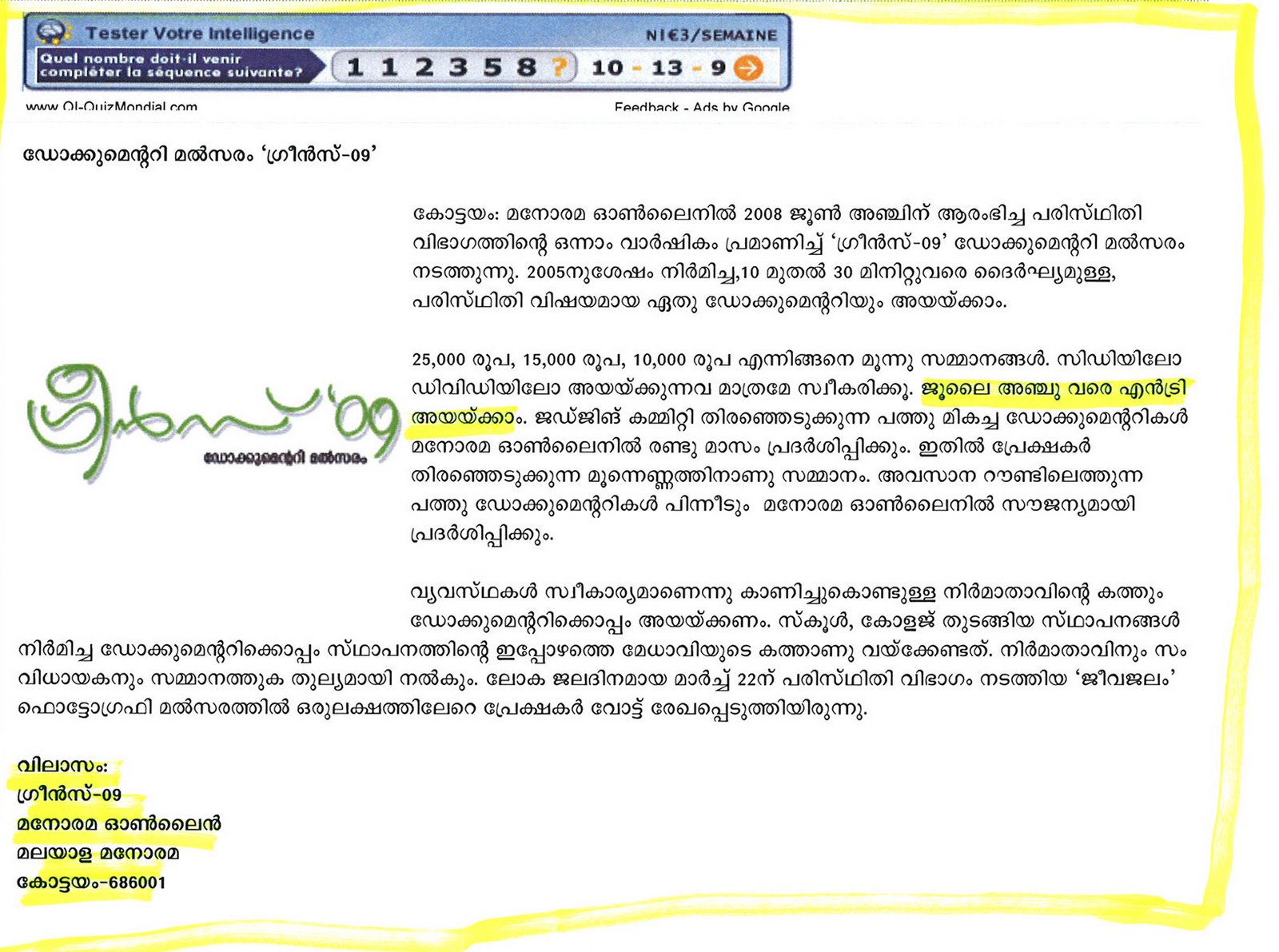
Documentary contest GREENS 09 on Manoramaonline
Documentary contest GREENS 09 on Manoramaonline
Kottayam: Manoramaonline is organising Greens-09, a documentary film competition as part of the first anniversary celebrations of its Environment channel which started on June 5, 2008.
Documentaries on the subject of environment, of 10 to 30 minutes duration can be sent.
A cash prize of Rs 25000, Rs 15000 and Rs 10,000 will be awarded to the films that are chosen first, second and third respectively. Only CD’s or DVD’s of the documentaries will be accepted. Entry is open till July 5, 2009.
Ten best documentaries selected by a judges’ panel will be featured on the website for a period of two months. Three of them voted best by viewers will be adjudged as winners. The ten documentaries selected by the judges’ panel to the final round will continue to remain on the website for free.
The producers of the documentaries are required to enclose a letter agreeing to the conditions applied along with their creative works. For documentaries made by schools, colleges or any other institutions, a letter ofrom the present head of the establishment is mandatory.
Documentaries should reach, on or before July 5, 2009:
Greens – 9,
Manorama Online
Malayala Manorama
Kottayam – 1
Kerala, India
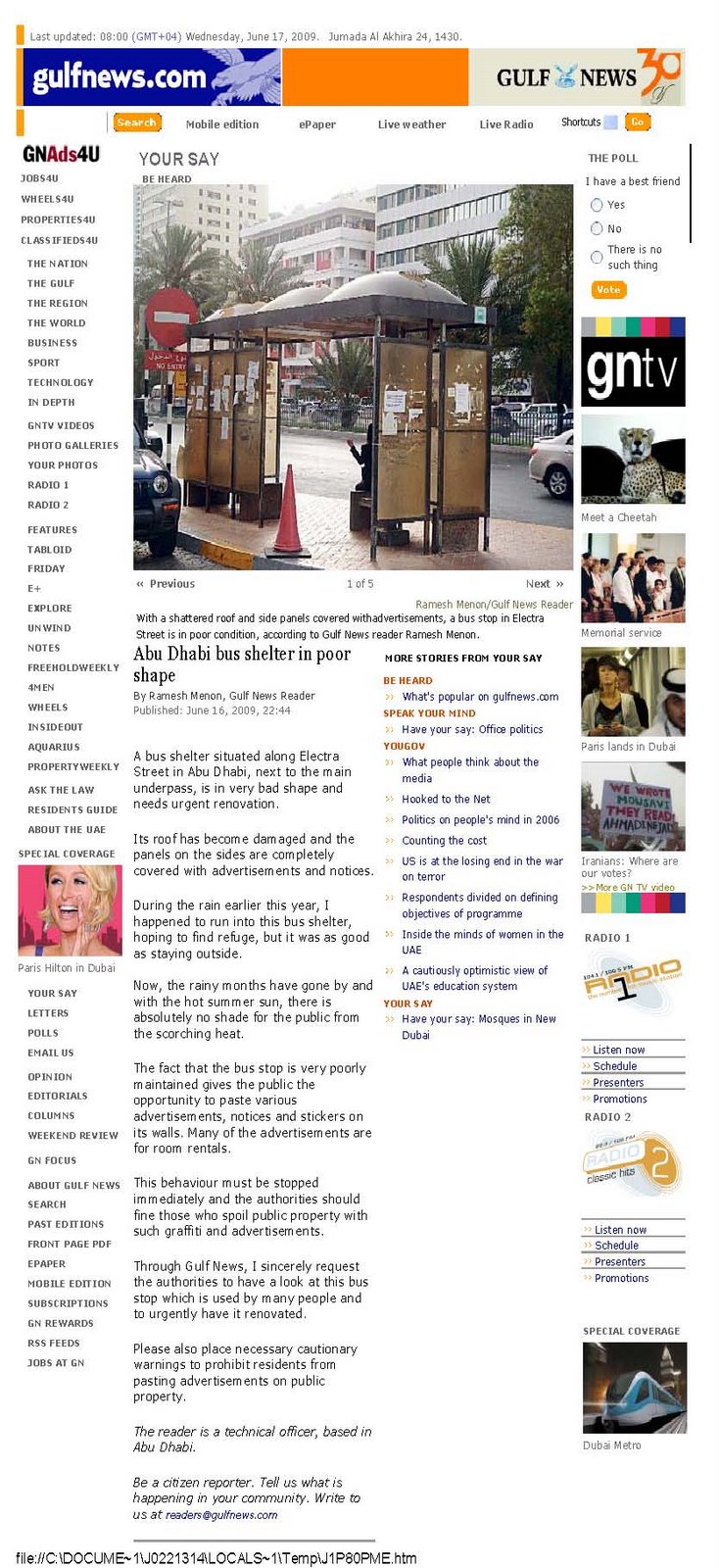
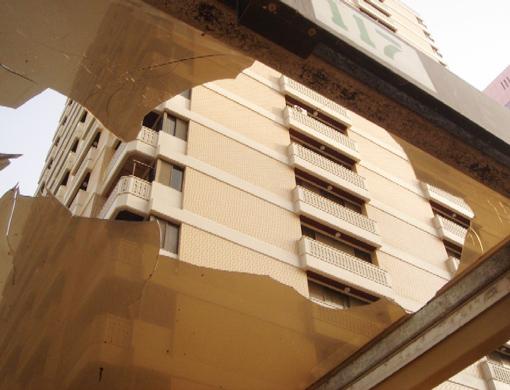
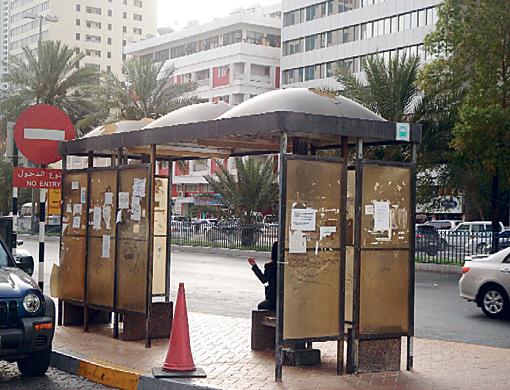
Abu Dhabi Bus Shelter in Poor Shape – My Letters – GULF NEWS
Abu Dhabi Bus Shelter in Poor Shape – My Letters – GULF NEWS




To read my letters to the news, please bookmark and visit:
http://team1uae.blogspot.com/search/label/02%20Letters%20to%20the%20Editor
Today in History – 17 June
1991 South Africa abolishes last of its apartheid laws
1985 18th Space Shuttle Mission (51-G)-Discovery 5 launched
1982 President Reagan 1st United Nations General Assembly address, “evil empire” speech
1967 1st Chinese hydrogen bomb explodes
1965 1st bombing by B-52 (50 km north of Saigon)
1950 1st kidney transplant, Chicago
1947 1st round-the-world civil air service leaves New York City
1863 Travelers Insurance Co of Hartford chartered, 1st accident insurer
They Unearthed Sufi Singers From South India
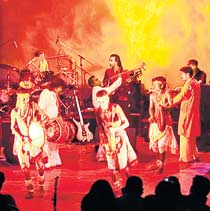
By: Bhairavi Jhaveri
Chennai-based record label EarthSync is giving an unusual twist to folk music from around the world. iTalk chatted up co-founder, Sonya Mazumdar on their rare finds
Fusing Sufi singers from Nagore, Tamil Nadu with Middle Eastern percussion, sprucing up vocals by traditional singers from Myanmar using a soothing arrangement, even mixing electronica with folk in their latest project, EarthSync has managed to make folk music saleable without dipping into the “fusion” market.
The essence of EarthSync’s music remains raw, with a naked representation of the soul of folk artists.
It was founded in 2005 by Sonya Mazumdar and Yotam Agam with the Laya Project as their first production, which captured a musical journey of the Tsunami-affected communities in Sri Lanka, Thailand, Indonesia, Maldives, Myanmar and India and was distributed as a double CD + DVD pack.
The aim was to provide support to folk artists, their culture and the beauty of the lands without indulging in charity.
What kind of folk and traditional music were you looking at promoting when you started?
Our idea was to identify and provide global recognition to music forms that were popular locally, but not confined to boundaries of these lands. Laya Project was our first production, for which we travelled to six countries to record music among local communities, since we believed the Tsunami was affecting not only those in lands it had ravaged, but cultures here too.
The Laya Project’s music documentary was sold along with a DVD. Why was a visual representation necessary?
It’s a personal musical tribute to the survivors as well as the resilience of the human spirit. The production creates a composition that mixes and enhances original recordings, and embarks on an inspirational visual and musical journey crossing borders, while preserving the music of the people. Some of the performances are rare, and needed to
be documented.
What is the focus of EarthSync’s second production titled, Nagore Sessions?
Nagore Sessions features 3 dargah singers from the district of Nagapattinam, Tamil Nadu. When we featured one of their songs in the Laya Project, we realised that their music needed a distinct platform. Here, Nagori singers collaborate with Middle Eastern percussion and Indian instruments from North India. The album marks the discovery of Sufi music from South India.
Is folk music difficult to sell?
It’s not about the music per se, but about presenting it in a way that audiences appreciate the richness of the music. Fusion is often more easily absorbed by audiences, however, there is an ocean of traditional music forms that can stand alone in all its majesty. This is evident in Laya Project, in tracks such as Katalu Talu from Indonesia, and Tapattam from India, Buduburru from Maldives.
What does it take to source music, find the artists?
A lot of research! We search countries and localities for native music, often not very recognised in the other parts of the world.
Tell us about Business Class Refugees.
Business Class Refugees (Kartick & Gotam) is a collaboration between music producer Patrick Sebag and Yotam Agam, a sound designer, who have remixed EarthSync’s folk productions to create an alternative, electronic album and a special live show.
What’s unique about upcoming release, Shoshan?
Shoshan by acclaimed composer Shye Ben-Tzur, comes from Rajsathan. He performed with his group of Rajasthani vocalists and percussionists and set Hebrew poetry to Qawwali music.
The complete EarthSync range Laya Project, Nagore Sessions, Techari, Voice Over the Bridge and Business Class Refugees is available at all leading outlets like Landmark, Plant M and Rhythm House.
EarthSync distributes in Mumbai, Delhi, Bangalore and Chennai and is priced between Rs 295 and Rs 800. Log onto http://www.earthsync.com for more information
http://www.mid-day.com/lifestyle/2009/jun/050609-Laya-Project-Sonya-Mazumdar-EarthSync-Tsunami.htm
 ClicksandWrites
You must be logged in to post a comment.