Month: March 2008
Jaaju Jaaju Stories – Time-transcending Remedies

Jaaju Jaaju Stories – Time-transcending Remedies
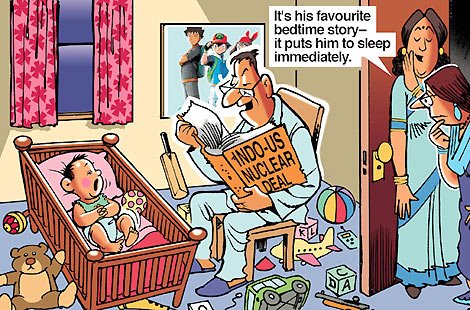
Jaaju Jaaju stories are bed time stories narrated by a loving father to his son each night before going to sleep. These stories are collected from various sources. Besides the little one (who loves to listen to the story and sleep with his head on his dad’s shoulder sucking his little thumb), there are three other characters who listen to this daily – they are Kesavan – the elephant, Chakki – the cow, and Sundari – it’s little daughter. Each night, the story is ended at some point, to give curiosity to the listeners and it is started the next night with a question answer session. Enjoy reading each day as it is posted and pass it on to your little loved ones.
The story this time is one recounted by Kottarathil Sankunni reflects the relevance of the life style prescribed in modern times also. It seems that a pair of birds used to sit a on the branch of a tree near a bathing ghat and ask of everyone coming to bathe, ‘ko rukku?’ No one was able to understand the nature of the query and give a suitable reply.
One day Alathur Nambi, who was passing by, heard the cry of the birds and turning towards them composed a Sanskrit sloka. The sloka was acceptable to the birds and they flew away, after blessing the family of the Nambis. They were actually Aswini devas, the celestial physicians, who had come to check up on the technical efficiency of Ayurveda practitioners on earth.
What is relevant to us in modern times are the question and the answers. The question was actually ‘Kah arukku’, meaning ‘who is there who is disease free’. Nambi answered that he who eats lightly and at proper times, he who walks a little after taking food, he who sleeps turning to the left side, he who passes urine and stools promptly without delay and he who is controlled in satisfying his sexual urges will be free of diseases.
How modern is this advice! Even today, modern doctors suggest the same regimen as an antidote against modern lifestyle diseases like hypertension, elevated cholesterol levels, obesity and so on.
Ayurveda is a very scientific and systematized body of medicine. There are a number of popular stories as well as a body of scientific literature that attests to the efficacy of the treatment systems of Ayurveda. It is up to modern Indians to take up the cause of Ayurveda in a systematic manner as a life style regulating mechanism, which will appeal to the West also.
The “Garland of Legends”, Ithihya Mala, is a collection of legends prepared by Kottarathil Sankunni, a revered Sanskrit – Malayalam scholar who lived in the latter part of the nineteenth and early part of the twentieth century in Kerala.
Jaaju Jaaju Stories – The Alathoor Nambis Celebrate the Ayurvedic Medicine Tradition

Jaaju Jaaju Stories – The Alathoor Nambis Celebrate the Ayurvedic Medicine Tradition
The “Garland of Legends”, Ithihya Mala, is a collection of legends prepared by Kottarathil Sankunni, a revered Sanskrit – Malayalam scholar who lived in the latter part of the nineteenth and early part of the twentieth century in Kerala.
Ayurvedic Medicine in Ancient Kerala.
In Kerala, the system of specialization in medicine was institutionalized and practiced since ancient times. The tradition of ‘Ashta vaidyans’, a group of eight physician families, was an innovative concept that was borne out of the system. Each of these families specialized in a certain area of Ayurvedic medicine.
Once, when some young Nampoothiris, Kerala Brahmins, were spending their free time talking in the verandah of a huge Illam, thier traditional house, the discussion veered around to who was the best among the Ashta Vaidyans. An elderly member of one of the Ashta Vaidyan families, who happened to pass by, explained to the young men that there was no question of which family was better than which. He said that each family was specially trained in a particular aspect of medicine and together the Ashta Vaidyans represented the best of Ayuvedic medicine.
The Renowned Alathoor Nambi Family
One of the more renowned of the Ashta Vaidya families was the family of Alathoor Nambi. The family hailing from what is now known as the Malappuram district of North Kerala, near the ancient port of Ponnani, was specially known for their prowess in finding out the exact nature of a disease and prescribing the correct and proper medicines.
One story recounted in the Ithihya Mala throws light on the awesome power of the Alathoor Nambis. Once, a handsome Brahmin approached the Nambis with the complaint of itching all over the body, which in the course of time was marring his handsome body with black sores. The Brahmin was in tears, since all the other Vaidyas he had approached were of the opinion that the disease was irreversible.
Nambi examined the Brahmin and said that the only effective remedy for the disease was to consume oil collected from a python. The Brahmin was aghast. With a heart filled with sorrow, he slowly wended his way back home. On the way was the famous temple of Chamravattam. (Chamravattam is a place near Tirur, in Malappuram district of modern North Kerala). The Brahmin decided to stay at the temple and spend his last days there in fasting and prayers.
That night he had a dream. A bearded man, very authoritative, approached him in the dream and asked him to ensure that he takes a bath every day in the nearby Bharatapuzha River and to drink some of its water every day after bathing. The Brahmin religiously followed these instructions. Lo and behold, within a couple of months, the itching stopped completely and the blackened sores had also disappeared.
Overjoyed, the Brahmin went to Alathur Nambi to share the joy of his recovery. Nambi asked him how he had managed to procure python’s oil. The Brahmin replied that he had not taken any python’s oil, but had only prayed at the divine temple of Chamravattam. He also recounted the dream. Nambi then went along with the Brahmin and after seeing the temple and the bathing place; he walked along with the Brahmin on the banks of the river. They had only gone a short distance upstream when they saw a python lying dead on the riverbank, oil from the carcass flowing downstream along with the river water to where the Brahmin used to bathe.
The story shows that even the Gods had accepted the veracity and exactitude of the treatment meted out by the Alathur Nambis. Once the Nambis have chalked out a course of treatment it is virtually impossible to better upon it.
Height of jealousy
Height of jealousy
Press Trust Of India
London, March 13, 2008
Shorter men are more likely to be jealous husbands and boyfriends than their taller counterparts, suggests a fascinating research, which may finally have proof for the controversial ‘Napoleon complex’.
The studies, reported in the New Scientist journal, believes it reflects insecurities among men who are not society’s “ideal” height. The much-talked about ‘short man syndrome’ is a phenomenon where short men compensate for their lack of height by inculcating aggressive tendencies, often associated with Napoleon, Mussolini, Hitler and Attila the Hun.
In the study carried out by the University of Groningen in the Netherlands, researchers asked men and women how jealous they were in their current relationships.
In another similar study, involving 119 male and 230 female students, the participants were quizzed on their reaction if they saw their girlfriend, or boyfriend, flirting with a stranger. The findings suggested that shorter men were far more likely to say they were jealous than taller ones.
“Taller men tended to be less jealous, and the tallest men were the least jealous,” the Daily Mail of Britain quoted the researchers, led by Dr Abraham Buunk, as saying. Among the women, average sized females were the least jealous- while tall and short women were the most.
Repeated studies have shown that women rate taller men as more attractive and powerful than shorter ones, while men prefer “average” women, usually who are a couple of inches shorter than them in height.



Education makes you live longer
Education makes you live longer
13 Mar 2008, 0039 hrs IST,AFP
WASHINGTON: If you have been contemplating going back to school to get a degree, this might convince you: a study by the Harvard School of Medicine has shown people with a better education live longer.
“Between the 1980s and 2000, life expectancy increases occurred nearly exclusively among high-education groups,” the study said.
While life expectancy for people with a high school degree or less did not change between 1990 and 2000, the better-educated gained more than 1.5 years over the same period, the study showed. “A 25-year-old with a high school degree in 1990 could expect to live another 50 years, or for about 75 years,” lead author Ellen Meara said.
“Looking at a similarly educated 25-year-old in 2000, you have the same expected life span,” said Meara, assistant professor of healthcare policy at Harvard Medical School.
“For the better educated, you have an expected life span of 80 years in 1990, but it’s 81.6 by the year 2000. So it’s quite a big gain.” The reasons for such longevity appear to be that more educated people have better access to both information about disease and medical advances.
“Quite literally, why are the better educated living longer? They’re less likely to die of diseases,” said Meara. Life expectancy grew across the board for all races and genders between 1990 and 2000, showed the study, which looked only at non-Hispanic blacks and whites to “limit the impact of immigration on estimates.”
Screen kidney, be safe
Screen kidney, be safe
13 Mar 2008, 1015 hrs IST,Risha Chitlangia,TNN
NEW DELHI: On World Kidney Day on Thursday, nephrologists want to raise awareness about Chronic Kidney Disease (CKD), incidents of which are increasing at an alarming rate.
If you have diabetes or high blood pressure, then you are at a risk of developing CKD. Unfortunately, by the time a person is diagnosed with CKD, nearly 50% of his kidneys are damaged. This happens because the blood creatinine levels, which are the indicators for kidney disease, don’t rise till 50% of the kidney functioning is affected.
During routine check-up, most doctors don’t study the creatinine levels of the patient if it is in the normal range. “But normal creatinine level doesn’t mean that the patient’s kidneys, especially those who have diabetes or high BP, are functioning properly. There is a need to study the creatinine levels seriously with respect to the patient’s weight, age, sex and history of diseases,” said Dr Vijay Kher, director, nephrology and kidney transplant unit, Fortis Healthcare.
Routine check-up doesn’t involve creatinine level assessment. “It is only in cases which have history of high BP or diabetes or any other ailment or they present with CKD symptoms, then we screen for CKD,” said Dr Mukesh Mehra, HoD, internal medicines, Max Healthcare.
Creatinine is freely filtered by the glomerular capillaries, inside the nephrons, and a small amount is also secreted in our body. But when these nephrons get damaged either due to high BP or diabetes, then the Glomerular Filtration Rate (GFR) also decreases. As a result of this, the creatinine level increases in a patient’s body.
“Unfortunately, the creatinine levels increase only after the GFR is affected nearly 50%. This means when the kidneys are nearly 50% damaged, it is then a patient is diagnosed with CKD. But by then it is too late,” said Dr Sanjeev Bagai, director and paediatric nephrologist, Rockland Hospital.
The prevalence of CKD is “one in 10 people in different stages of the disease. This varies from mild to severe form called, the End Stage Kidney Disease (ESKD),” said Dr S K Agarwal, additional professor, department of nephrology, AIIMS.
He added, “The reason for this in most cases is lifestyle related. High BP and diabetes are very common today. Most of the CKD patients have either of the two, especially in the urban population.
“If CKD is diagnosed in the early stages, it can be managed well and need for dialysis and a transplant in a patient can be delayed. A creatinine clearance test along with patient’s medical history can help a physician diagnose whether he/she is a case of CKD or not,” said Dr Kher.
CKD can happen in children too and can affect newborns as well. “A woman’s nutrition during pregnancy can affect the baby. It has been seen that newborns with low birth weight stand a chance of developing kidney diseases and also high BP when they grow up,” said Dr Agarwal. The common symptoms of CKD are: high HP, diabetes, low haamoglobin, difficulty in passing urine or blood in urine and swelling in body parts.
“If anybody has all these symptoms, then a routine ultrasound of the kidneys is a must. With this we can pick up kidney problems in the early stages,” said Dr Bagai.
Though there are no screening programme for CKD by the government, doctors say a screening test would not cost more than Rs 100 when compared with the cost of treatment of renal failure cases. So next time you go for a routine check-up, do ask the doctor for a CKD screening test, especially those who have above-mentioned symptoms and are BP or diabetes patients.
Morning sex can keep you healthy
Morning sex can keep you healthy
13 Mar 2008, 0046 hrs IST,ANI
LONDON: A steamy sex session in the morning can keep you in good health, say British researchers.
According to a research from Queen’s University in Belfast, a good morning session at least three times a week, decreases the risk of heart attack or stroke by half and a regular session improves circulation, thereby reducing blood pressure.
According to a study in New Scientist, a steamy session twice a week enhances IgA, an antibody that provides protection against microbes that multiply in body secretions, reports the ‘Sun’. Morning sex also helps in alleviating arthritis and migraine. It burns around 300 calories an hour that simultaneously diminishes the risk of developing diabetes.
Moreover, an American study involving 300 sexually active women whose partners did not use condoms revealed that they were less prone to depression.
Sex increases the production of testosterone that provides stronger bones and muscles thus helping to stave off osteoporosis.
A good morning session can make the hair shine and skin glow by raising the output of oestrogen and other hormones which are associated with it.
According to Yale School of Medicine researchers, having morning sex can aid in averting endometriosis, a condition where the tissue that normally lines the uterus, grows in other parts of the pelvis.
Prices of Selected Commodities – a selected review since 2006
As at 13 March 2008

As at 22 October 2007

As at 27 December 2006

As at 27 September 2006

Ant world is rife with royal corruption
Ant world is rife with royal corruption
12 Mar 2008, 1325 hrs IST,ANI
WASHINGTON: They may be held-up as the ideals of social co-operation but ants can be as sneaky as humans and their colonies are rife with cheating and corruption–with the royal line being the worst offenders, say scientists from the Universities of Leeds and Copenhagen.
Ants have always been thought to work together for the benefit of the colony rather than for individual gain, but Dr Bill Hughes from Leeds’ Faculty of Biological Sciences has found evidence to shatter this illusion.
With Professor Jacobus Boomsma from the University of Copenhagen, Hughes discovered that certain ants are able to cheat the system, ensuring their offspring become reproductive queens rather than sterile workers.
“The accepted theory was that queens were produced solely by nurture: certain larvae were fed certain foods to prompt their development into queens and all larvae could have that opportunity,” said Hughes.
“But we carried out DNA fingerprinting on five colonies of leaf-cutting ants and discovered that the offspring of some fathers are more likely to become queens than others. These ants have a ‘royal’ gene or genes, giving them an unfair advantage and enabling them to cheat many of their altruistic sisters out of their chance to become a queen themselves,” he added.
But what intrigued the scientists was that these ‘royal’ genetic lines were always rare in each colony.
Hughes said: “The most likely explanation has to be that the ants are deliberately taking steps to avoid detection. If there were too many of one genetic line developing into queens in a single colony, the other ants would notice and might take action against them. So we think the males with these royal genes have evolved to somehow spread their offspring around more colonies and so escape detection. The rarity of the royal lines is actually an evolutionary strategy by the cheats to escape suppression by the altruistic masses that they exploit.”
However, the scientists’ discovery does prove that, although social insect colonies are often cited as proof that societies can be based on egalitarianism and cooperation, they are not quite as utopian as they appear.
“When studying social insects like ants and bees, it’s often the cooperative aspect of their society that first stands out,” said Hughes.
“However, when you look more deeply, you can see there is conflict and cheating – and obviously human society is also a prime example of this. It was thought that ants were an exception, but our genetic analysis has shown that their society is also rife with corruption – and royal corruption at that!” added Hughes.
The study is published in the Proceedings of the National Academy of Sciences of the USA

 ClicksandWrites
You must be logged in to post a comment.