Month: January 2008
Jog daily, increase life span
Jog daily, increase life span
Indo-Asian News Service
Daily jogging may help you stay biologically young and live nine more years than those who don’t jog, researchers in US have suggested.
A regular exercise is already known to provide several health benefits. Regular exercise also helps prevent heart disease, blood pressure, stroke, diabetes and depression.
In the new study researchers at King’s College London and in the US studied ageing in 2,401 twins and found that there was a difference of about nine years of ageing between those who exercised regularly and those who did not.
It happened even after considering other influences, including body mass index (BMI), smoking and socio-economic status (SES), according to the researchers, online edition of Daily Mail reported.
“The US guidelines recommend that 30 minutes of moderate-intensity physical activity at least five days a week can have significant health benefits” the study said.
“Our results underscore the vital importance of these guidelines. They show that adults who partake in regular physical activity are biologically younger than sedentary individuals,” lead researcher Lynn Cherkas said.
Benefits of jogging
It speeds up the digestive system and helps get rid of digestive trouble.
It counteracts depression.
In order to be an effective means to loose weight, the jogging sessions must be at least half an hour and be repeated fairly often.
Jogging makes you sleep better.
A formula for stress-free driving
A formula for stress-free driving
By Carole Spiers, Special to Gulf News Published: January 29, 2008, 00:22
For Dubai’s motorists, the New Year has not begun well. First, the unexpected visit from President Bush, bringing instant gridlock to a city still not mentally accepting of urban traffic crawl.
Then the equally unaccustomed sight of Shaikh Zayed and Emirates Roads partially flooded during exceptionally heavy rainfall. And then the UAE road-accident figures for 2007, one of the worst in the world – 829 deaths and more than 10,000 injuries – a most unwelcome symptom of increasing traffic jams and driver frustration, in this fast-expanding emirate.
To you, all of this may look like something new and unnatural on your horizon. To me, as a UK-based stress consultant, it is something depressingly familiar and inevitable. So perhaps this is the moment for me to offer you my little rule-of-thumb guide to stress management on the road. It takes the form of a simple acronym – S.A.F.E.
S is for SURE. Be sure of your vehicle, sure of your itinerary, and sure of your own fitness to drive. Stress builds up especially when you’re driving an unfamiliar vehicle, either new or borrowed. So take trouble to check all the features, especially those that you need in an emergency. And when someone else is having to familiarise themselves with new controls, don’t raise the tension by standing over them, expressing impatience.
A is for ACCEPTING. This is an underlying philosophy which takes the heat out of many potentially stressful situations at the wheel. It is to accept that you are not master of the road, and that your journey will always be influenced by conditions you can’t change. You can’t stop it raining. You can’t stop your children grumbling. You can’t speed up that traffic jam as you approach the bridge to cross the creek. So – don’t get excited or agitated – it will not get you there any faster.
F is for FOCUSED. A driver’s first duty is to concentrate on the road. Even under perfect conditions, mistakes can be made. So when the car is full of distractions like music, quiz-games or long-running arguments with the children, driving errors can happen. Equally, the sheer familiarity of the same daily route may cause loss of concentration. To stay focused, try to make a habit of ignoring distractions, and make sure you’re properly nourished and exercised and take breaks on long journeys.
E is for EGO-FREE. Your car reflects your ego, and this lies behind many reckless actions on the road – trying to live up to that macho image, and wanting to hit back at any insults to your dignity or driving skills. Ego can be a major stressor, and you will do better to practise remaining calm and not rising to challenges that can spiral into fatal accidents.
Four little letters that may keep you safe by helping to set up the right kind of atmosphere in your car, as you learn to combat the growing pressures of driving in Dubai.
Good luck!
Key points: Safe drive
Dubai’s traffic congestion and high accident rate is predictable.
Constant pressure on the road leads to harmful stress for drivers.
Be Sure, Accepting, Focused and Ego-free.
– The writer is a BBC broadcaster and motivational speaker, with 20 years’ experience as CEO of Carole Spiers Group, an international stress consultancy based in London.
Special number plate to be exhibited at Abu Dhabi private motor show
Special number plate to be exhibited at Abu Dhabi private motor show
By Binsal Abdul Kader, Staff Reporter GULF NEWS
Abu Dhabi: Vehicle plate number 1, which is expected to set a record as the most expensive, will be exhibited at an exclusive private motor show next week, an official told Gulf News.
The world’s top 30 most luxurious supercars will be displayed at Abu Dhabi’s Emirates Palace from February 2-4, and it will be best venue to showcase the prestigious number plate, said Abdullah Mattar, Managing Director of Emirates Auction, which jointly organises the number plate auction with Abu Dhabi Police.
The exclusive automotive event held under the patronage of Shaikh Zayed Bin Hamdan Bin Zayed Al Nahyan will present the latest trends and inventions.
Plate “1” is expected to set a new Guinness world record for the most expensive plate when it goes under the hammer at the ‘Emirates Golden Auction’ on February 16, 2008 at 4 pm in Abu Dhabi.
Big expectations
It is only the third single-digit number plate to go on sale in Abu Dhabi, Mattar said, adding that Emirates Auction already holds the records for the six most expensive plates worldwide, followed by a Hong Kong plate in seventh place.
Plates “5” and “7” sold for Dh25.2 million and Dh11 million respectively. Both were snapped up by Abu Dhabi businessman Talal Ali Mohammad Khouri.
The expectations for Plate “1” are sky high,” Mattar said.
Raga Ratnam Junior – Jugal Bandhi Round
Raga Ratnam Junior is about to enter one of the most demanding aspects of this exciting competition. Scheduled for the next rounds will be what might be phrased as hard core Carnatic music. Within these upcoming rounds we will discover who the “pancharatnam” -the five diamonds- will be. If you have ever thought that Carnatic music was just for the older generation, these youngsters will change your mind in a heart beat.
Amrita TV is steadfastly pushing the envelope in its effort to find, nurture and develop talent in all fields of creativity and human interest. Raga Ratnam Junior exemplifies this effort by showcasing Carnatic musicians in the 10-15 years young age group. This programme is a first ever in the history of Malayalam televison.
From the original 15 we still have 9 talented performers left. But the competition is heating up. Watching the show is bound to expand the viewers knowledge of this unique music form by placing all us under the tutelage of veteran music maestros, V.Dakshinamurthy , K.L.Sreeram,Binni and Krishnakumar.
Raga Ratnam Junior is a perfect example of the channels commitment of providing exciting entertainment without compromising its commitment of honoring the values inherent in Malayalam culture. And its also were the action is!
Amal Shaju Jose
More to come, please continue to visit this section
Photo Speaks – Keeping clean
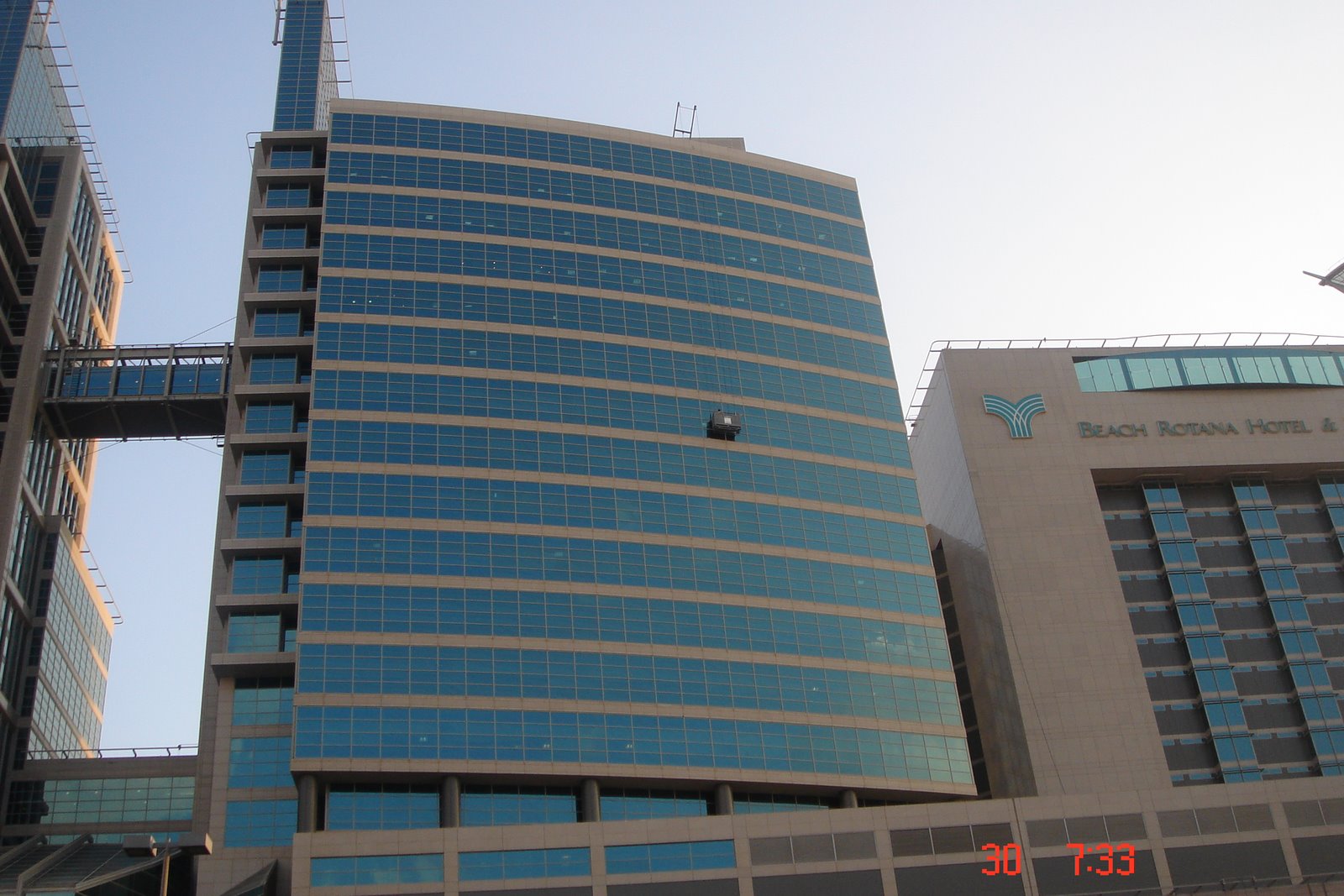
We all think our job is too difficult and only we have many problems in work and life. Just have a look at these workers who are keeping the mall neat and clean. And what about them? What do they say? And to whom?


Auto Riksha’s in Dubai
Come on and enjoy a ride for this DSF. Special discount for all Team 1 Dubai readers.
Plan for your child’s future
Plan for your child’s future
27 Jan, 2008, 0050 hrs IST,SRIKALA BHASHYAM, TNN
When it comes to children, parents turn generous. In most cases, asset allocation is not an issue as every parent makes it a point to set aside a corpus for the child’s future.
A few years ago, the parents of girl children made a conscious effort to get into the saving mood as the corpus for the marriage was considered a long-term goal. Today, planning for the child’s future has taken a different meaning as parents are increasingly setting aside money for their child’s education.
With the cost of education expenses galloping at a faster pace, it has become a necessity for parents to think of a savings plan for their children at the earliest.
Earlier the better. This is one dictum which holds well whether you think of retirement planning or investing for children. Needless to add, the more period you have on hand, bigger can the corpus get. Ideally, think of saving for the child immediately after birth simply because you will be faced with huge expenses at regular intervals.
Experience has shown that those who get into the saving mood at a child’s birth end up as more disciplined parents. Also, it helps them to start with a small sum.
Those looking at funding a children’s education through investments need to look at the cost in a staggered way.
The education cost for a parent can be divided into 3-4 phases. It first comes when the child is around 3-4 years old and is ready for schooling. Investment for this is possible only when a parent starts saving even before the child completes one year.
The next big bill arrives when the child is 18 and is ready for an entry into professional education. After a gap of three years, parents in most cases, have to prepare for an investment which depends on various other factors such as choice of educational course, location etc.
While setting aside a portion of earnings on a monthly basis is one of the options, it is definitely not an efficient method as savings bank offers a paltry interest of 3.5 per cent, and is well below the rate of inflation. Hence, one needs to look at different products.
The most popular option for children’s education has been insurance but it need not be the only option. The advantage with insurance is that it offers protection to the child even in the event of the death of the parent.
Since insurance companies allow investment options through their unit-linked plans, it offers the added advantage of cover and investment. In fact, it may not be a bad idea for every parent to look at the option of a child insurance plan at an early age.
While insurance can be a long-term option, mutual funds too offer the advantage of long-term capital appreciation for parents. One of the best options would be the systematic investment plan (SIP) in equity funds as they allow investment growth over the long term. The choice of fund could be a combination of aggressive and diversified funds with a time horizon of 10-15 years.
Mutual funds also offer dedicated children’s products which also carry a lower entry load. The fact that the parent cannot withdraw these plans before the child’s age of 18, allows them to build a corpus over the long term.
Indian students flock to China
Indian students flock to China
M.R. Narayan Swamy, IANS
China is becoming a higher education hub for Indian students. More and more young men and women from India are braving the bone-chilling temperatures as well as language and food hassles to study in Chinese universities.
Diplomats say that easy admission systems, affordable fees and high standards of facilities are the chief attractions for Indian students, who now number more than 6,000 all over China.
The dominant choice of Indians is medicine. Chinese language also draws many. Clearly, Indian students are enjoying it in China.
“My (Chinese) teachers and fellow students have been very welcoming,” said Jyoti Bhattacharya, 23, from New Delhi who studies at the Beijing Language and Culture University.
Bhattacharya admitted that she was very apprehensive when she arrived in September 2007.
“But it has been a very smooth journey, very helpful,” Bhattacharya told IANS. “We have been treated very well.
“While I could have studied Chinese even in India, the exposure there was not good. Here you are speaking and hearing the language all the time. It makes a big difference. And I want to make a career.”
Added Ravi Ranjan, who teaches Indian literature and culture and also Hindi language at Peking University: “This is a good place for students from India interested in Chinese studies. Chinese universities are good when it comes to science and technology too.”
The Tianjin Medical University, located in a port city that can be reached in 90 minutes, has 400 Indian students on its rolls studying medicine. According to its International Exchange Department, the number of applications from India exceeds the available places.
According to Indians, the average tuition fee in a Chinese medical university is $2,000-$3,000. Another $1,000 is needed for board and lodging. This is a fourth of what one would spend in India.
Indian students scoring 70 percent marks and above in their own universities are the most sought after. But Indians returning home are expected to pass the Indian Medical Council test.
According to Indian Ambassador Nirupama Rao, Indian students find China “cheaper possibly than any other country” when it comes to education.
“Chinese institutions of learning have also been very active in promoting themselves in India,” she said in an interview at her office.
Ranjan, 46, from Hyderabad, said that many of the Indians learning medicine in China were sons or daughters of doctors who failed to enter Indian medical institutions. “Also, it is not very expensive here,” he added.
But communication can be a daunting problem for students who know no Chinese – Putong Hua, the dominant language, or Mandarin. Although many teachers and students speak English, that language is hardly understood on the streets.
Where possible, Indian students living away from their homes provide comfort to one another. When they go sightseeing, Indians go in groups. The safety in and outside homes in China is widely appreciated.
The one area of concern for most Indians is cuisine.
Bhattacharya, who is on a 10-month language course, admitted: “I am missing my family in Delhi. And frankly, I am very much missing Indian food.”
In the circumstances, any Indian student who has culinary skills or has a relative or friend willing to serve Indian food to hungry young women and men is arguably the most popular in the community.
Pirates bring Ambani book out of closet
Pirates bring Ambani book out of closet
Ten years after it was effectively banned in India, photocopied versions of Hamish McDonald’s book The Polyester Prince: The Rise of Dhirubhai Ambani are now being sold freely on the city’s pavements and traffic signals for an astonishingly wide range of prices – Rs 100 to Rs 1,600. The unauthorised biography is said to be selling by the dozens.
The timing of its appearance is curious. Hawkers said they first got the book on January 13 and 14 — a couple of days before the IPO of Anil Ambani’s Reliance Power Ltd opened for subscription.
Representatives of both Mukesh Ambani’s Reliance Industries Limited and his estranged brother’s Anil Dhirubhai Ambani Group declined to comment on the underground sales.
Sanatan, a hawker selling the title for Rs 400 in Fort, had a unique marketing line. “The makers of Guru (the Bollywood film loosely based on Dhirubhai Ambani’s life) used 25 per cent of this book to make their film. The other 75 per cent that is in here was too controversial to show.” Sanatan is perhaps correct.
The book mentions how every year Dhirubhai played an April Fool’s Joke on an elderly employee, and also describes the arrest of Kirti Ambani, a general manager at Reliance, on charges of conspiring to murder Reliance rival Nusli Wadia.
On the phone, Australian author McDonald sounded bemused: “I wonder why it has suddenly appeared, 10 years after it was published. I am not even making any money out of this.”
In 1998, before the book could make it to Indian stands, the Ambanis had moved the Delhi and Ahmedabad High Courts, asking for injunctions against the book’s release on grounds of “anticipatory defamation.”
The Delhi High Court passed a verdict in favour of the Ambanis, halting the release of the book. The rights for the book’s Indian edition had then been sold to Harper Collins, which had numerous printed but unbound copies of the book in their warehouse. “After the Delhi stay order against the book, the Ambanis said they would get more such [court] orders from other states, and had threatened to sue,” said Renuka Chatterjee, who was heading Harper at the time. “Harper then decided to withdraw the book.”
McDonald recalled feeling gravely disappointed at the time. “Let a book be published and then be sued,” he said. “It getting blocked even before it can hit the stands is a serious infringement on the right to free speech.”
The Australian, though, is not one to be cowed down. “I have been keeping up-to-date with the actions of the two brothers and am thinking of an update,” he said. “I wish I find a publisher who is brave enough to publish the book in India.”
Abu Dhabi’s oldest hospital on its last legs
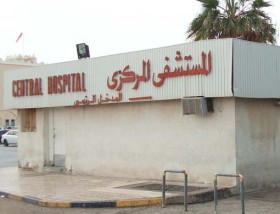
The Central Hospital is part of the Shaikh Khalifa Medical Centre and was the only hospital in Abu Dhabi till Al Jazeera Hospital was set up by the mid-70s.
Abu Dhabi’s oldest hospital on its last legs
By Dina El Shammaa, Staff Reporter GULF NEWS Published: January 28, 2008, 00:11
Abu Dhabi: Central Hospital, the oldest hospital in Abu Dhabi, is slated to be demolished by the end of next week.
The 40-year-old hospital located near Shaikh Khalifa Medical Centre (SKMC), was the only hospital in Abu Dhabi till Al Jazeera Hospital was set up by the mid-70s, said the management of SKMC.
Two crucial sections at Central Hospital – the Urgent Care section and the Renal Unit Dialysis (RUD) – are being transferred.
The Urgent Care section is scheduled to be transferred to the new Khalidiya Urgent Care Centre (KUCC) at SKMC, which will service patients the same day the Central Hospital is closed.
The urgent case section is meant to relieve the ER section at SKMC which receives a large number of patients suffering from accidents, heart attack, renal-related cases and others. The ER section has 28 beds in the surgical ward with 10 beds at the Children’s Accident Section. Seven new beds are to be added, to increase the current bed capacity to 45 for adults and children.
During the first ten months of last year, the ER ward treated 72,091 patients, including 24,368 children.
The KUCC will have 20 doctors specialised in emergency related cases, 43 nurses and 59 technicians, with a total of 19 rooms.
The second department to be transferred, the Renal Unit Dialysis (RUD), will be re-located in the medical pavilion, formally known as Al Jazeera Hospital.
The RUD will continue treating non-Emiratis. The section will have 17 new dialysis machines. Five more machines are to be added soon.
Healthcare: SKMC employs 4,600
* Shaikh Khalifa Medical Centre (SKMC) consists of a 550-bed Acute Care Hospital, a 120-bed Behaviour Sciences Pavilion, an 88-bed Abu Dhabi Rehabilitation Centre, 10 primary healthcare centres, and more than 12 specialised outpatient clinics. SKMC employs about 4,600 caregivers and administrators from 62 nationalities.
* The various sections at the SKMC are Shaikh Khalifa Surgical Pavilion; Shaikh Khalifa Medical Pavilion; Outpatient Specialty Clinics; Primary healthcare (PHC) facilities; Abu Dhabi Rehabilitation Centre; Abu Dhabi Blood Bank and Diabetes Centre.
Urgent Care patients include less life-threatening cases that need not be admitted to the Emergency Room ward (ER).
 ClicksandWrites
You must be logged in to post a comment.