Month: January 2008
My prayer, my dream
My prayer, my dream
By Amjad Ali Khan
India-a land that has been blessed abundantly and has witnessed aplenty. Right from the Vedic times to the Silicon age, India continues to intrigue, motivate and fascinate. Today, India is a symbol of grace, style, deep-rooted culture, trade, enormous growth and, of course, BPOs! Sometimes, I feel I’m going to witness one of the most momentous times of the world in the coming years.
So much has changed in the last 10 years. India has become a show window to the world. There is nothing that we don’t already possess. In fact, we have more than the rest of the world put together, including our wondrous seasons. We are a country which has the best to offer-be it the widest range of music, arts, textiles, politics, cinema, technology, sciences, religions, a billion strong work force, diverse languages, landscapes, wildlife, museums, forts, festivals and people. We are a young nation and an ancient country rolled into one.
India has evolved over the years. Somewhere within this process of evolution lies its ticket to success. Just where have we gone wrong is difficult to assess in a short span of time. But I shall attempt to put before you some of my thoughts.
Education tops my list. I hope that one day, like Kerala, all states will be 100 per cent literate. Education will begin the transformation, both from within and the outside. People will begin to see and recognise differences among themselves and then comparisons, which are not always pleasant, will spur them to do better.
While there should be more job opportunities, the attitude to work should change. Today, young people have ample opportunities to explore. We are no longer inhibited in our choices and can be anything we want to be. Our work environment is amazing. In fact, through our younger generation our older generation is also learning to appreciate newer and unheard of options. People are realising what work culture is all about.
I’ve been fortunate to see so many workplaces over the years and I must say that the look, the people and the energy are very tangible here. We want to do more and we are willing to learn more. As the world outside focuses on India, it does seem to be a good time. But we need a lot of catching up to do. The eighties and the nineties witnessed the brain drain, but today we see a reversal. This is the brain recovery age.
Moving on, poverty is a major millstone around our necks. Perhaps the world of science could find a way out for us. Resources and their management, fuel, energy, water and food are all areas of concern.
One area that touches me dearly is culture and perhaps closer is music. Having been reared on a diet of tradition and continuity, it is difficult living in a modern world with classic values. Yet, I chose to belong to a system, where oral knowledge is passed on from guru to student along with actual music lessons. I am standing at a crossroads. Where do we go from here? How will classical music evolve? There is a deluge of pop and so-called fusion, remix ragas and experimental music out there. Great work is being done. I’m doing a lot of stuff myself. The instant success of any of these, as opposed to the long hours of dedication required in the traditional set up, sometimes stands in the way of progress. I think it is great to imbibe cultures from all around the world, but let’s not forget who we are or what we have to offer. We need to be first and foremost, proud of ourselves. It will indeed be a sad day for all of us if our musical traditions that date back more than 5,000 years, is sacrificed at the altar of modernity. While the standard of living may have improved for some, it has worsened for many. Amenities and fast-track development in cities excite us. But, a closer look reveals the true picture, as you don’t have to travel far to see that there are many who have no clue about where the world has gone.
I have heard people say that India is going to be a super power. Amen to that. But I also hope that India becomes a super power in terms of humanness, love, peace and tolerance. Values that we all hold sacred. I pray that India will set the benchmark for the entire globe. I hope we are able to show the world that we can do without war and weapons. I also dream of a politically stable, refined and healthy nation! This is the India I want to see. I hope that my music will be all this and more.
music@sarod.com
Forgiveness may be good for health
Forgiveness may be good for health
3 Jan 2008, 1531 hrs IST,ANI
WASHINGTON: If you’re holding a grudge against someone, waste no time in pardoning him or her, for a study in the January issue of Mayo Clinic Women’s HealthSource has suggested that forgiveness might be good for your health.
Forgiveness means acknowledging hurt and then letting it go, along with the burden of anger and resentment.
According to the journal, having bitterness for someone might affect your cardiovascular and nervous systems.
In one study, it was found that who focused on a personal grudge had elevated blood pressure and heart rates, as well as increased muscle tension and feelings of being less in control.
When they were asked to imagine forgiving the person who had hurt them, the participants said that they felt more positive and relaxed, and thus the changes dissipated.
When it comes to learning how to forgive – talking with a friend, therapist or adviser might be helpful during the process, to sort through feelings and stay on track.
The journal has covered four steps that will help you learn forgiveness.
The first step is to acknowledge the pain and anger felt as a result of someone else’s actions. For forgiveness to occur, the situation needs to be looked at honestly.
In the second step, you should recognize that healing requires change, followed by the finding a new way to think about the person who caused the pain.
Finally in the last step, you will begin to experience the emotional relief that comes with forgiveness. It might include increased compassion for others who have experienced similar hurt.
Fingers length signify arthritis risk
Fingers length signify arthritis risk
3 Jan 2008, 1638 hrs IST,ANI
WASHINGTON: A study of index to ring finger length ratio (2D:4D) has revealed that having uncommonly long ring fingers raises the risk of developing osteoarthritis, the most common form of arthritis that results in severe pain in the joints.
Researchers at the University of Nottingham in the UK say that their finding is particularly applicable to women with long ring fingers.
For their study, the researchers recruited 2,049 case subjects, all of whom had clinically significant symptomatic OA of the knees or hips, requiring consideration of joint replacement surgery. The study also involved 1,123 controls who neither had OA nor a history of any joint disease.
The study population was comprised of both men and women, with an average age of roughly 67 years for cases and 63 years for controls.
Radiographs of both knees and the pelvis were obtained for all participants. Every participant also underwent separate radiographs of the right and left hands.
The researchers assessed the 2D:4D length ratio from radiographs using three methods – a direct visual comparison of the 2 finger ends, the measured ratio from the base to the tip of the upper finger joints, and the measured ratio of the metacarpal bone lengths.
They found that men were 2.5 times more likely than women to have the index finger shorter than the ring finger.
The relationship between 2D:4D length ratio and OA was then assessed using blind comparisons of hand radiographs with both knee and hip radiographs from random case and control samples, combined with statistical analysis and odds ratios.
It was found that people with index fingers shorter than the ring fingers had an increased risk of OA involving any part of the knee or the hip, and including the presence of arthritic finger nodes.
The risk of knee OA in participants with index fingers shorter than their ring fingers, was nearly double that of the risk for participants without this pattern. Women with this finger pattern had a greater risk of knee OA than men.
The researchers also found that the smaller the 2D:4D upper finger joint ratio, the greater the risk of OA of the tibiofemoral knee joint, among participants of both sexes.
Finally, after adjusting for established OA risk factors – age, sex, body mass index, joint injury, and lack of physical activity – the strong association of smaller 2D:4D length ratio with the risk for knee OA, was deemed independent.
“The 2D:4D length ratio appears to be a new risk factor for the development of OA. Specifically, women with the ‘male’ pattern of 2D:4D length ratio – that is, ring finger relatively longer than the index finger – are more likely to develop knee OA,” said Dr M Doherty, the study’s leading researcher.
He, however, admits that the “underlying mechanism of the risk is unclear, and merits further exploration.”
Photo Speaks – Unsung Heroes
Dear friends,
Holidays and festivities happen and most of are lucky to get holidays and relax and enjoy with friends and family. Here are some unsung heroes, working silently during the holidays, to keep our environment clean, to keep us happy and more. I take this opportunity to present of few whom I came across on my way.
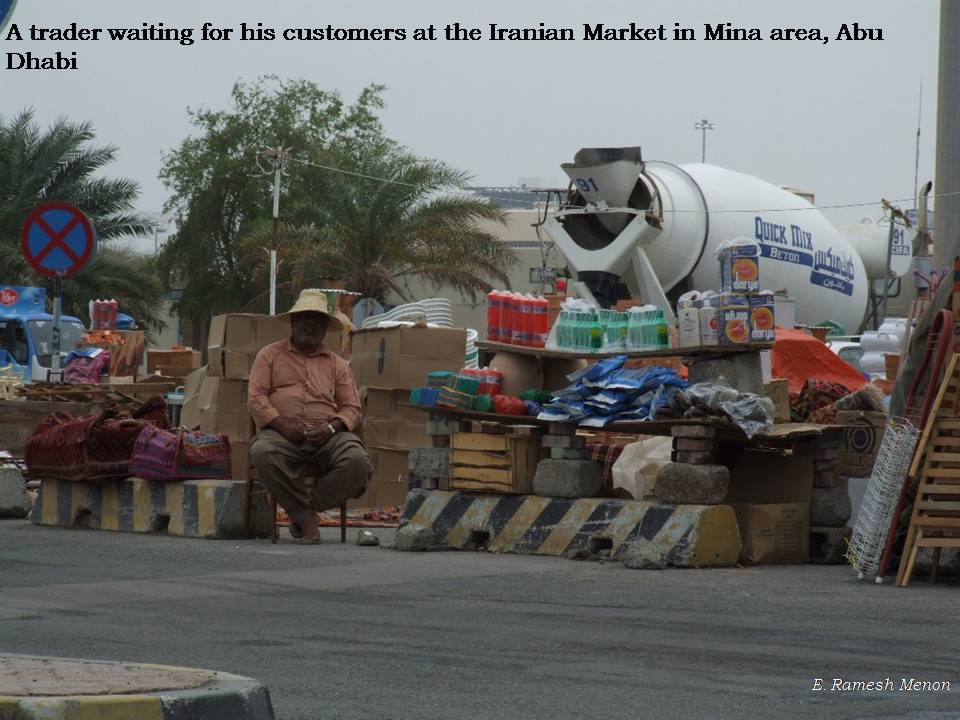
A vendor at the local Iranian Market (Mina Market) Abu Dhabi waiting for customers
A boat driver at a tourist spot in Muscat

A boat driver on duty at Madinat Jumeirah, Dubai

Reflections of Unsung Heroes – an Abu Dhabi Municipality worker keeping the beachfront clean

Reflections of Unsung Heroes – an Abu Dhabi Municipality worker on duty – keeping the city clean
We too need rest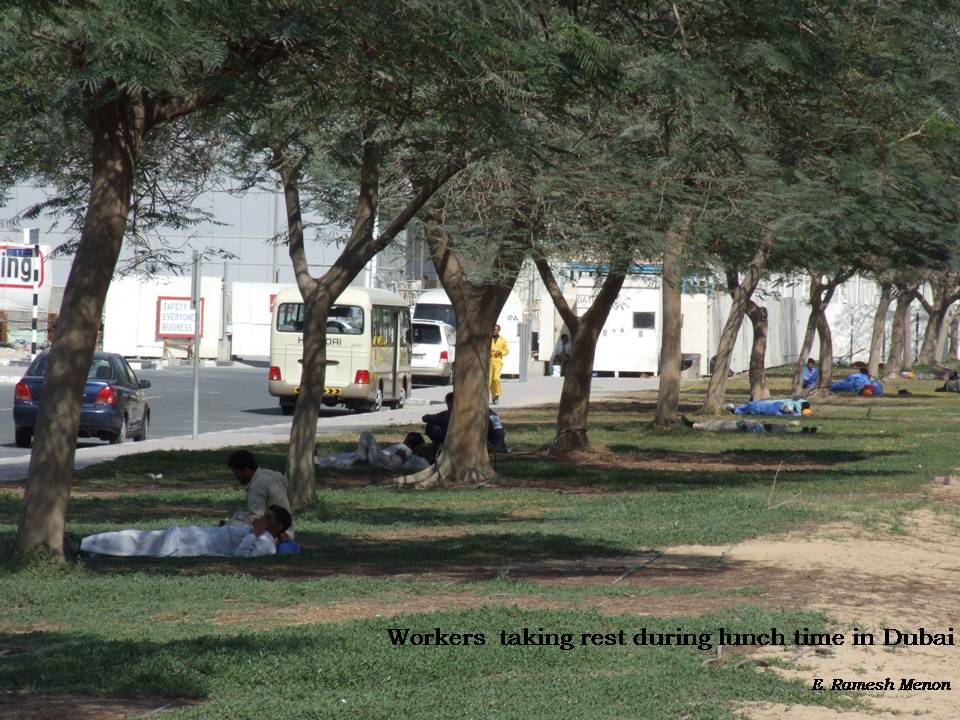
Relax and enjoy life as it happens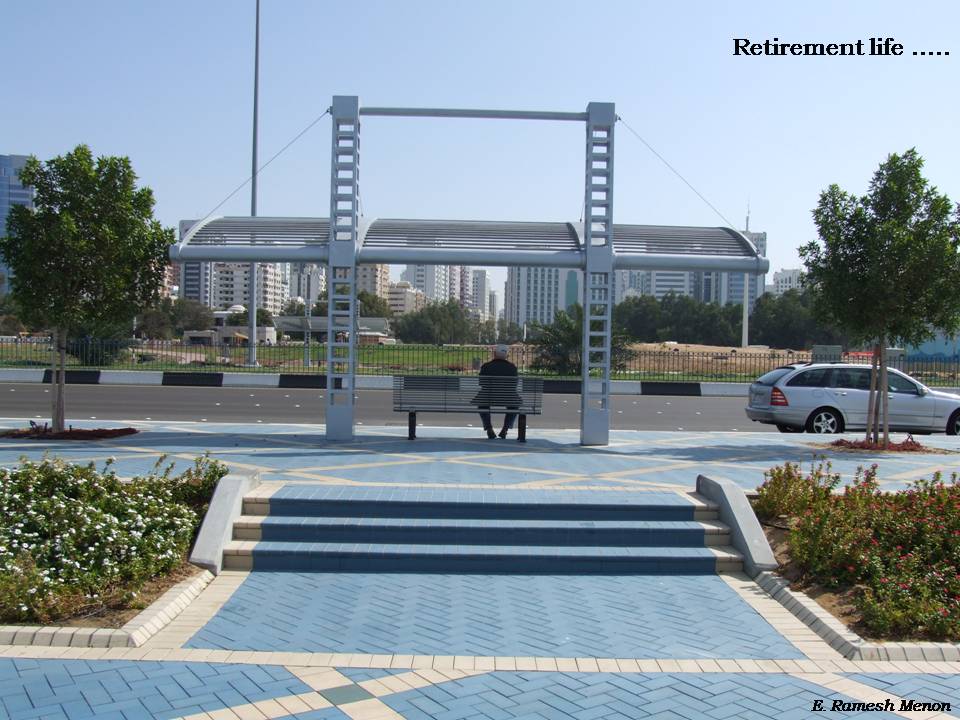
Money Matters – End of Day Review – Thursday, 3rd January 2008
Money Matters – End of Day Review – Thursday, 3rd January 2008
Global jitters shy away investors; Sensex loses 120 pts
3 Jan, 2008, 1805 hrs IST,Crystal Barretto, INDIATIMES NEWS NETWORK
MUMBAI: After soaring to all time highs, indices pared gains as weak global cues and sky rocketing oil prices got the better of investors.
Weak manufacturing data released late on Wednesday in the US further triggered fears of a recession. To add to that, crude oil zoomed to $100, mounting inflationary concerns and lessening the hopes of an interest rate cut by the US Federal Reserve.
Key indices across the globe slumped, and India was no exception. Mid-caps were fairly stable, but frontline shares bore the brunt, possibly on account of foreigners selling.
After setting a record high of 6230.15, the National Stock Exchange’s Nifty finally settled near the previous day’s close at 6178.55.
The Bombay Stock Exchange’s Sensex finished at 20,345.20, down 120.10 points or 0.59 per cent. The 30-share index charted a high of 20,519.70 and low of 20,293.87 intra day.
Major index gainers included NTPC (up 7.56%), Reliance Energy (6.42%), Hindustan Unilever (3.51%), ONGC (2.88%), Reliance Industries (1.44%) and DLF (0.24%).
Sensex losers comprised Grasim Industries (down 4.03%), ICICI Bank (3.03%), Wipro (3.03%), ITC (3.01%), TCS (2.95%) and Mahindra & Mahindra (2.83%).
“Weak international markets weighed down sentiment, and the hike in fuel prices only dampened the situation. But the outlook in the mid-cap space is still bullish. With global markets subdued, investors become wary of the large-cap space and don’t feel there’s much room for immediate upside. Also, with results season around the corner, investors are waiting for some cues before taking fresh positions,” said Viral Doshi, independent technical and derivatives strategist.
“Going by the discount in January Nifty futures, it appears traders are jittery at higher levels. One should refrain from going long in index futures till the 20,600 mark is breached on a closing basis in Sensex with substantial volumes. On the lower end, support comes at 20,250,” Doshi added.
Nifty January futures ended at 3-point discount to the spot, with 3.74 crore shares in open interest.
The BSE Mid-cap Index ended flat at 10,056.87 while the CNX Mid-cap Index was down 11 points at 9581.80.
Power shares posted smart gains. Torrent Power gained 20 per cent, NTPC climbed 7.56 per cent, Reliance Energy added 6.42 per cent and Tata Power was up 4.38 per cent.
Shares of cement companies took a beating with the Tamil Nadu government threatening to nationalise the units in the state if manufacturers fail to bring down prices to affordable levels. Grasim Industries, down 4.03 per cent per cent, was the biggest loser. Chettinad Cements followed with a fall of 2.2 per cent, Ambuja Cements slipped 1.82 per cent, ACC declined 1.64 per cent and Madras Cement was down 0.76 per cent.
TOP 5 GAINERS
Symbol, Curr.Price, % Change
GUJ INDS P, 173.90, 19.97
MOSER BAER, 337.85, 11.41
NTPC, 276.70, 7.56
HPCL, 399.45, 6.75
NEYVELILIG, 267.70, 6.67
TOP 5 LOSERS
Symbol, Curr.Price, % Change
INDO RAMA, 73.05, -5.56
SPICE TELE, 63.20, -5.46
FDC, 49.55, -4.99
MIRC ELTRN, 36.10, -4.87
CASTROLIND, 330.60, -4.75
TOP 5 VOLUME STOCK
Symbol, Curr.Price, Volume
RPL, 232.30, 13440701
ISPATINDUS, 76.90, 10951013
SPICE TELE, 63.20, 9226388
ASHOKLEYLA, 52.45, 7094260
POWER GRID, 151.70, 6830921
TOP 5 VALUE STOCK
Symbol, Curr.Price,Value (‘000)
REL, 2,517.40, 3953950.10
RPL, 232.30, 3136875.23
JAIPRAK AS, 473.35, 2030158.89
RIL, 2,902.90, 1782409.33
NTPC, 276.70, 1762653.97
3:34 PM – The market closes a bit quiet. Sensex closed at 20337, down 128 points (provisional) and Nifty at 6178, down 1 point (provisional) from the previous close. The CNX Midcaps Index and BSE Smallcaps Index both closed in the negative. But BSE Power Index closed up 3%. The market breadth was negative with advances at 522 against declines of 708 on the NSE.
4:13 PM – The market was volatile in late trade but closed a bit quiet. Sensex closed at 20345, down 120 points and Nifty closed at 6178, flat from the previous close. The CNX Midcaps Index and BSE Smallcaps Index both closed in the negative today. BSE Power Index closed up 3% and BSE PSU Index closed up 2.2%. The market breadth was negative with advances at 523 against declines of 709 on the NSE. Top Nifty gainers included NTPC, REL, Cairn India and Tata Power while losers included VSNL, TCS, SAIL and Unitech.
Top Performers from high-risk, high-returns category
Company ,Scheme ,Class ,Plan,Type
Reliance Diversified Power Sector Fund,Equity-Sector Fund,Growth,Open Ended,127.13
Reliance Diversified Power Sector Fund,Equity-Sector Fund,Bonus,Open Ended,127.13
JM Basic Fund,Equity-Sector Fund,Growth,Open Ended,115.83
Taurus Libra Taxshield,Equity-ELSS,Growth,Open Ended,114.56
Standard Chartered Premier Equity Fund,Equity-Diversified,Growth,Open Ended,109.55
Daily Exchange Rates – Thursday, 03 January 2008
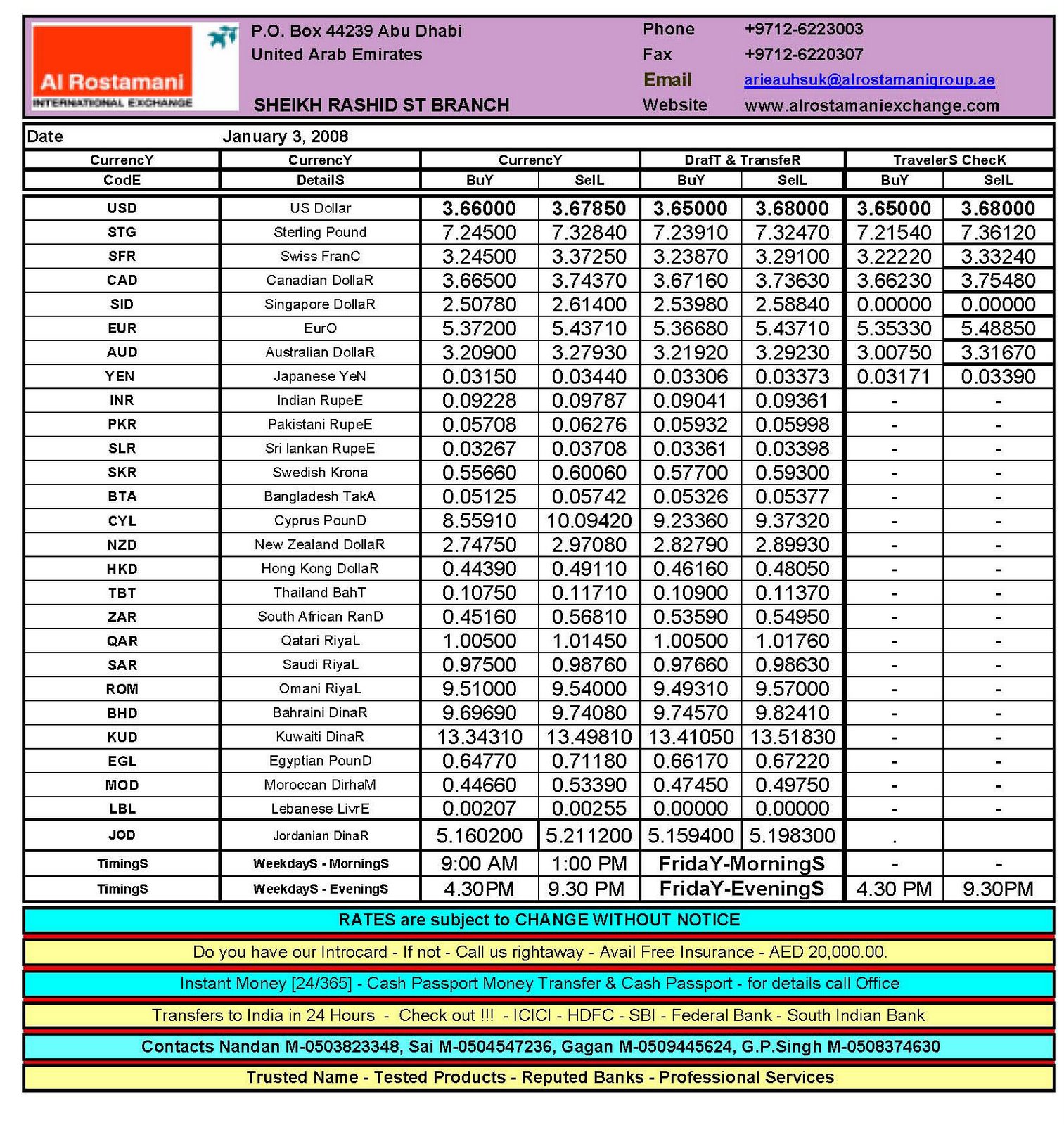
Brought to you by
Al Rostamani International Exchange
Abu Dhabi
Phone: +9712 6223003
http://www.alrostamaniexchange.com
Power Tips for Improving Communication Skill
Power Tips for Improving Communication Skill
It might sound an over-simplification, but it’s true. The best way of improving communication skill is through practice. There are some easy and fun ways that you can improve your communication skill, though, so you needn’t worry about it being too hard to do. You will probably be really glad in a short space of time that you bothered to improve your communication skill.
Remember that communication can be either written or spoken. Both of these improve with practice and here are some fun ways to do that:
1. Write down your thoughts
Just write down anything. It can be impromptu and you Don’t have to show these ideas to anyone. This helps you to be able to order your thoughts logically.
However, if you find that you enjoy this way of expressing yourself, you could join an online community or article database which will publish your articles. There are lots of opportunities like this online and some even offer payment, but what is probably more important and more gratifying is knowing that people are reading your opinions.
You may even find a site where articles are ranked by your peers. If you dare to subject yourself to such ranking, then you can be pleasantly surprised at how highly regarded your writing becomes.
2. Learn from other communicators
Watch speakers on TV or go to lectures. See how the experts do it. You can learn a lot this way, seeing what you liked about their way of putting their message across.
In improving communication skill, it’s important to have the confidence to get your own style. Getting some tips from others is fine, but no-one has all the answers and you may well have some good ideas yourself. Your communication style needs to be individual to you and you need to feel comfortable communicating in this way for it to be really effective.
3. Try the telephone
Telephone conversations take a different set of skills. Obviously, one big difference is that you can’t read body language of the person you’re talking to on the end of the telephone line. Also, without this body language to read, silences can seem much longer over the phone.
They are still important pauses to allow people to think, though, so you need to learn not to be frightened of these pauses in conversation.
4. Chat to people
Try holding a conversation with anyone you meet – the bank cashier or the man you pay for your gas when You fill up the car. Anyone. It’s the practice that matters.
5. Strike up a debate
One way of improving communication skill that you may not have considered is getting a few friends together and having a friendly debate. Pick a current topic in which you are all interested. It doesn’t have to be anything weighty or in any way controversial; in fact, whilst you are just starting out improving your communication skill, it really should be something light and fun in which everyone can participate.
Serve up the coffee and have fun with the debate. It can be casual and low-key and if you really want to have fun with it, which not switch to argue on the opposite side a little way into the debate. That’s a great way of improving communication skill. Keep it impersonal and remember not to directly attack anyone and you can have a really fun time and also learn a lot in the process.
So, try a few of these tips and see how much more comfortable you feel in communicating with other people, both people you know and strangers. You will soon be improving communication skills in all areas of your life and you should be enjoying it too.
The Simplest Leadership Practice
The Simplest Leadership Practice
Robin Sharma
Elevate Others
People crave recognition. Everyone needs to know that they are doing well, that they are appreciated, that what they do matters. It is hard-wired into us. Watch someone after they have received a compliment for their work. They shine.
Yet we so rarely call a meeting to discuss what’s going right in the organization and who’s responsible. We think that its our job to solve problems, not hand out praise. Wrong. It’s our job to act like a leader. And leaders make everyone around them better. More capable. More engaged. More positive.
Giving honest praise is one of the most powerful leadership actions you can take. (And remember: if you consume oxygen you are a leader.) No matter where you are in the organization you can find someone doing something right and recognize them. Whether it’s a vendor who is impeccably polite, a colleague who is outrageously punctual or a supervisor who listens deeply. Every one of them is a human being who deserves and craves recognition. And when you give them that recognition they will go out and make someone else’s day better. What a powerful way to spread leadership.
So think about your organization, your community or your family and try some of the following simple strategies for elevating others. Observe how people respond, the results will astound you.
1. Honest praise. Tell someone what you admire about their performance or their attitude.
2. Public praise. Share someone’s victory with the rest of the team.
3. Thank you notes. A handwritten card thanking someone for their help will be the highlight of their day.
4. Support them. Say yes to a colleague’s ideas. Find a way to incorporate their input into your plan.
Young expats can take up part-time jobs from age 16
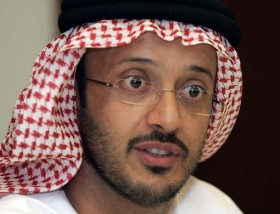
Young expats can take up part-time jobs from age 16 By Wafa Issa, Staff Reporter GULF NEWS Published: January 02, 2008, 17:11
Dubai: Young residents, under the sponsorship of their parents or universities, can undertake part-time work, the Labour Minister told Gulf News.
Dr Ali Bin Abdullah Al Ka’abi, Minister of Labour, has issued a decision that allows people from the age of 16 to undertake part-time job in the country.
“The decision aims to protect young people’s rights and give them the opportunity to acquire labour market experience at an early age,” said Al Ka’abi.
Earlier young expatriates, below 18 were not allowed to work in the country.
A part-time labour card also gives an opportunity to university students to get work experience before graduating, he added.
“Young people can now acquire a job if they meet the legal requirements, but they cannot work full-time until they reach 18,” said Al Ka’abi.
The new decision stipulates that teenagers will be allowed to work for a total period of six hours and in all types of work except jobs where they are exposed to dangers or face the risk of harming their health.
Expatriate teenagers, who wish to join a job, will have to apply for a labour card at the ministry after getting their parents’ approval.
“Legalising their employment will help the ministry to monitor violations closely and will ensure that teenagers work in a healthy atmosphere and under the supervision of their parents,” said Al Ka’abi, adding that the decision will shortly be applied across the country after the ministry’s system is updated to accept labour card for children at the age of 16.
Some types of jobs that are categorised as dangerous for health and in which child employment is prohibited (ministerial order No.5/1, 1981):
Work in mines and quarries
Work where ovens are used for melting mineral substances
Petroleum refining
Bakery ovens
Cement, ice-making and refrigerating plants
Mirror silvering with mercury
Explosives industry
Glass melting and blowing
Arc welding
Painting
Treatment and preparation or warehousing of ashes containing lead and extracting silver from lead
Making of tin (pewter) and metallic compositions containing more that 10 per cent lead
Making of prime oxide of lead (silicon), carbon oxide of lead, the orange lead, sulphates, chromate and silicates of lead
Operations involving mixing and preparation for repair of batteries
Operating or supervising operating machines or repairing or cleaning such machines while these are working
Asphalt work
Oil pressing by mechanical devices
Work involving fertilisers, metallic acids, laboratories and chemical products
Work in tanneries
Rubber industry
Work in factories for fitting cylinders with pressed gases
Loading and unloading merchandise
Coal works when coal is made of animals bones but not the operation of separating bones before such bones are burnt
Operations involving bleaching, dying and printing textiles
Carrying heavy loads
Work in public bars
Making sure ‘we approach future in steady steps’
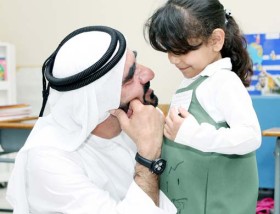
Making sure ‘we approach future in steady steps’ By Samir Salama, Bureau Chief Published: January 03, 2008, 01:31
Dubai: January 5 marks the second anniversary when His Highness Shaikh Mohammad Bin Rashid Al Maktoum became Vice-President and Prime Minister of the UAE. He became the Ruler of Dubai on January 4, 2006.
The past two years witnessed ground-breaking achievements as Shaikh Mohammad took charge of improving the lives of all residents.
In the last two years, Shaikh Mohammad has issued a number of laws and decrees for the advantage of residents and ordered his administration to implement them in the best service of the country and the citizens.
Ever since he became the Vice-President and Prime Minister of the UAE and Ruler of Dubai, he has been following up the concerns of his people and ordered changes and improvements in various fields, stressing commitment to national goals and policies laid down by the founding fathers.
All-round development
Shaikh Mohammad also infused dynamism that has become the hallmark of the Federal Strategy, adopting realistic and applicable programmes and well-considered plans to achieve economic, social and human development.
He has conducted inspection trips to all the emirates and ordered important changes.
Shaikh Mohammad ordered the establishment of a specialised court to deal with labour complaints. He also ordered the establishment of a special inspection unit to monitor workers’ accommodations and workplace. He ordered a stricter enforcement of laws that protect the rights of labourers and domestic workers and improve their quality of life.
The rent cap was another corrective step taken by Shaikh Mohammad to rationalise rents so that both tenants and landlords have an equal say.
The escrow account was yet another visionary measure to secure money of investors who invest in real estate development.
Shaikh Mohammad’s substantial contribution covers people around the world.
He launched the Dubai Cares initiative on September 30 to raise money to support the education of over a million poor schoolchildren through the efforts of businessmen, schools, students, their families and their neighbours in Dubai.
On May 19, the Mohammad Bin Rashid Al Maktoum Foundation was launched to promote human development and provide hope and opportunity by investing in education and knowledge development in the region.
Shaikh Mohammad, in his own words, is not one to revel in past accomplishments “because life doesn’t stop and it doesn’t care about those who stop because they are content with what they have achieved”.
He has said: “The present and future generations of our country are the top priority of all development plans. We have to make history and approach the future with steady steps, not wait for the future to come to us.”
 ClicksandWrites
You must be logged in to post a comment.