Month: November 2007
ICICI fined Rs 50 lakh for employing goons
ICICI fined Rs 50 lakh for employing goons
PTI News
NEW DELHI: The Delhi Consumer Commission fined ICICI bank a whopping fine of Rs 50 lakh for employing “goons” to recover loan and deplored the practice of the banks intimidating consumers to pay the installments.
In the significant judgement, the Commission deprecated the “audacity and impunity” with which the banks have been effecting forcible possession of vehicles and ordered ICICI also to pay Rs 5 lakh to a consumer, who was mercilessly beaten by the recovery agents while they snatched a loaned car from him.
“No civilised society governed by rule of law can brook such kind of conduct,” the Commission’s President Justice J D Kapoor said, adding the violent methods adopted by the recovery agents were serious violation of “human rights”.
Holding the ICICI Bank guilty of “unfair trade practice,” the Commission termed such miscreants as “yahoos” and said they are boorish and a brutal lout, who care a fig for legal and judicial authorities, including the Supreme Court.
While taking to task the leading bank, it vented its anger on ICICI for flouting the apex court’s direction that restrained all the financial institutions from employing musclemen to recover a loan amount or possession of a vehicle.
The Commission, also comprising Member Rumnita Mittal, issued notices to the Collection Manager of ICICI and the CEO of the recovery agency, seeking their explanations over blatant violation of the direction of the highest court of the nation.
Its strong worded order came recently while hearing a complaint by Tapan Bose, whose loaned car was taken away by some recovery agents after beating up his friend’s son with iron rods on January eight, leading to serious injuries on his skull and other parts of the body.
How to de-stress
How to de-stress Tejaswi Rathore for BUSINESS TODAY
Stress is an integral part of today’s corporate life. It can bog you down, and if left unattended, cause permanent physical and psychological damage. But it’s never too late to relax and rejuvenate… so let’s begin.
What is stress?
Stress is the emotional and physical strain caused by our response to pressure from the outside world. Common stress reactions include tension, irritability, inability to concentrate, and a variety of physical symptoms that include headache and a fast heartbeat.
What are the different types of stress?
Stress can broadly be divided into two categories: distress and eustress. The former is self-evident. Eustress has its roots in the Greek word eu, meaning good; thus, eustress is good stress and arises from positive events like marriage, promotions, windfall gains, birth of a child, etc. Thus, both negative and positive factors can lead to stress.
Some common stimuli are: pain, bright light, births, deaths, marriages, divorces, financial windfalls and losses, unemployment, conflict (at work, at home and socially), heavy drinking, lack of sleep, etc.
Is it a medical condition?
Yes. Stress is the disruption of homeostasis through physical or psychological stimuli… Hold your expression there… and check it in the mirror. What you see is a confused look, a frown and knitted brows… So much stress for not understanding an 11-word sentence. Shorn of medical jargon, it means, any physical or mental situation or activity that disrupts your peace of mind and leads to worry and stress.
What are the signs of stress?
Stress can cause both mental and physical symptoms. The effects of stress are different for different people.
The mental symptoms of stress include:
Tension
Irritability
Inability to concentrate
Feeling excessively tired
Trouble sleeping
The physical symptoms of stress include:
Dry mouth
A pounding heart
Difficulty in breathing
Upset stomach
Frequent urination
Sweating palms
Tight muscles that may cause pain and trembling
How does stress affect the body?
Under a stressful situation, the body prepares for either fight or flight. That is, either you will face the situation or look for an escape. Under sudden stress, you will get a burst of exceptional strength and endurance, as your body pumps out stress hormones:
Your heart rate speeds up
Blood flow to your brain and muscles increases by up to 400 per cent
Your digestion stops (so that your metabolism doesn’t use up energy that’s needed elsewhere)
Your muscle tension increases
You breathe faster, to bring more oxygen to your muscles
How does stress affect us adversely?
Stress can cause chronic fatigue, digestive upsets, headaches and back pain.
Stress can affect the blood cells that help you fight off infection, so you are more likely to get colds and other diseases.
Constant stress can increase blood pressure and can increase the risk for stroke.
Stress can increase the danger of heart attacks, particularly if you are often angry and mistrustful.
Stress can make an asthma attack worse.
Stress triggers behaviours that contribute to death and disability, such as smoking, alcoholism, drug abuse, and overeating.
Stress can lead to diminished sexual desire and an inability to achieve orgasm.
Stress makes it harder to take other steps to improve health, such as giving up smoking or making changes in diet.
How can you manage stress?
Fit in fitness every day: Getting regular physical activity helps you cope with stress. Give your stress to the pavement or the treadmill and let it go from your body. Staying active in winter elevates your mood and reduces stress.
Enjoy natural sunlight: Just going to the gym is not enough. You need to spend time in natural light and fresh air. About 15-20 minutes in the morning or evening is enough.
Indulge: Don’t deprive yourself of the foods you love; this only leads to bingeing. Instead, plan to eat a small portion of the desired foods, eat it slowly, and savour every mouthful.
Relax: Give yourself 15 minutes each day of peace and quiet; reflect, meditate and unwind. Soaking in a hot bubble bath can help release your troubles into thin air. Breaking free from the family, a breath of fresh air, or escaping to a quiet room will energise and empower you.
Clear the office desk clutter: Keep your desk neat. Don’t pile up paper and files; that will only make you irritable and stressed. Keep pictures of good times with friends and family on your desk. This will help you de-stress.
Take note of your water intake: A lot has been said about how you should drink water and all, but water does remain the elixir of life and helps you stay happy and cool.
Spend time with family: This does not mean that you have to go on a picnic or vacation. But just cook with your better half or help your child with his home work, believe us, these things work.
Check that ring tone: If the ring tone makes you jump out of your skin, change it NOW. Your ring tone should be soothing, that makes you reach for your phone, not lunge at it.
Dance your way out of stress: If your life is ruled by an overactive brain, dance could be the perfect way to de-stress and relax. If you’re switched on 24/7 and often find yourself feeling stressed, try dancing.it will use up your excess energy, help you to relax and leave you happier and calmer than before.
Take a vacation: If none of the above works, then we suggest, take a nice vacation!
How to de-stress now?
Deadlines swishing past you… colleagues not delivering… boss behaving impossibly… stress, stress and more stress. Take these quick steps to de-stress at work.
Take a deep breath.
Relax your tongue.
Take one minute vacations. Mentally visit places where you find peace.
Picture yourself there soaking up the beauty and solitude.
Just exit the situation that is leading to all the stress.
Discuss the problem that’s stressing you out with your team and your boss.
Can different colours help you de-stress?
Remember when, as a child, opening a new box of crayons or dipping your brush in a cup of water made you feel inventive and alive with possibility and choice. You could break free of pre-existing lines, combine colours, elongate familiar shapes or create surprising curves. We, as adults, have forgotten about colour, opting for basic black or the safe monochromatic look.
Colour has a powerful sensory appeal. Change your colours periodically to open yourself up to other people as well as your own disposition and energy levels. Here are some colours and what they might mean to you:
Orange is the colour of cheerfulness
Red is bold and energetic
Blue is calming and soothing
Yellow is intellectually stimulating
Green is healing
Brown is earthy
Silver is spiritual
How can you use colour to de-stress?
Try this quick colour centering exercise in the morning or whenever you need to regain your balance and empower yourself. Imagine that the centre of your forehead is deep blue. This is where your creativity and inspiration reside. Next, your heart, no matter what you have done in life, is pure white. Your belly is golden, because you are a confident, golden child. Now align the three colours in a straight vertical line, like a traffic light: blue, white and gold. Practise this for a few days and you will see how this little exercise “lifts” you up.
MAGIC IN SELF CONFIDENCE
A Business executive was deep in debt and could not see any way out.
Creditors were closing in on him. Suppliers were demanding payment. He sat on the park bench, head in hands wondering if anything could save his company from bankruptcy.
Suddenly an old man appeared before him.
“I can see that something troubling you”. He said
After listening to the executive’s woes, the old man said, “ I believe I can help you”.
He asked the man his name, wrote out a cheque and pushed it into his hand saying, “take this money, meet me here exactly one year from today and you can pay me back at that time”.
Then he turned and disappeared as quickly as he had come.
The business executive saw in his hand a cheque for $ 500,000 signed by
John D. Rockefeller, then one of the richest men in the world!
“I can erase my money worries in an instant!” he realized. But instead, the executive decided to put the uncashed cheque in his safe knowing that it might give him the strength to work out a way to save his business, he thought.
With renewed optimism, he negotiated better deals, restructured his business and worked rigorously with full zeal and enthusiasm and completed several big deals. Within few months, he was out of debt and making money once again.
Exactly one year later he returned to the park with the uncashed cheque. At the agreed upon time, the old man appeared. But just as the executive was about to hand him back the cheque and share his success story, a nurse came running up and grabbed the old man.
“I’m so glad I caught him!” she cried.” I hope he hasn’t been bothering you. He’s always escaping from the rest home and telling people he’s John D Rockfeller” and she let the old man away by the arm.
The astonished executive just stood there, stunned. All year long he’d been wheeling and dealing buying and selling, convinced he had half a million dollars behind him.
Suddenly, he realized that it wasn’t the money, real or imagined that had turned his life around. It was his newfound self-confidence that gave him the power to achieve anything he went after.
Have you been looking for a quite weekend? Jumeirah Bab Al Shams Resort & Spa is our choice for you.

Have you been working hard, the last 11 months? Then it’s time to ask your HR/PR department to organise a special weekend.
Are you in a mood to write a story or create a work of art? Then it is time for you take your laptop or brush and hit the Emirates Road.
Do you feel exhausted from work and life?
For all the above, and more, I have a beautiful place for you to travel during this weekend. Straight down the Emirates Road, travel 35 odd kms through the dessert listening to the sound of sand and counting the numerous developments coming up and the radar cameras passing by. By the time you finish 6 or 7 of them, you will reach, Jumeirah Bab Al Shams & Spa Resort.
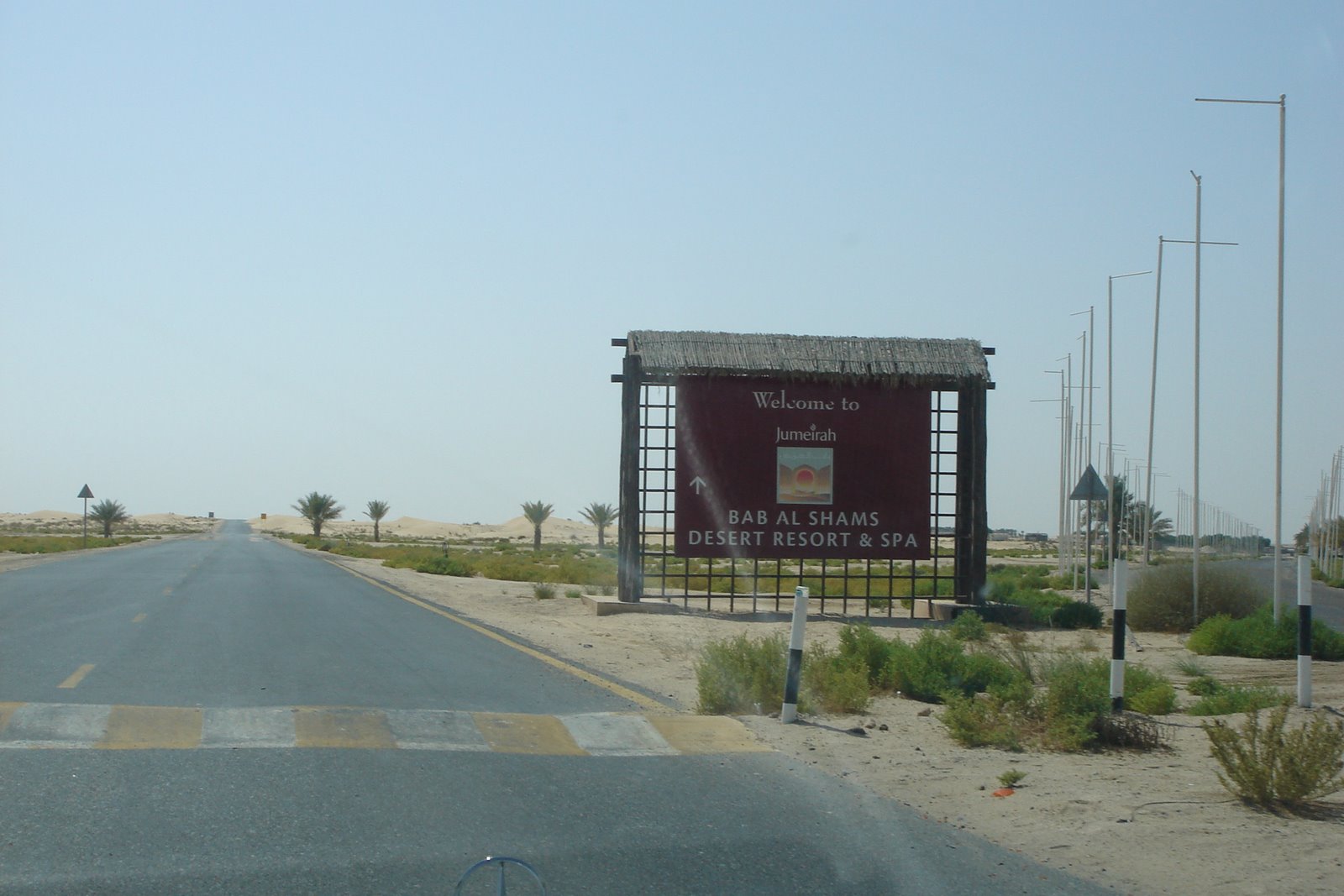
Voted the favorite weekend getaway hotel in the UAE, this is the place you should hit up on or tell your boss to reward you as for your performance. To rejuvenate and refresh in the quiteness of the dessert and the silent sounds of the dessert sands humming at night and listening for the birds to sing, which never happens for hours……
Emerging from the heart of the desert, Jumeirah Bab Al Shams Desert Resort & Spa is an elegant desert resort in a traditional Arabic fort setting. Located just 45 minutes from Dubai International Airport (only on a Friday morning traffic!!!), the Resort features 115 rooms and suites appointed in traditional Gulf decor, complemented by the region’s first authentic open-air Arabic desert restaurant, and a superb range of recreational facilities.
For those seeking a unique desert experience within easy reach of Dubai, Jumeirah Bab Al Shams Desert Resort & Spa presents the ideal destination.
Jumeirah Bab Al Shams Desert Resort & Spa Offers the ultimate in comfort and entertainment and your experience will be enhanced by history, splendour and magnificence.
Children’s Activities:
Sinbad’s Kids Club
The Sinbad’s Kids Club offers a varied programme of activities for children aged between 2 and 12, under the supervision of very highly trained and qualified staff, from 8.00am to 8.00pm everyday.
* Activity room
* Indoor and outdoor playground
* Daily activity programmes – arts and crafts, nature trails, swimming games, theme days and more
In addition to Sinbad’s Kids Club, Jumeirah Bab Al Shams Desert Resort & Spa also offers:
* Shaded children’s pool attached to the main resort pool
* Children’s menu in all restaurants
* Baby sitting service upon request (6 hours notice required)
A boutique store is located in the lobby and is open between 9:00 am and 9:00 pm daily.
* Souvenirs, books, newspapers and other amenities
* Jumeirah Bab Al Shams Desert Resort & Spa branded merchandise
* Satori Spa products
* Prayer room
* Foreign currency exchange
* Concierge and Guest Relations
* Landscape with 1,200 palm trees
* Guest safety deposit boxes
* Daily shuttle bus to and from Dubai and Wild Wadi
* Wireless internet connection available in all our meeting rooms, lobby, pool area, Al Sarab Rooftop Bar & Lounge, Ya Hala Lounge and Al Forsan Restaurant
Satori Spa
Tel: +971 4 8326699
Email: JBASspa@jumeirah.com 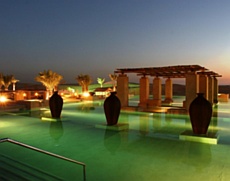
A variety of leisure activities are available and subject to applicable tariff rates. Advance bookings are required:
* Archery
* 4×4 desert exploration
* Guided horse riding
* Bicycle rental
* Satori Spa
* Falconry
* Camel rides and safari
and much more… 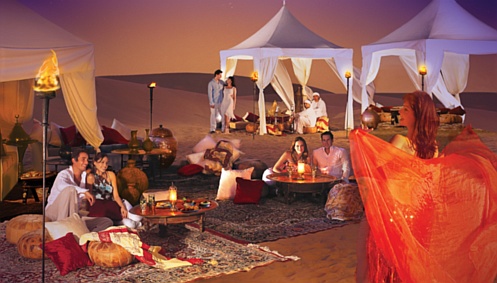
For enquiries and more information, please contact our Leisure Reception:
Tel: +971 4 8326699
Email: JBASleisure@jumeirah.com
Do not hesitate, contact the following number and enjoy a great weekend. And of course, do not forget to send your fun time pictures to Team 1.
JUMEIRAH BAB AL SHAMS DESERT RESORT & SPA PO Box 8168, Dubai, UAE TEL: +971 4 8326699 FAX: +971 4 8326698 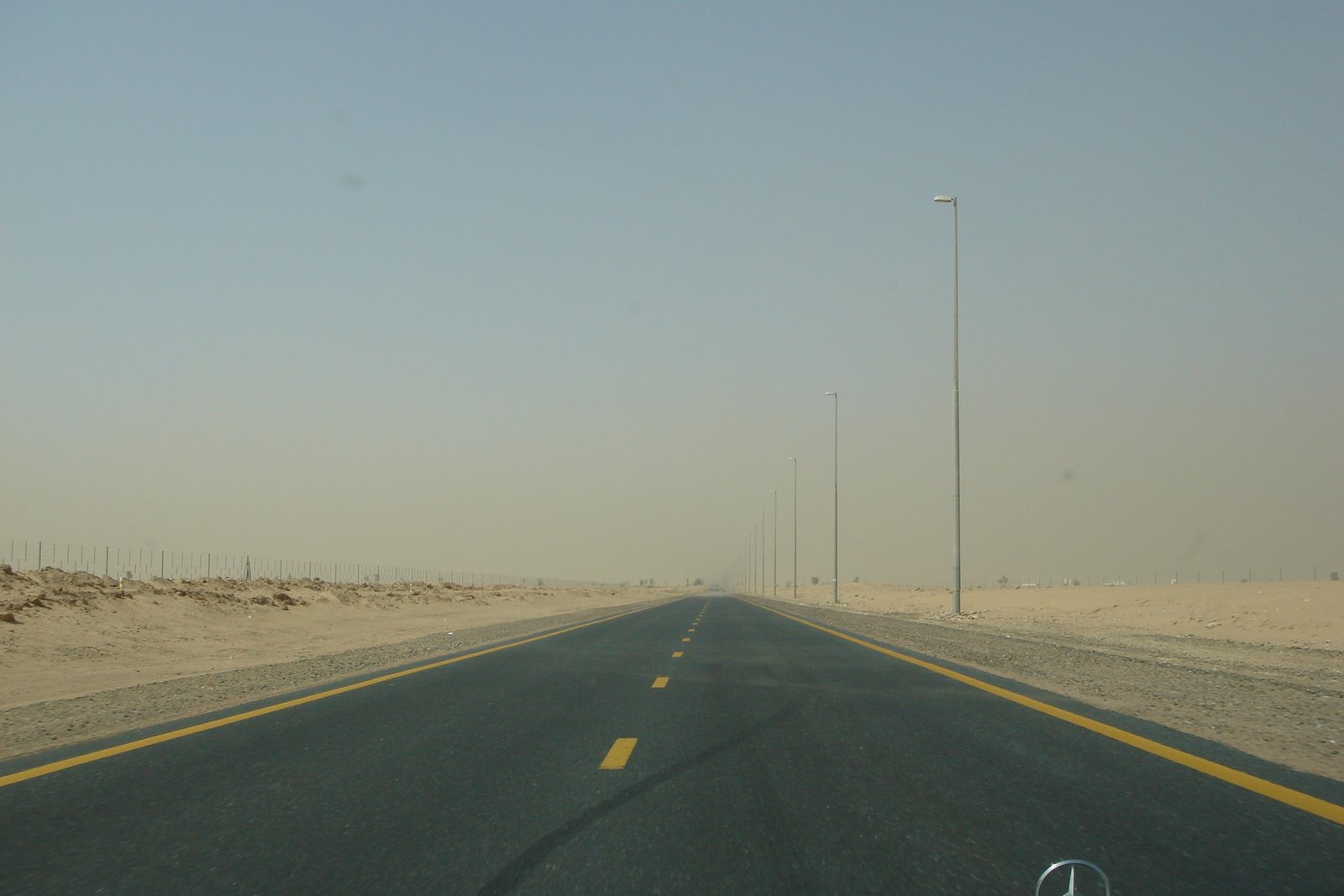
It’s just never ending road, dessert sand and quite serene thoughts. Do not miss it…..
Photo Speaks – Gone are the days
Once upon a time, public used to que in front of a public telephone – coin phone or card phone. Now, you cannot see even the machine there?! With everyone having own mobile connection, it’s easy communication all the time.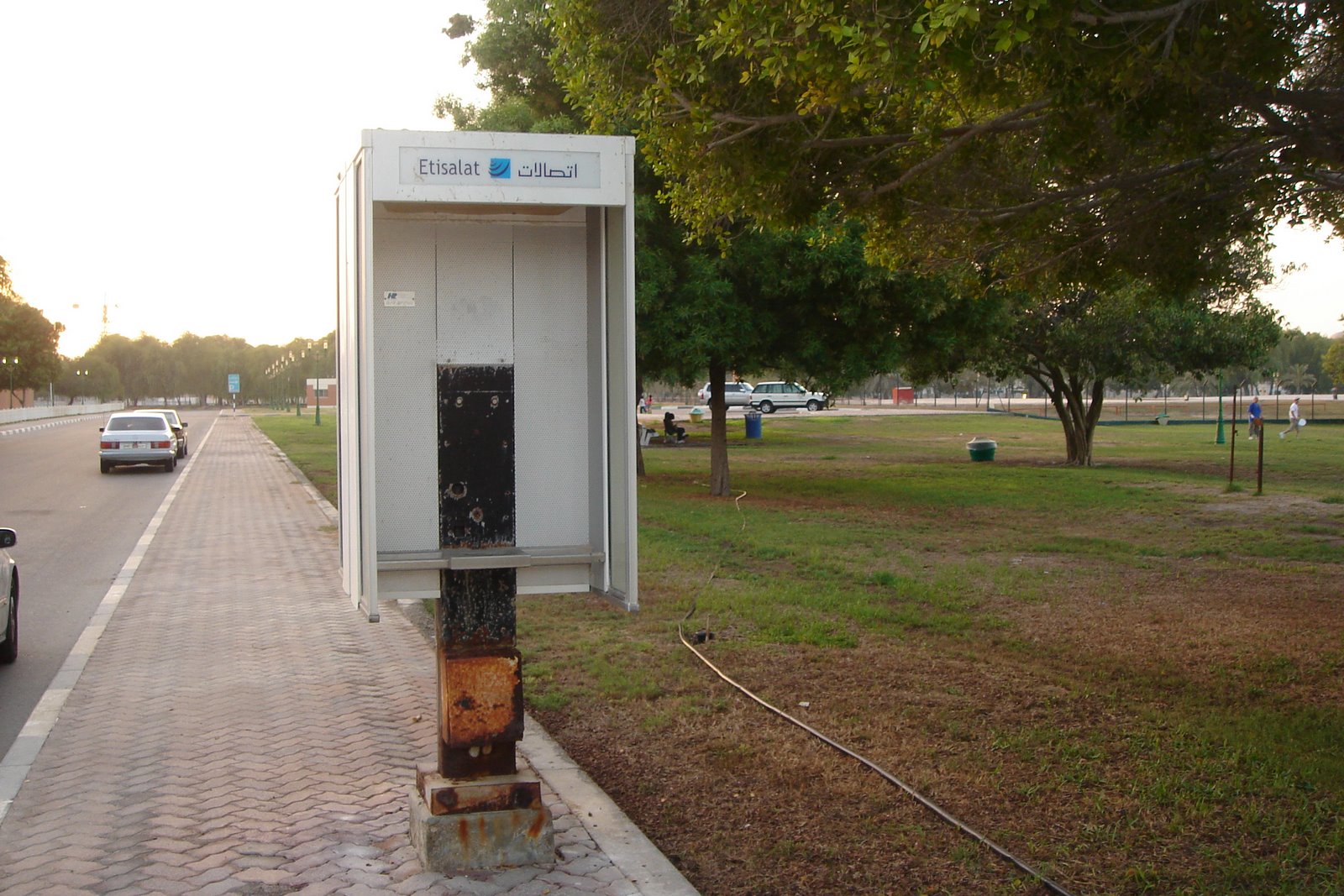
If you notice something unusual, interesting and wish to be passed on to our readers, take a passing shot of it, and send it to me at team1dubai@gmail.com. Life is very interesting, if you look through the lenses of a Camera!!!!!
What’s short-selling of shares?
What’s short-selling of shares?
13 Sep, 2007, 0211 hrs IST, TNN
What is short-selling?
Short-selling, in the context of the stock market, is the practice where an investor sells shares that he does not own at the time of selling them. He sells them in the hope that the price of those shares will decline, and he will profit by buying back those shares at a lower price. In India, there is no prohibition on short-selling by retail investors. Institutional investors —domestic mutual funds and foreign institutional investors registered with the Securities and Exchange Board of India (Sebi), banks and insurance companies — are prohibited from short-selling and are mandatorily required to settle on the basis of deliveries of securities owned and held by them.
How is short-selling beneficial?
Short-selling is considered an essential feature of the securities market not just for providing liquidity, but also for helping price corrections in over valued stocks. Supporters of short-selling claim its absence distort efficient price discovery, gives promoters the unfettered freedom to manipulate prices and favours manipulators than rational investors. Securities market regulators in most countries, and in particular, all developed securities markets, recognise short-selling as a legitimate investment activity. The International Organisation of Securities Commissions (IOSCO) has also reviewed short-selling and securities lending practices across markets and has recommended transparency of short-selling, rather than prohibit it.
Are there any drawbacks of short-selling?
Critics of short-selling feel selling, directly or indirectly, poses potential risks and can easily destabilise the market. They believe that short-selling can exacerbate declining trend in share prices, increase share price volatility, and force the price of individual stocks down to levels that might not otherwise be reached. They also argue that declining trend in the share prices of a company can even impact its fund raising capability and undermine the commercial confidence of the company. In a bear market in particular, short-selling can contribute to disorderly trading, give rise to heightened short-term price volatility and could be used in manipulative trading strategies.
Will institutional investors in India be allowed to short-sell securities?
Sebi is working on a proposal to introduce a stock borrowing and lending mechanism. This will allow institutional investors to short-sell by borrowing shares. Under this arrangement, an investor A, who feels that a certain stock is overpriced, borrows those shares for a charge from investor B, who is willing to lend those shares. Investor A then sells those shares in the market, hoping that the price declines so that he can buy cheap and return them to investor B.
What is the difference between covered short sales and naked short sales?
Covered short sales are those in which the seller arranges for the delivery of shares he has sold by borrowing them. Naked short sales are those in which the seller does not intend to provide for the delivery of shares he has sold. Most international securities market regulators have prohibited naked short-selling and require the client to have documentary evidence of borrowing/tie-up with lenders before executing the sale transaction. This is because naked short sales in huge quantities can destabilise the market.
How does the stock lending and borrowing mechanism function in other markets?
World over, securities lending and borrowing transactions are, by and large, over-the-counter (OTC) contractual obligations executed between lenders and borrowers. International securities market regulators do not directly regulate the lending and borrowing transactions. In many international markets, entities like custodians and depositories run the lending and borrowing scheme and have their own screens for meeting the demand and supply of securities from their clients.
( With inputs from the Sebi discussion paper on short-selling and stock lending )
Home loan: EMI and tenure
Home loan: EMI and tenure
4 Nov, 2007, 0511 hrs IST,Kavita Sriram, TNN
There was euphoria and expectation. Everyone hoped that the rates would come crashing down. Very much like how the rates peaked steadily with every Reserve Bank of India (RBI) move, the anticipation of a fall was huge. New borrowers were offered lower rates compared to existing borrowers. And Devansh was certainly unhappy and upset.
Three years ago, he procured a home loan of Rs 20 lakhs. The tenure of the loan was 10 years. The rate of interest was a humble eight percent. His monthly EMI outflow was a reasonable Rs 24,000. Today, the interest rate stands at a whopping 13 percent. This translates to a monthly outflow of Rs 30,000. Devansh contacted his bank to find out if any rate cut was being planned for existing borrowers and their answer was ambiguous.
The burden of unanticipated increase in monthly EMIs caught Devansh off guard. He had planned his monthly expenses and other financial commitments. Now, it had all gone for a toss. He had to rework on his finances, take stock of his assets and explore any changes to the structure of his home loan. The two most obvious options before Devansh are pay higher EMI or increase the tenure of the loan.
Some borrowers may feel more comfortable paying higher EMIs to the lender. This way, one does not need to prolong the loan period and bear the brunt of increased rates. Anxious borrowers are keen to repay their dues as soon as possible, as they fear defaulting in case the rates increase to an unaffordable level.
Paying off the home loan gives borrowers peace of mind. Perhaps, increasing the EMI is the best option in case further increases in interest rates is on the cards. This option is not for those who are already over-burdened with EMI repayments and cannot stretch their finances beyond this.
For those who are paying heavy EMIs, remember that in future, in case you need some more money from a lender, you may not be eligible for it. This is because the bank realises that your debt is heavy and bulk of your earnings is set aside for servicing your existing home loan.
Borrowers, who increase their monthly dues to the lender, agree to bear the increased cost of home loan immediately rather than postpone it to an indefinite future. Before increasing your EMI commitment, see if you can manage repayments with ease. A very tight lifestyle and a tight financial position can increase stress and make your life difficult.
If you anticipate a drop in rates in the future, increasing the tenure may not be a bad idea after all. On the contrary, if rates travel northwards borrowers who increase their tenure can end up shelling out more to the lender.
You can benefit from the strategy of increasing the tenure only if rates come down. Otherwise you’ll be bound to an expensive financial commitment. Some banks do not allow borrowers to increase their loan tenure beyond a fixed period say 20 or 25 years.
Others see to it that the borrower repays the loan before he retires. Hence, his retirement age, will decide how much his tenure can be extended. Before taking any of these crucial financial decisions, borrowers must consult their financial advisors or professionals.



Sponsoring teenagers

Sponsoring teenagers
By Bassma Al Jandaly, Staff Reporter GULF NEWS
Dubai: The residency laws of the UAE allows expatriate parents to sponsor their sons as long as they are less than 18 years old.
The laws are different for a daughter and the parents can sponsor her beyond 18 years of age. The parents can sponsor her if she is a divorcee or if she becomes a widow. Her residency visa will be valid for three years.
The situation is different if it is a son and if he reaches 18, the parents cannot sponsor him anymore.
The residency laws give the parents only one option in order to keep their 18-year-old son with them here.
According to the law the parents of the teenager can keep him here if he is studying at a local educational institution, a university or a college in the UAE.
The teenager can be sponsored either by the educational institution or by either one of the parents after submitting a document at the residency department that he is continuing his studies here in the UAE.
A deposit of Dh5,000 must be made at the naturalisation and residency department if he is studying in the UAE at an educational institution which is not an accredited institution or one which is not approved by the Ministry of Higher Education and Scientific Research. There is no need for a deposit if the educational institution or the university where the son is studying is an accredited one.
Similarly, if the sponsored son who is less than 18 and is studying abroad, the parents must deposit Dh5,000, which is refundable, to retain the residency visa.
The residency visa for the 18-year-old son is valid only for one year and should be renewed every year. In order to obtain a residency visa the son should submit to the residency department a letter from the educational institution which states that he is studying there.
- ← Previous
- 1
- …
- 9
- 10
- 11
- Next →
 ClicksandWrites
You must be logged in to post a comment.