Month: October 2007



MBAs’ guide to lasting fulfilment
MBAs’ guide to lasting fulfilment
By Della Bradshaw
It is a rare business school programme that invokes in its participants a similar fervour to that experienced in a revivalist religious meeting. But this would appear to be the case with Srikumar Rao’s elective course, Creative and Personal Mastery.
Now in its third year at London Business School, the course has also run at Columbia , New York, and may soon become part of the MBA programme at the Haas school at Berkeley.
Prof Rao, a businessman more than an academic and armed with practical experience rather than research, is one of a new breed of business school teachers. They eschew number-crunching and regression models in favour of personal issues.
“It is designed to get [students] to think about things rarely acknowledged in business schools. What makes me happy? What makes me happy at work?” Most people, he says, “don’t have a clue” about such things.
Many, however, would accept Prof Rao’s hypothesis. “When putting in long hours, if you don’t get a deep sense of fulfilment at work, you’re wasting your life.” His solution? “Your ideal job isn’t something that exists; it’s something you can craft.”
Just how to do that is at the core of his programme, which receives gushing praise from many students. “The technical skills that I learn at school will only get me so far and will one day be obsolete,” says Nick Wai, a recent LBS graduate. “What I learn in CPM, however, will help me build a foundation not only as a business person, leader even, but more importantly as a human being.”
Natasja Giezen, another London MBA, says the course teaches the “why” when most business school courses teach the “how”. She believes MBA students are the ideal target audience. “At business school we all think a lot about what we want from our future and this seems to fit in seamlessly.”
Prof Rao says there are four main planks to the course: learning techniques to spark creativity; helping students find their purpose in life; learning how to be most effective; and how to find balance in life.
Many university strictures have been rewritten. Students hand in written work when they think it is ready rather than to a deadline, and they have to make a public commitment to do something for their peers. A weekend retreat is included in the programme.
Prof Rao’s advice on landing a job flies in the face of many careers service dicta. You are most unlikely to find your ideal job straight out of business school, he says, so accept the “least worst” job you are offered.
As for interview techniques, he recommends that the aim should be to find out whether the company is one you want to work for, rather than trying to impress the interviewer.
Once you have your first job, you can start turning it into the job you want, he says. One piece of advice he gives is to focus on the good things about the job and then set the target of increasing the proportion of the job that is the good stuff. An element of learning should be involved in the process.
Prof Rao’s own work record includes experience in both the academic and the business worlds. His own MBA is from the Indian Institute of Management, Ahmedabad, and he has consulted for several blue chip corporations and taught on the corporate programmes of companies such as Bell Atlantic.
He also has a PhD in marketing from Columbia Business School and is no shrinking violet when it comes to promoting the programme he teaches. Students queue to learn about the course, he says, and it is the only business school programme with its own alumni association.
What differentiates the course from a self-help manual, however, are the mental models and long-term exercises the professor sets. MBA students are often labelled the most “me”-centric group on the planet. The obvious enthusiasm of past and present participants, who are undoubtedly some of the smartest cookies around, sets this programme apart.
http://www.areyoureadytosucceed.com
The Financial Times Limited 2007
TOP OF THE RANGE MBA Programmes Worldwide
Top masters in management programmes 2007
1. HEC Paris
2. Cems
3. London School of Economics and Political Science
4. ESCP-EAP European School of Management
5. Essec Business School
6. EM Lyon
7. Grenoble Graduate School of Business
8. Audencia
9. Stockholm School of Economics
10. RSM Erasmus Univeristy
Top executive education custom programmes 2007
1. Duke Corporate Education
2. IMD
3, Harvard Business School
4. Iese Business School
5. Babson Executive Education
6. University of Chicago GSB
7. Columbia Business School
8. Thunderbird School of Global Management
9. MIT: Sloan
10.Ashridge
Top executive education open programmes 2007
1. Harvard Business School
2. Stanford University GSB
3. University of Virginia: Darden
4. University of Chicago GSB
5. IMD
6. Center for Creative Leadership
7. Instituto de Empresa
9. Iese Business School
9. Northwestern University: Kellogg
10.Babson Executive Education
Top MBA programmes 2007
1. University of Pennsylvania: Wharton
2. Columbia Business School
3. Harvard Business School;
4. Stanford University GSB
5. London Business School
6. University of Chicago GSB
7. Insead
8. New York University: Stern
9. Dartmouth College: Tuck
10. Yale School of Management
Top European Business Schools 2006
1. HEC Paris
2. London Business School
3. IMD
4. Instituto de Empresa
5. Iese Business School
6. ESCP-EAP
7. RSM Erasmus University
8. University of Bradford/TiasNimbas
9.Cranfield School of Management
10. Insead
Top EMBA programmes 2006
1. University of Pennsylvania: Wharton
2. Columbia/London Business School
3. Kellogg/Hong Kong UST Business School
4. Trium: HEC Paris/LSE/New York University: Stern
5. Instituto de Empresa
6. University of Chicago GSB
7. London Business School
8. Washington University: Olin
9. Duke University: Fuqua
10. Northwestern University: Kellogg
Mittal-ONGC oil & gas JV runs out of steam
Mittal-ONGC oil & gas JV runs out of steam
Agencies Posted online: Friday , October 12, 2007 at 1434 hrs IST
New Delhi, October 12: Steel czar Lakshmi N Mittal’s joint venture with state-run ONGC for oil and gas trading has all but folded-up, with the India born billionaire absorbing the remaining two employees including the CEO into his group.
S K Sharma, the CEO of ONGC-Mittal Energy Services Ltd, along with the only other employee at OMESL, is joining the Mittal Investment Sarl, the Luxembourg-registered holding company of Mittal family, industry sources said.
OMESL, one of the two joint venture company Mittal had formed with ONGC in July 2005, is also shutting its Delhi office. “The company will only exist in paper,” a source said.
Mittal had never been happy with the progress at OMESL.
Apparently, ONGC, after the exit of flamboyant Chairman and Managing Director Subir Raha, was not keen on trading and shipping of oil and gas (including LNG).
The state-run firm had not even contributed its share of capital and the company survived all this while only on Mittal’s contribution.
In June last year, a government director on the board of ONGC blocked the exploration firm’s equity participation in OMESL as the ministry did not want the state-run firm to make huge financial outlays for non-core trading business.
Frustrated at the delays, Mittal first wrote to the Petroleum Ministry about the delays in shaping up of OMESL and later signed a preliminary pact with Total of France for cooperation in oil and gas business including trading.
Mittal Investment on its own has already taken 49 per cent stake in HPCL’s Bhatinda refinery and Russian oil firm Lukoil’s 50 per cent stake in Caspian Investments Resources for 980 million dollars.
…World’s biggest mass healthcare provider by 2010
…World’s biggest mass healthcare provider by 2010
By Dr Devi Shetty
India is a unique country, no doubt. It produces the largest number of doctors in the world (30,000 medical seats), as well as the largest number of nurses (Bangalore alone has over 900 nursing schools and colleges) and medical technicians. Outside the US, India has the largest number of US FDA-approved pharma companies. With their current capacity, Indian companies can make medicines for the whole world, if they are allowed to. Of course, they are not allowed, but that is a different matter.
When it comes to providing healthcare services, India is not the world leader. Today, the largest number of procedures on the human body is done in the US. Of the 6.5 lakh heart surgeries done annually in the world, 4.5 lakh are done in the US. The rest of the world accounts for just 2 lakh heart operations.
India requires 2.5 million heart surgeries each year but only about 80,000 are done in the country annually. The numbers for other procedures are not greatly different.
So how is India going to bridge this gap in less than five years?
The biggest hurdle in the path of universal quality healthcare delivery in India is the inability of most people to pay for it. Of course, if the US did not have its health insurance programme, most Americans would not be able to afford even a toenail removal, forget about heart surgery. But because most developed countries have organised themselves well and have a functioning healthcare system financed by health insurance, most people can afford to pay.
Four years ago, Karnataka State Cooperative Society in association with Narayana Hrudayalaya started a Micro Health Insurance Programme called Yeshaswin. The insurance programme has proved that by just paying Rs 5 a month, millions of poor farmers can afford to undergo any surgery, including heart surgery, totally free. Today, four years after the scheme was launched, nearly 2.4 million farmers have already benefited and various versions of the Yeshaswini scheme have been launched in other states. One such scheme is Arogya Shree, launched by the Andhra Pradesh government, which sponsors all types of surgeries to BPL (below poverty line) cardholders in three districts of Andhra Pradesh.
West Bengal, too, has a novel health insurance scheme for approximately 4 lakh teachers working in village schools. Each teacher gets Rs 100 each month for health expenses, which is not enough to buy them even a course of antibiotics. Now, the West Bengal Education Department and the National Insurance Company have come together to offer a health insurance cover of up to Rs 1.6 lakh a month for a teacher’s entire family. All the teacher pays is Rs 100 a month. In just one move and without any additional expense, nearly 20 lakh working-class people have been covered for major medical treatment and surgeries.
A few days ago, my wife was walking by a mall where she saw a beggar begging with his face covered. Curious about why he had covered his face, she took a closer look and found him chatting on a mobile phone wile begging with the other hand.
India defies logic and beggars owning mobile phones is not uncommon. The country has effortlessly moved from having no phones to the most modern mobile phones, from no radio to colour televisions with over a hundred channels to choose from. Using technological and economic tools, the essentials of life such as quality healthcare should now be dissociated from affluence. Even a person who lives in slum should have access to high-tech healthcare, which should be within their grasp using a smart card.
Poor people are very weak by themselves, but emerge very strong together. Governments are the only organisations in the world that can do wonders by putting things in order without having to spend money. Micro Health Insurance is an excellent example of this. I strongly believe that the government will gradually become a health insurance provider rather than a healthcare provider. When this happens — and it will require a policy change — this country will become a wonderful place to live in.
( Dr Devi Shetty is Chairman, Narayana Hrudayalaya, Bangalore, and one of India’s most celebrated cardiac surgeons)
…Technology can transform our country
…Technology can transform our country 
By Mukesh Ambani
India, a nation of a billion people, is well on the way to becoming one of the three largest economies of the world. But there is another reality. India’s average gross national income per capita at $750 is nearly 20 per cent lower than that across all 53 African nations.
There is, therefore an urgent need to bridge the chasm between India’s potential and its realisation. This is important not only for India; it is equally critical for the world. An Indian transformation will be the forerunner of a fundamental global change in terms of reducing regional disparity and, also, in transforming the quality of life of the people all over because one out of every six human beings on this planet lives in this country.
To realise this vision, India must do several things on a priority basis. However, on top of my agenda is the need to integrate technology with every aspect of our economy and make it a major tool of addressing our social problems.
Global economic superpowers are technology leaders. About 28 per cent of the GDP of USA is contributed by technology sectors. Extensive use of technology can bring about transformation in several spheres in India also. For example, technology can help improve agricultural productivity significantly. I am convinced that agriculture has the potential to re-emerge as a strong engine of economic growth and social development. Farmers in India are subject to the highest risks in the economy.
They face climatic uncertainties, have no dependable assurances about off-take of their output, get poor prices for produce, are subject to market manipulation, have to do with poor availability and poor quality of inputs and, above all, pay among the highest costs for private financing.
Unfortunately, they have to follow a model based on low value crops, low investments, low yields and low revenues. They use resources sub-optimally, whether it is land, water, crop nutrition and crop protection. This is an irony. Because India has the highest proportion of arable land, as compared to most countries, notably USA and China. Indeed more than 30 per cent of Asia’s irrigated land is in India.
India has the potential to enhance agricultural production by over ten times. Israel produces US $5.8 million in agriculture output per square kilometre of arable land. India produces just US $88,000.
The Economic Survey 2006-07 has enlisted some of the structural weaknesses of the agriculture sector which include exhaustion of the yield potential of new high-yielding varieties of wheat and rice, unbalanced fertilizer use, low seeds replacement rate and low yield per unit area across almost all crops. Agricultural growth has also suffered since rain-fed areas still constitute about 65 per cent of the total net sown area.
The same story is true for water. India uses only one-fourth of the 4,000 billion cubic metres of fresh water that is available each year. This is caused by topographical constraints, uneven distribution of water resources over space and time and low dam capacity. Water productivity in agriculture is only about one-fourteenth of the best in class.
We missed the industrial revolution and were left behind. Fortunately, we were able to catch up because independence from colonial rule was followed by establishment of institutions of higher learning which produced a large reservoir of skilled manpower.
Economic reform unshackled the entrepreneurial energies of our young generation and globalisation opened new vistas. We have to build further on this foundation and seize opportunities knocking at our doors.
We did a great job with the green revolution with high yielding hybrid crops. But since then, our technological progress in agriculture has been slow. We must ensure that India does not miss the biotechnology revolution in agriculture. Today, India needs to develop technology for crops that are drought resistant and saline tolerant.
Technology can also transform Indian society. It can help atomise power to the individual level. True power lies in the ability of every individual to influence and shape his or her destiny. The world, in my view, will move from power among groups to power within an individual. Technology will bring about this transformation. Technology can enable every individual to choose, communicate, collaborate and create.
Following dramatic technological revolution, every individual can have the power to tailor-make a product or select a service according to his or her choices and preferences — whether it is an automobile, a hotel room ambience or a cloned pet. Every individual can have the power to communicate with every other individual in the world wherever, whenever and by any mode.
Every individual can have the ability to collaborate and engage on individual or group activities with anyone else in the world. Every individual can have the ability to create or produce most products or services.
Man’s expedition to new frontiers is eternal. The quest to gain new insights is infectious. Such infective inquisitiveness can be increased by extensive education, awareness and earnings, specially by lifting those at the bottom of the pyramid. There are many frontiers barely explored — the ability to alter the form, duration and quality of life, the untapped power of the mind, the mysteries of the universe and the secrets of ocean depths. Technology can help India and Indians seek new frontiers.
India has the necessary ingredients to become a technology-enabled country. It has a critical mass of educated and skilled young men and women, some of the world’s best institutions for study of science and technology, and the productive energies of a vibrant private sector. We need to scale up these endowments and give our people and our institutions the freedom to rise to global heights.
India must focus on a defining set of transformational technologies. To my mind, special focus is needed in areas of modern medicine, alternate energy, networked communications, public transportation, performance materials, biotechnology, nanotechnology, robotics and automation and aerospace.
Many technologies in the developed world have emerged from the private sector. These have been facilitated by sizeable public funding for research, surpluses from traditional businesses of large corporations, protection for intellectual capital, vibrant venture capital participation, competitive market place and, above all, a demanding environment for academic researchers.
Locations of centres of innovation in the private sector, higher public spend on research and pursuit of research by leading companies will bring about greater innovation in India.
India must be an innovation powerhouse if it wishes to be a global economic power. India must place technology in the highest quadrant of her development agenda.
(Mukesh Ambani is Chairman and Managing Director, Reliance Industries Limited)
Do you keep delaying things? Eat that frog!

Do you keep delaying things? Eat that frog!
Brian Tracy
There is one quality that one must possess to win, and that is definiteness of purpose, the knowledge of what one wants and a burning desire to achieve it.
Napoleon Hill
Before you can determine your “frog” and get on with the job of eating it, you have to decide exactly what you want to achieve in each area of your life. Clarity is perhaps the most important concept in personal productivity. The number one reason why some people get more work done faster is because they are absolutely clear about their goals and objectives, and they don’t deviate from the.
The greater clarity you have regarding what you want and the steps you will have to take to achieve it, the easier it will be for you to overcome procrastination, eat your frog, and complete the task before you.
A major reason for procrastination and lack of motivation is vagueness, confusion, and fuzzy-mindedness about what you are trying to do and in what order and for what reason. You must avoid this common condition with all your strength by striving for ever greater clarity in your major goals and tasks.
Here is a great rule for success: Think on paper
Only about 3 per cent of adults have clear, written goals. These people accomplish five and ten times as much as people of equal or better education and ability but who, for whatever reason, have never taken the time to write out exactly what they want.
There is a powerful formula for setting and achieving goals that you can use for the rest of your life. It consists of seven simple steps. Any one of these steps can double and triple your productivity if you are not currently using it. Many of my graduates have increased their incomes dramatically in a matter of a few years, o even a few months, with this simple, seven-part method.
Step one: Decide exactly what you want. Either decide for yourself or sit down with your boss and discuss your goals and objective until you are crystal clear about what is expected of you and in what order of priority. It is amazing how many people are working away, day after day, on low-value tasks because they have not had this critical discussion with their managers.
One of the very worst uses of time is to do something very well that need not be done at all.
Stephen Covey says, “Before you begin scrambling up the ladder of success, make sure that it is leaning against the right building.”
Step two: Write it down. Think on paper. When you write down a goal, you crystallize it and give it tangible form. You create something that you can touch and see. On the other hand, a goal or objective that is not in writing is merely a wish or a fantasy. It has no energy behind it. Unwritten goals lead to confusion, vagueness, misdirection, and numerous mistakes.
Step three: Set a deadline on your goal; set subdeadlines if necessary. A goal or decision without a deadline has no urgency. It has no real beginning or end. Without a define deadline accompanied by the assignment or acceptance of specific responsibilities for completion, you will naturally procrastinate and get very little done.
Step four: Make a list of everything that you can think of that you are going to have to do to achieve your goal. As you think of new activities, add them to your list. Keep building your list until it is complete. A list gives you a visual picture of the larger task or objective. It gives you a track to run on. It dramatically increases the likelihood that you will achieve your goal as you have defined it and on schedule.
Step five: Organize the list into a plan. Organize your list by priority and sequence. Take a few minutes to decide what you need to do first and what you can do later. Decide what has to be done before something else and what need to be done afterward. Even better, lay out your plan visually in the form of a series of boxes and circles on a sheet of paper, with lies and arrows showing the relationship of each task to each other task.
You’ll be amazed at how much easier it is to achieve your goal when you break it down into individual tasks.
With a written goal and an organized plan of action, you will be far more productive and efficient than people who are carrying their goals around in their minds.
Step six: Take action on your plan immediately. Do something. Do anything. An average plan vigorously executive is far better than a brilliant plan on which nothing is done. For you to achieve any kind of success, execution is everything.
Step seven: Resolve to do something every single day that moves you toward your major goal. Build this activity into your daily schedule. You may decide to read a specific number of pages on a key subject. You may call on a specific period of physical exercise. You may learn a certain number of new words in a foreign language. Whatever it is, you must never miss a day.
Keep pushing forward. One you start moving, keep moving. Don’t stop. This decision, this discipline alone, can dramatically increase your speed of goal accomplishment and boost your personal productivity.
The Power of Written Goals
Clear written goals have a wonderful effect on your thinking. They motivate you and galvanize you into action. They stimulate your creativity, release your energy, and help you to overcome procrastination as much as any other factor.
Goals are the fuel in the furnace of achievement. The bigger your goals and the clearer they are, the more excided you become about achieving them. The more you think about your goals, the greater become your inner drive and desire to accomplish them.
Think about your goals and review them daily. Every morning when you begin, take action on the most important task you can accomplish to achieve your most important goal at the moment.
EAT THE FROG
Take a clean sheet of appear right now and make a list of 10 goals you want to accomplish in the next year. Write your goals as though a year has already passed and they are now a reality.
Use the present tense, positive voice, and first period on so that they are immediately accepted by your subconscious mind. For example, you could write. “I earn x number of dollars per year” or “I weight x number of pounds” or “I drive such and such a car.”
Review your list of 10 goals and select the one goal that, if you achieved it, would have the greatest positive impact on your lie. Whatever that goal is, write it on a separate sheet of paper, set a deadline, make a plan, take action on your plan, and then do something every single day that moves you toward that goal. This exercise alone could change your life!
Excerpted from:
Eat That Frog! by Brian Tracy.
Copyright 2007 by Brian Tracy. Price: Rs 150. Reprinted by permission of Tata McGraw Hill Publishing Company Limited. All rights reserved.
Brian Tracy is one of America’s leading authorities on the development of human potential and personal effectiveness. Eat That Frog! is an international bestseller and sold more than 500,000 copies.
Photo Speaks – Passing shots
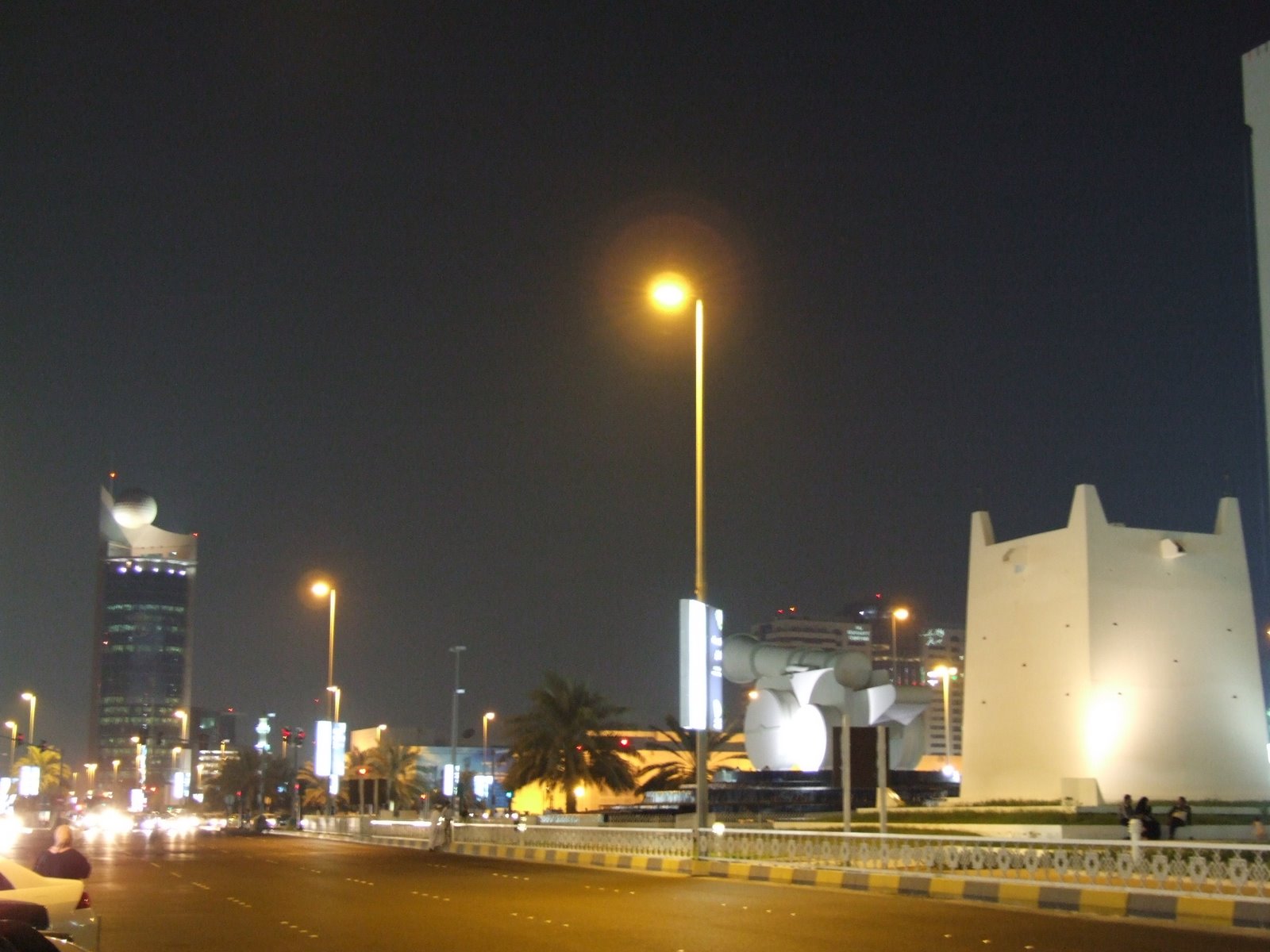
Abu Dhabi – Canon Square at night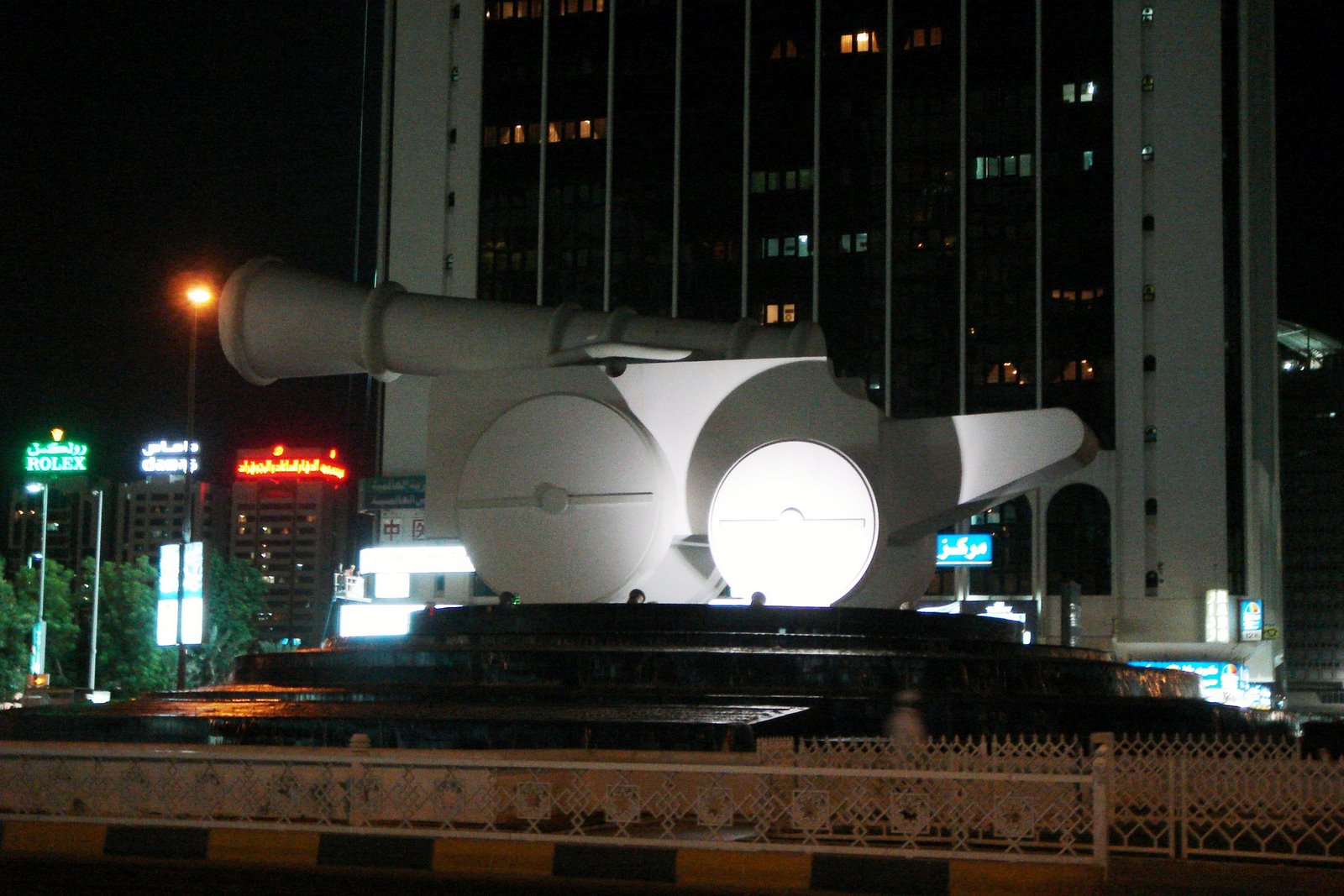


Love your family, Insure for them, Cover their futrue – ad by LIC of India on a building near Bur Juman Round about Dubai.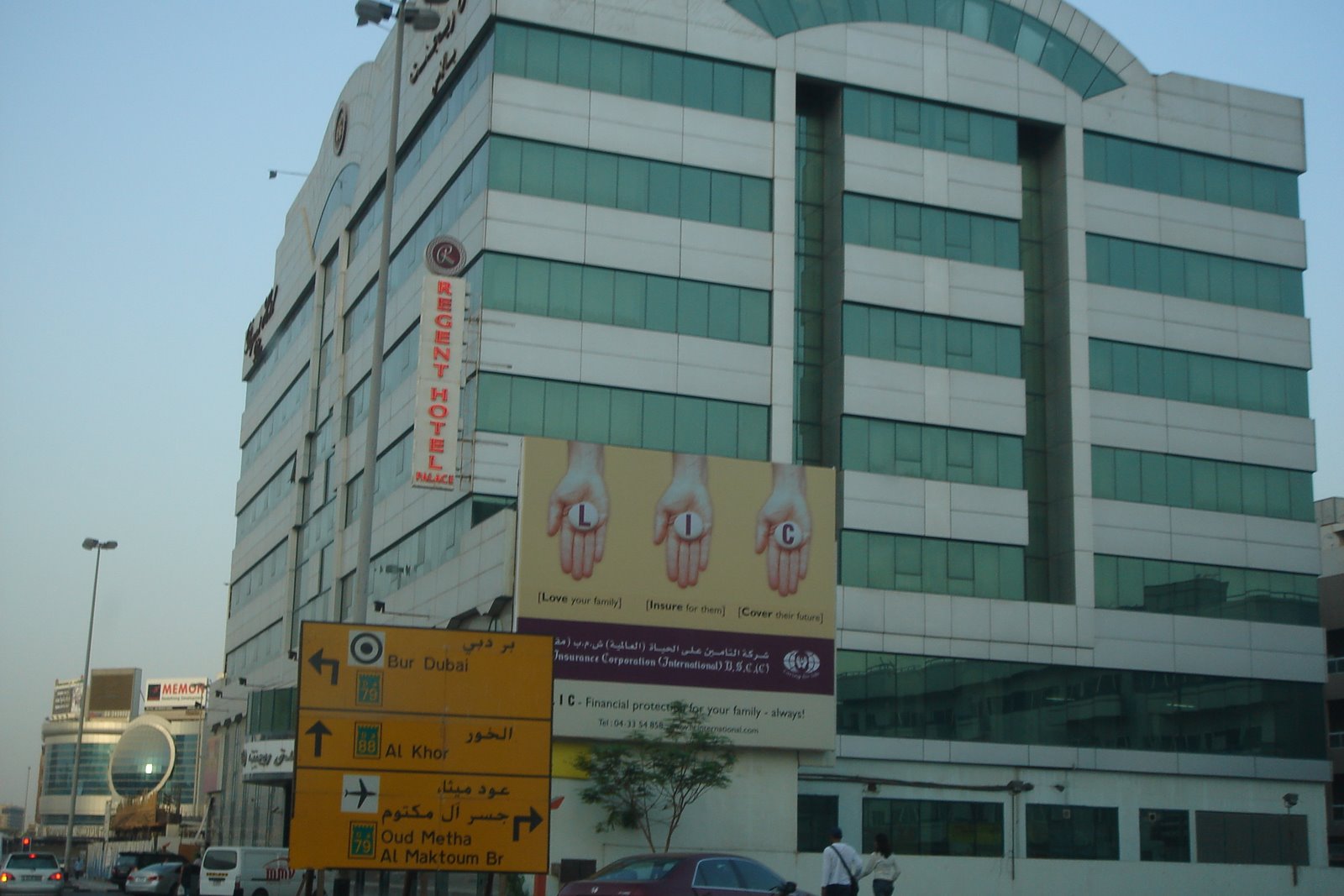
Work swiftly in progress for the Dubai Metro, scene near Al Karama in Dubai
Labourers from outskirts of Abu Dhabi relaxing near UAE Exchange Centre after sending money transfers to their loved ones for Eid Al Fitr.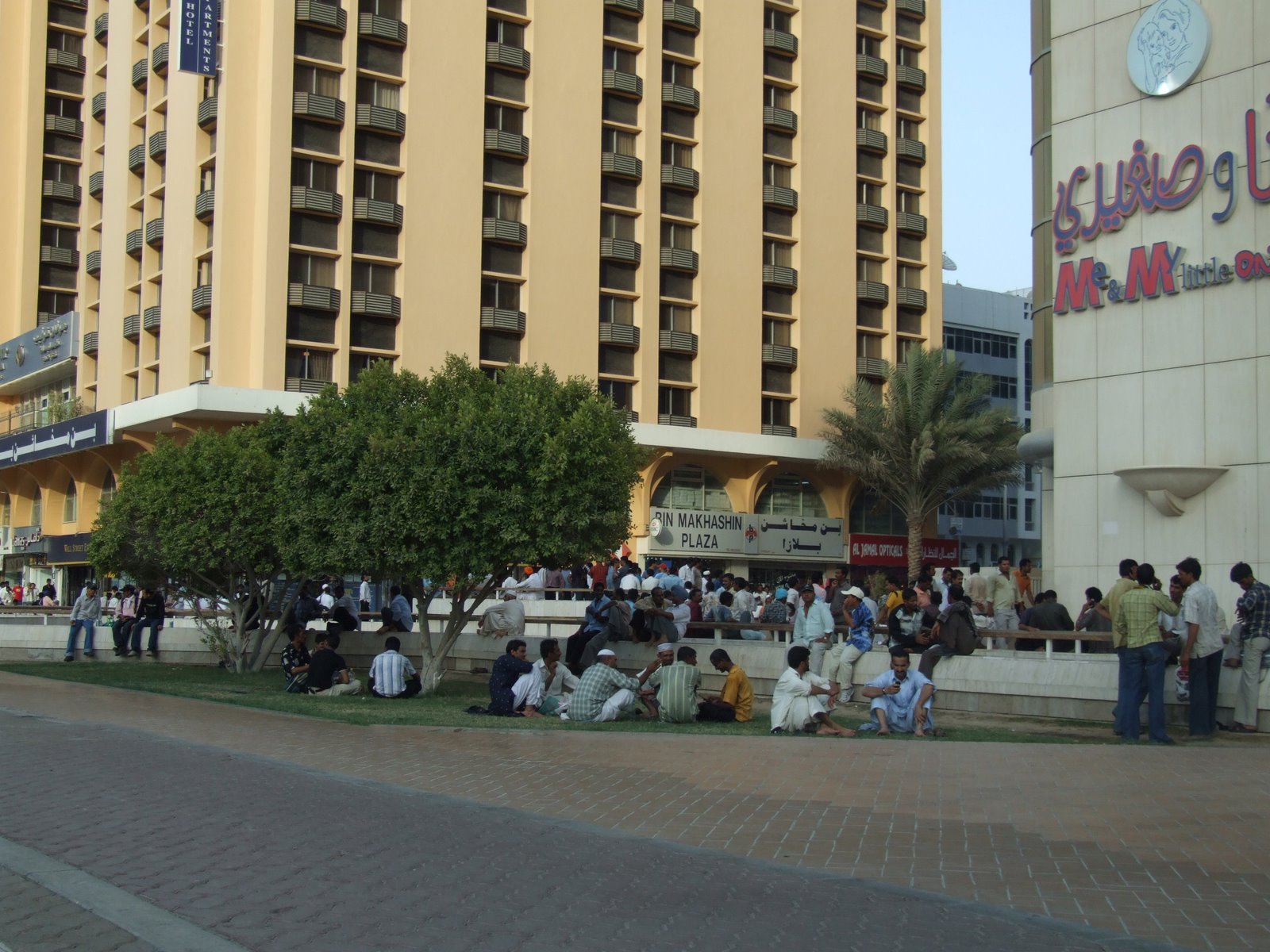
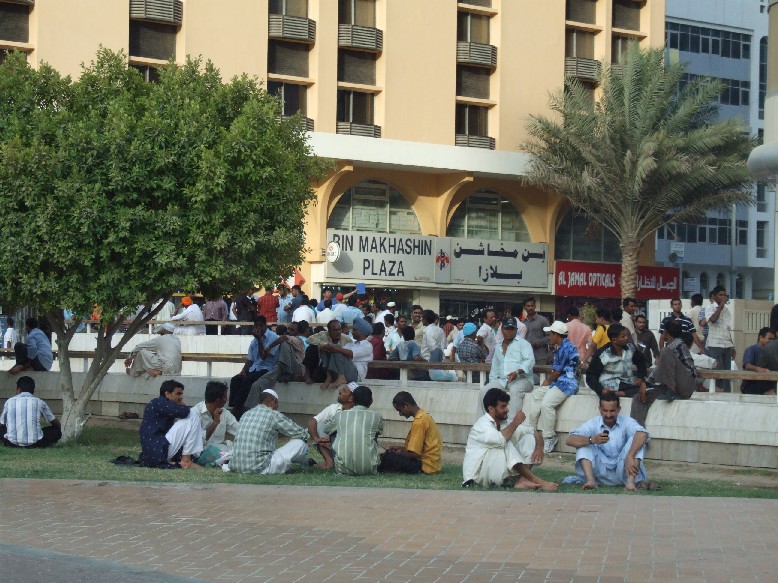
Joy ride, near Marina Mall, Abu Dhabi
Pedestrian crossing at Hamdan Street Abu Dhabi


Waiting for Taxi to Mussaffah on a busy Friday, scene near the market centre, Hamdan Street Abu Dhabi.
Workers from labour camps outside the city waiting for their company transport after visiting Abu Dhabi market area near Hamdan Street on a Friday afternoon.
Want to succeed? Avoid these 9 traps

Want to succeed? Avoid these 9 traps
Robert J Herbold
Success leads to the damaging behaviors of a lack of urgency, a proud and protective attitude, and entitlement thinking. This leads to the tendency to institutionalize legacy thinking and practices. Essentially, you believe that what enabled you to become successful will enable you to be successful forever.
After reviewing this problem in many companies, I believe there are nine dangerous traps into which successful people and organizations often stumble.
Trap 1: NEGLECT
Sticking with Yesterday’s Business Model
By business model, I mean what you do and how you do it. It includes such issues as deciding what industry you will be competing in and what approaches you will use in carrying out all the processes necessary to compete in that industry. Will we manufacture something or contract it out? How will we sell our products or services?
Do we go through retail channels? How should we organize our sales force? Which segments of the industry do we want to ignore, and which do we want to compete in? What is the structure of our support staff? Which parts of the organization do we out source? What are our approaches to distribution and inventory management? What are the cost targets of the various components of the organization, like information technology costs and human resources costs? Does our model leave us satisfied with our gross margins, profit margins, and other such figures?
Organizations should be consistently reviewing all aspects of their business model, looking for areas that are weak and need to be overhauled. By weak, we mean out of date, too costly, too slow, or not flexible. In which areas of the business model are you at parity? In those areas, are there any bright ideas on how to achieve a competitive advantage?
TRAP 2: PRIDE
Allowing Your Products to Become Outdated
You may be super proud of your product or service today, but you have to assume that it is going to become inferior to the competition very soon. You need to hustle ad beat your competition to that better mousetrap, and you need to do it over and over.
The amazing thing about success is that it leads to a subconscious entitlement mentality that cause you to believe that you no longer need to do all the dirty work of getting out and studying consumer behavior in details, analyzing different sales approaches, jumping on the latest technology to generate improved products, and everything else that is required to stay ahead. The attitude is often one of believing that you have done all of that and have figured it out, and now things are going to be fine.
Until the early 1970s, typewriters were used to prepare documents. The IBM Selectric model was the standard. Then along came Wang Laboratories’ word processor in 1976, providing a completely new approach. It displayed text on a cathode ray tube (CRT) screen that was connected to a central processing unit (CPU). In fact, you could connect many such screens to that CPU in order to handle many different users. Wang’s device incorporated virtually every fundamental characteristic of word processors as we know them today, and the phrase word processor rapidly came to refer to CRT-based Wang machines. Then, in the early to mid-1980s, the personal computer emerged. Wang saw it coming but made no attempt to modify its software for a personal computer. PC-based word processors like WordPerfect and Microsoft Word became the rage, and Wang died. Wang fell into the trap of not updating its products, even though it basically invented the word processor industry.
We saw this behavior very clearly with the General Motors example. Its cars, while highly distinctive back in the 1970s, were allowed over time to look more and more alike, and the excitement factor for the customer disappeared.
TRAP 3: BOREDOM
Clinging to Your Once-Successful Branding after It Becomes Stale and Dull
Constantly achieving uniquencss and distinctiveness for a brand and also keeping it fresh and contemporary is hard work. Once a brand achieves some success, the tendency is to sit back and pat yourself on the back, allowing your brand to become dull and ordinary.
The Plymouth automobile was introduced by Chrysler for the 1928 model year as a direct competitor to Ford and Chevrolet. It was a sturdy and durable car that attracted a legion of loyal owners. Plymouth became one of the low-priced three from Detroit and was usually number three in sales, just behind Ford and Chevrolet. For almost two decades, Plymouth sold almost 750,000 cars per year and had a solid brand reputation in the low price range of being reliable but having a bit more flair than Chevrolet or Ford. Older readers may remember the 1957 Plymouth with the huge fins, as well as its Road Runner (beep beep!) model. Plymouth had a very clear brand positioning.
In the 1960s, the Plymouth brand began to lose its uniqueness. Chrysler decided to reposition the Dodge, reducing its price so that it was quite close to Plymouth’s. Chrysler came out with low-priced compact and intermediate-size models under both the Plymouth trademark and the Dodge trademark. By 1982, Dodge, was outselling Plymouth. Throughout the late 1980s and the 1990s, Plymouth offered nothing unique. Sales continued to decline, while Dodge was quite healthy. In 1999 Chrysler announced that the Plymouth brand would be discontinued. The lesson is simple: when you allow brands to get stale, they die.
TRAP 4: COMPLEXITY
Ignoring Your Business Processes as They Become Cumbersome and Complicated
Successful organizations often reward themselves by adding more and more people and allowing processes to become fragmented and nonstandardized. This is often done under banner of refining the management of the business. It is also caused by business units and subsidiaries seeking more autonomy, which leads them to develop their own processes and staff resources. Before you know it, getting any kind of change made is very complicated.
Over and over again you read stories about organizations experiencing weak financial results, then finally coming to grips with the problem, laying off thousands of people and simplifying the organization.
We saw in our Toyota case study how aggressive that company is at constantly improving each and every process. Keeping that mindset of constant improvement is very difficult. Success usually leads to a decrease in the intensity with which you tackle such challenges. Also, success leads to a belief that since we are doing so well, we probably need to reward the people in the organization who are asking for their own building and lots of extra people to get them to the next level. Importunely, all those extra costs often lead to bloated processes and further fragmentation of how work gets done.
TRAP 5: BLOAT
Rationalizing Your Loss of Speed and Agility
Successful organisations and individuals tend to crate complexity. They hire a lot of extra people, since clearly things are going well, and those people find things to do, often creating layers of bureaucracy, duplicating capabilities that already exist in the organization, and making it very hard to react quickly to change.
Getting an organization to constantly think about retaining simplicity and flexibility is not easy. The account given in the previous chapter of Toyota’s Global Body Line is a good example of doing it right. Toyota thought about agility ahead of time, and when it came time to build a brand-new car, such as the Prius, it didn’t have to build a new plant or a new line. This enabled Toyota to get to market fast and save tens of millions of dollars compared with traditional approaches.
TRAP 6: MEDIOCRITY
Condoning Poor Performance and Letting Your Star Employees Languish
When organizations are successful, they have a tendency to stop doing the hard things, and dealing with poor performance is a really hard thing. It also becomes hard to move new people into existing jobs, because there is the burden of getting the new person up to speed and the perception that you are losing valuable expertise. Also, the really strong performers and to get ignored. Consequently, what happens in many successful organizations is that people are left in their jobs too long and poor performance is not dealt with as crisply as it should be. Unfortunately, this also leads to strong players not being constantly challenged.
Successful organizations are especially vulnerable to this trap, since companies that achieve success often have high morale and pride. And who wants to spoil the fun by dealing with the tough personnel issues, which is an onerous task for most managers? Any excuse to put it aside will be embraced.
TRAP 7: LETHARGY
Getting Lulled into a Culture of Comfort, Casualness, and Confidence
Success, and the resulting tendency to become complacent, often leads organizations and individuals to believe that they are very talented, have figured things out, have the answers to all the questions, and no longer need to get their hands dirty in the trenches. They lose their sense of urgency � the feeling that trouble might be just around the corner.
Considering our case studies on GM and Toyota, the contrast between their cultures is really striking. GM seems to exude pride and an attitude of “we are the real pro in the industry,” while Toyota has a more humble personality that is all about constant improvement.
The leader of a group really sets the tone on this cultural complacency issue. The tendency is to become very proud of your success and protective of the approaches that got you there. It is those very tendencies that lead to an insular, confidence culture that makes people believe that they are on the wining team, while in reality, the world is probably passing them by.
TRAP 8: TIMIDITY
Not Confronting Turf Wars, Infighting, and Obstructionists
Success often leads to the hiring of too many people and the fragmentation of the organization. Business units and subsidiaries work hard to be as independent as possible, often creating groups that duplicate central resources. Staff groups fragment as similar groups emerge in the different business units. Before long, turf wars and infighting emerge, as who is responsible for what becomes vague.
Even worse, the culture gets very insular, with an excessive focus on things like who got promoted, why am I not getting rewarded properly, and a ton of other petty issues that sap the energy of the organization.
Another source of turf wars and infighting is lack of a clear direction for the organization and slow decision making on critical issues. When these kinds of management deficiencies occur, people are left to drift and end up pulling in different directions. That often leads to tremendous amounts of wasted time as groups argue to have it their way.
TRAP 9: CONFUSION
Unwittingly Providing Schizopherenic Communications
When an organization is success or stable, its managers often fall into the trap of not making it clear where the organization is going from there. Sometimes this is because they don’t know, but they don’t admit that, and they don’t try to get the company’s direction resolved. They do everything they can to keep all option open, with no clear effort to get decisions made and a plan developed. Such behaviors lead to speculation by the troops, based on comments that they pick up over time. Often those comments are offhand remarks that the leaders have not thought through. Or the troops hear conflicting statements coming form a variety of folks in leadership positions in the organization.
When employees receive confusing and conflicting messages and don’t have a clear picture of where the organization is gong or whether progress is being made, they feel vulnerable and get very protective of their current activities. In late 1991, IBM’s CEO,John Akes, announced that in the future, IBM would look more like a holding company and that “clearly it’s not to IBM’s advantage to be 100 per cent owners of each of IBM’s product lines.”
During the next 12 months, everybody was trying to figure out what he meant. And IBM made no attempt to start publishing separate financial information by product line in preparation for possible spin-offs. IBM also ignored Wall Street’s suggestion that it create separate financial entries, with their own stock exchange symbols, for the products that were to be spun off. Employees and investors were confused. The IBM board of directors finally ended the drama in early 1993, announcing that Akers was leaving and a new CEO would be hired quickly. From 1987 to 1993, IBM shareholders lost $77 billion of market value.
Communications from the head of the organization, be it a small group or an IBM, are critical. People want to know where they are headed and how things are going. When the words and actions don’t match, confusion reigns.
In the remaining parts of this book, I will discuss these traps in detail. In each part, I will give detailed examples of companies and individuals that in some cases have been hurt and in other cases have avoided these problems. My objective in each part is to provide specific actions that people can take to avoid the particular trap, or to rid themselves of the problem.
Excerpted from:
Seduced by Success by Robert J Herbold.
Copyright 2007 by Robert Herbold. Price: Rs 495. Reprinted by permission of Tata McGraw Hill Publishing Company Limited. All rights reserved.
Robert J Herbold was hired by Bill Gates to be chief operating officer of Microsoft Corporation. During his seven years as COO of 1994 to 2001, Microsoft experienced a four-fold increase in revenue and a seven-fold increase in profits.
Abu Dhabi’s Sour Gas Project to Use Sulfur Pipeline (Update1)
Abu Dhabi’s Sour Gas Project to Use Sulfur Pipeline (Update1)
By Ayesha Daya for Bloomberg
Oct. 10 (Bloomberg) — Abu Dhabi National Oil Co. is proceeding with a $10 billion project to develop high-sulfur gas reserves in the United Arab Emirates, choosing a pipeline to carry away sulfur even before selecting an international partner.
International companies Exxon Mobil Corp., Royal Dutch Shell Plc, ConocoPhillips and Occidental Petroleum Corp. are vying to join Adnoc in the project and become the first foreign company to gain access to the country’s gas reserves, among the world’s largest. 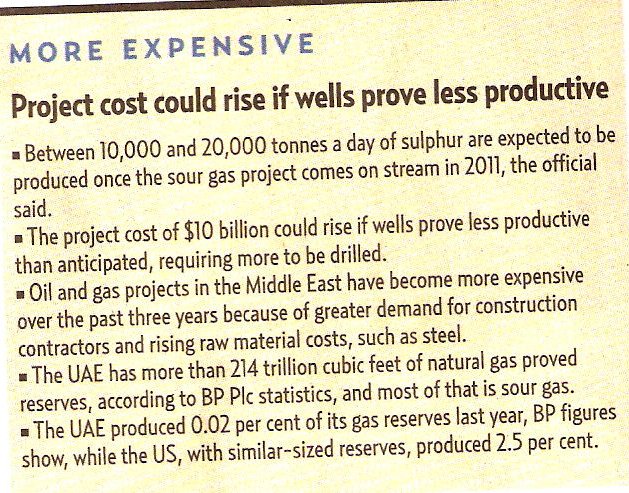
“Abu Dhabi holds the fifth-largest gas reserves in the world, but it is importing gas to meet its domestic energy needs,” said Dalton Garis, an energy analyst at the U.A.E.-based Petroleum Institute. “Abu Dhabi wants to double its population by 2010 as well as build gas-intensive industries such as aluminum smelters, so it needs to increase its supply of natural gas.”
Adnoc, meantime, has decided that sulfur produced as a byproduct with the gas will be transported by pipeline from the field to a processing facility 120 kilometers (75 miles) away. The state-run company debated using trucks or a purpose-built railroad to carry the sulfur, before deciding to use a pipeline, said an Adnoc official who declined to be identified by name.
Abu Dhabi, home to more than 90 percent of the U.A.E.’s oil and gas reserves, is under pressure to develop its “sour,” or high-sulfur, gas reserves to meet the growing energy requirements of its burgeoning economy.
“There is potentially in excess of 30 trillion cubic feet of undeveloped sour gas reservoirs in the initial two onshore fields scheduled for development,” said Stuart Lewis, a Middle East analyst at oil and gas consultancy IHS Energy. “Reserves of this magnitude would be difficult for any company to overlook, particularly in an economy as vibrant as that of the U.A.E.”
Molten Sulfur
The state-run company will use heated water to maintain high temperatures inside the sulfur pipeline, to prevent the material from solidifying and getting stuck, the ADNOC official said. Sulfur must be kept at a temperature of above 115 degrees Celsius (239 degrees Fahrenheit) to remain in liquid form.
Between 10,000 and 20,000 tons a day of sulfur is expected to be produced once the sour gas project comes on stream in 2011, the official said. It will use gas from the Shah field while another field, Bab, will be developed in a second phase because it is more complex and has a higher sulfur content.
The project cost of $10 billion could rise if wells prove less productive than anticipated, requiring more to be drilled. Oil and gas projects in the Middle East have become more expensive over the past three years because of greater demand for construction contractors and rising raw material costs, such as steel.
`National Imperative’
The primary motivation for developing U.A.E. gas reserves is political, rather than financial, said Lewis. “Although technically challenging, the development of non-associated gas might be regarded as a national imperative in terms of energy security.”
Adnoc already extracts some sour gas, producing about 6,000 tons of sulfur a day at a gas processing facility at Habshan, which is then loaded into 150 trucks daily and carried 120 kilometers to a sulfur-handling terminal at Ruwais.
The U.A.E. has more than 214 trillion cubic feet of natural gas proved reserves, according to BP Plc statistics, and most of that is sour gas. The country extracts only a tiny fraction of its reserves each year partly because of the technical challenge and dangers associated with producing highly sulfuric gas.
The U.A.E. produced 0.02 percent of its gas reserves last year, BP figures show, while the U.S., with similar-sized reserves, produced 2.5 percent.
This year, the U.A.E. began importing gas from Qatar through the Dolphin pipeline to supply its power and water plants. Dolphin Energy Ltd. is a joint venture between the Abu Dhabi government, Total SA and Occidental.
To contact the reporter on this story: Ayesha Daya in Dubai adaya1@bloomberg.net
Last Updated: October 10, 2007 10:58 EDT
 ClicksandWrites
You must be logged in to post a comment.