Month: September 2007
Respecting ramadan

Respecting ramadan
By Kelly Crane, Staff Reporter GULF NEWS Published: September 18, 2007, 23:50
When it comes to knowing what to do – and what not to do – during Ramadan, most of us know the basics: don’t eat and drink in public places, ladies cover up more so than usual and no entertainment across the UAE.
But how many of us actually know why and understand the culture in which we, as expatriates, are living?
Salamah Ghudayer, a cultural presenter from the Shaikh Mohammad Centre for Cultural Understanding, says people should even go as far as toning down their blaring mobile ring tones so as not to offend Muslims at work and in the streets.
She says: “Anyone living in the UAE is a visitor here and should respect the traditions of the country.
Cultural lesson
“Everyone is welcome here, but that invitation has been extended in the hope each individual will try to learn a little about the religion, heritage and traditions of the country in which they have arrived.”
Ramadan is the month during which fasting is obligatory for all Muslims.
It is the ninth month of the Islamic lunar calendar (Hijri year).
Fasting is one of the five pillars of Islam and during Ramadan, Muslims refrain from eating and drinking from dawn to sunset. At Maghrib, the time of the fourth prayer, the fast is broken and iftar starts.
Piety
The month is a time of piety, charity and good deeds and Muslims refrain from smoking and talking ill of others.
They are expected to spend a large part of their time praying and reading the Quran and helping people worse off than themselves by giving money to the poor or donating food to charity.
Fasting develops a believer’s moral and spiritual values and keeps them away from greed, selfishness and material concerns.
Salamah added: “It is simple really. It’s about being considerate to those around you. Playing loud music in your car is another thing which many non-Muslims don’t think about.
“We all appreciate that not everyone knows exactly what Ramadan is about or how they should behave, but I would encourage people to learn – it is polite and shows an interest in the country you live in.”

Symbols of Ramadan
There are some special decorations that symbolise Ramadan. Among them the lantern and the cannon are the most popular. The lantern signifies light and the cannon sounds the time for iftar.
People usually eat dates and drink water to break their fast as Prophet Mohammad (PBUH) did, so dates are a must on an iftar table.
Salamah Ghudayer, from the Shaikh Mohammad Centre for Cultural Understanding, said: “I would encourage non-Muslims to go along to iftar at least once during Ramadan. It is a wonderful experience and will allow you to see, understand and even meet Muslims who are fasting.
“The most basic piece of advice is to have patience. That goes for people of all nationalities – including Muslims. Non-Muslims must be open to becoming educated about the ways of Ramadan and Muslims must respect that some people are still learning.
“If we all have patience, everything will be OK.”
What to do during Ramadan
* Try to cultivate piety.
* Refrain from bad actions.
* Pray and ask for forgiveness. Ramadan is the month of forgiveness.
* Read the Quran.
* Help the needy and give to the poor.
* Ideally, you must double whatever you give during Ramadan, if you can afford it.
* Do not throw away leftover food. Donate it to the needy.
* Join charity groups and do social work.
* Behaviour code
* Do not eat, drink, smoke or chew in public.
* Do not wear revealing clothes.
* Maintain decorum and propriety at all times.
Crude prices leap to new record on supply worries
Crude prices leap to new record on supply worries
By Himendra Mohan KumarStaff Reporter GULF NEWS Published: September 18, 2007, 23:50
Abu Dhabi: Crude oil futures in the United States, the world’s largest oil importer, surged to a new record high of $81.24 a barrel yesterday amid concerns of tightening supply in the market and fears that prices could well be in sight of touching $100 a barrel when the winter demand sets in.
An official at the Organisation of Petroleum Exporting Countries (Opec), the group that supplies more than a third of the world’s oil, told Gulf News that while the Opec is keeping a close eye on the developments, the situation doesn’t immediately warrant another increase in supplies to water down prices.
“If the current situation persists for several days and if prices continue to rise, I don’t rule out Opec ministers trying to find a solution,” said the source.
Photo Speaks – Passing Shots
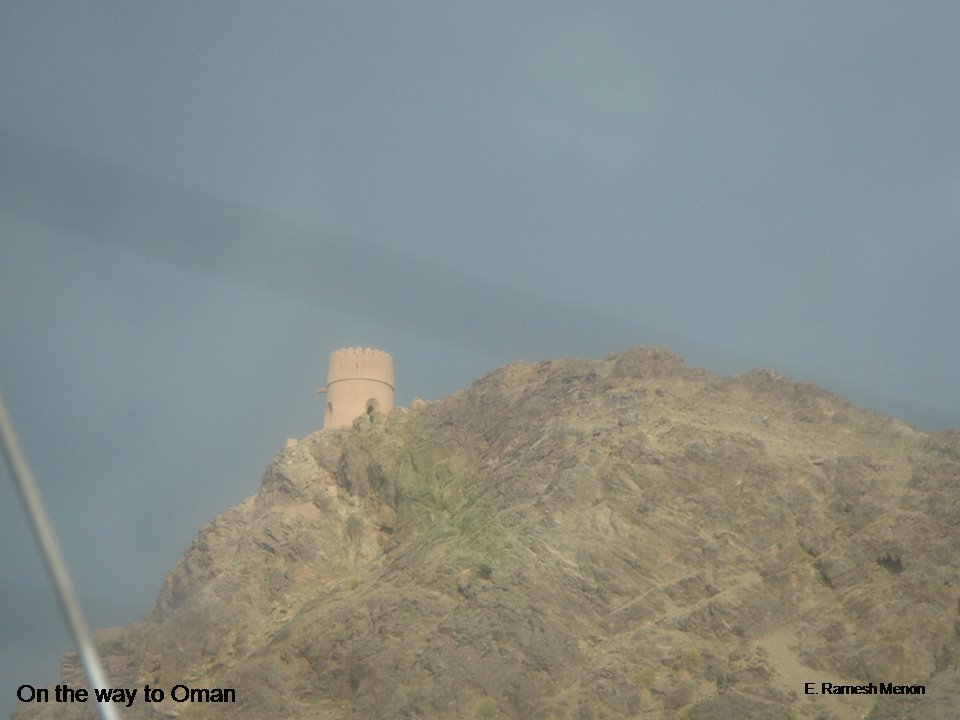
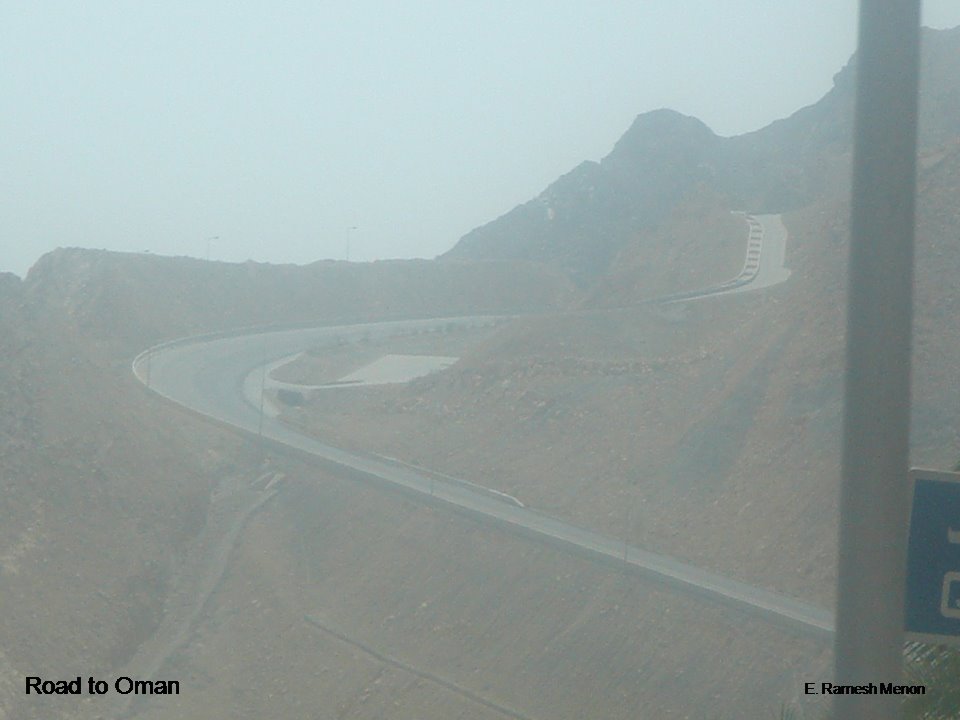
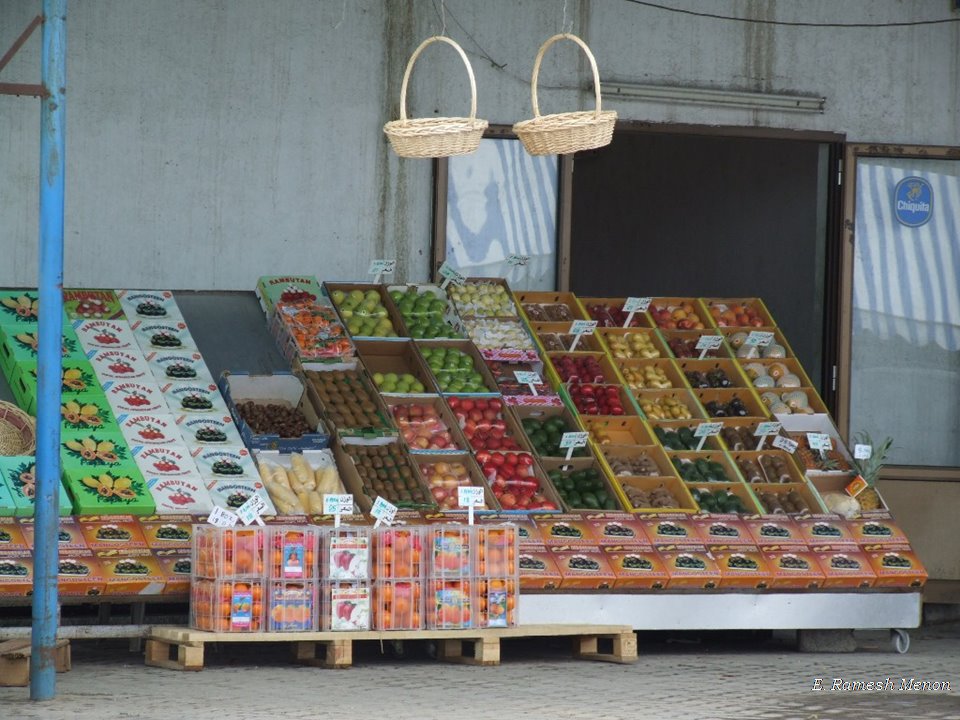
I haven’t updated this section for some time now. Here are some photos on my way around during a short travel.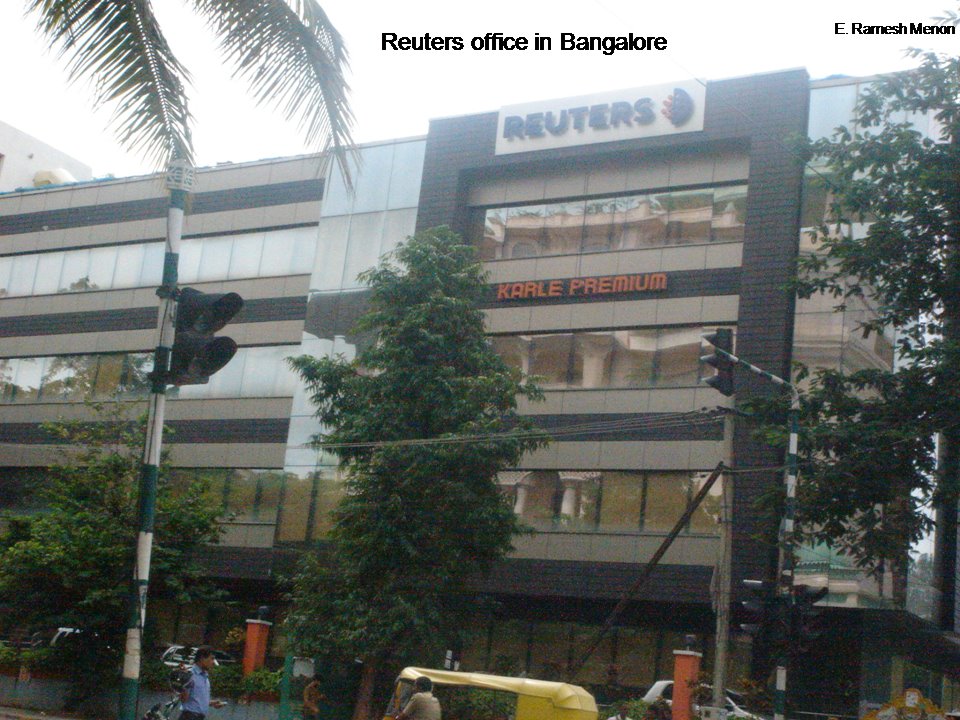



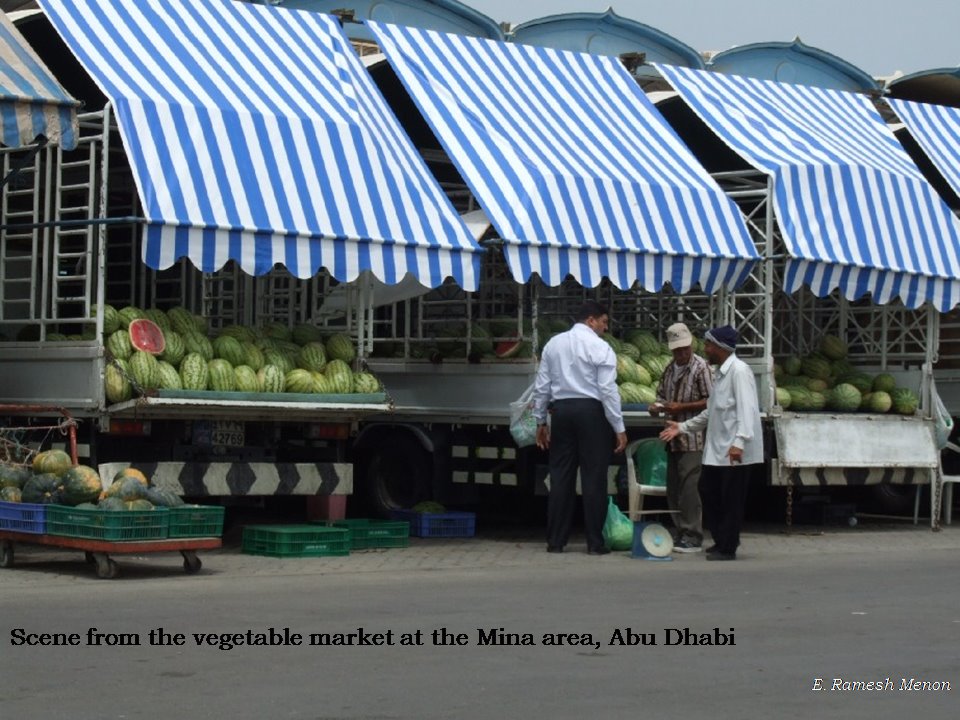
And now have a look at the Fruits & Vegetable Market located near the Mina Port in Abu Dhabi.

Passenger traffic at Abu Dhabi Airport up 32 per cent
Passenger traffic at Abu Dhabi Airport up 32 per cent
BY A STAFF REPORTER KHALEEJ TIMES 17 September 2007
ABU DHABI — Abu Dhabi International Airport handled a total of 707,671 passengers in August 2007, a 32 per cent rise over the 536,201 passengers in August 2006.
The number of aircraft movements increased 10 per cent during the same period, rising from 6,156 in August 2006 to 6,785.
Cargo volume increased to 27,015 tonnes in August 2007 from 23,601 tonnes last year, a growth of 14.5 per cent. Abu Dhabi International Airport continues to achieve high levels of growth, with the passenger growth in August exceeding the 27 per cent growth seen in the first half of 2007, a particularly impressive result in the busiest time of the year for the airport.
The number of aircraft grew especially strongly in August driven by the new services added during the year by Etihad Airways, the national carrier of the
United Arab Emirates and new airlines Oman Air which commenced services in May 2007 and Ethiopian Airlines which commenced services in July 2007.
ADAC has officially taken over the operation and management of Abu Dhabi and Al Ain international Airports, as of 28 September 2006. Under its mandate will be the re-development and expansion of Abu Dhabi International Airport, which includes the new midfield terminal designed to increase the overall capacity of the airport to 20 million passengers by 2010.
Abu Dhabi economy to attract Dh1 trillion
Abu Dhabi economy to attract Dh1 trillion
BY A STAFF REPORTER KHALEEJ TIMES 18 September 2007
ABU DHABI — With fixed investment expected to double and sustained growth in the years to come, Abu Dhabi’s economy is set to attract over Dh1 trillion in local and foreign capital, according to a new report issued by Abu Dhabi Chamber of Commerce and Industry (ADCCI).
ADCCI Director General Ahmed Al Mansouri said increase in the fixed investment in the emirate during the current year outpaced figures registered for the recent year by 400 per cent with total accumulated investment reaching around Dh295 billion for the years 2001 to 2006.
“These figures stand testimony to the dynamism, vibrancy and resilience of the emirate’s economy and its capacity to lure in more local and foreign investment due to sound policies adopted by the emirate’s government,” he added.
Abu Dhabi’s business philosophy, he said, revolves around optimum utilisaition of oil revenues,forging constructive public-private partnership, creating fertile investment ground for local, regional and global investors, introducing new flexible laws and diversifying the economic base in order to achieve sustainable development.
He noted that the booming construction and building sector is projected to establish itself as the most magnetic business sector in 2007 with total inward investment growing by 346 per cent to Dh580 billion against the previous figure of Dh130 billion.
Second in line is the tourism sector whose investment is expected to see a whopping growth of 820 per cent to more than Dh230 billion.
“Manufacturing sector is set to lure Dh130 billion in the next few years and Dh12 billion in the current year, an increase of 39.5 per cent over 2005,” he indicated.
According to the ADCCI chief, Dh2.4 billion was expected to be pumped in by investors in the wholesale/retail trade sector against Dh1.4 billion in 2005.
The restaurants and hotels sectors, he continued, could see a 50 per cent growth in investment, rising to Dh3.9 billion in 2007 from Dh2.6 billion in 2005.
As for the real estate and business services, an estimated amount of Dh6.8 billion is set to be ploughed in. The figure represented an increase of 78.9 per cent over 2005.
In 2007, the social and private services sector is set to receive a total investment of Dh2.5 billion compared with Dh2 billion in 2005.
Al Mansouri put the total value of foreign investor’s portfolio in the emirate at Dh420 billion.
Indians are argumentative: Edward de Bono
Indians are argumentative: Edward de Bono
18 Sep, 2007, 0037 hrs IST,Harsimran Singh, TNN
NEW DELHI: Ever thought of a restaurant which serves no food but still makes money? Or about a restaurant with no lights or a chef or even a menu? Or a restaurant which charges not for food but time spent? Hundreds of such creative business ideas flowed when lateral thinking Guru and inventor of Six Hats Theory, Dr Edward De Bono, arrived in the capital to provoke corporate honchos to ‘think out of the box’. ET caught up with the septagenuarian author of 74 books to understand whether Indians are creative enough?
“From the limited interactions I’ve had, I find Indians very argumentative,” says Dr Edward De Bono. “Argument is a very primitive way of discussion. In contrast, Americans are creative and have a ‘go getter’ attitude. The Chinese have not started thinking creatively but the Japanese are slowly shifting from logic based thinking to creative thinking. French think they are the most creative. But in fact, they are not!,” he told ET on the sidelines of an Indiatimes seminar.
The Malta born psychologist and pyshician has advised hundreds of top companies like Coca Cola, Siemens, Boeing, 3M, Goldman Sachs, Nokia, Rolex, BT, Nestle, Ericsson.(the list is endless) to think out of the box and improve profitability. Dr De Bono also advises many governments on policy isasues related to economy, unemployment, education and conflict resolution. The creative Guru has an instant answer for everything – from how to solve economic problems to how to get rich to how to propose to your girlfriend (or boyfriend)! But we’ll come to the last one in a while.
“How can India become a superpower?” we ask first. “If India can partner China, the two can become a superpower in a short time. Alternately, if India and China can form a coalition bringing other developing nations under its fold, it can beat all other superpowers,” he adds.
And how can we solve the SEZ’s land acquisition problem? “Rather than forcefully acquiring land, if the SEZ owners partner with landowners/farmers, giving them part ownership, they will be happy to give their land.”
Dr Bono has lots more up his sleeve and some creative advise for companies. “A company should appoint a CIO – Chief Ideas Officer. He should be responsible for ideation, collection and implementation of ideas. Ideation should be made more cumpolsory,” says the man who advises the who’s and who of the corporate world.
He gives the example of a bank in England which allows half an hour daily for employees to just think. Bank employees have to report at 9 am and think till 9.30 am.
What are three factors which prevent us from thinking creatively? We ask while he has a glass of water. “Lack of confidence, lack of knowledge of adequate creative thinking tools, fear of taking risks,” comes the stacatto reply.
For those wanting to become rich quickly here’s some Bonospeak: “If you are a professional, sell not an idea but its benefits to your boss. If you are an entrepreneur, identify unsaturated markets and try marketing your products in a way different from your competition.”
Now for those trying to find a match but never knew how to propose, the doctor helps: “Most women find either sensitive or dominant men attractive” Proceed like this, he says with a wink: “Since you are the most beautiful and sensitive girl, I have ever met. And I am one of the most understanding men you will ever meet. Will you like to to settle down?”
And if a woman wants to propose a man? Dr De Bono has an answer for that too. She should say: “Though there are much better looking men around. And I am sure, if I wait, I will surely get one. But since I am getting older, and so are you, why don’t we settle down?”
In case you were still thinking about the no food restarant, it just offers place to eat where people can warm their frozen food in dozens of microwave ovens. Just an idea.
People who dare to ‘do things differently’
People who dare to ‘do things differently’
18 Sep, 2007, 0100 hrs IST,Shubhashish, TNN
MUMBAI: While most flock with the crowd, there are a few individuals who dare to create a path of their own. With nothing but belief, courage and conviction by their side, meet three such people who dared to carve their own niche by exploring opportunities in untapped territories.
They are people who are not lured by ‘what life has to offer’ but instead have something to offer to it. These are people who don’t do things differently but do different things. Three such individuals who dared to invent a new niche and even achieved paramount success give the phrase, ‘doing things differently’ a whole new connotation.
Canine companions
Wasiff Khan, straight after his graduation started a novel dabbawala service for pets! While Raju Patel, the man whose unparallel love for telescopes made him a famous telescope manufacturer and Priya Kumar teaches executives to walk on fire! Sounds interesting? Board the bus.
Wasiff Khan comes from a middle-class Indian family but with dreams unmatched and addictive enthusiasm! Khan gave the age-old adage, ‘A dog is man’s best friend’ a new interpretation altogether. “I was just another college graduate with no specific direction in life and highly skeptical as to what life had in store for me.
That’s when the idea of starting a catering service flashed through my mind,” he says. “I met several people in order to explore the avenue and realised that there was no one offering food for pets!” he recollects. He invested time and research and as he explored further, he knew he had struck gold!
“I began my research by visiting veterinaries and friends who had pets and started gathering as much information as possible but keeping the idea firmly under wraps,” he says. As one phase lead to another, Khan, without any money and no one ready to offer loan for this ‘unique’ business preposition, gambled on.
He prepared a questionnaire about food preferences of different breeds of dogs and approached dog-owners under the disguise of a researcher working on a survey! The intention was to create a database of customers, identify the possible problems with the idea and study the reactions of people of the service.
The next part was the most challenging and there were several questions still lingering in his mind. He wanted to provide freshly cooked customised food to his customers. Khan says that he would collect information related to the personality traits of various breeds, allergies that a particular breed is prone to, lifestyle, habits, etc before customising the food for a particular breed.
“I started making food from my home kitchen and fed stray dogs to put it through test! They liked it and I took the next step of distributing free samples to the dog owners from the database I had created earlier,” he says. “In the first month itself, I got around 35 confirmed customers elevating my aspirations and there has been no looking back since then,” recollects Khan. A dog is indeed a man’s best friend and when it comes to business, it can also be a man’s best bet!
Playing with fire
Ancient India was full of mysterious people who walked on fire, broken glass pieces and climbed ropes. But how would you feel if someone, in today’s world boasts of teaching you to walk on fire and broken glass pieces? Perplexed? This is exactly what Priya Kumar specialises in.
She always wanted to do what others never dared to try! “I never saw a point in attempting something everyone could do,” says Kumar. She feels that there isn’t any point in being ‘just another ordinary person’. Kumar was in Malaysia when she first heard about a fire-walking workshop and ended up enrolling for one. She was moved with the art to such an extent that she attended numerous workshops after that. “I was scared to try it the first time but eventually gave in to the adventure.
There were times during the sessions when my feet got burnt and there were times when they didn’t. I couldn’t understand the reason behind and hence, to understand the mystery, I attended the subsequent workshops as well. The organiser of the workshop was so startled by my dedication that he offered me to be his helper in conducting the workshop,” Kumar adds.
The idea of adding a corporate touch to the fire-walk occurred to her when she was attending a few workshops in Amsterdam. “I thought of starting a ‘Corporate Fire-walking Movement’ and it’s been two years since its inception,” says Kumar. She teaches fire-walking to liberate the corporates from unfocussed approach and make them understand the importance of discipline in their professional careers.
“The targets which seemed outrageous when announced by their bosses felt doable post the walk!” she says. Kumar has been fire-walking for the past five years and says that situations around us are the same, only perspectives differ. And the fire-walk is a novel idea to teach the corporate that important lesson!
Space explorations
Raju Patel, 53, is an ace telescope manufacturer since 1978, which means, in his own words that “99 percent of the telescopes sold in India are mine”! Astronomy was a cherished hobby passed on to him by his father. Patel was all of 20 when he made his first telescope right in the comfort of his home.
He wasn’t an academic person and with an insufficient score to get admission in any college, he joined Sir JJ School of Arts. “I enrolled myself for a photography course and passed it with a first class,” says Patel. He was interested in sky photography but did not have the money to buy a telescope. That’s when he thought of manufacturing small telescopes and selling them.
He eventually bought himself an American telescope. “I developed an instant liking towards manufacturing telescopes and couldn’t stop myself after that,” he says. But the sailing hasn’t been smooth for him. He was taking care of the travel agency which his grand-father started and was manufacturing telescopes alongside. “I quit being a travel agent after 18 years for the sake of astronomy. Astronomy has always been my passion,” he adds.
Patel says that being a non-engineer has been a major disadvantage for him. “One has to be technologically sound to manufacture a telescope and that is exactly where I fell short. It took me a laborious one year to manufacture my first telescope. I did not get any help from anywhere and had only two American books as my reference on how to make telescopes,” he says. But manufacturing telescope was his calling and Patel continues to do the same with penchant and dedication.
‘Different’ was the only word in their dictionary and ‘impossible’ had no place. With a will to make a difference in their lives, they ventured into territories where no one dared. And today, for these three individuals, there is no looking back!
Mind Speaks – Life without Ctrl C and Ctrl V and Story telling
Life without Ctrl C and Ctrl V
The other day, I was reading an article on Research written by Mr. C.S.V. Ratnam, Director of IMI, New Delhi. In his article, he was mentioning that Indian Business School doesn’t seem to make even a feeble attempt to prioritise research. A parallel swim search on the www ocean on a different subject about leading Professional and business schools in India confirmed his statement. Many times we see excessive dependence on usage of Ctrl C and Ctrl V keys of the computer while preparing reports. It is ok to a certain extent. However, blind copying without even reading or proof checking ends up in disasters. This trend will reduce the creative and innovative aspect of knowledge delivery.
Story telling
I am surprised by another fact. There are people out there who think commonly about topics of current relevance. Yesterday, I was writing about passing on the old stories to our younger generations. And today, I get to read about a group of professionals – Kahani Inc – based in canada who are producing animation films based on old stories passed on by generations.
At the same time, I happened to read about Geeta Ramanujam of Bangalore. Geeta has run the Kathalaya Trust for ten years, to promote ‘positive national change through cultural literacy’. She holds workshops in schools, colleges and institutions across India and the world. She has swapped stories with a Cherokee Indian grandmother in Tennessee and with an old Xhosa bard in Africa. You could mail her at geetastory@gmail.com if you want to hear her.
Twenty20 Cricket
The way each match is being played and finished, the Twenty20 form of cricket will soon be the in-thing among the cricketing world. It is proving once again that for this form, we need players who has aggressive mindset without which they will not be able to deliver what they are required to. One player whom I feel sorry in this series is our Yuvraj Singh who has not shown so far fire in his eyes and power in his shots, resulting in less runs for him when he bats and more runs for his opposition when he bowls. Daniel Vettori clearly played a Captain’s knock by bowling well to take 4 key wickets for New Zealand. I hope we still have chances to get through to the semifinals if we play aggressive and infantry cricket with killer instinct.
The best thing so far seen is that all the players and viewers are enjoying it.
Crossword Puzzling
Almost every day, I work the crossword puzzle in one of the daily news. Some days, I find that the puzzle seems to solve itself quickly without any effort. Other days, I struggle with each and every answer. More often that not, I will get a few of the clues correct and when I return later, the answers to the very clues that eluded me before seem to present themselves. Once I get one answer completed, often it provides me with the letters that I need to solve the other clues.
I have found that life is a lot like crossword puzzles. Just as the puzzle themes vary each day, so do my “life’s” crossword puzzles. I have also found that the ease in solving some of my life’s puzzles also varies. It seems that the more problematic a life issue is for me, the more difficult it is to understand and solve for the clues. It is though I have to re-read the clue many times before I can understand what is being asked.
Perhaps I have difficulty with these puzzles because I am unwilling to set aside preconceived ideas of what the answers should be. Or I unconsciously distort the question so that the answer will completely elude me. Fortunately, with the paper puzzle, I only have to wait until the next day to get the missing words and, with them, a better understanding of the questions. Unfortunately, the solutions to life’s puzzles don’t come the next day, or even as quickly as I would like.
Wouldn’t it be nice to have dictionary with the possible solutions to life’s puzzles like the dictionary for crossword puzzles? It would be great to be able to look up a clue and the possible solutions. I could select one, see if it “fits” and fill in another blank space in my life. For example, what if I could look up the solutions for “impatience?” Perhaps it would include suggestions like, “to everything there is a time and season.” For those days when I don’t seem to have a clue as to why I am so scattered in my thinking, perhaps the solutions would include, “where the focus flows the energy goes.”
Perhaps that may be another one of my life goals, to think of developing a dictionary to help with the daily crossword puzzle. In the meantime, I will continue to use a pencil and eraser to rub out my mistakes and enter the correct responses.
I would like to end today’s note with the affirmation that “Everyday I will voluntarily tackle the crossword puzzle of my life with the intent to answer all of the clues.”
God Bless and Have a puzzle-less week ahead.
Ramesh Menon
16092007
Breaking the higher education logjam
Breaking the higher education logjam
14 Sep, 2007, 0030 hrs IST,Manoj Pant,
In the last few articles this columnist had argued that inclusive growth requires the universal dissemination of primary and high school education rather than higher education. In this, the government is well equipped to do the needful as more than 90% of the (primary) school-going population is enrolled in government schools.
All that is required is decentralisation of schools and eliminating political interference to ensure accountability. But, crucially, enabling participatory growth requires basic skills for which the groundwork is laid in schools rather institutions of higher learning.
The inability to appreciate this has led to a situation where the private sector complains of a lack of skilled labour while there is a growing army of the educated unemployed in most states. Last month, this column had shown that this is a problem of ‘inappropriate’ secondary education rather than a lack of universities. Yet, the mess in higher education continues.
To the government, the solution to higher education seems to lie in increasing expenditure. One example is the proliferation of distance education models. Typically, distance education is a means of reducing the expenses of face-to-face education in the standard universities without reducing the value of the basic degree. Distance education reduces the fixed costs of operating in the classical university mode.
This is hardly true in India, given the high costs of modern technology. Consider the rather absurd system now operating in India where every state is setting up its own open university. But distance education is supposed to be the alternative to setting up a host of geographically separated universities. Why then do we need an open university in each state? About a year ago this writer was invited as an expert in discussing the course content of the post graduate economics programme of the Uttarakhand open university.
When it was pointed out that a course content without emphasis on quantitative methods would be meaningless, one was told that with quantitative courses there would be no takers! And when one suggested that perhaps then the course should not be offered, there was disbelief. That was the last one heard from the authorities!
It is even stranger that distance education is supposed to provide vocational courses, which crucially depends on hands-on practical experience. There is a pressing need for such courses, but here the private sector is far ahead of the state. As argued in earlier columns, the supply of vocational education must respond to the demands of the private sector which can vary on a continuous basis. Universities, however, are not geared to meet such demands.
What then should be the objective of higher education, particularly in our state universities? The main aim should be to further the R&D requirements of the country. Anyone who has followed the history of inventions will observe that more than 90% of such inventions first happened in universities and reported in scientific publications.
It is only later that the private sector came in to fund the application of such inventions to everyday life. Yet, the link between industry and universities is the subject of great suspicion in India. It is not surprising then that very few students want to study science at the university level and even China is ahead of India in the role its universities will play in promoting R&D.
Where then are we headed? The prognosis for state run higher education is grim. For, universities have become highly politicised. In less than one year we have ‘progressed’ from the case of the late Prof Sabharwal in Bhopal to the vice chancellor of Lucknow, who needed court intervention to function, to the recent banning of all student union elections in Uttar Pradesh.
To many students, university life has become a way of promoting their political careers with little regard for academic excellence. Surprisingly, it needed a Lyngdoh committee to discover this! Even more unfortunate, universities are judged today on the basis of populous quantitative indicators (number of students per faculty, number of PhDs produced, etc.,) rather than their contribution to promoting long term R&D efforts of the country.
Yet, India has one of the best structures of higher education, at least among the developing countries. The crucial issue today is the shortage of teachers, not universities. To use modern language, the problem is software, not hardware. Universities (particularly state universities) need to be given greater autonomy from state (and hence political) control as this is crucial to serious research.
Dismantling this structure and replacing it with one of dedicated institutes and private universities seems to be the current trend. As in other matters, ten years down the line we will look at China and wonder where we failed. But it is still not too late.
(The author is professor, Centre for International Trade and Development, School of International Studies, JNU)
Corporate affair: Make yourself count
Corporate affair: Make yourself count
Most people at the workplace inhabit the far extremes of the spectrum: They either behave like sheep or treat others like them. While the former appear inordinately conditioned by their childhood morals to never come across as pushy, demanding, fussy or impatient, the latter seem to reckon that high decibels and absolutism are the only levers of advancement in a dog-eat-dog world.
The ever-elusive golden median, the trait of assertiveness that has for long been the staple of personal development experts, psychotherapists and self-help books alike, is being increasingly hailed as the make-or-break leadership quality. And yet, in a society split across plastic politeness and presumptive boldness, assertiveness continues to take a bad rap.
In a series of studies carried recently by the Journal of Personality and Social Psychology, Daniel Ames of Columbia Business School and Francis Flynn of Stanford Graduate School of Business have reported a trend that assertiveness seldom qualified as leadership strength when colleagues evaluated one another. On the contrary, it often got bracketed as a weakness, either because the person came across as too aggressive or a pushover. And while the right balance may just be the stuff boardroom role models are made of, striking it is indeed difficult.
Sulajja Firodia Motwani, managing director, Kinetic Motor Company, draws attention to the fluid interpretations of assertiveness at the workplace. “If you are in a leadership role, it is your ability to manage your team effectively so that you can discharge your responsibility effectively. If you are a part of the team, it is your ability to express your thoughts and contribute to team discussions in a meaningful and equal manner. If you are representing your employer in outside meetings or negotiations, assertiveness means communicating your preferences and effectively guarding your interests,” she says.
“One is not being assertive if, in response to someone else’s aggressiveness, one finds oneself doing things that one does not want to do because they are unethical, outside authorised codes of conduct, or outside the job description,” opines Dr Hemant C. Sashittal, a professor of management at the Rochester, New York-based St. John Fisher College.
“Overt assertiveness is when one tries to make a point and change the behaviour of others by trying to argue and win one’s point of view without any public invitation to scrutinise their argument for logic and data, and without offering hard, confirmable evidence to support one’s argument.”
“Assertiveness inevitably conjures up negative images of aggression and combativeness,” avers Rajiv Narang, CMD, Erehwon Innovation Consulting. “This form of assertiveness creates defensiveness and negatively impacts relationships and results, and becomes the greatest block to innovation. Positive assertiveness is the courage needed to express a disconnect with a ‘different point of view’ or with another person’s style of engagement. It is the capacity to not say ‘yes’ when you mean ‘no’ or ‘maybe’; it is the willingness to put forth a radical, unconventional idea without the fear of ridicule; it is the ability to openly express disagreement with a superior without antagonising him or her.”
“Assertiveness is when we weigh others’ rights as well as ours equally,” explains Dr. Sanjay Chugh, senior consultant psychiatrist. “This means being truthful to ourselves and respectful towards others. Assertiveness at the workplace does not mean that we say no to some work because we don’t feel like doing it. It just means that we stand up for ourselves, do not let others trample upon us, and ask for whatever we think is our right. At the workplace, like elsewhere, compromising on things that are important to us will only suffocate us.”
Ames states that an individual’s personality has a strong bearing on his assertiveness. Extroverts, for instance, are likely to be assertive. Often, he observes, people tend to affiliate themselves with like personalities, who then reinforce their behaviour. Experts cannot emphasise enough the need for periodic reality checks on one’s assertiveness. Business psychologists suggest that seeking feedback from colleagues and bosses on how one is perceived or taking stock of whether one is getting the desired results are among the best ways to figure out if one is not being assertive enough or being too assertive in a self-serving manner.
According to Narang, most Indian organisations suffer from a ‘public agreement or public silence’ and ‘private disagreement’ culture. “This breeds mistrust and suspicion and completely dilutes innovative possibilities. Most Indian organisations, both the new players and the legacy organisations, have a hierarchical culture that kills the openness needed to nurture positive assertiveness,” he points out.
As Marie Reid and Richard Hammersley write in Communicating Successfully in Groups: A Practical Guide for the Workplace: “More assertive people tend to have good self-esteem, compared to passive or aggressive people, because self-esteem and assertion are inter-related.”
Ames points out that while overly assertive people tend to be too optimistic and assume too much on other people’s behalf, pushovers may be pessimistic and fear angry reactions to their questions. Changing these attributes, he believes, is more about changing one’s expectations. Ames explains that possessing the right amount of assertiveness is also a matter of reading a situation and fine-tuning one’s style accordingly.
So what degree of assertiveness is indeed right for the workplace? Sulajja Firodia Motwani says that there are three steps to this ladder: assertive, aggressive and abrasive. “The ‘assertive’ is important, I like the ‘aggressive’ too, but I draw a line at ‘abrasive’,” she says. “To me, ‘aggressive’ indicates a strong will and the wish to impose that will, and that isn’t necessarily bad. But it can be a fine line between aggressive and abrasive. Abrasive is when you begin to rub people the wrong way through your attitude and that’s not professional.”
Dr Sashittal thus describes the hallmark of proper assertiveness: “First, is trust being built after every exchange of information? Second, is value being created after every exchange of information? Third, have you maintained your integrity? Fourth, and most important, when people agree in a meeting, does that agreement reflect a deep-seated internal commitment? If people are browbeaten into submission, they sabotage the implementation,” he concludes.
 ClicksandWrites
You must be logged in to post a comment.