House hunters weigh rent and time taken to reach office
House hunters weigh rent and time taken to reach office
By Robert Ditcham, Staff Reporter/GULF NEWS Published: August 23, 2007, 01:01
Dubai: Faced with the strenuous decision of where in the UAE to call home, most newcomers to the country factor in the rent they can afford and their travel distance to work.
It seems that, for the moment at least, the distances involved in commuting from Dubai to the northern emirates of Ras Al Khaimah (RAK), Fujairah and Umm Al Quwain (UAQ) are mostly too lengthy for people’s liking.
Real estate brokers say the main alternatives to Dubai are still Ajman, Sharjah and Abu Dhabi, where residents can enjoy lower rents and still be within touching distance of Dubai’s job scene and lifestyle options.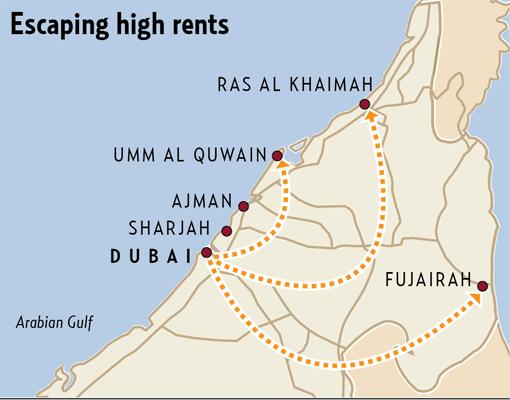
According to second quarter 2007 statistics by UAE-based property services company Asteco, rents for a one-bedroom apartment in Ajman are around the Dh22,000 mark. In RAK, Fujairah and UAQ a similarly sized apartment will set you back around Dh25,000.
Meanwhile, in Dubai, a one-bedroom apartment in Karama and Bur Dubai averages approximately Dh75,000, and in Dubai Marina will cost Dh135,000.
This price difference has put Dubai out of contention for many mid-income families, say property analysts.
“We are seeing a very strong trend of people moving out of Dubai, especially young, middle-income families, because rents are not affordable for them and schooling is cheaper elsewhere,” said Peter Penhall, CEO of property portal Gowealthy.com.
“Ajman has been the most viable alternative because of its short distance to Dubai.”
Roger Wilkinson, managing partner of Northern Emirates Property, a Sharjah-based property leasing and management company, described the residential real estate market in Fujairah and UAQ as “low key” compared to Ajman.
In terms of future rents, Penhall said Dubai will always command a premium because of the advanced state of its real estate sector, its wide array of lifestyle options and the quality of its projects.
However, he said despite rents being substantially lower in the northern emirates, the gap in the quality of apartments is moderate.

COSTS
Look carefully, you are saving a lot
Based on the assumption that petrol costs are Dh0.14 per km and the distance to Fujairah is 120km (round trip 240km).
Approximate petrol cost of daily round trip commute from Dubai to Fujairah: Dh34
Approximate annual petrol cost of round trip from Dubai to Fujairah: Dh12,380 (assuming that travel on weekends for Dubai-based activities)
Average annual rent of one-bedroom apartment in Karama and Bur Dubai (Dubai): Dh75,000
Average annual rent of one-bedroom apartment in Fujairah: Dh26,000
Overall saving for resident who has moved to Fujairah, but commutes daily to Dubai: Dh36,620
Words of Wisdom – Azim Premji to Professionals
Words of Wisdom – Azim Premji to Professionals
Here are some powerful advice from Azim Premji,Chairman, Wipro Ltd based on his successes, setbacksand the lessons learnt during his corporate journey.
Respond, don’t react
Always be aware of your emotions and learn to manage them. There is a huge difference between people who react impulsively and those who can disengage themselves and then respond at will. Bychoosing to respond differently, we can prevent another person from controlling our behaviour. I remember a small story that illustrates this well. There was once anewspaper vendor who had a rude customer. Every morning, the customer would walk by, refuse to return the greeting, grab the paper off the shelf and throw the money at the vendor. The vendor would pickup the money,smile politely and say, Thank you, Sir. One day, the vendor’s assistant asked him, Why are you always so polite with him when he is so rude toyou? Why don’t you throw the newspaper at him when he comes back tomorrow? The vendor smiled and replied, “He can’t help being rude and I can’t help being polite. Why should I let his rude behaviour dictate mine?’’
Put yourself first
This does not mean being selfish. Nor does it mean that you mustbecome so full of yourself that that you become vain or arrogant.
It means developing your self-confidence. It means, developing aninner faith in yourself that is not shaken by external events. It requires perseverance. It shows up in the ability to rebound from a setback withdouble enthusiasm and energy. I came across a recent Harvard BusinessReview which describes this very effectively: No one can truly define success and failure for us. Only we can define that for ourselves. No one can take away our dignity unless we surrender it. No one can take away our hope and pride unless we relinquish them. No one can steal our creativity, imagination and skills unless we stop thinking.
Courtesy: Executive Knowledge Lines
Info updates
Intelligent Spoon -Sensing the Properties of the Food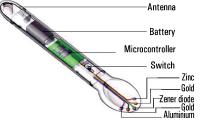
Two students,Connie Cheng andLeonardo Bonanni ofMIT Media Lab are behindthis sensor-laden smart spoon,which monitors the temperature,acidity, salinity and viscosity ofwhatever it happens to be stirringand feeds the information to acomputer for processing. Thisintelligent spoon has zinc, gold, zener diode, and aluminum sensors todetect the temperature, acidity, salinity, and viscosity levels of thehuman-feed it’s currently stirring.
The project aims to introduce computing into traditional culinaryutensils. It seeks to provide information, in an integrated manner, aboutany food the spoon is in contact with, and to offer suggestions to improvethe food. The built-in sensors evaluate the different properties of thefood, and send them to the computer for further processing.
Apart from consolidating measurements that are normally done byan array of equipment into a single spoon, the information obtained canbe used to advise the users what their next step should be; for example,it tells the user if there is not enough salt in the brine prepared to makepickles.
Plastic ..plastic
In the 1950s the world made less than 5 million tonnes of plastic products, now we produce 80 million tonnes!
Car Fuel from Food Waste
Chain of fast food eateries and restaurants world over, push out billions of gallons of animal fat and waste vegetable oil which is an untapped source of transportation fuel – cleaner-burning bio-diesel. As a fuel source, bio-diesel has distinct advantages over conventional diesel based on fossil fuels. When burned in cars, it produces far less carbon dioxide in most cases and can produce fewer sulfur compounds, claims advocates of bio-diesel.
In US, most food outlets currently pay 10 to 15 cents a gallon to waste disposal companies to haul away their food waste. The new bio-diesel companies entering the field, instead, will pay fast food outlets for their oil.
All are benefited, including the environment.
Humans as Professional Noses to Sniff out Pollution
For years, dogs have been man’s best friend when it comes to sniff out drugs. Now humans themselves are being trained as ‘professional noses’ to sniff for illegal emissions while patrolling the southern city of Guangzhou, in China.
Environmental experts train the selected people in the laboratory to differentiate between hundreds of odors and gauge their threat to human health. A dozen such sniffers will be employed by an environmental monitoring station in the city to detect noxious gases released by chemical and rubber factories, as well as from rubbish dumps and sewers. The sniffers expect to receive certificates that will officially let them commence their careers as professional noses. The certificates will be valid for just three years, though, because humans’ olfactory capabilities tend to decline with aging.
Universal Cell Phone Charger-Chinese Stipulation
We are now in an era of portable gadgets, predominantly cell phones, powered by batteries to be re-charged regularly. Thus the charger has become part and parcel of people on the move, with its inconvenience.
China is now taking the lead to enforce a compulsory universal cell phone charger standard. The aim is to reduce the number of chargers that are thrown away each year because of very high cell phone upgrades in China – nearly 100 million cell phones are destroyed by the non-invasive radio waves.
Navigation Skills of Homing Birds
One of nature’s most intriguing mysteries is how some birds are able to retrace their path after the seasonal migration to places thousands of kilometres away. It has long been recognized that birds possess the ability to use the Earth’s magnetic field for their navigation. But the real scientific basis behind this navigation skill has not been clarified until very recently. The recent discovery of iron-containing structures in the beaks of homing pigeons in a new study by scientists at the University of Frankfurt offers some insight into this complex issue.
In histological and physicochemical examinations, iron-containing subcellular particles of maghemite and magnetite werefound in sensory dendrites of the skin lining the upper beak of homing pigeons.
China promotes Solar Water Heating
Nearly 80 % of China’s hot water requirements are met through solar water heaters. According to a recent plan, the Chinese government is encouraging new buildings and major users of hot water—such as hospitals, restaurants, swimming pools etc. —to install solar water heaters as the technology has become mature and cost-effective.
A typical device, consisting of a two-square-meter collector with rows of glass tubes and a 180-litre storage tank, can provide hot water for a 3 to 4 person family at a minimum cost of around US$195. In 2006, the Chinese solar water heater industry had a turnover of more than US$2.6 billion and provided nearly 600,000 jobs. The total installed capacity of solar water heaters nationwide has reached some 90 million square meters, or roughly 60 percent of the world total.
Courtesy: Executive Knowledge Lines
Drunk-driver detection system
Drunk-driver detection system
Nissan, the third largest car maker of Japan has developed a Drunk-Driver
Detection System. Before starting the car, the driver has to blow into a
breathalyzer like unit on the dash which will decide whether he is drunk or not.
If drunk, ignition system will not work and car will not start Odour sensors on the
driver and passenger seats read alcohol levels, while a detector in the gear-shift
knob measures the perspiration of the driver’s palm when starting the car.
The car also includes a mounted camera that monitors alertness by eye
scan, ringing bells and issuing a voice message that a driver should pull over and rest.
Laser printers and health
Laser printers and health
Wednesday,22 August 2007 16:4 hrs IST/MALAYALA MANORAMA English edition
As per the air quality researcher Lidia Morawska and colleagues at the Queensland University of Technology, Australia, some home and office laser printers may spew out as much particulate matter as a cigarette smoker inhales, posing serious health problems to the users.
The study, measured particulate output of 62 laser printers, including models from all major brands. Particle emissions, believed to be toner – the finely-ground powder used to form images and characters on paper – were measured in an open office floor plan, then ranked.
They classified 17 of the 62 printers, or 27 per cent, as “high particle emitters”; one of the 17 pumped out particulates at a rate comparable with emissions from cigarette smoking, the study said.
Morawska called the emissions “a significant health threat” because of the particles’ small size, which makes them easy to inhale and easily lodged in the deepest and smallest passageways of the lungs. The effects, she said, can range from simple irritation to much more serious illnesses, including cardiovascular problems or cancer.
The research also found that office particulate levels increased fivefold during work hours because of laser printers. Generally, more particles were emitted when the printer was using a new toner cartridge, and when printing graphics or photographs that require larger amounts of toner than, say, text.
Morawska recommended that people make sure rooms at work and home with laser printers are well ventilated.







‘India of today’
‘India of today’
Watercolour by M.F.Husain, done specially for The Hindu on the occasion of 60 years of Independence
Dubai moves to calm soaring rental prices
Dubai moves to calm soaring rental prices
By Saifur Rahman, Business News Editor/GULF NEWSPublished: August 22, 2007, 00:13
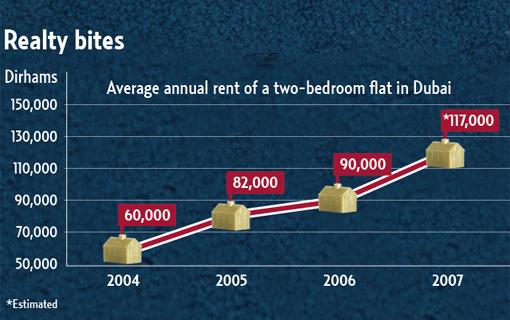
Dubai: The emirate will soon facilitate lands to develop low-cost housing for Dubai’s middle class to tackle the current housing shortage and tame rent-related inflation, a top government official said on Tuesday.
Marwan Bin Galita, chief executive of the newly formed Real Estate Regulatory Agency (Rera), told Gulf News in an interview the agency was all set to finalise a three- to five-year tenancy agreement so that the tenants can tackle the rising rental costs.
“It will be a model tenancy agreement in which all the rights and privileges of the tenants will be reserved. We will ensure that everyone strictly adhere to the contracts,” he said.
“The long term contracts will be transparent and fix the rents for that period and help the tenants in coping with rising rental costs.” 
However, these contracts may not be mandatory, but to help the consumers, he said. “We do not want to police the market, rather allow the market forces to reshape in a more professional manner. We will try to enforce this,” he said.
Experts say a big part of the problem is that the demand for housing in the emirate remains significantly larger than what is available in the market.
Project delays have deprived the market of 300,000 housing units, according to Syed Ali Anwar, chief executive officer of 3D Venture Real Estate.
“These projects have been delayed by at least one year and will only be ready by December 2009. Some are facing construction delays because of rising material costs, others never got started after being announced,” he said.
“The current demand is for 100,000 apartments but we include the number of people who will be coming to Dubai by 2009, then we will require 200,000 more units.”
The continued economic growth means demand for housing units will continue to remain strong, says Bermak Besharaty, chief executive officer of Al Mas Capital, a company advising on real estate finance deals.
“There was some overbuilding in the luxury sector. There was not enough building in the middle and lower income segments. More developers are realising this.”
To counter that, Rera is developing a comprehensive Real Estate Index to assess the market and make recommendations to the government on proposed regulations, said Bin Galita. 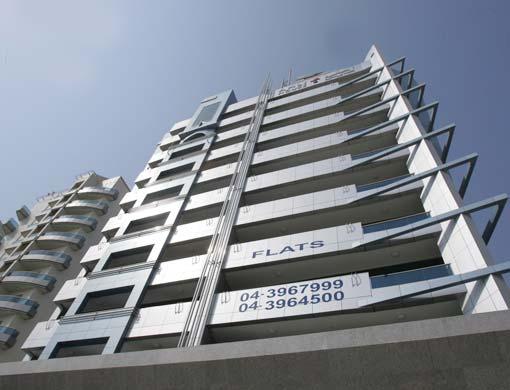
“We have began collecting data on the housing supplies and projected demand to complete the assessment which should be completed by the end of this year,” he said.
Based on data, he said, Rera will make a set of recommendations to the Dubai government in which facilitating the low-cost housing would figure prominently.
“Dubai definitely needs to facilitate low-cost housing to support the middle class like any other cities and we will definitely recommend measures to facilitate this,” he said.
“Already, a number of leading developers have come forward to launch low-cost housing schemes that will help tame the demand.” Bin Galita also stressed that Dubai was in need for a property arbitration centre, he said.
“Although the number of rent disputes will reduce drastically once the long-term tenancy comes into effect, the time is right for Dubai to set up a property arbitration centre,” he added. “The rent committee may not be enough to tackle everything.”
Gulf between aspirations and achievements
Gulf between aspirations and achievements
– Inder Malhotra/MALAYALA MANORAMA English edition
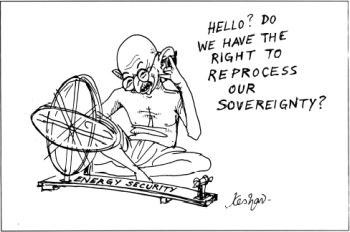
As part of a periodic reshuffle of diplomatic postings, the ministry of external affairs in New Delhi has sent some very senior and experienced officers as ambassadors to countries of the Gulf – the latest being Talmiz Ahmad as ambassador to the United Arab Emirates (UAE) – a region of the greatest importance to India. To each the policymakers spoke at length about this country’s “enormous stakes” in the area and directed him to work for evolving a “role” for India there.
Indian stakes and interests in the Gulf region are as obvious as they are immense, but to talk of an Indian role is a tall order. Let the paradox be put in perspective.
Geographically, the Gulf is India’s extended neighbourhood and the only link with the no less vital Central Asia, with Pakistan denying this country transit rights and Afghanistan having sunk into chaos. Historically, a relationship between the subcontinent and the Gulf goes back to ancient, pre-Islamic days. Britain controlled the Gulf littoral tightly because of its overwhelming strategic importance for the defence of India, the brightest jewel in the crown.
Remarkably, however, this control was exercised not from London but from Calcutta (now Kolkata) first and then New Delhi. Even after the end of the British rule in the subcontinent, the Reserve Bank of India was the currency issuing authority in the Gulf; in the mid-1950s this arrangement was terminated at the instance of India, not of the littoral states.
The discovery of oil in the early years of the twentieth century had boosted the Gulf’s strategic and economic importance. Since the first oil shock of 1973, to say nothing of the Islamic revolution in Iran in 1979 and the first Gulf War in 1991, it has swiftly increased and is at a very high pitch today amidst the brisk competition between China, India, Japan and South Korea for securing oil and gas.
Overriding all this, in some respects, is what is sometimes called India’s “manpower bonanza” in the region. Three and a half million Indians live and work in the six states comprising the Gulf Cooperation Council. In some of these countries, the Indian workers form the majority of the population.
At first Indian manpower in the Gulf consisted almost exclusively of unskilled and semi-skilled workers. Now however the proportion of professionals has gone up to 25 percent. The Indian work force in the Gulf remits home a whopping sum of $20 billion a year, which, incidentally, is the vale of the Indo-Gulf trade also.
All this should normally be conducive to an active Indian role in the Gulf, especially because the entire region is within the operating radius of the Indian Navy, and to maintain the safe and smooth flow of oil is a crucial interest of not just India but also all energy-importing nations.
Unfortunately, however, rude ground realities often come in the way of even the most rational scenario. Until 1970, the Persian Gulf was a British lake. Now it is an American lake with the formidable presence of at least two carrier groups in the Gulf waters and the US bogged down in Vietnam-like quagmire in Iraq and apparently hell-bent on taking some kind of military action against Iran. Pakistan-specific issues also play a small but significant part in influencing attitudes in a predominantly Muslim area where the two South Asian neighbours often bicker.
More importantly this factor also affects America’s willingness to let India, its strategic partner, be active in the region, except in a subordinate position to it. It prefers Indo-US maritime cooperation to centre on the Strait of Malacca rather than the Persian Gulf. Only the other day the US secretary of state announced huge military sales and aid to Gulf and West Asian countries. India, itself dependent on imports of the main weapons systems it needs, is a non-player in this arena.
Nor is this all. Until two years ago, the Chinese navy hadn’t crossed the Malacca Strait. Now, there is a considerable presence of the Chinese navy in the Upper Arabian Sea. Moreover, China has acquired a major advantage over India by having the use of the Gwadar port at the mouth of the Strait of Hormuz that it has built on the Makran coast of Pakistan, its all-weather friend.
The crowning irony is that even in areas such as economic cooperation between the fast-growing India and the booming countries of the Gulf – in which India can make massive contributions in IT and other sectors and the oil-rich Gulf countries can meet India’s virtually insatiable needs for capital investment – little has been done.
It is not that the leaders on the two sides are lacking in imagination. Grandiose promises have been made during the visits to India of President Khatami of Iran in 2003, King Abdullah of Saudi Arabia, who was chief guest at last year’s Republic Day parade, and UAE Vice President and Prime Minister Sheikh Mohammed bin Rashid al-Maktoum, the Dubai ruler, who came here recently. But they all became victims of the principal Indian weakness of being long on declarations of intent and woefully short on implementing them.
And what can be more distressing than that no Indian Prime Minister has visited any Gulf country since P.V. Narasimha Rao went to Oman in 1993? Under the circumstances, it should be no surprise if there is a yawning gulf between Indian aspirations and achievements in relation to the Gulf.
Inder Malhotra is a veteran commentator on political and strategic affairs. He can be reached at indermalhotra30@hotmail.com
 ClicksandWrites
You must be logged in to post a comment.