Abu Dhabi economy challenges global market with solid growth
Abu Dhabi economy challenges global market with solid growthBY A STAFF REPORTER KHALEEJ TIMES
17 November 2007
DUBAI — Oil and gas production will no longer be the major source of public revenue in Abu Dhabi with the government’s determined strategy of diversifying the economy and creating new productive sectors based on solid partnerships with the private sector, says Adel Al Zarouni, Managing Director of Burooj Properties.
Al Zarouni of Burooj Properties, the gold sponsor of the Abu Dhabi Conference 2007 to be held at Emirates Palace on November 18-19, added: “Innovation and creativity are becoming an integral part of the national policy in Abu Dhabi which has succeeded in implementing the right formula to emerge as a global leader. The city’s growing reputation as an international tourism and business hub reflects its steady current economic boom. The most crucial factor that will drive economic prosperity in the capital of UAE is the forceful partnership between the public and private sectors.”
The economic success of the UAE owed much to the government support to the private initiatives. The growth of the city into a strategic destination for business is seen internationally as a pioneering effort where public-private partnerships are now a standard concept in the economic development realm of the city.
Al Zarouni added: “By combining the best talents and resources of the UAE public and private sectors, we can deliver value for money, greater efficiency and accelerated delivery of planned projects. Abu Dhabi is laying the ground for future development through enabling the implementation of public-private partnerships under principles of transparency, flexibility and fidelity.”
Abu Dhabi public private partnerships define partners’ roles and responsibilities by high level of transparency and precision through looking into partner selection, deal structuring and negotiations.
Al Zarouni added: “We are pleased to be a gold sponsor of the Abu Dhabi Conference 2007 which brings together key government officials and influential industry leaders to discuss and debate issues that shape the future of Abu Dhabi.”
Abu Dhabi Conference 2007 follows the Government’s recent comprehensive plan for the development of the city that will guide planning decisions for the next quarter of a century.
Al Zarouni concluded: “Innovation is the most critical element in sustaining competitiveness. Abu Dhabi’s construction boom goes in hand with further industry development in areas such as education, healthcare and government services which remain at top of the government’s agenda.”
Male Circumcision can Cut HIV Infection, Studies Show
Male Circumcision can Cut HIV Infection, Studies Show
Scientific studies have confirmed a long-standing belief that male circumcision can reduce HIV infection rates in men by 60 percent, an international AIDS conference will be told next week.
David Cooper, the co-chairman of an International AIDS Society (IAS) conference to be held in Sydney from July 22-25, said research on male circumcision represented a major development in HIV prevention.
“We always knew that if you went into any particular African country that HIV rates among Muslim men were lots lower,” Cooper told AFP.
“But we were never sure that the Muslim men had lower numbers of partners than non-Muslim men, so people always doubted it.”
Cooper said the only way to ensure the link between lower HIV rates and circumcision was not due to cultural factors was to carry out random trials, the results of which will be presented at the Sydney conference.
He said three trials were conducted in South Africa, Kenya and Uganda, each involving more than 2,000 heterosexual men, half of whom were circumcised.
“The reduction in HIV infection was about 60 percent, so clearly it works,” said Cooper, who is also the director of Australia’s National Centre for HIV Epidemiology and Clinical Research.
Cooper said the studies showed circumcision could be a powerful tool in helping curb HIV infection in sub-Saharan Africa, where infection rates in some countries are up to 40 percent of the adult population.
He said, however, that any introduction of widespread male circumcision in developing countries needed to be carried out with an education campaign that reinforced a safe sex message.
“In some areas of sub-Saharan Africa men are requesting circumcision, which is a bit of a worry, as they may think they’re protected and they’re not,” Cooper said.
“It merely reduces the risk, you still have to use condoms, men can’t think ‘that’s all I need to do, I can now have unsafe sex’.”
The clinical reason for circumcision’s preventive effect is still being investigated.
One theory is that the foreskin has a very thin lining and suffers minor abrasions during intercourse, making it easier for the human immunodeficiency virus (HIV) to enter the man’s bloodstream. Another is that the foreskin is rich in Langerhans cells, whose surface is configured in such a way that the AIDS virus readily latches on to them.
Source-AFP
UAE announces new steps to protect rights of foreign workers
UAE announces new steps to protect rights of foreign workers
14 Nov, 2007, 1727 hrs IST, PTI
DUBAI: In a move aimed at protecting rights of foreigners working as domestic helps, including Indians, the UAE has announced that it would draft a law on par with international standards to safeguard their interests.
“Government decreed the drafting of a law later last month to protect the rights of domestic helps like other workers under UAE Labour Law. First of its kind, the law will follow local and international standards to safeguard their interest,” Anwar Gargash, Minister of State for Federal National Council Affairs said.
“We recognise that the protection of domestic workers is the top priority for the government and are committed towards it,” he told the Emirates News Agency.
His comments came in the wake of a report published by the New York-based Human Rights Watch (HRW), which claimed that domestic helps face forced labour and sexual harassment in Gulf countries. The research was conducted in Saudi Arabia, Kuwait, Lebanon and UAE.
The minster stressed that they are committed to “protect the rights of labourers and curb abuses against them.”
Criticising the survey conducted by HRW, Gargesh said they are disappointed by the quality of the research.
The findings are based on interviews with Sri Lankan women workers who work across the Middle East, he said.
Skin, hair, nail show stress level
Skin, hair, nail show stress level
11 Nov 2007, 1125 hrs IST,PTI
NEW YORK: Feeling stressed? Your skin, hair and nails can show it as they’re the external indicators.
While everyone knows that stress can take a toll on a person physically and psychologically, researchers in the United States have carried out a study and found that it also can lead to dermatological problems, like acne, brittle nails or even hair loss, the ScienceDaily reported.
“When a person becomes stressed, the level of the body’s stress hormone (cortisol) rises. This in turn causes an increase in oil production, which can lead to oily skin, acne and other related skin problems.
“Stress can aggravate the skin and trigger unexpected flare-ups that, in effect, create more stress for patients,” lead researcher Dr Flor A. Mayoral of the University of Miami’s Miller School of Medicine was quoted as saying.
Dr Mayoral and his fellow researchers came to the conclusion after analysing a study, involving 27 medical, dental and pharmacy students.
The researchers examined how periods of higher stress impacted the skin’s response to repeated stripping of cellophane tape on the subjects’ forearms vs. periods of lower stress (such as after returning from winter vacation).
They found that it took longer for the skin to recover from the minimally invasive tape stripping during periods of perceived higher stress than during less stressful periods.
“This study’s the first of its kind to suggest what dermatologists anecdotally have known for years — that psychological stress adversely affects the normal functions of the skin.
“While the subjects in this study did not have any pre-existing skin conditions, I’d suspect that people with skin conditions such as eczema or psoriasis would have been more adversely affected by this experiment,” he said.
Curvy women are cleverer too: Study
Curvy women are cleverer too: Study
11 Nov 2007, 1203 hrs IST,PTI
LONDON: Curvy women have been admired for their sensual figures. But, a new study has found that ladies with large hips and small waists are cleverer too, than those with apple-shaped bodies.
In fact, according to international researchers, women with an hourglass figure are not only intelligent, they also give birth to brighter children, The Sunday Times reported in London on Sunday.
“The fat around fuller hips and thighs holds higher levels of omega3 fatty acids which are essential for the growth of the brain during pregnancy,” the researchers were quoted as saying.
The scientists at the Universities of Pittsburgh and California came to the conclusion after analysing data from a study of 16,000 women and girls, which collected details of their body measurements and their scores in cognitive tests.
The team found that those women with a greater difference between the waist and hips scored significantly higher on the tests, as did their children — “possibly a result of higher levels of Omega3 fatty acids on the hips”.
The research has explained why children born to teenage mothers do worse in cognitive tests: Their mothers may have had insufficient stores of the best fatty acids.
“The cognitive development of their children is reduced, and their own cognitive development is impaired compared with those mothers with a later first birth,” the researchers were quoted as saying.
The study also noted, however, that children born to teenage girls with traditional hourglass figures seemed to be protected from this phenomenon and did better in tests.
‘Indian elite emit most CO2’
‘Indian elite emit most CO2’
13 Nov 2007, 1819 hrs IST,INDIATIMES NEWS NETWORK
NEW DELHI: Greenpeace on Tuesday released a survey based report named “hiding behind the poor” which reveals that the highest income group in India, constituting merely 1% of the population emits four-and-a-half times as much CO2 as the lowest income group consisting 38% of the population. It demands that common but differentiated responsibility for CO2 emissions reduction, which the government is justifiably advocating at a global level be implemented in India. With less than a month to go for the United Nations Climate Change Council conference in Bali, the report challenges the Indian government’s hard line of not committing to GHG gases reduction on grounds of development and makes an argument about why India must de-carbonize its development.
According to the proposed national strategy on climate change India will not abide by any international commitment to mandatory reduction of greenhouse gas emission. India ‘s approach of measuring world GHG emissions is per capita emission rather than country-wise emissions which is the approach of the developed nations. Although India is the sixth largest carbon emitter in the world, it has one of the lowest per capita emission rates.
G Ananthapadmanabhan, Executive Director, Greenpeace India said “While the government continues to point at low average per capita emissions to justify non reduction of India ‘s CO2 emissions, over 150 Million Indians are emitting above the sustainable limit which needs to be maintained to restrict global temperature rise below 2 degree centigrade. India ‘s low average per capita emissions is due to the over 800 million poor population whose emissions are negligible and the difference in emissions between the highest and the lowest income groups in India is almost as glaring as the difference in the average per capita emissions between the EU and India .”
‘hiding behind the poor’ is based on face-to-face surveys of 819 households from the seven different income classes across the four metros, medium and small towns and rural areas for energy consumption patters. According to the report, the average CO2 emissions of an individual from the highest income group of above Rs 30,000 (1494 KG) is 4.5 times that of one from the lowest income group of below Rs 3000 per month (335 Kg).
Ananth further added “Electricity production in India is already extremely carbon intensive, emitting more then twice as much CO2 per kilowatt-hour than in the EU. The government’s objective, as in the 11th five year plan to base India’s future power generation on a massive expansion of coal power plants will further enhance climate instability and expose the most vulnerable poor population to increasing impacts of climate change. While rightfully demanding that developed nations reduce Co2 emissions and provide developing nations the carbon space to grow, the Indian government must not hide India ‘s emissions behind the vast poor population. The principle of climate justice must be included in the national development plan.”
The poor population, while contributing the least to global warming, is highly exposed to and has the lowest capacity to adapt to the impacts of climate change. The report recommends that funds be created by mechanisms like carbon credits and carbon tax to be used for mitigation and adaptation projects to protect the poor from climate change impacts.
Inching closer to spinal cord repair
Inching closer to spinal cord repair
14 Nov 2007, 0148 hrs IST,ANI
WASHINGTON: A new study has identified key elements that may make the regeneration of nerve cells using the body’s own stem cells following spinal cord injury a possibility.
The seminal study, co-lead by Dr Philip Horner, neuroscientist at the University of Washington, Dr Tim Kennedy, neuroscientist at the Montreal Neurological Institute of McGill University, might help in providing novel therapies for repairing previously irreversible nerve damage in the injured spinal cord.
In the study, the researchers tested numerous proteins and identified netrin-1 as the key molecule responsible for the migratory pattern of stem cells following injury. “Because of their regenerative role, it is crucial to understand the movements of stem cells following brain or spinal cord injury,” Horner said.
“We know that stem cells are present within the spinal cord, but it was not known why they could not function to repair the damage. Surprisingly, we discovered that they actually migrate away from the lesion and the question became why — what signal is telling the stem cells to move,” he said.
In the developing nervous system, netrin-1 acts as a repulsive or attractive signal, guiding nerve cells to their proper targets.
The team found that in the adult spinal cord, netrin-1 specifically repelled stem cells away from the injury site, thereby preventing stem cells from replenishing nerve cells. Very little knowledge is known as to why a wound to the skin repairs itself but the adult nervous system is unable to repair itself following spinal injury. This is in contrast to the developing brain and non-mammals, which can repair, and regenerate after severe injuries.
The sole clue from these systems has been the role of stem cells and their potential to develop into different cell types.
Telling the life and times of Khalifa through images

Telling the life and times of Khalifa through images
By Daniel Bardsley, Staff Reporter GULF NEWS
Published: November 14, 2007, 00:18
Dubai: A book that details the life of President His Highness Shaikh Khalifa Bin Zayed Al Nahyan – and which also acts as a history of Abu Dhabi and the UAE – has been published.
Shaikh Khalifa – Life and Times features more than 200 pictures by acclaimed UAE royal photographer Noor Ali Rashid.
At a launch in Dubai organised by Motivate Publishing, Shaikh Nahyan Bin Mubarak Al Nahyan, Minister of Higher Education, hailed the book as “very valuable”.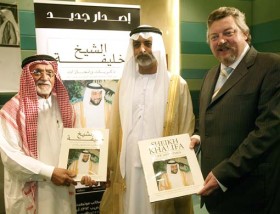
The volume is the latest in a series that so far also includes books on Abu Dhabi, Dubai, the UAE, the late Shaikh Zayed Bin Sultan Al Nahyan and the late Shaikh Maktoum Bin Rashid Al Maktoum.
“These books are sought after not just in the UAE but outside as well because they very clearly show the history of the UAE in pictures and in writing,” said Shaikh Nahyan.
The new book has a forward by His Highness Shaikh Mohammad Bin Rashid Al Maktoum, Vice-President and Prime Minister of the UAE and Ruler of Dubai, and General Shaikh Mohammad Bin Zayed Al Nahyan, Abu Dhabi Crown Prince and Deputy Supreme Commander of the UAE Armed Forces. The book is available in Arabic and English.
As well as featuring many pictures of Shaikh Khalifa, the book also includes photos that trace the development of Abu Dhabi and the UAE.
There are black and white images from decades past of camel races and the souqs of Al Ain, while more recent colour pictures show, for example, the shiny high-rise buildings of modern Abu Dhabi and the new Shaikh Zayed Grand Mosque.
Noor Ali Rashid, who landed in Dubai in 1958, said: “I am the only person who has, consistently for five decades, recorded the history of this area.”
Jonathan Griffiths, General Manager – Books at Motivate Publishing, said the book’s first print run of about 12,000 copies was sold out and it was being reprinted.
Heavy fog covers Abu Dhabi
Heavy fog covers Abu Dhabi
By Binsal Abdul Kader, Staff Reporter GULF NEWS
Published: November 13, 2007, 12:27
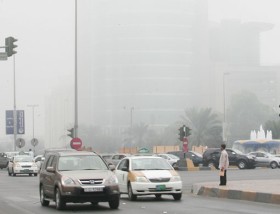
Abu Dhabi: The heavy fog on Tuesday morning, which affected the visibility in Abu Dhabi, will continue on Wednesday, the meteorological department told Gulf News.
“The visibility was reduced to about 50 meters in the city, the surrounding areas and the south west desert in the morning,” said forecaster Mohammad Al Tal. “The fog did not affect other emirates where the visibility was about 4,000 metres.”
Al Tal forecasted the same phenomenon in the emirate for Wednesday morning, but said that the density of the fog will be lighter, with visibility at about 1,000 metres.
Al Tal said the fog was brought about by regular weather change in November.
The fog slowed down traffic on the roads. “It took me one hour to reach the city from Mussafah instead of half an hour,” said motorist Mohammad Ayoob.
Majority of residents suffer spine problems
Majority of residents suffer spine problems
By Dina El Shamma, Staff Reporter GULF NEWS
Published: November 14, 2007, 00:18
Abu Dhabi: More than 60 per cent of the UAE population suffers from spine-related problems and majority are unaware of the condition, according to an expert.
Dr Aslam Khan, Founder of Khan Kinetic Treatment (KKT), told Gulf News that structural disorders and spinal problems are a growing concern that have been left ignored or undetected by a large number of people throughout the UAE; and if detected is usually treated via surgical procedures which he found to be unnecessary through his research.
“In many cases, people may have their whole nervous system partially shut down and not be aware of it or revert to surgery. KKT research involves acoustics of sound with specific treatments and angels and we are currently reverting to biosynthesis by measuring the DNA level and allowing KKT regenerate damaged tissues in the body,” said Khan.
KKT spinal treatment is a refined non-invasive procedure, utilising sound waves to address the core spinal distortions and disturbances.
The procedure takes a couple of minutes. It involves lying on a KKT table with a device placed on the precise region of the spine, sound waves are then applied to the spine, waves reposition vertebrae and the entire body is re-positioned. Healthy blood flow is restored to the brain and neural communication is re-established.
Dr Khan said the treatment is now available in the UAE at a KKT centre he opened with Emirati doctor Omar Salem.
 ClicksandWrites
You must be logged in to post a comment.