World’s tallest gets taller
World’s tallest gets taller
By a staff reporter KHALEEJT TIMES 4 January 2008
DUBAI — Burj Dubai continues to soar above Dubai and higher than any building in the world with its 158 levels now reaching a height of 598.5 metres, according to a statement released yesterday by the iconic tower’s developers Emaar Properties.
Cladding work of the tower is now taking place at an accelerated pace with 58 storeys already wearing the shimmering sheen of the high-performance cladding system.
The primary materials used —reflective glazing, aluminium and textured stainless steel spandrels and vertical stainless tubular fins — accentuate the tower’s height and slenderness to the eye.
Burj Dubai is now taller than Taipei 101 (508 metres; 1667 ft) in Taiwan and CN Tower (553.33 metres; 1815.5 ft) in Toronto, Canada. When completed, the tower will have used 330,000 cubic meters of concrete, 39,000 metric tons of steel rebar and 142,000 sq m of glass— and 22 million man hours. More than 5,000 consultants and skilled professional workers are employed on-site at the tower.
Burj Dubai is the centrepiece of Emaar’s flagship project, the Dh73 billion (US$20 billion) Downtown Burj Dubai, a new downtown with residential, commercial, leisure, retail and hospitality components, set on 500 acres of land in the heart of Dubai. Burj Dubai will feature residences, commercial space and retail space and hospitality elements including the world’s first Armani Hotel and Armani Residences.
Mohammed’s second anniversary as Ruler to be celebrated today
Mohammed’s second anniversary as Ruler to be celebrated today
By a staff reporter KHALEEJ TIME 4 January 2008
DUBAI — The Global Village, a member of Tatweer, will celebrate the second anniversary of His Highness Shaikh Mohammed bin Rashid Al Maktoum’s assumption of office as Ruler of Dubai today.
Visitors will enjoy free entry to the Global Village where celebrations will mark the historic occasion with traditional shows and folk dances such as ‘Al Harbia’, ‘Al Lewa’, ‘Al Habban’, ‘Al Ayala’ and ‘Al Dan’.
Saeed Al Muntafiq, Executive Chairman, Tatweer, said, “On this special day, Tatweer will bear the cost of all Global Village entry tickets. We invite visitors to come in large numbers and experience diverse cultures in this outstanding destination.”
Young girls in traditional UAE costume will welcome visitors with incense and scented rose water, offering special gifts such as sweets, nuts, UAE national flags as well as Global Village memorabilia.
Abdul Redha Ali Bin Redha, CEO, Global Village, said, “We are grateful to have a leader who has wholeheartedly supported the overall growth of Dubai and the future of our beloved country. Over the years, the Global Village has grown into a premium attraction among the UAE nationals, residents as well as visitors from across the world, thanks to the vision of His Highness Shaikh Mohammed.
“While fun, entertainment and cultural activities for the family are key components of the Global Village, safety has been given top priority to make the visit a memorable experience to all,” he said.
Burj Dubai reaches 158 levels to set world record
Burj Dubai reaches 158 levels to set world record
Staff Report GULF NEWS
Published: January 04, 2008, 00:42
Dubai: Burj Dubai, the iconic tower developed by global property developer Emaar Properties, has reached 158 levels – the most in any building in the world – and is now 598.5 metres high, Emaar said.
“Cladding work of the tower is now ongoing at an accelerated pace with 58 storeys already wearing the shimmering sheen of the high-performance cladding system,” the statement said.
“The primary materials used – reflective glazing, aluminium and textured stainless steel spandrels and vertical stainless tubular fins – accentuate the tower’s height and slenderness to the eye.”
Burj Dubai is now taller than Taipei 101 (508 metres) in Taiwan and CN Tower (553.33 metres) in Toronto, Canada.
When completed, the tower will have used 330,000 cubic metres of concrete, 39,000 metric tonnes of steel rebar and 142,000 square metres of glass – and 22 million man hours.
More than 5,000 consultants and skilled professionals workers are employed on-site at the tower.
Emaar has partnered with South Korean construction major Samsung Corporation and New York-based Project Manager Turner Construction in constructing Burj Dubai, which is designed by Adrian Smith and Skidmore, Owings & Merrill of Chicago.
Burj Dubai is the centrepiece of Emaar’s flagship project, the Dh73 billion ($20 billion) Downtown Burj Dubai, a new downtown with residential, commercial, leisure, retail and hospitality components.
Officials and corporate leaders hail governance
Officials and corporate leaders hail governance
By Shakir Husain, Ahmed A. Elewa & Himendra Mohan Kumar, Staff Reporters GULF NEWS
Published: January 04, 2008, 00:43
Dubai/Abu Dhabi: Senior officials and businessmen on Thursday praised the dynamic leadership of His Highness Shaikh Mohammad Bin Rashid Al Maktoum, Vice-President and Prime Minister of the UAE and Ruler of Dubai, capitalising on the gains achieved so far.
January 5 marks the second anniversary when His Highness Shaikh Mohammad Bin Rashid Al Maktoum became Vice-President and Prime Minister of the UAE. He became the Ruler of Dubai on January 4, 2006.
Abdul Aziz Al Ghurair, Federal National Council Speaker, said Shaikh Mohammad is an inspirational leader, who has created an atmosphere of immense confidence and courage in the UAE.
“This has been extremely beneficial for the business community in the region as it has helped us create a highly competitive and lucrative business arena.”
Mohammad Ali Al Abbar, Director General of the Dubai Economic Development Department, said the occasion calls for deep thinking to evaluate the march of giving and understand the honourable leader whose ambitions for his people are excellence and progress at a global level.
“Shaikh Mohammad’s personality is a harmonised mix of unique and positive characteristics, he is simple and humble when dealing with people, courageous when facing obstacles, and does not know the word impossible,” Al Abbar said.
Mattar Al Tayer, Chairman of the Roads and Transport Authority, said the achievements since Shaikh Mohammad took office stand testimony to the UAE’s comprehensive development process, which is based on a strategic growth and progress strategy.
Rashid Mohammad Al Mutawa, CEO and MD of the Mohammad Bin Rashid Housing Establishment, said Shaikh Mohammad has great concern to the housing of UAE nationals.
“Shaikh Mohammad gives free housing with priority to the less fortunate sectors of society, such as poor families, divorced and widowed women supporting their children and people with special need,” Al Mutawa said.
Development strategies
Mohammad Ali Al Hashimi, executive chairman, Zabeel Investments, said: “We have seen a major focus on healthcare and education. For the first time we have seen a cabinet that is being managed in a way you would have a Fortune 500 company managed.
“The drive that we have seen in the two years is phenomenal. It is good for all of us, whether we are nationals or expatriates.”
Khalid Bin Kalban, managing director and CEO, Dubai Investments, said Shaikh Mohammad’s development strategy covers both economic and humanitarian activities.
“He has the determination and willingness to take bold decisions. His influence is not limited to the UAE and GCC. He is influencing other parts of the Arab world as well.”
Saleh Abdullah Lootah, CEO, Al Islami Foods, said: “We see more synergies in the functioning of all the ministries and delivery of results. Shaikh Mohammad’s style of work is to give more authority to people and also hold them accountable about their performance. … Infrastructure projects are being implemented to fulfil the requirements of the future. … Gradually, there will be more integration with other GCC countries under his leadership.”
“This is the first government to … adopt a national strategy for developing the country, with clear targets and objectives,” said Khalfan Al Ka’abi, chairman of Ascorp Holdings and chairman of the construction committee at the Abu Dhabi Chamber of Commerce and Industry.
In April, the government announced a revolutionised agenda, setting strategic targets for all government departments and entities on the federal level, with a special task-force setup to monitor the adoption of these new national targets.
“The UAE now is benchmarking the performance of federal departments, and even the government of Abu Dhabi announced its own policy agenda to keep up with the ambitious national targets, and I think all the other emirates will follow suit … he revolutionised the way we perceive civil service on the federal and local level,” he said, referring to the substantial increase in the federal budget and the ambitious planning to develop infrastructure of the whole country.
From a different perspective, the concepts introduced so far helped in establishing a very open architecture for the economy, said Nazim Al Qudsi, chief investment officer at the National Bank of Abu Dhabi.
“This is very important as the UAE seeks now to base the economy on expertise and the quality of output, and that is what distinguishes the UAE from other economies in the region,” he said.
Ambitious targets are now set at the national level requiring excellence of service in all segments of the federal government bodies, while concepts as accountability, transparency, and efficiency are being pushed to the forefront.
Karim Al Solh, CEO of regional equity firm, Gulf Capital, said Shaikh Mohammad has helped improve the business environment in the UAE and brought greater visibility for Dubai and other emirates on the world scene.
Saleh Mohammad Bin Nsra, chairman of real estate companies Shorfa and Ashraq, said: “The business environment is better than ever before and this has given a big boost to real estate development in the UAE,” he said.
One more chance
One more chance
By Mahesh Dattani
Time is what makes us travel. We are all travellers in time. Another year has begun and many of us wonder “now where did the last year go?” The month, date and year have nothing to do with time really. These man-made markings are mere indicators to the real travel map of our lives. The time allotted to us on this planet. The marking of one year reminds us that our planet has made one more revolution around the Sun and our lives on the planet can be counted by a limited number of those cycles.
Given the space and age of the universe as we know it, this little rock’s destiny and scale are so insignificant that it wouldn’t be worth a mention if somebody were to be recording the movements of all the planets and stars across the universe.
Yet, to us humans this little pebble’s elliptical trajectory is what governs our awareness and our very being. And we think we really matter. Like the dinosaurs, the human species could be extinct one day and the universe will not even tremble!
So powerful is the reality of time and space, but we rarely seem to come to grips with it. We feel we have all the time until we lose it. And then we exclaim: “Oh where did it go?”
We all know how important it is to live in the present moment. Writers and philosophers have spoken about the value of present time. That is all we truly have. Yet we preoccupy ourselves with all the events that ?affected us over the year or month or week. We allow anger to build inside us. We continue to regret the wrongs we have done to people who have left us long ago. We yearn for the youth or beauty that once belonged to us.
All our happy memories make us feel that we were better off before than we are now. And painful ones just grip us at every moment that we pause in our day-to-day activities. Something in the present remotely associated to that tragic event takes us there. It prevents us from staying here. Brave ones try to push it away but they spring out of the closet in the most unexpected ways simply because we never really let go.
The New Year is always the time for introspection and for hope and also to quote famous people on introspection and hope. Oprah Winfrey once exclaimed: “It’s a new year! One more chance to get it right!” I like this one because it acknowledges the past but it’s firmly grounded in what is possible now. Other appealing quotes are ones that can make the most trivial of ?activities seem important. Sometimes the most valuable use of time is when the moment is contained with a sense of sharing. “Time spent in the company of cats is never a waste.” I am not a cat lover but it makes me think about it.
Which brings me to another one picked off the net: “How we spend our days, is of course, how we spend our lives.” Quite ironic for me since I spent a good part of the day on the net looking for these quotes! To me it has been far more fruitful than throwing up my hands and saying, “Now where did that year go?”
The previous year went where all previous years go. It is lost forever in transit, and a lot of what happened in the past is baggage that ought to stay lost. But we keep sifting our memory to try and find things there. A famous essayist said that the future comes to us at a speed of sixty minutes an hour. But what about the past? Does it really leave us at the same speed with which the future came? The past seems to leave us at variable speeds. The more we cling on to the past, it slows down lingering like a huge truck at a traffic light turned red, spewing toxins as we stare at its ugly rear from our position in the present. The sooner we let go the quicker it speeds away from us, as if the light has just turned green. Making the red light green is the only choice we have when it comes to time.
Until we choose to make the red one green and allow time past to vanish at the speed of lightning, we cannot extend the time we have on hand. Time is relative. We may have the same amount of time as did yesterday, but the more we let go the more we can cherish what we truly have.
Emily Dickenson puts it so: “To live is so startling it leaves little time for anything else.”
mahesh.dattani@gmail.com
My prayer, my dream
My prayer, my dream
By Amjad Ali Khan
India-a land that has been blessed abundantly and has witnessed aplenty. Right from the Vedic times to the Silicon age, India continues to intrigue, motivate and fascinate. Today, India is a symbol of grace, style, deep-rooted culture, trade, enormous growth and, of course, BPOs! Sometimes, I feel I’m going to witness one of the most momentous times of the world in the coming years.
So much has changed in the last 10 years. India has become a show window to the world. There is nothing that we don’t already possess. In fact, we have more than the rest of the world put together, including our wondrous seasons. We are a country which has the best to offer-be it the widest range of music, arts, textiles, politics, cinema, technology, sciences, religions, a billion strong work force, diverse languages, landscapes, wildlife, museums, forts, festivals and people. We are a young nation and an ancient country rolled into one.
India has evolved over the years. Somewhere within this process of evolution lies its ticket to success. Just where have we gone wrong is difficult to assess in a short span of time. But I shall attempt to put before you some of my thoughts.
Education tops my list. I hope that one day, like Kerala, all states will be 100 per cent literate. Education will begin the transformation, both from within and the outside. People will begin to see and recognise differences among themselves and then comparisons, which are not always pleasant, will spur them to do better.
While there should be more job opportunities, the attitude to work should change. Today, young people have ample opportunities to explore. We are no longer inhibited in our choices and can be anything we want to be. Our work environment is amazing. In fact, through our younger generation our older generation is also learning to appreciate newer and unheard of options. People are realising what work culture is all about.
I’ve been fortunate to see so many workplaces over the years and I must say that the look, the people and the energy are very tangible here. We want to do more and we are willing to learn more. As the world outside focuses on India, it does seem to be a good time. But we need a lot of catching up to do. The eighties and the nineties witnessed the brain drain, but today we see a reversal. This is the brain recovery age.
Moving on, poverty is a major millstone around our necks. Perhaps the world of science could find a way out for us. Resources and their management, fuel, energy, water and food are all areas of concern.
One area that touches me dearly is culture and perhaps closer is music. Having been reared on a diet of tradition and continuity, it is difficult living in a modern world with classic values. Yet, I chose to belong to a system, where oral knowledge is passed on from guru to student along with actual music lessons. I am standing at a crossroads. Where do we go from here? How will classical music evolve? There is a deluge of pop and so-called fusion, remix ragas and experimental music out there. Great work is being done. I’m doing a lot of stuff myself. The instant success of any of these, as opposed to the long hours of dedication required in the traditional set up, sometimes stands in the way of progress. I think it is great to imbibe cultures from all around the world, but let’s not forget who we are or what we have to offer. We need to be first and foremost, proud of ourselves. It will indeed be a sad day for all of us if our musical traditions that date back more than 5,000 years, is sacrificed at the altar of modernity. While the standard of living may have improved for some, it has worsened for many. Amenities and fast-track development in cities excite us. But, a closer look reveals the true picture, as you don’t have to travel far to see that there are many who have no clue about where the world has gone.
I have heard people say that India is going to be a super power. Amen to that. But I also hope that India becomes a super power in terms of humanness, love, peace and tolerance. Values that we all hold sacred. I pray that India will set the benchmark for the entire globe. I hope we are able to show the world that we can do without war and weapons. I also dream of a politically stable, refined and healthy nation! This is the India I want to see. I hope that my music will be all this and more.
music@sarod.com
Forgiveness may be good for health
Forgiveness may be good for health
3 Jan 2008, 1531 hrs IST,ANI
WASHINGTON: If you’re holding a grudge against someone, waste no time in pardoning him or her, for a study in the January issue of Mayo Clinic Women’s HealthSource has suggested that forgiveness might be good for your health.
Forgiveness means acknowledging hurt and then letting it go, along with the burden of anger and resentment.
According to the journal, having bitterness for someone might affect your cardiovascular and nervous systems.
In one study, it was found that who focused on a personal grudge had elevated blood pressure and heart rates, as well as increased muscle tension and feelings of being less in control.
When they were asked to imagine forgiving the person who had hurt them, the participants said that they felt more positive and relaxed, and thus the changes dissipated.
When it comes to learning how to forgive – talking with a friend, therapist or adviser might be helpful during the process, to sort through feelings and stay on track.
The journal has covered four steps that will help you learn forgiveness.
The first step is to acknowledge the pain and anger felt as a result of someone else’s actions. For forgiveness to occur, the situation needs to be looked at honestly.
In the second step, you should recognize that healing requires change, followed by the finding a new way to think about the person who caused the pain.
Finally in the last step, you will begin to experience the emotional relief that comes with forgiveness. It might include increased compassion for others who have experienced similar hurt.
Fingers length signify arthritis risk
Fingers length signify arthritis risk
3 Jan 2008, 1638 hrs IST,ANI
WASHINGTON: A study of index to ring finger length ratio (2D:4D) has revealed that having uncommonly long ring fingers raises the risk of developing osteoarthritis, the most common form of arthritis that results in severe pain in the joints.
Researchers at the University of Nottingham in the UK say that their finding is particularly applicable to women with long ring fingers.
For their study, the researchers recruited 2,049 case subjects, all of whom had clinically significant symptomatic OA of the knees or hips, requiring consideration of joint replacement surgery. The study also involved 1,123 controls who neither had OA nor a history of any joint disease.
The study population was comprised of both men and women, with an average age of roughly 67 years for cases and 63 years for controls.
Radiographs of both knees and the pelvis were obtained for all participants. Every participant also underwent separate radiographs of the right and left hands.
The researchers assessed the 2D:4D length ratio from radiographs using three methods – a direct visual comparison of the 2 finger ends, the measured ratio from the base to the tip of the upper finger joints, and the measured ratio of the metacarpal bone lengths.
They found that men were 2.5 times more likely than women to have the index finger shorter than the ring finger.
The relationship between 2D:4D length ratio and OA was then assessed using blind comparisons of hand radiographs with both knee and hip radiographs from random case and control samples, combined with statistical analysis and odds ratios.
It was found that people with index fingers shorter than the ring fingers had an increased risk of OA involving any part of the knee or the hip, and including the presence of arthritic finger nodes.
The risk of knee OA in participants with index fingers shorter than their ring fingers, was nearly double that of the risk for participants without this pattern. Women with this finger pattern had a greater risk of knee OA than men.
The researchers also found that the smaller the 2D:4D upper finger joint ratio, the greater the risk of OA of the tibiofemoral knee joint, among participants of both sexes.
Finally, after adjusting for established OA risk factors – age, sex, body mass index, joint injury, and lack of physical activity – the strong association of smaller 2D:4D length ratio with the risk for knee OA, was deemed independent.
“The 2D:4D length ratio appears to be a new risk factor for the development of OA. Specifically, women with the ‘male’ pattern of 2D:4D length ratio – that is, ring finger relatively longer than the index finger – are more likely to develop knee OA,” said Dr M Doherty, the study’s leading researcher.
He, however, admits that the “underlying mechanism of the risk is unclear, and merits further exploration.”
Photo Speaks – Unsung Heroes
Dear friends,
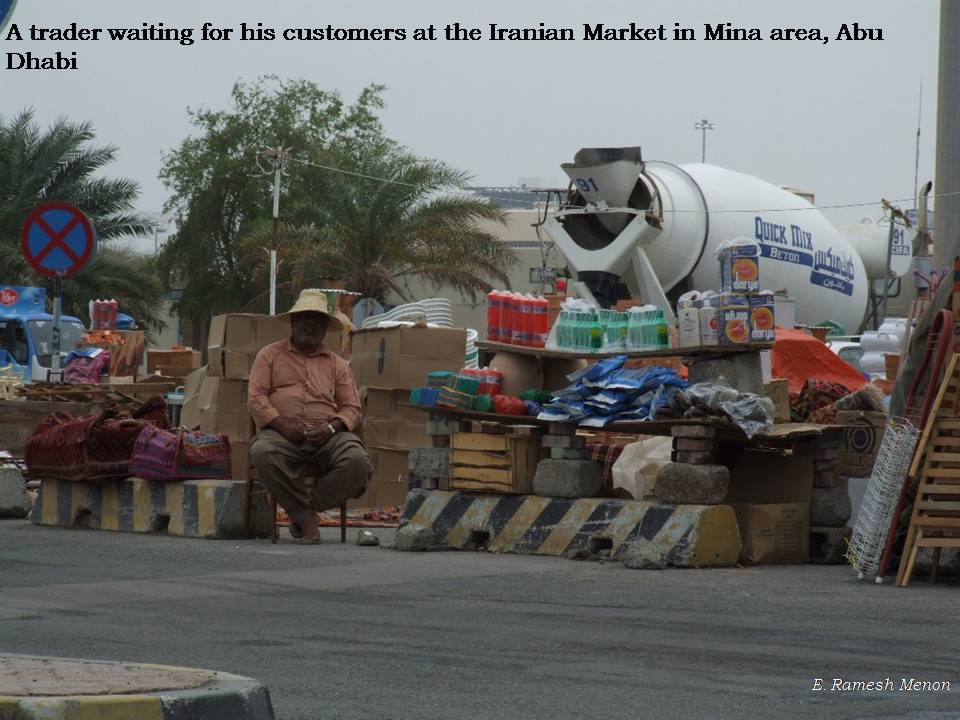
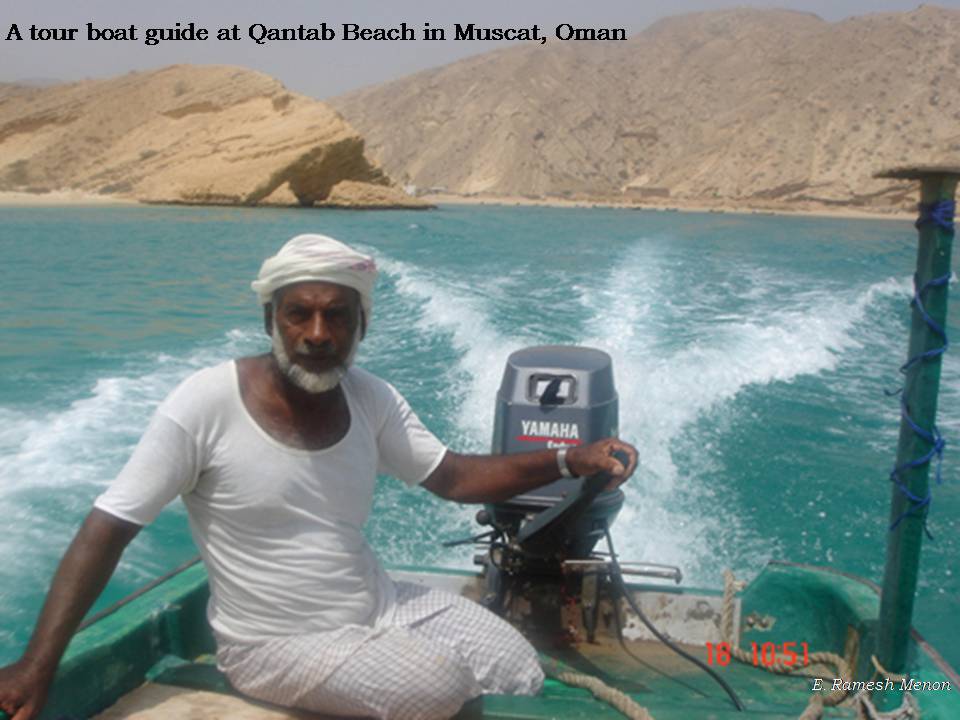
Holidays and festivities happen and most of are lucky to get holidays and relax and enjoy with friends and family. Here are some unsung heroes, working silently during the holidays, to keep our environment clean, to keep us happy and more. I take this opportunity to present of few whom I came across on my way.
A vendor at the local Iranian Market (Mina Market) Abu Dhabi waiting for customers
A boat driver at a tourist spot in Muscat
A boat driver on duty at Madinat Jumeirah, Dubai

Reflections of Unsung Heroes – an Abu Dhabi Municipality worker keeping the beachfront clean
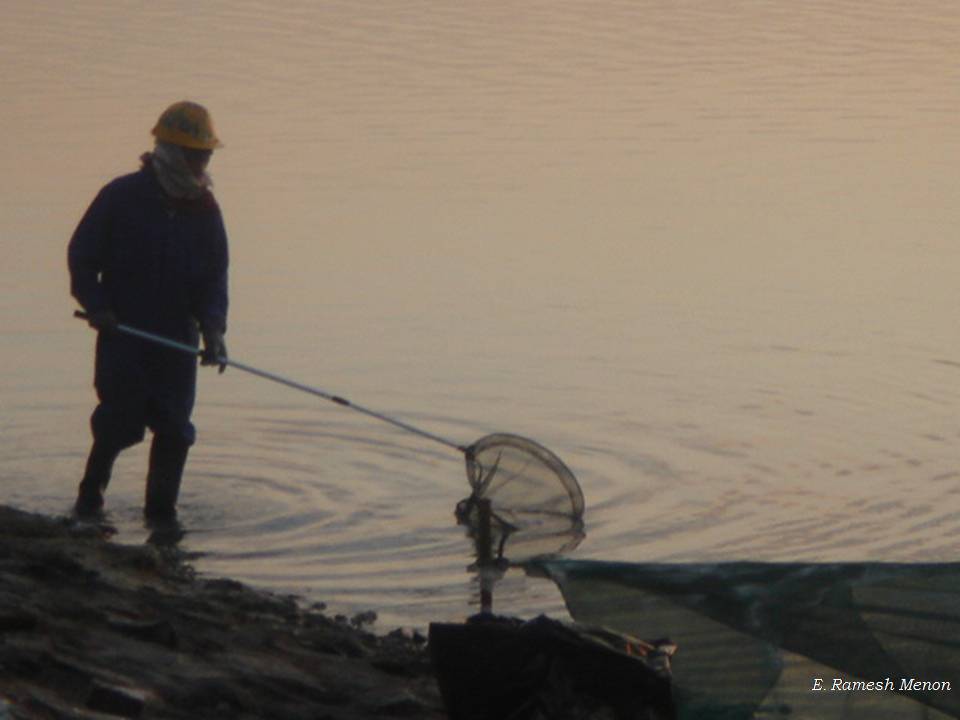
Reflections of Unsung Heroes – an Abu Dhabi Municipality worker on duty – keeping the city clean
We too need rest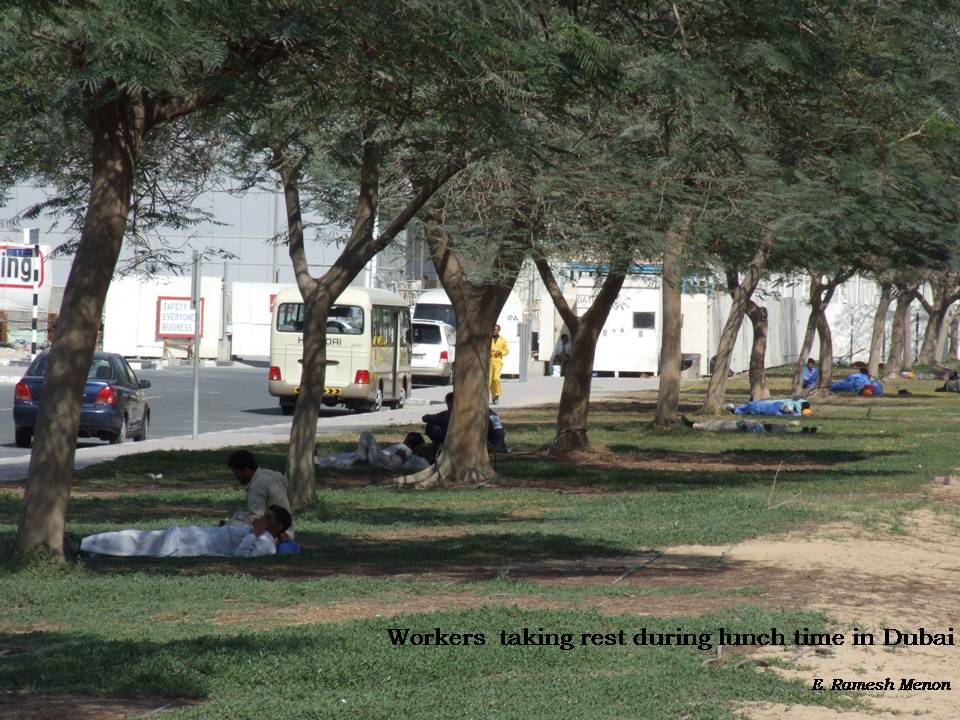
Relax and enjoy life as it happens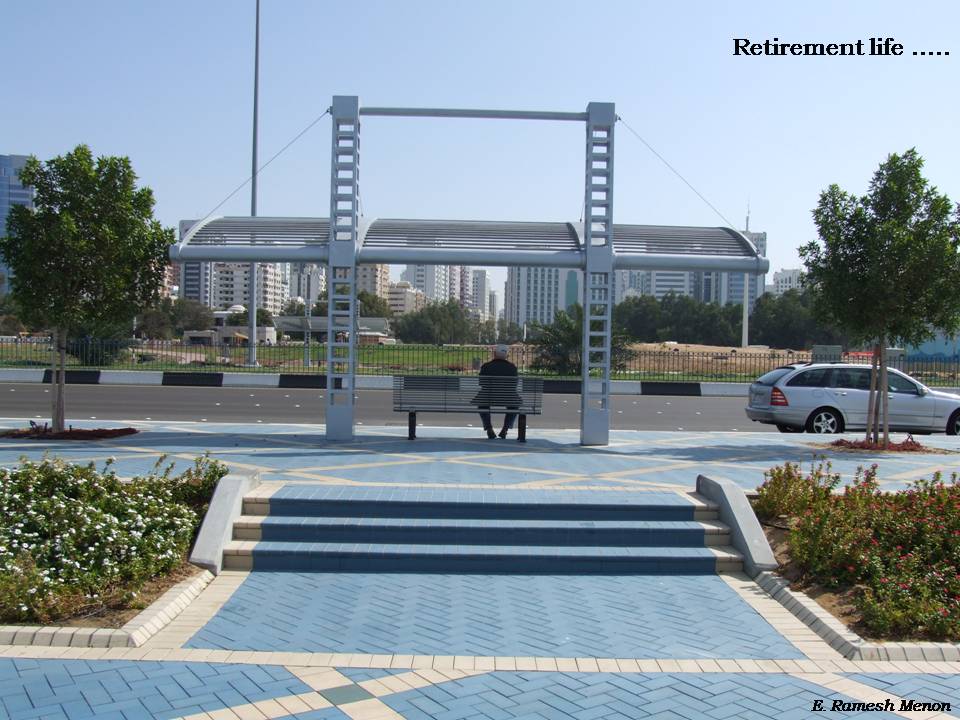
Money Matters – End of Day Review – Thursday, 3rd January 2008
Money Matters – End of Day Review – Thursday, 3rd January 2008
Global jitters shy away investors; Sensex loses 120 pts
3 Jan, 2008, 1805 hrs IST,Crystal Barretto, INDIATIMES NEWS NETWORK
MUMBAI: After soaring to all time highs, indices pared gains as weak global cues and sky rocketing oil prices got the better of investors.
Weak manufacturing data released late on Wednesday in the US further triggered fears of a recession. To add to that, crude oil zoomed to $100, mounting inflationary concerns and lessening the hopes of an interest rate cut by the US Federal Reserve.
Key indices across the globe slumped, and India was no exception. Mid-caps were fairly stable, but frontline shares bore the brunt, possibly on account of foreigners selling.
After setting a record high of 6230.15, the National Stock Exchange’s Nifty finally settled near the previous day’s close at 6178.55.
The Bombay Stock Exchange’s Sensex finished at 20,345.20, down 120.10 points or 0.59 per cent. The 30-share index charted a high of 20,519.70 and low of 20,293.87 intra day.
Major index gainers included NTPC (up 7.56%), Reliance Energy (6.42%), Hindustan Unilever (3.51%), ONGC (2.88%), Reliance Industries (1.44%) and DLF (0.24%).
Sensex losers comprised Grasim Industries (down 4.03%), ICICI Bank (3.03%), Wipro (3.03%), ITC (3.01%), TCS (2.95%) and Mahindra & Mahindra (2.83%).
“Weak international markets weighed down sentiment, and the hike in fuel prices only dampened the situation. But the outlook in the mid-cap space is still bullish. With global markets subdued, investors become wary of the large-cap space and don’t feel there’s much room for immediate upside. Also, with results season around the corner, investors are waiting for some cues before taking fresh positions,” said Viral Doshi, independent technical and derivatives strategist.
“Going by the discount in January Nifty futures, it appears traders are jittery at higher levels. One should refrain from going long in index futures till the 20,600 mark is breached on a closing basis in Sensex with substantial volumes. On the lower end, support comes at 20,250,” Doshi added.
Nifty January futures ended at 3-point discount to the spot, with 3.74 crore shares in open interest.
The BSE Mid-cap Index ended flat at 10,056.87 while the CNX Mid-cap Index was down 11 points at 9581.80.
Power shares posted smart gains. Torrent Power gained 20 per cent, NTPC climbed 7.56 per cent, Reliance Energy added 6.42 per cent and Tata Power was up 4.38 per cent.
Shares of cement companies took a beating with the Tamil Nadu government threatening to nationalise the units in the state if manufacturers fail to bring down prices to affordable levels. Grasim Industries, down 4.03 per cent per cent, was the biggest loser. Chettinad Cements followed with a fall of 2.2 per cent, Ambuja Cements slipped 1.82 per cent, ACC declined 1.64 per cent and Madras Cement was down 0.76 per cent.
TOP 5 GAINERS
Symbol, Curr.Price, % Change
GUJ INDS P, 173.90, 19.97
MOSER BAER, 337.85, 11.41
NTPC, 276.70, 7.56
HPCL, 399.45, 6.75
NEYVELILIG, 267.70, 6.67
TOP 5 LOSERS
Symbol, Curr.Price, % Change
INDO RAMA, 73.05, -5.56
SPICE TELE, 63.20, -5.46
FDC, 49.55, -4.99
MIRC ELTRN, 36.10, -4.87
CASTROLIND, 330.60, -4.75
TOP 5 VOLUME STOCK
Symbol, Curr.Price, Volume
RPL, 232.30, 13440701
ISPATINDUS, 76.90, 10951013
SPICE TELE, 63.20, 9226388
ASHOKLEYLA, 52.45, 7094260
POWER GRID, 151.70, 6830921
TOP 5 VALUE STOCK
Symbol, Curr.Price,Value (‘000)
REL, 2,517.40, 3953950.10
RPL, 232.30, 3136875.23
JAIPRAK AS, 473.35, 2030158.89
RIL, 2,902.90, 1782409.33
NTPC, 276.70, 1762653.97
3:34 PM – The market closes a bit quiet. Sensex closed at 20337, down 128 points (provisional) and Nifty at 6178, down 1 point (provisional) from the previous close. The CNX Midcaps Index and BSE Smallcaps Index both closed in the negative. But BSE Power Index closed up 3%. The market breadth was negative with advances at 522 against declines of 708 on the NSE.
4:13 PM – The market was volatile in late trade but closed a bit quiet. Sensex closed at 20345, down 120 points and Nifty closed at 6178, flat from the previous close. The CNX Midcaps Index and BSE Smallcaps Index both closed in the negative today. BSE Power Index closed up 3% and BSE PSU Index closed up 2.2%. The market breadth was negative with advances at 523 against declines of 709 on the NSE. Top Nifty gainers included NTPC, REL, Cairn India and Tata Power while losers included VSNL, TCS, SAIL and Unitech.
Top Performers from high-risk, high-returns category
Company ,Scheme ,Class ,Plan,Type
Reliance Diversified Power Sector Fund,Equity-Sector Fund,Growth,Open Ended,127.13
Reliance Diversified Power Sector Fund,Equity-Sector Fund,Bonus,Open Ended,127.13
JM Basic Fund,Equity-Sector Fund,Growth,Open Ended,115.83
Taurus Libra Taxshield,Equity-ELSS,Growth,Open Ended,114.56
Standard Chartered Premier Equity Fund,Equity-Diversified,Growth,Open Ended,109.55
 ClicksandWrites
You must be logged in to post a comment.