Stocks to pick: Reliance capital,Axis Bank, Moser Baer, Shree Cement
Stocks to pick: Reliance capital,Axis Bank, Moser Baer, Shree Cement
14 Jan, 2008,
Reliance Capital
Research: Macquarie
Rating: Outperform
CMP: Rs 2,768
Macquarie has initiated coverage on Reliance Capital with an ‘outperform’ rating and a target price of Rs 3,392, with a 23% potential upside. The company looks set to make a serious breakthrough into multiple segments of retail financial services. Macquarie believes the domestic financial services sector is in a period of high structural growth. The retail side of this is being driven by chronic under-penetration, which is being unlocked by changing demographics and greater availability and reach of products. The wholesale segment is being driven by significant acceleration in investment activity in the economy. Reliance Capital is entering a critical phase in most of its businesses, where it will start to grow aggressively and give a massive push to break into the top three.
It has already established its credentials by surging to the top spot in the mutual fund league tables, and is now starting to make an impact in insurance and broking/wealth management as well. Its core strengths remain its strong brand name, aggression in the market, deep pockets and execution capabilities. The stock looks expensive at >11x P/BV, even on a consolidated basis, but its holding-company-like structure makes it difficult to view it on traditional valuation parameters. Also, the market is factoring in its large unrealised gains on the equity portfolio, some of which include strategic holdings in other group companies.
Moser Baer
Research: JP Morgan
Rating: Underweight
CMP: Rs 289
JP Morgan retains its negative view on Moser Baer with a sum-of-the-parts based June ’08 price target of Rs 250. Risks to the target price include a sharp price increase in optical media. Monthly sales of Taiwanese optical media manufactures fell 15% month-on-month. December monthly sales also fell 36% year-on-year (YoY), indicating continued original equipment manufacturer (OEM) pricing pressure. Optical media sales fell 14% quarter-on-quarter (QoQ) and 30% YoY during the second quarter. JP Morgan expects subdued pricing to continue, especially in DVD-R, leading to weak margins. On January 4, ’08, Warner Brothers (WB) announced that it will exclusively support the Blu-ray format. This is a major positive for the Blu-ray format as WB has the largest market share (18-20%) in the US and earlier supported both formats. As greater clarity emerges on the next-generation DVD format, JP Morgan believes that adoption will accelerate, but expects significant volumes only in late ’09. The photo voltaic business may face significant margin pressure going forward, led by higher poly-silicon prices in the near term and rising competition in the long term once the supply tightness eases.
Axis Bank
Research: CLSA
Rating: Buy
CMP: Rs 1,167
Axis Bank can trade up to 25x 12-month forward P/E based on its strong growth trajectory, and reiterates ‘buy’ rating on the stock with a price target of Rs 1,300. Axis Bank’s Q3 FY08 profit grew 66% YoY to Rs 310 crore, ahead of estimates, led by strong growth in core operations and higher treasury gains. Despite moderation in sector loan growth, Axis Bank’s loan book grew 50% YoY led by corporate and agricultural credit. Retail loans as a percentage of total loans fell to 25% (29% in December ’06). Despite strong loan growth, asset quality improved, gross non-performing loans (NPLs) fell 5% YoY, while net NPLs declined 12% YoY. Gross NPLs are now at 0.8% of advances and coverage has improved to 50%. Net interest margins (NIMs) expanded 90 bps to 3.9%, of which, 30 bps was due to the bank’s recent capital-raising.
Cost of funds declined by 45 bps QoQ due to capital-raising and aggressive growth in low-cost demand deposits. Cost pressures for Axis Bank continue; while employee costs have increased 51% YoY, other operating costs have risen 75% YoY (partly due to rising rentals for new branches). Treasury gains also increased sharply due to a buoyant equity market and some reversal of mark-to-market hit on the bank’s bond portfolio. Axis Bank, with Tier-1 capital of 12.6%, is well-capitalised to leverage on rising credit demand.
Shree Cement
Research: Merrill Lynch
Rating: Neutral
CMP: Rs 1,325
Shree Cement’s operating performance in Q3 FY08 was a tad better than expectations due to lower-than-expected rise in costs. Q3 EBITDA/tonne was up 2% QoQ versus flattish forecast. Contrary to expectations, Shree’s power and fuel costs fell 8% QoQ in Q3 FY08. Shree stated that higher blending had offset the impact of rising pet-coke prices. Overall, operating cost per tonne was up 3% QoQ, in line with the improvement in cement prices. Reported net profit fell 66-67% YoY to Rs 35 crore, due to accelerated depreciation. For the industry, the window of opportunity to increase cement prices is short (1-2 quarters), as nearly 49 million tpa (mtpa) of new capacity is expected to be commissioned by March ’09. Merrill Lynch is also uncomfortable about the recent uptick in clinker inventory across the industry, including North India.
The upside to cement prices in the North may be capped in the near term due to recent large capacity expansions by both Binani and Shree Cement. Merrill Lynch expects Shree to post flattish earnings in FY09E. Despite likely strong volume growth of ~30% YoY, FY09-EBITDA growth may be modest at ~8% YoY due to forecast of a downturn in cement prices by end-CY08. Shree is evaluating greenfield capacity expansion in Madhya Pradesh as part of its long-term plans. This is unlikely to impact cash flows over the next year or so. In the next six months (by Q1 FY09E), Shree will commission further 1.5 mtpa expansion at Ras, thereby taking its composite capacity to 9 mtpa versus 7.5 mtpa currently.


Left side is the right side to get out of bed

Left side is the right side to get out of bed
Sydney, UNI:
Sleep scientists, feng shui experts and psychologists analysed the best way to get up in the morning and have claimed ”Left is best”.
Just don’t jump out of bed as you get up after a good night sleep but make a habit of leaving your duvet from the left side.
According to a recent study, getting out of bed on the left side is the right side.
Sleep scientists, feng shui experts and psychologists analysed the best way to get up in the morning and have claimed ”Left is best”.
Feng shui expert Jan Cisek said getting out of the bed on the left side led to progress in family, health, money and power.
The left side helped humans to think rationally about the day ahead, the Australian quoted psychologist Pete Cohen as saying.
”The right side of the brain is responsible for emotions like fear and stress which only dilute your potential for having a positive experience,” he said.

Sound of Rain
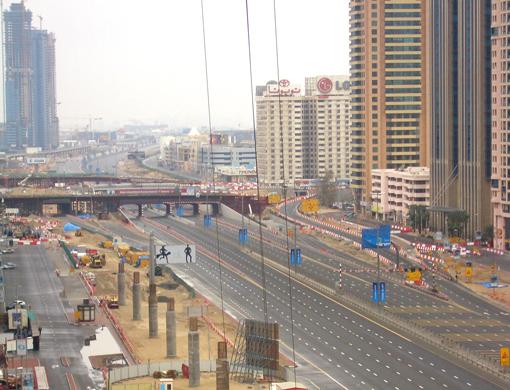
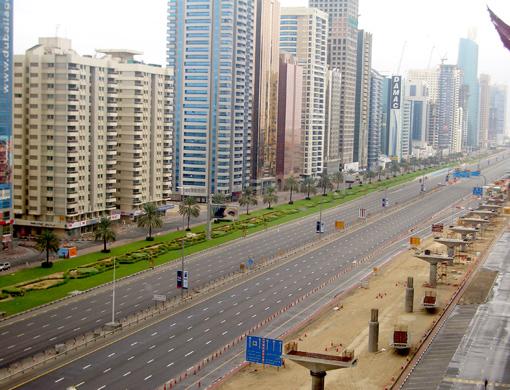
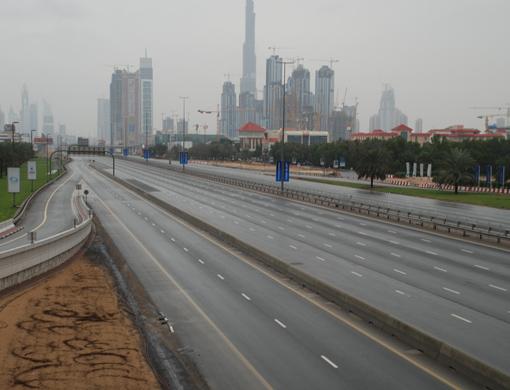
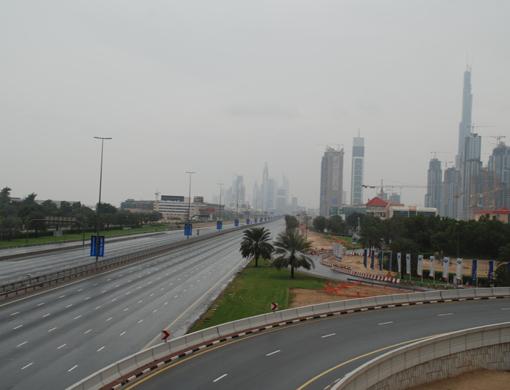
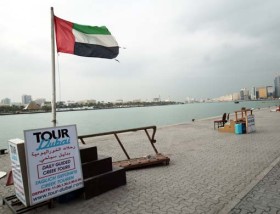
UAE welcomed US President George Bush for a two day visit to the country. I think it was a special welcome by rain god to mark the state visit of this special guest. Enjoy a few moments of this once in a year event as far as UAE is concerned. rain is very special for us. I am following lots of music these days and listening to music all around and share the sound of rain with you all. Listen/view carefully and you too can hear the sound of music in it.
Rain or sunshine, enjoy life as it comes…
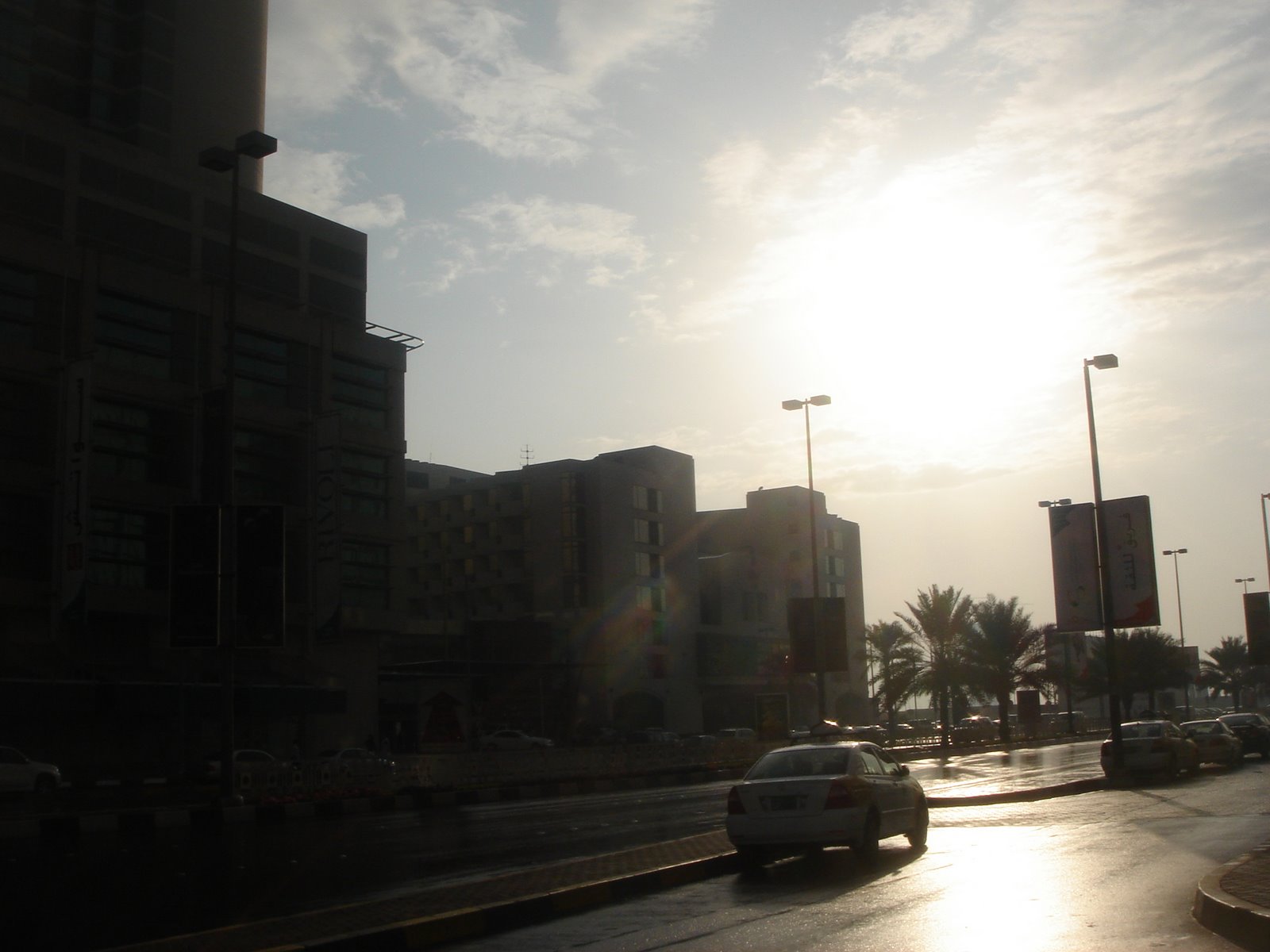
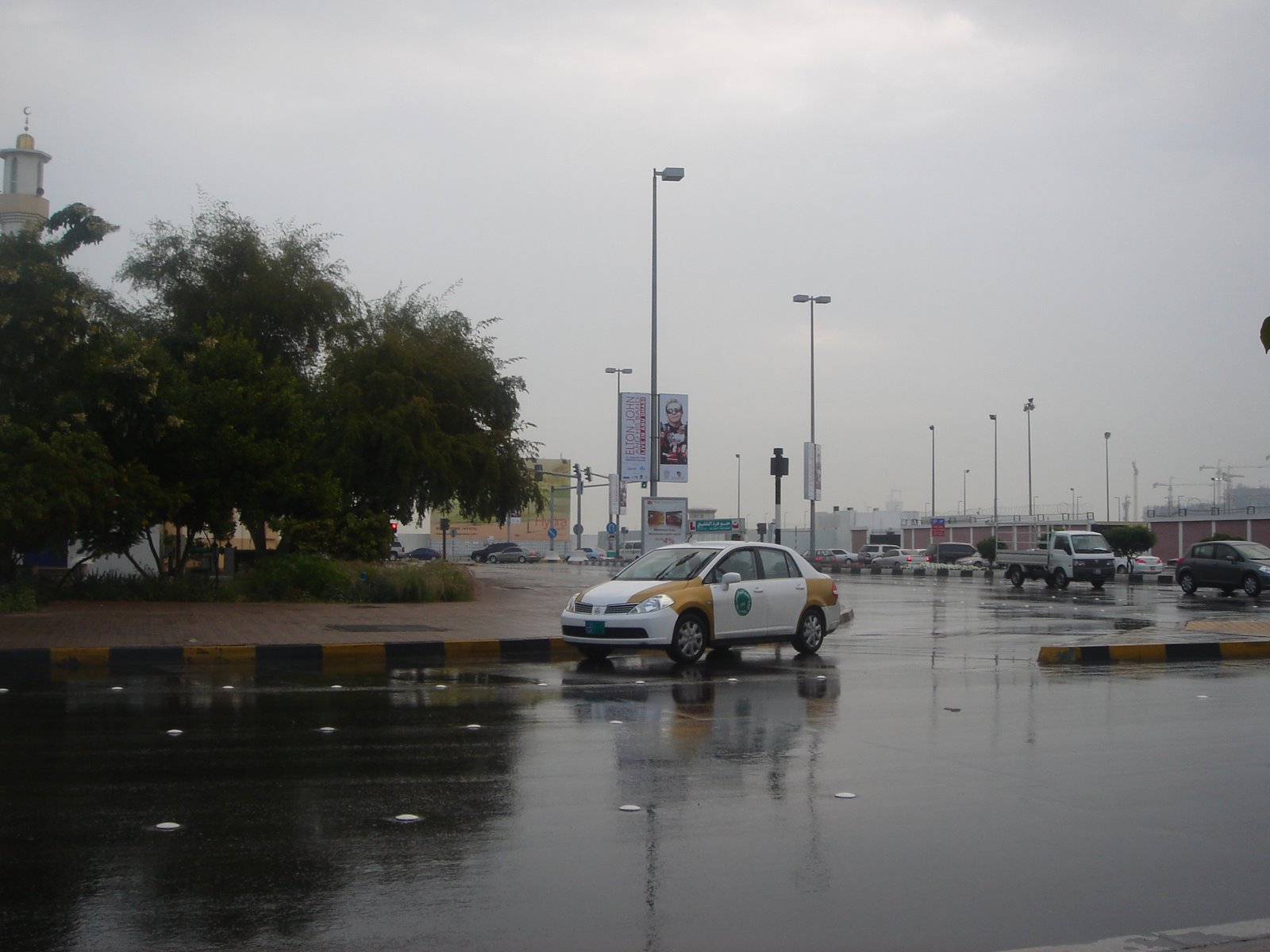
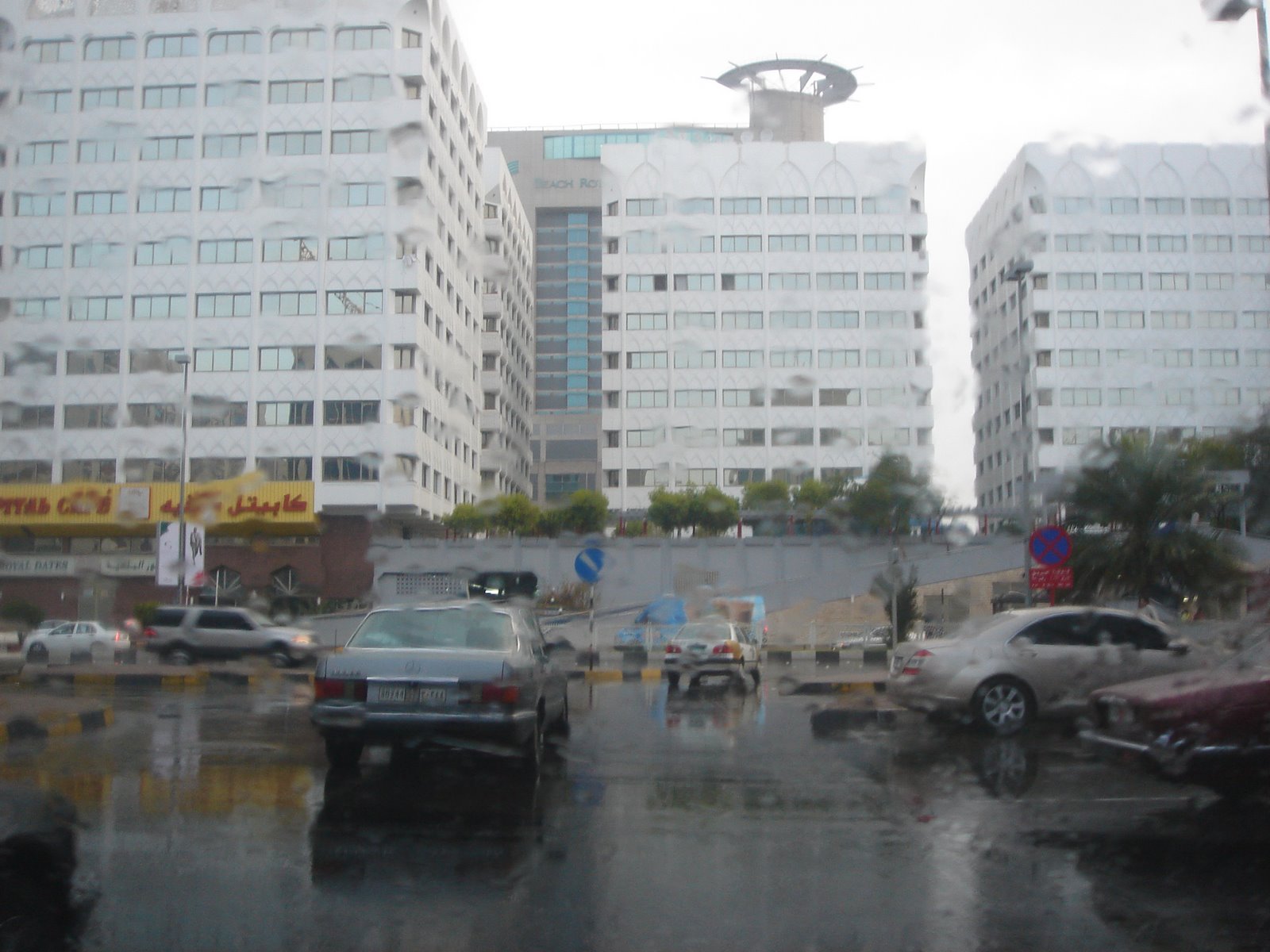


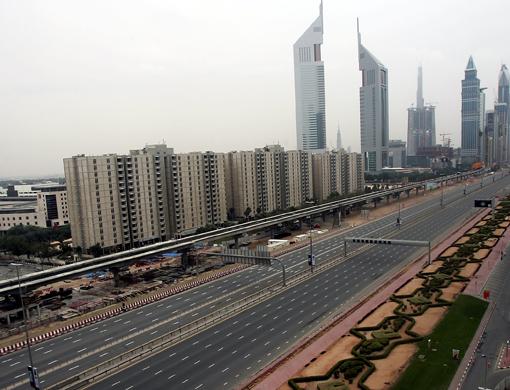
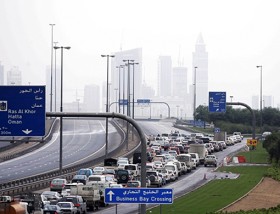
A holiday has been declared tomorrow for all instituitions private and public in Dubai. Do not venture out in your car as most of the roads are blocked. So take this opportunity, get set with your children, your camera and explore the beautiful developments that’s happening around, a view which normally you don’t see during your rush to and from office. Capture them and send them to me. I will be glad to post them. Because, we will be working when you holiday.
Want bulging muscles? You need cholesterol
Want bulging muscles? You need cholesterol
New York: Cholesterol may play a role in increasing muscle mass and help in muscle repair, show the results of a new study.
Cholesterol is a waxy, fat-like substance that occurs naturally in all parts of the body. The liver manufactures it from the fat consumed by us.
High cholesterol level in the body is known to cause several illnesses, including heart disease. However, researchers at the Texas A&M University have found that it may also be beneficial.
The researchers studied 55 men and women, aged between 60 and 69, who were healthy non-smokers and were able to perform exercise tests.
Three days a week for 12 weeks, participants performed several exercises, including stretching, stationary bike riding and vigorous weight lifting, according to a report posted on the website of the university.
At the conclusion of the study, the researchers found that there was a significant association of dietary cholesterol and change in strength. In general, those with higher cholesterol intake also had the highest muscle strength gain.
“Lower cholesterol levels can actually reduce muscle gain with exercising. More cholesterol may result in a more robust inflammatory response. We know that inflammation in some areas, such as near the heart, is not good, but for building muscles it may be beneficial, and cholesterol appears to aid in this process,” lead researcher Steven Riechman said.
New law aims to cut soaring road deaths

New law aims to cut soaring road deaths
By Rayeesa Absal, Staff Reporter GULF NEWS Published: January 12, 2008, 23:29
Abu Dhabi: The traffic department has come up with tougher regulations that will come into effect from March, with the aim of bringing down the death toll related to traffic accidents.
Gulf News spoke to Colonel Gaith Al Za’abi, Director of Traffic Department at Ministry of Interior, to find out more.
Gulf News: Could you tell us about the upcoming changes in the traffic law?
Colonel Gaith Al Za’abi: Fourteen changes have been made to the existing Traffic Law, which will come to effect from March 1. We are looking at cutting down the number of traffic accidents by 5 per cent. As per the instructions of Lieutenant General Shaikh Saif Bin Zayed Al Nahyan, Minister of Interior, a committee was formed with members of the traffic department of each emirate, and we after much discussion decided upon these amendments.
The traffic death toll in the country hit 852 last year. This is not a small number. We need effective measures to bring down this figure.
How would the amended laws help in cutting down accidents?
The committee identified four targets. Reducing the number of accidents, reducing traffic jams, increasing awareness and developing a traffic culture and reducing the number of accidents involving pedestrians. To achieve each target, a detailed action plan has been drafted.
Dh20,000 will be the minimum fine for serious offences and the penalty may also include a jail term, as per the court ruling. In addition to the heftier fines and jail terms, we will also implement a black points system.
What are the main challenges ahead for your department?
Increasing the awareness of people is one of the challenges. Pedestrians who do not cross at designated areas is a major cause of concern. Some motorists also do not respect the rights of the pedestrians. Making people aware will help reduce many accidents.
According to the new law, if a person crosses a road which has a speed limit over 80kmh then he/she would be held responsible for an accident. The growing number of pedestrian-related accidents and deaths has led the authorities to reach this decision.
But there are many areas that do not have proper pedestrian crossings?
The necessary infrastructure developments to support this law would be carried out simultaneously.
Those who talk on mobile phones while driving is another issue. These people slow down sometimes on highways which can be dangerous for them as well as others.
What measures will be taken to improve the public’s awareness?
Four programmes are being finalised for this. Our aim is to make the roads safer for all road users and for this we will reach out to all residents in the country. Lat year, approximately 25 per cent of accidents involved UAE nationals, 49 per cent involved Asians and 19 per cent involved Arab nationals.
These programmes will be relayed using visual, audio and print media, later this year. And this will play a significant role in developing a traffic culture.
Some of the emirates have local bodies that deal with traffic rules. How will this be tackled?
Cooperation between the emirates is part of our agenda. This is a federal law and all the emirates will implement it. The agenda discusses the use of latest technology, development of new methodologies to positively affect road users, bringing about changes in road engineering and helping other emirates develop their infrastructure.
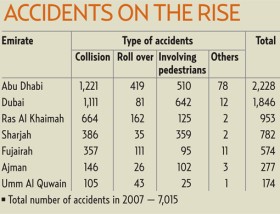
What are the main causes of accidents?
According to our statistics, speeding is a major cause. Not maintaining adequate distance from other vehicles and entering roads without verifying if the road is clear also cause many accidents.
Wind turbine for homes to reduce costs naturally
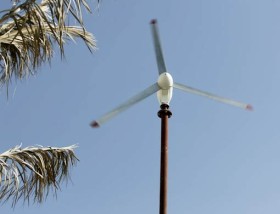
Wind turbine for homes to reduce costs naturally By Emmanuelle Landais, Staff Reporter GULF NEWS Published: January 12, 2008, 20:30
Dubai: Miniature wind turbines or solar powered water heaters now available in the market could reduce your home energy bill by 20 per cent and reduce carbon emissions to combat global warming.
For around Dh6,000 a mini wind turbine can be connected to the circuit breaker of a house and with an extra electricity inverter can power your home’s electrical needs. This does not power air conditioning.
Turning your home into an energy saving unit with the flick of a switch is the future, said Dilip Rahulan, chief executive director of Pacific Controls, who is shortly going to put on the market a Ubiquitous Box, or U-Box, which can monitor all sensors in your home and optimise their use.
Pacific Controls, which recently opened their headquarters in Dubai’s Techno Park as the Middle East’s first Platinum rated green building because of its energy saving facilities, has developed the small wind turbine for homes.
Combining the wind turbine with a U-Box will reduce energy consumption by using motion, temperature and timer sensors that can calculate when air conditioning, lights and taps should be switched on and for how long.
“This will help us find out where energy is being used. People go on a holiday and leave the air conditioning on, or the lights and with this system we will know if something is working that could be switched off,” said Rahulan.
“Savings of 20 per cent in energy use can be achieved in all properties. We started this with Emaar 20 months ago. We manage all pumps and streetlights to reduce energy consumption,” he added.
Homes and businesses will now be able to do the same with the Green Home and Green Building Systems which monitor use and waste of energy through a central command centre that can tell how full a water tank is, or what the temperature of a hotel lobby is.
Showers can even be set to switch off every three minutes.
“Through measurement and verification we will be able to monitor carbon footprint in homes. We are hoping to get LEED certification so residents can earn carbon credits. We will be able to tell how buildings are performing or [locate] any leaks,” said Rahulan.
Dubai budget surplus to hit Dh11.4b in ’08
Dubai budget surplus to hit Dh11.4b in ’08(Wam)
13 January 2008
DUBAI — His Highness Shaikh Mohammed bin Rashid Al Maktoum, Vice-President and Prime Minister of the UAE and Ruler of Dubai, has issued in his capacity as Ruler of Dubai, Decree no. 8 for 2008, announcing the budget of the emirate, which is expected to touch a surplus of Dh11.4 billion compared to Dh5.1 billion in 2007.
Dubai’s revenues for fiscal year 2008 are expected to touch Dh135 billion, while planned spending is estimated at Dh123.6 billion.
Dubai’s non-oil sector has scored success in regard to production rate through the emirate’s endeavours to expand and diversify revenue sources and base of income.
According to the financial report, the contribution of oil sector to the projected gross domestic product (GDP) in 2008 will be four per cent. The share of Dubai’s public sector in the balance sheet was 21 per cent, while the contribution of the economic sector was 79 per cent.
Shaikh Mohammed has also issued Law no. 29 for 2007 on budgets of the Departments of Dubai Government in the year 2008. The budgets are put at Dh26.5 billion, in which expenditure was distributed as per the strategic plan. Salaries and wages totalled 28 per cent, while the administrative and general expenditure were 32 per cent. The developmental and projects accounted for 40 per cent of the budget of the government departments.
“The endorsement of the Dubai emirate’s balance sheet by Shaikh Mohammed reflects the keenness of Dubai government on its major role in the achievement of targeted economic and social aspirations’, said Secretary-General of the Dubai Executive Council Ahmed bin Bayat. He noted the attention paid by Shaikh Mohammed to members of the community through his emphasis on making economic development go hand in hand with social development.
Director-General of Dubai Finance Department Sami Dhaen Al Qamzi said the 2008 budget reflects new dimensions and shows a growing attention is being paid to infrastructure projects as per international standards.
Mercury dips to zero in Al Ain
Mercury dips to zero in Al Ain
By a staff reporter KHALEEJ TIMES 13 January 2008
DUBAI — Mercury dipped to zero degree Celsius in Al Ain as the the UAE experienced light to heavy showers in the past 24 hours since Thursday evening, triggering accidents that killed two people and injured scores of others.
Abu Dhabi’s Abu Al Bukhoosh Island received the highest rainfall of 14.4mm, according to a senior duty forecaster at the National Centre of Meteorology and Seismology in the capital.
The forecaster said the sky would remain cloudy with showers across the UAE and heavy rains predicted particularly in the northern parts of the UAE.
 ClicksandWrites
You must be logged in to post a comment.