The advantages of taking the biology stream at the higher secondary level
The advantages of taking the biology stream at the higher secondary level
B.S. WARRIER for THE HINDU
We explore the range of higher study options available for those opting for the biology-physics-chemistry combination at the higher secondary level.
Successful: Graduate doctors during a convocation function of AIIMS, New Delhi.; studying there could be an option for those who have chosen biology, physics and chemistry.
Those who have studied biology, physics and chemistry as optional subjects in the higher secondary classes can go for medical and allied degree programmes. Several States conduct joint entrance examinations that lead the candidates to a wide variety of medical and agricultural courses. For example, the medical-agricultural entrance examination in Kerala opens the door to 15 Bachelor’s degree courses — MBBS, BDS (dental surgery), nursing, pharmacy, medical labor atory technology, Ayurveda, homoeopathy, Siddha, nursing (Ayurveda), pharmacy (Ayurveda), physiotherapy, agriculture, fisheries science, forestry and veterinary science.
In some States, marks in the higher secondary examination are the basis of selection. There are instances when the ranking is made based on the aggregate of the marks in the higher secondary examination and in an entrance examination.
Let us now look into the possibilities for selection at the national level.
•All-India Pre-Medical and Dental Entrance Examination: Participation in this examination gives the candidates access to 15 per cent seats in the MBBS and BDS programmes in all public sector medical and dental colleges in India. However, Andhra Pradesh and Jammu and Kashmir are not in the scheme.
The total seats available are much more than the total number of seats in all the government and aided medical and dental colleges in any one State.
Usually, students prepare well for the entrance tests in their respective States, and appear in the all-India test based on the strength of this preparation. It should be borne in mind that one should make special preparation in tune with the demands of the particular competitive test in which one intends to appear.
Special preparation has, therefore, to be made for appearing in the All-India Pre-Medical and Dental Examination, although the syllabi are more or less the same for all the medical entrance tests in the country.
•The All India Institute of Medical Sciences, Ansari Nagar, New Delhi – 110 608
•Christian Medical College, Vellore and Ludhiana: The candidates can apply for admission to a variety of degrees courses in medicine, physiotherapy, occupational therapy, nursing and medical laboratory technology. The majority of seats are reserved for students belong to the Christian community. Certain supporting bodies and churches have been authorised to certify candidates under the sponsored category. Christians who have applied under the sponsored category will be given a test of Bible knowledge.
•Jawaharlal Institute of Postgraduate Medical Education and Research (JIPMER ), Puducherry.
•The Armed Forces Medical College (AFMC), Wanowrie, Pune. A total of 130 seats (105 for boys and 25 for girls) are available. No fee has to be paid. Accommodation is provided free of cost. Rations, book allowance, uniform allowance, AC 3-Tier railway warrant for journey during vacation from college to home and back, and other facilities are provided to the selected candidates. The candidate must be in good physical and mental health, and free from any disability which is likely to bar them from serving in the Armed Forces. On completion of the course, the candidates will be commissioned as officers in the Armed Forces Medical Services.
•The Institute of Medical Sciences, Banaras Hindu University, Varanasi, selects candidates for admission to MBBS and BAMS (Ayurveda) degree courses.
•The Mahatma Gandhi Institute of Medical Sciences, Sevagram, Wardha, conducts an entrance test that comprises a descriptive paper on Gandhian thought, in addition to the usual objective paper in biology, physics and chemistry. The test is usually held at Hyderabad, Nagpur, Mumbai and Delhi.
•Bharati Vidyapeeth University, Pune: Any Indian national who satisfies the conditions of eligibility with regard to educational qualification and age can seek admission to the MBBS programme in the medical colleges at Pune and Sangli.
•Manipal University: Kasturba Medical Colleges at Manipal and Mangalore
•Sri Ramachandra Medical College and Research Institute, Porur, Chennai, 600 116: MBBS, BDS, BPT, B.Sc. (nursing), B.Pharm. and B.Sc. (speech and hearing)
•Annamalai University, Annamalainagar, Tamil Nadu: MBBS, BDS, BPT and B.Sc. (nursing)
•All-India Agricultural Entrance: The ICAR (Indian Council of Agricultural Research) holds an entrance examination every year at the national level for selection of candidates to 15 per cent seats in all public sector institutions running Bachelor’s degree courses in agriculture, horticulture, forestry, fisheries, sericulture and so on. The institutions include 39 State agricultural universities, the Central Agricultural University, Imphal, and Central universities having Agriculture faculty — namely Banaras Hindu University, Visva-Bharati and Nagaland University. All the seats in the degree course in dairy science at the National Dairy Research Institute, Karnal, are filled based on the ranks in this test. Further, these ranks decide the selection of candidates for the National Talent Scholarship (NTS). A scholarship of Rs. 1,000 a month will be awarded to all those selected in this examination and join any university in ICAR-SAU (State Agricultural University) system, located outside their State of domicile.
•All-India Veterinary Entrance Examination: The Veterinary Council of India conducts a common entrance examination at the national level for selection of candidates for admission to 15 per cent seats in the B.V.Sc.&A.H. (Bachelor of Veterinary Science and Animal Husbandry) course in all public sector institutions in the country. Jammu and Kashmir, however, does not come under the scheme. Job prospects are bright for veterinary graduates.
One may not scale great heights in the field of medicine on the strength of an MBBS degree.
Even for normal practice, patients will look for doctors with postgraduate or super-specialty qualifications.
But in the veterinary field, normal practice can flourish with a Bachelor’s degree. If, however, a candidate seeks admission to a postgraduate degree programme, it would not be difficult to achieve, since most of the veterinarians carry on with their practice on the strength of the first degree.
Opportunities are there in animal husbandry departments of State governments, cattle, dairy and poultry farms, piggeries, zoos, private veterinary hospitals, remount veterinary corps in the armed forces, pharmaceutical industry, wildlife preserves, sanctuaries, racecourses, cattle breeding units, research laboratories and so on. There is good scope for private practice as well.
Visva-Bharati invites applications
Visva-Bharati invites applications
K. VIJAYA BHASKARA REDDY for THE HINDU
Visva-Bharati University, Santiniketan, is inviting applications for the academic year 2008-09. The university established by the Nobel laureate Rabindranath Tagore stands out for its academic excellence and the diversity of the courses that it offers. The university institutes are offering the following courses.
The Institute of Humanities and Social Sciences (Vidya-Bhavana) offers BA courses in Sanskrit, Bengali, English, Chinese, Hindi, Japanese, Oriya, Indo-Tibetan studies, philosophy, economics, history, Persian, ancient Indian history, culture and archaeology, comparative religion, geography, journalism and mass communication, functional Hindi and mathematics. For Persian, Tibetan, Chinese and Japanese, the course is of four years, including a year’s preparatory work. The institute also offers MA programmes in all these subjects.
The Institute of Science (Siksha-Bhavana) is offering Master’s programmes in physics, chemistry, mathematics, zoology, botany, statistics, environmental science and computers. The Bachelor’s degree is offered in all these subjects, except environmental science. The Institute of Music, Dance and Drama is offering B.Mus. and M.Mus. courses in Rabindra Sangit, Hindustani classical in both vocal and instrumental (Sitar/Esraj/Tabla/Pakhawaj), Kathakali and Manipuri dance.
The Institute of Fine Arts (Kala-Bhavana) offers BFA, MFA, Casual Course, Diploma and Advanced Diploma in Painting, Sculpture, Mural, Graphic Art (Print Making), Design (Textile/Ceramic) and History of Art (only for BFA and MFA students), two-year certificate course in Design and three-year bridge course in History of Art (leading to MFA).
The Institute of Agriculture (Palli Siksha Bhavana) offers four-year B.Sc in Agriculture (Honours) and M.Sc. in Agronomy, Plant Protection, Agricultural Extension, Soil Science & Agricultural Chemistry and Horticulture.
The Institute of Rural Reconstruction (Palli Smagathana Vibhaga) offers M.A. and M.Sc. in Anthropology, M.A. Rural Development, MSW, BSW (Honours), three-year diploma in Textile Technology (Handloom), Furniture Technology & Interior Design, Pottery and Ceramic Technology. The Institute of Education (Vinaya-Bhavana) offers M.A. Education, B.A. and B.Sc. (Honours) in Physical Education and one-year B.P.Ed.
Interested students can obtain application from the office of the Deputy Registrar (Academic & Research) against a crossed demand draft (Rs. 200 – general category, Rs. 70 for the Scheduled Caste and Scheduled Tribe category and Other Backward Caste students) in favour of ‘Visva-Bharati, Santiniketan’ and payable at ‘State Bank of India, Santiniketan Branch (code: 2121)’ along with a self-addressed envelope affixed with postage stamps of Rs. 40. Applications are also available at select branches of the Union Bank of India in major cities from June 4 to 30. The last date for receipt of applications is June 30. For further details, log on to http://www.visva-bharati.ac.in
Merging classroom and distance learning
Merging classroom and distance learning
IGNOU has been promoting a convergence between the conventional university and ODL systems. G. KRISHNAKUMAR makes an appraisal.
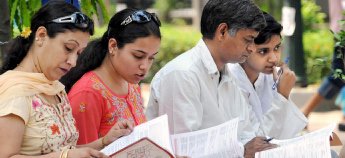
No barriers: The IGNOU plan for a synergy between conventional and distance learning systems will enhance educational access.
The Indira Gandhi National Open University (IGNOU) is actively promoting convergence between the conventional university system and the open- and distance-learning (ODL) system.
It is being done through enhanced and optimal utilisation of the physical facilities and intellectual and knowledge resources available in various colleges.
IGNOU’s ambitious plan is to have a flexible convergence system by clustering institutions and encouraging maximum use of existing resources.
Credit transfer and mutual recognition of programmes both in the ODL and conventional systems are some of the steps being initiated to achieve the target.
Vice-Chancellor V.N. Rajasekharan Pillai elaborates: “Latest technological aids and support through satellite-based education are also being used to address the areas of convergence of educational systems and enhance flexible and blended learning. Internationally, ODL and technology-enabled distance education is gaining acceptance for mass higher education in the areas of liberal arts, humanities, social sciences, languages, literature, mathematics, statistics, teacher education, commerce, computer and information sciences, management sciences and, to a considerable extent, even in basic experimental sciences.”
Prof. Pillai said that enhancing access through conventional expansion required doubling of the physical facilities and human resources in higher education institutions and that was rather difficult to realise. “To partially overcome these constraints, a synergy of ODL and conventional systems is the proposed viable alternative. The objective of the scheme is to achieve the projected targets related to access and equity in higher education during the 11th Plan. A convergence between the conventional university system and the ODL system in colleges is an integral part of this scheme,” he said.
Collaboration
IGNOU will collaborate with all universities coming under the purview of sections 2f or 3 of the University Grants Commission (UGC) Act. It will initiate joint programmes with colleges having potential for excellence. The university will collaborate with autonomous colleges and affiliated colleges. Professional colleges that are recognised by their respective statutory councils will be included.
Collaborating institutions will have the opportunity to offer enhanced access programmes.
Prof. Pillai said that institutions could offer undergraduate and postgraduate programmes of IGNOU. “The scheme provides for a combination of use of printed self-learning course material and face-to-face academic counselling enabled by technology. Institutions will be provided all the printed course materials, multimedia materials and technological support,” he said.
An additional two to four hours daily (between 4.30 p.m. and 8.30 p.m. or an hour in the morning and two to three hours in the evening) and six to eight hours during the weekends suiting the convenience of the colleges will be a viable proposition for holding contact sessions. Teachers from the college can be involved in the teaching and coordination of the activities when such sessions are held in the colleges.
Value-added programmes will be offered under the convergence scheme. Undergraduate and postgraduate students of the colleges concerned and adjoining institutions can enrol for certificate and diploma programmes of IGNOU as a value-added programme. The mode of programme transaction may be either face-to-face or ODL.
If an institution opts for face-to-face mode, the entire course material (print and audio-video) will be provided by IGNOU. The college will transact the curriculum and examinations will be conducted as per the university schedule. If an institution opts to host the programmes through ODL, then, IGNOU will provide the course material and the faculty will be oriented to offer the curriculum.
Dual courses
Regular students enrolled in colleges through the conventional system may simultaneously enrol for a degree of the same level in IGNOU. In such cases, credit transfer will be given due consideration through a memorandum of understanding (MoU) between IGNOU and the university concerned. Institutions that wish to enter initially into this MoU will offer IGNOU syllabus through ODL/face-to-face teaching. Faculty will be trained to conduct contact sessions, conduct assignments and tests.
Some new programmes leading to a joint degree between two universities will be mutually identified by IGNOU. The programmes will be jointly formulated and IGNOU will supplement the face-to-face instruction of the conventional university with ODL component. Technology and multimedia support will be provided by IGNOU. Evaluation and examination will be handled as per the IGNOU pattern.
The university will provide the expenditure towards transacting the programmes. It will also provide capacity-building training programmes to teachers in the use of information and communication technology as a pedagogical tool. The college will provide adequate furniture, classrooms, library facilities and computers to supplement IGNOU’s assistance.
For colleges opting to conduct certificate/diploma programmes of IGNOU through the face-to-face mode, students will be enrolled from the respective college and adjoining institutions.
The college will be required to maintain an attendance register for all candidates enrolled. For all certificate and diploma programmes, a walk-in policy of admissions will be adopted for enrolling students round the year .
One of the senior faculty members with high motivation and dedication will be appointed coordinator for all the programmes offered by the college through the convergence scheme. He or she will be responsible for maintaining coordination between the various programmes in-charge/faculties to ensure effective implementation of the scheme.
Dr. Pillai said the faculty for various modules could be drawn from within the college.
The service of retired faculty members from university or postgraduate departments of colleges could also be taken for the implementation of the scheme. For programmes offered through the face-to-face mode, classes will be organised at different times. The timetable of the classes should be announced in the beginning of the session, he said.
Students will be encouraged to form study groups wherever possible.
Audiovisual and multimedia materials of IGNOU will be used to supplement the process of teaching and learning.
Pointing out that the university has one of the largest repositories of educational materials in multimedia format, Prof. Pillai said that teleconferencing, videoconferencing and other technological facilities would be provided or arranged through the regional centres of IGNOU across the country.
According to IGNOU, the targeted gross enrolment ratio (GER) of the 16-21 age group in higher education during the 11th Plan is 20, about double that of today.
“We believe that open and distance learning is a tool for education — it does not have to be utilised only by the open university system,” Prof. Pillai said.
IGNOU is also looking at a mixed model that links face-to-face learning and distance-learning systems. This is the state-of-the-art open system of education in the world now. It is also looking at how virtual laboratories can be created for a practical mode of teaching. This is when convergence will occur and form the background of the joint activity of the AICTE, the UGC and the ODL. The university will continue to hold discussions on the nature of convergence of conventional and distance modes of education; areas in which convergence is needed; strategies to be adopted towards desirable, effective, viable and cost-effective convergence; and possible outcomes of convergence and utilisation by various stakeholders.
Giving ‘mizhavu’ its due

Innovative: ‘Thayambaka’ performed on the mizhavu by brothers P.K. Unnikrishnan and P.K. Harish at the Puzhikunnam Sreekrishna Temple Hall in Ottappalam recently.
Giving ‘mizhavu’ its due
Brothers P.K. Unnikrishnan and P.K. Harish gave a memorable gift to their father, P.K. Narayanan Nambiar, on his 81st birthday. At the Puzhikunnam Sreekrishna Temple Hall in Ottappalam, the siblings performed ‘thayambaka’ on mizhavu for the first time. Usually, ‘thayambaka’ is performed on chenda.
Nambiar, a Padmasree winner, is a master in mizhavu, the background instrument of Koodiyattam. Mizhavu has profuse references in epics as the instrument used to accompany the ‘Thandava Nritha’ (cosmic dance) of Lord Shiva. The instrument is made of earth or lead, in the shape of a pot, with the hide of calf stretched at the top. For quite a long time, this was an unknown accompaniment to Koodiyattam and was hardly taken notice of by the temple audience.
But, Nambiar realised the immense possibilities of mizhavu. After many years of training, he developed it into a separate genre of percussion instrument. The maestro structured ‘thayambaka’ on mizhavu.
Another doyen
Nambiar, son of the patriarch of Koodiyattam, the late Mani Madhava Chakyar, began performing on the instrument in 1948 and later popularised it on countless stages. He tutored his children and disciples, keeping the tradition alive.
Unnikrishnan and Harish experimented on mizhavu, while taking care to keep the ritualistic and pristine charms of the instrument intact. It took years of ‘sadhana’ to perform ‘thayambaka’ on mizhavu.
Nambiar’s nephews Shreejit, grandchildren Sharat Narayanan and Abhilash Narayanan too performed at the programme.
Unnikrishnan is a high school teacher at Kuzhalmannam and Harish is a graphic designer. He is also a performing Koodiyattam artiste. Both are keen to follow in the footsteps of their grandfather Mani Madhava Chakyar.
G. Prabhakaran for THE HINDU
Govt warns about ill-effects of mobile phone radiation
Govt warns about ill-effects of mobile phone radiation
Monday June 16 2008 22:05 IST PTI
NEW DELHI: Warning people about harmful effects of radiation from mobile phones, the government has asked service providers and makers to avoid promotional advertisements showing vulnerable segments like children and pregnant women using cell phones.
The electromagnetic waves emitted from mobile phones can seriously damage the tissues of the users’ brain, according to recent guidelines issued by the ministry of telecommunication.
The draft guidelines suggested measures like limited usage of mobile phones by children, pregnant women and people suffering from heart ailments. In India, the growth of mobile phones is very high and may cross 500 million by 2010-end, and a large chunk of the users are children.
Many parents provide mobile phones to their children for safety reasons, and to keep connected with them all the time. The guidelines say that mobile phones/radio terminals radiate radio frequency energy that heats up the tissues which may be possibly harmful to human health.
During use, mobile phones are usually kept closer to the ear which is very near to the brain giving rise to fears that continuous use of mobile phone for longer duration may damage some brain tissues.
The report advises people to use hands-free, if longer use is unavoidable and recommends that children below 16 should be discouraged from using cell phones as the tissues of children are tender and are likely to be more affected.
A boon for would-be mothers
A boon for would-be mothers
Monday June 16 2008 11:33 IST Zubeda Hamid EXPRESS NEWS SERVICE
CHENNAI: Grandmothers apparently, no longer know it all. A generation ago, they would have done everything from predicting the sex of a baby to helping with labour pain. Today, young women go for childbirth classes.
A recent trend in the city, childbirth classes are becoming popular. And it’s not just pregnant women who go for them, most are accompanied by nervous yet determined husbands, some by mothers and mothers-in-law.
Rekha Sudarsan, a psychologist and childbirth educator, who takes lessons on ante-natal and post-natal care at several city hospitals, said these days her classes are full. “I started six years ago with just one pregnant woman. Now my classes are full of expectant mothers, their husbands and in-laws.”
Nithya Ranganathan, who delivered this February, swears by birth lessons, saying that the classes gave her both an objective perspective on pregnancy and prepared her mentally and physically for delivery.
Sriram, Nithya’s husband, said the classes were extremely informative. “I had no clue what my wife would go through, but the class had helped,” he said.
Rakhi Kapoor, who runs Dwi Maternity Studio, said working women have a stressful period, when it comes to pregnancy. This, coupled with the absence of a joint family, had led to the popularity of classes.
The childbirth classes offer guidance in every aspect of pregnancy, including diet, fitness, exercises and breast-feeding after the delivery.
“I see a lot of women who are terrified of labour. Then there are the google-confused-moms who have no one to guide them,” said Sudarsan.
Though there seems to be only two centres at present – Progeny and Dwi Maternity Studio
Japanese company creates eco-friendly car that uses water as fuel!
Japanese company creates eco-friendly car that uses water as fuel!Tuesday June 17 2008 14:51 IST ANI
WASHINGTON: Japanese company, Genepax has claimed that it has created a new eco-friendly car that can run on nothing but water.
The company said that a proprietary unit, a type of membrane electrode assembly (MEA), breaks water apart into hydrogen and oxygen using a chemical reaction, which provides fuel for a hydrogen fuel cell to run the car.
Genepax said that power is generated by its Water Energy System (WES) by supplying water and air to the fuel and air electrodes, the system being similar to that of a standard fuel cell.
While the company did not disclose much, its president claimed that they had “succeeded in adopting a well-known process to produce hydrogen from water to the MEA”, Environmental News Network reported.
He also said that the mechanism was similar to the method in which hydrogen is produced by a reaction of metal hydride and water.
But, Genepax insists that the new process produces hydrogen from water for a longer time than the existing method.
The company uncovered a fuel cell stack with a rated output of 120W and a fuel cell system with a rated output of 300W. The 300W system is an active system, which supplies water and air with a pump.
While showcasing the cell system, they successfully powered the TV and the lighting equipment with a lead-acid battery charged by using the system.
And then, they mounted the 300W system in the luggage room of a compact electric vehicle “Reva” manufactured by Takeoka Mini Car Products Co Ltd, and the vehicle was successfully driven by the system.
Now, Genepax is planning to provide 1kw-class generation systems for use in electric vehicles and for residential applications.
While the current production cost is about 18,522 US Dollars, it is estimated to be reduced to 5000 US Dollars and even lower if the company succeeds in mass production.
Orange peel extract may help enhance sporting performance
Orange peel extract may help enhance sporting performance
Tuesday June 17 2008 15:17 IST ANI
London: The next time you eat an orange, don’t forget to chew its peel because it may enhance your sporting performance.
This proposition springs from a study of plant metabolites called polymethoxylated flavones, which are found in the peel of sweet oranges such as the Valencia and Hamlin varieties.
Funded by the US Army Natick Soldier System Center in Massachusetts, the study has shown that polymethoxylated flavones can decrease post-exercise recovery time.
The researchers conducted tests on horses, and measured the time it took for post-exercise oxygen consumption levels to return to normal.
It was observed that the horses who were not administered any treatment took about 110 seconds to recover, while those treated with the flavones were ready to go again after about 85 seconds, 23 per cent quicker.
The researchers reckon that the extract could be used to delay the onset of fatigue in sporting competitions in a way that does not require banned performance enhancing drugs, reports New Scientist journal.
The magazine also reports that some researchers are studying the orange peel for their ptential anti-inflammatory and anti-tumour properties.
Coffee may help you live longer
Coffee may help you live longer
Tuesday June 17 2008 17:34 IST ANI
WASHINGTON: Good news for coffeeholics: Drinking up to six cups a day of caffeinated or decaffeinated coffee everyday won’t reduce your life span, according to a new research.
What’s more, both caffeinated and decaffeinated coffee consumption is associated with a somewhat smaller rate of death from heart disease.
“Coffee consumption has been linked to various beneficial and detrimental health effects, but data on its relation with death were lacking,” says Esther Lopez-Garcia, PhD, the study’s lead author.
“Coffee consumption was not associated with a higher risk of mortality in middle-aged men and women. The possibility of a modest benefit of coffee consumption on heart disease, cancer, and other causes of death needs to be further investigated,” Lopez-Garcia added.
Women consuming two to three cups of caffeinated coffee per day had a 25 percent lower risk of death from heart disease during the follow-up period (which lasted from 1980 to 2004 and involved 84,214 women) as compared with non-consumers, and an 18 percent lower risk of death caused by something other than cancer or heart disease as compared with non-consumers during follow-up.
For men, this level of consumption was associated with neither a higher nor a lower risk of death during the follow-up period (which lasted from 1986 to 2004 and involved 41,736 men).
The researchers analyzed data of 84,214 women who had participated in the Nurses’ Health Study and 41,736 men who had participated in the Health Professionals Follow-up Study. To be in the current study, participants had to have been free of cancer and heart disease at the start of those larger studies.
The study participants completed questionnaires every two to four years that included questions about how frequently they drank coffee, other diet habits, smoking, and health conditions.
The researchers then compared the frequency of death from any cause, death due to heart disease, and death due to cancer among people with different coffee-drinking habits.
Among women, 2,368 deaths were due to heart disease, 5,011 were due to cancer, and 3,716 were due to another cause. Among men, 2,049 deaths were due to heart disease, 2,491 were due to cancer, and 2,348 were due to another cause.
While accounting for other risk factors, such as body size, smoking, diet, and specific diseases, the researchers found that people who drank more coffee were less likely to die during the follow-up period. This was mainly because of lower risk for heart disease deaths among coffee drinkers.
The researchers found no association between coffee drinking and cancer deaths. These relationships did not seem to be related to caffeine because people who drank decaffeinated coffee also had lower death rates than people who did not drink coffee.
The study is published in Annals of Internal Medicine.
Thomas Technique’ to cure breast cancer

Thomas Technique’ to cure breast cancer
Tuesday June 17 2008 14:17 IST Sudha Nambudiri EXPRESS NEWS SERVICE KOCHI
KOCHI: Those suffering from early or curable stages of breast cancer need not despair. You need not undergo a breast removal or reconstruction.
You can undergo a surgery for removal of the cancerous part and get discharged from the hospital on the third day, according to Dr Thomas Varughese, who has come up with a pioneering surgical technique.
Thomas Varughese is the Head of the Department of cancer surgery and reconstructive surgery division, Lakeshore Hospital.
“Normally in this kind of surgery, we remove the tumour and also the lymph nodes in the armpit (axilla). While the removal of the lymph nodes is the standard procedure, lymphorea or constant collection of fluid in the armpit needs repeated aspirations or suctioning out of the fluid for several weeks,” he explains.
Thomas has devised a method which he has patented as `Thomas Technique’ using saline which will prevent the collection of fluid at the lymph nodes, thus enabling the patient to get back to routine work in a couple of weeks.
“After this procedure, the patient begins rigorous physiotherapy on day two and is advised to do household work rather than take rest.”
Thomas won the international award for the best scientific paper based on this surgical technique at the International Cancer Congress held at Krasnodar, Russia, under the aegis of the World Federation of Surgical Oncology, the apex body of all surgical cancer societies across the globe.
Thomas, who did a randomised control study for 12 years on 700 patients, said that after a conventional breast surgery with drains, the patient remains in hospital till the drains are removed which may be 7 to 15 days depending on the extent of fluid collection.
Even after the removal of drains, seroma can persist for months, he said.
He showed a video recording of the whole treatment at the conference.
“I received a standing ovation because all over the world doctors have been trying out different techniques but nobody has found a cost-effective technique that could help the patient. I will be presenting papers at two other world conferences next month before publishing in a medical journal,” he said.
However, he warns that the new technique can work only if the patient comes to the doctor in an early stage or curable stage.


You must be logged in to post a comment.