Master B.R. Sanjay Nag – Budding Karnatic Classical Vocalist from Karnataka

An unexpected and incessant rain in the evening hours during my recent visit to Bangalore had a pleasant surprise for me. Although, I was very sad to miss one very important and pre-planned appointment with an Amrita TV forum family member, a friendly call to our Dear Sohanlal ji (Director of Raga Ratnam shows) created an opportunity for me to make a phone call to the family of Master Sanjay Nag, one of the contestants who participated in Raga Ratnam Junior from Bangalore. Many of you might be remembering him, as it is not easy to forget his authentic style of classical carnatic singing. What was meant to be a very short and informal session of 15 minutes became an extended session of knowledge sharing with him and his parents. I did not want to miss this opportunity to meet this budding artists as it was part of my TQM objective to have an insider report and also analyse it from a quality angle which may help the organisers to streamline and rectify the flaws if any when they plan to do a continuation of this prestigious show – Raga Ratnam Junior. Enjoy reading what Master Sanjay Nag has to tell you all.
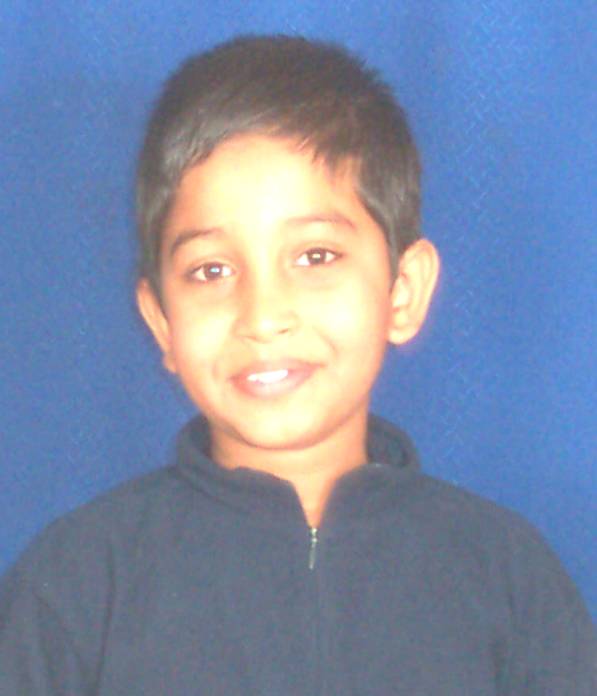 Greetings to you Sankar Naag. You have been one of the contestants of the recently concluded Raga Ratnam Junior programme conducted by Amrita TV. Being the first ever talent hunt show of this calibre in the Indian Television industry for finding out the best amongst Carnatic Classical music, it gave a feast to all the rasikas and the contestants. It is the same interest of rasikas that made me now approach you for a brief and casual talk to find how your progress is after the post-elimination from this show.
1. Sanjay Naag, congratulations for participating in the Raga Ratnam Junior Competition and getting selected to the top 15 level. How did you hear about this programme?
Advertisement on Amrita T V Channel
2. How did you find the different stages of the competition? Particularly on the challenges thrown to you to perform non-Carnatic items like Jugal Bandhi and Nritha Sangeetham round.
Intriguing, Challenging & Exiting. Facilitated me to familiarise with the very versatile & different genres of Music.
3. Who is your Guru? Could you please give us an idea how you went about preparing for each round.
Dr. K. Varadarangan, Musician & Musicologist.
Learning by self & getting resource through experts in respective fields.
4. How was the support given by the Amrita TV channel in terms of co-ordination and arrangements for contestants like you who were situated far away from Trivandrum?
Very warm & inviting in each & every respects (Coordinators, accommodation, food, conveyance & arrangements) In a word Excellent.
5. How do you rate the grooming sessions before each stage of this competition? Did you all get sufficient notification about each stage and also did you get sufficient guidance about how your performance should be for each one of them?
Excellent. Each grooming session helped me to over grow my capacity and potential. Yes, got sufficient notification & guidance
6. How do you rate the other contestants who participated along with you? Did you all get along well?
High edged competitiveness among contestants was evident.
Yes, very friendly and accommodative fellow contestants.
7. Was there any stress on you with regards to the SMS votes / campaign which was a part of the requirement for getting through to the next level in each stage? How did you work on this, especially in your case, being an outsider from Kerala, being a non-Malayalee and coming from a place outside Kerala.
Uncertainty, anxiety & excitements used to fill my days. Earnestly & eagerly looking forward to each round of viewer’s verdict / counting.
Realised that Music is beyond any state or Language especially viewers from other states and countries encouraged me.
8. What do you rate amongst the various stages for this particular competition as the toughest round? What was the reason that made you say this particular round as very challenging.
Film Song round. Difficulty in getting right accent for Malayalam lyrics. My breaking voice also proved to be bothersome.
9. Looking back at this competition after elimination, do you feel, the stages set after your elimination makes you feel that you could have performed well in those?
Yes, very much
10. How often you give concerts? How many hours normally you practise?
Due to breaking voice currently I have refrained from concerts as per my guruji’s advice
11. Other than vocal, are you learning any musical instruments?
Yes, I am learning Mrudangam
12. I understand you are good at playing cricket and can bowl relatively fast. Tell me something about your activities other than those involved with music.
Painting, Pencil sketching and playing electronic games.
13. How are you in studies? Which grade/school you are attending and what was the reaction from the school, your friends and well wishers when they came to know about your participation in Raga Ratnam Junior?
Very good, X std. Hymamshu Jyothi Kala Peetha, Malleswaram, Bangalore.
Very proud and encouraging. Every one began watching RRJ episodes in Amtita channel & even demanded for the channel telecast from the cable operators.
14. Being a resident of Bangalore, did you get any support/recognition from the numerous Malayalee associations based in Bangalore?
No.
15. Who is your favourite Carnatic musician? And who else do you like to follow closely from the music world?
Dr. M. Balamurali Krishna & I would like to follow my guruji, Vidwan
Dr.K. Varadarangan
16. What are your future plans? What do you want to become – musically and otherwise?
Hope & desire to be into music & sustain the priority of Music Classical, whatever be the style. Academically hoping to be a Scientist in pure Sciences.
17. Do you get noticed when you travel to Kerala after participation in this show. How do you handle this popularity / recognition/encouragements.
Yes, viewers recognised me as a very competitive contestant from the show at various public places.
This encourages me to grow, learn and devote more time to Music.
18. Tell me anything additional you want to include here
This is the most memorable event in my life. Over whelming and of high calibre. Looking forward to more and such opportunities. The pioneering task taken by Amrita and their total involment and commitment into promoting genius classical music is commanding. Throughout my participation, I constantly experience an urge to be more than what I was at that movement and instilled a power full desire to take music seriously and made me a confident person.
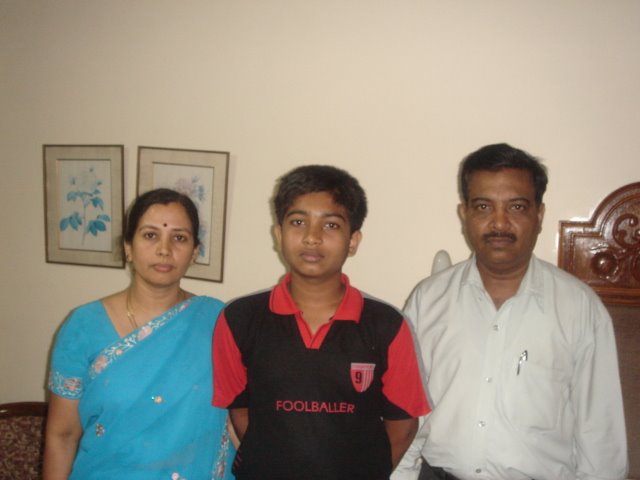
Master Sanjay Nag with his parents
A musical Profile of Master B.R. Sanjay Nag
Personal Particulars : Born 6.11.1993 at Bangalore
Master Sanjay Nag is a top-ranking student, presently studying 9th standard in Hymamshu Jyothi Kala Peetha, Malleshwaram, Bangalore with special interests in Science & Mathematics. He is inquisitive and hard working.
Master Sanjay Nag belongs to a family with a rich heritage of artists, Scholars, Musicians and writers. It includes well-known scholars like Vidhushi Kamakshamma (Vocalist & Veena Player),Vyakhyana Vachaspathi & Gamaka Gayaka Vidwan K.S. Venkatadri Sharma, Vidwan Ravishankar Sharma (Mrudangist), Vidwan Srikanth Sharma(Violinist), Vidhushi Dr. Joythsna Srikanth (Violinist).
Musical Training:
Born with an innate musical talent, Master Sanjay Nag began his music lessons from his mother at a very young age of 5 years, Vidushi K.V. Sowbhagya and continuing his advanced lessons in music under the able guidance of Guru Vidwan Dr. K. Varadarangan. In the year 2005 he passed the junior music examination with distinction securing 98.25 %. Extensive listening, constant practice and innovative guidance of guru made Master Sanjay Nag a budding Karnatic Vocalist. He is also learning Mrudangam from Vidwan T.S. Chandrashekar.
Achievements:
He has won the Prize from Sri Ramasevamandali, Chamarajpet in the Junior Concert Competition held in Fort High School during Ramanavami Festival during the year 2007.
He won 2nd prize in Mridangam competition conducted by the most prestigious Sabha of Bangalore, The Gayana Samaja in the Month of August 2007 in Junior Category.
He won Ist prize in both Karnatic Classical Vocal & Devaranama competition conducted by the most prestigious Sabha of Bangalore, The Gayana Samaja in the Month of August / September 2002 in sub junior category & also Junior Category in July 2004.
He won Ist prize in Both Karnatic Classical Vocal & Devaranama Competition conducted by the Malleswaram Sangeetha Sabha in the month of January 2003 (Sub Junior) & 2004 (Junior).
He won the Ist prize & recipient of “Mr. Voice” award from Carnatica.com, competition conducted by Vidhushi Sowmya, Vidwan Sashikiran& Vidwan Ravikiran in the year 2004.
He won I st prize in competition conducted by Music Academy, Bangalore in the year 2005
He won the Ist prize from Kamala T Avadhani Memorial Trust, competition conducted by Bettadapura Sankethigala Sangha, Koramangala, Bangalore in the year 2005.
A recipient of “Prathiba Shree” award from Kannada Patrika Balaga in the year 2003.
A recipient of “Bala Pratibe” award (Gamaka) from Department of Kannada and Culture, Govt. of Karnataka in the year 2004
A recipient of “2004 Aralu Mallige” award from Gnanamandara Educational & Cultural Academy in the year 2004.
A recipient of “Bala Kala Gandharva Rathna” award from Kalavikasa Parishath, Gadag in the year 2005.
A recipient of “Bala Kalashree” award from Balabhavan Sponsored by Depatment of Women and Child Development, Karnataka Government, in the year 2005.
He has attended the National Level “Bal Shree” selection Camp held in the month of December 2006 at Bal Bhavan, New Delhi, after completing the selection process from the state & Zonal Level Selections in Bangalore & Hyderabad respectively.
At the age of 9 years, he gave a programme in “Chiguru” (for 45 Minutes), which was held on 16.2.2002 in Bal Bhavan, Bangalore conducted by Department of Kannada & Culture, Government of Karnataka.
A solo Performance accompaniment for dance programme in Gayana Samaja, Bangalore was arranged on 14.11.2002 & also in Gubbi Veeranna Theater, Tumkur on 14.11.2003 on the occasion of “Children’s day” arranged by AIR, Bangalore which was telecasted by all the T.V. Channels and All India Radio, Bangalore.
He has given many programs in different occasions for “Tirupati Tirumala Devasthanam, Bangalore” which were much appreciated both from the Organizers and audiences.
He is graded as an Artist in Children section of Karnatic Vocal music, All India Radio Bangalore in the year 2003 & his program was broadcasted on 5.10.2003.
Recently he sung for a Tele Serial “Violin Subbanna” which was telecasted which was produced by “Prabhat Kalavidaru” and won many appreciations.
He has attended and won many prizes and appreciations from the prestigious sabhas of the Bangalore like ISKCON-Bangalore, R.T. Nagar Cultural Association, Gopinathdas Nyasa, Girinagar Sangeetha Sabha, Tyagaraja Gana Sabha, Vamshi Academy of Music, Sruthi Sidhura, etc.
Sanjay Naag – Manodharmam round Amrita TV Raga Ratnam Junior
Sanjay Nag during his elimination from Raga Ratnam Junior competition
You may contact Master Sanjay Nag at:
Master Sanjay Nag
# 12, “Lakshmi Nilaya”
Anjaneya Temple II Street
Seshadripuram,
BANGALORE – 560 020.
Ph: 094482 01569 / 094480 79658
Wishing Sanjay Nag the very best in his journey through the Ocean of music, I rushed to the new Bengaluru airport to make sure I did not miss my flight.
MoH reviews decision on medical test
MoH reviews decision on medical test
By Asma Ali Zain (Our staff reporter)KHALEEJ TIMES 2 July 2008
DUBAI -Following intense discussions, the Ministry of Health (MoH) has reviewed its decision on including the infectious disease, Hepatitis C, in the new set of medical fitness tests required by expatriates taking up study, residency or employment in the UAE. Leprosy was, however, included in the list of tests.
In a ministerial decree issued by the Minister of Health Humaid Mohammed Obaid Al Qutami yesterday, the MoH officials cited the need for more technical studies on inclusion of Hepatitis C before a final decision was taken.
However, MoH sources said the decision was deferred due to logistic reasons, including the huge number of infected people willing to enter the country, especially from the Indian subcontinent.
The decree also calls for treating expats for syphilis and TB instead of the earlier policy of deporting them. The deportable disease list now only includes HIV/AIDS.
As reported by Khaleej Times yesterday, expats will have to undergo a urine and stool test for certain professional categories, including nannies, maid servants, private drivers, kindergarten and nursery supervisors, workers in saloons, beauty, health and fitness clubs, and in all food outlets, including cooks and butchers.
However, MoH sources said a decision to include university students in this category was also being mulled.
Vaccination for Hepatitis B has also been made compulsory.
All residents will either be required to hold a health card that will cost Dh300 -a fee that remains unchanged -or a valid health insurance policy.
Tests for HIV, TB, and Hepatitis B will be carried out for Dh250, while Dh50 each will be charged for stool and urine tests, and only for the first dose of the Hepatitis vaccine. The other two required doses will be administered free of charge over a period of six months.
If the resident does not hold a health card and has a valid health insurance policy, Dohms will charge Dh200 to attest the insurance before the screenings are done.
Foreigners visiting UAE must undergo medical check-ups for contagious diseases
Foreigners visiting UAE must undergo medical check-ups for contagious diseases WAM Published: July 01, 2008, 18:56
Dubai: Foreigners who come to the UAE to live, study or work for a period not less than six months will now have to undergo medical check-ups for some contagious diseases, like HIV/Aids, Hepatitis-b and leprosy.
Humaid Mohammad Al Qutami, Minister of Health, has issued a new ministerial decree making it compulsory for all expatriates coming to the UAE to live, study or work to undergo the medical tests.
In the case of Hepatitis-b test, the decree states that a foreigner who enters the UAE to live, study or work shall undergo the test in two phases, the first test will be conducted during the first entry into the country, but during the renewal of residence permit only six categories of expatriates will undergo the test. They include babysitters, maids, private drivers, kindergarten and nursery supervisors, barbers, beauty, health and fitness club employees and workers of all food outlets, including cooks and butchers.
The procedure for the second phase will be determined based on the result of the first phase, said the decree.
In the case of hepatitis-c test, the decree calls for more technical studies on the disease before a final decision would be taken. But the decree calls for syphilis and pulmonary tuberculosis test on foreigners during their first entry to the UAE. Those who tested positive can stay in the country, but must undergo the necessary medical treatment.
Leprosy test would be conducted on every expatriate who enters the country to live, study or work during the first entry and during renewal of residency. Those who tested positive would be deported in accordance with the rules.
Only the Preventive Medicine Department of the Ministry of Health, Abu Dhabi Health Authority and Dubai Health Authority will conduct the medical tests, said the decree.
Insurance for low-income expats
Insurance for low-income expats
By Dina El Shammaa, Staff Reporter GULF NEWS Published: July 02, 2008, 00:08
Abu Dhabi: Expatriates earning a salary of Dh5,000 or less will now be eligible to enrol for the basic health insurance plan due to high inflation rates in the UAE, said an official from the Health Authority Abu Dhabi (HAAD).
The basic health insurance plan (BHIP) is subsidised by the government of Abu Dhabi for people with low monthly salaries. Up until June 1 more than 700,000 expatriates with a salary of Dh4,000 or less have been enrolled in the plan. Daman has more than a million health insurance members to date.
Under Law 23, the executive council of Abu Dhabi and HAAD agreed with the National Health Insurance Company (Daman) to keep the premium basic product stable at Dh600 for 2008. The employer bears all costs of the employee’s basic plan.
“Individuals and their dependents with incomes not exceeding Dh4,000 with housing or Dh5,000 without housing are now eligible for the health insurance plan,” said Gulam M. Teli, Director-Technical Division in Daman.
In the past, BHIP included individuals who earned less than Dh4,000. Those who earned an exact salary of Dh4,000 were not eligible.
Beneficial
According to Dr Philipp Vetter, Head of Strategy in HAAD, Daman is technically a third party administrator whose role is to provide the product and HAAD sets the products price, as well as supervise the healthcare services through an authorised network of healthcare providers.
“Our regulations are clear on this issue. First off, salary certificates must be submitted by the employer before enrolling in the basic plan. Anyone earning more than Dh5,000 will not be eligible for the plan.”
He added that there will be no exceptions, unless the HAAD Chairman, Dr Ahmad Al Mazroui, decides that an individual can be exempt.
“This can be done on individual basis only by our chairman,” said Vetter.
According to the law, the policy includes medication costs which cover a maximum of Dh1,500 for out-patient medication expenses and 30 per cent from the transaction. In case the transaction exceeds Dh500 the insured person is required to get previous permission from the insurance company.
They may liaise with an authorised insurance company to increase the upper limit by switching to an enhanced insurance policy, provided they pay the premium difference.
“This change will be beneficial for the segment of individuals who are earning between Dh4,000 to Dh5,000. They don’t have to pay the premium difference anymore, which for many people was pretty high,” said Teli.
Global accreditation
Five hospitals in the Emirate of Abu Dhabi have been inspected and internationally accredited by the Health Authority Abu Dhabi (HAAD) in partnership with the Joint Commission International (JCI), announced HAAD.
So far a total of 14 hospitals across the UAE have been accredited by JCI. The JCI is a division of Joint Commission Resources (JCR), the not-for-profit affiliate of the Joint Commission and has been involved in the healthcare sector across the UAE since May 2006, with the mission of improving safety and quality of care.
HAAD’s partnership with JCI is an initiative to make sure licensure standards are applied in hospitals, ambulance care and continuum care.
“As the responsible authority for setting standards, inspection and licensing of health facilities in the Emirate of Abu Dhabi, we are working to ensure standards developed and implemented are best practiced, meeting the benchmark of international health care quality,” said Zaid Al Siksek, Chief Executive Officer at HAAD.
Dr Philipp Vetter, Head of Strategy at HAAD, said it was important for healthcare facilities to be accredited for two main reasons. First, the accreditation process can help improve patient safety. Second, the accreditation is an indicator of quality, which helps patients chose between healthcare facilities.
Most companies sticking to midday break rule

Most companies sticking to midday break rule
By Wafa Issa, Fuad Ali and Nasouh Nazzal, Staff Reporters GULF NEWS Published: July 02, 2008, 00:08
Dubai/ Fujairah/Ras Al Khaimah: Ministry of Labour inspectors across the country went out two hours prior to the start of the midday break to spread awareness about the implementation of the rule while the majority of companies showed commitment on the first day of its enforcement.
Maher Al Oabed, head of the Inspection Unit at the ministry, said that the ministry’s main focus this year was to educate companies and workers on the rule.
Reduced
“We are hoping by going out earlier in the day the number of violations will be reduced this year,” said Al Oabed.
First implemented in 2005, the midday break rule orders that all outdoor work to be stopped from 12.30pm to 3pm during July and August.
——————————————————————————–
——————————————————————————–
The majority of companies that did not take workers to their accommodation provided on-site shaded rest areas and some even provided fans.
“To have a fan in the rest place is very good because you really get refreshed after the break,” said an Indian worker.
However, some workers were spotted resting in an aluminum box in Dubai and labourers in Fujairah were spotted under the shade of a Portakabin at one of the sites as they sought refuge from the searing midday heat.
In Ras Al Khaimah Inspectors from the Labour Department yesterday registered 11 violations against companies for breaking the midday break rule.
Saeed Al Nuaimi, who heads the department, said that the labourers were found working during the banned hours of noon to 3pm and the inspectors registered the violations against the workers’ sponsoring companies.
Health Drive
Sun safety
As many as 250,000 labourers, working with 150 companies across the UAE, will benefit from an awareness campaign aimed at educating labourers about taking care of their health while working under the hot summer sun.
The Ministry of Labour (MoL) in association with the New Medical Centre (NMC) Group, is organising the campaign. Launched yesterday, the campaign complements the midday break rule. It focuses on educating labourers on simple and practical measures to avoid dehydration and illness.
A team of experts, including doctors from the NMC Hospital will visit labour accommodation. “Our agenda is to guide and educate the labourers for the sake of their health and well-being,” said Humaid Bin Deemas, undersecretary at the ministry.
The Ministry of Health has been asked to inform the MoL about any cases of heat-related illness or death, said Deemas.
– By Rayeesa Absal, Staff Reporter
Ministry organises awareness campaign for labourers in UAE
Ministry organises awareness campaign for labourers in UAE
Staff Report GULF NEWS Published: July 01, 2008, 16:04
Abu Dhabi: The Ministry of Labour in association with New Medical Centre (NMC) is organising an awareness campaign for labourers across the UAE from Tuesday.
The campaign will focus on educating the labourers about taking care of their health while working under the hot summer sun.
Complementing the midday break rule that came into effect on Tuesday, the campaign will educate the labourers on simple and practical measures to avoid dehydration and illness. A team of experts, including doctors from the New Medical Centre (NMC) hospital, will visit labour camps for the purpose.
First implemented in 2005, the midday break rule mandates stopping of all outdoor work from 12.30pm to 4.30pm during July and August.
Death on roads ‘due to financial stress’
Death on roads ‘due to financial stress’
By Nasouh Nazzal,Staff Reporter GULF NEWS Published: July 02, 2008, 00:08
Ras Al Khaimah: The Traffic and Licensing Department has attributed the sharp increase in the number of deaths on the road in the first half of this year to rising prices and the burdens put on drivers.
The minds of drivers are preoccupied, considering many issues, the least of which is safe driving, a department official said.
Fifty people of different nationalities died in road accidents here in the first half of this year, registering a 47 per cent increase compared to the first half of the previous year where 34 people died in road accidents.
According to traffic statistics released yesterday by the Traffic and Licensing Department, 40 per cent of fatalities involved Emiratis, with 20 dying in road accident in the first half of this year, along with 30 others of various nationalities.
Colonel Hassan Al Braiki, the Deputy Director of the Traffic and Licensing Department said drivers’ minds were preoccupied with their responsibilities and domestic daily troubles.
He added that failure to focus on driving made them unaware of speed limits, traffic regulations and signs which could secure their safety and that of others. Colonel Al Braiki said the number of vehicles licensed and registered had sharply increased in Ras Al Khaimah and the current road infrastructure could not accommodate them. This has also contributed to the rise in road accidents.
The majority of fatalities on the road is due to the fact that motorists are preoccupied by thoughts about their responsibilities and domestic troubles.
Photo Speaks – Importance of Prayer Books


The other day, I received an email forward which was depicting the importance of our Prayer Books. I found it very interesting and sharing it with you all. While coming down to office, I happened to notice a car with it’s owner having the same ideology. A unique one. I thought I must give him some due credit.
Many times, we have seen, especially in India, dashboards and front panel of automobiles filled with several pictures and idols of gods. We see the same drivers swearing and cursing the fellow drivers and bullying each other small vehicle and pedestrians on their way. All this they are doing with one or more witness readily availabile in front and nearer to them.
What to say? Give our gods a break. Make a habit to pray during the regular prayer times and let your dedication to your family, work and society be your offerings. Do it diligently. Why not give it a try. The almighty god needs a break. He has been busy working for us all these years. Now, let him focus on someone else with more pressing problems.
Have a great day ahead.
********************************************
CELL PHONE vs. Prayer Book
I wonder what would happen if we treated our Prayer Books like we treat our cellphone?
> What if we carried it around in our purses or pockets?
> What if we flipped through it several time a day?
> What if we turned back to go get it if we forgot it?
> What if we used it to receive messages from the text?
> What if we treated it like we couldn’t live without it?
> What if we gave it to Kids as gifts?
> What if we used it when we traveled?
> What if we used it in case of emergency?
This is something to make you go…..hmm.. .where is my Prayer Books? Oh, and one more thing. Unlike our cell phone, we don’t have to worry about our Prayer Book being disconnected because God already paid the bill.
Makes you stop and think ‘where are my priorities? And no dropped calls!
ESSENCE OF OUR RELIGIOUS BOOKS AND PRAYERS
> Whatever has happened, has happened for good.
> Whatever is happening is happening for good.
> Whatever is going to happen, it will be for good.
> What have you lost for which you cry?
> What did you bring with you, which you have lost?
> What did you produce, which has destroyed?
> You did not bring anything when you were born.
> Whatever you have, you have received from Him.
> Whatever you will give, you will give to Him.
> You came empty handed and you will go the same way.
> Whatever is yours today was somebody else’s
> Yesterday and will be somebody else’s tomorrow.
SO WHY WORRY UNNECESSARILY?
…….Change is the law of the universe…..
Mid-day respite for workers from today
Mid-day respite for workers from today
By Riyasbabu and Ahmed Abdul Aziz (Our staff reporters)KHALEEJ TIMES 1 July 2008
DUBAI/ABU DHABI — Beginning today, the Ministry of Labour (MoL) will enforce the mid-day break rule for labourers, banning outdoor work between 12.30pm and 3pm daily during the months of July and August.
However, this year, work at construction sites, where concrete mix pouring is being done (which needs non-stop work for 10 hours), electricity and water maintenance in buildings, and other light activities under shade at workshops, will be allowed during the break time, the MoL yesterday clarified.
The mid-day break will also not stop work in emergencies on roads or disasters as well as at oil and petroleum companies.
Humaid bin Deemas, Acting Under-Secretary of the MoL, told Khaleej Times yesterday that the employers who are exempted from the mid-day break must establish shades and provide umbrellas, cold drinking water, lemon juices, salt capsules, and first aid mobile clinics to workers.
“All the companies in the country are aware about the rule that comes into effect July 1,” he said.
The rule is aimed at providing respite to construction workers from the scorching sun and high humidity during the peak summer months.
The MoL started implementing the mid-day break rule since 2005 as part of its commitment to ensuring the health and safety of workers.
According to the law, companies violating the rule for the first time will be fined Dh10,000 and their status will be transferred to ‘C’ category for three months and all of their new visa applications would be blocked.
If a company is found violating the law for the second time, a fine of Dh20,000 will be slapped and its status will be downgraded for six months.
If the company violates the law the third time, the fine will be Dh30,000 and its work licence will be suspended for one year.
New medical tests from today
New medical tests from today
By Asma Ali Zain (Our staff reporter) KHALEEJ TIMES 1 July 2008
DUBAI — Effective today, expatriates will have to undergo a new set of medical fitness screening tests before acquiring their residency or employment visas.
According to the new Government Federal Law No 7/2008, people renewing/applying for a residence or employment visa will have to undergo a number of medical fitness screenings for diseases including HIV, Hepatitis B & C, Tuberculosis and Syphilis. Two more tests —Hepatitis C and Syphilis — have been added to the existing three for which expatriates were already being screened before being granted a residency or employment visa.
Though the X-ray and blood tests were already being conducted, two more screening methods have also been added that include the urine and stool tests. Vaccination for Hepatitis B has also been made compulsory.
However, if a person is found unfit and suffering from any of these diseases, he/she is likely to be deported. The decision applies to the Ministry of Health, and the health authorities of Abu Dhabi and Dubai.
Maitha Al Bustani, Head of the Medical Fitness Centre at the Department of Health and Medical Services (Dohms), said that the new rules come into effect starting July 1. “According to the decision taken by the Minister of Health Humaid Al Quttami, the rules are being implemented on a trial basis for three months, and may be subject to change in the coming months,” she explained.
A group of professionals who are especially under the scanner include food handlers, nannies, housemaids, educators/teachers, and people who work in restaurants and heath fields due to the sensitivity of their profession.
“If housemaids are found to be disease-carriers, it’s the decision of the sponsor either to send them back or get them treated,” she added.
A new fee structure for the screenings is also in place. All residents will either be required to hold a health card that will cost Dh300 -a fee that remains unchanged- or a valid health insurance policy.
Tests for HIV, TB, and Hepatitis B & C will be carried out for Dh250, while Dh50 each will be charged for stool and urine tests, and only for the first dose of the Hepatitis vaccine. The other two required doses will be administered free of charge over a period of six months.
“If the resident does not hold a health card and has a valid health insurance policy, Dohms will charge Dh200 to attest the insurance before the screenings are done,” she explained.


You must be logged in to post a comment.