UAE
Dubai to move on cards from 2008
Dubai to move on cards from 2008
By Joy Sengupta (Our staff reporter)23 November 2007 KHALEEJ TIMES
DUBAI — In Dubai, card is in, cash is out.
Soon, one will not have to pay in cash to a taxi driver or for using buses but just ‘flash’ the card before a machine and go one’s way.
The Roads and Transport Authority (RTA) in Dubai yesterday announced the introduction of a Unified Automated Card Project which would cover all modes of transport, including buses, taxis and abras, and parking.
The project costing Dh102 million would be completed in phases. The project is being handled by Electronic Document Centre (EDC).
The fourth quarter of 2008 would see its introduction in buses, taxis, abras and waterbuses. Phase two would see the Dubai Metro also starting to accept the card.
RTA sources told Khaleej Times that there would be a system at a later stage in which the same card could be used to buy things like movie tickets and fill petrol.
According to the RTA officials, there would be two types of cards. One, known as the plastic cards, would be for people who use public transport services on a permanent basis. The second, called the Paper Ticket, would be for a short term basis valid upto a maximum of one week.
Ali Mahdi, Director of the Unified Automated Card of Transport Systems, said, “The cost of the cards has not been decided yet.”
The system works like this. If a person is travelling in the metro, he would just need to wave the card in front of a machine near the exit gate when he is coming out. The machine would automatically calculate the fare and deduct the amount from the card. Once the money in the card is over, one can top it up just like the phone cards. “Recharging could be done in any of the metro and bus stations,” Ali Mahdi said.
He said the parking metres in Dubai would also be upgraded so that the cards could be used.
“We are not going to change the existing system at the moment. Gradually, we would stop the manufacture of the existing parking cards. The new cards would replace them,” added the official.
“This card is safe, difficult to counterfeit and modelled on worldwide practices. In the future, it could be sold at the commercial outlets, petrol stations and ATMs. This will make it accessible to our customers and enhance their confidence in the services delivered by the RTA,” said Mattar Al Tayer, Chairman of the Board and Executive Director of the RTA.
Ali Mahdi said the top-up method would be made easier. “Facilities will also be provided for ‘auto top-up’ where cards are linked to a designated credit or debit account of the cardholder for debiting the recharge amount. Internet top-ups will also be available.”
All transactions, including sales, top-up and usage transactions, would be processed through a central clearing house operated under the direct control of RTA, through the Unified Card Department, said the official.
The unified card service would be launched for public buses, water buses, taxis and parking metres in the fourth quarter of 2008.
In the third quarter of 2009, the unified card would be launched in Dubai Metro, whereas in the fourth quarter of 2009, more customer care-related services would be introduced on the web, including online recharging (topping up) and automatic reloading to start using the same card on the Metro.
Cooking gas prices rise in most parts of UAE
Cooking gas prices rise in most parts of UAE
By Binsal Abdul Kader, Staff Reporter GULF NEWS
Published: November 20, 2007, 00:28
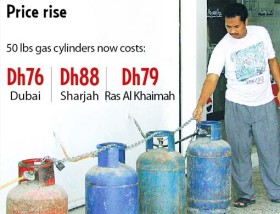
Abu Dhabi: The price of cooking gas has gone up in most emirates by 5 to 18 per cent recently, with Sharjah residents paying Dh90 for a 50 lbs cylinder, residents said.
The price has not gone up in Abu Dhabi.
A standard gas cylinder of 50lbs now costs Dh88 (without delivery charges) since the beginning of this month, compared to Dh75, said a sales agent.
“The price was increased to Dh75 from Dh69 just six months ago,” said P. Jayaraj of Al Maliha Gas Agency.
Dubai residents have to pay a 10 per cent increase for cooking gas. “The price of the standard gas cylinder was increased to Dh76 from Dh69 recently,” said a staffer from Oasis Gas and Binsuloom Gas.
A Dubai resident said she never expected the price rise will affect cooking gas prices in the country
“I thought cooking gas at least will be spared from unbearable price rise of all commodities,” said Alice Gomez, 26, from the Philippines who is working as a clerk at an insurance company.
Ras Al Khaimah residents now pay Dh79 for a 50lbs cylinder as compared to Dh75 two weeks ago. The Department of Economic Development in Ras Al Khaimah fixed the price of a standard cooking gas cylinder as Dh79 earlier this month. The department announced a price list for different sized gas cylinders, after prices soared.
The same standard gas cylinder costs Dh75 in Ajman and Fujairah, said a sales agents and residents. “The price was increased four to five months back and there was no increase recently”, they said.
In Fujairah it was increased from Dh65 to Dh75 three months back, said Zubair a sales agent of Al Ghuraih Gas in Fujairah.
GCC countries should revalue currencies
GCC countries should revalue currencies
By Saifur Rahman, Business News Editor GULF NEWS
Published: November 18, 2007, 15:27
Dubai: The six oil-rich Gulf countries should carry out a one-time big revaluation to adjust their currencies, Steve Forbes, US entrepreneur, told Leaders in Dubai conference.
Gulf consumers have lost between 25 to 35 per cent in purchasing power during the last two years as the falling value of dollars coupled with the strong economic growth has added inflationary pressures on the economy that has reflected in higher cost of living.
Forbes, however, is a strong advocate of the currency peg.
“The Gulf countries should carry out a one-time big revaluation by 10 to 15 per cent of their currencies to the dollar,” he said. “Don’t let your currency float, keep the peg, but revalue it and revisit the peg from time to time,” he said.
According to the International Monetary Fund, inflation in the UAE has reached 9.3 per cent last year on higher economic growth and partly due to the weakening value of the dirham pegged to the US dollar.
He blamed the US Federal Reserve for inflating the global economy.
“The US Federal Reserve has been printing too many dollars, causing global inflation,” he said.
“The major currencies, the euro, pound and others are in a way adding to the global inflation, with the Federal Reserve being the biggest sinner. The UAE and other Gulf countries should revalue their currencies to adjust.”
In an exclusing interview with the Gulf News, Forbes said, the Gulf states should tell the US Federal Reserve chairman to “put its act together”.
Dubaisation
Forbes said Dubai has created a model for economic growth, and others should follow what he fondly referred to as ‘Dubaisation’.
“Saudi Arabia is undergoing a reform process and developing its midedle class, which will create a healthy balance for growth. However they should look at Dubai and other economies should follow the Dubaisation example,” he said.
Forbes, a strong critic of the International Monetary Fund, said that the institution is good for nothing.
“The IMF loves to pay money to the countries and enjoy when they suffer. The IMF should be sent to Bolivia or some other places,” he said.
Abu Dhabi airport in chaos again
Abu Dhabi airport in chaos again
By Daniel Bardsley, Staff Reporter GULF NEWS
Published: November 19, 2007, 15:47
Dubai/Abu Dhabi: Fog played havoc with flight schedules at Abu Dhabi International Airport for another day yesterday.
The runways at the UAE capital’s airport were shut down from midnight to 10am due to a blanket of fog that cut visibility to 100 metres.
It was the seventh day in a row with fog at the airport and the eighth day of fog there this month, but Dubai and Sharjah International Airports escaped.
Yesterday morning 11 inbound flights to Abu Dhabi were diverted to Al Ain while 43 outbound services were delayed and at least four were cancelled.
The morning disruption caused a build-up of delayed flights that put schedules out of kilter for the rest of the day.
Abu Dhabi-based Etihad Airways announced yesterday it was rescheduling all flights due to arrive at or depart from the capital’s airport between midnight and 8am today.
The airline did this as a precautionary measure in case there was more thick fog at the airport this morning – as forecasters were predicting. Seven Etihad flights were rescheduled to ensure that no aircraft was timetabled to arrive or leave between midnight and 8am this morning. For example, services from Toronto and New York due to arrive at 2am were brought forward and were due to land before midnight.
Flights from Geneva and Munich originally set to land in Abu Dhabi before 8am were put back so they would not land during the time when fog was most likely.
In addition, eight Etihad flights due to leave this morning to destinations including Kuwait, Karachi, Jakarta, Muscat and Johannesburg were cancelled, the airline announced yesterday.
A spokesman for Etihad said the company was contacting passengers to inform them of the changes.
“We are not leaving the passengers stranded. The key is to get everything back to order,” he said.
Dubai and Sharjah International Airports remained open throughout yesterday as visibility never fell below 2,000 metres.
Dubai-based Emirates said its operations returned to normal on Sunday following the severe fog at its hub airport on Saturday morning. A spokesperson said the airline offered free meals and hotel accommodation to passengers affected by disruption.
Clive Stevens, duty forecaster at Dubai International Airport, said there was a possibility of fog this morning.
“It’s very humid at the moment so I don’t see why we shouldn’t have a high risk of fog. It’s gone on for such a long time,” he said.
– With inputs from Binsal Abdul Kader, Staff Reporter
Dubai Motor Show 2007
Dubai Motor Show 2007
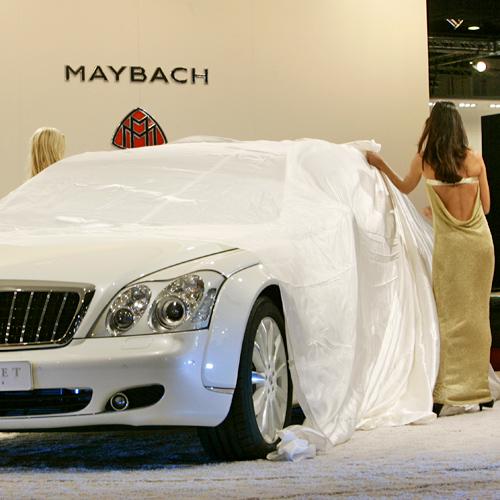
Al fresco motoring at its finest: Maybach’s latest Landaulet, unveiled for the first time in the world.


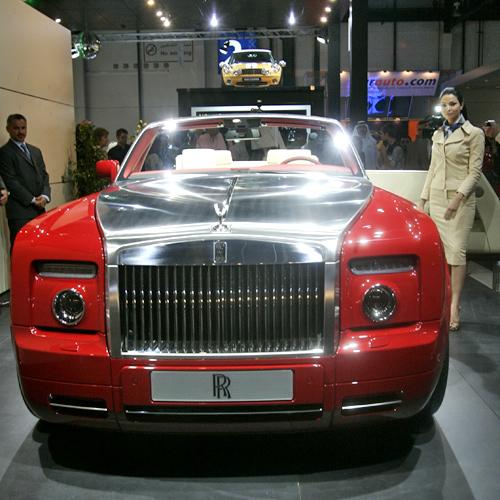
Red hot: Rolls Royce’s jaw-droppingly spectacular Phantom Drophead Coupé.
A Rolls Royce black model 1975, Shaikh Hamdan Bin Hamdan Al Nahyan collection, on display at the Dubai Motor Show.

Ford A model 1928, Shaikh Hamdan Bin Hamdan Al Nahyan collection, on display at the Dubai Motor Show.
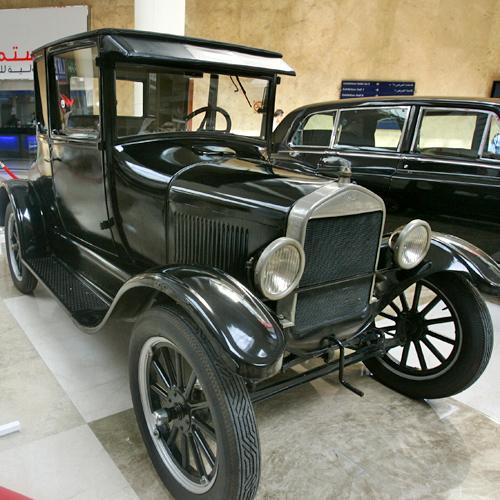
Shouja, Shaikh Hamdan Bin Hamdan Al Nahyan collection, on display at the Dubai Motor Show.

Change in rules for shifting jobs
Change in rules for shifting jobs
By Rayeesa Absal and Wafa Issa, Staff Reporters GULF NEWS
Published: November 16, 2007, 00:10
Abu Dhabi: The Ministry of Labour has amended rules for sponsorship transfer allowing expatriates to change their jobs without having to spend one year with their original sponsors, a senior official said on Thursday.
Humaid Bin Deemas, Assistant Undersecretary at the ministry, told Gulf News that earlier an exemption from the minister was needed in order to be able to transfer sponsorship before completing one year.
“However, since two weeks exemptions are no longer needed but the NOC from the previous sponsor is still a prerequisite and the applicant will have to pay a fee of Dh500 for each month remaining to complete this mandatory period. The procedure could be done at the customer service counter at the ministry and applicants no longer need to approach the minister’s office,” said Bin Deemas.
Khalil Khoury, the Director of Work Permits Department, said as per the rule, anybody wishing to transfer sponsorship before completion of the mandatory period specified by the MOL would have to pay a fee of Dh3,000. Apart from this a fee of Dh500 would have to be paid for each month remaining to complete this mandatory period.
He added that the cost of sponsorship transfer depends on the qualification of the concerned employee. For instance, a person with Master’s degree would have to pay Dh1,500 for approval while a person with low educational qualification will have to pay Dh 5,000 for the same. The cost of approval of internal work permit to move to another company owned by the same sponsor is Dh500.
New counter
“Even before the new rule was implemented, people could transfer their sponsorship without completing the mandatory period with their sponsors, but this required the approval of the Assistant Undersecretary. With the new rule in place, people can complete the sponsorship transfer procedures at the counter itself, after obligatory fines are paid,” Khoury said. A new counter has been opened at the MOL to accept applications.
The original sponsor should sign in the application for cancellation, which means the consent of the sponsor is essential to facilitate the transfer process.
Not many people are availing this facility, said Khoury, citing high costs as the reason. “We have not received many requests to facilitate sponsorship transfer because of the high costs involved. Labourers and workers in the low-income group would find it hard to shell out so much money for this purpose.”
Abu Dhabi economy challenges global market with solid growth
Abu Dhabi economy challenges global market with solid growthBY A STAFF REPORTER KHALEEJ TIMES
17 November 2007
DUBAI — Oil and gas production will no longer be the major source of public revenue in Abu Dhabi with the government’s determined strategy of diversifying the economy and creating new productive sectors based on solid partnerships with the private sector, says Adel Al Zarouni, Managing Director of Burooj Properties.
Al Zarouni of Burooj Properties, the gold sponsor of the Abu Dhabi Conference 2007 to be held at Emirates Palace on November 18-19, added: “Innovation and creativity are becoming an integral part of the national policy in Abu Dhabi which has succeeded in implementing the right formula to emerge as a global leader. The city’s growing reputation as an international tourism and business hub reflects its steady current economic boom. The most crucial factor that will drive economic prosperity in the capital of UAE is the forceful partnership between the public and private sectors.”
The economic success of the UAE owed much to the government support to the private initiatives. The growth of the city into a strategic destination for business is seen internationally as a pioneering effort where public-private partnerships are now a standard concept in the economic development realm of the city.
Al Zarouni added: “By combining the best talents and resources of the UAE public and private sectors, we can deliver value for money, greater efficiency and accelerated delivery of planned projects. Abu Dhabi is laying the ground for future development through enabling the implementation of public-private partnerships under principles of transparency, flexibility and fidelity.”
Abu Dhabi public private partnerships define partners’ roles and responsibilities by high level of transparency and precision through looking into partner selection, deal structuring and negotiations.
Al Zarouni added: “We are pleased to be a gold sponsor of the Abu Dhabi Conference 2007 which brings together key government officials and influential industry leaders to discuss and debate issues that shape the future of Abu Dhabi.”
Abu Dhabi Conference 2007 follows the Government’s recent comprehensive plan for the development of the city that will guide planning decisions for the next quarter of a century.
Al Zarouni concluded: “Innovation is the most critical element in sustaining competitiveness. Abu Dhabi’s construction boom goes in hand with further industry development in areas such as education, healthcare and government services which remain at top of the government’s agenda.”
Kerala and Dubai formally launch Smart City project
Kerala and Dubai formally launch Smart City project
By Akhel Mathew, Correspondent GULF NEWS
Published: November 16, 2007, 18:14
Kochi: Smart City Kochi, the Kerala government’s most ambitious IT venture, was formally launched by the Kerala Chief Minister V.S. Achuthanandan and Dubai-based Tecom Executive Director Fareed Abdul Rahman.
Achuthanandan and Rahman laid the foundation stone for the project. Tecom Executive chairman Ahmad Bin Byat, however, could not attend the function.
Estimated outlay
The project, which involves an estimated outlay of Rs16 billion (Dh1.5 billion) and is being established on about 246 acres at Kakkanad in Kochi city, is expected to provide about 90,000 direct jobs and have a built-up space of 8.8 million square feet within a decade.
The entire project is being visualised on the lines of Dubai Internet City and the Dubai Media City, officials said.
Achuthanandan said this was the first major IT infrastructure project being developed by a public-private partnership in Kerala after two successful IT parks set up in the public sector – the Technopark in Thiruvananthapuram and the Infopark in Kochi.
Achuthanandan said the project would provide jobs to the local youth.
He added there were several enquiries from investors following the signing of the agreement with the Smart-City Dubai authorities.
Rahman said SmartCity Kochi was expected to be “a significant hub of excellence in the knowledge-based industry”. He added the SmartCity in Kerala and another being set up in Malta would be key hubs of the global SmartCity concept.
He praised Kerala’s vast talent pool and appreciated the state government’s support for IT projects.
UAE announces new steps to protect rights of foreign workers
UAE announces new steps to protect rights of foreign workers
14 Nov, 2007, 1727 hrs IST, PTI
DUBAI: In a move aimed at protecting rights of foreigners working as domestic helps, including Indians, the UAE has announced that it would draft a law on par with international standards to safeguard their interests.
“Government decreed the drafting of a law later last month to protect the rights of domestic helps like other workers under UAE Labour Law. First of its kind, the law will follow local and international standards to safeguard their interest,” Anwar Gargash, Minister of State for Federal National Council Affairs said.
“We recognise that the protection of domestic workers is the top priority for the government and are committed towards it,” he told the Emirates News Agency.
His comments came in the wake of a report published by the New York-based Human Rights Watch (HRW), which claimed that domestic helps face forced labour and sexual harassment in Gulf countries. The research was conducted in Saudi Arabia, Kuwait, Lebanon and UAE.
The minster stressed that they are committed to “protect the rights of labourers and curb abuses against them.”
Criticising the survey conducted by HRW, Gargesh said they are disappointed by the quality of the research.
The findings are based on interviews with Sri Lankan women workers who work across the Middle East, he said.
Telling the life and times of Khalifa through images
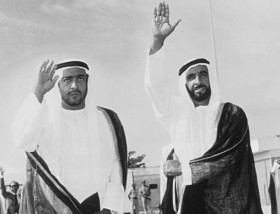
Telling the life and times of Khalifa through images
By Daniel Bardsley, Staff Reporter GULF NEWS
Published: November 14, 2007, 00:18
Dubai: A book that details the life of President His Highness Shaikh Khalifa Bin Zayed Al Nahyan – and which also acts as a history of Abu Dhabi and the UAE – has been published.
Shaikh Khalifa – Life and Times features more than 200 pictures by acclaimed UAE royal photographer Noor Ali Rashid.
At a launch in Dubai organised by Motivate Publishing, Shaikh Nahyan Bin Mubarak Al Nahyan, Minister of Higher Education, hailed the book as “very valuable”.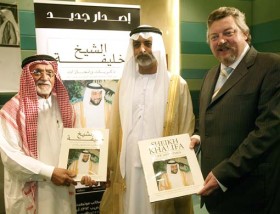
The volume is the latest in a series that so far also includes books on Abu Dhabi, Dubai, the UAE, the late Shaikh Zayed Bin Sultan Al Nahyan and the late Shaikh Maktoum Bin Rashid Al Maktoum.
“These books are sought after not just in the UAE but outside as well because they very clearly show the history of the UAE in pictures and in writing,” said Shaikh Nahyan.
The new book has a forward by His Highness Shaikh Mohammad Bin Rashid Al Maktoum, Vice-President and Prime Minister of the UAE and Ruler of Dubai, and General Shaikh Mohammad Bin Zayed Al Nahyan, Abu Dhabi Crown Prince and Deputy Supreme Commander of the UAE Armed Forces. The book is available in Arabic and English.
As well as featuring many pictures of Shaikh Khalifa, the book also includes photos that trace the development of Abu Dhabi and the UAE.
There are black and white images from decades past of camel races and the souqs of Al Ain, while more recent colour pictures show, for example, the shiny high-rise buildings of modern Abu Dhabi and the new Shaikh Zayed Grand Mosque.
Noor Ali Rashid, who landed in Dubai in 1958, said: “I am the only person who has, consistently for five decades, recorded the history of this area.”
Jonathan Griffiths, General Manager – Books at Motivate Publishing, said the book’s first print run of about 12,000 copies was sold out and it was being reprinted.
 ClicksandWrites
You must be logged in to post a comment.