UAE
Young expats can take up part-time jobs from age 16
Young expats can take up part-time jobs from age 16 By Wafa Issa, Staff Reporter GULF NEWS Published: January 02, 2008, 17:11
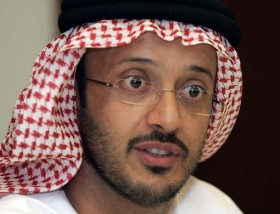
Dubai: Young residents, under the sponsorship of their parents or universities, can undertake part-time work, the Labour Minister told Gulf News.
Dr Ali Bin Abdullah Al Ka’abi, Minister of Labour, has issued a decision that allows people from the age of 16 to undertake part-time job in the country.
“The decision aims to protect young people’s rights and give them the opportunity to acquire labour market experience at an early age,” said Al Ka’abi.
Earlier young expatriates, below 18 were not allowed to work in the country.
A part-time labour card also gives an opportunity to university students to get work experience before graduating, he added.
“Young people can now acquire a job if they meet the legal requirements, but they cannot work full-time until they reach 18,” said Al Ka’abi.
The new decision stipulates that teenagers will be allowed to work for a total period of six hours and in all types of work except jobs where they are exposed to dangers or face the risk of harming their health.
Expatriate teenagers, who wish to join a job, will have to apply for a labour card at the ministry after getting their parents’ approval.
“Legalising their employment will help the ministry to monitor violations closely and will ensure that teenagers work in a healthy atmosphere and under the supervision of their parents,” said Al Ka’abi, adding that the decision will shortly be applied across the country after the ministry’s system is updated to accept labour card for children at the age of 16.
Some types of jobs that are categorised as dangerous for health and in which child employment is prohibited (ministerial order No.5/1, 1981):
Work in mines and quarries
Work where ovens are used for melting mineral substances
Petroleum refining
Bakery ovens
Cement, ice-making and refrigerating plants
Mirror silvering with mercury
Explosives industry
Glass melting and blowing
Arc welding
Painting
Treatment and preparation or warehousing of ashes containing lead and extracting silver from lead
Making of tin (pewter) and metallic compositions containing more that 10 per cent lead
Making of prime oxide of lead (silicon), carbon oxide of lead, the orange lead, sulphates, chromate and silicates of lead
Operations involving mixing and preparation for repair of batteries
Operating or supervising operating machines or repairing or cleaning such machines while these are working
Asphalt work
Oil pressing by mechanical devices
Work involving fertilisers, metallic acids, laboratories and chemical products
Work in tanneries
Rubber industry
Work in factories for fitting cylinders with pressed gases
Loading and unloading merchandise
Coal works when coal is made of animals bones but not the operation of separating bones before such bones are burnt
Operations involving bleaching, dying and printing textiles
Carrying heavy loads
Work in public bars
Making sure ‘we approach future in steady steps’
Making sure ‘we approach future in steady steps’ By Samir Salama, Bureau Chief Published: January 03, 2008, 01:31
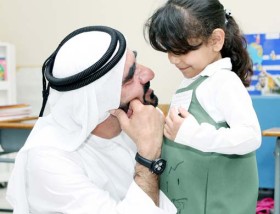
Dubai: January 5 marks the second anniversary when His Highness Shaikh Mohammad Bin Rashid Al Maktoum became Vice-President and Prime Minister of the UAE. He became the Ruler of Dubai on January 4, 2006.
The past two years witnessed ground-breaking achievements as Shaikh Mohammad took charge of improving the lives of all residents.
In the last two years, Shaikh Mohammad has issued a number of laws and decrees for the advantage of residents and ordered his administration to implement them in the best service of the country and the citizens.
Ever since he became the Vice-President and Prime Minister of the UAE and Ruler of Dubai, he has been following up the concerns of his people and ordered changes and improvements in various fields, stressing commitment to national goals and policies laid down by the founding fathers.
All-round development
Shaikh Mohammad also infused dynamism that has become the hallmark of the Federal Strategy, adopting realistic and applicable programmes and well-considered plans to achieve economic, social and human development.
He has conducted inspection trips to all the emirates and ordered important changes.
Shaikh Mohammad ordered the establishment of a specialised court to deal with labour complaints. He also ordered the establishment of a special inspection unit to monitor workers’ accommodations and workplace. He ordered a stricter enforcement of laws that protect the rights of labourers and domestic workers and improve their quality of life.
The rent cap was another corrective step taken by Shaikh Mohammad to rationalise rents so that both tenants and landlords have an equal say.
The escrow account was yet another visionary measure to secure money of investors who invest in real estate development.
Shaikh Mohammad’s substantial contribution covers people around the world.
He launched the Dubai Cares initiative on September 30 to raise money to support the education of over a million poor schoolchildren through the efforts of businessmen, schools, students, their families and their neighbours in Dubai.
On May 19, the Mohammad Bin Rashid Al Maktoum Foundation was launched to promote human development and provide hope and opportunity by investing in education and knowledge development in the region.
Shaikh Mohammad, in his own words, is not one to revel in past accomplishments “because life doesn’t stop and it doesn’t care about those who stop because they are content with what they have achieved”.
He has said: “The present and future generations of our country are the top priority of all development plans. We have to make history and approach the future with steady steps, not wait for the future to come to us.”
Knowledge Village to phase out use of halogen lamps
Knowledge Village to phase out use of halogen lamps
Staff Report GULF NEWS Published: January 03, 2008, 01:31
Dubai: As part of its efforts to conserve the environment and mitigate air pollution, Dubai Knowledge Village with the support of Sustainable Energy and Environment Division, have launched a campaign to phase out the use of halogen lamps in the Knowledge Village premises.
The Sustainable Energy and Environment Division (SEED) was created by Tecom Investments as one of its key initiatives under the Sustainable Development Policy, in line with the vision of His Highness Shaikh Mohammad Bin Rashid Al Maktoum, Vice-President and Prime Minister of the UAE and Ruler of Dubai, to make the emirate a sustainable place to live in.
Initiative
The Dubai Knowledge Village’s (DKV) initiative is estimated to reduce at least 174 tonnes of CO2 emission per year, which is equivalent to one passenger abstaining from 26 round trip flights from Dubai to New York.
Dr Ayoub Kazim, Executive Director, DKV and Dubai International Academic City, said: “[DKV] has come a long way since its launch in 2003. However, we know that success comes with a responsibility to contribute something of benefit to the community that has impacted our growth.
“We are expressing this through a series of initiatives towards safe guarding the environment, which we believe will not only have a sustainable impact on our immediate surroundings but also motivate others to emulate our example.
“In April 2007, we rolled out a comprehensive Energy and Water Conservation Programme that reduced CO2 emissions by 1,148 tonnes within seven months. Two months ago, we erected the first and largest solar tracker in the Middle East in front of DKV buildings on Al Soufouh road.
“This year, we have accomplished a major feat in switching off the halogen lamps in our indoor areas at DKV.
“Our next step is to involve our business partners in the initiative, and we are currently discussing the extension of the programme to their offices,” said Dr Kazim.
Ali Bin Towaih, Director, Seed, said: “We are extremely pleased with the commitment that DKV has shown toward this project, which has already generated sound results. Switching off the halogen lamps not only helps reduce energy consumption, it also makes indoor areas cooler and comfortable by eliminating the harsh glare that is emitted by the lamps.
“We hope the initiative will encourage the participation of every facility in Dubai as studies have shown that approximately 270,000 tonnes of CO2 emission can be stopped from reaching the atmosphere if everyone switches off or replaces their halogen lamps, using of course, certain assumptions and conservative extrapolations.”
SEED has carried out several sustainable development initiatives across all entities of Tecom Investments, while playing a vital role in setting up the Energy and Environment Park (Enpark) as a comprehensive eco-friendly community for both commercial and residential use.
One-year ban on workers who leave country without cancelling visa
One-year ban on workers who leave country without cancelling visa
By Ahmed Abdul Aziz (Our staff reporter)/KHALEEJ TIMES 3 January 2008
ABU DHABI — The workers who had left the UAE without completing the formalities for cancellation of their visas will face a one-year ban from entering the country, according to Obaid Rashid Al Zahmi, Assistant Undersecretary of the Ministry of Labour (MoL).
During the Open Day session at the MoL, Al Zahmi met around 45 people, including PROs, owners of firms and workers to find solutions to their problems.
A worker’s request to reimburse the fees charged for issuing work permit to him was rejected by Al Zahmi as he had left the company during the probation period.
When a PRO of a company demanded refund of the work permit fees and the bank guarantee, Al Zahmi said the ministry would refund any fees which the companies were forced to pay due to mistakes of the MoL staff or any system snag.
Adnoc vows to protect environment
Adnoc vows to protect environment
posted on 31/12/2007
The Abu Dhabi National Oil Company (Adnoc) has pledged to protect the environment by putting in place internal standards that push the company to decrease its impact on the earth. The government-controlled company, one of the largest oil producers in the world, made the commitment at the Arab Corporate Environmental Responsibility Summit organised by the Abu Dhabi Environment Agency and other local and international organisations.
“Adnoc and its group of companies are fully committed to environmental protection through a set of laws, corporate policies and codes of conduct,” said Ali Rashid Al Jarwan, general manager, ADMA-OPCO. He said leadership, commitment, policies, laws, management systems and corporate social responsibility form a strong bond that helps the group to shoulder its environmental responsibility. “We use the latest environmental management systems to ensure continuous improvement,” he said, adding that one of the major achievements of the group is the success made towards achieving a zero-flaring goal through upgrading facilities.
Meanwhile, the Abu Dhabi Environment Agency has urged all businesses in the emirate to live up to their promises concerning the environment and to take preventative measures to protect the earth. The agency said the Arab Environment Ministers Council has approved last month’s Abu Dhabi Declaration on Corporate Responsibility and Cleaner Production, which called for the private sector to support environmental protection efforts.
More than 120 chief executives, representing major business sectors from the Arab world, attended the summit and made commitments to take responsibility for the environmental costs associated with their businesses and to work towards green alternatives. “The protection of the environment is the responsibility of all business sectors. They have to contribute to environmental protection efforts and need to invest towards this,” Majid Al Mansouri, secretary-general of the Environment Agency, told Emirates Business.
In order to achieve this goal, he said, the agency is working with different sectors to implement an Environment, Health and Safety policy and the Environment, Health and Safety Management System at the emirate level so that sustainable development is integrated into every step of corporate strategies. “Financial achievement should not be the only goal of companies. Their corporate responsibilities should include environmental protection and social development. The environment, health and safety management must be considered in any new project,” Al Mansouri said. (Emirates Business 24|7)
IPIC awards 460 million dollars contract
IPIC awards 460 million dollars contract
posted on 02/01/2008 – Emirates News Agency, WAM
International Investment Company IPIC said Monday it awarded contracts worth 460 million dollars to three companies to supply pipes for a domestic crude oil export pipeline linking Abu Dhabi and Fujairah. IPIC, an Abu Dhabi government investment firm, split the contract for a total of 225 thousand tons of coated steel pipes between Sumitomo of Japan, Salzgitter Mannesmann International of Germany and Jindal Group of India. First delivery of the pipe will be in July 2008 and the whole deal will be completed in January 2009. Abu Dhabi plans to build the 360-kilomter pipeline to transport up to 1.5 million barrels a day from Habshan oil fields to Fujairah to bypass the Strait of Hormuz through which Arabian Gulf producers’ ship crude oil exports.
Employers must give health insurance
Employers must give health insurance
By Dina El Shammaa, Staff Reporter GULF NEWS Published: January 01, 2008, 23:09
Abu Dhabi: Expatriates residing in Abu Dhabi, whether working or living there, are entitled to health insurance coverage, said an official from the Health Authority Abu Dhabi (HAAD) on Tuesday.
According to the Abu Dhabi Health Insurance Regulation Bill under Law 23, all employers and sponsors must provide health insurance for expatriates who live or work in Abu Dhabi.
This includes expatriates residing in Abu Dhabi, even if their visa is issued in another city, such as Dubai, people who are sponsored by expatriates residing in the emirate and all individuals sponsored by expatriates residing in the capital city.
“A sponsor or employer is responsible for ensuring that resident expatriates are in possession of valid health insurance,” said Sultan Al Daheri, team leader of Reimbursement and Claims at HAAD.
“They will be held personally liable for the cost of all healthcare services that are provided to persons on their sponsorship in the event that such a person is not covered by a valid health insurance policy,” said Al Daheri.
Penalty
Failure to subscribe or renew the subscription in the Health Insurance Scheme (HIS) by an employer or sponsor for workers and those residing under their sponsorship will result in a penalty of Dh300 monthly for every person without an insurance subscription, said Al Daheri.
In addition, employers and sponsors must not pass on the cost of providing Health Insurance to Employees.
If an employer or sponsor does pass on the cost to their employee, they will be considered in violation of the law and subject to investigation and penalties.
If an employee living in Abu Dhabi files a complaint against lack of fulfilment of an obligation arising from a health insurance scheme, a written complaint, called a Letter of Inspection Notification, is lodged at the Customer Service Section in HAAD.
Moreover, if any dispute occurs between parties involved, such as healthcare institutions, employers, or insurance companies, the problem is managed by the Enrollment and the Inspection Section (EIS) who send out their inspection team to monitor the issue and make sure a proper health insurance policy is provided to all employees.
Common complaint
According to HAAD Customer Service Head Afra Khalifa Al Ghathi, one of the most common complaints received at HAAD is related to Health Insurance Policies The EIS section also claims to receive up to six serious complaints per day.
Once HAAD officials receive these complaints, confidentiality is maintained so that the employee’s position in the company is not jeopardised.
“Sometimes employers may fire or deduct from the employee’s salary as reaction to the complaint. We put that into consideration and make sure the employee’s name while lodging the complaint is not mentioned and all related details are kept confidential.
“We do not want to jeopardise the individual’s position in any way and encourage people to openly share their experiences with us. It is our role to make sure employees and residents in Abu Dhabi are given a proper health insurance scheme,” said Al Daheri.
Who to contact: Complain with confidence
Any complaints regarding health insurance regulations are handled by the Health Authority Abu Dhabi’s customer service department, via three channels. The complainant’s identity is kept confidential.
Toll free number: 800800 (from Abu Dhabi)
E-mail: healthcentre@haad.ae
Visit: the Health Authority Headquarters, Airport Road
Total upper limit coverage: The annual upper limit for healthcare services is Dh250,000
Ministry in deal to raise quality of education
Ministry in deal to raise quality of education By Dina El Shammaa, Staff Reporter GULF NEWS Published: January 01, 2008, 23:09
Abu Dhabi: The Ministry of Education (MoE) and the Abu Dhabi Education Council (ADEC) signed a Memorandum of Understanding (MoU) to raise the quality of education across the UAE and encourage international educational standards.
The agreement was signed by Abdullah Al Mussabbeh, Executive Director at the ministry, and Mubarak Saeed Al Shamsi, Director General, ADEC.
“We want to develop governmental and non-governmental schools following the GCC strategy. We will focus on students from kindergarten till 12th grade and are going to start immediately after the signing of this memorandum,” said Al Mussabbeh.
ADEC is responsible for the education process in Abu Dhabi and focuses on planning, future development, implementation processes across the nation and in dealing with day to day problems in schools.
Responsibilities
The MoU stated the following: the council is responsible for all employees that work in the education sector in Abu Dhabi as from the date of signing the agreement; the council is responsible to deal with all administrative problems and supervises employees in Abu Dhabi, including school principals, employees, administrators and teachers; the MoE to still pay salaries and pensions as well as compensations that are due to the employees working in Abu Dhabi during the transitional period.
“The ministry during the transitional period will keep paying the salaries of the employees, then the council will take over in all the duties done by the ministry in Abu Dhabi to reach a high level of performance,” said Al Mussabeh.
In addition, the ministry is giving all the information concerning Abu Dhabi to the council who aim to evolve the school curriculum allowing students reach international standards, deal with standards of teaching and school maintenance.
The agreement also mentions the number of classes to be given weekly, the beginning and end of the school year, exam dates, holidays and the official working hours; in addition to testing the education level of students through exams that will provide students a chance to go into universities under the supervision of the Ministry and the council held as responsible.
Identity card holders get more facilities
Identity card holders get more facilities
By Binsal Abdul Kader, Staff Reporter GULF NEWS Last updated: January 01, 2008, 21:54
Abu Dhabi: Holders of identity cards issued by Emirates Identity Authority will get a New Year gift of two electronic services, E-Dirham and E-gate facilities are to be integrated onto the cards, a senior official told Gulf News.
“Technical work has been completed and the E-Dirham will be activated this week and the E-gate in the first quarter of this year,” said Thamer Al Kassemi, Planning Division Manager at Emirates Identity Authority (EIDA).
The E-gate card provides a fast-track immigration clearance using smart technology and a fingerprint scan.
This not only takes you through immigration faster but also saves space on a passenger’s passport, as it eliminates the need for a manual stamp every time they travel.
Travel document
“The EIDA is working with the Ministry of Interior to activate the E-gate service soon,” said the official.
The E-Dirham service includes using the identity card as an e-wallet to pay for different services offered by ministries, government departments, and private companies that use E-dirhams. “Identity card holders can activate it at any E-dirham service point when it is announced.”
Discussions are ongoing with the Ministry of Labour to integrate labour cards with identity cards, said Al Kassemi. This may enhance electronic transactions in the country as the EIDA starts issuing identity cards to expatriates this year.
Darwish Al Zaraouni, General-Director of the EIDA earlier told Gulf News that registration for expatriate employees in the Government Sector and for large companies would start this month.
Registration for all expatriates will open in May 2008, he added.
The identity card has already enabled holders to use it a travel document to all GCC nations as it works as an e-passport. It will eventually replace driving licences, labour, residency and health cards. It will also act as an ATM card. Registration to get the identity card is just a phone call away as the EIDA launched its mobile registration service last month.
Coming soon: Mandatory for all
The Emirates Identity Authority (EIDA) has been issuing identity cards to citizens since 2005 and it is mandatory for Emiratis to have an identity card under federal law No.9, 2006.
It will be mandatory for expatriates over 15-years-old from May (it is voluntary for 15 years and below). Darwish Al Zaraouni, General-Director of the EIDA earlier told Gulf News that registration for expatriate employees in the government sector and large private companies would start in January 2008.
“We are ready to open temporary offices at company premises on request”. Registration for all expatriates will be open in May 2008, he added. Registration is just a phone call away as the EIDA launched its mobile registration service last month. For mobile registration services and further information, call the EIDA call centre on (600 523 432).
The EIDA also has seven registration centres located in Abu Dhabi, Al Ain, Dubai and Sharjah. Centres in other emirates are under construction, said an official.
Fees
Citizens have to pay Dh 115 for five years. (Dh65 for 15 years or younger). Expatriates have to pay Dh100 per annum. (The fee has to be paid for the duration of the residence visa).
Contact
For mobile registration services and further information phone the EIDA call centre on 600523432.
Unified visit visa soon
Unified visit visa soon
By Ahmed Abdul Aziz (Our staff reporter)/KHALEEJ TIMES31 December 2007
ABU DHABI — The Naturalisation and Residency Departments (NRDs) at the Ministry of Interior have completed all preparations to implement the unified system of issuance of visit visas in all the emirates, Colonel Nasir Al Awadi Al Minhali, director of the Abu Dhabi Naturalisation and Residency Department (ADNRD) disclosed yesterday.
The move comes with a view to weeding out the menace of illegal workers from the country.
Talking to Khaleej Times, Al Minhali said, “The new system will restrict the issuance of visit visas for immediate relatives only, such as parents, brothers or sisters.”
Al Minhali added that workers who had entered the country on business visas would face life ban. “The NRDs across the country will reject any application to amend the status of the applicant from his/her business visa to worker’s visa,” Al Minhali noted.
Al Minhali said the measures would be implemented soon after getting the approval from the Minister of Interior, Shaikh Saif bin Zayed.
 ClicksandWrites
You must be logged in to post a comment.