UAE
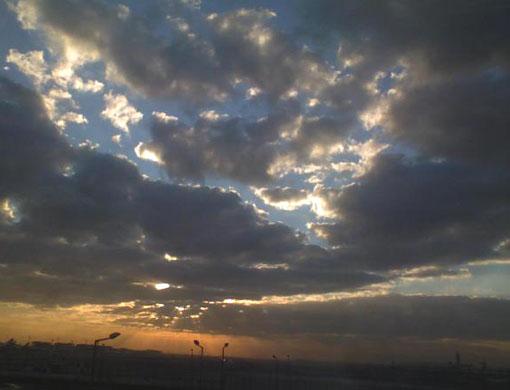
Rain lashes the UAE




Rain lashes the UAE
Gulf News web reportLast updated: January 15, 2008, 12:40
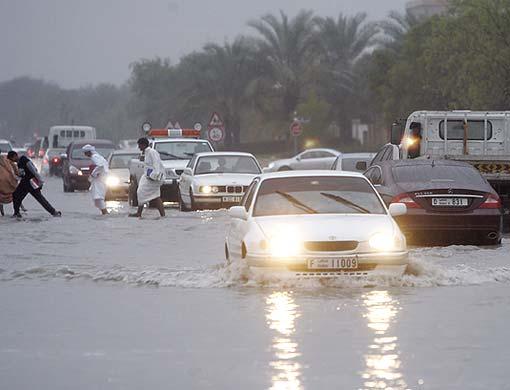
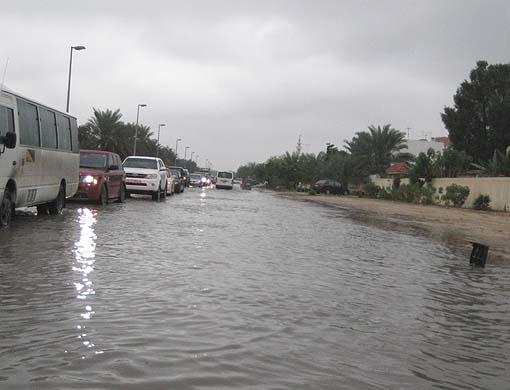
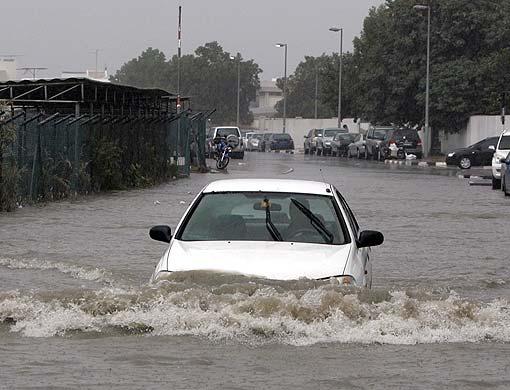
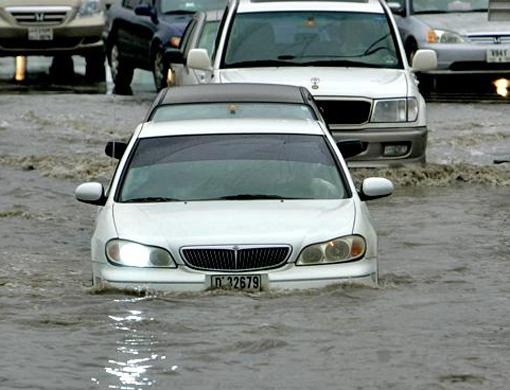
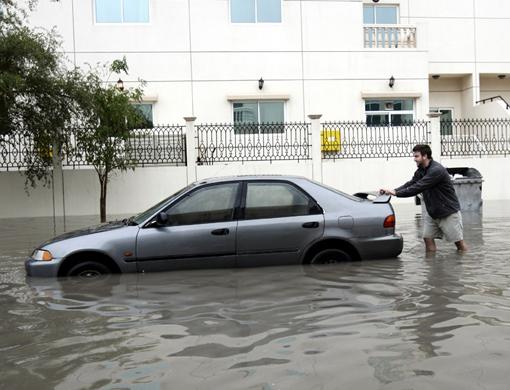
Dubai: Rain has lashed the UAE, causing widespread flooding across the country and traffic chaos.
While Abu Dhabi has largely escaped serious rain, the major roads in Sharjah have been completely flooded.
Weather forecasters have predicted more heavy rain for Wednesday morning.
On the roads, police diverted traffic away from the Emirates Road in both directions because the rain has made it impassable.
Police also cordoned off the National Paints roundabout in Sharjah, making it more difficult to access the major roads.
Several schools in Dubai and Sharjah have cancelled lessons for the day, while Our Own English High School in Sharjah cancelled exams.
Residents in the Al Nahada area of Sharjah have reported their cars being partially submerged by the heavy rains.
Flooding has also been reported at the Emaar office building near the Burj Dubai
Satellite dish antennas were blown off the roof tops in the Al Meena Bazaar area of Dubai
Traffic has also come to a standstill in Dubai with heavy flooding causing long delays on all roads.
In Bur Dubai, readers have reported widespread flooding, with residents having to wade through knee deep water to get to their cars.
Company is family
Company is family
By Suchitra Bajpai Chaudhary, Staff Writer GULF NEWS Published: January 10, 2008, 23:32
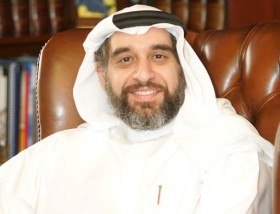
Change is inevitable, says Mishal Hamed Kanoo, But people should be prepared for and adapt to it. While he rues the loss of old-world charm, this scion of a highly respected business family believes that finding the balance between tradition and modernity is the best way forward.
“It is lovely to have a dream … you must have a dream. Anyone who doesn’t dream is dead.”
Eloquent words from a man who has dreams for himself and his country, and strives hard to make those dreams come true.
Meet Mishal Hamed Kanoo, a bold new face of the bold new UAE.
Enlightened, educated, deeply humane and sensitive to maintaining the balance between the traditional and the modern, Kanoo combines the positive qualities of the new generation of Emiratis who are determined to take the nation forward.
Belonging to a family that has a century-old business tradition in the Gulf, Kanoo, who is deputy chairman of the Kanoo Group in UAE and Oman, exudes grace and wisdom that is far beyond his 38 years.
Although he is euphoric about the great business opportunities the economic boom in Dubai has ushered in, he is upset that the old-world charm of the little fishing hamlet that he grew up in is fast changing.
“In a brief span of time, Dubai has exploded in population ten-fold. From a village, it has grown to a metropolitan city.”
While he admits that change is inevitable, he is unhappy about losing the “close-knit neighbourhood” that he grew up in.
He also feels that the modern steel-and-glass buildings “lack the charm of regional design and architecture.
“Probably the closest we have come to recreating our (style of) architecture is in building Madinat Jumeirah,”
he says.
But that said, Kanoo is not entirely nostalgic. He appreciates some of the benefits the society has derived with change.
“Earlier, the only major road (in Dubai) was the one leading to the airport. Now we have so many flyovers and cloverleaves in the city.
“Culturally too, it was very limited. Now with the amalgamation of so many nationalities, we have such great cultural dialogue that it has made the UAE, particularly Dubai, a very attractive place, culturally.
“In terms of work, it has become a bit more formal now,” he says. “Earlier, (business was conducted in) a more relaxed atmosphere but (then) productivity was low.”
Work culture
When it comes to his work, Kanoo is a humanist, deeply aware of the consequences every decision of his can have on his employees’ life. He holds hardworking employees in high esteem and feels greatly responsible for the safety and security of their future.
“Having a company (like the Kanoo group) is a huge responsibility. I do think about the 700 people working in our company.
“The thought that I am directly or indirectly liable for their livelihood through my decisions is a great responsibility and I do not take that lightly. The decisions I take affect their lives and this is not (a trivial issue).
“If a division does badly, I might have to (let) people go. I am less worried about people who make Dh15,000-Dh20,000 per month in my office, as I believe they will most likely find alternative work.
“The people I am more worried about are those who make just Dh2,000 or Dh3,000.” The challenge in managing a company like this is realising that you can do something that you enjoy while affecting people’s life positively, he says.
“One can use this office as a pulpit to propagate ideas on art and culture and add value to the company and to people’s life. Doing good things does affect life positively,” believes Kanoo. However, he has no respect for those who fail to adapt to change and allow their skills to rust.
“People sometimes don’t take the trouble to upgrade their skills and move ahead in their jobs. People love to complain about (almost everything) because everyone thinks (solving problems) is somebody else’s responsibility. Usually, a company will treat you as an adult, if you treat yourself as an adult,” he says.
Tradition vs. modernity
“I think every age has its share of tradition and modernity. It is the issue of looking at culture and society as a whole.
“In the world of art, we had the old masters in 1400-1600; we also had modern art in the 1960s … now we have contemporary art. These are just labels. I am sure that in Botticelli’s time, traditionalists condemned his art as ‘modern’.
“I take a holistic perspective towards it. A person who is living and adding something new is ‘modern’. If I take something from the past to interpret the present, then I am reviving tradition in a positive manner. That’s the difference.”
Kanoo’s thinking has been shaped by core cultural values of the Arab world. He grew up in Dubai and attended a local school before moving to the US to complete his graduation and post-graduation.
During his time in the West, he assimilated the best of American values and used them to broaden his perspective. Today he talks with a fondness for both – the Western and Arab value systems.
“Within the Arab family life, tradition plays a significant role. For tradition to succeed, one has to teach it to the next generation and allow them to adapt to it. When we talk of tradition, people think of it as something that can never change.”
Sometimes people follow certain practices blindly without questioning the rationale or meaning behind them, he says, and quotes an example of just such a practice which he saw on TV recently.
“A woman blindly follows the family tradition of trimming the end of roast beef before serving it to the family. Why does she do it? Because she had seen her mother doing it.
“She eventually gathers courage to ask her mother why the end of the roast was being trimmed. The mother tells her that she did it because her mother had done it.
“The woman then goes to her grandmother and puts the question to her who eventually solves the mystery. The elderly lady tells her that she used to trim the tail end of the roast simply because it never used to fit into the pan!”
Kanoo feels that tradition should not be eradicated, but neither should it be followed blindly.
People should set traditions that positively impact the society such as establishing a tradition of sending children to school and colleges for education; allowing youngsters to work for their living; telling children to be generous and to give to charity.
He feels there is a certain resistance to change in the present society.
Meritocracy should be the basis of a society, he says. “Evaluate the merit of the person and not his social status,” he says, highlighting an aspect of culture he imbibed from the US.
“In the US … they (rely) meritocracy. It is okay to challenge a parent respectfully,” he says, adding that
a child’s thoughts should be accorded respect.
“In the US, children are taught to challenge what is the accepted norm. Challenge is not an aggression against authority but an effort to learn and create something new.
“It is the same in business. Companies cannot be successful if no one challenges them. If there is no one to challenge me and if I always want to be surrounded by ‘yes-men’, I will soon become irrelevant.
“When we teach our children not to challenge, think or be creative, it affects their contribution to society. More particularly, the children of the rich have to be challenged to be humane and modest. They need to know that they can’t get away with anything because they can buy their way out of any situation.”
Kanoo thinks it is important to encourage the new generation to be innovative and creative in their approach to life. This will benefit organisations and businesses in the long run, he says.
“Art is a great way to teach our children to be creative. This allows them to start the creative process that the mind needs to expand.”
His strong views on education and building a sound work culture have inspired him to teach what he has learned through experience to the younger generation.
“That is why I teach family business at the American University in Sharjah (AUS). My friends often ask me why I am wasting my time (teaching). But I think part of completing the education cycle is to give back what you learned to a newer generation of students.
“If I can’t do that, then I have done nothing with my life. I hope they will challenge my ideas and create something better.”
Kanoo believes that legacies created by the previous generation in the family are to be valued and improvised upon with the passage of time. He has great respect for the principles his father, Hamed Ali Kanoo, believed in and established for the family.
He thinks it is now the prerogative of the present generation and the successive generations to imbibe the lessons of his father, who passed away in 1994.
“My father was never comfortable being a bureaucrat. It bothered him and it bothers me too. There is a saying: ‘The operation was a success but the patient died’. The surgeon may have followed all the procedures but as far as the patient was concerned it was useless … because he did not survive. This is something I learnt from my father.
“If I am put in a position where I need to make a decision and if I behave like a paper pusher and don’t make a meaningful decision, then what is the use of being in that position? Bureaucracy is supposed to set guidelines to help; not to rule.
“I learnt a lot of things from my father and of them were lessons in humility and candour. He was open to new thoughts and ideas, and never discriminated between people based on their class or social standing. Wherever he was invited, he would go – be it the home of a low-paid worker or of a very wealthy person.
“I am open to (ideas) and allow people to correct me. I don’t have a problem in people telling me I am wrong as long as they can explain to me how or why I am wrong.
“To be humble does not mean that you cannot enjoy the luxuries of life. You can, but you should not allow these luxuries to control your life. You can be humble and still drive a Rolls Royce, if you can afford it.”
A tradition of excellence
The foundation of the Kanoo business group rests on two important features – Family and Quality. The business may be based on family traditions but they are moulded to fit into the total quality management approach to business he believes in.
The organisation has received several TQM awards including the Shaikh Khalifa Excellence Award in 2002.
“We take pride in the quality of our work,” says Kanoo. “We ensure a good product, good quality and good service because that is the only way to guarantee return customers.
“Quality starts from the family. People who work for our company are also family. You have some well-organised and well-run organisations out there and then you have some reckless cowboys who tarnish what these quality companies have built up for years. This is the price you pay for progress.
“As a company we want to conserve the legacy created by my father. The customer is the lifeline; he has allowed us to prosper. If we do not fulfil his expectations, then we are not going to have a company.
“Essentially, we must deal with professional managers who will run our company in a professional manner. Even within the family, you must follow this rule and allow the present generation to decide for themselves as responsible adults.”
Kanoo accepts and acknowledges the great changes have taken place in business practices in the UAE and thinks it is important for the new generation – who plan to take over – to be ready to take on the challenges in the future. “We cannot dictate legacies to generations.
“On an average, every 20 years there is a generation shift. Rules change, sensibilities and perceptions change. So how can we apply today the rules that were laid down during the Second World War?
“Today we have outsourcing, globalisation, taxation, WTO, interests, commissions. Things have shifted. How do I reach out and sell some stuff to a farmer in Madurai (in South India)?
“The paradigm shift has already happened. I am not sure if the 20-somethings of today are up to the challenge because the impression I get is that they rely on others to do the work for them.
“That said, I do know of some excellent 20-somethings who are capable of running with the best out there. I am hoping the generation younger to them will challenge (their ideas).
“Those who are willing to put in extra hours and sacrifice certain things to get to their goal will (succeed).
The wheel of fortune
Like life, Kanoo believes success and failure in business depends a lot on destiny. Sometimes the best of things do not work because they were not meant to.
“A love or an arranged marriage has equal chances of success. People perceive an arranged marriage as cold, calculated, focused on social advantages to be derived out of the alliance, etc. Love marriage is perceived as emotional and spontaneous. But no one knows which one has a greater chance to succeed.
“The same can be said about business collaborations. You can calculate on paper how something will succeed and what ingredients would be required for its success, but that doesn’t guarantee that the business will be a success.
“Many factors play a pivotal role in that success and luck is definitely a major factor. Take the instance of Daimler Chrysler.
“On paper, it was a perfect business merger but it failed miserably and had to be sold at one-tenth of its value later. Even the best calculating minds cannot predict success or failure. Sometimes, gut is the way to go.
“I think luck plays a very strong factor in anything we do. We can calculate, assume and plan a lot before we jump into something hoping for the right thing to happen. But will it? That depends on pure luck.
“Luck is an important factor but not the only factor required for success. When you meet a person you (may have some preconceived) notions about him. But if you allow a person to talk to you, he might win you over.
“Even meeting the right person at the right time depends on luck. A person may have been around for a long time, but only at a certain stage will he or she enter your life in a way that changes life forever. For me, that person was my mother – Lulwa Kanoo.
“There was a time when everything looked black; she helped me by shining a light (in my life) when I felt there was no light. I think all of us have peaks and troughs, happiness and sadness in life. The world is not as bleak as it sometimes seems to be but it needs someone to help you see the light,” he says.
Kanoo thinks it is the duty of every one to give back when they receive so much from society and feels charity is a tradition intrinsic to all cultures and religions of the world.
“Our religious convictions tell us that we have to give alms and charity, and I think charity is the springboard of all cultures and religion. We feel it is our religious obligation and religion has been the greatest influence on me.
“Personally, I do philanthropy for art not because it’s a Corporate Social Responsibility but because I love it. Philanthropy should find expression in human needs rather than human aspirations.
“You must do things because of a personal sense of responsibility, not because of a governmental watchdog.”
Kanoo believes passionately in the power of education and feels the biggest act of philanthropy should be done in the field of education, which is the propelling force for lasting progress in any society.
“There has to be an emphasis on education, education and education. What one has learnt, one must learn to give back to society.
“If you want a good life for your children, give and give generously – because it comes back.”
Losses could be more than Dh432m
Losses could be more than Dh432m
Gulf News Report Published: January 15, 2008, 01:23
Dubai: Dubai’s economy may have suffered a loss of more than Dh432 million as a result of the shutdown caused by US President George W. Bush’s visit, according to estimates based on the emirate’s gross domestic product.
Dubai’s GDP in 2006 reached Dh157 billion (nearly $43 billion). If trade comes to a standstill, then the emirate, the Gulf’s largest trading hub and the major supply line, might have just lost Dh1 billion in export, import and re-export business for the day.
Dubai’s first-quarter trade crossed Dh91.71 billion last year, translating to a total annual trade volume of Dh366.85 billion.
While the financial loss due to suspension in business activities may be quantifiable, it is difficult to put a value on lost opportunities, business analysts said, speaking on condition of anonymity.
Public and private sector activity in the region’s business and tourism hub was severely curtailed as the city’s major roads were blocked to allow unhindered movement for the US leader and his entourage.
“Today being Monday, we had so many conference calls and meetings. We could not do anything,” said a senior official of an international accounting firm.
“Because it was an emergency shutdown, there was not enough time for companies to reorganise their schedules. It must have been planned in advance and opportunity losses could have been avoided had the announcement come earlier,” he added.
Offices at the Dubai International Financial Centre (DIFC) were closed and the Dubai International Financial Exchange did not trade. Although people working there were not barred from being in their offices, it was hard to get to work because of the blocked roads.
There are about 500 companies operating at the DIFC who employ 7,000 to 10,000 “knowledge workers” or professionals.
More than 5,000 companies are currently under operation in Jebel Ali Free Zone, that was shut down.
According to the Dubai Chamber of Commerce and Industry, the number of companies registered with it, crossed 100,000 last year – almost all were partially shut down, except for some neighbourhood stores and shops.
One chartered accountant said the shutdown could also be looked at in a “positive” way as any untoward incident during Bush’s visit could have a long-term impact on the country’s economy.
“Everybody is losing money, factories have lost production and services are shut. But let’s look at the positive side also. We could not afford anything going wrong with this visit. In the coming days some of the losses can be recouped from increased business activity,” he said.
Hotel guests had a difficult time trying to figure out what was going and were not sure whether taxis were running.
Paradoxically, when other businesses suffered, food and beverage outlets at Dubai’s expensive beach hotels made more money.
With cloudy skies not even allowing them to get a suntan, guests at these hotels were busy eating and drinking indoors.


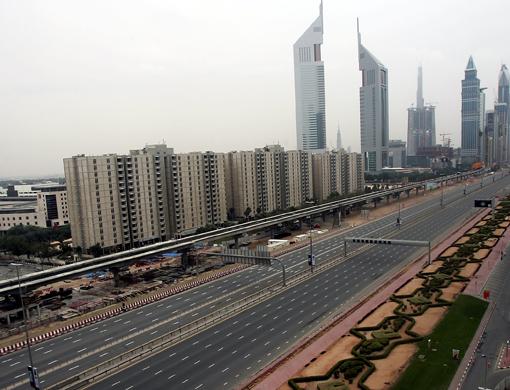
Sound of Rain
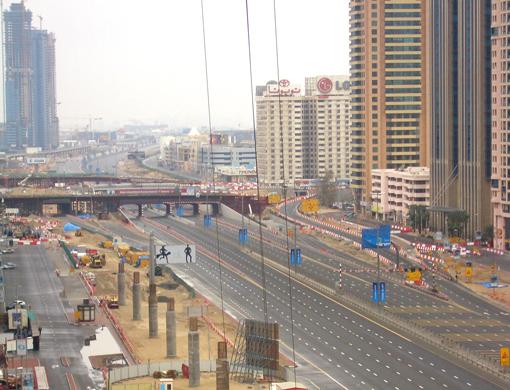
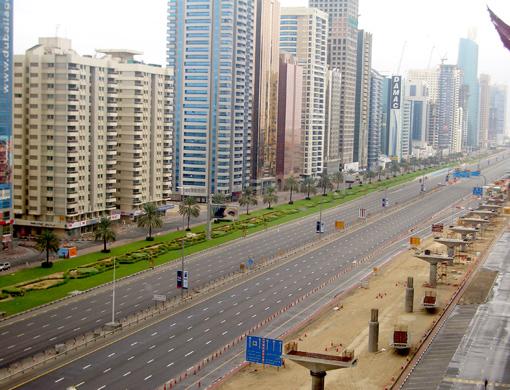
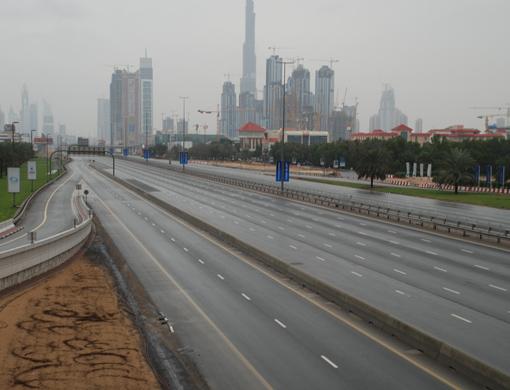
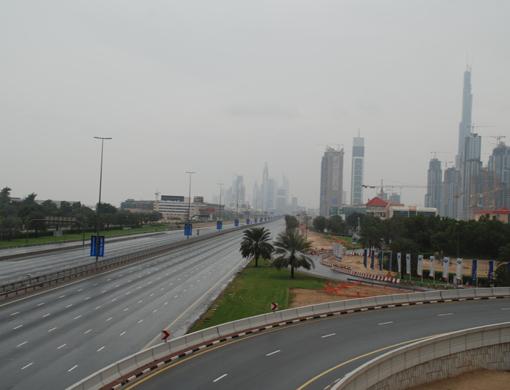
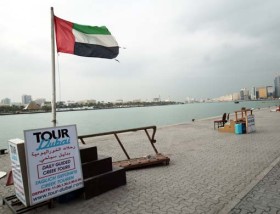
UAE welcomed US President George Bush for a two day visit to the country. I think it was a special welcome by rain god to mark the state visit of this special guest. Enjoy a few moments of this once in a year event as far as UAE is concerned. rain is very special for us. I am following lots of music these days and listening to music all around and share the sound of rain with you all. Listen/view carefully and you too can hear the sound of music in it.
Rain or sunshine, enjoy life as it comes…
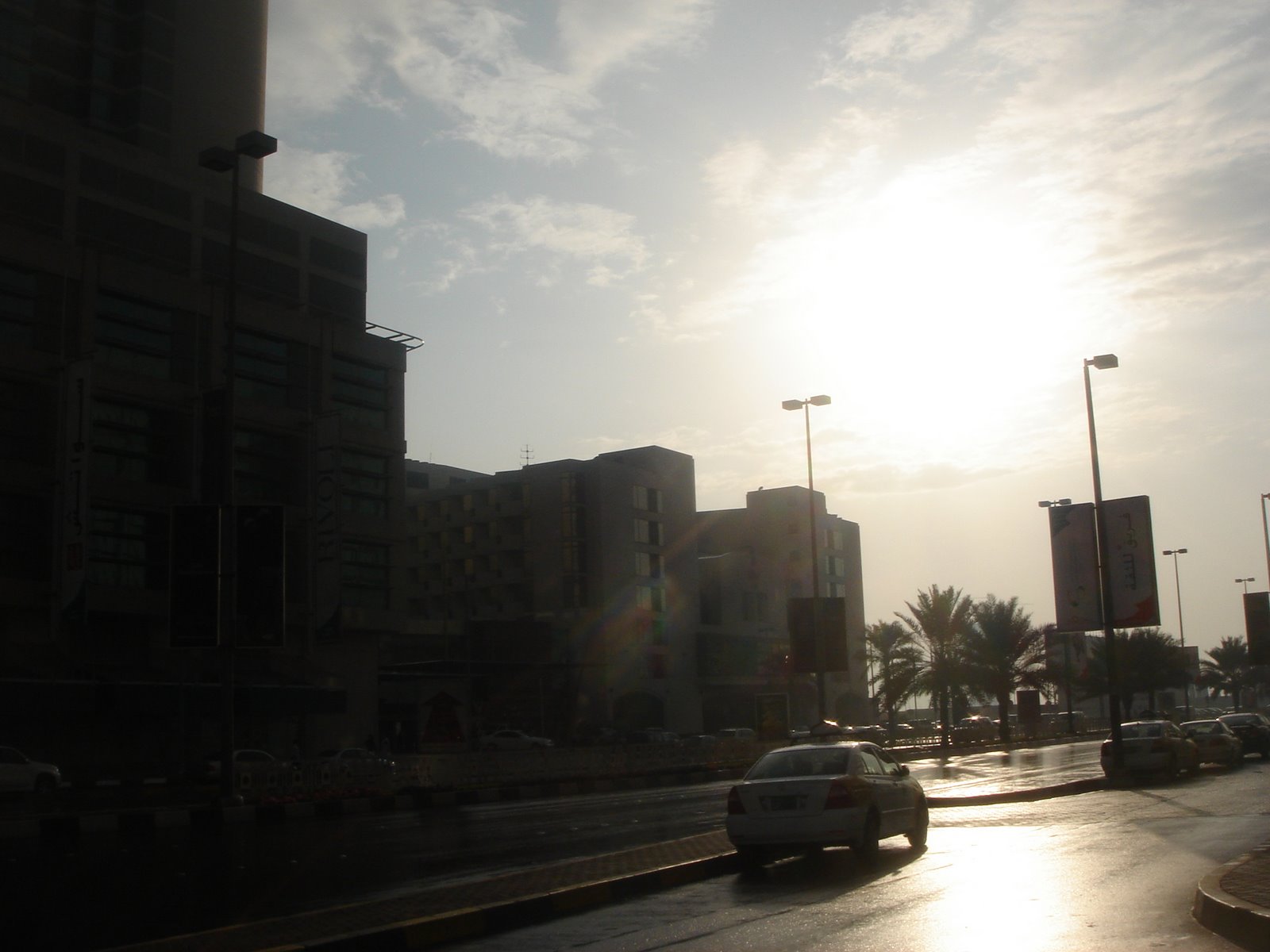
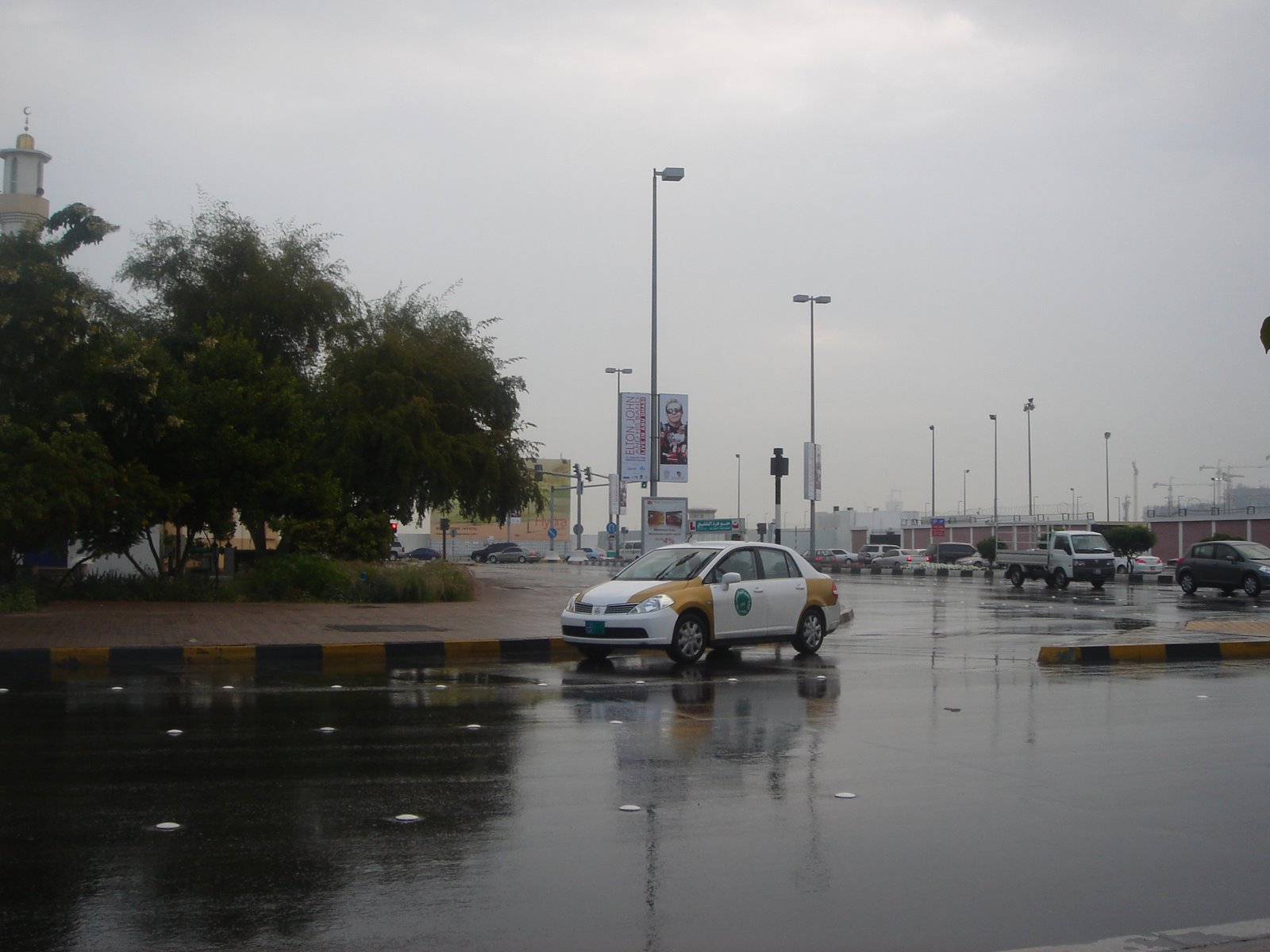
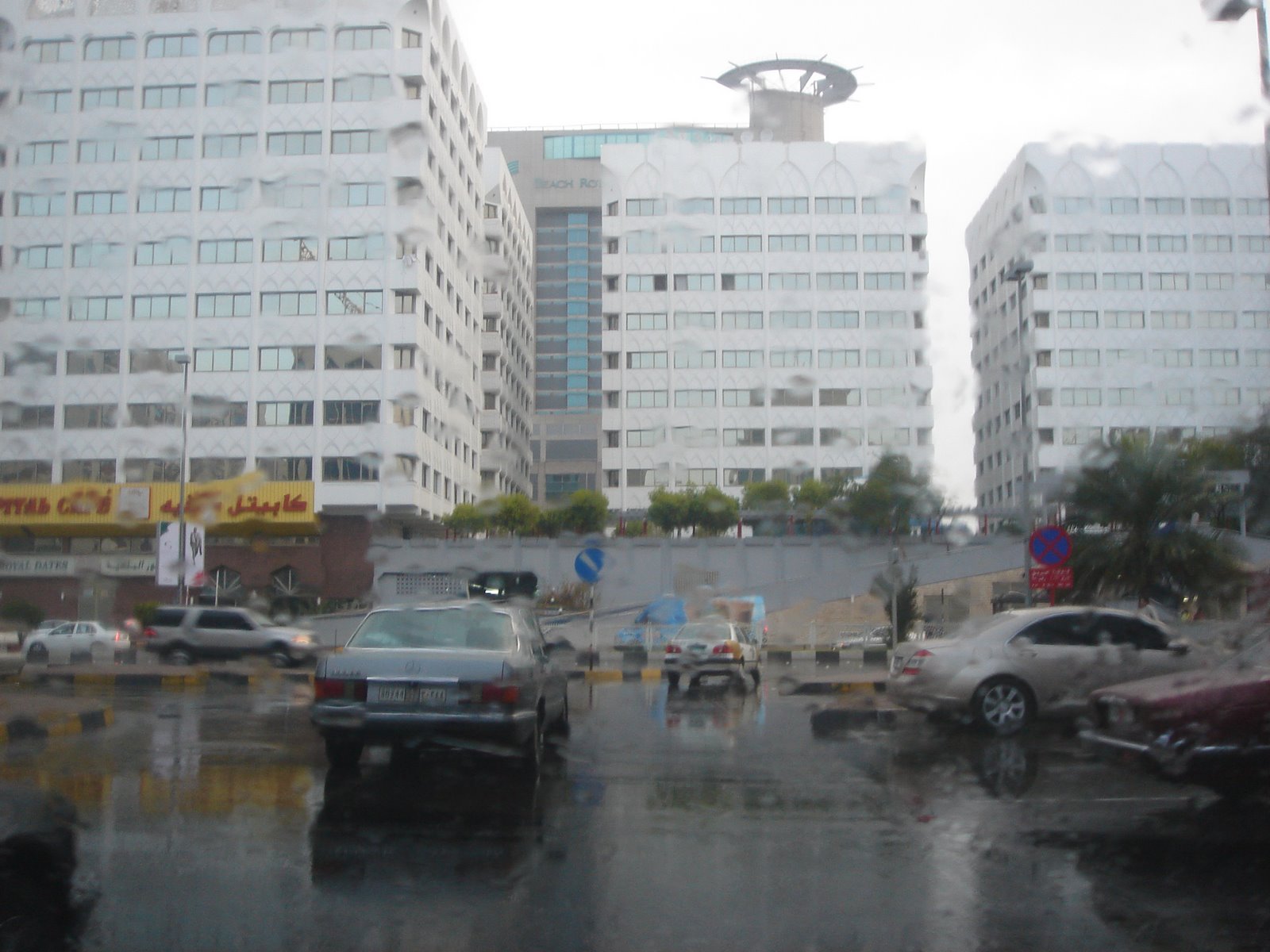


A holiday has been declared tomorrow for all instituitions private and public in Dubai. Do not venture out in your car as most of the roads are blocked. So take this opportunity, get set with your children, your camera and explore the beautiful developments that’s happening around, a view which normally you don’t see during your rush to and from office. Capture them and send them to me. I will be glad to post them. Because, we will be working when you holiday.
New law aims to cut soaring road deaths
New law aims to cut soaring road deaths
By Rayeesa Absal, Staff Reporter GULF NEWS Published: January 12, 2008, 23:29
Abu Dhabi: The traffic department has come up with tougher regulations that will come into effect from March, with the aim of bringing down the death toll related to traffic accidents.
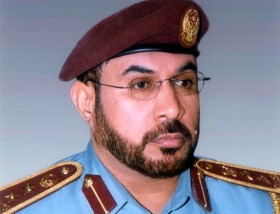
Gulf News spoke to Colonel Gaith Al Za’abi, Director of Traffic Department at Ministry of Interior, to find out more.
Gulf News: Could you tell us about the upcoming changes in the traffic law?
Colonel Gaith Al Za’abi: Fourteen changes have been made to the existing Traffic Law, which will come to effect from March 1. We are looking at cutting down the number of traffic accidents by 5 per cent. As per the instructions of Lieutenant General Shaikh Saif Bin Zayed Al Nahyan, Minister of Interior, a committee was formed with members of the traffic department of each emirate, and we after much discussion decided upon these amendments.
The traffic death toll in the country hit 852 last year. This is not a small number. We need effective measures to bring down this figure.
How would the amended laws help in cutting down accidents?
The committee identified four targets. Reducing the number of accidents, reducing traffic jams, increasing awareness and developing a traffic culture and reducing the number of accidents involving pedestrians. To achieve each target, a detailed action plan has been drafted.
Dh20,000 will be the minimum fine for serious offences and the penalty may also include a jail term, as per the court ruling. In addition to the heftier fines and jail terms, we will also implement a black points system.
What are the main challenges ahead for your department?
Increasing the awareness of people is one of the challenges. Pedestrians who do not cross at designated areas is a major cause of concern. Some motorists also do not respect the rights of the pedestrians. Making people aware will help reduce many accidents.
According to the new law, if a person crosses a road which has a speed limit over 80kmh then he/she would be held responsible for an accident. The growing number of pedestrian-related accidents and deaths has led the authorities to reach this decision.
But there are many areas that do not have proper pedestrian crossings?
The necessary infrastructure developments to support this law would be carried out simultaneously.
Those who talk on mobile phones while driving is another issue. These people slow down sometimes on highways which can be dangerous for them as well as others.
What measures will be taken to improve the public’s awareness?
Four programmes are being finalised for this. Our aim is to make the roads safer for all road users and for this we will reach out to all residents in the country. Lat year, approximately 25 per cent of accidents involved UAE nationals, 49 per cent involved Asians and 19 per cent involved Arab nationals.
These programmes will be relayed using visual, audio and print media, later this year. And this will play a significant role in developing a traffic culture.
Some of the emirates have local bodies that deal with traffic rules. How will this be tackled?
Cooperation between the emirates is part of our agenda. This is a federal law and all the emirates will implement it. The agenda discusses the use of latest technology, development of new methodologies to positively affect road users, bringing about changes in road engineering and helping other emirates develop their infrastructure.
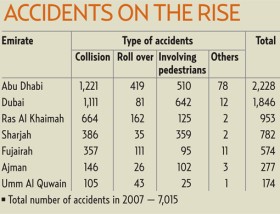
What are the main causes of accidents?
According to our statistics, speeding is a major cause. Not maintaining adequate distance from other vehicles and entering roads without verifying if the road is clear also cause many accidents.
Wind turbine for homes to reduce costs naturally
Wind turbine for homes to reduce costs naturally By Emmanuelle Landais, Staff Reporter GULF NEWS Published: January 12, 2008, 20:30
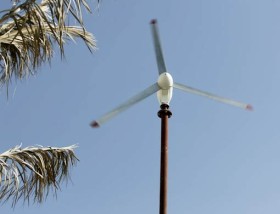
Dubai: Miniature wind turbines or solar powered water heaters now available in the market could reduce your home energy bill by 20 per cent and reduce carbon emissions to combat global warming.
For around Dh6,000 a mini wind turbine can be connected to the circuit breaker of a house and with an extra electricity inverter can power your home’s electrical needs. This does not power air conditioning.
Turning your home into an energy saving unit with the flick of a switch is the future, said Dilip Rahulan, chief executive director of Pacific Controls, who is shortly going to put on the market a Ubiquitous Box, or U-Box, which can monitor all sensors in your home and optimise their use.
Pacific Controls, which recently opened their headquarters in Dubai’s Techno Park as the Middle East’s first Platinum rated green building because of its energy saving facilities, has developed the small wind turbine for homes.
Combining the wind turbine with a U-Box will reduce energy consumption by using motion, temperature and timer sensors that can calculate when air conditioning, lights and taps should be switched on and for how long.
“This will help us find out where energy is being used. People go on a holiday and leave the air conditioning on, or the lights and with this system we will know if something is working that could be switched off,” said Rahulan.
“Savings of 20 per cent in energy use can be achieved in all properties. We started this with Emaar 20 months ago. We manage all pumps and streetlights to reduce energy consumption,” he added.
Homes and businesses will now be able to do the same with the Green Home and Green Building Systems which monitor use and waste of energy through a central command centre that can tell how full a water tank is, or what the temperature of a hotel lobby is.
Showers can even be set to switch off every three minutes.
“Through measurement and verification we will be able to monitor carbon footprint in homes. We are hoping to get LEED certification so residents can earn carbon credits. We will be able to tell how buildings are performing or [locate] any leaks,” said Rahulan.
Dubai budget surplus to hit Dh11.4b in ’08
Dubai budget surplus to hit Dh11.4b in ’08(Wam)
13 January 2008
DUBAI — His Highness Shaikh Mohammed bin Rashid Al Maktoum, Vice-President and Prime Minister of the UAE and Ruler of Dubai, has issued in his capacity as Ruler of Dubai, Decree no. 8 for 2008, announcing the budget of the emirate, which is expected to touch a surplus of Dh11.4 billion compared to Dh5.1 billion in 2007.
Dubai’s revenues for fiscal year 2008 are expected to touch Dh135 billion, while planned spending is estimated at Dh123.6 billion.
Dubai’s non-oil sector has scored success in regard to production rate through the emirate’s endeavours to expand and diversify revenue sources and base of income.
According to the financial report, the contribution of oil sector to the projected gross domestic product (GDP) in 2008 will be four per cent. The share of Dubai’s public sector in the balance sheet was 21 per cent, while the contribution of the economic sector was 79 per cent.
Shaikh Mohammed has also issued Law no. 29 for 2007 on budgets of the Departments of Dubai Government in the year 2008. The budgets are put at Dh26.5 billion, in which expenditure was distributed as per the strategic plan. Salaries and wages totalled 28 per cent, while the administrative and general expenditure were 32 per cent. The developmental and projects accounted for 40 per cent of the budget of the government departments.
“The endorsement of the Dubai emirate’s balance sheet by Shaikh Mohammed reflects the keenness of Dubai government on its major role in the achievement of targeted economic and social aspirations’, said Secretary-General of the Dubai Executive Council Ahmed bin Bayat. He noted the attention paid by Shaikh Mohammed to members of the community through his emphasis on making economic development go hand in hand with social development.
Director-General of Dubai Finance Department Sami Dhaen Al Qamzi said the 2008 budget reflects new dimensions and shows a growing attention is being paid to infrastructure projects as per international standards.
Mercury dips to zero in Al Ain
Mercury dips to zero in Al Ain
By a staff reporter KHALEEJ TIMES 13 January 2008
DUBAI — Mercury dipped to zero degree Celsius in Al Ain as the the UAE experienced light to heavy showers in the past 24 hours since Thursday evening, triggering accidents that killed two people and injured scores of others.
Abu Dhabi’s Abu Al Bukhoosh Island received the highest rainfall of 14.4mm, according to a senior duty forecaster at the National Centre of Meteorology and Seismology in the capital.
The forecaster said the sky would remain cloudy with showers across the UAE and heavy rains predicted particularly in the northern parts of the UAE.
It’s a Rainy rainy day
Hai friends,
So, the rain has come to Abu Dhabi, Dubai and all over UAE. Passing shots passing by you to comment. More rain and more photos as and when it happens.
Ramesh Menon
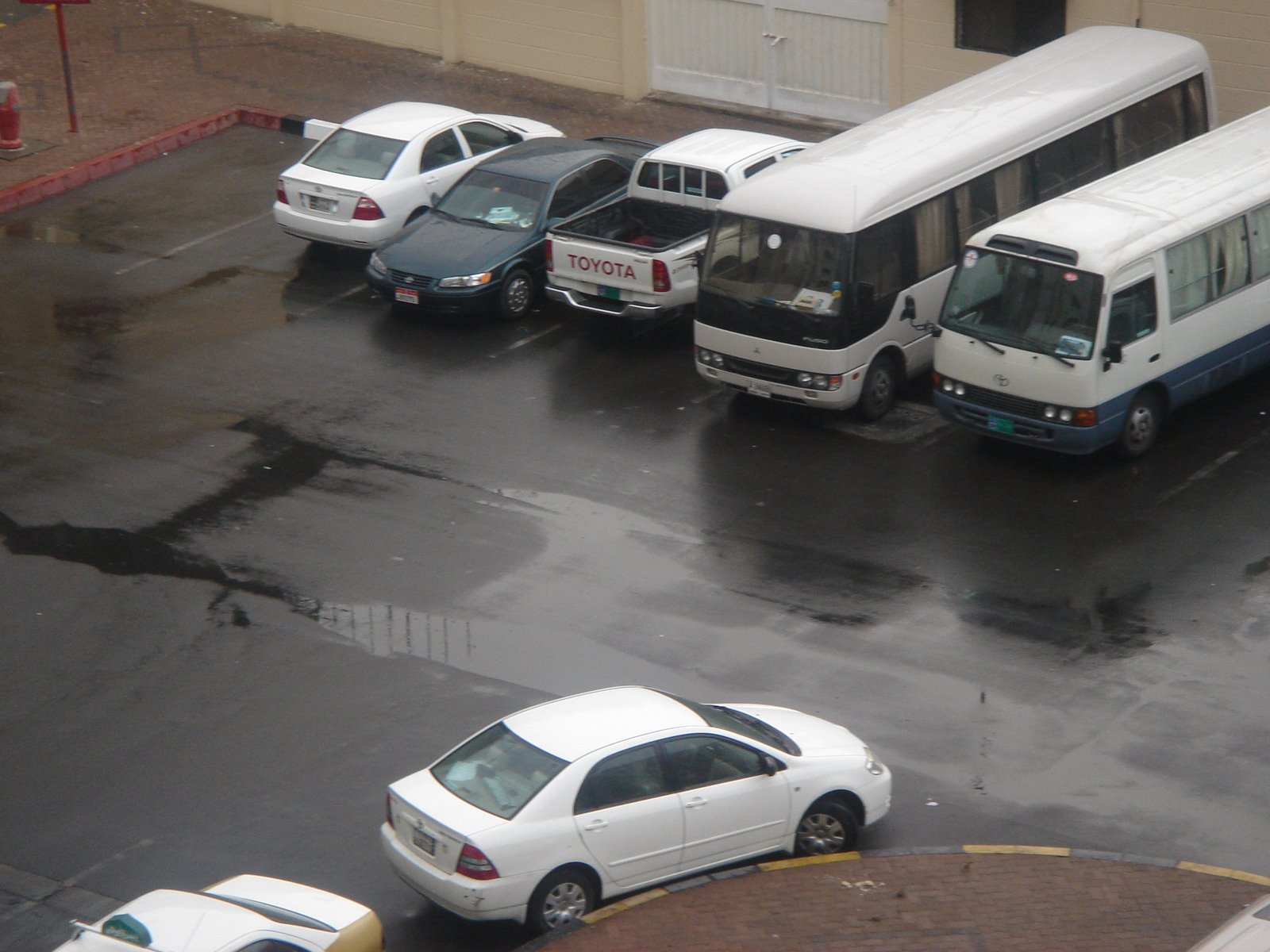
Reflections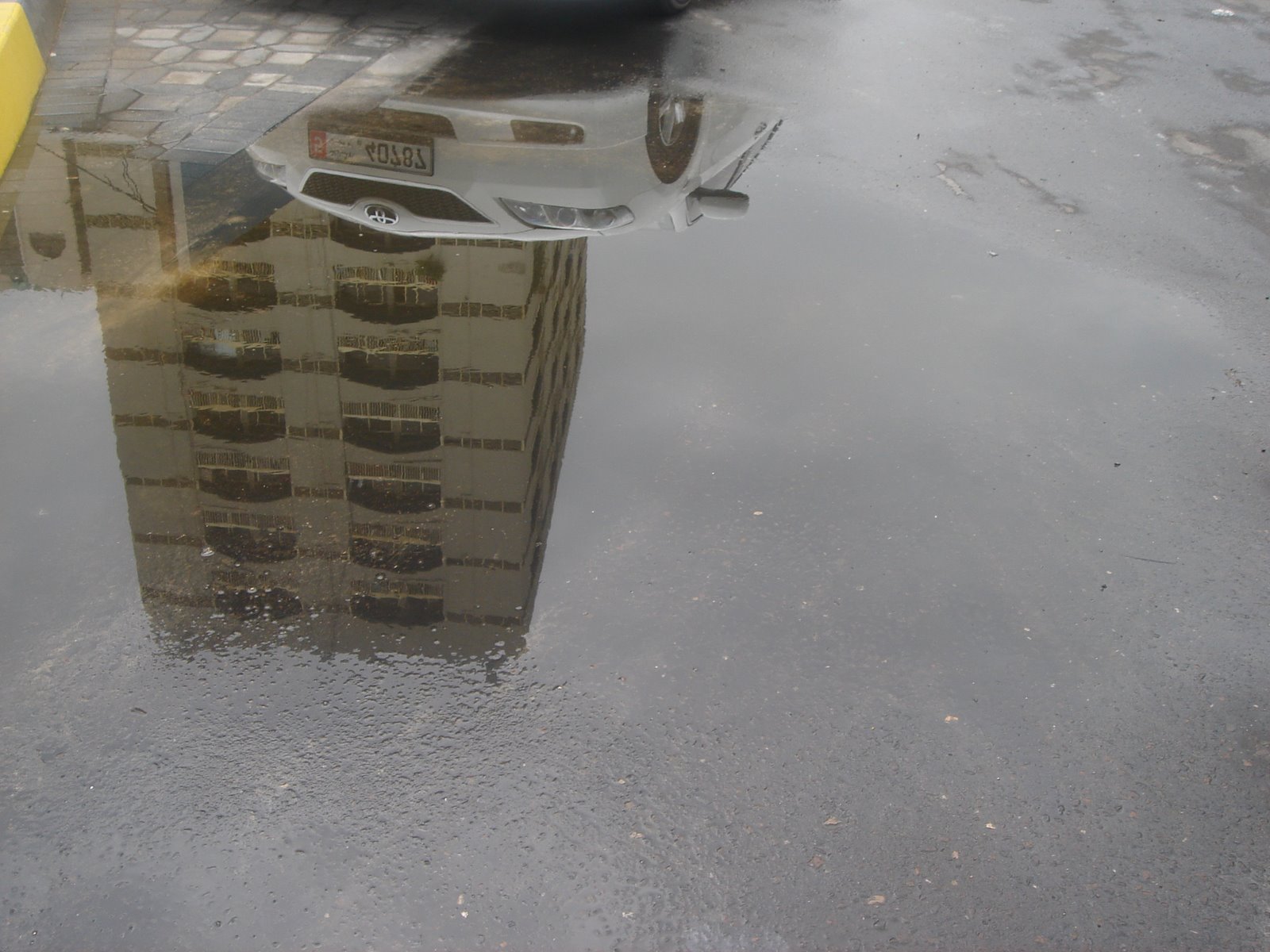
 ClicksandWrites
You must be logged in to post a comment.