UAE
Dubai-Sharjah double decker bus from Aug
Dubai-Sharjah double decker bus from Aug
By Joy Sengupta (Our staff reporter)KHALEEJ TIMES 28 February 2008
DUBAI — Commuting between Dubai and Sharjah is all set to become a pleasure when double decker buses start plying between the two emirates from August this year.
Senior officials of the Public Transport Department in the RTA have said 70 state-of-the-art double decker buses would be plying between Dubai and Sharjah from August.These 90-seat buses are all set to provide the passengers with the much-needed luxury.
Officials told Khaleej Times that they would also start new coach buses between Dubai and Abu Dhabi and Dubai and Al Ain.
The RTA already has a fleet of buses plying between Dubai to Sharjah, but the commuters have complained that at times, they have to stand because of the lesser number of seats.
Thousands of people use the bus service from Dubai to Sharjah everyday. The RTA started the service on the Dubai-Sharjah route in May last year with 90 buses. These were later replaced by more luxurious buses.
“People can catch the new double decker buses from the Al Ghubaiba (Bur Dubai) Bus Station. Initially, we would be operating a fleet of 70 double decker buses, with 90 seats each. This means that more people can travel comfortably at one time,” said an official.
He added that the double decker buses would drop passengers at two bus stations in Sharjah — Al Jubail Bus Station and Al Rolla Bus Station.
“The new buses would be strengthening our fleet and reduce the waiting period for buses considerably. Moreover, the passengers can enjoy a more comfortable journey,” he added.
Talking about the coach buses, the official said each of them had 35 seats and would be travelling on the Dubai-Abu Dhabi and Dubai-Al Ain routes.
Takreer plans to build new refining unit at Ruwais
Takreer plans to build new refining unit at Ruwais By Himendra Mohan Kumar, Staff Reporter GULF NEWS Published: February 25, 2008, 23:40
Abu Dhabi: The Abu Dhabi Oil Refining Company (Takreer), plans to build a new refinery with a capacity of 417,000 barrels per day (bpd) at Ruwais, 240 km west of Abu Dhabi, a senior company executive said on Monday.
“The project is in the front end engineering and design (FEED) phase. This phase will be completed in a year and then the construction of the unit will begin, subject to necessary approvals, with its completion planned for 2013,” Takreer general manager Jasem Ali Al Sayegh told delegates at the ongoing Middle East Refining Conference here.
He declined to comment on the estimated cost of the project.
“We will have an estimated cost one year from now,” said Al Sayegh, but admitted that Takreer is feeling the heat of project escalation costs, which is a global phenomenon.
Al Sayegh said the new refinery will complement Takreer’s present 400,000 bpd plant at Ruwais.
The Ruwais refinery currently processes 120,000 bpd of crude oil and 280,000 bpd of condensate.
In addition, Takreer operates the 85,000 bpd Abu Dhabi refinery located on the outskirts of Abu Dhabi.
Al Sayegh said Takreer’s future plans are driven by the demand growth for petroleum in the local and international markets.
The refiner’s green diesel project, which aims to reduce sulphur content in gasoil as mandated by the government, is planned for completion by the end of 2011.
In addition, Takreer is building an inter-refinery pipeline, which will connect both refineries with its Musaffah product dispatch terminal in the second quarter of 2008.
“This project, upon completion, will eliminate shipment of products between refineries,” said Al Sayegh.
Another senior Takreer executive said nearly 30 per cent of the refiner’s output constitutes gasoline and diesel.
“As of now, we don’t import any oil products. We meet all our domestic fuel requirements and export too. We are exporting diesel, jet fuel and naphtha, mainly to Japan and the Far East,” said the Takreer executive.
He said the Ruwais refinery, which at present is undergoing partial maintenance, will resume normal operations within the next 25 days.
Takreer was established in June 1999 to take over the responsibility of refining operations of the Abu Dhabi National Oil Company (Adnoc).
Friday sermon to be telecast live in sign language
Friday sermon to be telecast live in sign language
By Adel Arafah (Our staff reporter) KHALEEJ TIMES 26 February 2008
ABU DHABI — The Juma (Friday) sermon at Shaikh Zayed Mosque in Abu Dhabi will be telecast live in sign language from the first Friday of March, Dr Mattar Al Ka’abi, Director-General of the General Authority for Islamic Affairs and Auqaf (Endowments), said recently.
Emirates TV channel would telecast the sermon in sign language every Friday, he said.
The move was part of the authority’s commitment to the people with hearing and speech difficulties, who number more than 200 in Abu Dhabi alone as per the statistics issued by the Zayed Higher Foundation for Humanitarian Care, he said.
The authority had signed contracts with two specialists in sign language to convey, in detail, the Juma sermon, he noted. These people with special needs are an integral part of the society, and the authority was planning to introduce sermons in sign language in more mosques in all emirates, he added.
Want to test your fitness, climb 55 floors
Want to test your fitness, climb 55 floors
By a staff reporter KHALEEJ TIMES 26 February 2008
DUBAI — A high rise stair climb in Dubai’s iconic tall buildings will be held on February 29. As part of it, participants will scale 55 floors to test both their endurance and fitness.
The ‘Dynamisan High Rise Stair Climb’ was announced yesterday by Novartis Consumer Health (NCH).
The climb, to be held at the A W Rostamani 21st Century Tower in Dubai, is expected to be rolled out throughout the GCC countries over the coming months.
With the increasing incidence of lifestyle diseases such as diabetes and cardiovascular diseases in the UAE, this climb aims to showcase the benefits of taking the stairs and getting more physical exercise to combat obesity and help ensure a healthy lifestyle.
Stair climbing is an effective cardiovascular work-out and burns twice as many calories as other sporting activities; 15 minutes of stair climbing produces the same results as 30 minutes of running. Climbing up the first 20 flights will be aerobic, after which the climb will intensify becoming an intense anaerobic work-out.
Samah ElManzalawy, Dynamisan Brand Manager from Novartis Consumer Health said, “We all work long hours and tend to neglect our health, especially with regards to exercise. We are often too tired to exercise, even though it will give us an energy boost.”
The event is open to everyone.
No ban on YouTube in UAE
No ban on YouTube in UAE
By Asma Ali Zain (Our staff reporter) KHALEEJ TIMES 26 February 2008
DUBAI — Internet users can be rest assured that YouTube, an active video sharing web site, will not be completely banned in the UAE as its content is already being regulated by the Telecommunication Regulatory Authority (TRA).
Users were concerned after Pakistan on Sunday asked its Internet service providers (ISPs) to completely ban the web site until further orders for posting blasphemous material.
A spokesperson for the TRA told Khaleej Times yesterday, “We have given choice to the Internet users in the country and not blocked the web site entirely. Adult content on the web site that is clearly against the religious, cultural, political and moral values of the UAE will automatically be blocked.
“Our ISPs (Etisalat and du) have an understanding with YouTube in this regard. Nearly two years ago, YouTube was blocked in the country. However, the TRA wants to provide flexibility to its subscribers. Therefore, the web site can be accessed in the country though objectionable content will remain blocked,” said the spokesperson.
“Following reports from Pakistan banning the site for blasphemous material, we were concerned that the UAE might follow suit since this is an Islamic country. Thankfully, the site is still accessible. Despite its drawbacks, it remains a rich source of information. It is fair though that the content is monitored and blocked if that is the rule in the country,” said Linda Brehick, a user.
“I think that the web site should be banned completely in the country because even though it is being monitored closely, there are certain objectionable materials that I would not like my children to see. It is practically impossible to monitor your children all the time. If the ban is in place, we can be assured that they will not have access to the site,” said Farida Mohammed.
According to Wikipedia, YouTube is the third most visited web site (as per statistics from Alexa Internet). It has been censored several times in some countries since its launch and it is banned in several countries including Brazil, Iran, Morocco, Pakistan, Syria, Thailand and Turkey. Saudi Arabia and the United Arab Emirates only block content that is not in line with their policies.
Use of seatbelts in back seats may be made compulsory
Use of seatbelts in back seats may be made compulsory
By Alia Al Theeb, Staff Reporter GULF NEWS Published: February 24, 2008, 23:29
Dubai: Police are working with the Interior Ministry to issue a law that considers making not wearing seatbelts in the back of a car an offence, a senior police official announced on Sunday.
Brigadier Mohammad Saif Al Zafein, Director of Dubai Police’s Traffic Department, did not elaborate on the issue, but stressed the importance of wearing seatbelts at all times. Currently, only front seat passengers need to wear seatbelts by law.
Police issued around 25,520 offences for not wearing seatbelts in 2007 with an average of 2,126 offences monthly. Brigadier Al Zafein announced the launch of a two-week awareness campaign on wearing seatbelts which began yesterday.
Awareness
He said awareness regarding wearing seatbelts had started going down and the number of motorists who now wore seatbelts was only 50 per cent. Brigadier Al Zafein revealed that 332 people were killed in traffic accidents last year and it is estimated that 40 per cent of those victims in collisions were not wearing seatbelts.
He pointed out that 16 per cent of people who were killed in accidents where cars flipped over in 2007 were not wearing seatbelts. The fine for not wearing seatbelts is Dh100 and three black points. The law fines the motorist and the passenger sitting next to the motorist.
“We are coordinating with the Interior Ministry to issue a law that considers not wearing seatbelts in the back seat a punishable offence,” Brigadier Al Zafein said.
He said the first week of the campaign would focus on spreading awareness on the importance of wearing seatbelts and the importance of using child car safety seats.
The second week will focus on road control and issuing fines to offenders.
“Seatbelts do not prevent accidents but they do reduce the damage to the lowest levels,” Brigadier Al Zafein said.
He pointed out that traffic police issued 14 fines to motorists who allowed children under 10 to sit in the front of cars.
Lieutenant Colonel Dr Jasim Mirza, Director of Dubai Police’s Security Awareness Department, said the focus of the campaign would be on educating schoolchildren.
Dubai Police’s Traffic Department launched the campaign in coordination with the Santis HSE Group, a Global Health, Safety and Environment Consultancy and Gargash Enterprises.
Santis HSE Group and Gargash Enterprises officials will take the campaign to schools, streets and shopping malls in Dubai to promote safety and give out complimentary child car seats and car safety packages.
Black points await errant drivers
Black points await errant drivers
By Rayeesa Absal, Staff Reporter GULF NEWS Published: February 24, 2008, 23:29
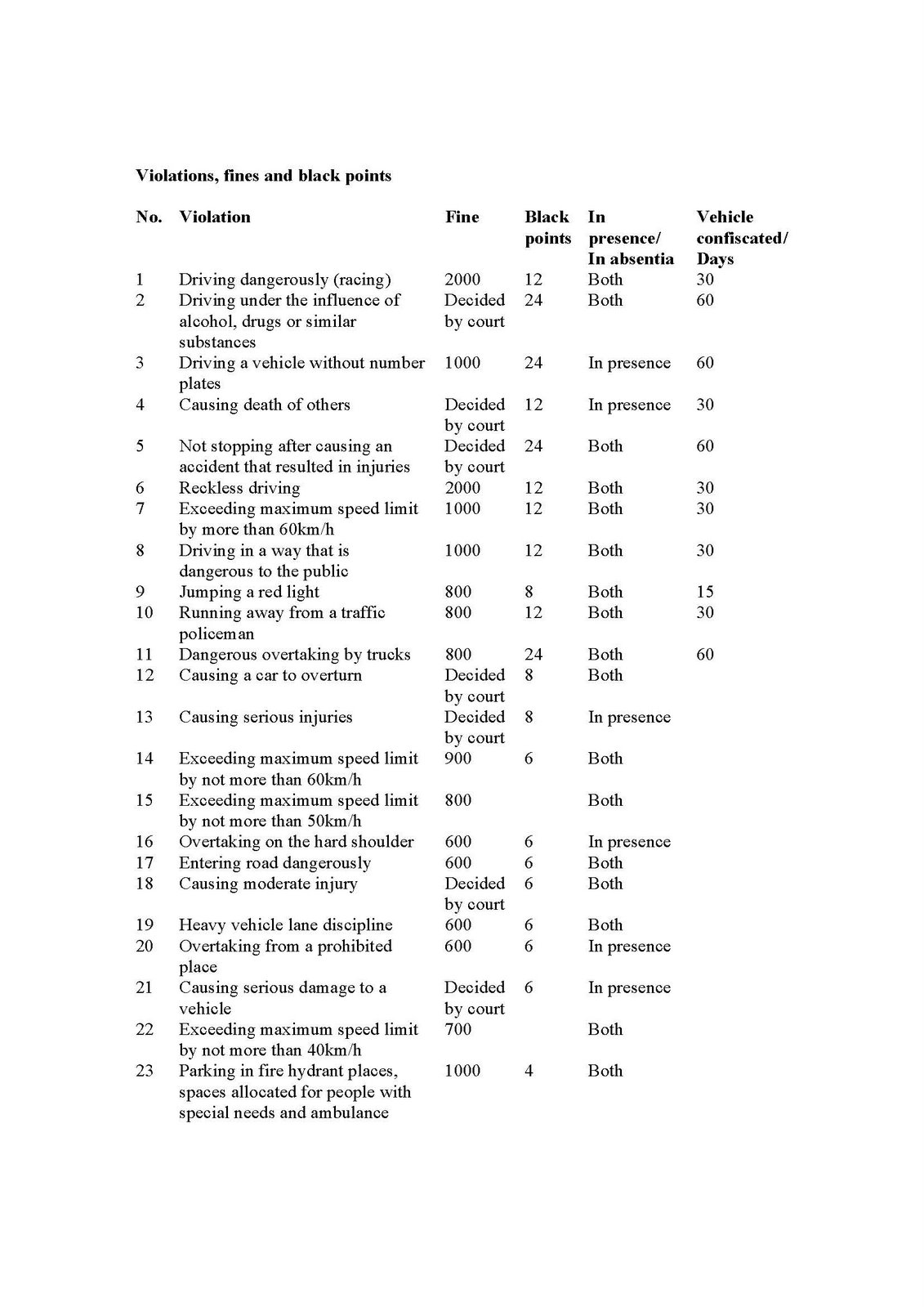
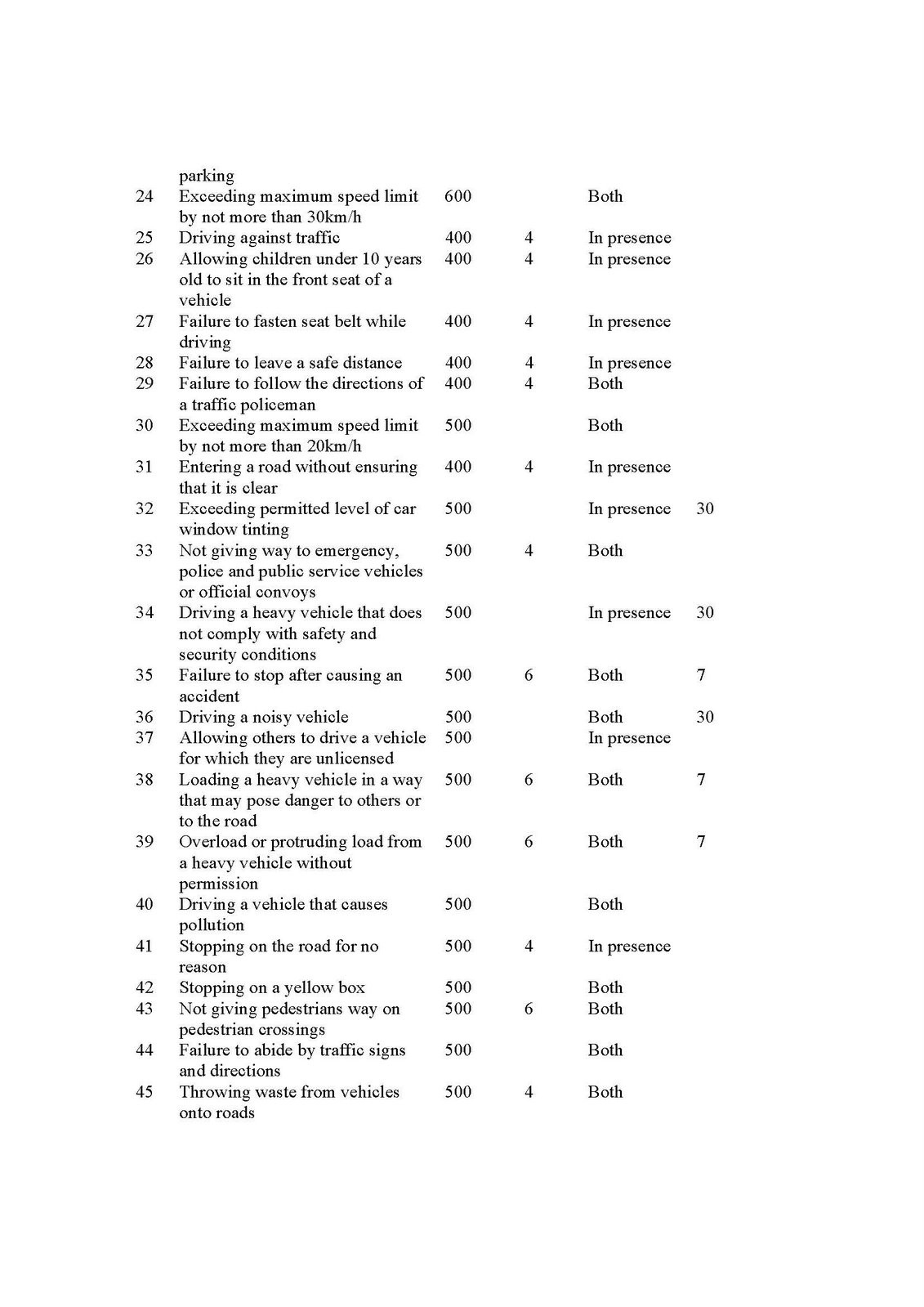
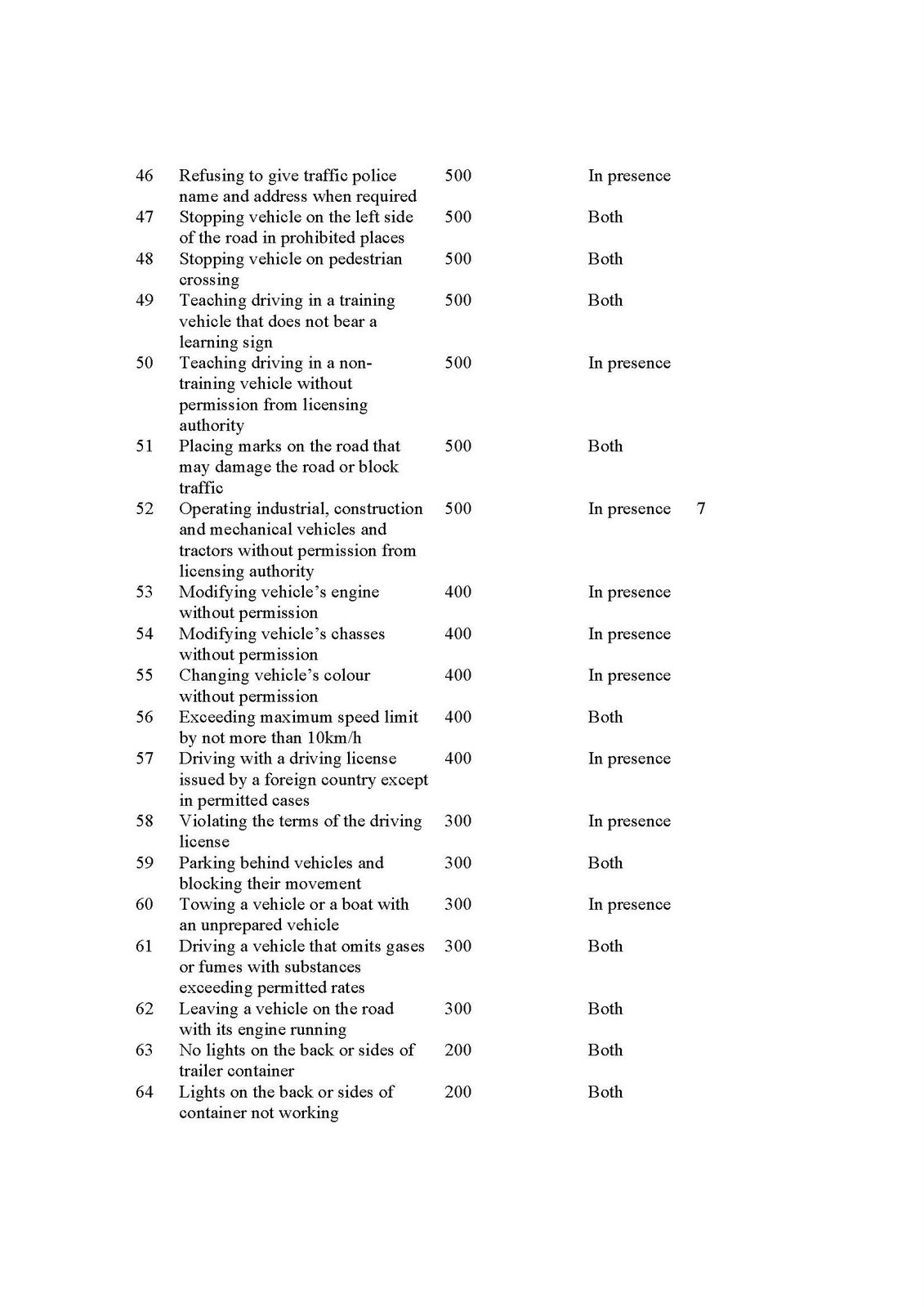
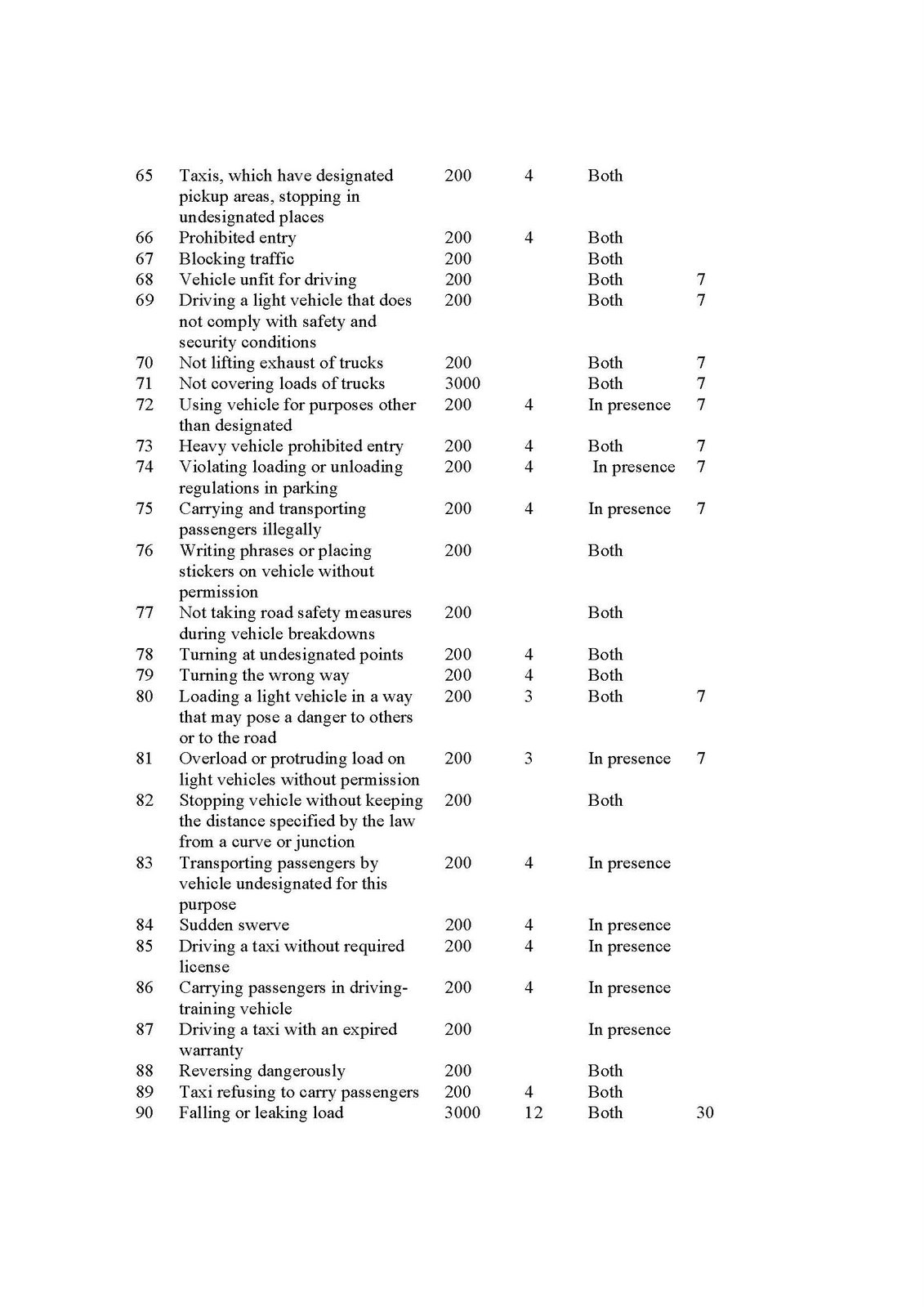
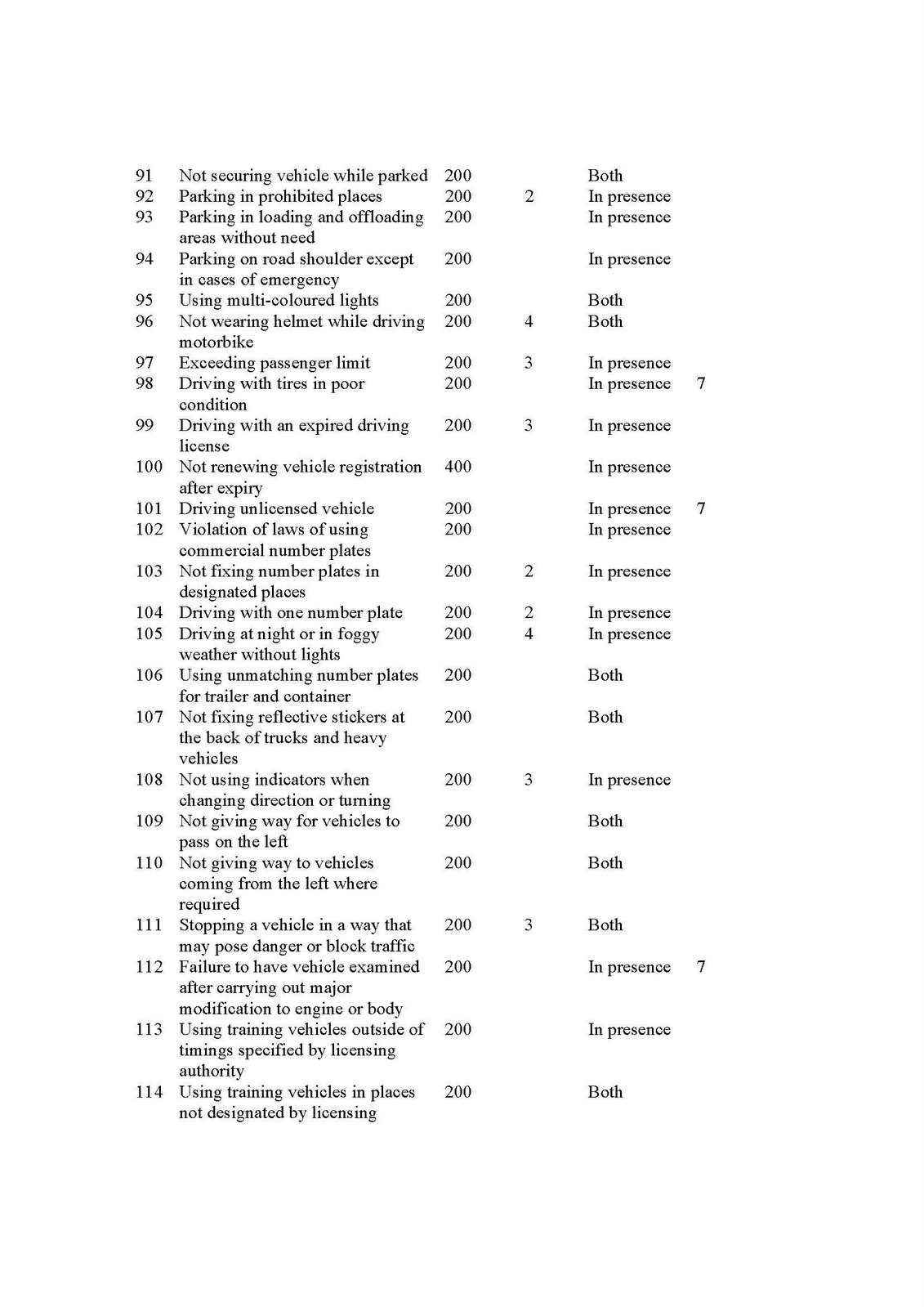
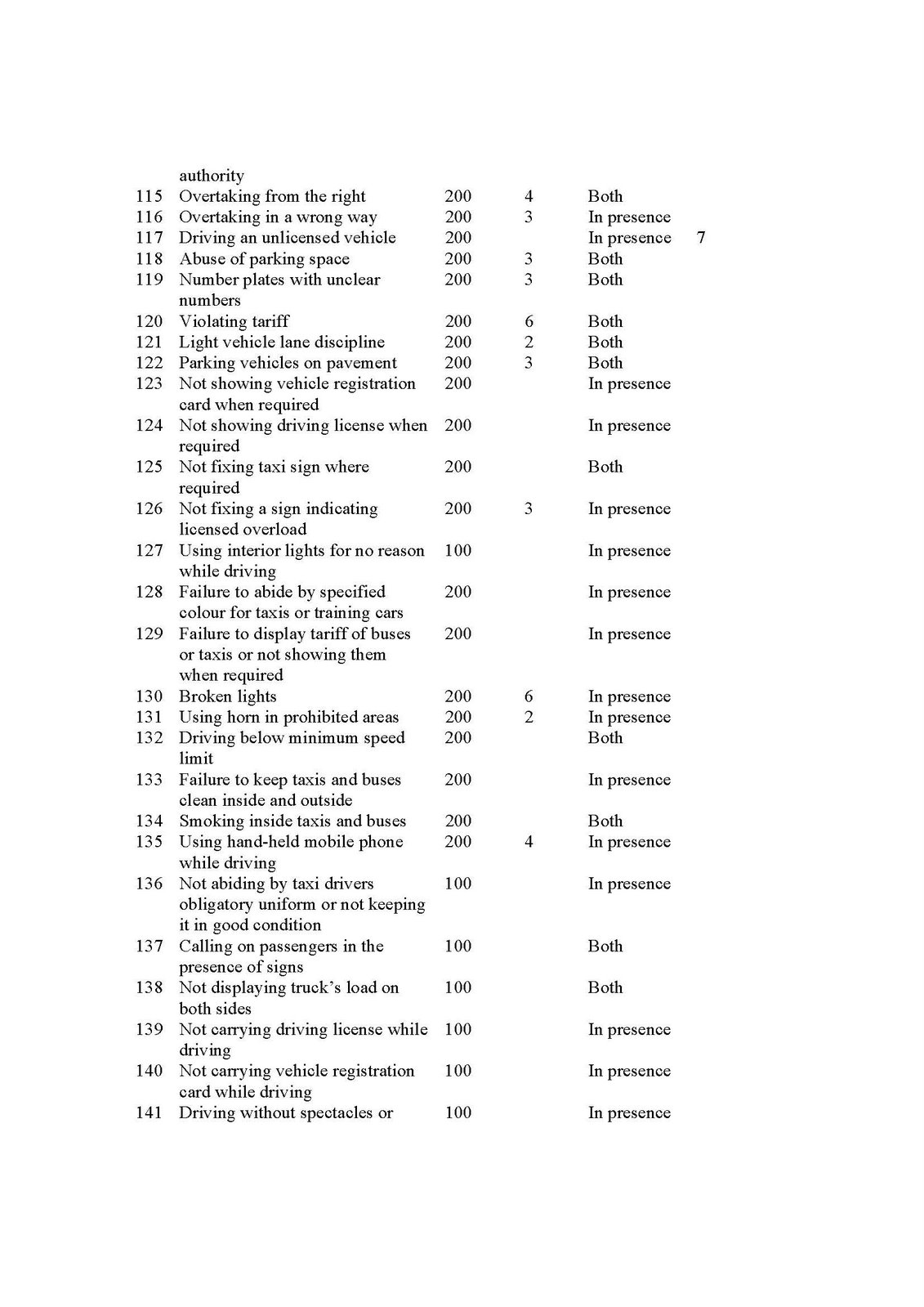
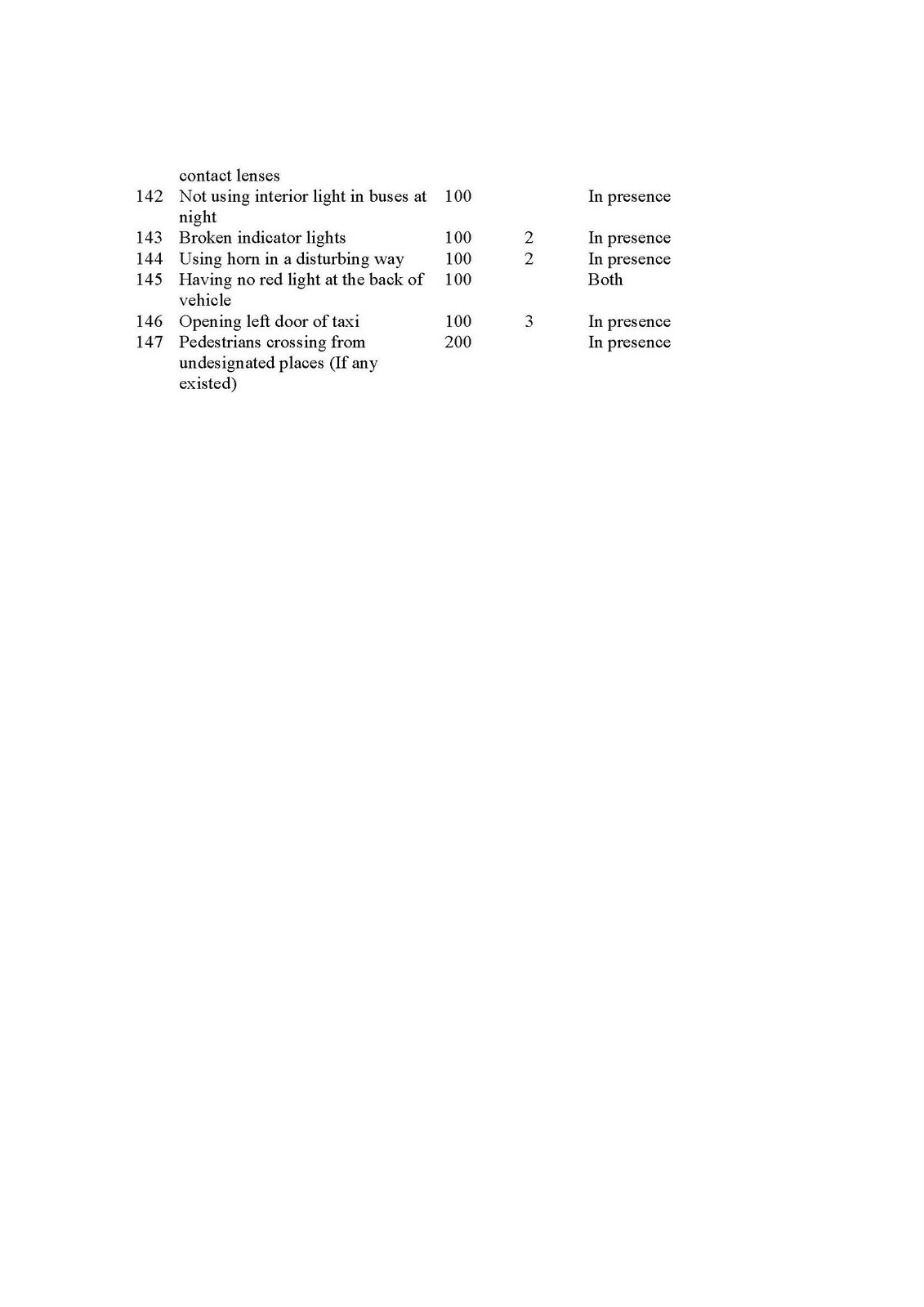
Abu Dhabi: A black point system for traffic offences is to be implemented across all the emirates starting March 1, senior Ministry of Interior officials said on Sunday.
On March 1, the new Unified Federal Traffic Law comes into effect putting in place hefty penalties for serious traffic offences as well as black points against the licence of the driver.
“Earlier errant drivers could get away with paying comparatively low fines, but from now on the rules are getting tough”, said Lieutenant General Saif Al Shafa’ar, Undersecretary of the Ministry of Interior, at a press conference, announcing amendments made to the Federal Traffic Law. Fourteen amendments have been made to the traffic law.
“The lives of 1,056 people were lost in 2007 alone all over the country in traffic accidents. This number is what forced the ministry to come up with the changes,” he said.
The strategy of the ministry is to cut down traffic deaths as much as possible by effective changes in the traffic law clubbed with stringent implementation techniques, Al Shafa’ar said, adding that the new law will save lives and create a safe environment for all road users.
The maximum number of black points a motorist can incur in a year is 24 at which point his licence is suspended. Once a person collects 24 black points, the licence will be suspended for three months. If a motorist collects 24 points for the second time, the license will be suspended for six months. If it happens for the third time, the licence will be taken away for one year and will not be returned until the driver passes a training course from an institute authorised by the traffic department.”
Senior officials said that if a motorist has collected, for example, 20 black points and feels that his licence could soon be taken away if he accumulates 24 points, he can take a training course at an authorised driving institute. Police will then remove 8 points. This option can be utilised only once a year.
Impounded
If a driver is below 21 years and collects 24 black points, then the licence will be impounded for six months. It will be returned after the driver passes a driving course. Also, if a driver gets 24 black points within six months of issuance of his licence the licence will be cancelled and the person cannot apply for a test only after one year following the date of cancellation.
All government owned vehicles are exempt from these rules. The traffic department will inform the owner about details of the offences. If the vehicle was driven by another driver, the owner must send the driver to the traffic department within a month of notice. Otherwise the vehicle may be impounded for a month.
If the driver of a heavy vehicle has caused an accident which results in the flipping over of vehicles, or he has jumped a red light or overtaken in places not allowed, the vehicle will be impounded for one month and licence will be suspended for one year.
The ministry has already started an awareness campaign to reach out to all sections of society to familiarise them with the new law. Arabic, English, Urdu and Malayalam brochures will be distributed to the public as part of the campaign.
As part of the new law some vehicles have been exempt from registration and licensing fees such as vehicles belonging to those with special needs.
New leaf: Cancelled every year
In case a person gets five black points in May 2008 and gets another five in October, the points incurred in May 2008 will be cancelled in May 2009 unless the motorist has incurred 24 points in the year when the licence will be suspended.
Similarly, the points incurred in October 2008 will be cancelled in the same month the following year.

French connection
French connection
By Shiva Kumar Thekkepat, Staff Writer GULF NEWS Published: February 15, 2008, 00:30
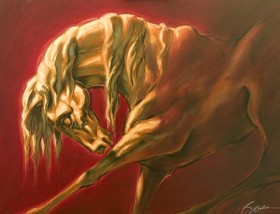
The UAE is fast becoming a major player on the international art scene. Next month, the first French Art Festival – featuring the works of 35 artists, including five from the UAE – is scheduled to take place in Dubai and Abu Dhabi.
Think art and one of the first images that springs to mind is of France. This nation was home to some of the most prolific artists in the world.
After the Second World War, many in the field argued that the US had taken over from France to become the centre of the art world. However, in the past decade or so, Europe, primarily Britain and France, has been edging ahead of the US. Now, if the French interest in the Middle East, as shown by the high profile French Art Festival set to take off in Dubai and Abu Dhabi next month, is anything to go by, a fourth market is likely to emerge on the international art scene – the UAE.
The First French Art Festival will see the exhibition and sale of 400 works of art produced by 30 French artists. Also taking pride of place in this festival will be five artists from the UAE who are to be the guests of honour at the festival. Hosted by the Abu Dhabi Cultural Foundation, the event will showcase some of the finest works of art including paintings, sculptures and photographs.
“It all started with Francoise Malafosse’s passion for art, contemporary art in particular, and creation,” says Odile Duron, French Art Festival project manager.
“Through the French design and communication company she started with her husband, Michel, Francoise (who is the French Art Festival manager and a passionate art lover). met a large number of artists, most of whom became her friends over the past 15 years. Francoise always had the desire to bring their talents together through a major art exhibition. Out of 120 she chose 30, and she wanted to showcase their talents and that is how the festival came about. The French Art Festival in the UAE offered her just that opportunity.”
Francoise is all set to realise her dream thanks to Odile Duron who, along with her team, has been working for over a year enlisting the support of the concerned authorities in the UAE.
“It is about promoting art, French contemporary art and French artists helping them to export their works of art which is usually difficult to do especially if they are independent and don’t work with established galleries. The French Art Festival is a great opportunity (for them),” says Odile.
Patrice Paoli, French Ambassador to the UAE, and Dominique Baudis, president of the Arab World Institute in Paris, are expected to attend the opening of the event.
During the opening night, one of the French painters, Robert
Di Credico, will paint live on stage and his painting will then be auctioned with the proceeds going to the Emirates Foundation. Around 5,000 people have been invited and 2,000 more visitors are expected over the three days, according to Odile. A special evening will be reserved for women.
Based on the initial selection made by Francoise, over 700 works of art by the 30 select French artists have been put together to form a panel that is representative of the best of contemporary art in France.
“Many French artists don’t work with galleries as they want to be independent and we too prefer it that way as we want to preserve their identity and not impose anything on (their creativity),” explains Odile. “Francoise and the artists chose the works of art that are to be exhibited together, and nothing was imposed on them in terms of technique or anything.”
The main idea behind the selection was to make sure that they would not compete with each other. Also the organisers wanted to provide a wide range of what contemporary French art is. Francoise did not choose one trend in particular. On the contrary, she wanted to be as objective as possible, to give as broad a spectrum as possible to meet the expectations of the public, says Odile.
According to her, the talent that will be on exhibit is incontrovertible. “There is Robert Di Credico who is going to paint live on stage at the opening ceremony and that work will be auctioned, with the proceeds going to the Emirates Foundation,” she says. “He’s done that before, he’s very good at it. There’s also Christine Barres. She uses very bright colours. It reflects her personality. She’s very enthusiastic, very optimistic. She’s going to conduct workshops at the Cultural Foundation and wants to share her passion for art with all art lovers.
“There is also Pascal Magis, he’s already quite famous in France. Then there’s Jean-Louis Toutain, a sculptor, whose works can be seen in many public places in France. All of them are quite unique in their own way.”
Apart from the French talent, five local contemporary artists – Manal Bin Amro, Nuha Hassan Asad, Mohammad Kanoo, Mohammad Mandi and Wasel Safwan Antepli – will provide local input with their works complementing those of their French colleagues.
Though French art has dominated the art scene globally for centuries spawning many influential schools, it has not been setting any discernible trends in recent times.
Francoise, a serious student of French contemporary art, says: “I don’t think there is a particular trend, or maybe it’s too early to say.
“I would refer instead to a new momentum in various fields: there are interesting creations in ‘classic’ fine arts (painting, sculpture, music, couture, etc.) as well as in more innovative areas: photography, design, cuisine, video art, etc. There is a profusion of talent and inventiveness. For French artists, the challenge is to take on board – and release themselves from – extremely strong traditions. For years, France has reigned supreme as the country of the arts: both an opportunity and a responsibility.”
Does this mean that French art is in a good state of health at present?
“You have to distinguish between the creation and the market,” says Francoise.
“In terms of creation, I would emphasise that the talent is out there. And the people we are introducing with the French Art Festival prove my point. Through the 30 artists selected, we present a sort of representative shot of what is being done in France today.
“In terms of the market, or rather of market share, it cannot be denied that France follows the United States, Great Britain and, now, China. But artistic quality is not measured just by millions of dollars … at least I hope not,” she says.
The French government had announced a Euro 100-million project to support French artists and increase the contemporary art market some time back. Has this succeeded in reviving the art market in France?
“I don’t know the details of this project,” says Francoise. “But I do know that in March, Martin Béthenod, general commissioner of the International Contemporary Art Fair, is to submit his report to ease the administrative burdens facing professionals and to encourage collectors. That will involve relaxation of regulations in France and harmonisation on a European level. Last autumn, Christine Albanel, Minister for Culture, promised to launch a revival plan to boost the art market. And at the end of January, the Council of Ministers adopted a bill to make art and cultural education generally available from the earliest age. Finally, a new structure, linked to the Pompidou Centre, will be created in the vacant premises of the Palais de Tokyo in Paris.”
While it appears that the French government has many mechanisms for supporting contemporary art and artists, there has been some criticism of this sort of State sponsorship. Francoise, however, feels this move is justified.
“Most countries promote their art and support their artists by placing orders, allocating grants, providing premises, facilitating exports, etc,” she says. “France has a tradition and knowledge in this field, whether at a national level or at a regional level through DRACs – the regional offices for the arts. Local councils are also playing an increasingly important part in the distribution of the arts and culture.
“There are always critics on either side: some believe that public authorities do not do enough, others believe that they are getting involved in a field which is not their own. You have to find the right balance between public and private, while keeping in mind that, in the end, it is always the public who decides.”
And then she delivers the coup de grace: ” I have two things to say about the effectiveness of this policy: first, the share of living artists in the art market is continuing to rise; second, 83 per cent of works changing hands around the world in 2005 were worth less than $10,000. So it is not only past geniuses who are finding buyers!”
Francoise does not entirely agree that after ten centuries of hegemony, there was a certain decline in the influence of French art following the Second World War. “I would not call it a decline in French art but increased strength in other countries, which is perfectly normal,” she says.
“It was natural that the dominant power of the United States since 1945 should also manifest itself in the arts. Similarly, it is natural that China, which represents nearly a quarter of humanity, should take its own prominent place.
“Countries such as France, England and Italy, for example, have made similar journeys. But I do recall that, in 2005, of the 10 bestselling artists in the world, four were French – Claude Monet, Marc Chagall (originally from Belarus), Fernand Léger and Jean-Michel Basquiat. [Also], the number one, Pablo Picasso, spent a large part of his life in France!”
But according to experts, during the past decade Europe appears to have caught up somewhat with the United States. Does this denote a resumption of contemporary art in France?
“Following the explosion of the speculative bull market in 1990, the art market experienced several years of recession, followed by an upturn in recent years, linked primarily with an increase in the number of buyers,” explains Francoise. “This can be explained by the emergence of new markets (such as China, India and Russia) and by increased accessibility to works, thanks to all the tools in place especially on the internet.
“France continues to be an inexhaustible crucible for works of art: the country’s museums contain unrivalled riches, its collectors are innumerable and the institutions, such as the Drouot auction house, the house of François Pinault and Fondation Cartier, play a major role in artistic exchange today. And, again, we are not just talking about classic works: the 20th century was exceptionally rich [in modern works of art] in France, and there is no reason for that to stop in the 21st century.”
There are three essential markets for art: France, Great Britain and the United States. Does this exhibition represent a high level of interest in French art in the Middle East?
“Yes, I believe these new ‘stages’ are important,” says Francoise. “Not just because these are markets, but also because these are places where art has always been present. What motivates me more than anything is artistic exchange, the meeting of people and works from different traditions. Nothing is more interesting.”
Perhaps the reason why both Francoise and Odile are looking beyond the festival already. “The spin-offs of such an event are innumerable and not all of them are quantifiable,” say Odile. How can one measure the pleasure provided, the desires aroused, the relationships it leads to …, she asks.
“There will, of course, be economic spin-offs, for the artists who open up to new markets, and for the companies taking part in this festival in different ways,” she continues.
“But there will also be spin-offs in terms of knowledge and recognition: what an opportunity for an artist to be able to present his or her work on such a prestigious scene and to an audience as cosmopolitan as that of the UAE! It offers tremendous encouragement to these new talents to continue and make further progress in their artistic expression!
“There will also be other benefits in terms of openness of mind, the discovery of new forms of expression and respect for cultures. The festival’s noble ambition is to bring individuals together through their shared interest in contemporary art.”
According to the organisers of the festival, the art event will be “renewed and amplified every year because contemporary art is by definition constantly evolving and because, alongside the visual arts, other arts such as literature, theatre, cinema, music and even gastronomy can find their place and their audience.”
Ultimately, Francoise feels the Middle East, and the East in general, will be significant markets for international art.
“The UAE considers culture to be a factor of development. That is wonderful and we were lucky that our proposal was consistent with this outlook,” she says.
Abu Dhabi to host T/20, county warm-up games
Abu Dhabi to host T/20, county warm-up games
By Adur Pradeep, KHALEEJ TIMES 20 February 2008
DUBAI — Abu Dhabi is all set to join the Twenty20 bandwagon soon.
The likes of former international cricketers Chris Cairns, Marwan Atapattu and Rashid Latif will be in action in Abu Dhabi next week.
Playing for Lashings XI, they take on the Chairman’s XI at the Zayed Cricket Stadium in Abu Dhabi on Monday.
Among others, Lashings XI will have the likes of Alwin Kallicharran, Grant Glower and Chris Harris in their team.
“We plan to have regular meetings with Lashings XI. We would like to conduct it on an annual basis,” Dilawar Mani, CEO of Abu Dhabi Cricket Club, told Khaleej Times.
The city is also set to host five UK counties — Sussex, Essex, Lancashire, Yorkshire and Somerset — from March 12 to 28, he said. “The likes of England’s Andrew Flintoff and Pakistan’s Mushtaq Ahmed are expected to play in the pre-season warm-up matches here.
“The UAE team is also playing against the counties. Out of the twelve matches, Abu Dhabi will host eight games, while Sharjah will have four,” he added.
Regarding the Twenty20 match to be played on Monday, he said, the game, under floodlights, is scheduled to start at 6.30pm. Tickets prices are fixed at Dh20 for East and West mounds; Dh30 for North and South stands.
The chairman’s XI include Saqib Ali, Alawi Shukri, Sajjad Ahmed and Arshad Ali.
“The match has only been made possible by the support provided by Shaikh Nahayan Mabarak Al Nahayan, Chairman of the Club,” Mani said in a statement.
Tickets are available at the Zayed Cricket Stadium office reception from 10 am to 6 pm. The sponsors of the match include Emirates Palace, Etihad Airways, Khaleej Times, Gulf Technical & PDM International.
“The cricket match in Abu Dhabi will be a grand occasion. Playing cricket in the Emirates has always been a dream and we are sure it will be a wonderful experience. The fan-base for Lashings and the international cricket stars in the team, is huge.
“The beautiful stadium of Abu Dhabi, green outfield, impressive seating areas and flood lights will all add colour to this event.
“We would like to thank Shaikh Nahayan Mabarak Al Nahayan, Omar Al Askari, Dilawar Mani and the ADCC for this opportunity.” David Folb, chairman of Lashings said in a statement.
List of Players: Lashings XI: Alwin Kallicharran, Chris Harris, Adam Hollioake, Philp DeFreitas, Jimmy Adams, Devon Malcolm, Brendon Taylor, Chris Cairns, Chris Silverwood, Grant Flower, Graeme Hick, Rashid Latif, Marwan Attapattu, Ed Giddins
Chairman’s XI: Saqib Ali, Alawi Shukri, Sajjad Ahmed, Arshad Ali, Amjad Javed, Irfan Haider, Khurram Khan, Mohd Iqbal, Prasanth Braggs, Amjad Ali, Fayaz Ahmed, Haroon Iftiqar, Fahad Al Hashimi, Waqas Alwi.
 ClicksandWrites
You must be logged in to post a comment.