TQM
Metro man is Indian of the Year

Metro man is Indian of the Year
HT Correspondent, Hindustan Times
And here is the Indian of the Year for 2007. He is the man who gave the country such rail marvels as the Konkan Railway and Delhi Metro. He also taught Delhiites, without ever asking for it, how to respect public property.
He is the Delhi Metro chief E Sreedharan.
Sreedharan was presented the award — instituted by CNN-IBN in partnership with the Hindustan Times — at a glittering function in the capital on Tuesday. The chief guest was Vice-President Hamid Ansari and the guest of honour former President APJ Abdul Kalam.
Accepting the award, Sreedharan said the honour bestowed on him showed that some values still count — the integrity of individuals; professional competence; and the fact that time is money, hence, the need to finish work on time. And, he said, he held these values in high esteem.
The metro chief was competing with Finance Minister P Chidambaram (from the category of politics), SBI chairman OP Bhatt (business), Vishwanathan Anand (sports), Chak De director Shimit Amin and scriptwriter Jaideep Sahni (entertainment) and Vodafone CEO Arun Sarin (NRIs). Sreedharan was the winner in the public service category.
The lifetime achievement award went to cartoonist RK Lakshman.
The format of the awards was as follows: the competition was divided into six categories, each with six nominees — politics, business, sports, entertainment, public service and NRIs. Each category would have a winner. The six winners would then compete for the top award.
They were to be picked by a mix of voting by people — SMS and online — and selection by a jury of Padma awardees — lawyer Soli Sorabjee (chairman), HDFC chairman Deepak Parekh, actor Mohanlal Viswanathan Nair, Hindustan Times Media Ltd vice-chairman and editorial director Shobhana Bhartia, Infosys co-chairman Nandan Nilekani, billiards champion Geet Sethi and former police officer Kiran Bedi.
The Indian of the year for 2006 was Prime Minister Manmohan Singh.
Plan for your child’s future
Plan for your child’s future
27 Jan, 2008, 0050 hrs IST,SRIKALA BHASHYAM, TNN
When it comes to children, parents turn generous. In most cases, asset allocation is not an issue as every parent makes it a point to set aside a corpus for the child’s future.
A few years ago, the parents of girl children made a conscious effort to get into the saving mood as the corpus for the marriage was considered a long-term goal. Today, planning for the child’s future has taken a different meaning as parents are increasingly setting aside money for their child’s education.
With the cost of education expenses galloping at a faster pace, it has become a necessity for parents to think of a savings plan for their children at the earliest.
Earlier the better. This is one dictum which holds well whether you think of retirement planning or investing for children. Needless to add, the more period you have on hand, bigger can the corpus get. Ideally, think of saving for the child immediately after birth simply because you will be faced with huge expenses at regular intervals.
Experience has shown that those who get into the saving mood at a child’s birth end up as more disciplined parents. Also, it helps them to start with a small sum.
Those looking at funding a children’s education through investments need to look at the cost in a staggered way.
The education cost for a parent can be divided into 3-4 phases. It first comes when the child is around 3-4 years old and is ready for schooling. Investment for this is possible only when a parent starts saving even before the child completes one year.
The next big bill arrives when the child is 18 and is ready for an entry into professional education. After a gap of three years, parents in most cases, have to prepare for an investment which depends on various other factors such as choice of educational course, location etc.
While setting aside a portion of earnings on a monthly basis is one of the options, it is definitely not an efficient method as savings bank offers a paltry interest of 3.5 per cent, and is well below the rate of inflation. Hence, one needs to look at different products.
The most popular option for children’s education has been insurance but it need not be the only option. The advantage with insurance is that it offers protection to the child even in the event of the death of the parent.
Since insurance companies allow investment options through their unit-linked plans, it offers the added advantage of cover and investment. In fact, it may not be a bad idea for every parent to look at the option of a child insurance plan at an early age.
While insurance can be a long-term option, mutual funds too offer the advantage of long-term capital appreciation for parents. One of the best options would be the systematic investment plan (SIP) in equity funds as they allow investment growth over the long term. The choice of fund could be a combination of aggressive and diversified funds with a time horizon of 10-15 years.
Mutual funds also offer dedicated children’s products which also carry a lower entry load. The fact that the parent cannot withdraw these plans before the child’s age of 18, allows them to build a corpus over the long term.
Can’t focus on work? Hire a mind trainer
Can’t focus on work? Hire a mind trainer
20 Jan 2008, 0329 hrs IST,Amrita Singh,TNN
January is usually the time for resolutions. But if you find yourself breaking them as you slip into February, don’t lose heart. Try hiring a mind trainer. That’s someone who would help you understand your emotions and show why you haven’t been able to keep your promises. Mind trainers work on making your brain more fit so you are better equipped to excel in life and face various situations with a collected mind.
However, it’s not as easy as it sounds. Training the mind involves an understanding of how your mind works, visualisation techniques and exercises for the brain — popularly called brain gym.
There are people who swear by its effectiveness. Indian cricket coach Gary Kirsten has requested the BCCI for a mental conditioning coach for the team and even recommended his own mind coach Paddy Upton for the job. Kirsten apparently believes Upton was instrumental in shaping his career by making him understand and deal with his emotions while batting.
But it’s not just Team India who is getting a mental coach. As urban Indians are feeling the stress of a more competitive life, even young professionals, students and sportspersons are hiring a mind trainer to help them excel.
In the last two years, several mind training institutes like Brainobrain, Mindtrainers and Mind Gym have come up in the country. At the Delhi Police Public School’s brain gym center, students are encouraged to try out exercises that help them keep their mind strong and agile. Chennai-based SIP Academy, that uses brain exercises to make children learn faster, has grown at more than 60% annually and has over 300 branches in India now. Even individual mind trainers have never had it better. N Renuka, a mind trainer based in Hyderabad, has interacted with over 150 clients in the last two years.
The current interest in mind training focusses on enhancing performance. “Broadly, all the mind trainers, irrespective of the technique they use, work on making the brain cognitively fit,” says Pawan Choudhary, mind coach and author of the book When you are sinking, become a submarine. Among the most popular options for mind training is the brain gym. Sareylom Poole, one of the two instructors approved for India by the US-based Braingym International Foundation, says, “Brain exercises could help just about anyone, whether you are wanting to lose weight or learn faster or improve sales.”
“Brain gym exercises increase the flow of energy between the right and left brain, which in turn increases alertness, concentration, focus and other brain functions,” says Dinesh Victor, a master trainer who also happens to be cricketer Sreesanth’s coach.
To start with, a private session with a gym instructor is recommended, which typically lasts one-two hours and focusses on a specific goal like increasing creativity, imagination, focus etc. At the end of the session, says Sareylom, one typically experiences what is termed as a ‘balance’, which means that the process of learning is complete.
Though the concept of a mind coach has been there for centuries (in the Mahabharata, for instance, Krishna turned into a mind coach for Arjun, while Napoleon is said to have employed the services of Indian hypnotist Abbe Faria, who even accompanied him to several battlefields, including the wars against Italy and England), mind training in the country is at a very nascent stage. Which is why, before you settle on a mind coach for yourself, ask for past experience and proof and only then, enroll for a mind training session.
amrita.singh@timesgroup.com
Metro man gets public service vote

Metro man gets public service vote
HT Correspondent New Delhi, January 25, 2008
Anybody who can bring order to a mad city like Delhi deserves the highest award in the world. Delhiites are monumentally unruly on road, and famously callous with public property. They love to scribble graffiti on monuments, rip open bus seat covers, etch romantic messages (for God knows who) on trees and, worse, of it all, relieve themselves whenever it becomes unbearable.
Next time you ride the metro, look for all the familiar signs associated with Delhiites. You won’t find many. People are magically behaving themselves – it’s hard to believe but it’s true.
And making all this happen is, of course, the Metro chief E Sreedharan. And the best part is, he is known more for the other things that he has brought to the city – a good and efficient public transport. Sreedharan is changing Delhi, its geography and its attitude. He is the choice of voters and the jury of the Indian of Year award — instituted by CNN-IBN in partnership with the Hindustan Times – from the category of people in public service.
Former police officer Kiran Bedi, who has a long and eventful association with Delhi, says this for Sreedharan: “What he has done for his country and at his age (70 years) is remarkable. People think it’s time to retire and live in the past but he has given the metro concept to this country with commitment, integrity, vision and remarkable professionalism…”
The metro chief fought off competition for the slot from Bangalore surgeon Dr Sharan Patil, HIV campaigner Kousalya, Sushma Iyengar of the Kutch Nav Nirman Abhiyan, Patna teachers Abhay anand and Anand Kumar and Dr Oscar Rebello of the Goa Bachao Abhiyan.
Sreedharan now joins finance minister P Chidambaram, SBI chairman O P Bhatt, Chak de director Shimit Amin and scriptwriter Jaideep Sahni and chess champion Vishwanathan Anand as category winners in the fray for the Indian of the Year. These nominees have been elected/selected by votes sent through SMS or online and a jury comprising six eminent Indians – lawyer Soli Sorabjee (he is the chairman of the jury), HDFC chairman Deepak Parekh, actor Mohanlal Viswanathan Nair, Hindustan Times Media Limited vice-chairperson and editorial director Shobhana Bhartia, billiards champion Geet Sethi, Infosys co-chairman Nandan Nilekani and former police officer Kiran Bedi.
The Indian of the Year will be declared on January 29.
Coping with high EMIs
Coping with high EMIs
Ramganesh Iyer for Express Money Posted online: Monday , January 21, 2008 at 1339 IST
If you took a home loan at rates prevailing in 2005 (around 7.5 per cent), you must be feeling the heat now. If you had borrowed Rs 20 lakh for 20 years, your EMI would have increased by Rs 3,500 or more. What options do you have today?
Increase tenure. If you are not near retirement, and if your original tenure was less than 20 years, your bank should increase the loan tenure. The other benefit of this is that due to inflation, the real cost of your loan will decrease over the years.
Prepay. If you have surplus cash, prepay part of your loan. The EMI on remaining principal will remain the same as earlier.
Switch banks. This involves a sizeable transaction cost, besides time and hassle. Your old bank may charge a prepayment penalty, and the new bank, processing and administration fees. Switch banks only if the rate differential is at least 0.5 per cent.
Avoid a bad deal New borrowers should do their groundwork. First, avoid taking on an EMI that is too close to your monthly surplus. Expenses have a tendency to shoot up over the years, while income is more unpredictable. By keeping an adequate buffer, you ensure that interest rate increases do not hurt you.
Scout around for the best deal. PSU banks are slower in processing the application, but usually offer slightly lower interest rates.
Finally, before signing the papers, read the fine-print carefully. Of special importance are the clauses that permit the bank to reset interest rates, and pre-payment related clauses. Change the bank if you find a clause that is not acceptable.
The author is a certified financial planner.
Computer upgrades that make sense
Computer upgrades that make sense
(DPA)19 January 2008
WASHINGTON – With notebook and desktop computer prices at an all-time low, you have to think carefully about upgrading them.
That’s because the cost of a few upgrades may come close to equalling the price of an entirely new system.
In general, aside from adding memory or a new hard drive to your computer, you’ll probably want to avoid upgrades designed to improve performance.
The fact is, components in a modern computer – whether desktop or notebook – operate more synergistically than they do independently. So if you upgrade a computer’s main processor, for example, your system may still be hampered by memory that is not optimally paired to the processor or a graphics card that cannot fully unburden the processor enough to allow you to see its full potential.
But that doesn’t mean that all upgrades short of buying a new computer are folly. In general, upgrades that add functionality to your computer – and especially those that might be transferred to a new computer, should you buy one later – can be smart investments. Let’s look at a few.
RAM
Both memory (RAM) and hard drive upgrades make good sense if you know that your system is hampered by insufficient RAM or too little hard drive space. Windows systems today need 1 gigabyte (GB) of memory, at least, and most recent computers can accept up to 4 gigabytes. If you do a lot of multitasking, photo or video editing, or advanced CAD work, you’ll probably benefit from more RAM, especially if you’re using Vista. Bear in mind that a memory upgrade is unlikely to be transferable to a new machine, since memory technology changes about as quickly as processor technology.
Media card reader
Computers sold today often have a media card reader as optional equipment. Media card readers allow you to transfer files from your camera or other portable device much more quickly than if you have to search for a cord and plug the device in directly.
A media card reader is a great convenience, too – and something that’s usually transferable to a new machine or even between machines. If you buy an external media card reader that connects by USB, you can plug it in to just about any computer.
The media card reader is typically seen by your computer as just another drive. Plug in a CompactFlash or other removable storage medium into it, and you can read files from it just as you can by copying files from one disk to another. Internal media card readers are also available, but these will require that you pop open your computer and install them yourself – or have a technician do it for a fee.
USB scanner
The purpose of computers is to be able to store information digitally. But if you have a bunch of paper-based material around the office, you’ll need the services of a flatbed scanner to get the data into your computer.
The good news about flatbed scanners is that they’ve become a lot smaller and less expensive than in previous generations. And best of all, there are lots of models on the market today that are powered solely from a USB port, meaning you won’t even need to plug them into the wall.
A scanner is a no-brainer, useful accessory. They’re so small, light, and thin today that you can easily transport them from notebook to desktop, and many models, such as the Canon Lide series, are available for under 100 dollars.
Expand with SATA
External hard drives are essential today, either as a backup device or as an additional storage pool. The trouble is that most external hard drives connect to your computer or notebook via a USB port, which provides data transfer speeds that are too slow.
Enter SATA. Now the industry standard for internally connecting hard drives to motherboards, SATA ports can also be added externally to your PC or notebook. With an external SATA port and an hard drive enclosure that supports SATA, you can transfer files to a backup device as quickly as you can move data from one folder to another on your PC.
For desktop computers, search for a SATA PCI card at retailers such as Newegg.com. These plug directly in to a free PCI slot inside your computer and give you one or more SATA ports on the outside of your case into which you can plug an external SATA hard drive. You shouldn’t have to pay more than 20 dollars for such an upgrade, and you can take it with you if you upgrade your computer later.
Similarly, you can find plenty of SATA PCMCIA cards for notebooks on the market. These typically provide two external SATA ports to a notebook computer, and since they come in a standard PCMCIA card, you can transfer those ports to any notebook with a PCMCIA slot. Expect to find these expansion cards on the market for 25 to 40 dollars.
Duplexing printer
Lots of folks who have migrated to Windows Vista are finding that the manufacturer of their printer has been slow in getting a compatible printer driver out. That might be as good an excuse as any to consider upgrading your general-purpose printer. But there are other reasons, as well.
First among them is cost. Not only have the prices of laser printers come down drastically from just a few years ago – with models on the market at 100 dollars or less – but green features of some of the better ones will save you money over the lifetime of the unit.
For instance, duplexing – the ability to print on both sides of a piece of paper – can save you significant money in paper costs and, of course, reduce the amount of paper you use. If your printer is on its last legs – and giving you fits with Windows Vista – it could be time to move on to something better.
www.saferindia.com
There is an important information about a web site called as http://www.saferindia.com.
This is a site of an NGO started by Ms Kiran Bedi you can go to this site an log your complaint regarding any crime if the police at your place is not accepting your complaint. Then this NGO will mail your complaint to the DGP of your area. You can also use this mail as the legal document in case of filing a case in the court of judgment. This is to be noted that this site is directly administered by Ms Kiran Bedi so all your mails directly goes to her.
Friends pls spread this information in your network so that any one in such need can go to this site and launch his/her complaint.
Company is family
Company is family
By Suchitra Bajpai Chaudhary, Staff Writer GULF NEWS Published: January 10, 2008, 23:32
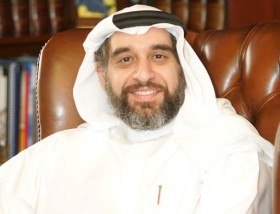
Change is inevitable, says Mishal Hamed Kanoo, But people should be prepared for and adapt to it. While he rues the loss of old-world charm, this scion of a highly respected business family believes that finding the balance between tradition and modernity is the best way forward.
“It is lovely to have a dream … you must have a dream. Anyone who doesn’t dream is dead.”
Eloquent words from a man who has dreams for himself and his country, and strives hard to make those dreams come true.
Meet Mishal Hamed Kanoo, a bold new face of the bold new UAE.
Enlightened, educated, deeply humane and sensitive to maintaining the balance between the traditional and the modern, Kanoo combines the positive qualities of the new generation of Emiratis who are determined to take the nation forward.
Belonging to a family that has a century-old business tradition in the Gulf, Kanoo, who is deputy chairman of the Kanoo Group in UAE and Oman, exudes grace and wisdom that is far beyond his 38 years.
Although he is euphoric about the great business opportunities the economic boom in Dubai has ushered in, he is upset that the old-world charm of the little fishing hamlet that he grew up in is fast changing.
“In a brief span of time, Dubai has exploded in population ten-fold. From a village, it has grown to a metropolitan city.”
While he admits that change is inevitable, he is unhappy about losing the “close-knit neighbourhood” that he grew up in.
He also feels that the modern steel-and-glass buildings “lack the charm of regional design and architecture.
“Probably the closest we have come to recreating our (style of) architecture is in building Madinat Jumeirah,”
he says.
But that said, Kanoo is not entirely nostalgic. He appreciates some of the benefits the society has derived with change.
“Earlier, the only major road (in Dubai) was the one leading to the airport. Now we have so many flyovers and cloverleaves in the city.
“Culturally too, it was very limited. Now with the amalgamation of so many nationalities, we have such great cultural dialogue that it has made the UAE, particularly Dubai, a very attractive place, culturally.
“In terms of work, it has become a bit more formal now,” he says. “Earlier, (business was conducted in) a more relaxed atmosphere but (then) productivity was low.”
Work culture
When it comes to his work, Kanoo is a humanist, deeply aware of the consequences every decision of his can have on his employees’ life. He holds hardworking employees in high esteem and feels greatly responsible for the safety and security of their future.
“Having a company (like the Kanoo group) is a huge responsibility. I do think about the 700 people working in our company.
“The thought that I am directly or indirectly liable for their livelihood through my decisions is a great responsibility and I do not take that lightly. The decisions I take affect their lives and this is not (a trivial issue).
“If a division does badly, I might have to (let) people go. I am less worried about people who make Dh15,000-Dh20,000 per month in my office, as I believe they will most likely find alternative work.
“The people I am more worried about are those who make just Dh2,000 or Dh3,000.” The challenge in managing a company like this is realising that you can do something that you enjoy while affecting people’s life positively, he says.
“One can use this office as a pulpit to propagate ideas on art and culture and add value to the company and to people’s life. Doing good things does affect life positively,” believes Kanoo. However, he has no respect for those who fail to adapt to change and allow their skills to rust.
“People sometimes don’t take the trouble to upgrade their skills and move ahead in their jobs. People love to complain about (almost everything) because everyone thinks (solving problems) is somebody else’s responsibility. Usually, a company will treat you as an adult, if you treat yourself as an adult,” he says.
Tradition vs. modernity
“I think every age has its share of tradition and modernity. It is the issue of looking at culture and society as a whole.
“In the world of art, we had the old masters in 1400-1600; we also had modern art in the 1960s … now we have contemporary art. These are just labels. I am sure that in Botticelli’s time, traditionalists condemned his art as ‘modern’.
“I take a holistic perspective towards it. A person who is living and adding something new is ‘modern’. If I take something from the past to interpret the present, then I am reviving tradition in a positive manner. That’s the difference.”
Kanoo’s thinking has been shaped by core cultural values of the Arab world. He grew up in Dubai and attended a local school before moving to the US to complete his graduation and post-graduation.
During his time in the West, he assimilated the best of American values and used them to broaden his perspective. Today he talks with a fondness for both – the Western and Arab value systems.
“Within the Arab family life, tradition plays a significant role. For tradition to succeed, one has to teach it to the next generation and allow them to adapt to it. When we talk of tradition, people think of it as something that can never change.”
Sometimes people follow certain practices blindly without questioning the rationale or meaning behind them, he says, and quotes an example of just such a practice which he saw on TV recently.
“A woman blindly follows the family tradition of trimming the end of roast beef before serving it to the family. Why does she do it? Because she had seen her mother doing it.
“She eventually gathers courage to ask her mother why the end of the roast was being trimmed. The mother tells her that she did it because her mother had done it.
“The woman then goes to her grandmother and puts the question to her who eventually solves the mystery. The elderly lady tells her that she used to trim the tail end of the roast simply because it never used to fit into the pan!”
Kanoo feels that tradition should not be eradicated, but neither should it be followed blindly.
People should set traditions that positively impact the society such as establishing a tradition of sending children to school and colleges for education; allowing youngsters to work for their living; telling children to be generous and to give to charity.
He feels there is a certain resistance to change in the present society.
Meritocracy should be the basis of a society, he says. “Evaluate the merit of the person and not his social status,” he says, highlighting an aspect of culture he imbibed from the US.
“In the US … they (rely) meritocracy. It is okay to challenge a parent respectfully,” he says, adding that
a child’s thoughts should be accorded respect.
“In the US, children are taught to challenge what is the accepted norm. Challenge is not an aggression against authority but an effort to learn and create something new.
“It is the same in business. Companies cannot be successful if no one challenges them. If there is no one to challenge me and if I always want to be surrounded by ‘yes-men’, I will soon become irrelevant.
“When we teach our children not to challenge, think or be creative, it affects their contribution to society. More particularly, the children of the rich have to be challenged to be humane and modest. They need to know that they can’t get away with anything because they can buy their way out of any situation.”
Kanoo thinks it is important to encourage the new generation to be innovative and creative in their approach to life. This will benefit organisations and businesses in the long run, he says.
“Art is a great way to teach our children to be creative. This allows them to start the creative process that the mind needs to expand.”
His strong views on education and building a sound work culture have inspired him to teach what he has learned through experience to the younger generation.
“That is why I teach family business at the American University in Sharjah (AUS). My friends often ask me why I am wasting my time (teaching). But I think part of completing the education cycle is to give back what you learned to a newer generation of students.
“If I can’t do that, then I have done nothing with my life. I hope they will challenge my ideas and create something better.”
Kanoo believes that legacies created by the previous generation in the family are to be valued and improvised upon with the passage of time. He has great respect for the principles his father, Hamed Ali Kanoo, believed in and established for the family.
He thinks it is now the prerogative of the present generation and the successive generations to imbibe the lessons of his father, who passed away in 1994.
“My father was never comfortable being a bureaucrat. It bothered him and it bothers me too. There is a saying: ‘The operation was a success but the patient died’. The surgeon may have followed all the procedures but as far as the patient was concerned it was useless … because he did not survive. This is something I learnt from my father.
“If I am put in a position where I need to make a decision and if I behave like a paper pusher and don’t make a meaningful decision, then what is the use of being in that position? Bureaucracy is supposed to set guidelines to help; not to rule.
“I learnt a lot of things from my father and of them were lessons in humility and candour. He was open to new thoughts and ideas, and never discriminated between people based on their class or social standing. Wherever he was invited, he would go – be it the home of a low-paid worker or of a very wealthy person.
“I am open to (ideas) and allow people to correct me. I don’t have a problem in people telling me I am wrong as long as they can explain to me how or why I am wrong.
“To be humble does not mean that you cannot enjoy the luxuries of life. You can, but you should not allow these luxuries to control your life. You can be humble and still drive a Rolls Royce, if you can afford it.”
A tradition of excellence
The foundation of the Kanoo business group rests on two important features – Family and Quality. The business may be based on family traditions but they are moulded to fit into the total quality management approach to business he believes in.
The organisation has received several TQM awards including the Shaikh Khalifa Excellence Award in 2002.
“We take pride in the quality of our work,” says Kanoo. “We ensure a good product, good quality and good service because that is the only way to guarantee return customers.
“Quality starts from the family. People who work for our company are also family. You have some well-organised and well-run organisations out there and then you have some reckless cowboys who tarnish what these quality companies have built up for years. This is the price you pay for progress.
“As a company we want to conserve the legacy created by my father. The customer is the lifeline; he has allowed us to prosper. If we do not fulfil his expectations, then we are not going to have a company.
“Essentially, we must deal with professional managers who will run our company in a professional manner. Even within the family, you must follow this rule and allow the present generation to decide for themselves as responsible adults.”
Kanoo accepts and acknowledges the great changes have taken place in business practices in the UAE and thinks it is important for the new generation – who plan to take over – to be ready to take on the challenges in the future. “We cannot dictate legacies to generations.
“On an average, every 20 years there is a generation shift. Rules change, sensibilities and perceptions change. So how can we apply today the rules that were laid down during the Second World War?
“Today we have outsourcing, globalisation, taxation, WTO, interests, commissions. Things have shifted. How do I reach out and sell some stuff to a farmer in Madurai (in South India)?
“The paradigm shift has already happened. I am not sure if the 20-somethings of today are up to the challenge because the impression I get is that they rely on others to do the work for them.
“That said, I do know of some excellent 20-somethings who are capable of running with the best out there. I am hoping the generation younger to them will challenge (their ideas).
“Those who are willing to put in extra hours and sacrifice certain things to get to their goal will (succeed).
The wheel of fortune
Like life, Kanoo believes success and failure in business depends a lot on destiny. Sometimes the best of things do not work because they were not meant to.
“A love or an arranged marriage has equal chances of success. People perceive an arranged marriage as cold, calculated, focused on social advantages to be derived out of the alliance, etc. Love marriage is perceived as emotional and spontaneous. But no one knows which one has a greater chance to succeed.
“The same can be said about business collaborations. You can calculate on paper how something will succeed and what ingredients would be required for its success, but that doesn’t guarantee that the business will be a success.
“Many factors play a pivotal role in that success and luck is definitely a major factor. Take the instance of Daimler Chrysler.
“On paper, it was a perfect business merger but it failed miserably and had to be sold at one-tenth of its value later. Even the best calculating minds cannot predict success or failure. Sometimes, gut is the way to go.
“I think luck plays a very strong factor in anything we do. We can calculate, assume and plan a lot before we jump into something hoping for the right thing to happen. But will it? That depends on pure luck.
“Luck is an important factor but not the only factor required for success. When you meet a person you (may have some preconceived) notions about him. But if you allow a person to talk to you, he might win you over.
“Even meeting the right person at the right time depends on luck. A person may have been around for a long time, but only at a certain stage will he or she enter your life in a way that changes life forever. For me, that person was my mother – Lulwa Kanoo.
“There was a time when everything looked black; she helped me by shining a light (in my life) when I felt there was no light. I think all of us have peaks and troughs, happiness and sadness in life. The world is not as bleak as it sometimes seems to be but it needs someone to help you see the light,” he says.
Kanoo thinks it is the duty of every one to give back when they receive so much from society and feels charity is a tradition intrinsic to all cultures and religions of the world.
“Our religious convictions tell us that we have to give alms and charity, and I think charity is the springboard of all cultures and religion. We feel it is our religious obligation and religion has been the greatest influence on me.
“Personally, I do philanthropy for art not because it’s a Corporate Social Responsibility but because I love it. Philanthropy should find expression in human needs rather than human aspirations.
“You must do things because of a personal sense of responsibility, not because of a governmental watchdog.”
Kanoo believes passionately in the power of education and feels the biggest act of philanthropy should be done in the field of education, which is the propelling force for lasting progress in any society.
“There has to be an emphasis on education, education and education. What one has learnt, one must learn to give back to society.
“If you want a good life for your children, give and give generously – because it comes back.”
Promises to make in New Year
Promises to make in New Year
5 Jan, 2008, 0000 hrs IST,Rukshana Eisa,ET
Vision: Form a clear idea of where and what you want to be in five years’ time. Draw up a mission plan to achieve your goals and make sure you follow through to get there.
Ambition: Write down a high stretching target for the year and try your best to achieve it. Learn to have faith in your dreams and aim for the impossible as it has often been achieved.
Be positive: Adopt the best mental attitude and concentrate on the potential of positive thinking. As the book The Secret by Rhonda Byrne rightfully says “Every thought of yours is a real thing – a force.”
Accept criticism: Do not allow constructive criticism to damage your self-esteem. Learn to use it in a more effective manner by growing from it.
Be punctual: It is disrespectful to keep someone waiting. Plan effectively beforehand so that you get there 10 minutes before time.
Stress control: Set aside quiet time for yourself to de-stress and do things you enjoy. Meditate, dance or take up a sport or a hobby. Anything that lets you unwind from the daily hustle and bustle and helps you find inner peace and tranquility to take on yet another hectic day in your life.
Welcome competition: Choose the best adversary you can and make them the one to beat. However, play fair and keep the aggression under control. A little bit of healthy competition only makes you strive harder to achieve your goals. So welcome it!
Take calculated risks: Never let an opportunity pass you by. Do your research and if it is worthwhile have the courage and self-confidence to take that risk to make your goals a reality.
Be aware of your appearance: Enhance your appearance by leading a healthy lifestyle. Ensure you get adequate rest, regular exercise and a balanced diet. Flip through the latest magazine to help you follow current fashion trends and styles to help guide you. Of course, do keep in mind that what is most important is that it should suit your body type and flatter you, not render you a fashion victim! Sport a new haircut.
Find a mentor: Have a role model who has had a profound influence in your life and learn to imbibe their ways in order to help guide you to achieve your goals and strive towards perfection.
(Rukshana Eisa is a Mumbai-based image consultant)
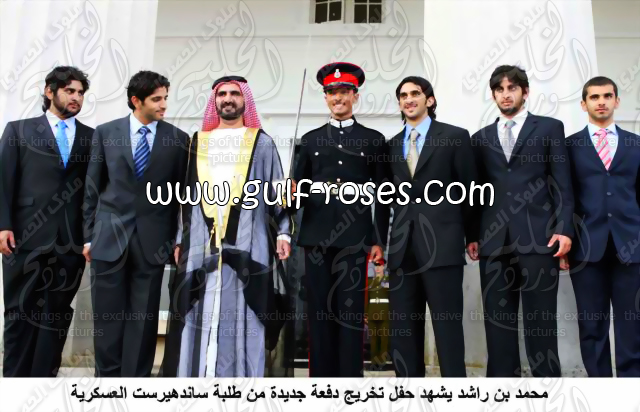
HH Sheikh Mohammed Bin Rashid Al Maktoum – Inspiring leadership…into the third year
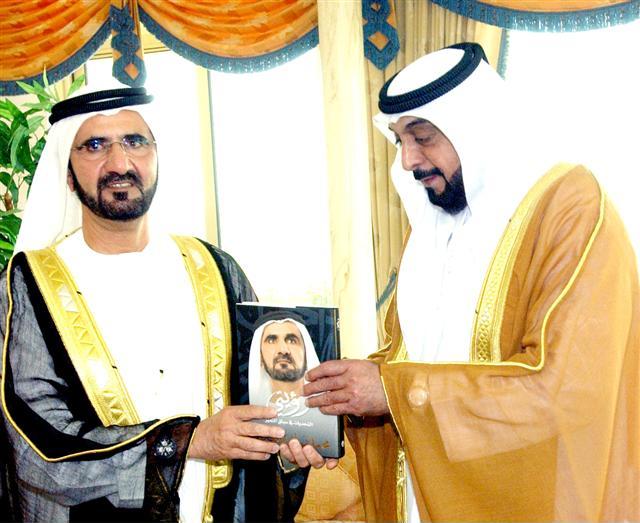
Sheikh Mohammed Bin Rashid Al Maktoum’s New Book: My Vision – Challenges In The Race For Excellence.
The book is dedicated to UAE President His Highness Sheikh Khalifa bin Zayed Al Nahyan. Sheikh Mohammed bin Rashid Al Maktoum presented Sheikh Khalifa with the first copy of his new book.
Inspiring leadership…into the third year
Inspiring leadership…into the third year
Team KT 4 January 2008
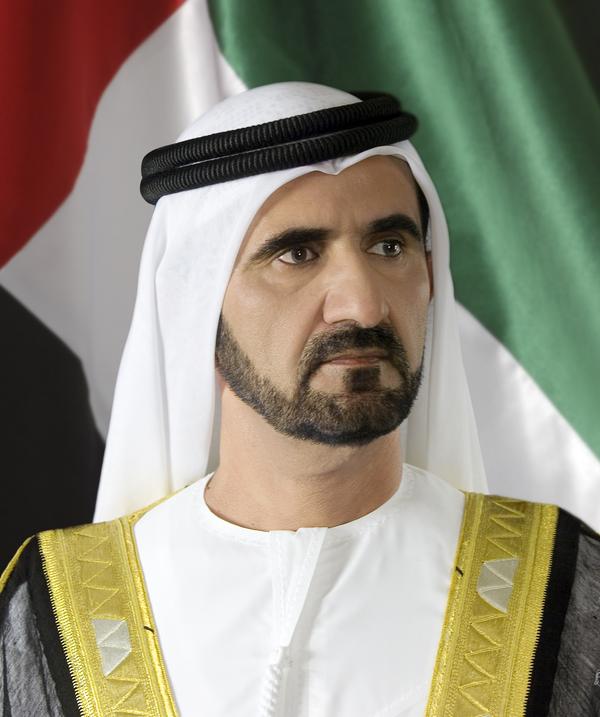
THINGS are changing… changing for the better, and with ever-greater speed. There’s the perceptible ‘Shaikh Mohammed touch’ to the administration everywhere. For the past two years across the UAE, and more emphatically in Dubai.
New instructions to tone up the governmental machinery, new emphasis on education and health sectors, new laws regulating the real estate sector, new legislation on rent cap, new rules to curb rash driving on the roads, new order to build more bridges to ease traffic congestion… new laws to promote labour welfare….new initiative to co-ordinate and streamline the functioning of federal and local establishments. UAE is changing…and Dubai is changing. In amazing ways.
There’s no looking back for the leader who became the Dubai Ruler on January 4, 2006, and was named Vice President and Prime Minister of the UAE the next day by the President His Highness Shaikh Khalifa bin Zayed Al Nahyan. Now, on to the third year of his inspiring leadership.
These are the times when the nation is witnessing a dramatic economic boom, helped also by the increasing revenues from oil. As per latest assessments, UAE’s GDP touched Dh 697 billion by now. Non-oil sectors are developing fast, giving an added push to the economy. The federal cabinet, led by Shaikh Mohammed, has its hands full. There already were good comments coming its way. For instance, the Transparency International went on record to state that, in matters of administration, the UAE has the highest level of transparency in the whole of the Arab region-–meaning, an excellent climate for foreign investments.
The strength of modern-day Dubai, of which Shaikh Mohammed is the architect, is not just that it has grown in amazing ways, but also that it did so in a systematic and modern manner, backed by a visionary approach, and with the aid of sophisticated technology. Dubai aimed high; and Dubai touched the top in many respects with a precision and ease that left the rest of the world gasping for breath. UAE too is making waves.
There have been surprises and surprises….
Dubai, for the visionary leader, “is where future begins”. The present targets are: a continuing double digit economic growth; a GDP of $108 billion, and raising the GDP per capita to $44,000 by year 2015. It would mean, among other things, an increase in productivity by four per cent per annum.
Eight years ago, at the turn of the century, Dubai had set its targets for year 2010. And, such was the pace with which the emirate progressed that those targets were realised in half the allotted time-by 2005. A feat that has few parallels in history.
There might be a few problems like the high cost of living, traffic snarls etc for us to cope with, but the days here are impressive, indeed. We are part of great growth process. Here are some highlights of the good tidings. Emirates airline created global aviation history by ordering nearly 150 aircraft, at a cost of Dh127 billion, at the Dubai Airshow. Dubai’s aviation aspirations have many more faces. Phased investments in the sector are set to go up to 82 billion over the next decade, of which an estimated 10 billion would go into the making of the world’s largest airport, the Al Maktoum International at Dubai World Central (DWC). That the total infrastructure cost for the new airport is estimated at $33 billion, speaks highly of the ambitious nature of the project.
The Metro Rail project, a dream that is coming true, is progressing at a fast pace. The 75-km project is set to revolutionise public transport sector in Dubai at a cost of Dh15 billion, or more. The first phase of the project is set for completion by September next year. Once operational, the capacity of the main Al Ittihad station would touch 35,000 passengers per hour. Here now starts the era of rail services in the Gulf region.
There have been great strides in the maritime sector as well. Dubai has entered a new phase of economic and industrial development with the building and commissioning of giant ships and oil tankers in the Dubai Dry Docks. A new dock has been added, the fifth dry dock, where works like maintenance of giant ships and conversion of such ships from oil tankers to commercial ships take place. The dock is stated to be the first in the world to build ships (of up to one million tonnes) on land before shifting them to the sea.
And, in times of growth and prosperity, Dubai and Shaikh Mohammed care for others…. There have been many a regional, global, humanitarian endeavour launched by His Highness in recent times.
The Mohammed bin Rashid Al Maktoum Foundation for Human Development, launched in May, 2007 with an endowment of Dh 37 billion, aims to open doors to generations of future leaders in the region in ways as to shape their futures by equipping them with world-class knowledge and education. The foundation, as His Highness visualises, would act as a showcase for the benefits of long-term educational initiatives for the “humanity in general and for our region in particular”.
Dubai Cares
Shaikh Mohammed put his best foot forward in recent times to help the world overcome poverty. Said he famously at the World Economic Forum meet in Dalian, China, last September: “If we want to be heroes of progress, we cannot ignore poverty, which prevents people from joining the wide current of human development”. Added he: “Any soil infested with poverty, ignorance and neglect is always a good breeding ground for fundamentalism and produces fundamentalists”.
Dubai Cares, launched by him in September, 2007, is based on the belief that education is the best way, and long-term solution, to tackle poverty. It targets uplift of one million children in poor countries around the world, through proper education, and in a way as to “break the cycle of poverty”.
The unveiling of a Knowledge Initiative by His Highness in October, 2007, styling it as an Arab House of Wisdom, was another landmark. It aims at re-drafting the knowledge roadmap for the region, educating the youth, and helping them get employment.
The past two years saw Shaikh Mohammed growing in stature as a world leader, visiting countries, meeting and interacting with world leaders, and sharing his ideas about development. That saw him holding forth at the World Economic Forum Summit, and flying down to nations as distant as India, Jordan, South Korea, Tunisia, China, Vietnam and Uzbekistan on state visits.
No wonder, accolades came His Highness’s way…Prince of the Arab Youth…a Role Model Trophy by the Arab Youth Council for Integrated Development… Global Leadership Award by Arab-American Anti-discrimination Committee in the US, a New York Times title, the Entrepreneur of the Year… so on and so forth.
Times are changing…. and more pleasant surprises are in store…for Dubai and UAE in its forward march. Happy times may never have an end. That’s the spirit.
So spoke the Shaikh
“We are very realistic despite our big dreams, and we work hard to be the best, relying on God and our citizens.”
“We have succeeded because we have always believed that tomorrow is a new day, that yesterday’s achievements are in the past and that history will record what we achieve in the future, not what we have achieved in the past”.
“We are aiming at being in the ranks of more advanced countries in all fields. This will only happen with increased public participation”.
On the youth of the UAE: “You are the homeland and development. You are the future hope. Become experts in your fields today through education, training and acquiring of skills. This will make you tomorrow’s leaders in this knowledge-based economy. Our goals and aspirations for this country will not materialize without your efforts and your ability to be examples in your loyalty and allegiance to the UAE.
“Man’s competence is to be measured not by his capability to skillfully cope with the status quo, but by his ability to change it for the better”.
“The challenges we face in the Arab and Islamic worlds are challenges of survival, not only of reform and development. Our knowledge level will determine to a large extent our ability to surmount these challenges”.
“I change the way of government to make it like a big company”.
“Education holds out hope for the future, enrichment for the present, and dignity for the mankind. It helps us to communicate with each other. It helps nations to cross the barriers to understanding. It provides a solid basis from which societies can grow and flourish”.
“A network of Arab leaderships, in business in particular, would serve as a leverage to boost the capabilities of the coming Arab generations and set the stage for them to successfully continue the march with confidence and based on solid foundations”.
“I am optimistic about the social and economic future of Arab societies, and have no worries about failure” (at the World Economic Forum meet at Dalian, China, in September, 2007).
“I am personally committed to building a new generation of young leaders who are open to new ideas and to the change and diversity.”
The UAE could not have achieved progress without turning theory into practice, and without learning from other successful examples, including the Chinese example”.
Profile
Shaikh Mohammed bin Rashid Al Maktoum was born in 1949 as the third child of Shaikh Rashid bin Saeed Al Maktoum.
In the sixties, he studied in the UK, including at the Bell School of Languages in Cambridge and the Mons Officer Cadet School in Aldershot.
In 1968, he took over as head of the Dubai Police and Public Security Department.
In 1971, he became the youngest Minister of Defence. In 1995, he became the Crown Prince of Dubai.
In 2006, he took over as the Ruler of Dubai and also as Vice President and Prime Minister of the UAE.

 ClicksandWrites
You must be logged in to post a comment.