Information – Positive Thinking
His tryst with God
His tryst with God
Bassi Pendu||INNER VOICE||, January 4, 2008
It is the perspective of a person that keeps him going in his doings, don’t you think?
The great writer of the Ramayana, Maharishi Valmiki, was justifying his doings as robber because it was to maintain his family, until he realised that it was a sin.
After that he was a converted person from the core of the heart and a great personality, revered as the first poet and writer of the first kavya and the first sloka in our literature.
It makes me think of a related story of conversion. Nand Lal and Sham Lal lived on the bank of a river. The two friends were regular in visiting a temple on the other bank, but with different motives as they were at two opposite ends of the spectrum in matters of faith.
Nand Lal used to worship God by offering flowers and money but Sham Lal had no faith at all and so he would throw his slippers at the idol.
One day the river was flooded and Nand Lal decided not to worship at the temple. But Sham Lal crossed the river, endangering his life, and cheerfully threw his slippers as usual at the silent idol.
But when Sham Lal turned back, lo, God appeared and helped him across the flooded river, holding his hand. After they crossed over, God asked Sham Lal to demand anything of Him.
Spotting this, Nand Lal found it very strange since he had always worshiped God with flowers and money while Sham Lal had always insulted Him. So what had transpired that God was so happy with Sham Lal?
That’s when God let Nand Lal know that, “A blessed person is clear and determined in his doings and even a flooded river cannot deter him from keeping his tryst with Me.
I enjoyed Sham Lal’s determination and feel he has all the qualities of a good devotee.” God’s generosity completely changed Sham Lal’s heart and after that he was a perfect devotee, focused in doing good for God’s sake.
One more chance
One more chance
By Mahesh Dattani
Time is what makes us travel. We are all travellers in time. Another year has begun and many of us wonder “now where did the last year go?” The month, date and year have nothing to do with time really. These man-made markings are mere indicators to the real travel map of our lives. The time allotted to us on this planet. The marking of one year reminds us that our planet has made one more revolution around the Sun and our lives on the planet can be counted by a limited number of those cycles.
Given the space and age of the universe as we know it, this little rock’s destiny and scale are so insignificant that it wouldn’t be worth a mention if somebody were to be recording the movements of all the planets and stars across the universe.
Yet, to us humans this little pebble’s elliptical trajectory is what governs our awareness and our very being. And we think we really matter. Like the dinosaurs, the human species could be extinct one day and the universe will not even tremble!
So powerful is the reality of time and space, but we rarely seem to come to grips with it. We feel we have all the time until we lose it. And then we exclaim: “Oh where did it go?”
We all know how important it is to live in the present moment. Writers and philosophers have spoken about the value of present time. That is all we truly have. Yet we preoccupy ourselves with all the events that ?affected us over the year or month or week. We allow anger to build inside us. We continue to regret the wrongs we have done to people who have left us long ago. We yearn for the youth or beauty that once belonged to us.
All our happy memories make us feel that we were better off before than we are now. And painful ones just grip us at every moment that we pause in our day-to-day activities. Something in the present remotely associated to that tragic event takes us there. It prevents us from staying here. Brave ones try to push it away but they spring out of the closet in the most unexpected ways simply because we never really let go.
The New Year is always the time for introspection and for hope and also to quote famous people on introspection and hope. Oprah Winfrey once exclaimed: “It’s a new year! One more chance to get it right!” I like this one because it acknowledges the past but it’s firmly grounded in what is possible now. Other appealing quotes are ones that can make the most trivial of ?activities seem important. Sometimes the most valuable use of time is when the moment is contained with a sense of sharing. “Time spent in the company of cats is never a waste.” I am not a cat lover but it makes me think about it.
Which brings me to another one picked off the net: “How we spend our days, is of course, how we spend our lives.” Quite ironic for me since I spent a good part of the day on the net looking for these quotes! To me it has been far more fruitful than throwing up my hands and saying, “Now where did that year go?”
The previous year went where all previous years go. It is lost forever in transit, and a lot of what happened in the past is baggage that ought to stay lost. But we keep sifting our memory to try and find things there. A famous essayist said that the future comes to us at a speed of sixty minutes an hour. But what about the past? Does it really leave us at the same speed with which the future came? The past seems to leave us at variable speeds. The more we cling on to the past, it slows down lingering like a huge truck at a traffic light turned red, spewing toxins as we stare at its ugly rear from our position in the present. The sooner we let go the quicker it speeds away from us, as if the light has just turned green. Making the red light green is the only choice we have when it comes to time.
Until we choose to make the red one green and allow time past to vanish at the speed of lightning, we cannot extend the time we have on hand. Time is relative. We may have the same amount of time as did yesterday, but the more we let go the more we can cherish what we truly have.
Emily Dickenson puts it so: “To live is so startling it leaves little time for anything else.”
mahesh.dattani@gmail.com
My prayer, my dream
My prayer, my dream
By Amjad Ali Khan
India-a land that has been blessed abundantly and has witnessed aplenty. Right from the Vedic times to the Silicon age, India continues to intrigue, motivate and fascinate. Today, India is a symbol of grace, style, deep-rooted culture, trade, enormous growth and, of course, BPOs! Sometimes, I feel I’m going to witness one of the most momentous times of the world in the coming years.
So much has changed in the last 10 years. India has become a show window to the world. There is nothing that we don’t already possess. In fact, we have more than the rest of the world put together, including our wondrous seasons. We are a country which has the best to offer-be it the widest range of music, arts, textiles, politics, cinema, technology, sciences, religions, a billion strong work force, diverse languages, landscapes, wildlife, museums, forts, festivals and people. We are a young nation and an ancient country rolled into one.
India has evolved over the years. Somewhere within this process of evolution lies its ticket to success. Just where have we gone wrong is difficult to assess in a short span of time. But I shall attempt to put before you some of my thoughts.
Education tops my list. I hope that one day, like Kerala, all states will be 100 per cent literate. Education will begin the transformation, both from within and the outside. People will begin to see and recognise differences among themselves and then comparisons, which are not always pleasant, will spur them to do better.
While there should be more job opportunities, the attitude to work should change. Today, young people have ample opportunities to explore. We are no longer inhibited in our choices and can be anything we want to be. Our work environment is amazing. In fact, through our younger generation our older generation is also learning to appreciate newer and unheard of options. People are realising what work culture is all about.
I’ve been fortunate to see so many workplaces over the years and I must say that the look, the people and the energy are very tangible here. We want to do more and we are willing to learn more. As the world outside focuses on India, it does seem to be a good time. But we need a lot of catching up to do. The eighties and the nineties witnessed the brain drain, but today we see a reversal. This is the brain recovery age.
Moving on, poverty is a major millstone around our necks. Perhaps the world of science could find a way out for us. Resources and their management, fuel, energy, water and food are all areas of concern.
One area that touches me dearly is culture and perhaps closer is music. Having been reared on a diet of tradition and continuity, it is difficult living in a modern world with classic values. Yet, I chose to belong to a system, where oral knowledge is passed on from guru to student along with actual music lessons. I am standing at a crossroads. Where do we go from here? How will classical music evolve? There is a deluge of pop and so-called fusion, remix ragas and experimental music out there. Great work is being done. I’m doing a lot of stuff myself. The instant success of any of these, as opposed to the long hours of dedication required in the traditional set up, sometimes stands in the way of progress. I think it is great to imbibe cultures from all around the world, but let’s not forget who we are or what we have to offer. We need to be first and foremost, proud of ourselves. It will indeed be a sad day for all of us if our musical traditions that date back more than 5,000 years, is sacrificed at the altar of modernity. While the standard of living may have improved for some, it has worsened for many. Amenities and fast-track development in cities excite us. But, a closer look reveals the true picture, as you don’t have to travel far to see that there are many who have no clue about where the world has gone.
I have heard people say that India is going to be a super power. Amen to that. But I also hope that India becomes a super power in terms of humanness, love, peace and tolerance. Values that we all hold sacred. I pray that India will set the benchmark for the entire globe. I hope we are able to show the world that we can do without war and weapons. I also dream of a politically stable, refined and healthy nation! This is the India I want to see. I hope that my music will be all this and more.
music@sarod.com
Forgiveness may be good for health
Forgiveness may be good for health
3 Jan 2008, 1531 hrs IST,ANI
WASHINGTON: If you’re holding a grudge against someone, waste no time in pardoning him or her, for a study in the January issue of Mayo Clinic Women’s HealthSource has suggested that forgiveness might be good for your health.
Forgiveness means acknowledging hurt and then letting it go, along with the burden of anger and resentment.
According to the journal, having bitterness for someone might affect your cardiovascular and nervous systems.
In one study, it was found that who focused on a personal grudge had elevated blood pressure and heart rates, as well as increased muscle tension and feelings of being less in control.
When they were asked to imagine forgiving the person who had hurt them, the participants said that they felt more positive and relaxed, and thus the changes dissipated.
When it comes to learning how to forgive – talking with a friend, therapist or adviser might be helpful during the process, to sort through feelings and stay on track.
The journal has covered four steps that will help you learn forgiveness.
The first step is to acknowledge the pain and anger felt as a result of someone else’s actions. For forgiveness to occur, the situation needs to be looked at honestly.
In the second step, you should recognize that healing requires change, followed by the finding a new way to think about the person who caused the pain.
Finally in the last step, you will begin to experience the emotional relief that comes with forgiveness. It might include increased compassion for others who have experienced similar hurt.
Making sure ‘we approach future in steady steps’
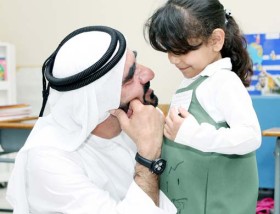
Making sure ‘we approach future in steady steps’ By Samir Salama, Bureau Chief Published: January 03, 2008, 01:31
Dubai: January 5 marks the second anniversary when His Highness Shaikh Mohammad Bin Rashid Al Maktoum became Vice-President and Prime Minister of the UAE. He became the Ruler of Dubai on January 4, 2006.
The past two years witnessed ground-breaking achievements as Shaikh Mohammad took charge of improving the lives of all residents.
In the last two years, Shaikh Mohammad has issued a number of laws and decrees for the advantage of residents and ordered his administration to implement them in the best service of the country and the citizens.
Ever since he became the Vice-President and Prime Minister of the UAE and Ruler of Dubai, he has been following up the concerns of his people and ordered changes and improvements in various fields, stressing commitment to national goals and policies laid down by the founding fathers.
All-round development
Shaikh Mohammad also infused dynamism that has become the hallmark of the Federal Strategy, adopting realistic and applicable programmes and well-considered plans to achieve economic, social and human development.
He has conducted inspection trips to all the emirates and ordered important changes.
Shaikh Mohammad ordered the establishment of a specialised court to deal with labour complaints. He also ordered the establishment of a special inspection unit to monitor workers’ accommodations and workplace. He ordered a stricter enforcement of laws that protect the rights of labourers and domestic workers and improve their quality of life.
The rent cap was another corrective step taken by Shaikh Mohammad to rationalise rents so that both tenants and landlords have an equal say.
The escrow account was yet another visionary measure to secure money of investors who invest in real estate development.
Shaikh Mohammad’s substantial contribution covers people around the world.
He launched the Dubai Cares initiative on September 30 to raise money to support the education of over a million poor schoolchildren through the efforts of businessmen, schools, students, their families and their neighbours in Dubai.
On May 19, the Mohammad Bin Rashid Al Maktoum Foundation was launched to promote human development and provide hope and opportunity by investing in education and knowledge development in the region.
Shaikh Mohammad, in his own words, is not one to revel in past accomplishments “because life doesn’t stop and it doesn’t care about those who stop because they are content with what they have achieved”.
He has said: “The present and future generations of our country are the top priority of all development plans. We have to make history and approach the future with steady steps, not wait for the future to come to us.”
Diversity lessons from Taare Zameen Par
The moment of the year 2007 for me was the evocative scene in Aamir Khan’s Taare Zameen Par where the young protagonist defies all the odds and walks up shyly to receive an art prize, thereby demonstrating that every social and intellectual shortcoming can be overcome through genuine appreciation of potential.
So too, leaders in organizations can build stars if they are able to look beyond the appeal of ordinary success in pre-defined criteria such as a management degree from the right school, perfect articulation, polished dress sense etc. This may mean nurturing the stellar young woman returning after a career break to have children, offering tailor-made opportunities to those with specific handicaps such as blindness or being wheelchair bound, or identifying those who for reasons of financial difficulty, may not have benefited from the final polish of the top business schools.
Indeed, modern organisations can no longer afford to overlook the capabilities of those historically run over by the rat race. Recent studies by the Organization for Economic Cooperation and Development (OECD), whose developed country members have of late suffered from declining productivity and ageing, shrinking populations, underscore this fact. Countries that have adopted women and family-friendly work practices including flexible working, such as Norway and Finland, have shown remarkable improvements in both business productivity and birth rate, as women find balancing career progression with child-rearing more manageable. On the other hand, Italy, with its traditional domestic values and macho corporate environment, has witnessed declines in both.
In the knowledge sector in our country, a lot is being to done to correct the gender imbalance that normally pervades all organisations in the corporate sector.
However, one identified factor that can come in the way of sustained growth is the availability of manpower of the right quality and numbers – the perennial refrain of poor quality of engineers and other technical graduates is not going to disappear and industry chieftains need to explore other avenues to find the talent they need to fuel growth of both the IT and business process outsourcing (BPO) sectors. Early experiments by progressive organisations like Satyam through their rural empowerment programme and the Thermax-Zensar-Forbes Marshall connsortium supported by Dr Reddy’s Foundation have focused on creating employability for urban slum children and demonstrated that the talent that exists at the bottom of the socio-economic pyramid can be tapped for individual and business benefits.
There is no doubt that a greater degree of effort is required to make worthy knowledge workers out of the weaker segments of society but the results can make this effort truly worthwhile, not just through the satisfaction that each success story can bring but also by the sheer scale of new employment that is feasible if one looks beyond the traditional talent pools for future resources. Can we overcome our very own brand of corporate dyslexia and put new meaning into the lives of millions of our countrymen?
Ganesh Natrajan
Deputy Chairman & MD, Zensar Technologies
APJ Abdul Kalam launches his own epaper – Billion Beats
Busy as ever even after leaving Rashtrapati Bhavan, India’s ”missile man” A P J Abdul Kalam donned the role of a ”media man” by launching a fortnightly e-paper Billion Beats to highlight the stories of India’s ”islands of success” and to establish knowledge connectivity.
Apparently frustrated over Indian media’s lack of focus in highlighting the country’s success stories, Kalam, along with his associates launched the e-paper on his website http://www.abdulkalam.com recently.
”We have the islands of success in every field of activity and we have to connect them to make a garland,” he said in his message to first edition of the e-paper being brought out by his associate V Ponraj.
Typical of Kalam, the idea to have his own media medium struck him while he was coming out of a television interview in New Delhi. As he drove out of the studios, Kalam vented his frustration to his associates saying, ”why are we not highlighting the success stories of achievers. Why are we not bringing unsung heroes to the forefront.”
”Why an overdose of politics, murder caste war why ”, Kalam was quoted as saying in the inaugural edition by M Anantha Krishnan, its National Affairs Editor, explaining the reasons that prompted the former President to launch the new initiative. Kalam also wants his new venture to establish ”knowledge connectivity” among people.
Be wise in what you ask for
Be wise in what you ask for
29 Dec, 2007, 0003 hrs IST,Vithal C Nadkarni, TNN
On New Year, be careful of what you ask. You might actually get it! That warning has been variously attributed to Vyasa and Valmiki. In the Mahabharata, for instance, Vyasa narrates an intriguing ‘explanation’ behind Draupadi’s becoming a common wife to the five Pandava princes. She’s supposed to have propitiated Siva with her austerities in her previous incarnation. When the blue-throated Lord asks his devotee to choose a boon, she begs for a groom with all the great qualities.
Not being content to voice her request once, the pushy girl goes on to repeat her wish five times. “So be it,” says the Lord. “Since you spoke five times, five husbands you shall have, but in your next life.” Now why didn’t the Lord grant her wish immediately? Perhaps he wanted to spare his devotee the agonies of the Great War, which was certain to occur once his heroic bratpack made its bid for kingly spoils from older, entrenched bloodlines. Nor does Siva excuse his devotee’s excess in the story as narrated by Vyasa. His motto seems to be, “You have only to ask and you shall have it.”
This is not unlike what the Australian TV-producer Rhonda Byrne has articulated in her best-selling The Secret, namely, for better or worse, you’ll get what you wish for. So, be very careful.
Valmiki’s version of the power of misplaced wishing involves Ravana and his brothers. The Danava brood wins over Brahma with their tapasya and is asked to make their wishes: Ravana asks for immunity from all the gods, anti-gods, the nagas and other semi-divine beings in the seven worlds. His attempt is to cover all the major bases from which he anticipates attack. But he neglects to include puny humans, which proves to be his nemesis. He might have been saved had he eschewed toxic thinking and chosen as his youngest sibling Vibhishana did, namely, constant proximity to the Lord and His good cause.
The mighty Khumbhakarna, too, slips in his unseemly hurry to ask for the Indrasana or sovereignty over the gods. He asks for Nidrasana instead, which involves suzerainty over inordinate sleep and inertia.
Closer to our times watch the paradox of “millions longing for immortality who do not know what to do on a rainy Sunday afternoon,” writes the novelist Susan Ertz. Just think of the prospects of living forever in a world gone to pot from pollution and perverted nature. Mere quantity isn’t enough. Think of the quality. Strive for it.
Just say it
Just say it
By Suchitra Bajpai Chaudhary, Staff Writer GULF NEWS Published: December 28, 2007,
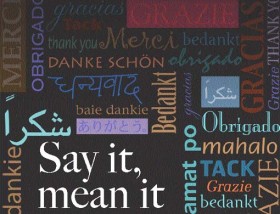
They are two simple little words – thank you – but put together, with complete sincerity, they are so powerful that they can change lives, situations, even the future. With 2008 around the corner, how about getting some attitude – of gratitude?
A fortnight ago, I had the opportunity to spend a weekend at a resort in Umm Al Quwain. Thanks to the kids and their activities the day’s schedule was hectic and by late evening, almost all the adults were tired and those who could stay awake were relaxing by the pool.
I decided to go for a stroll on the beach to take in the cool breeze and reflect on the activities of the day.
I chose a nice spot on the beach and sat down to watch the sunset. The colours that lit up the sky were simply breathtaking. Tracers of pink and swatches of purples lay in artless abandon on a backdrop of bleeding crimson … I wished I had taken along a camera but my mind’s eye
came in handy.
Slowly, the colours bleached as though the sky had been sprayed with a giant hose of a decolorant and scraps of greys and faded pinks clung on as the backdrop paled into slate.
Soon night swept in draped a voluminous black cloak and in a swish revealed the crystal work of stars. It was pure theatre and I was watching it free of charge.
The breeze soon picked up so I decided to resume my walk. The sand was cool under my feet, the sea like a vast spill of ebony ink and the moon hung almost full as though held at that spot by an invisible puppeteer’s hand. Nature was putting on another spectacular show. Once again, free of charge.
The only sound was the lapping of the waves. I was sure that if I concentrated hard enough, I would be able to hear the beat of my heart.
And that’s when a familiar but not-so-regular emotion washed over me – the feeling of absolute gratitude for the moment. The sheer beauty of nature that was all around me, giving me everything and asking for nothing in return, except to be in the moment.
I felt blessed for having the chance to be a part of that night.
Back in my room, the calming experience I had just enjoyed kept returning to my mind and set me thinking: would it sound silly if I thanked Life for the evening? After all, how many such evenings had I experienced in the recent past? In fact, when was the last time I was overcome with gratitude for the free abundance of so many things life offers me every day, every week?
I thought of the way we say ‘Thank you’. It is specifically for something we have received or in general for nothing really; just politesse, because it’s so easy to say it without really thinking about it.
And to me that was like a thorn in the flesh. Did I really think through my expressions of gratitude?
Were they simply reflexive responses or had I said some ‘Thank yous’ that were as deeply felt as other emotions like the anger when someone cuts you off on the highway or jumps the queue with impunity or arrogance when someone does not return your call? It’s so easy to feel some emotions so strongly.
You know the ones I mean. But what about a ‘thank you’?
Quite often, we seem to miss the wood for the trees. We expect a lot of things to be the way they are and forget to acknowledge the fact that someone, somewhere, known or unknown, is responsible for making it easy for us.
We take things for granted to the extent that when we wake up, the coffee should be brewing and the croissant shining with a buttery glaze. And warm. Better still, served to you on a plate with a monogrammed napkin tucked in by its side.
You think I am going too far?
Well, I have the right to pontificate on my life and I don’t think I am not guilty of that charge. Quite often I fail to see the silver lining in the clouds and focus instead on the grey … and grumble and groan and whine about it all.
Cicero, the Roman philosopher, got it right: “Gratitude is not only the greatest virtue but the parent of all others.”
New-age psychologists believe that more than anything else, a feeling of gratitude for all the things we enjoy in life can fill us with happiness.
When you count your blessings, you actually tend to discount the inconveniences in life. You tend to grumble less, feel less stressed out and thus produce less stress hormones in your system.
Fewer negative thoughts mean your mind is free … to think of more and better ways to improve your state.
It’s called positive psychology, says Dubai-based clinical psychologist Maya Selisel Sidani.
Till recently, psychology was focused on the treatment of a particular mental ailment. It essentially meant taking a patient who was in, let’s say, a ‘minus 5’ state of mind to a condition where he/she became normal or achieved a state of mind termed zero.
But positive psychology does not involve any treatment procedures as such. It examines the individual’s
state of mind and focuses on lifting his/her mood from, for instance, zero to plus five.
“Gratitude definitely affects our sense of happiness,” says Sidani. She quotes the theory put forward by American Psychology Association president Martin Selignan who explains how gratitude impacts our sense of happiness.
According to Selignan there are three components
to happiness:
A pleasant focus on things that give us pleasure – such as listening to beautiful music, watching a play, enjoying a dinner … basically activities that provide us direct sensory pleasure.
Engagement: This is about the depth of our involvement and commitment to relationships such as (with) our spouse, family, romance, hobbies. When we do things with passion and are involved in these, there |is a natural sense of fulfillment and happiness.
The meaning of life: Doing things that give a larger, greater meaning to life such as using (your efforts) to serve a larger social end.
According to Sidani, the last category is the one that deals with feeling a sense of gratitude … by trying to find meaning to life through doing noble deeds, participating in charity drives, etc.
So, how important is it be grateful for small things in life? Does it take a life-changing experience to make people realise the value of expressing gratitude? In what way can a person express gratitude?
To find out, Friday met a few people:
A humbling experience
Brian Senelwa’s life changed for ever when he learnt that he had lost his first child, a baby boy. “That’s the time I realised how fragile life is,” says the export manager in
a Dubai FMCG company.
“The experience (I underwent) was humbling. It made me appreciate and be grateful for (everything),” he says.
Senelwa, who hails from Kenya and has two children, Christina (5) and Antony (2), is keen to instill the value
of gratitude in his children as they grow up.
“I believe in the power of gratitude. I once read a book called The Attitude to Gratitude, which pointed out the importance of appreciating what one has in life.
“Of late, with the kind of mechanical lifestyles (we lead), we are rushing through the day and I think I have forgotten to thank God for the beautiful and important things he has given me.
“When I watch television – the tragedies, the violence, pestilence, murders – I feel fortunate to be in Dubai. Of course I have had my share of ups and downs in life, many financial and personal problems, but I am thankful to God for having given me some friends who have stood by me and given me the strength to bear it all.”
Senelwa, who had a very tough childhood in Kenya, is all praise for his mother for having instilled in him the right attitude to gratitude.
“My mother, Margaret, was a source my inspiration. She brought up my sister and me single-handedly after my father passed away (I was nine years old at the time). We lived frugally, but she taught me humility and an appreciation for what we had in life.
“Eight things I will always be grateful for and thank God for…
My kids.
My health and well-being.
To be surrounded by friends.
The beauty of nature. I often travel to Hatta and Oman and am awestruck by the beauty of the desert.
My job. I love doing what I do.
For having hope. I have always looked forward to better things.
Second chances in life. Very often we commit mistakes and I am grateful I have been given a second chance to improve on them and redeem myself.
For every new morning in my life.
I had a near fatal accident in Kenya, but escaped unhurt!
* * *
Shemsah Musabih, an accredited Life Coach, specialising in relationships, says: “People sometimes focus on bad times and forget the pleasant and positive things in their lives. I truly believe a sense of gratitude ignites positive feelings in you.”
She has experienced many things in her life that fill her with a very positive feeling.
“I was born in USA but spent most of my life in the UAE. One of the strongest memories I have of my childhood is of my mother showing pictures of starving children to my brothers and me whenever we refused our food. She used to remind us of what they didn’t have and all the things that we had to be grateful for.
“My father always reminded us to thank God whenever we saw people who were suffering, sick, or poor and for us not being that way.
“We also grew up being told that there’s a blessing and wisdom behind everything that we go through – the good and the bad. We may not understand it now, but someday, when we look back upon our lives, we will realise the truth.
“I believe that we get what we deserve and we have to earn what we want in life. The only way we can prove that we will be grateful for the things we want and won’t take them for granted, is by being grateful for the things that we have.
“By being grateful, we realise that we have so many reasons to celebrate and share happiness. It puts life into perspective and keeps us going.”
One of the fondest memories she has of childhood is of spending a summer with her father in London.
“It was just him and I. I felt very close to him and he made me feel very special. We didn’t do anything out of the ordinary. We went shopping, to the park and simply hung out together.
“I’ve spoken about it so many times, however, now that I think about it I never actually thanked him, so I’d like to take this opportunity to say “Thank you Baba for making me feel special”.
Shemsah’s lists things she is grateful for:
The family that I grew up in. (That experience moulded me into who I am today).
My husband and son (my inspirations and support).
My friends and relationships (my balance in life).
My health and beauty.
My experience through postpartum depression (It taught me to be more compassionate and grateful. I am a better woman, wife, mother, friend, daughter, sister, and citizen because of it).
My knowledge and Islam (My empowerment).
Being half American and half Emirati (I got the best of both worlds).
My safety and security (I’m grateful that I’m living in a
place like Dubai).
My time (I am grateful for each day that I am able to wake up and do the things that I want to do and share my time with the people that I love).
My food, clothes, house, wealth and nannies (I am grateful for not having the stress of not knowing where I am going to sleep tonight, or how I am going to get my next meal).
* * *
Lillian Yordi has wonderful memories of a warm Venezuelan home filled with family that makes her so full of gratitude for all the nice times she had. I crib about things and I think it is human nature to do so.
But I (am always brought back to reality) when I see things around me and I realise how lucky I am to be alive; that makes me reflect and to be grateful just for being healthy and happy.
“I am happy when I am surrounded by my family, friends and people that I care about and love. I thank God for all the beautiful things in my life – my kids, my husband and family.
Zordi recalls the happy memories of Christmas: “I can remember how every year my mother would purchase all the ingredients and then gather all of us around to begin preparing and making ‘Hallacas’ (a Venezuelan dish for Christmas) and special desserts, treats and decorations.
“She had a magic touch that made our lives special. I don’t recall saying ‘thank you’ to her but I carry that feeling of gratitude in my heart and I share it with my kids. I hope to follow my mother’s example by making my children’s lives special.”
You too can get enlightened!
You too can get enlightened!
PARAMAHAMSA SRI NITHYANANDA, TNN
We all live at three levels. At the first level, we live in our head. We live using our intellect and logic. The second level is our heart. When we live with our heart, we use our emotions. In the third level we live at the core of our very being. We live in our identity.
When our intellect is heightened, when it ripens, it shines forth as common sense or intelligence. Although called common sense, it is a rare treasure, an uncommon thing on this planet Earth. Emotions can ripen. Deep emotions ripen into faith. When our being ripens it leads to enlightenment.
What is enlightenment? People have several strange notions about this word and concept. Let me explain it in simple words. Enlightenment is simply the experience of our inner energy. Enlightenment is related to the understanding and experience of our inner energy. It is not based on our physical activities, as we presume.
This concept although simple is not easy for people to understand or follow. Many people misunderstand this concept. Be clear: enlightenment is our individual experience. It is our experience of the inner energy.
There is no one who is barred for any reason, an alcoholic, man or woman, this caste or that caste, a criminal, each one is equally eligible for enlightenment as any one else is. A man has no edge over a woman. In fact, a woman lives in a higher energy plane than a man.
A person who claims to have led a pure and chaste life may not get enlightened at all. He has no edge over another who may be considered a sinner by religion and society. They both have the same chance of achieving enlightenment. Anyone can attain this status.
If you ask me, I will say that neither our activities nor actions are related to enlightenment. Enlightenment is within the reach of one and all. Everyone is eligible for enlightenment. Many people may take this as a licence to do whatever they want to do. They can create even bigger problems in the world.
Masters realise the potential problems this assertion can cause to the uninitiated public. That is why they don’t speak about it, freely and generally in public. Let us all work towards our enlightenment. Everyone can reach it, everyone is eligible and everyone is entitled to it. Nothing we do can stop us from reaching that state.
 ClicksandWrites
You must be logged in to post a comment.